
Baseboard Trim: 10 Powerful Ideas for Amazing 2025 Spaces
The Essential Guide to Baseboard Trim
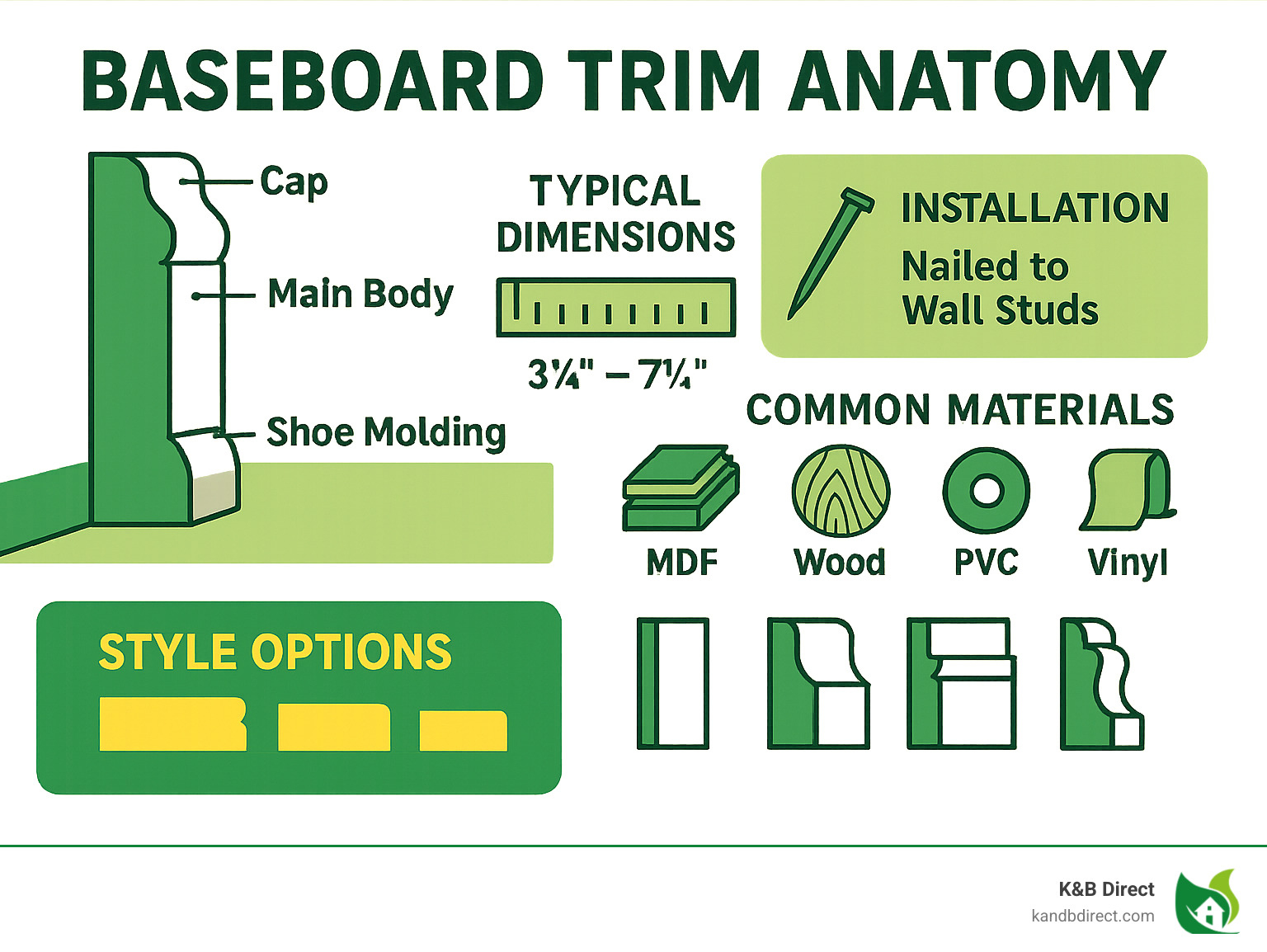
Baseboard trim is the decorative molding that covers the joint between a wall and floor, providing both protection and visual appeal to any room.
| Quick Baseboard Trim Facts |
|---|
| Purpose: Covers wall-floor gap and protects walls from damage |
| Common Heights: 3¼” to 7¼” |
| Popular Materials: MDF, wood, PVC, vinyl |
| Installation: Typically nailed to wall studs with mitered or coped corners |
| Cost Range: $0.50 to $3.00+ per linear foot (material only) |
When you look around any finished room, you might not immediately notice the baseboards, but they play a crucial role in your home’s appearance and functionality. These modest trim pieces protect your walls from vacuum cleaners, furniture scuffs, and everyday wear while creating a smooth visual transition between floors and walls.
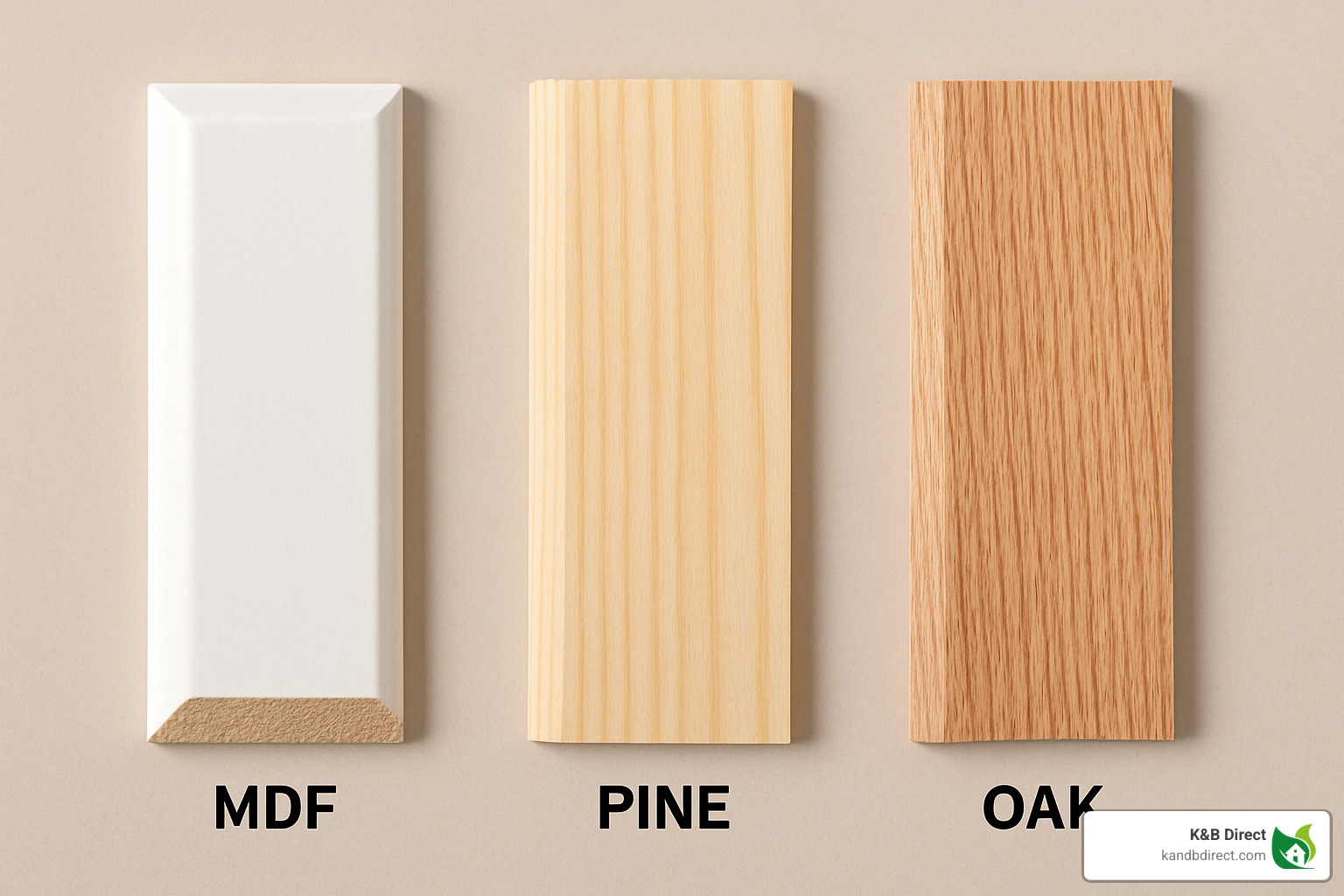
Baseboards come in various materials, each with its own advantages. MDF (medium-density fiberboard) offers an economical, paintable option that won’t split when nailed. Wood provides classic appeal and can be stained to showcase natural grain. For moisture-prone areas like bathrooms and basements, vinyl and PVC baseboards offer water and termite resistance.
The style you choose can significantly impact your room’s overall aesthetic. From simple, modern flat profiles to ornate colonial designs, your baseboard trim selection should complement your home’s architectural style. Most popular designs range from 3-1/4 inches to 7-1/4 inches in height, with thicknesses between 5/8 inch and 1 inch.
I’m Eryk Piatkowski, and during my years at K&B Direct, I’ve helped countless homeowners select the perfect baseboard trim to improve their living spaces while balancing style, durability, and budget considerations.
Baseboard Trim 101: Purpose & Value
Ever walked into a room and felt something was missing, but couldn’t quite put your finger on it? Chances are, it might have been missing baseboard trim. These modest heroes of home design do so much more than meet the eye!
At its heart, baseboard trim covers that necessary gap between your flooring and wall—a space that allows materials to naturally expand and contract as temperatures and humidity levels change throughout the seasons. Without baseboards, you’d be staring at an unsightly gap that becomes a magnet for dust bunnies and debris.
But protection goes both ways. Your walls take quite a beating over time, especially at floor level. Think about it—vacuum cleaners bumping along, kids racing toy cars, furniture being rearranged during your seasonal cleaning spree. Baseboard trim acts like a shield for your walls, absorbing impacts that would otherwise leave your drywall or plaster damaged and in need of repair.
From a design standpoint, baseboards frame your room much like a picture frame completes a beautiful painting. They provide that finished look that whispers “quality” and “attention to detail” without saying a word. As one of our contractor friends puts it, “Baseboards are an easy and low-cost way to add impactful style to your home and should be a detail you’re proud of.”
There’s a rich history behind these humble trim pieces too. During the Victorian era, baseboards became architectural showpieces, sometimes soaring 9-12 inches high with elaborate profiles. While today’s designs tend to be more streamlined, they still carry that touch of architectural heritage.
And here’s a benefit many homeowners don’t consider: energy efficiency! Baseboard trim helps seal the perimeter of your rooms, reducing those pesky drafts and improving your home’s heating and cooling efficiency. This is especially noticeable in older homes, where you might actually feel the difference in comfort (and see it in your energy bills).
Why Every Room Needs Baseboard Trim
I’ve occasionally heard clients ask if they can skip baseboards altogether for a more minimalist look. While design trends come and go, the practical reasons for baseboards remain constant.
First and foremost, they provide crucial impact resistance. Without this protective barrier, a casual bump from a vacuum cleaner can chip paint and damage drywall. They also create a buffer zone that prevents furniture from sitting directly against painted walls, reducing those frustrating scuffs and color transfers that happen when you rearrange your living room.
Cleaning becomes significantly easier too. That junction where floor meets wall is naturally prone to collecting dust and dirt. Baseboard trim creates a smooth, cleanable surface that’s much simpler to maintain than a raw wall-floor junction. Just a quick wipe with a damp cloth, and you’re good to go!
Perhaps most importantly, rooms simply look better with baseboards. Without them, spaces often feel unfinished or somehow off-balance. As Gary Katz, a veteran carpenter, explains, “Baseboard is the ideal workpiece for learning all basic trim joints because it contains all the fundamental elements of finish-trim carpentry.”
Even in ultra-modern spaces where designers might prefer a “floating wall” look, some form of minimal baseboard is typically incorporated to achieve that clean aesthetic while maintaining all these practical benefits.
How Baseboard Trim Adds Instant Equity
When it comes to home value, it’s often the details that make the difference. Real estate professionals consistently note that buyers respond positively to homes with quality trim work, including well-executed baseboards.
Buyer perception plays a huge role here. Homes with properly installed, proportional baseboards signal quality construction and meticulous attention to detail. As one real estate agent told us, “Buyers might not consciously notice good baseboards, but they definitely notice bad ones or none at all.” It’s one of those subtle details that contributes to the overall impression of a well-maintained home.
The finished appearance that baseboards provide cannot be overstated. A home without baseboards simply appears incomplete, which can lead potential buyers to wonder what other corners were cut during construction or renovation. This is not the question you want in their minds during a showing!
Quality baseboards also create style cohesion throughout your home. Coordinated trim creates visual continuity, making spaces feel harmonious and intentionally designed rather than randomly assembled. This sense of cohesion is something buyers can feel, even if they don’t consciously identify baseboards as the source.
While it’s challenging to assign a specific dollar value to baseboard installation, industry professionals estimate that quality trim work can help a home sell faster and potentially command a price premium of 1-3% compared to similar homes with poor or missing trim details. That’s a significant return on a relatively modest investment!
At K&B Direct, we’ve seen how the right baseboard trim can transform a space from merely functional to truly finished. It’s one of those small touches that makes a house feel like a home—and makes your home more valuable in the process.
Material & Cost Breakdown
Selecting the right material for your baseboard trim involves balancing aesthetics, durability, and budget considerations. Here’s a comprehensive breakdown of the most common options:
| Material | Cost Per Linear Foot | Durability | Moisture Resistance | Paintability | Stainability |
|---|---|---|---|---|---|
| MDF | $0.70-$1.50 | Medium | Poor | Excellent | No |
| Pine | $1.00-$2.00 | Medium | Fair | Good | Good |
| Oak/Hardwood | $2.50-$6.00 | High | Good | Good | Excellent |
| PVC/Vinyl | $1.50-$3.00 | High | Excellent | Limited | No |
| Engineered Composites | $2.00-$4.00 | High | Good | Good | Limited |
Walking into a home improvement store, you’ll likely find yourself staring at a wall of baseboard trim options, wondering which one is right for your home. Let me break it down for you in plain English.
Medium Density Fiberboard (MDF) is the popular kid on the block for modern homes. Think of it as wood fibers squeezed together with resin – it comes pre-primed, ready for your favorite paint color, and won’t throw a fit (split) when you nail it in. The smooth, consistent surface is a painter’s dream! Just keep it away from water – MDF and moisture are sworn enemies. One splash too many and you’ll be shopping for replacements.
Pine and other softwoods offer that sweet spot between price and quality. They’re like the reliable middle child – not too expensive, not too fancy, but gets the job done with style. Pine takes both paint and stain beautifully, though it will collect a few battle scars (dents) over time. For longer, straighter runs, look for finger-jointed pine, which uses shorter pieces cleverly connected to resist the warping that can make your walls look wavy.
Hardwoods like oak and maple are the luxury options – the fancy dinner plates you bring out for special guests. With gorgeous natural grain patterns and fortress-like durability, these baseboard trims will likely outlast your mortgage. The trade-off? Your wallet will feel considerably lighter, and installation requires more patience and pre-drilling to prevent splitting.
PVC and vinyl baseboards are the practical solution for wet spaces. As one contractor told me, “These synthetic options are like the rain boots of the baseboard world – perfect for bathrooms, kitchens, and basements where moisture is a regular visitor.” PVC comes in rigid forms that look like traditional baseboards, while vinyl often comes in flexible rolls that can hug uneven walls.
Engineered composites represent newer technology that combines wood fibers with plastics. They’re the clever compromise that resists moisture better than MDF while remaining workable and affordable. Think of them as the hybrid car of the baseboard world – newer technology with practical benefits.
Here at K&B Direct, we offer several quality options to suit different homes and styles. Our Base 121×6 provides a timeless profile that works in nearly any room, while the Base 3098 offers clean lines for more contemporary spaces.
Baseboard Trim Material Pros & Cons
Let’s dive deeper into what makes each baseboard trim material shine – and where they might fall short.
MDF is the chameleon of baseboards – it takes paint beautifully and creates a smooth, consistent look without knots or grain variations. It’s budget-friendly and surprisingly cooperative during installation. However, it’s practically allergic to moisture, making it a poor choice for bathrooms or basements. It’s also heavier than wood, so you might need an extra coffee before lugging bundles up the stairs.
Pine brings natural warmth and character to your rooms. It’s lighter than MDF, easy to cut, and versatile enough to paint or stain. When painted, it provides a slightly softer look than MDF’s ultra-smooth finish. The downside? Pine can collect dents over time, especially in high-traffic areas. Think of it as developing character, like the laugh lines on a friendly face.
Hardwood baseboards are the premium choice that adds a touch of elegance to any room. The natural grain patterns create visual interest, and the durability is best – these baseboard trims can handle decades of vacuum bumps without complaint. They’re particularly stunning when stained to showcase their natural beauty. The main drawbacks are the premium price tag and more demanding installation requirements.
PVC and vinyl options shine in wet environments where other materials would quickly deteriorate. They’re completely waterproof, won’t rot or attract insects, and clean up with a simple wipe. Perfect for mudrooms, bathrooms, and basements! The compromise is in appearance – while they’ve improved dramatically in recent years, they still lack the authentic look of wood or MDF. Also, while some can be painted, they’ll never accept stain.
From an environmental perspective, each material has its considerations. MDF sometimes contains formaldehyde (though low-VOC options exist), solid wood from certified sustainable forests represents a renewable resource, and PVC production has a higher environmental footprint but offers exceptional longevity.
Smart Budgeting for Baseboard Trim Projects
When planning your baseboard trim project, material costs are just the opening act – there’s a whole show to budget for. Here’s how to avoid sticker shock:
Start by measuring accurately – walk each room with a tape measure and note the perimeter, subtracting doorways. Then add 10-15% for waste, mistakes, and those tricky cuts around weird corners (every house has at least one). This gives you your total linear footage needed.
For a typical 12’×12′ room with one doorway, you’ll need approximately 44 linear feet of baseboard. Using MDF at $1 per linear foot, your material might cost about $50 including waste allowance – but that’s just the beginning of your budget story.
Professional installation typically costs $4-$8 per linear foot, including materials. DIY installation saves on labor but requires tools and time. Be honest with yourself about your skill level – baseboards look simple but proper installation requires precision and patience.
If you’re going DIY, factor in tools: a miter saw ($100-$300 to purchase, $30-$50 daily rental), nail gun and compressor ($200-$400 to purchase, $25-$40 daily rental), and a coping saw for inside corners ($20-$100). Don’t forget the “supporting cast” of measuring tape, level, stud finder, and other basic tools.
Then there are the finishing materials – the little things that add up quickly: caulk for seams ($3-$5 per tube), wood filler for nail holes ($5-$10), paint or stain ($30-$50 per gallon), and primer if needed ($20-$30 per gallon).
As one experienced contractor shared with me, “The materials often represent only about 30% of the total project cost when you factor in all the incidentals and your time.” This includes hidden costs like removing existing baseboards, protecting floors during installation, possible wall repairs, and touch-up painting afterward.
For our example 12’×12′ room, your total project might cost $200-$300 with professional installation or $100-$150 DIY (assuming you already own some tools). Planning for these costs upfront prevents that all-too-common mid-project panic when the budget starts creeping up.
Profile, Size & Finish Selection
The profile (shape) and size of your baseboard trim dramatically influence your room’s character. From simple, clean lines to ornate curves and details, your selection should complement your home’s architectural style and your personal taste.
Common Baseboard Trim Profiles
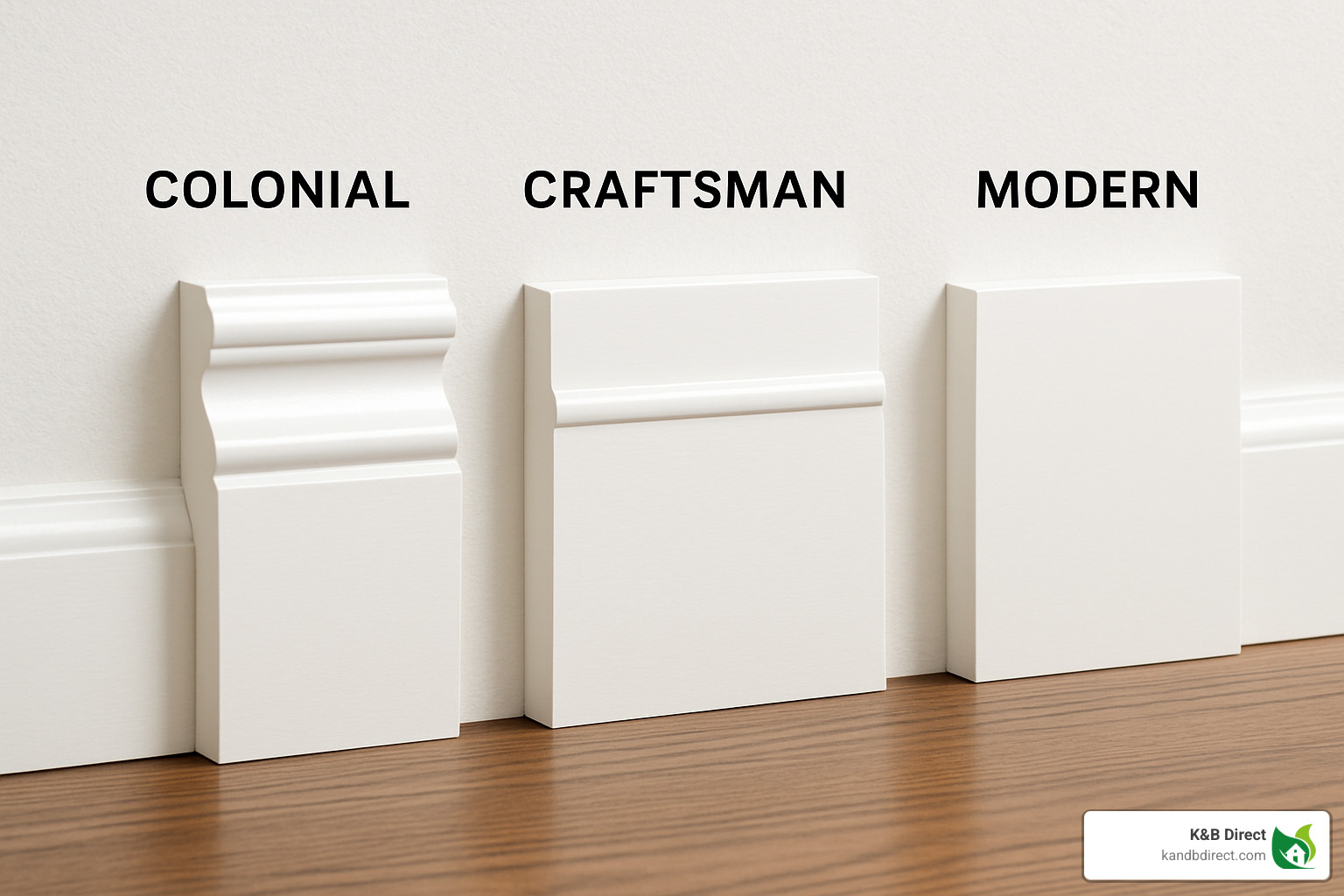
Walking into a home with the right baseboards feels instantly “right” – even if you can’t put your finger on why. The colonial or traditional profile, with its graceful curved top edge and sometimes decorative ridges, brings timeless elegance to traditional homes. At 3-1/4″ to 5-1/4″ in height, these profiles whisper rather than shout their presence.
If you love the honest, straightforward appeal of Craftsman or Prairie-style homes, the Craftsman profile is your perfect match. With simple, straight lines and minimal ornamentation, these baseboards (typically 5-1/4″ to 7-1/4″ tall) honor the handcrafted aesthetic that defined this architectural movement.
For those who accept contemporary design, modern flat baseboards offer clean, rectangular shapes without fussy details. These sleek profiles range from 3″ to 8″ in height and create a perfect backdrop for minimalist and mid-century modern interiors. The beauty is in their simplicity.
Want to make a statement? Sculpted baseboards incorporate multiple curves, steps, and decorative elements for a more formal appearance. Standing 5-1/2″ or taller, these eye-catching profiles add architectural weight to Victorian and Georgian homes, grounding rooms with their substantial presence.
The humble ranch profile, with its slight curve at the top, feels right at home in mid-century ranch houses. At a modest 2-1/2″ to 3-1/2″ in height, these baseboards offer subtle definition without competing with other design elements.
For homeowners who love to customize, K&B Direct offers decorative options like our Base Cap GM400, which can be added to simpler baseboards to create a more layered, custom look without starting from scratch.
Companion Trim Pieces
The perfect baseboard installation often includes companion pieces that might seem small but make a huge difference in the finished look. Shoe molding acts like the perfect finishing touch, covering any tiny gaps between your baseboard and floor. This small, quarter-round or slightly squared piece (typically 1/2″ to 3/4″ in height) is especially valuable with hard flooring, where expansion and contraction can create seasonal gaps.
Quarter round molding, with its perfect quarter-circle profile, serves a similar purpose but with a distinctly different look. At 1/2″ to 3/4″ in height, it’s particularly effective when you need a bit more coverage between floor and baseboard.
Adding a base cap to a simple baseboard instantly lifts its appearance. This additional decorative piece installed at the top of your baseboard adds visual interest and can transform a basic board into something special. It’s like adding the perfect necklace to complete an outfit.
As one of our contractors recently told a customer, “That shoe molding isn’t just covering gaps—it’s creating a gentle transition that keeps your eye moving smoothly around the room.” These small details make the difference between an amateur-looking installation and one that feels professionally finished.
Baseboard Trim Size Calculator
Choosing the right height for your baseboard trim isn’t just about personal preference—it’s about respecting the proportions of your space. Your ceiling height offers the perfect starting point for making this decision.
In rooms with standard 8-foot ceilings, baseboards between 3-1/4″ and 5-1/4″ tall (and 5/8″ to 3/4″ thick) create a balanced look. As your ceilings grow taller, your baseboards should follow suit. For 9-foot ceilings, consider 4-1/4″ to 5-1/2″ baseboards, while soaring 10+ foot ceilings call for substantial 5-1/2″ to 7-1/4″ (or taller) baseboards with 3/4″ to 1″ thickness.
The traditional design wisdom suggests your baseboard height should measure roughly 1/2″ to 3/4″ for each foot of ceiling height. This proportional approach ensures your trim looks naturally at home in your space—neither too wimpy in grand rooms nor overpowering in cozy spaces.
Thickness matters too. While most standard baseboards range from 5/8″ to 1″ thick, the difference in visual impact is significant. Thicker baseboards (3/4″ to 1″) create a more substantial, premium appearance that anchors the room, while thinner options (5/8″) offer a more delicate profile that works well in smaller spaces.
I’ve noticed that many of our customers at K&B Direct are going bigger these days. As one homeowner recently told me after installing 7″ baseboards in her standard-height living room, “Breaking the rules gave my ordinary space extraordinary character!” Sometimes making a statement with taller-than-recommended baseboards creates exactly the dramatic architectural presence you’re looking for.
Picking the Perfect Color & Sheen
The finish you choose for your baseboard trim ties everything together, creating either subtle harmony or striking contrast in your space.
Classic white remains the most popular choice for a reason—it’s timeless, clean, and works with literally any wall color. Benjamin Moore’s “White Dove” and Sherwin-Williams “Pure White” are perennial favorites in our customers’ homes, offering soft whites that don’t feel stark or clinical.
For a more contemporary, seamless look, many designers now recommend matching your walls. This approach minimizes visual transitions and can make smaller spaces feel larger and more cohesive. I’ve seen this technique work wonders in apartments where the continuous color creates an expansive feeling.
Feeling bold? Contrasting colors can transform ordinary baseboards into a design feature. Black baseboards against white walls create a striking modern statement (perfect for industrial lofts), while deep navy or forest green baseboards add unexpected sophistication to neutral walls. One customer painted her baseboards the same rich burgundy as her dining room ceiling, creating a beautiful “frame” for the space.
The warmth of natural wood baseboards brings irreplaceable character to craftsman, rustic, and traditional homes. When stained to complement hardwood floors or exposed beams, these baseboards create a sense of authentic craftsmanship that painted options can’t match.
For those who dread painting trim (and who doesn’t?), pre-finished options eliminate the need for tedious on-site painting. These factory-finished baseboards provide consistent color and remarkable durability right out of the box.
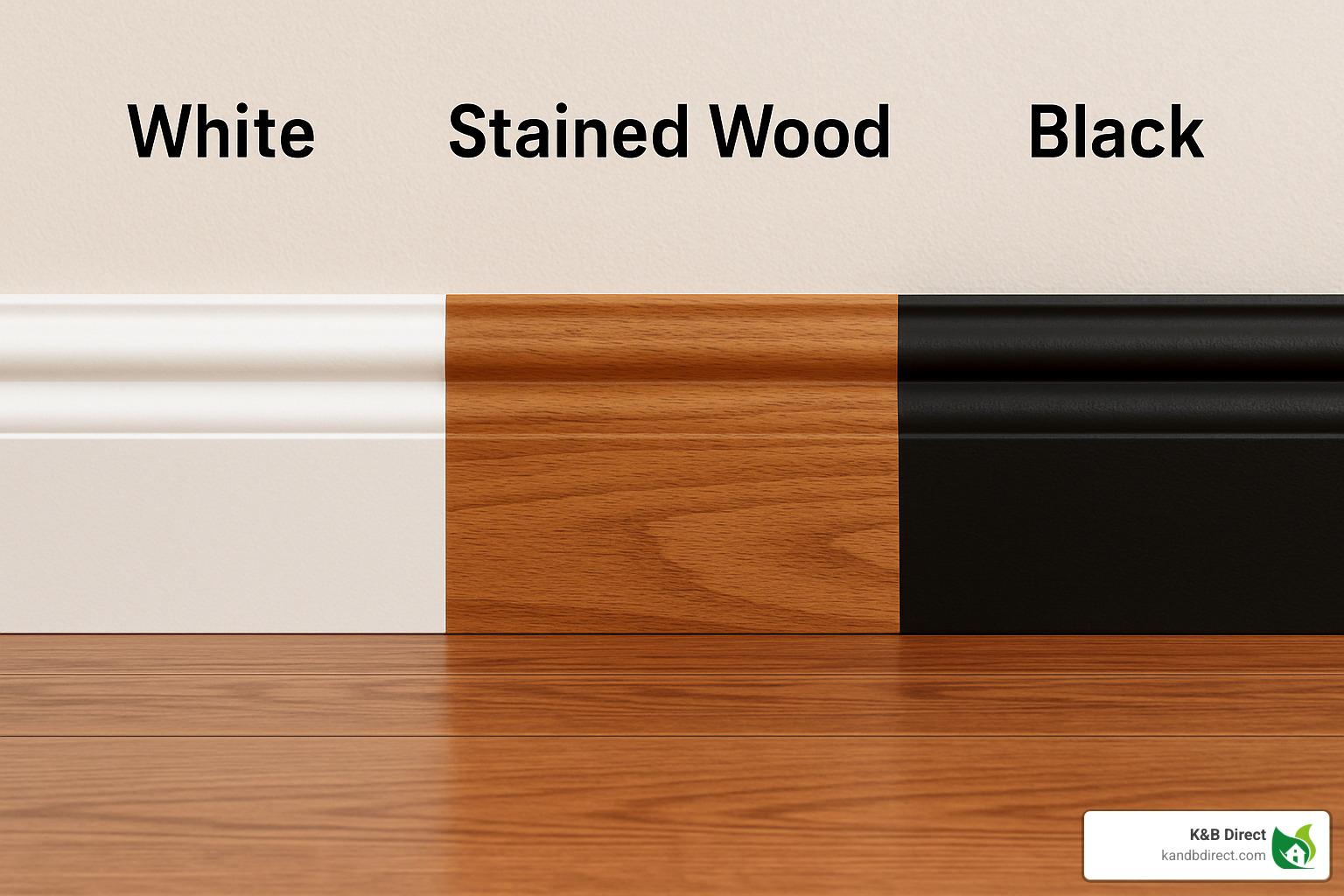
When it comes to sheen, semi-gloss has traditionally reigned supreme for baseboard trim because it stands up to cleaning and provides a subtle highlight. However, I’ve noticed more of our customers choosing satin or even matte finishes for a more subdued, contemporary look. Whatever sheen you choose, aim for at least one step higher than your wall finish—this subtle differentiation helps your baseboards stand out just enough to define the space without calling too much attention to themselves.
Installation, Maintenance & Repair
Let’s face it – even the most beautiful baseboard trim won’t look good if it’s poorly installed. Whether you’re a weekend warrior tackling your first trim project or hiring professionals, understanding the basics will help ensure your baseboards look fantastic for years to come.
Baseboard Trim Installation Checklist
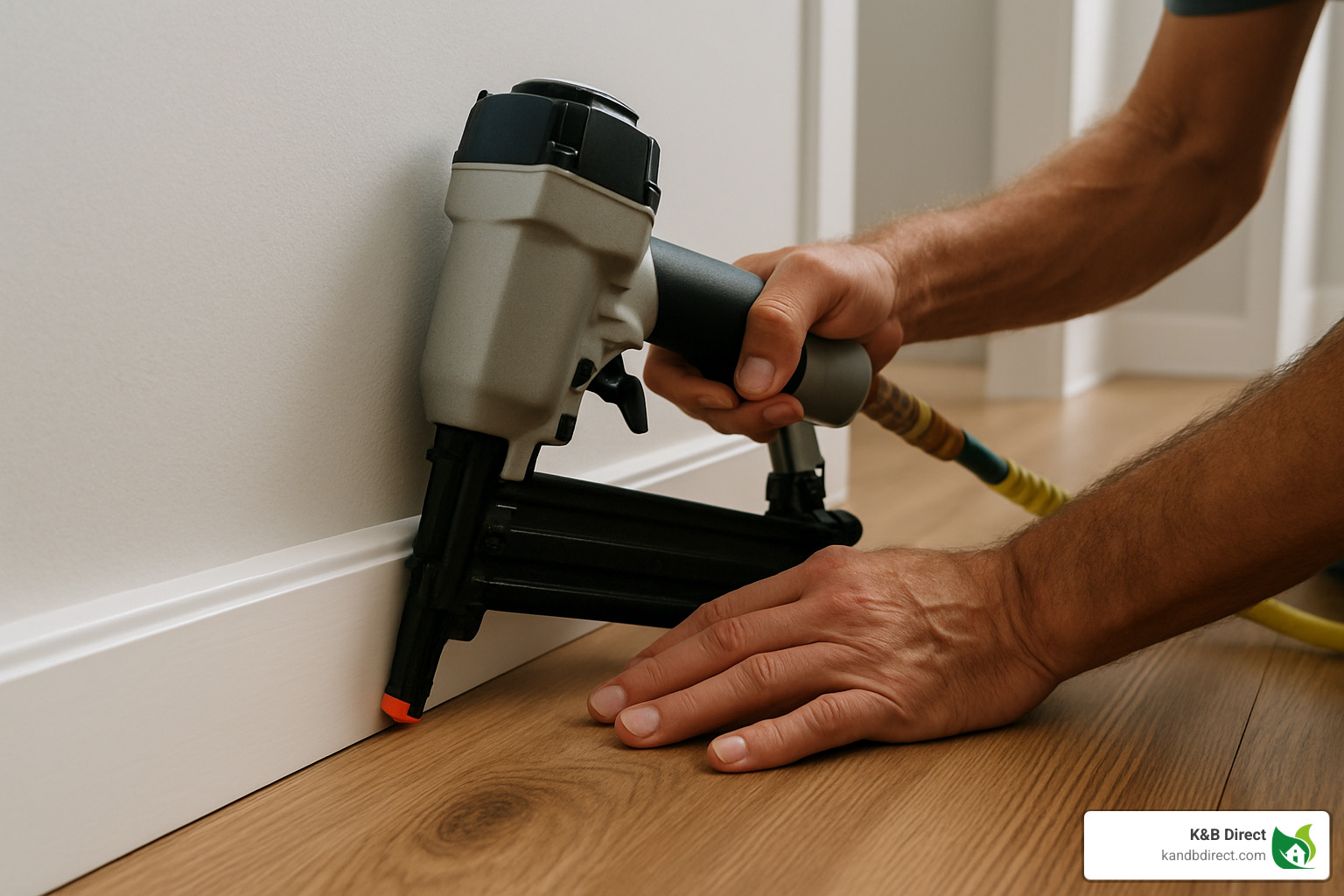
Before you make that first cut, gather everything you’ll need. A proper installation starts with preparation and the right tools. You’ll want a miter saw (or at minimum a miter box with backsaw), coping saw, nail gun, tape measure, stud finder, level, wood glue, caulk, wood filler, and sandpaper. Don’t forget safety gear – your eyes and ears will thank you!
Start by removing any old baseboards and thoroughly cleaning the wall-floor junction. If you’ve just installed new flooring, give it 2-3 days to acclimate before adding trim. Many pros recommend painting or finishing your baseboards before installation – it’s much easier to touch up nail holes later than to paint perfectly along floors and walls.
When measuring, follow the advice of veteran carpenter Gary Katz: “Measure to the nearest 1/32 inch and adjust for spring-in on long pieces or slip-in on short pieces.” This means slightly oversizing longer pieces so they’ll spring into place, while undersizing tiny pieces so they’ll slip in without forcing. Work your way around the room in a counterclockwise direction, keeping a detailed cut list as you go.
Corners can make or break your project. For inside corners, you have two options: coping (cutting one piece square and shaping the adjoining piece to match the profile) or mitering (cutting both at 45° angles). Most professionals prefer coping because it accommodates out-of-square corners and prevents gaps as wood naturally expands and contracts. For outside corners, always miter at 45° angles and consider using wood glue for added strength.
During installation, position each piece firmly against both wall and floor. Nail through the thicker parts of the profile into wall studs (typically every 16 inches), using two nails per stud for taller baseboards. Outside corners need special attention – place nails within 1-2 inches of the corner from both sides for stability.
Finish by filling nail holes with wood filler, caulking the top edge where baseboard meets wall, sanding smooth, and touching up paint as needed. Take your time with these final steps – they make the difference between an amateur-looking job and professional results.
Common Pitfalls & How to Avoid Them
Even seasoned pros encounter challenges with baseboard trim installation. Here’s how to handle the most common headaches:
Those frustrating out-of-square walls can ruin perfectly cut mitered joints. Instead of fighting geometry, use a coping saw for inside corners. For severely misaligned corners, measure the actual angle with an adjustable protractor and adjust your cuts accordingly.
Uneven floors are practically a given in any home older than a week! When gaps appear between your baseboard and floor, shoe molding or quarter round comes to the rescue. For significant variations, you might need to scribe the bottom of your baseboard to follow the floor’s contours.
When walls decide to play wavy games, your baseboard trim won’t sit flush. Minor bowing can often be tamed with additional nails to pull the baseboard tight. For more rebellious walls, use a string line to identify problem areas, then either shim behind the baseboard or carefully plane material from the back.
Over time, nail pops can create annoying bumps in your once-smooth surface. Prevent this by using ring-shank nails with better holding power or combine adhesive with fewer nails for a more secure attachment.
Bathrooms, kitchens and basements love to challenge your baseboard trim with moisture issues. In these damp battlegrounds, PVC or vinyl baseboards are your best allies. If you’re committed to MDF or wood in these areas, ensure it’s properly sealed on all surfaces before installation.
Nothing spoils the look of fresh trim faster than paint drips and uneven finishes. Whenever possible, paint baseboards before installation. Use high-quality brushes designed for trim work and apply thin coats of paint for professional results.
For more detailed guidance that covers every situation you might encounter, the Guide to baseboard trim installation offers comprehensive solutions.
Maintenance and Repair
With proper care, your baseboard trim will look great for years. Regular maintenance is simple but often overlooked.
Dust accumulates on baseboards faster than almost anywhere else in your home. Give them a quick once-over with a microfiber cloth or vacuum attachment during regular cleaning. For deeper cleaning, a slightly damp cloth with mild soap works wonders – just avoid excessive moisture, especially with MDF baseboards.
When damage happens (and it will), prompt attention prevents bigger problems. Touch up paint chips as soon as you notice them. If the caulk along the top edge starts to crack or separate, a fresh bead will restore that clean line. For loose sections, a few additional nails or a touch of adhesive can tighten things up.
Sometimes, a section becomes too damaged for simple repairs. Don’t panic! Carefully remove the damaged piece using a utility knife to cut through the caulk and a pry bar to gently pull the baseboard away from the wall. Take the damaged piece to your local home center to match the profile, then cut a replacement to the exact length. Install following the same techniques used in the original installation, and finish to match your existing baseboards.
As noted in Gary Katz’s advanced techniques guide, “Baseboard is the ideal workpiece for learning all basic trim joints because it contains all the fundamental elements of finish-trim carpentry.” Mastering these skills will serve you well in countless home improvement projects to come.
Trends, Tips & Takeaways
The world of baseboard trim is constantly evolving, with fresh ideas breathing new life into this traditional home element. As I’ve worked with homeowners across Chicago, I’ve noticed several exciting trends that might inspire your next project.
Tall is definitely having a moment right now. Oversized baseboards (7″ and taller) are making bold statements in modern homes, especially in spaces with open floor plans and higher ceilings. These substantial baseboards ground the room and create a sense of architectural significance that standard-sized trim simply can’t match.
I’m also seeing a lot of creative mixing and matching. Rather than selecting a single profile, homeowners are combining different trim elements to create truly custom looks. For instance, pairing a simple flat baseboard with a decorative cap moulding creates a unique, layered effect that looks custom-built but doesn’t break the bank.
For those who really want to make a statement, ultra-tall baseboards reaching 9-12″ are making a comeback. These dramatic proportions harken back to historic homes but often feature cleaner, more contemporary profiles. Our Base 7500 G714 is perfect if you’re drawn to this bold approach – it provides that substantial presence without feeling stuffy or overly ornate.
On the opposite end of the spectrum, minimalist design continues to influence baseboard trim choices. Simple rectangular baseboards with no profile at all are increasingly popular in modern and contemporary homes. These clean lines complement minimalist aesthetics beautifully while still providing all the practical benefits of traditional baseboards.
While white remains the go-to color choice, I’ve helped many homeowners step outside the box with bold color choices. Black, navy, and other deep colors create dramatic contrasts with walls and add unexpected visual interest. One client recently painted all her baseboards in a deep charcoal that perfectly complemented her light gray walls – the effect was subtle but incredibly sophisticated.
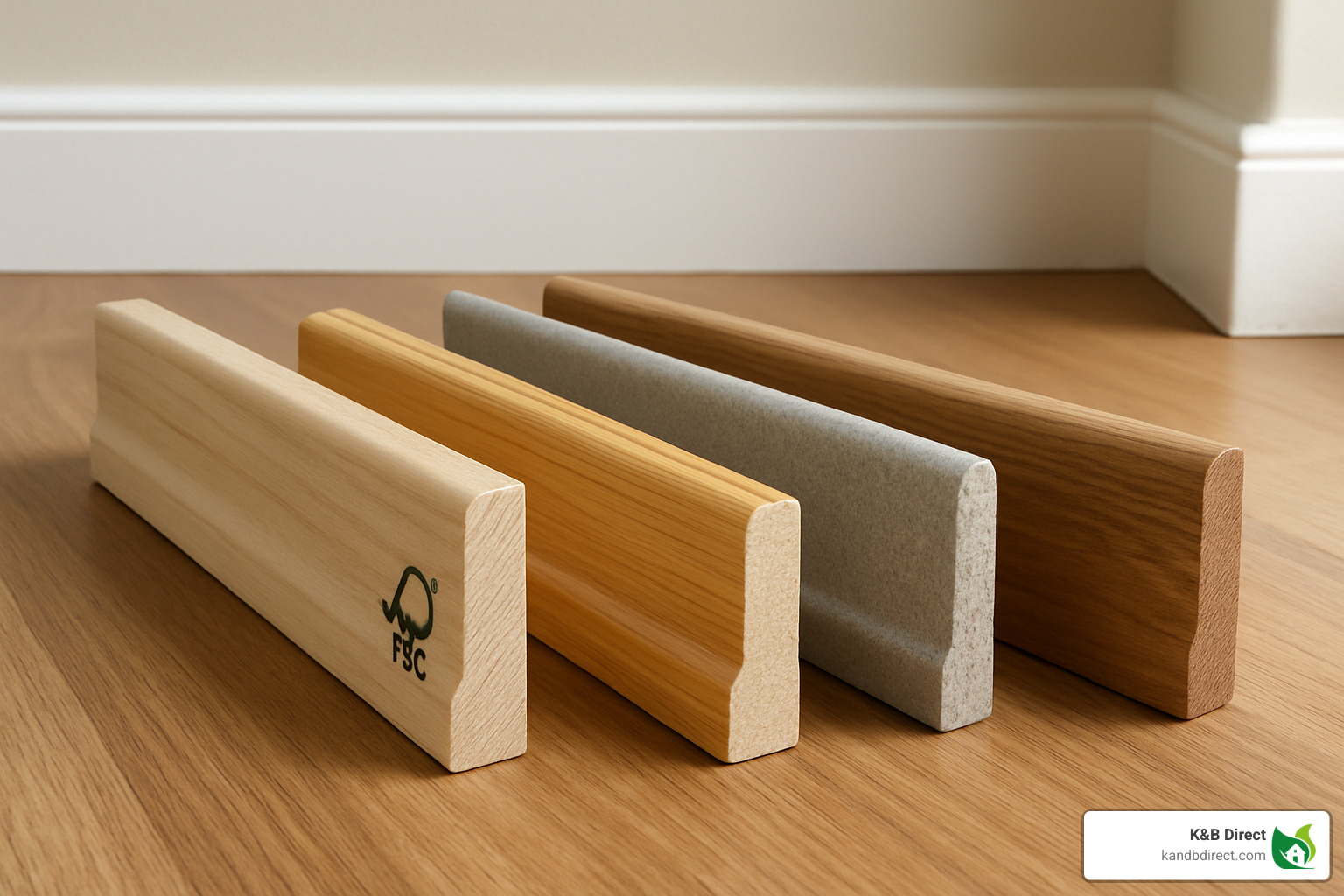
Sustainability matters more than ever, and baseboard trim is no exception. Eco-friendly options like FSC-certified woods, bamboo, and recycled composite materials are gaining popularity as environmental consciousness influences more home design decisions.
Future-Ready Baseboard Trim Ideas
The future of baseboard trim looks exciting, with innovations that merge function and technology in ways we’re just beginning to explore.
Have you seen baseboards with built-in LED lighting channels? These clever designs incorporate space for LED strip lighting, creating a subtle glow along the floor line. It’s not just beautiful – it’s practical too, especially for navigating hallways and stairs at night without turning on overhead lights.
As our homes become more connected, we’re starting to see baseboards designed with removable sections for cable management. These practical solutions let you hide unsightly cords while maintaining easy access when you need to make changes or additions to your home technology setup.
Materials science is advancing too, with more sustainable versions of PVC trim made from recycled content hitting the market. These options offer all the durability and moisture resistance of traditional PVC but with a significantly smaller environmental footprint – perfect for eco-conscious homeowners who don’t want to sacrifice performance.
The smart home revolution might soon extend to our baseboards as well. Imagine trim that incorporates sensors for home automation systems, detecting movement, temperature variations, or even water leaks. While not mainstream yet, these innovations are already appearing in high-end custom builds.
One development I’m particularly excited about is magnetic attachment systems. These emerging installation methods use magnetic backing to secure baseboards without nails, allowing for easier removal when accessing utilities or making repairs. For homeowners who like to change things up or may need frequent access to what’s behind their walls, this could be a game-changer.
Conclusion & Next Steps
Baseboard trim may seem like a small detail in your home, but it truly plays an outsized role in both protection and aesthetics. The right baseboards do so much more than just fill a gap – they provide that finished, polished look that makes a room feel complete, protect your walls from daily abuse, and create visual framing that improves your overall design.
When selecting baseboards for your Chicago home, remember to consider how they’ll fit with your home’s architectural style, whether that’s a classic bungalow in Schiller Park or a sleek downtown condo. Think about your room proportions and ceiling height – taller ceilings generally call for taller baseboards to maintain visual balance. Don’t forget practical concerns like moisture exposure in bathrooms and kitchens, and of course, your budget for both materials and installation.
At K&B Direct, we’re passionate about helping homeowners find the perfect trim solutions for their unique spaces. We understand that every project is different, and we take pride in offering options that work with both your vision and your budget.
Ready to transform your space with new baseboard trim? I invite you to browse our complete selection of mouldings and millwork or visit our showrooms in Schiller Park or Chicago. There’s nothing like seeing and touching samples in person to help you make the right choice for your home.
In my years working with homeowners, I’ve found that it’s often the smallest details that make the biggest impact in design. Your baseboards may not be the first thing visitors comment on, but they contribute significantly to that overall feeling of quality and completeness that makes a house feel like a thoughtfully designed home.