
Why Window Frame Moulding Transforms Your Home’s Character
Window frame moulding is the decorative trim that surrounds your windows, turning basic openings into polished architectural features. Whether you’re renovating your kitchen, updating your bathroom, or giving your entire home a fresh look, the right moulding can make all the difference.
Quick Guide to Window Frame Moulding:
- Casing – The main trim piece that covers gaps between the window frame and wall
- Architrave – The decorative header piece above the window
- Jambs – The vertical and horizontal frame pieces that support the window
- Sill & Stool – The bottom horizontal pieces (sill supports, stool is visible)
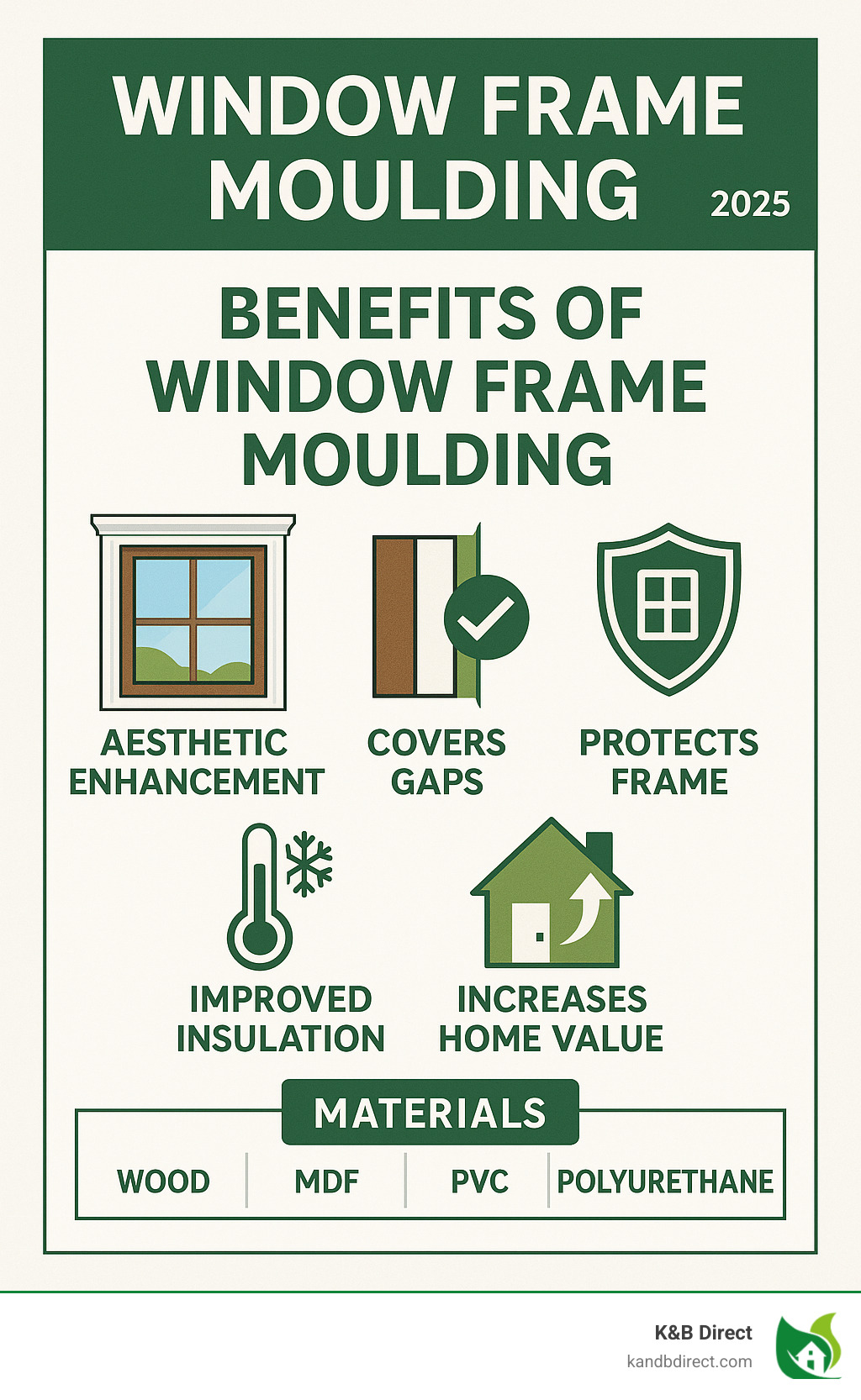
- Materials – Wood, MDF, PVC, and polyurethane options available
- Benefits – Covers gaps, protects frames, improves insulation, adds style
As research from home improvement retailers shows, doors and windows are often noticed first when walking into a home, and quality moulding transforms these functional elements into beautiful focal points. With over 783 different door and window moulding products available in today’s market, homeowners have endless options to match their personal style.
The right window frame moulding doesn’t just look good – it serves important practical functions too. It covers unsightly gaps between your window frame and drywall, protects the window structure from moisture and damage, and can even improve your home’s energy efficiency by creating better seals around openings.
About the Author: I’m Eryk Piatkowski, Owner of K&B Direct, and I’ve spent over ten years helping homeowners select quality window frame moulding and other architectural elements that transform houses into dream homes. My experience has shown me that the right moulding choices can dramatically lift a space while staying within budget, which is why I’m passionate about sharing this knowledge with fellow renovators.
What is Window Frame Moulding? The Anatomy of a Window
Think of window frame moulding as the finishing touch that transforms a basic window opening into a polished architectural feature. Like a picture frame for a photograph, these carefully crafted components work together to create something special in your home.
Understanding each piece helps you appreciate why quality moulding makes such a dramatic difference. Let’s walk through the essential parts that create a finished, professional look.
The Core Components Explained
Every beautiful window starts with understanding its key parts. Each component serves a practical purpose and adds to the overall aesthetic appeal.
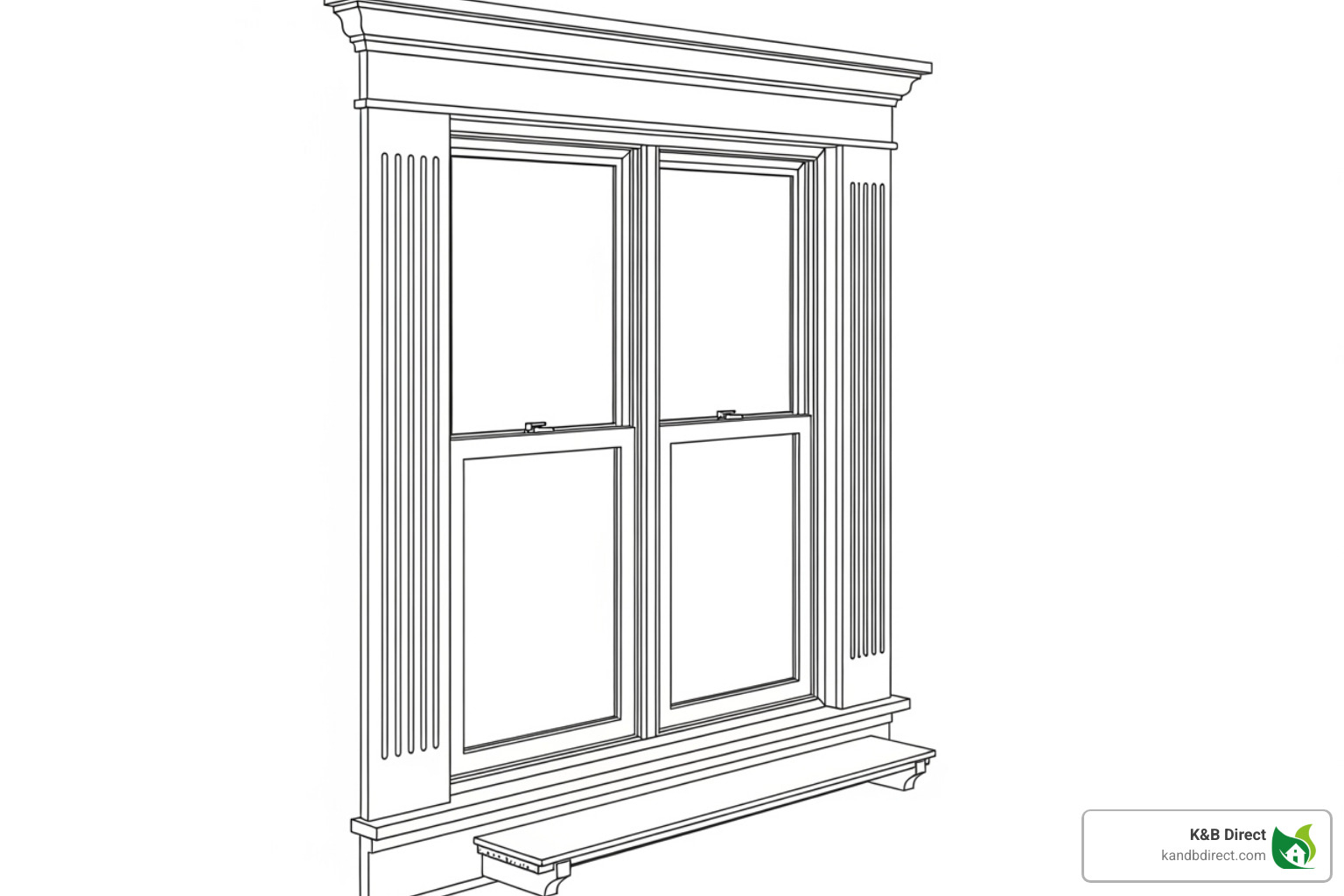
The window casing is the decorative trim you notice first. It surrounds the window opening, covering unsightly gaps between the window frame and your drywall. Typically thicker than baseboard moulding, it acts like a picture frame for your window, tying the room together and giving your windows a finished, intentional look.
Above your window, you might find an architrave (sometimes called a header or pediment). This decorative piece adds elegance and visual weight to the top of your window. Like a crown, it draws the eye upward, can make ceilings feel taller, and helps create cleaner lines by reducing visible miter joints.
The jambs are essential structural pieces. These vertical side jambs and horizontal head jamb form the actual window frame where your window sash sits. Once the casing is installed, the jambs are mostly hidden but provide the solid foundation for everything else.
Now, let’s clarify the window sill versus the window stool, as they are often confused. The window sill is the structural part built into your wall that slopes outward to shed water. You usually can’t see it once everything’s installed.
The window stool is what most people call the “window sill”—it’s the flat surface inside your home where you might place plants. This piece extends into the room, creating that classic window ledge look. We carry beautiful options like our Stool 7POPWC that combine durability with timeless style.
Beneath the stool, you’ll often find an apron, a piece of decorative trim that provides a finished look and visual support.
When all these pieces come together, they transform a simple opening into a beautiful architectural feature that adds character and value to your home.
Casing vs. Trim vs. Moulding: Clearing Up the Confusion
Let’s clarify these terms, which are often used interchangeably.
Moulding is the umbrella term for all decorative strips in our homes, including baseboards, crown moulding, chair rails, or window trim. It’s any shaped piece of material that adds beauty or covers joints.
Trim is essentially the same as moulding, though it’s often used when talking about finishing pieces around windows, doors, or where walls meet floors and ceilings. “Window trim” is another way of saying “window moulding.”
Casing is more specific: it’s the type of moulding that frames windows and doors. Its main job is covering the gap between the window jamb and the wall. So, all casing is moulding, but not all moulding is casing.
The bottom line is that window frame moulding refers to all these components working together. Don’t worry about using the “right” term—what matters is choosing quality pieces that make your home look amazing.
If you’d like to explore your options, check out more info about our window trim options to see what might work best for your project.
Key Benefits: More Than Just a Pretty Frame
When you invest in quality window frame moulding, you’re getting so much more than just a decorative upgrade. It looks fantastic, but the real magic happens in all the practical ways it improves your home’s comfort, protection, and value.
Aesthetic improvement is probably what draws most homeowners to moulding in the first place, and for good reason! The right profiles can transform your windows from basic builder-grade openings into stunning architectural character features that make your whole room feel more custom and high-end. Whether you’re going for cozy farmhouse vibes or sleek modern lines, moulding creates that polished, intentional look that ties everything together beautifully.
But here’s where it gets really interesting – protecting the window frame is one of those benefits you might not think about until you need it. Your windows take a beating from daily life: kids running around, furniture being moved, even just regular cleaning. Window frame moulding acts like a shield, absorbing those bumps and scratches that would otherwise damage your actual window structure. It’s like having a bodyguard for your windows!
One of my favorite things about quality moulding is how it magically makes problems disappear. When windows get installed, there are almost always those annoying gaps and rough edges where the frame meets your wall. Concealing gaps and imperfections is where moulding really shines – it covers up all those little flaws and creates clean, professional-looking lines that make your whole room feel more finished.
Here’s something that might surprise you: improved insulation and energy conservation can actually save you money on your utility bills. When window frame moulding is properly installed, it helps create better seals around your windows, reducing those sneaky drafts that make your heating and cooling systems work overtime. Your home stays more comfortable, and your energy bills stay lower – it’s a win-win situation.
If you’re considering energy-efficient upgrades, you might want to learn more about energy efficiency grants that could help offset the cost of improvements like quality window moulding.
The bottom line? Window frame moulding is one of those smart investments that keeps giving back – through better looks, better protection, and better performance for years to come.
Choosing the Perfect Window Frame Moulding for Your Home
Selecting the right window frame moulding is like choosing the perfect outfit for your home—it needs to look great and function beautifully. With many gorgeous options available, you’re sure to find something that makes your windows shine.
The key is balancing personal style with practical needs. Your preference for modern or traditional lines, moisture concerns, and budget will guide you toward the perfect choice.
Match Your Home’s Style: From Modern to Traditional
Your window frame moulding should feel like it belongs in your home, not an afterthought. Think of it as the element that makes your windows the star of the show.
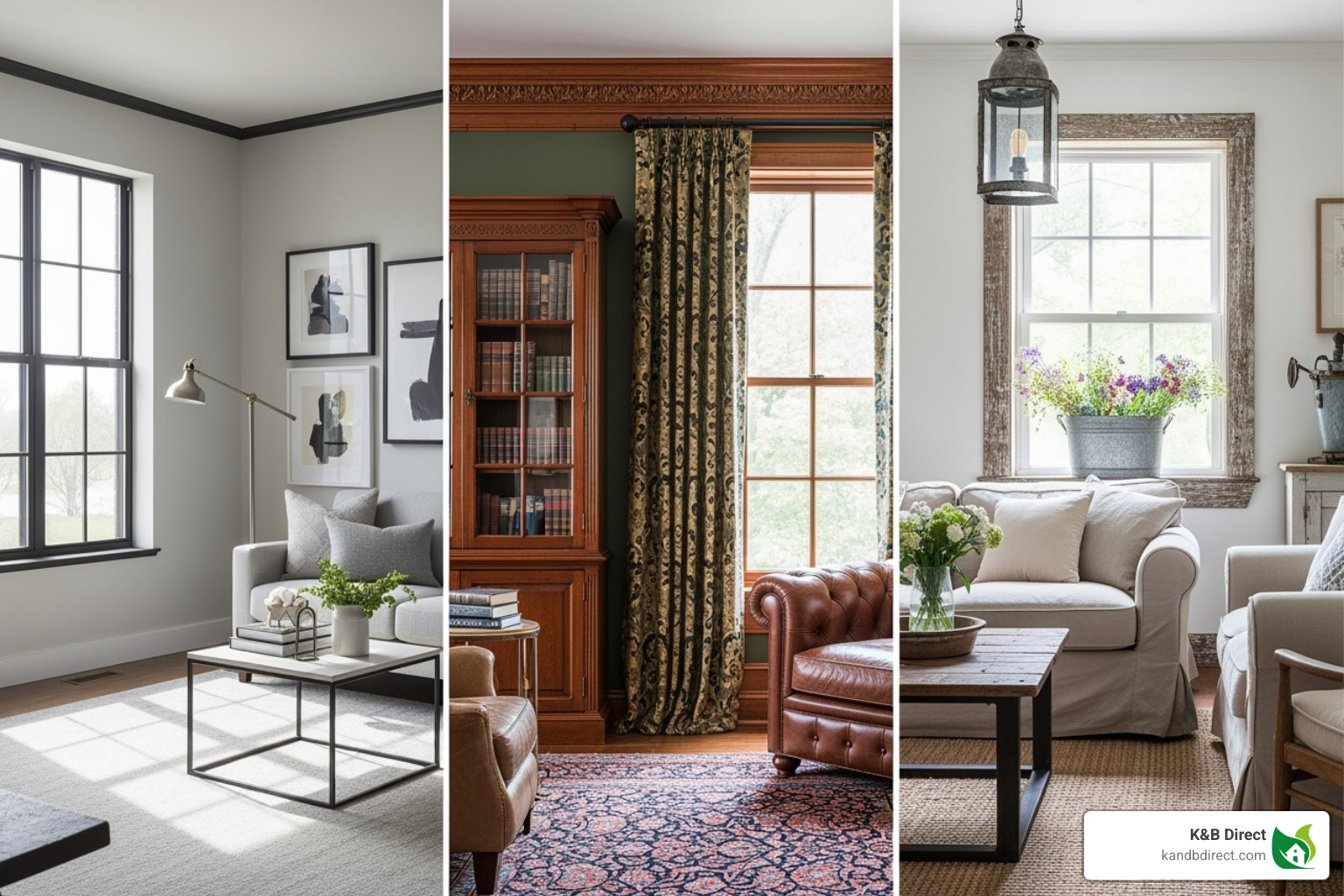
Modern casing is about the “less is more” philosophy, featuring clean lines, sharp angles, and minimal fuss. You’ll see simple stepped designs, eased edges, or flat stock for a sleek, contemporary feel. Modern casing helps maintain an airy, uncluttered vibe in open-concept homes.
Conversely, traditional casing accepts classic beauty with more intricate profiles and decorative elements. These styles draw from historical periods, adding timeless elegance to any room. The craftsmanship in these detailed profiles is deeply satisfying.
Transitional styles offer the best of both worlds, blending modern simplicity with traditional warmth, perfect for a classic yet informal feel.
Here are some popular styles: Colonial features a classic, often symmetrical profile with gentle curves, versatile for almost any home. Craftsman emphasizes sturdy, honest lines with flat faces and subtle steps. Victorian is highly ornate with complex curves and fluting for historical grandeur. Contemporary is minimalist and streamlined with clean, straight lines.
Farmhouse style combines traditional and rustic elements with simpler, bolder profiles for a cozy, lived-in feeling. Baroque is dramatic, with exaggerated curves and intricate details. Shaker style is clean and unadorned, reflecting a focus on utility and modesty.
Choosing window frame moulding is your chance to add personality and make your windows truly special.
A Guide to Common Materials for your window frame moulding
The material you choose affects budget and longevity, so it’s important to understand your options.
| Material | Cost | Durability | Paintability | Moisture Resistance | Rot/Termite Resistance |
|---|---|---|---|---|---|
| Wood | Medium-High | High | Excellent | Low | Low |
| MDF | Low | Medium-Low | Excellent | Low | Low |
| Polyurethane | Medium-High | High | Excellent | High | High |
| PVC | Medium-High | High | Excellent | High | High |
Wood remains the gold standard for many due to its natural beauty and warmth. Finger-jointed pine and poplar are popular because they’re stable and take paint beautifully. The downside is that wood can be sensitive to moisture and needs protection from rot and insects.
MDF (Medium Density Fiberboard) is a budget-friendly option. Made from wood fibers and resin, it has a smooth surface perfect for painting and won’t warp or crack with humidity changes. However, it must be kept away from water. Our Casing 356 MDF offers a crisp finish that looks fantastic when painted.
Polyurethane is a superhero of moulding materials: lightweight, durable, and resistant to moisture, rot, and insects. It comes pre-primed and holds paint exceptionally well, making it perfect for bathrooms and kitchens.
PVC offers similar benefits to polyurethane. It’s impervious to moisture and pests, durable, and easy to maintain, making it popular for both interior and exterior applications.
When deciding, consider the window’s location. A bathroom might benefit from PVC or polyurethane, while a living room could showcase beautiful wood. At K&B Direct, we offer top-quality products in all these materials at the lowest prices, so you don’t have to compromise.
Finishes and Features for your window frame moulding
After choosing a style and material, the finish determines the pre-installation work and final look.
Primed finish mouldings come with a base coat applied, ready for your final paint color. This is a huge time-saver and ensures better paint adhesion. Our Casing 444 and Casing 472 are excellent examples of quality primed options.
Unfinished wood offers maximum flexibility. You can paint it any color or stain it to showcase the natural wood grain, perfect for matching existing woodwork.
Prefinished moulding saves time as it comes painted or stained, but you are limited to available colors.
Most window frame moulding materials are highly paintable. Wood and MDF are excellent for painting, while solid wood also takes stain beautifully. Polyurethane and PVC also paint well, so you don’t sacrifice style for durability.
Consider special features for your situation. Moisture resistance is crucial for bathrooms and kitchens. Durability matters in high-traffic areas. Rot and termite resistance is important for certain environments and essential for exterior use.
Our extensive selection includes options like Casing 1500, ensuring you’ll find the perfect combination of style, material, and finish to bring your dream home to life.
Interior vs. Exterior Moulding Applications
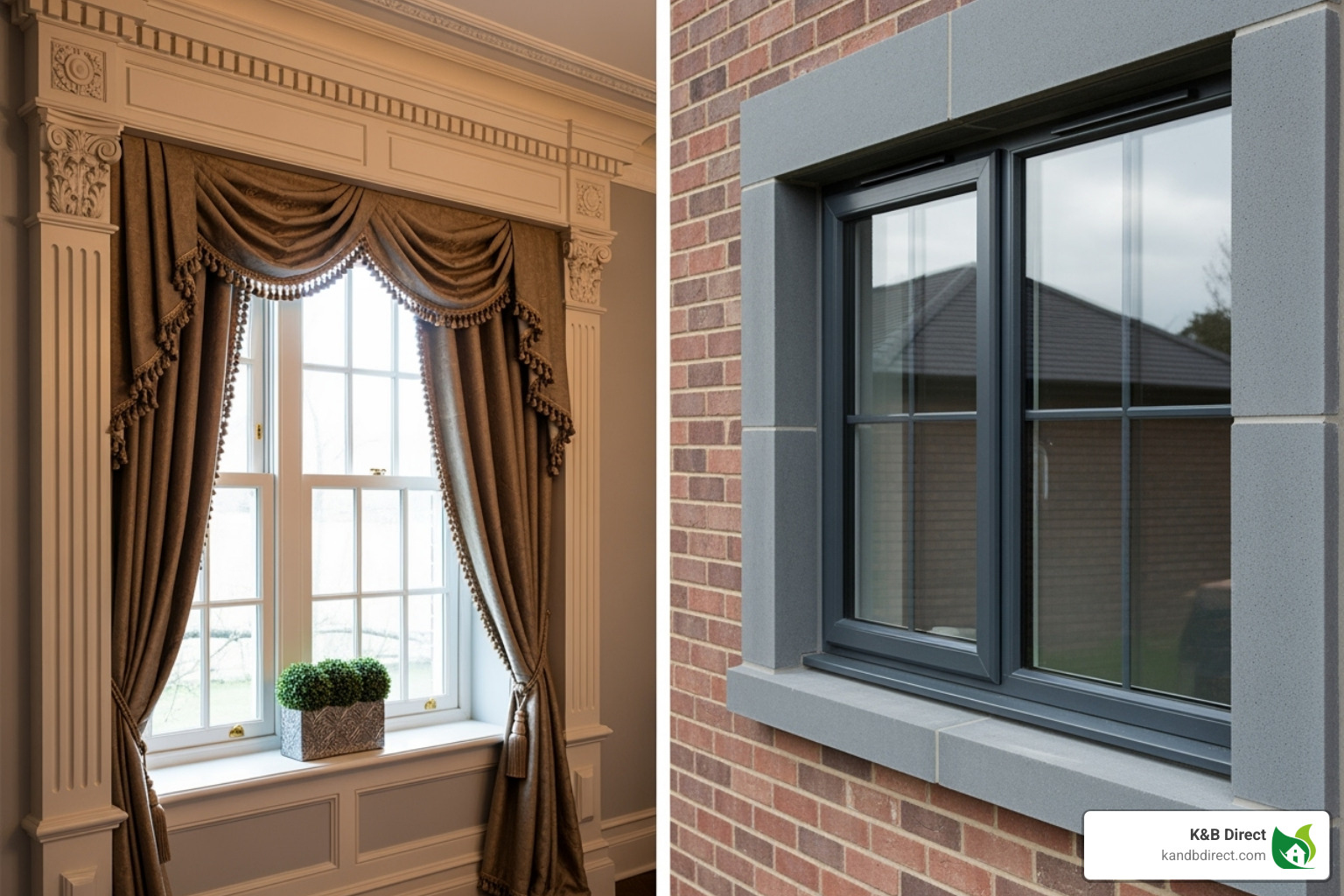
While window frame moulding beautifully transforms your interior spaces, don’t overlook its powerful impact on your home’s exterior. The same principles that make interior moulding so appealing – adding character, covering gaps, and creating finished looks – apply outside your home too. However, choosing exterior moulding requires some different thinking due to Mother Nature’s challenges.
Material Considerations for Outdoors
When you step outside, your window frame moulding faces a whole different world of challenges. Rain, snow, blazing sun, and temperature swings that would make your head spin – exterior moulding needs to be tough enough to handle it all while still looking great year after year.
PVC moulding is like the superhero of exterior trim materials. It laughs in the face of water, never rots or warps, and bugs simply can’t touch it. Paint sticks beautifully to PVC, and once it’s up, you can pretty much forget about it. No annual touch-ups, no worrying about winter damage – just lasting beauty that keeps your home looking sharp.
Polyurethane runs a close second in the durability race. It offers similar weather resistance to PVC while being lightweight and easy to work with. Many homeowners love polyurethane because it can perfectly mimic the look of traditional wood grain without any of the maintenance headaches that come with real wood.
If your heart is set on wood treatment for that authentic natural look, you’ll need to be strategic about it. Cedar and redwood naturally resist rot, making them smart choices for exterior use. Pressure-treated lumber is another option, though it requires high-quality exterior primers and paints to create a protective barrier against moisture and UV damage. The trade-off? Wood looks absolutely stunning but demands regular maintenance to keep performing well.
Weather resistance and UV stability aren’t just fancy marketing terms – they’re essential features for exterior moulding. The sun’s UV rays can break down materials over time, causing fading, cracking, or that unsightly yellowing you sometimes see on older trim. PVC and polyurethane materials are engineered to resist these effects, maintaining their appearance and structural integrity through countless seasons.
Curb appeal might be the most rewarding benefit of exterior window frame moulding. It’s amazing how adding quality trim around your windows can transform your home’s entire facade. Neighbors will notice, visitors will compliment you, and you’ll feel proud every time you pull into your driveway. Well-trimmed windows create architectural definition that makes even modest homes look custom and expensive.
The best part? You don’t have to choose between interior and exterior applications. We offer mouldings that work beautifully in both environments, so you can create a cohesive look that flows seamlessly from inside your home to outside, tying your entire property together with consistent style and quality craftsmanship.
Frequently Asked Questions about Window Moulding
Over the years, I’ve noticed that certain questions about window frame moulding come up again and again. Let me share the answers to the most common ones – these insights will help you make confident decisions for your home improvement project.
What is the difference between a window sill and a window stool?
This question comes up constantly, and I completely understand the confusion! The terms get mixed up all the time, even by professionals.
Here’s the simple breakdown: The window sill is the structural part you don’t actually see once everything’s finished. It’s built right into the wall opening and slopes slightly outward to direct water away from your window. Think of it as the hidden foundation that does the heavy lifting.
The window stool, on the other hand, is the visible horizontal piece that extends into your room – the flat surface where you might place a plant or decorative items. This is what most people call the “window sill” in everyday conversation, but technically it’s the stool that’s part of your window frame moulding system.
So when you’re shopping for that beautiful interior ledge to complete your window trim, you’re actually looking for a window stool. The sill is already there, working quietly behind the scenes to support everything and keep moisture out.
Can you mix different moulding styles in the same room?
Absolutely! Mixing moulding styles can create incredible character and visual interest – when done thoughtfully. I’ve seen homeowners create stunning rooms by combining different profiles, and it’s one of my favorite design approaches.
The secret is creating unity through consistency. Paint is your best friend here – when you paint all your mouldings the same color (usually white or a soft neutral), the consistent color ties everything together beautifully. The different textures and shapes actually complement each other rather than compete.
Scale matters too. If your baseboards are substantial and bold, your window casing shouldn’t be too delicate, or it’ll look out of place. Keep the proportions balanced throughout the room.
Plinth blocks are another great tool for mixing styles. These square blocks at the bottom of door casings create clean transitions between different baseboard and casing profiles, giving you freedom to use different styles for your windows and doors.
The key is trusting your eye and creating flow. Start with one dominant style, then introduce complementary profiles that share similar proportions or design elements.
How wide should window moulding be?
There’s no magic formula for window frame moulding width, but there are some helpful guidelines that’ll steer you in the right direction.
Room scale is your starting point. In rooms with high ceilings and generous proportions, wider mouldings (around 3.5 to 4.5 inches) create that sense of grandeur and keep everything in proportion. In cozy spaces, the same wide moulding might feel overwhelming – you’d want something more like 2.5 to 3.5 inches.
Window size plays a role too. Large picture windows can handle substantial casing that would look ridiculous around a small bathroom window. The moulding should frame your window beautifully without making it look heavy or insignificant.
Ceiling height is another factor to consider. Standard 8-foot ceilings typically look best with mouldings in the 2.5 to 3.5 inch range, while 9-foot or higher ceilings can easily accommodate wider profiles.
But here’s what I tell all my customers: personal preference trumps everything. Some people love the clean, understated look of narrower casing, while others want their windows to make a bold architectural statement. Both approaches can look fantastic when executed well.
The most common widths we see range from 2.5 to 4.5 inches, which gives you plenty of options to find that perfect balance for your space.
Find the Perfect Moulding to Complete Your Vision
Throughout this guide, we’ve seen that window frame moulding is a magical home improvement element that works double duty. It not only makes your windows look gorgeous but also creates a polished, custom look while protecting your investment and helping with energy efficiency.
When you step back and look at what window frame moulding brings to your home, it’s impressive. You’re getting aesthetic improvement that transforms basic windows into architectural features, protecting your window frames from daily wear, concealing pesky gaps from installation, and boosting your home’s energy performance with better seals.
The beauty of quality materials shines through in the final result. Whether you choose the natural warmth of wood, the smooth finish of MDF, or the durability of PVC or polyurethane, investing in good materials means your moulding will look stunning and perform well for years. The design impact is immediate—visitors notice the difference, and you’ll love how it pulls your room together.
At K&B Direct, our mission is to help you achieve a dream home aesthetic without the dream home price. Finding the perfect moulding can feel overwhelming, but we’re here to help. Our team loves changing spaces and has built a reputation on combining top-quality products with unbeatable, lowest possible prices and the kind of friendly service that makes the process enjoyable.
We believe every home has potential, and sometimes the finishing touches make all the difference. Ready to see what the right window frame moulding can do for your space? Explore our full collection of Mouldings & Millwork and find how easy it is to bring your vision to life. We can’t wait to be part of your home’s change story!