
Why Interior Door Units Transform Your Home’s Look and Feel
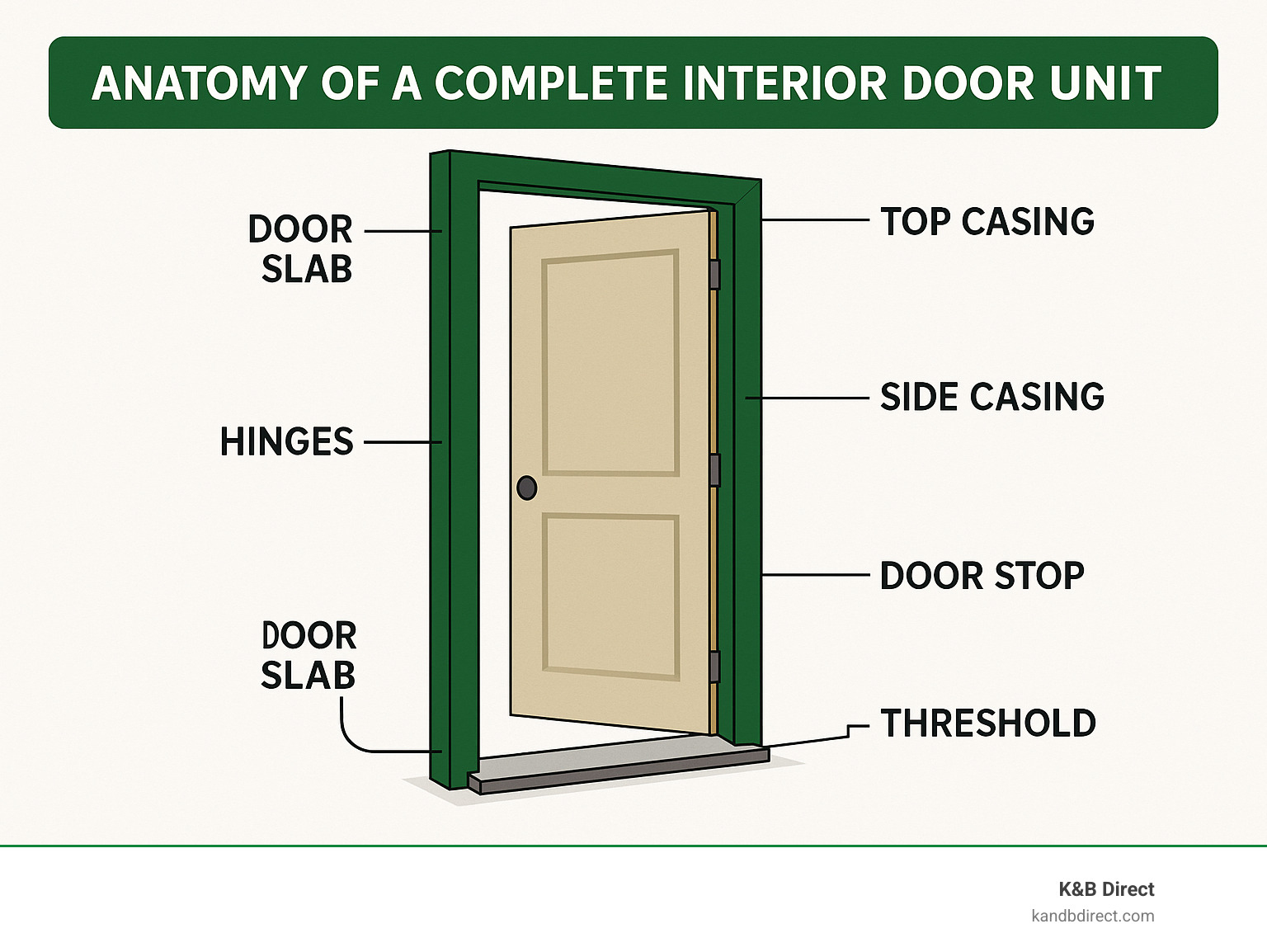
An interior door unit is a complete system including the door slab, frame (jambs), hinges, and often the casing—everything needed for a professional installation. Here’s what you need to know when shopping for interior door units:
Key Components of Interior Door Units:
- Pre-hung units – Complete with frame, hinges, and hardware pre-installed
- Door slabs – Just the door panel, requiring separate frame and hardware
- Core types – Solid core for sound control, hollow core for budget-friendly options
- Materials – Wood, MDF, composite, each with different benefits
- Popular sizes – 24″, 30″, 32″, and 36″ widths, typically 80″ height
The average house has 14 interior doors, and we believe none of them should be average. Whether you’re building new or renovating, the right interior door unit can dramatically improve your home’s aesthetics, functionality, and privacy.
Solid core doors offer superior sound reduction—perfect for bedrooms and home offices where noise control matters. Hollow core options provide a budget-friendly solution for areas where sound transmission isn’t a concern. Pre-hung units simplify installation with everything included, while slab doors offer flexibility for custom applications.
I’m Eryk Piatkowski, owner of K&B Direct, where we’ve helped homeowners select the perfect interior door unit for over ten years. Our experience shows that choosing the right door system—whether pre-hung or slab, solid or hollow core—makes all the difference in installation success and long-term satisfaction with your interior door unit investment.
Interior door unit word roundup:
Pre-Hung vs. Slab: Which Interior Door Unit is Right for You?
Choosing between a pre-hung door and a door slab might seem like a small detail, but trust me – it’s one of those decisions that can make or break your renovation experience. After helping countless homeowners through this choice at K&B Direct, I’ve seen how the right decision leads to smooth sailing, while the wrong one can turn a weekend project into a month-long headache.
Let’s start with the basics. A pre-hung interior door unit comes ready to go – the door is already mounted in its frame with hinges attached, and often includes the door stop and casing too. It’s like buying a complete meal kit versus shopping for individual ingredients. Everything’s measured, cut, and assembled at the factory.
A door slab, on the other hand, is just the door panel itself. No frame, no hinges, no pre-drilled holes. It’s the “build it yourself” option that gives you complete control but requires serious carpentry skills.
| Feature | Pre-hung Doors | Slab Doors |
|---|---|---|
| Installation Ease | Much easier – slide into opening and adjust | Complex measuring, cutting, and fitting required |
| Required Skill Level | Moderate DIY skills | Advanced carpentry experience |
| Included Components | Door, frame, hinges, often casing | Door panel only |
| Typical Cost | Higher upfront (but saves labor costs) | Lower material cost (but higher installation time) |
| Best Use Case | New construction, full replacements, DIY projects | Existing frame in good shape, custom hardware needs |
Advantages of a Pre-hung System
Here’s where pre-hung units really shine – they’re designed for ease of installation. Everything arrives perfectly aligned and ready to install. The hinges are already mortised (that’s the fancy term for the little pockets cut into the door and frame), and the door swings smoothly right out of the box.
This all-in-one solution approach means you’re not spending your Saturday afternoon trying to figure out why your door won’t close properly. The factory has already done the precision work, ensuring a consistent finish that looks professional. Plus, all the hardware is included – no last-minute trips to the hardware store because you forgot something.
Pre-hung doors are absolutely ideal for new openings where you’re starting from scratch. They’re also perfect when you’re replacing an old door and frame that’s seen better days. The time-saving aspect can’t be overstated – what might take a weekend with a slab door often becomes a few hours with a pre-hung unit.
When to Choose a Door Slab
Sometimes a slab door is exactly what you need. If your existing frame is solid, properly aligned, and matches your home’s character, why replace it? This is especially true in older homes where the original millwork has character you just can’t buy today.
Door slabs offer the most cost-effective replacement option when you’re only dealing with a damaged door panel. You’re retaining the existing frame and just swapping out the door itself. This approach also gives you complete freedom with custom hardware choices – no pre-drilled holes means you can place handles, locks, and hinges exactly where you want them.
But here’s the reality check – installing a slab door requires advanced DIY skills. You’ll need to measure precisely, cut the door to size, mortise the hinges, and bore holes for the hardware. It’s definitely doable, but it’s not a beginner project. If you’re matching historic millwork or have a unique opening size, though, a slab door might be your only option.
The bottom line? If you’re looking for the easiest path to a beautiful new door, pre-hung is usually the way to go. But if you have the skills and a specific vision, slab doors offer best flexibility.
Material Matters: Choosing the Right Core and Composition
When you’re shopping for an interior door unit, the material and core construction are just as important as the style. These choices affect how your door sounds when it closes, how long it lasts, and yes – how much you’ll spend. Think of it as choosing between a lightweight sports car and a solid SUV – each has its place depending on what you need.
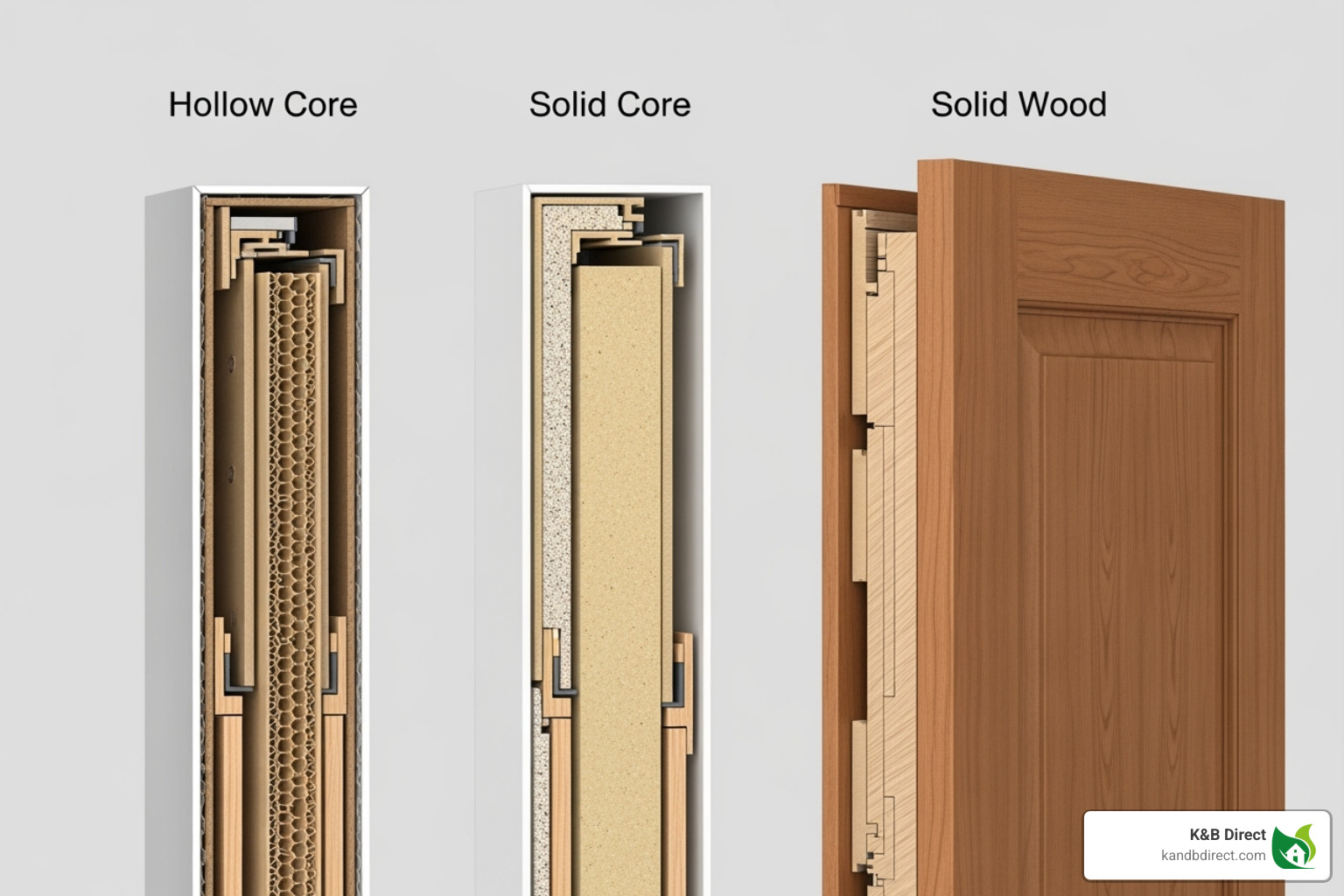
The core of your door – what’s inside between those outer faces – makes a huge difference in how it performs in your home. Room-specific needs matter too. A bedroom door has different demands than a pantry door, and understanding these differences helps you make the right choice for each space.
Solid Core vs. Hollow Core: The Great Debate
Here’s where things get interesting. The battle between solid core and hollow core doors isn’t really a battle at all – it’s about matching the right door to the right job.
Solid core doors pack some serious benefits that make them worth the extra investment in many situations. The superior soundproofing is their biggest claim to fame. If you’ve ever tried to work from home while kids are playing in the next room, you’ll appreciate what a solid core door can do. The dense interior – usually made from particleboard or engineered wood – acts like a sound barrier between rooms.
These doors also have that heavy feel that screams quality. When you close a solid core door, it feels substantial and secure. This isn’t just about perception – that extra weight comes from increased durability that helps them resist dents, dings, and the daily wear and tear that lighter doors can’t handle as well.
Hollow core doors, on the other hand, are the practical choice for many homeowners. They’re budget-friendly because they use less material – typically a honeycomb cardboard core between thin wood or composite skins. This makes them significantly more affordable when you’re outfitting multiple rooms.
Their lightweight construction is actually a feature, not a bug. If you’re doing your own installation, you’ll appreciate how easy they are to maneuver and hang. They’re perfect for low-traffic areas like closets, pantries, or spare bedrooms where sound control isn’t a priority.
The key is being honest about what each room needs. Bedrooms and home offices benefit from solid core doors, while utility areas work perfectly fine with hollow core options.
Exploring Wood, MDF, and Composite Materials
Once you’ve decided on the core, it’s time to think about what’s on the outside. The material choice affects everything from how your door looks to how much maintenance it needs down the road.
Solid wood doors bring that timeless, classic appeal that never goes out of style. We carry doors in beautiful species like Red Oak, Cherry, Hickory, and Walnut – each with its own unique grain pattern and character. These doors are stainable, which means you can highlight that gorgeous natural grain or paint them if your style changes later.
The Douglas Fir options we offer work beautifully in contemporary, craftsman, or colonial homes. Modern manufacturing techniques use engineered stiles and mortise-and-tenon joinery to keep these doors stable, even when humidity changes with the seasons.
MDF doors are the go-to choice when you want a painted finish. MDF gives you an incredibly smooth surface that takes paint like a dream – no grain to show through, no imperfections to sand out. They’re also warp-resistant, which means they’ll stay true and straight even in areas where moisture levels fluctuate.
Composite doors offer the best of both worlds – the look you want with durability that keeps maintenance low. These engineered doors blend wood fibers with resins and other materials, creating doors that resist warping, shrinking, and cracking. They come primed and ready to paint, or you can choose from prefinished options including the trending black finish that’s so popular right now.
At K&B Direct, we’ve seen how the right material choice can make or break a project. Whether you’re drawn to the natural beauty of solid wood, the paint-ready perfection of MDF, or the reliable performance of composite materials, we help you find the perfect match for your home’s style and your budget.
Finding Your Style: From Classic Panels to Modern Glass
Your interior door unit is so much more than just a way to close off a room – it’s one of the most impactful design elements in your home. The style you choose can transform how light flows through your space, how large rooms feel, and the overall architectural character of your home.
Popular Panel Designs and Finishes
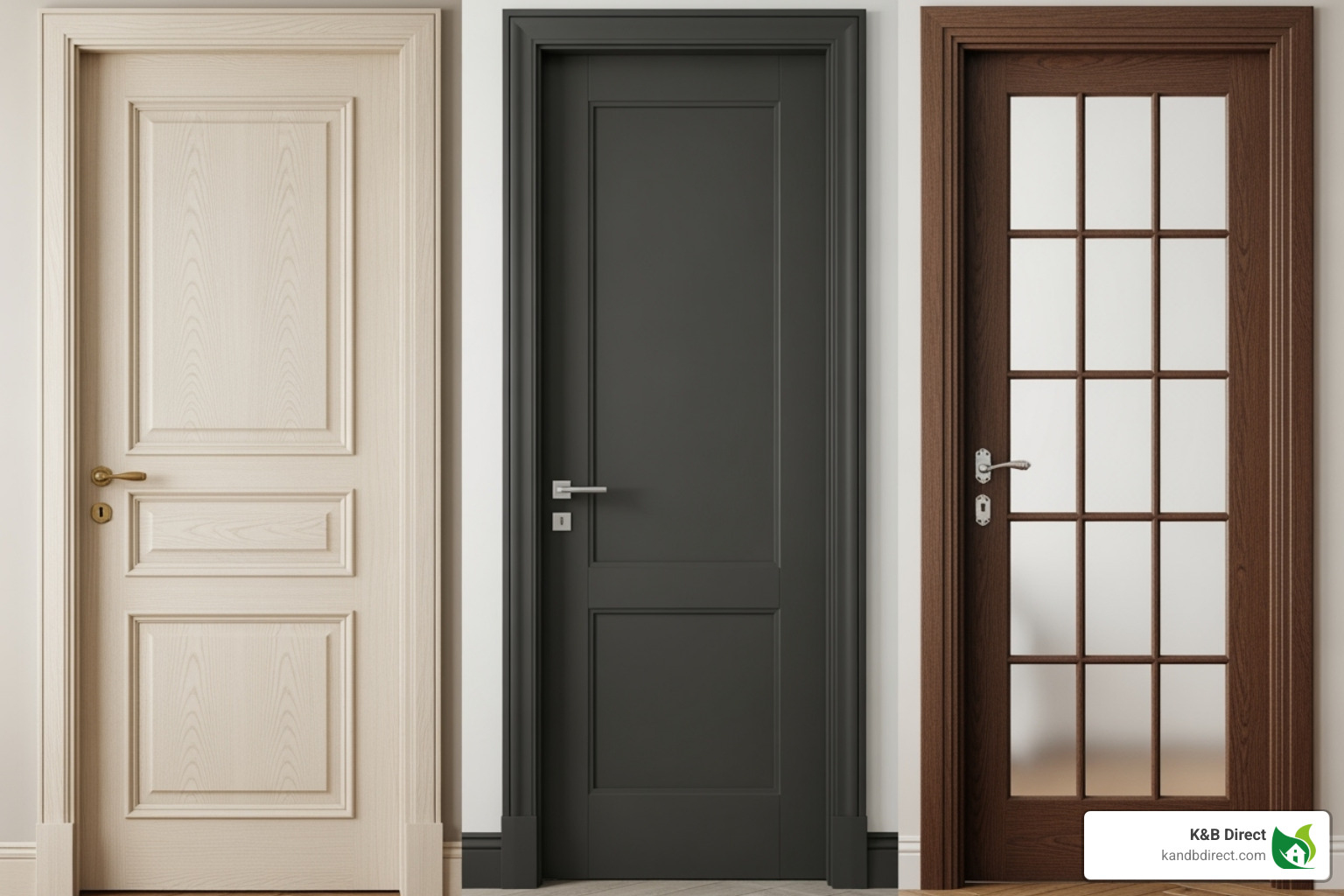
The panel design is where your interior door unit really shows its personality. Think of it as the door’s “face” – and each style has a character that works better in certain settings.
Single-panel doors are the minimalists of the door world. With a clean, uncluttered look, they’re perfect for a modern, Shaker-inspired vibe. These doors don’t compete with other design elements; they just look effortlessly stylish.
Two-panel doors hit the sweet spot between simple and traditional. They get along with almost any decor, whether you’re aiming for a craftsman look or something more contemporary.
5-panel doors are contemporary with a twist, often featuring horizontal panels that create sleek, linear lines. They’re great if you want something that feels current but not too stark.
The 6-panel door is a classic that never goes out of style. It’s a reliable choice that works in traditional, colonial, and even transitional spaces, with a comforting symmetrical design.
Flush doors are the chameleons of the interior door world. Completely flat and smooth, they can disappear into your walls when painted the same color or make a bold statement in a contrasting shade. They’re incredibly versatile for both modern and traditional settings.
Shaker style doors blend simplicity and craftsmanship. Their clean lines and recessed panels have a timeless quality that works for farmhouse chic or urban contemporary styles.
Most doors come primed and ready for you to paint in any color. This allows you to perfectly match your decor. If you’re short on time or want a factory-perfect finish, prefinished doors arrive ready to install with durable, professional-quality paint or stain already applied.
We’ve been seeing a lot of black interior doors lately. They create a striking contrast against lighter walls and instantly add sophistication. A black 1-panel solid core door can transform a room from ordinary to extraordinary.
The Impact of Glass and Specialty Doors
Now let’s talk about doors that know how to make an entrance. Glass doors and specialty options can completely change how your home feels and functions.
French doors are like having a beautiful window you can walk through. With multiple glass panes, they’re fantastic for keeping an open, airy feeling while still letting you close off a space. They’re perfect for connecting a dining room to a living area or creating an neat entrance to a master suite. The natural light they let through can make any space feel bigger and brighter.
Barn doors have become incredibly popular for good reason. They slide along an exposed track, making them perfect space-savers where a traditional swinging door would be awkward. While they bring a cozy farmhouse vibe, modern barn door designs can work in contemporary homes too. Just keep in mind they don’t offer the same sound privacy as traditional doors, so they’re better for pantries or laundry rooms rather than bedrooms.
The type of glass in your interior door unit can change its personality. Clear glass is all about maximum light and connection, perfect for home offices. Frosted glass is the diplomat, offering the perfect compromise between light and privacy. It brightens spaces while providing separation, making it ideal for bathrooms or walk-in closets. Patterned glass adds an artistic touch with varying levels of privacy.
For a helpful overview of common door types and terminology, see Door.
These specialty doors open up many creative possibilities for your home. Whether you want to maximize natural light, save floor space, or create a stunning focal point, there’s a door style that can help you achieve your vision.
The Perfect Fit: A Guide to Sizing and Hardware
Getting the perfect interior door unit isn’t just about picking a style you love – it’s about making sure everything fits like a glove and works smoothly for years to come. Think of it like buying a suit: the fabric and cut matter, but if the measurements are off, you’ll never be happy with the result.
The good news? With the right approach to measuring and hardware selection, you’ll end up with doors that not only look fantastic but function flawlessly. Let me walk you through exactly what you need to know.
How to Measure for Your New Interior Door Unit
Here’s where precision pays off big time. I’ve seen too many frustrated homeowners who rushed through measurements only to find their beautiful new door doesn’t fit properly. Take your time with this step – it’s worth getting right the first time.
Measuring width is your starting point, but here’s the trick: measure at three different spots – the top, middle, and bottom of the doorway. Walls aren’t always perfectly straight (trust me on this one), so always use the smallest measurement. This ensures your new door will fit without any binding or sticking issues.
Measuring height follows the same careful approach. For pre-hung units, measure from your finished floor straight up to the top of the existing door jamb. If you’re replacing just a slab door, measure the door panel itself. Most homes use the standard 80-inch height (that’s 6 feet 8 inches), though you’ll also find 84-inch and 96-inch options for rooms with taller ceilings.
Don’t forget about measuring jamb depth – this one catches people off guard. You need to know how thick your wall is from edge to edge of the door frame. Most homes with standard 2×4 construction use 4-9/16 inch jamb depths, but measure yours to be sure.
The rough opening for your door frame should be about 2 inches wider and 2 inches taller than the actual door. This extra space gives you room for proper shimming and alignment during installation. Common standard widths include 24-inch, 30-inch, and 36-inch doors, with 32-inch being another popular choice for main living areas.
Selecting the Right Hardware for Your Interior Door Unit
Once you’ve nailed down the measurements, it’s time for the fun part – choosing hardware that makes your interior door unit both beautiful and functional. Think of hardware as the jewelry for your doors – it can make or break the whole look.
Hinges are the workhorses of your door system. Most interior doors need three hinges to work properly, typically with a 5/8-inch radius corner. The finish you choose here sets the tone for all your other hardware, so pick something you’ll love seeing every day.
When it comes to door handles, you’ve got two main camps: knobs versus levers. Knobs give you that classic, timeless feel that works beautifully in traditional homes. Levers, on the other hand, offer a more contemporary look and are much easier to operate – especially helpful if anyone in your family has arthritis or mobility challenges.
Locksets need to match how you’ll actually use each room. Passage sets work perfectly for hallways and closets where you just need the door to latch but not lock. Privacy locks are your go-to choice for bedrooms and bathrooms – they have that handy push-button or turn-button lock on the inside, plus an emergency release on the outside (because we’ve all been there with a locked bathroom door and a panicked child).
Finish options can transform your entire look. Matte black has become incredibly popular for its modern, sophisticated vibe. Satin nickel offers a clean, versatile appearance that works with almost any decor. Brass brings warmth and traditional elegance, while oil-rubbed bronze adds rustic charm.
Here’s a pro tip from our years of experience: look for doors that come with features like pre-drilled lockset bores (usually 2-3/8 inches backset). This small detail can save you significant time and the headache of precise drilling. Some of our pre-hung units even come with hardware included, making your installation day much smoother and more enjoyable.
The right combination of precise measurements and quality hardware will give you an interior door unit that not only looks amazing but performs beautifully for decades to come.
Frequently Asked Questions about Interior Door Units
Over the years at K&B Direct, we’ve helped countless homeowners steer their interior door unit decisions. These are the questions that come up most often, and I’m happy to share what we’ve learned from a decade of experience.
What is the main benefit of a solid core interior door?
The biggest advantage of a solid core interior door unit is superior sound reduction. That dense core construction acts like a sound barrier between rooms, making these doors perfect for bedrooms where you want peaceful sleep, home offices where you need to concentrate, or any space where privacy matters.
But there’s more to love about solid core doors. They have that substantial, high-quality feel when you open and close them – none of that hollow, flimsy sensation you get with cheaper alternatives. This weight isn’t just about perception; it translates to real increased durability. These doors stand up better to daily wear and tear, resist dents and dings, and generally last longer than their hollow counterparts.
We often tell customers that if noise control is important to you, solid core is the way to go. The investment pays off in comfort and peace of mind.
Are pre-hung doors more expensive than slab doors?
Here’s where the math gets interesting. Yes, a pre-hung interior door unit typically costs more upfront than just buying a slab door. You’re paying for the complete frame, hinges, and all that factory assembly work. For example, you might see a slab door priced around $248, while a similar pre-hung unit runs $298 or more.
But here’s what we’ve learned from helping thousands of customers: the real savings often come during installation. Pre-hung doors are so much easier to install that they can turn a complex professional job into a manageable weekend DIY project. If you were planning to hire someone to frame and hang a slab door, you might actually spend less overall with a pre-hung unit.
The time savings alone can be worth it. Instead of spending your weekend wrestling with measurements, mortising hinges, and getting everything perfectly aligned, you’re focusing on the fun finishing touches that make your home shine.
Can I paint a pre-finished door?
Technically, yes – but I wouldn’t recommend it unless you’re prepared for some serious prep work. Pre-finished doors come with a durable, factory-applied coating that’s designed to last. It’s tough stuff, which is great for longevity but not so great if you want to change the color later.
To paint over a pre-finished door successfully, you’ll need to thoroughly clean, scuff, sand, and prime with a high-quality primer made for glossy surfaces. Skip any of these steps, and you’ll likely see your new paint peeling or chipping within months. It’s labor-intensive work that requires patience and the right materials.
Our advice? Start with a primed door if you plan to paint. It’s designed for painting, takes color beautifully, and saves you hours of prep work. Your future self will thank you for making the easier choice from the beginning.
Conclusion: Lift Your Home with the Perfect Door
Choosing the right interior door unit doesn’t have to feel overwhelming. Think of it as finding the perfect balance between what looks great, works well, and fits your budget. Throughout this guide, we’ve walked through everything from the convenience of pre-hung units versus the flexibility of slab doors, to the practical differences between solid and hollow cores that can transform how your rooms feel and sound.
We’ve explored how materials like solid wood, MDF, and composite each bring their own personality to your space. Whether you’re drawn to the classic appeal of a 6-panel design, the clean lines of a modern flush door, or the light-enhancing beauty of French doors with glass, your choice becomes part of your home’s story.
The details matter too – getting those measurements right, choosing hardware that feels good in your hand, and understanding whether you need privacy locks for bedrooms or simple passage sets for hallways. These decisions might seem small, but they add up to create spaces that truly work for your family.
At K&B Direct, we’ve seen how the right interior door unit can completely change how a home feels. It’s not just about replacing what’s there – it’s about creating something better. Our goal is simple: help you find doors that make your house feel more like home, all while keeping prices as low as possible and service as friendly as it gets.
We’re here for homeowners throughout Illinois, from busy Chicago neighborhoods to quiet suburban streets in Glen Ellyn, West Chicago, and Lombard. Every project is different, but our commitment stays the same – quality products that deliver long-term value and transform your living spaces.
Ready to see what’s possible? Explore our complete collection of high-quality interior doors and find how the perfect interior door unit can lift your home’s look and feel. Your dream home aesthetic is closer than you think.