Why Your Heavy Duty Storm Door Closer Needs Regular Attention
A heavy duty storm door is designed to protect your home from extreme weather while adding security and energy efficiency. These doors often feature reinforced frames (typically thicker aluminum than standard models), multi-point locking systems, and commercial-grade pneumatic closers. When the closer is out of tune, you may notice:
- Slamming shut – The door closes too quickly and forcefully
- Won’t latch – The door doesn’t close completely or bounces back
- Opens too far – The door swings wide without resistance
- Slow creep – The door takes too long to close and latch
Most closing issues stem from minor closer adjustments, latch/strike alignment, or added friction from weatherstripping or a bottom sweep. In many cases, a few small adjustments restore smooth, controlled closing.
Heavy duty storm doors differ from standard models in their construction and components. The frames use thicker aluminum or steel for added rigidity, and the closers are commonly pneumatic rather than spring-loaded. That combination affects the feel of the door and the closer settings needed for consistent operation across changing seasons.
As Eryk Piatkowski, owner of K&B Direct, I’ve helped homeowners select and maintain heavy duty storm doors for years, including addressing common closer adjustment questions. Understanding how the components work together helps keep your entryway operating smoothly year-round.
Defining the Heavy Duty Storm Door and Its Components
When we talk about a heavy duty storm door, we’re referring to a robust layer of protection for your entryway, built to handle harsher conditions and heavier daily use than standard models. What defines a door as “heavy duty” typically comes down to stronger frame construction, reinforced hardware, and upgraded security and sealing features.
At K&B Direct, we help homeowners across the Chicago area choose products that match local conditions, including wind, temperature swings, and winter weather.
Structural Integrity: The Foundation of Heavy Duty
The biggest difference in a heavy duty storm door is strength and rigidity.
- Frame Construction: Heavy-duty frames are generally built with thicker aluminum or steel profiles for improved resistance to bending, sagging, and long-term wear.
- Materials:
- Aluminum: Common for its corrosion resistance and strength-to-weight ratio. In heavy-duty models, aluminum frames are often extruded for a stronger profile.
- Steel: Used when additional strength and security are priorities. Steel storm doors may use galvanized or stainless steel construction in heavier gauges.
- Reinforced Components:
- Heavy-Duty Hinges: Designed to reduce sag and keep alignment consistent over time.
- Reinforced Kick Panels: Helpful for higher-traffic entries.
- Reinforced Edges/Seams: Some designs use interlocking edges or additional reinforcement to improve stiffness.
Key Features for Improved Security and Protection
A heavy duty storm door can also upgrade entry security.
- Locking Mechanisms: Many heavy-duty models include stronger lock components than a basic latch.
- Multi-point locking systems: Secure the door at multiple points along the frame.
- Additional anti-pry features: Some designs include pins or hardware meant to resist forced entry.
- Weather Sealing: Heavier-duty designs often include more complete perimeter sealing.
- Improved weatherstripping and multi-sweep bottoms help reduce drafts, moisture intrusion, and wind-driven air movement.
Advantages in Harsh Weather Climates
For Illinois homeowners, heavy-duty construction can help with:
- Wind resistance: Stronger frames and hardware can better handle gusty conditions.
- Longevity: Reinforced components tend to hold alignment longer and tolerate frequent use.
- Protection for your primary entry: A storm door helps shield your Main Entrance Door from sun, precipitation, and seasonal wear.
Below is a quick comparison to clarify what typically separates standard from heavy-duty frames.
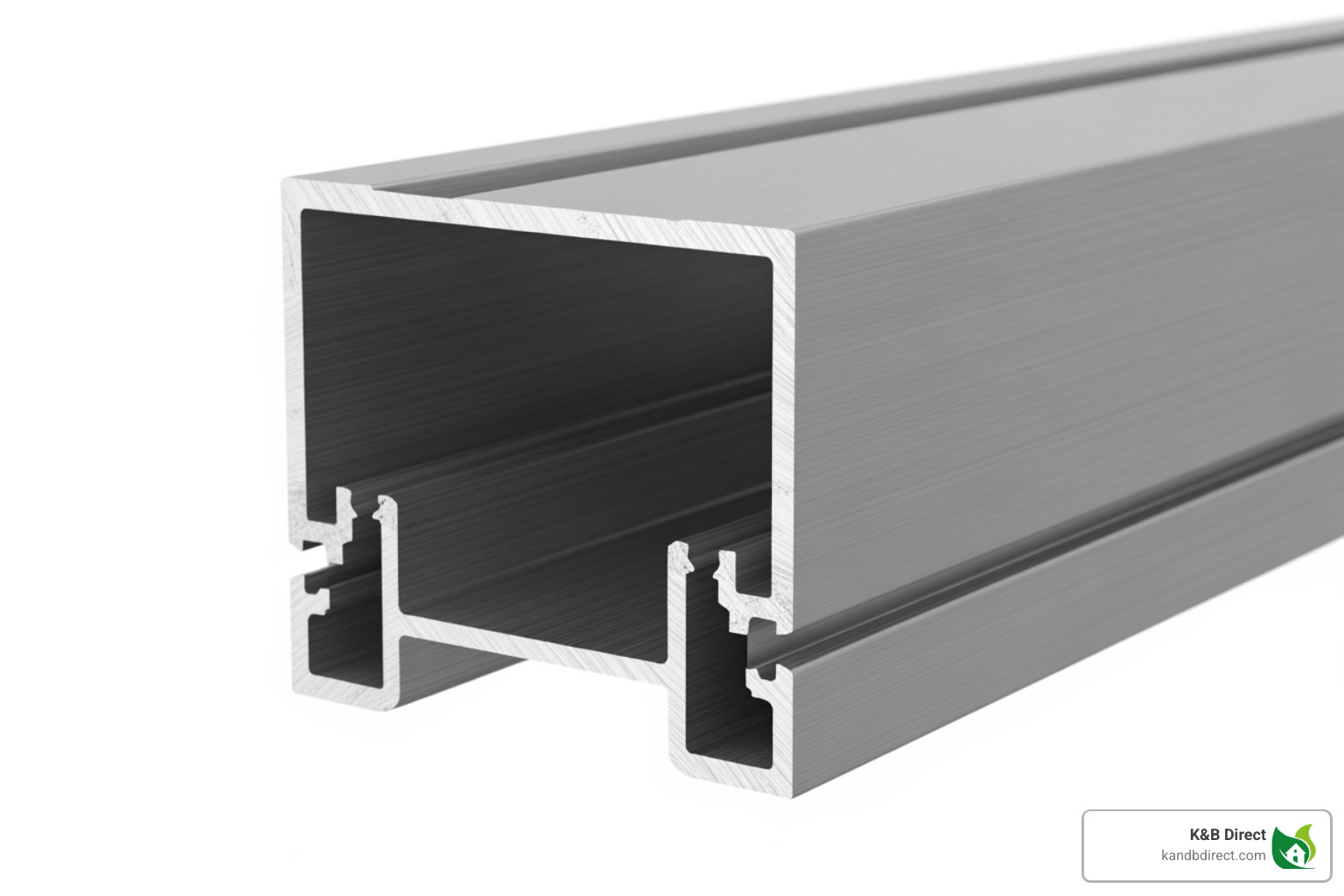
Table: Comparing Standard vs. Heavy-Duty Storm Door Frames
| Feature | Standard Storm Door Frame | Heavy Duty Storm Door Frame |
|---|---|---|
| Frame material | Aluminum (lighter profiles) | Aluminum (heavier extrusions) or steel (heavier gauge options) |
| Hinges | Standard hinges | Heavy-duty hinges for improved alignment and durability |
| Kick panel | Basic panel | Reinforced kick panel options |
| Locking | Basic latch | Options for multi-point locking and additional security hardware |
| Weather sealing | Basic perimeter sealing | Improved weatherstripping and multi-sweep bottoms |
| Rigidity | Moderate | Higher rigidity to resist sag and wind stress |
If you’re comparing options, our Exterior Storm Doors selection is a helpful place to start.
Defining the Heavy Duty Storm Door and Its Components
When we talk about a heavy duty storm door, we’re not just discussing any old door. We’re referring to a robust guardian for your home, built to withstand harsher conditions than its standard counterparts. What truly defines a storm door as “heavy-duty” boils down to its superior construction, materials, and specialized features that go above and beyond typical requirements.
At K&B Direct, we understand that for homes in areas like Chicago, Glen Ellyn, or Arlington Heights, where weather can be unpredictable, a standard storm door simply won’t cut it. Our focus is always on offering top-quality products that meet the highest standards of durability and performance.
Structural Integrity: The Foundation of Heavy Duty
The most significant differentiator for a heavy duty storm door is its structural integrity. This means thicker frames, stronger materials, and reinforced components.
- Frame Construction: Unlike standard storm doors that might use thinner gauge aluminum or composite materials, heavy-duty versions boast frames with significantly greater wall thickness. For instance, some heavy-duty aluminum frames feature an aluminum wall thickness that is 20% greater than the industry standard, as seen in ProVia’s DuraGuard™ line. This increased material density provides unparalleled rigidity and resistance to warping or bending, especially under stress from high winds.
- Materials: The choice of materials is crucial.
- Aluminum: Often the material of choice for its corrosion resistance and strength-to-weight ratio. In heavy-duty applications, aluminum frames are extruded, meaning they are formed under pressure into a dense, solid profile, not simply hollow tubes.
- Steel: For the ultimate in strength and security, heavy-duty storm doors can incorporate steel frames. These might be galvannealed steel, stainless steel, or G90 galvanized steel, available in various gauges (e.g., 14, 16, 18, and 20 gauge). Steel doors are known for their ability to resist impact forces and are often found in products designed to comply with rigorous test standards for high windstorms, such as those required in hurricane zones. While our Illinois locations don’t face hurricanes, the principles of impact resistance and structural integrity translate directly to protection against severe Midwestern storms.
- Reinforced Components: Beyond the main frame, heavy-duty storm doors integrate robust elements throughout:
- Heavy-Duty Hinges: These are not your average hinges. Heavy-duty forged hinges provide exceptional strength and durability, preventing door sag and ensuring smooth operation even after years of use. They are often pre-installed for easier mounting and to ensure proper alignment.
- Reinforced Kick Panels: Many models feature reinforced aluminum kick panels that add an extra layer of toughness, particularly useful for homes with pets or children, as they can withstand more abuse.
- Interlocked Edges: For steel doors, longitudinal door edges are often interlocked with a mechanical seam and reinforced with epoxy adhesive, making the door face flush and free of joints, welds, or seams for a cleaner aesthetic and superior structural integrity.
Key Features for Improved Security and Protection
A heavy duty storm door isn’t just about resisting the elements; it’s also a significant upgrade in home security.
- Locking Mechanisms: Standard storm doors might have a basic latch. Heavy-duty models often feature advanced locking systems:
- Multi-point Locking Systems: These systems secure the door at three or more critical points along the frame, making forced entry significantly more difficult than with a single-point lock. We’ve seen homeowners in places like Palatine and Schaumburg appreciate this extra layer of defense.
- Durable Vault Pins: These pins further secure the door to the frame when closed, preventing it from being pried open.
- Anti-removable Pin Systems: Some security storm doors include this feature, making it impossible to remove the door by taking out the hinge pins.
- Screen Durability: For doors with screens, heavy-duty versions often use non-removable, durable stainless steel screening. This is particularly beneficial for pet owners or families with active children, as it resists tears and damage far better than standard fiberglass screens.
- Weatherstripping and Sealing: While energy efficiency is a separate benefit, the robust sealing of a heavy-duty door also contributes to its protective qualities. Triple-seal weatherstripping and triple bottom sweeps are common, designed to eliminate drafts and create a tight seal against wind, rain, and snow.
Advantages in Harsh Weather Climates
For our customers in Illinois, especially in areas prone to high winds or heavy snowfall like Crystal Lake or Lake Zurich, the advantages of a heavy duty storm door are clear.
- Wind Resistance: Doors designed to meet hurricane-grade standards (like TAS 201, TAS 202, and TAS 203) are built to resist impact forces from strong windstorms and prevent damage from wind-borne debris. While our Illinois locations don’t face hurricanes, the principles of impact resistance and structural integrity translate directly to protection against severe Midwestern storms.
- Longevity: The improved durability means these doors will last longer, requiring less frequent replacement and standing up to daily wear and tear as well as seasonal abuse. This aligns perfectly with our K&B Direct promise of top-quality products.
- Protection for Your Main Entry Door: A heavy-duty storm door acts as a formidable shield for your Main Entrance Door, protecting it from rain, snow, sun, and hail. This extends the lifespan and maintains the aesthetic appeal of your primary door.
Below, we’ve put together a table to highlight the key differences between standard and heavy-duty storm door frames:
| Feature | Standard Storm Door Frame | Heavy Duty Storm Door Frame |
|---|---|---|
| Frame Material | Aluminum (typically thinner than heavy-duty) | Aluminum (extruded, 20% greater wall thickness), Steel (galvannealed, stainless, G90 galvanized, various gauges) |
| Hinges | Standard, often lighter-duty | Heavy-duty forged hinges, pre-installed for optimal strength |
| Kick Panel | Standard composite or thin aluminum | Reinforced aluminum kick panels for improved durability |
| Locking Mechanism | Single-point latch | Multi-point locking systems, durable vault pins, anti-removable pin systems |
| Screen Material | Standard fiberglass or polyester | Heavy-duty, non-removable stainless steel screening |
| Weather Sealing | Basic weatherstripping | Triple-seal weatherstripping, triple bottom sweeps for superior draft elimination |
| Wind Resistance | Moderate | High, designed to resist impact forces from strong winds |
| Structural Reinforcement | Minimal | Interlocked edges with epoxy adhesive (for steel), thicker extrusions (for aluminum) |
Choosing a heavy-duty option ensures your Exterior Storm Doors provide the best possible defense against the elements and unwanted intrusions, giving you peace of mind.
Adjusting the Closer for Optimal Performance
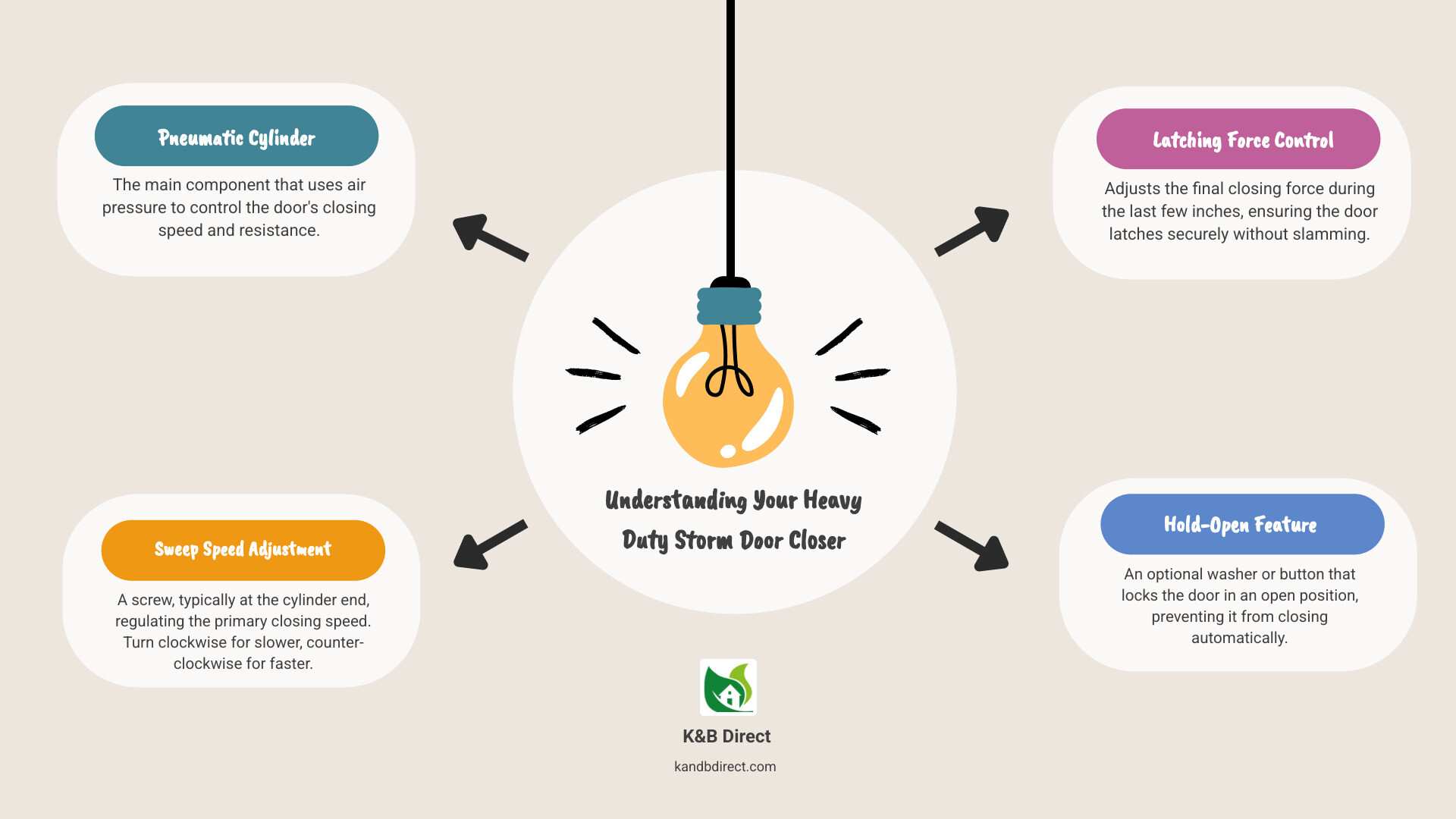
Even the most robust heavy duty storm door needs its closer tuned correctly. Most heavy-duty storm doors use commercial-grade pneumatic cylinders that control movement through air pressure. When the setting is off, the door may close too fast, drift too slowly, or struggle to latch.
A properly adjusted closer helps protect hinges and the frame, and it supports a consistent latch so the door stays secure.
Step-by-Step Calibration for Your Heavy Duty Storm Door
Adjustment is usually straightforward and done at the cylinder.
- Locate the adjustment screw: Typically at the end of the cylinder opposite the hinge side.
- Adjust closing speed in small increments:
- To slow the closing speed: Turn the screw counterclockwise.
- To increase the closing speed: Turn the screw clockwise.
Make small changes (about a quarter turn), then test.
- Confirm the latch action: The last few inches of travel should pull the door closed so it latches cleanly. If it stops short, a slight increase in closing speed may help.
- Use the hold-open feature if equipped: Some closers have a hold-open washer or button that engages when the door is opened to the desired position and released by nudging the door open slightly.
- Account for seasonal changes: Colder temperatures can make the closer feel slower, while warm weather can make it close faster. Minor seasonal readjustments are normal, especially on busy entries paired with a Main Entrance Door.
Troubleshooting Latching Problems in a Heavy Duty Storm Door
If closer adjustments do not resolve the issue, check these common friction and alignment points:
- Strike plate alignment: Confirm the latch aligns with the strike opening. Many strike plates allow small shifts after loosening screws.
- Hinge friction or sag: Verify hinge screws are tight and hinges move smoothly. If needed, use a silicone-based lubricant.
- Weatherstripping drag: Overly tight or mispositioned weatherstripping can add resistance and prevent a clean latch.
- Bottom expander/sweep contact: If the sweep drags heavily on the sill, it can slow closing or stop the door before it latches. Many designs allow small height adjustments.
- High-wind control: In exposed entries, added control hardware can help limit overextension and reduce stress. The Storm Door Buying Guide provides an overview of common storm-door control features.
Working through these checkpoints typically restores smooth closing and reliable latching without changing the door itself.
Enhancing Security and Energy Efficiency
A heavy duty storm door is a practical, year-round upgrade that can strengthen entry security and improve comfort through better sealing. These benefits matter in Illinois, where wind, temperature swings, and winter weather can challenge entry systems.
Security: A Stronger Entry System
Heavy-duty designs commonly include construction and hardware intended to resist prying and maintain alignment.
- Multi-point locks: When equipped, these secure the door at multiple points along the frame for improved resistance compared with a single latch.
- Reinforced frame and hinges: Thicker aluminum or steel frames and heavy-duty hinges help the door stay square and reduce flex under force.
- Additional security hardware: Some models include features such as security pins that help anchor the door when closed.
These upgrades pair well with a variety of entry styles, including Arched Entry Doors, where maintaining alignment and a consistent latch is especially important.
Energy Efficiency: Better Sealing, More Stable Comfort
A storm door creates a buffer between outdoors and your main entry, and heavy-duty versions typically do more to reduce air movement.
- Improved perimeter sealing: Improved weatherstripping can reduce drafts, dust, and moisture intrusion.
- Multi-sweep bottoms: A multi-sweep design can help seal uneven sills and reduce air leakage at the threshold.
- Optional performance glazing: Some storm doors offer coated glass options that can help manage radiant heat while keeping the entry bright.
Impact and Wind Resistance
While conditions vary by neighborhood, stronger frames and hardware generally help storm doors stay stable in gusty weather and reduce the chance of damage from repeated hard closing.
Choosing a heavy duty storm door supports a more secure, more comfortable entryway and helps protect the door behind it from seasonal exposure.
Frequently Asked Questions about Storm Door Maintenance
Even a heavy duty storm door benefits from periodic checks. Below are common questions we hear from homeowners across the Chicago area.
Why does the door slam during high winds?
Wind can overpower the resistance of a pneumatic closer, especially on exposed entries.
- Wind force vs. closer resistance: Strong gusts can push the door faster than the closer is set to control.
- Closer setting is too fast: If the adjustment is set for mild conditions, it may not be sufficient when it gets windy.
- Added strain over time: Repeated slamming can loosen hardware and affect alignment.
What to do:
- Turn the adjustment screw slightly to slow the closing speed, then test.
- For very exposed locations, additional control hardware may be appropriate to help limit overextension and reduce strain.
Can weatherstripping affect the closing speed?
Yes. Sealing components can change how the door moves and how hard the closer must work.
- Friction: Tight or mispositioned weatherstripping can drag on the door.
- Air pressure between doors: A tighter seal can increase air resistance as the door nears the frame.
What to do:
- If closing becomes sluggish after weatherstripping changes, slightly increase closing speed at the closer.
- Inspect for binding points and ensure the weatherstripping sits evenly.
When should the closer cylinder be replaced?
A pneumatic closer cylinder typically needs replacement when internal seals or components fail.
- Visible oil residue: This often indicates a seal failure.
- Loss of control: If the door moves with little resistance even after adjustment.
- Inconsistent action: If the speed varies significantly from one close to the next.
- Physical damage: Bent rod or damaged brackets.
In these cases, replacing the closer cylinder is the most reliable path to restoring controlled operation.
Conclusion
A heavy duty storm door is built to handle demanding conditions, but consistent closing and latching still depend on a properly tuned closer and a well-aligned latch. With periodic adjustment and a quick check of common friction points, most closing issues can be resolved and long-term wear can be reduced.
At K&B Direct, we help homeowners across the Chicago area improve comfort, security, and curb appeal with products that support their overall vision for the home. Explore our full selection of Doors to find the right fit for your entry.