Why Glass Exterior Storm Doors Are a Smart Upgrade for Any Home
Glass exterior storm doors are one of the most practical upgrades you can make to your home’s entryway. They add a layer of protection in front of your main entry door while letting in natural light and boosting curb appeal.
Here is a quick overview of what they offer:
| Feature | What It Means for You |
|---|---|
| Natural light | Full-view panels brighten your entryway without opening the door |
| Weather protection | Shields your main door from rain, wind, and sun exposure |
| Security | Acts as a physical barrier with multi-point locking systems |
| Ventilation | Interchangeable or retractable panels allow fresh airflow |
| Curb appeal | Frames your entry door and enhances your home’s exterior look |
Many homeowners are surprised to learn that a full-view storm door can actually prevent damage to their main entry door by blocking harsh UV rays and moisture. Without one, your primary door takes the full brunt of the elements year after year.
Whether you are renovating your entryway or simply want better protection and style, choosing the right storm door matters more than most people realize.
I’m Eryk Piatkowski, owner of K&B Direct, and after more than a decade helping homeowners select quality doors and home improvement products, I’ve seen how the right glass exterior storm doors can transform both the function and appearance of an entryway. In the sections below, I’ll walk you through everything you need to know to make a confident, informed choice.
Handy Glass Exterior Storm Doors terms:
- Custom storm doors Chicago
- Heavy duty storm door
- where to buy replacement glass for storm door
Defining Glazed Exterior Storm Doors and Their Benefits
When we talk about Glazed Exterior Storm Doors, we are referring to a secondary outer door installed for protection against inclement weather and to allow for better ventilation and light. Unlike standard utility doors, these models emphasize the transparent paneling—often using high-strength tempered crystalline materials—to ensure that your beautiful main entry door remains visible to the neighborhood.
In the Chicago area, from Schiller Park to Des Plaines, the weather can be quite unpredictable. We often experience heavy winds and sudden temperature shifts. A high-quality Exterior Storm Door acts as a thermal buffer. This extra layer of air trapped between the two doors provides an insulating effect, which can help maintain your home’s internal temperature and potentially lower your monthly utility expenses.
Beyond energy efficiency, these doors serve as a robust security barrier. While the primary entry door provides the main defense, a secondary door with a multi-point locking system adds a significant hurdle for any unwanted visitors. It also allows you to open your main door to speak with someone at the entrance while maintaining a physical barrier between you and the outdoors.
Advantages of High-Visibility Panels
The most obvious benefit of these doors is the visibility they provide. By using large, high-clarity panels, you can enjoy a full view of your yard or street. This is particularly wonderful for parents keeping an eye on children playing outside or for those who simply enjoy watching the changing seasons in Elk Grove Village or Arlington Heights.
Aesthetic framing is another factor. A well-chosen door doesn’t hide your home’s personality; it enhances it. Modern frames come in various finishes—like black, white, or almond—that can complement your architecture. Furthermore, premium glazing options often include UV protection. This is vital because intense sun exposure can cause the paint or stain on your expensive interior door to fade or peel over time. By installing a protective glazed layer, you are effectively extending the life of your home’s main entrance.
Low-E glazing is a specialized option we often recommend. This low-emissivity coating is a microscopically thin layer of metal oxide on the pane. It reflects heat back to its source, meaning in the winter, the heat stays inside your home, and in the summer, the scorching Chicago sun is reflected away.
Ventilation and Seasonal Comfort
One of the greatest joys of a storm door is the ability to let in fresh air without letting in the neighborhood’s insect population. Many glass exterior storm doors feature interchangeable inserts or retractable mesh systems. When the weather is mild in Park Ridge or Niles, you can swap the solid pane for a mesh panel to enjoy a cross-breeze.
Retractable mesh designs are particularly clever. Instead of storing a large panel in your basement or garage, the mesh is hidden in a small canister at the top or side of the frame. When you want air, you simply slide the panel down or over, and the mesh follows. This seasonal adaptability ensures your home remains comfortable regardless of whether it’s a humid July afternoon or a crisp October morning.
Popular Styles of Glazed Exterior Storm Doors
Choosing the right style depends on how much of your main door you want to show off and how much ventilation you require. We see a variety of preferences across the suburbs, from the classic looks in Oak Park to the modern designs in Schaumburg.
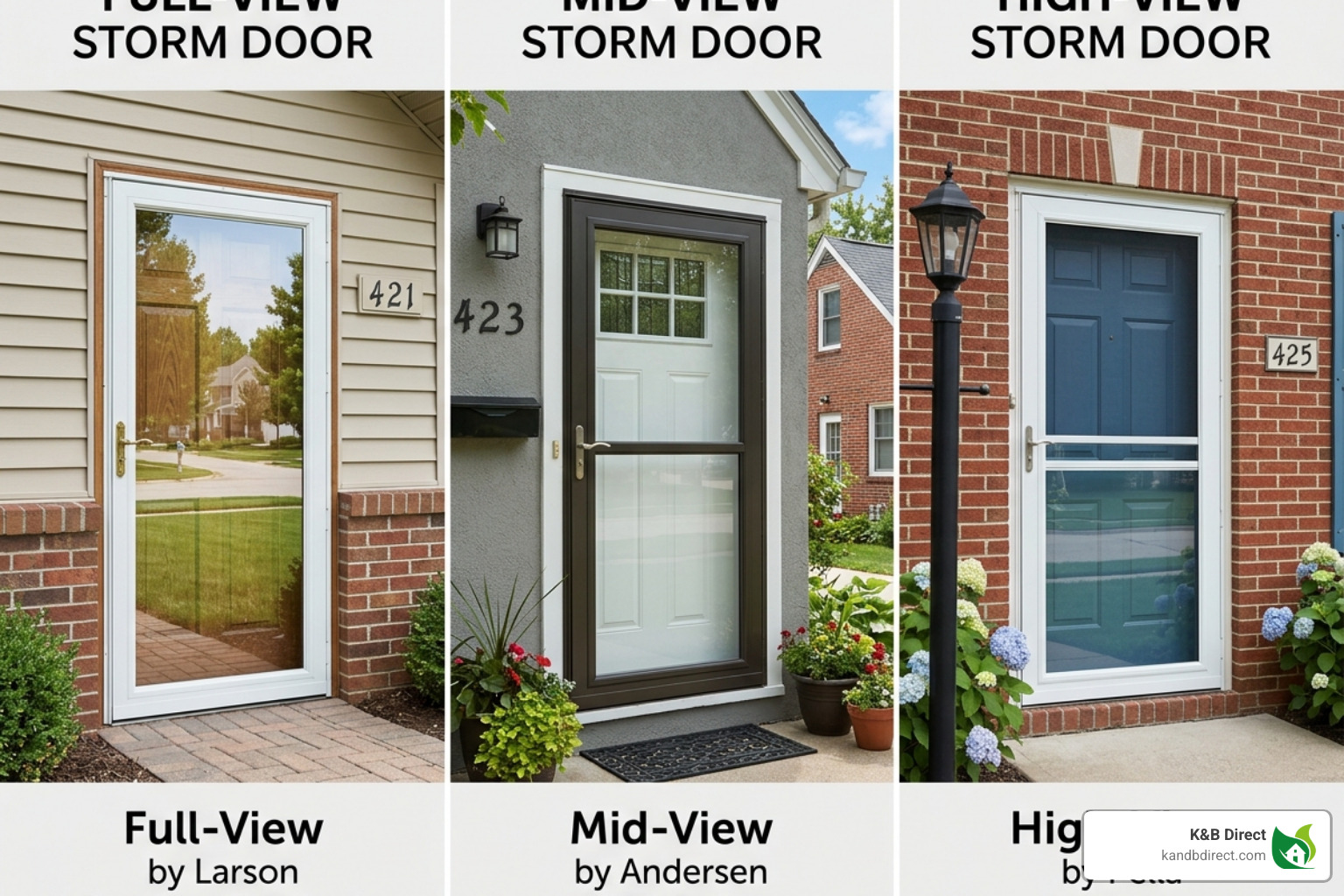
Full View Glazed Exterior Storm Doors
This is the gold standard for curb appeal. A full-view model features a massive pane that spans almost the entire height of the frame. It provides maximum visibility and a clean, modern aesthetic. Many of these models are “interchangeable,” meaning they come with both a full pane and a full mesh panel. You simply switch them out twice a year.
For those who want the look of a full-view door but don’t want the hassle of moving heavy panels, “retractable” full-view options are available. These usually have a split pane where the top half slides down to reveal a hidden mesh. It’s the best of both worlds: a clear view when closed and instant airflow when needed.
Integrated Ventilation Options
If you prefer a more traditional look or have specific functional needs, there are other configurations:
- Mid-View Doors: These have a solid bottom panel (usually about 1/4 to 1/3 of the door height) and a large transparent area on top. These are great for high-traffic homes where shoes or pets might scuff the bottom of the door.
- High-View Doors: These feature a solid lower half, with the transparent area only on the top. These are often used for side entrances or laundry rooms where privacy or extreme durability is more important than a full view.
- Decorative Accents: Some premium models include beveled glazing, stained designs, or “art” inserts. These can turn a simple protective door into a stunning piece of home decor that reflects the architectural style of a historic Maywood home or a classic Glenview estate.
Essential Features for High-Performance Protection
Not all doors are created equal. When we evaluate the quality of a storm door, we look at the engineering behind it. A door that rattles in the wind or fails to latch properly isn’t providing the protection you deserve.
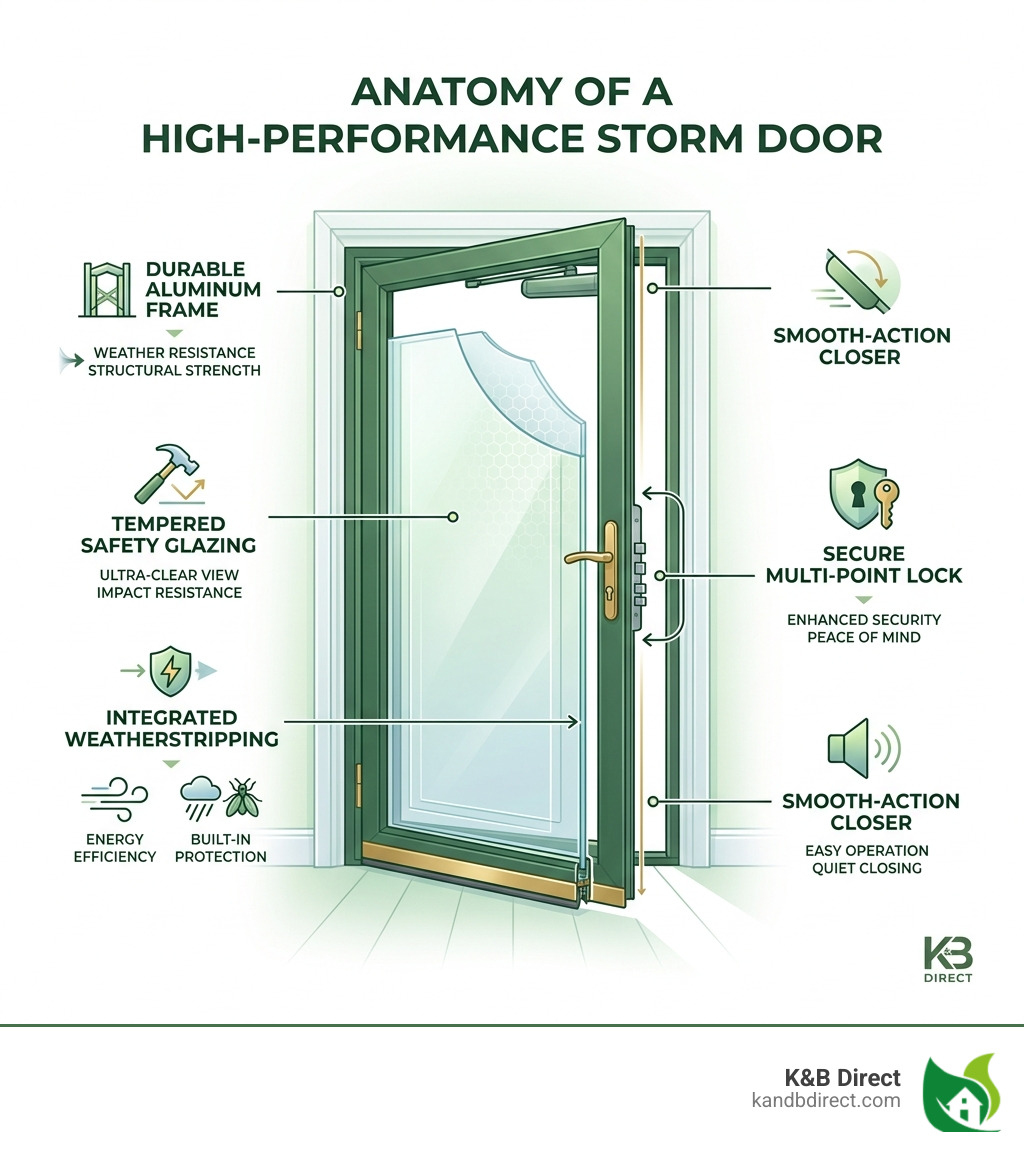
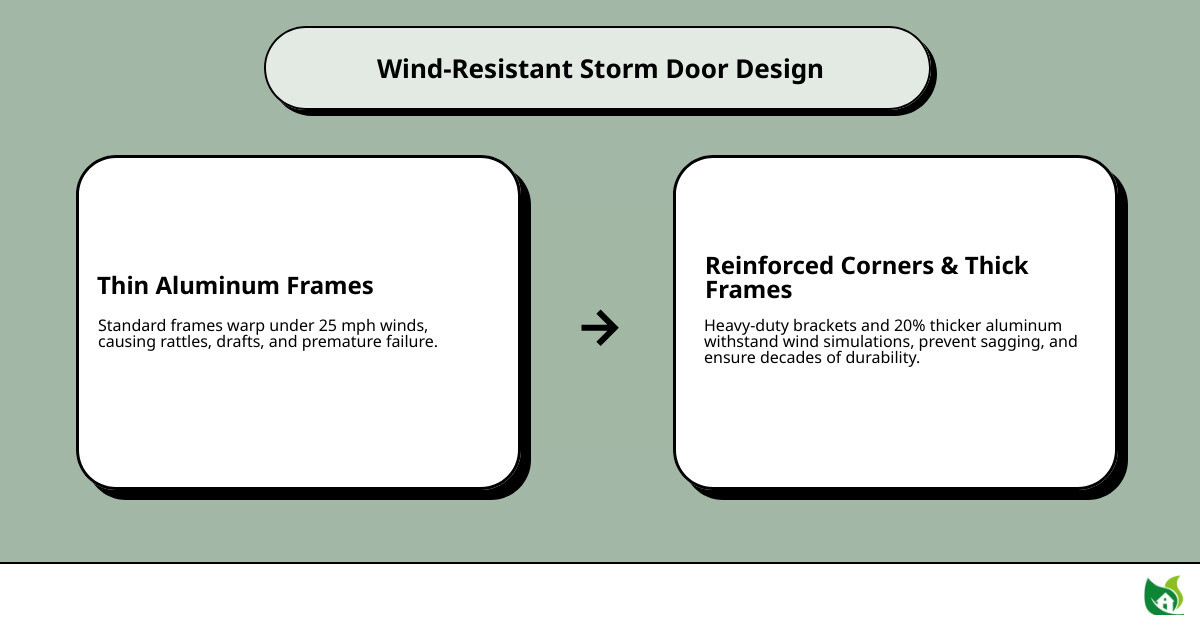
The thickness of the aluminum frame is a major indicator of durability. Industry standards vary, but premium models—like those from ProVia—often feature aluminum walls that are 20% thicker than the average retail model. This extra “heft” provides better rigidity, ensuring the door doesn’t warp or twist over years of use in the windy city.
Tempered safety glazing is another non-negotiable feature. This material is heat-treated to be significantly stronger than standard panes. If it does happen to break, it crumbles into small, dull pebbles rather than sharp shards, protecting your family and pets from injury.
For a quiet and efficient home, look for triple weatherstripping. This involves layers of flexible seals around the entire perimeter of the door, including a bottom expander with a “fin” or “sweep” that blocks drafts from entering under the threshold. If you find your door isn’t closing as it should, you might need to look into Fixing Heavy Duty Storm Door Closing Issues – Effective Solutions to ensure your weather seals are making proper contact.
Advanced Locking Systems for Glazed Exterior Storm Doors
Security is a top priority for our customers in Chicago and Bensenville. Modern glass exterior storm doors have moved far beyond the simple hook-and-eye latches of the past. High-performance models now feature multi-point locking systems. These systems secure the door to the frame at three critical points—top, middle, and bottom—with a single turn of the handle.
This “vault-like” security makes the door incredibly difficult to force open. Coupled with keyed deadbolts and tamper-proof hinges, these doors provide peace of mind. Many homeowners find that having this extra layer of security allows them to leave their main door open during the day to enjoy the light, knowing the storm door is securely locked.
Durability and Weather Resistance
Wind resistance is a critical factor in our region. In lab tests, top-tier doors are subjected to 25 mph wind simulations to check for drafts and structural integrity. Reinforced corners, often made with heavy-duty internal brackets, prevent the door from sagging over time.
The finish on the door also matters. We recommend electrostatic finishes, where the paint is applied using an electric charge to ensure it wraps around every contour of the aluminum. This results in an oven-baked polyester finish that is incredibly resistant to fading, chipping, and peeling. This is why many premium doors come with lifetime warranties on their finishes—they are built to look new for decades.
Selection and Maintenance for Long-Term Durability
Selecting your door is only half the battle; ensuring it is measured correctly and maintained will determine how long it lasts. We’ve seen many homeowners get excited about a purchase only to realize the door doesn’t fit their specific frame.
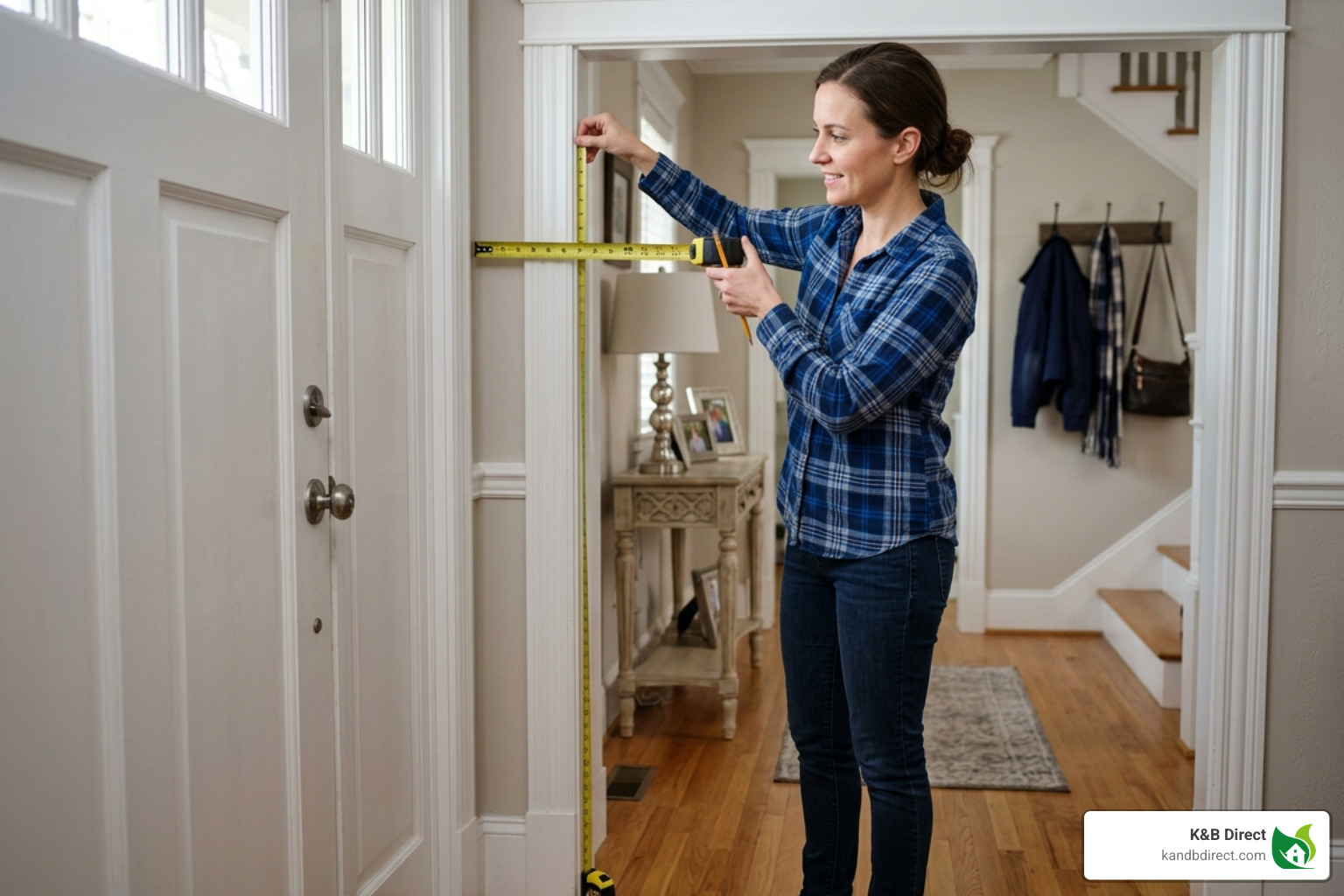
Measurement Guidelines for a Perfect Fit
Accuracy is everything. Even a 1/8-inch discrepancy can lead to air gaps or a door that won’t latch. When measuring, you should check the width of the opening at the top, middle, and bottom. Most standard openings are 30, 32, or 36 inches wide, but there is usually a 3/16-inch width tolerance.
You also need to consider:
- Opening Height: Measure from the threshold to the underside of the top trim.
- Handle Handing: Which side is the handle on your main door? You generally want the storm door handle to be on the same side for ease of use.
- Swing Direction: Most storm doors swing outward. Ensure there is enough clearance on your porch or walkway so the door doesn’t hit railings or pillars.
If you are replacing a door that has seen better days, you might find that the glazing has finally given out. In those cases, knowing Finding and Installing Replacement Parts can save you from having to replace the entire unit.
Maintenance for Lasting Performance
To keep your glass exterior storm doors functioning like the day they were installed, a little bit of care goes a long way.
- Glazing Cleaning: Use a non-ammonia based cleaner and a soft microfiber cloth. This prevents streaks and protects any special coatings like Low-E.
- Lubricating Hinges: Once a year, apply a small amount of silicone-based lubricant to the hinges to prevent squeaking and ensure a smooth swing.
- Weatherstrip Inspection: Check the seals around the door for cracks or compression. If they feel brittle, they should be replaced to maintain energy efficiency.
- Finish Care: A simple wash with mild soap and water will remove salt and dirt buildup, which is especially important after a Chicago winter.
Frequently Asked Questions about Entry Protection
What are the benefits of Low-E glazing?
Low-E (low-emissivity) glazing features a microscopic coating that reflects infrared and ultraviolet light. This keeps your home cooler in the summer by reflecting solar heat and warmer in the winter by preventing internal heat from escaping. It also protects your interior flooring and furniture from UV fading.
Can these doors improve home energy efficiency?
Yes! By creating an insulating pocket of air between the storm door and your primary entry door, you reduce heat transfer. This acts as a buffer against the extreme temperatures we see in places like Mount Prospect and Elmhurst, ultimately reducing the load on your HVAC system.
What is the difference between interchangeable and retractable panels?
Interchangeable panels require you to manually remove the transparent pane and replace it with a mesh panel for the season. This usually provides a clearer view but requires storage space for the unused panel. Retractable panels feature a mesh that is built into the door and rolls up or down, offering “anytime ventilation” without the need to store extra parts.
Conclusion
At K&B Direct, we believe that every detail of your home should contribute to your dream aesthetic while providing the highest level of protection. Choosing the right glass exterior storm doors is an investment in your home’s longevity, security, and beauty. From the initial measurement to the final latch, we are here to help our neighbors in River Grove, Norridge, and throughout the Chicago area find the perfect fit.
If you are ready to upgrade your entrance, we invite you to explore our Chicago Storm Doors Custom Solutions For The Windy City or explore our full range of exterior door solutions to find a model that matches your style. Let us help you frame your home with the quality and durability it deserves.