
Bifold Door Sizes: Top 5 Essential Tips for 2025
Bifold door sizes are a key consideration for anyone looking to improve their home’s style without sacrificing space. These versatile doors not only save room but also add a modern touch to any area. Here’s a quick look at common bifold door sizes to get you started:
- Widths: 18″ to 36″
- Heights: 80″ and 96″
- Wider 4DR options: 48″, 60″, and 72″ for larger spaces
Bifold doors fold neatly in half, making them perfect for closets, pantries, and room dividers. In brief, they help to maximize space while adding a chic aesthetic to your home.
I’m Eryk Piatkowski, and I’ve been dedicated to making home improvement simple and accessible since 2011. Over the years, I’ve focused on providing expert advice on bifold door sizes and other home elements to help you achieve the home of your dreams.
Understanding Bifold Door Sizes
When it comes to bifold door sizes, understanding the difference between nominal and actual sizes is crucial. These terms are often used interchangeably, but they have distinct meanings.
Nominal vs. Actual Size
The nominal size is the label used to identify the door size, like a model number. It’s a convenient way to categorize doors but doesn’t reflect the true size. Think of it as the name tag for the door.
On the other hand, the actual size is the true measurement of the door. It’s typically smaller than the nominal size to allow for installation space. For example, a bifold door labeled as 36″ x 80″ might actually measure 35½” x 79″ to fit snugly in its opening. This size reduction ensures easy installation and smooth operation.
Common Widths and Heights
Bifold doors come in various sizes to suit different spaces. Here are some common dimensions:
- Widths: 18″ to 36″
- Heights: 80″ and 96″
For larger openings, such as walk-in closets, wider options like 48″, 60″, and 72″ are available. These dimensions provide versatility, making bifold doors a popular choice for many applications.
Fitting Tolerance
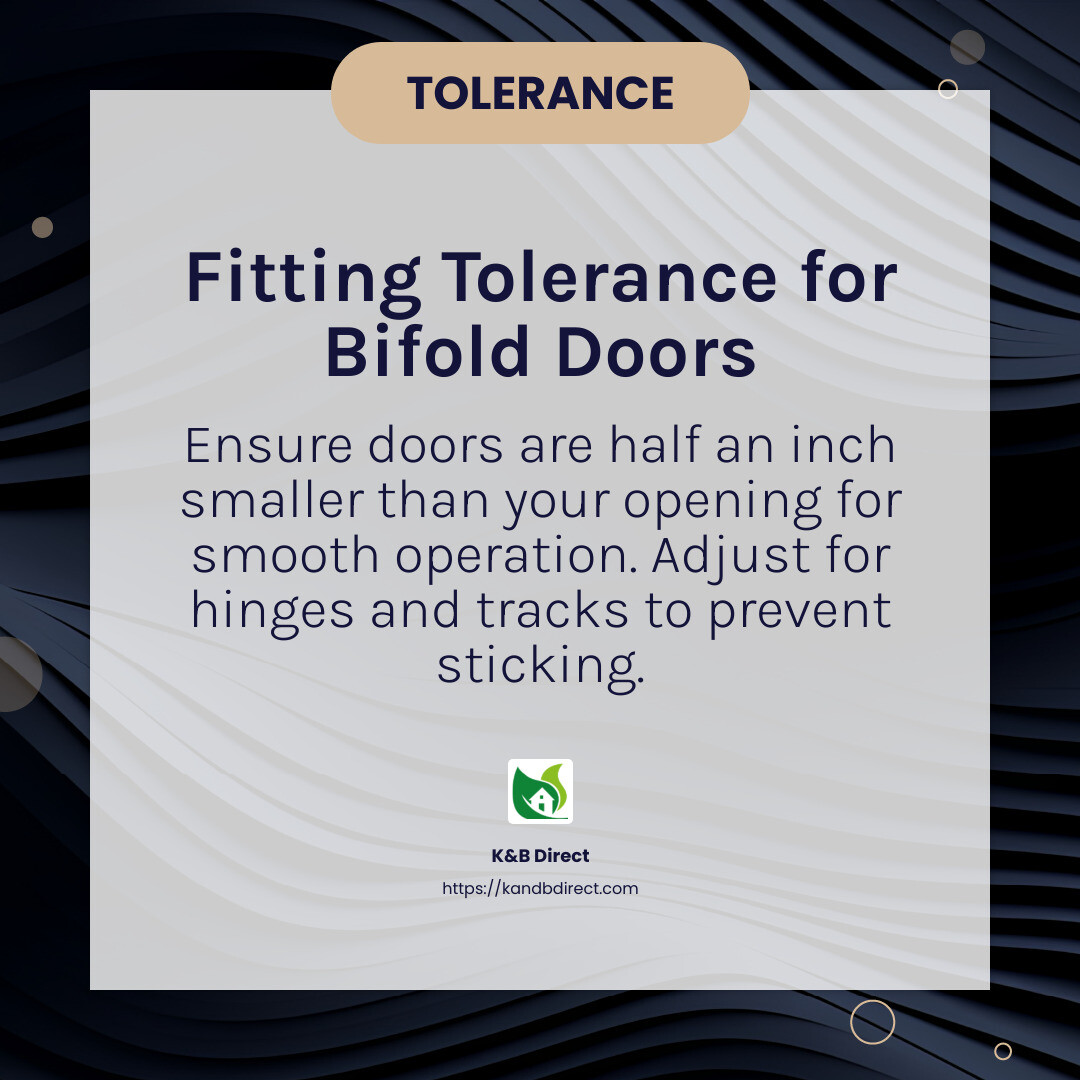
Fitting tolerance is the extra space needed for installation. It ensures that the doors operate smoothly without sticking or jamming. Typically, bifold doors should be about ½ inch smaller in width and 1 inch shorter in height than the opening. This allowance helps accommodate hardware like hinges and tracks.
To summarize, understanding the nuances of bifold door sizes is essential. Whether you’re choosing standard sizes or custom options, knowing these details will make your project smoother and more successful.
Measuring Your Opening for Bifold Doors
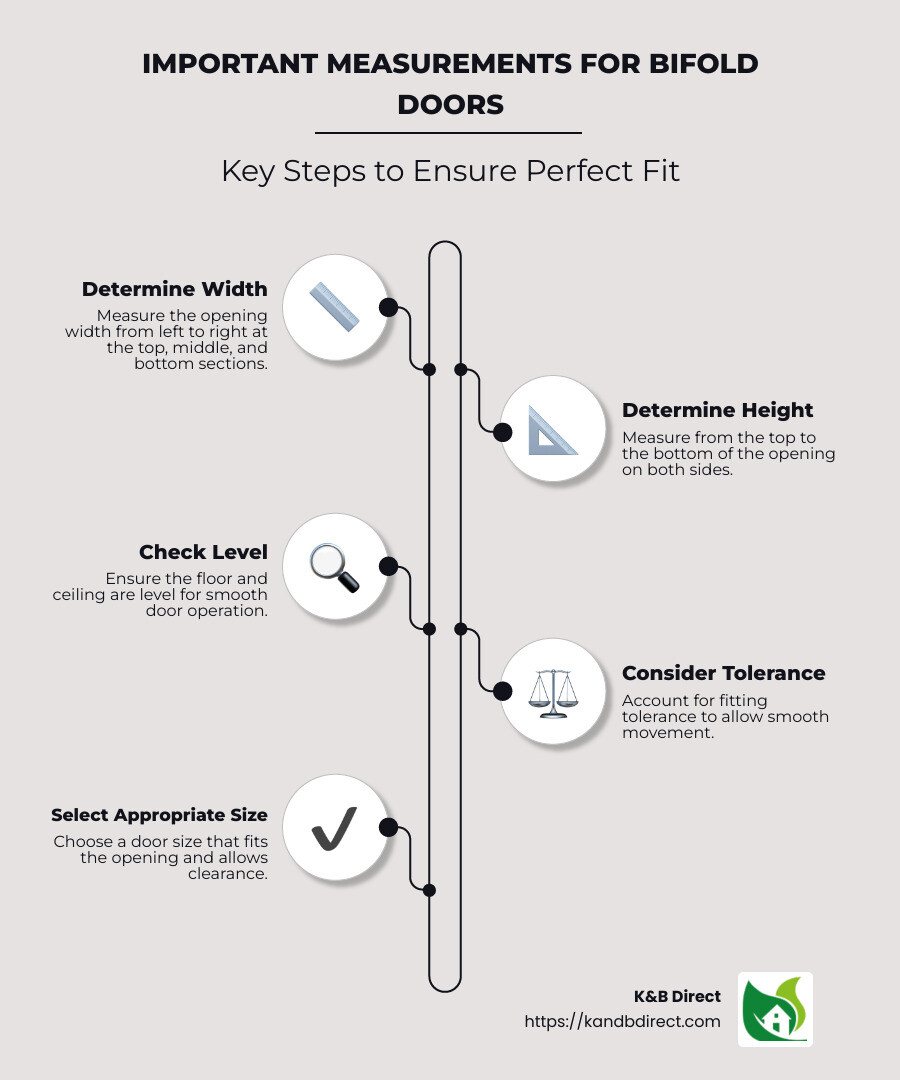
Getting the right measurements is key to installing bifold doors that fit perfectly and operate smoothly. Here’s a simple guide on how to measure your opening accurately.
Tools You Will Need
Before you start, gather these tools to ensure precise measurements:
- Spirit Level: To check if the opening is level.
- Tape Measure: For measuring width and height.
- Pencil: To mark measurements and notes.
These tools will help you avoid errors and ensure a snug fit for your bifold doors.
Step-by-Step Measuring Guide
Follow these steps to measure your opening like a pro:
-
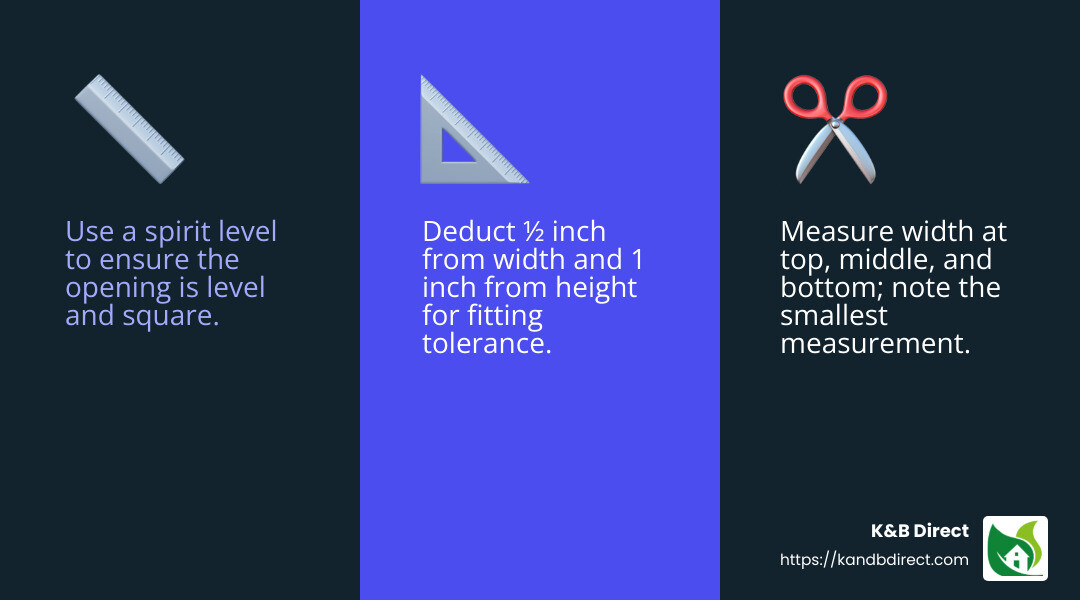
Level Check: Use the spirit level to measure diagonally from corner to corner. This ensures the opening is level and square. If it’s not, adjustments may be needed before installation.
-
Width Measurement: Measure the width of the opening at three points: the top, middle, and bottom. Record the smallest measurement. This accounts for any irregularities in the opening.
-
Height Measurement: Measure the height on both sides and in the center. Again, note the smallest measurement for accuracy.
-
Fitting Tolerance: Deduct ½ inch from the width and 1 inch from the height. This allowance is crucial for fitting tolerance, ensuring the doors can open and close without sticking.
By following these steps, you’ll have the precise measurements needed to order the right size bifold doors. Accurate measurements are the foundation of a successful installation.
Now that you know how to measure your opening, let’s explore the difference between standard and custom bifold door sizes.
Standard vs. Custom Bifold Door Sizes
Choosing the right bifold door sizes can make a big difference in how your space looks and functions. Let’s explore the options available: standard sizes and custom sizes.
Standard Sizes
Standard bifold doors are like the “one-size-fits-most” solution. They’re designed to fit common openings without much hassle. These doors typically come in widths ranging from 18 inches to 36 inches and standard heights of 80 inches or 96 inches.
-
Off-the-Shelf: You can easily find these sizes in stores or online, ready to install. They are perfect for spaces like closets or pantries where typical dimensions are often used.
-
Common Applications: Standard sizes are great for those who want a quick and cost-effective solution. They fit well in most residential settings and are readily available, saving time on ordering and installation.
Custom Sizes
Sometimes, your space might be unique, and that’s where custom-sized bifold doors come into play. Custom doors are custom to fit your specific needs, ensuring a perfect fit.
-
Unique Openings: If your opening doesn’t match standard dimensions, custom doors are the way to go. They can be made to fit any size, giving you flexibility in design.
-
Made-to-Order: Ordering custom bifold doors means you can select specific materials, finishes, and configurations that match your style and needs. However, custom doors may take longer to produce and can be more expensive.
-
Space Considerations: When dealing with limited space or architectural quirks, custom doors can be designed to maximize the available area. This is especially helpful in older homes or unique architectural designs where standard sizes just won’t work.
Whether you choose standard or custom sizes, understanding your space and needs is key. Both options have their benefits, so consider what works best for your project.
With the right size in mind, let’s move on to explore various panel configurations and material options for your bifold doors.
Panel Configurations and Materials
When it comes to bifold doors, the configuration and material you choose can significantly impact both aesthetics and functionality. Let’s explore the options.
Panel Configurations
Two Panels vs. Four Panels
-
Two-Panel Bifold Doors: These are perfect for smaller openings. They provide a simple, neat look and are easy to operate. Ideal for closets or smaller room dividers.
-
Four-Panel Bifold Doors: These are suited for larger spaces. They offer a grander appearance and can cover wider openings, making them perfect for larger rooms or patio doors.
Corner Configurations
Corner bifold doors are a game-changer for modern homes. They allow you to open up two walls completely, offering an unobstructed view of the outdoors. These are especially popular in new builds and extensions.
-
Moving Corner Posts: This option allows the corner posts to move with the doors, providing a seamless transition between indoor and outdoor spaces.
-
Fixed Corner Posts: Here, the corner posts remain stationary, which might be more suitable for certain structural requirements.
Material Considerations
Wood, Aluminum, and Vinyl
The material of your bifold door affects not only its look but also its durability and maintenance needs.
-
Wood: Offers a classic and warm appearance. It’s great for traditional interiors but requires regular maintenance to prevent warping and damage from moisture.
-
Aluminum: Known for its strength and slim profiles. Aluminum allows for larger glass panels, providing a sleek, modern look with minimal maintenance. At Origin, for instance, high-strength aluminum is used to create thin yet robust frames.
-
Vinyl: A budget-friendly, low-maintenance option. Vinyl is durable and resistant to moisture, making it a good choice for humid areas.
Choosing the right panel configuration and material is crucial for both functionality and style. Consider the size of your opening and the overall aesthetic you want to achieve. With these options in mind, you’re well on your way to finding the perfect bifold door for your space.
Next, we’ll dive into installation tips to ensure your bifold doors are set up for smooth operation.
Installation Tips for Bifold Doors
Installing bifold doors may seem daunting, but with the right preparation and tools, you can achieve a smooth and hassle-free installation. Here’s a simple guide to help you through the process.
Preparing the Opening
Clean Space and Level Check
Before installing your bifold doors, it’s crucial to prepare the opening. Start by ensuring the area is clean and free of debris. This will make the installation process easier and help avoid any potential issues later.
Next, check the level of the opening. Use a spirit level to measure diagonally from corner to corner. This ensures that the opening is square and level, which is vital for the smooth operation of the doors.
- Measure the Width: Check the width at the top, middle, and bottom of the opening to ensure consistency.
- Measure the Height: Measure the height on both sides and in the center to confirm uniformity.
Installing the Track and Hardware
Top Track, Bottom Track, and Alignment
Once the opening is prepared, it’s time to install the track and hardware. Begin with the top track. Attach it securely to the wall, making sure it is straight and level.
- Bottom Track Installation: Align the bottom track with the top track. This alignment is crucial for the doors to operate smoothly.
- Use a Spirit Level: Double-check the alignment with a spirit level to ensure both tracks are perfectly straight.
Hanging the Door Panels
Panel Attachment and Swing Check
Now it’s time to hang the door panels. Start by attaching the first panel to the top track. Ensure it swings freely without obstruction. This is important for the door’s functionality and longevity.
- Repeat for Remaining Panels: Attach each subsequent panel, checking that they align correctly and operate smoothly.
- Adjust if Necessary: If the panels don’t swing freely, adjust the hinges or track alignment until they do.
Proper installation is key to avoiding issues later on. A well-installed bifold door will not only look great but also function effortlessly. If you encounter any problems, consider using a light-duty screen door closer for smoother operation.
By following these tips, you can ensure your bifold doors are set up for smooth operation and long-lasting use.
Next, we’ll tackle some frequently asked questions about bifold door sizes to clear up any lingering doubts.
Frequently Asked Questions about Bifold Door Sizes
How much smaller should a bifold door be compared to the opening?
When installing bifold doors, they should be slightly smaller than the opening to ensure a perfect fit. Typically, you should deduct about half an inch from the width and height of your opening measurements. This allows for fitting tolerance, ensuring the doors can open and close smoothly without sticking. For example, if your opening measures 36″ x 80″, you might want to order a door that is around 35½” x 79″. This small adjustment is crucial for accommodating hinges and tracks, ensuring optimal functionality.
What tools do I need to measure for bifold doors?
Accurate measurement is key to a successful bifold door installation. Here are the essential tools you’ll need:
- Spirit Level: Ensures the opening is level and square.
- Tape Measure: For precise width and height measurements.
- Pencil: To mark measurements and make notes.
- Notepad: To record your measurements and any observations.
Start by using the spirit level to check the level and square of the opening. Then, measure the width at the top, middle, and bottom, as well as the height on both sides and in the center. Record the smallest measurements and deduct half an inch for fitting tolerance.
Can I order custom-sized bifold doors?
Yes, you can! If your space has unique dimensions, custom-sized bifold doors are a great option. Many manufacturers offer made-to-order doors to fit non-standard openings. At K&B Direct, we understand that no two spaces are alike, and our custom options ensure you get a perfect fit for your home. Whether you need a specific width, height, or even a unique panel configuration, custom bifold doors can be custom to meet your exact needs. Just make sure to provide precise measurements to ensure a seamless fit.
By keeping these FAQs in mind, you can confidently choose and install bifold doors that improve your space both functionally and aesthetically.
Conclusion
Choosing the right bifold door sizes is essential for any successful home renovation project. At K&B Direct, we pride ourselves on offering top-quality products that meet your unique needs. Our wide range of bifold doors caters to various styles and spaces, ensuring a seamless integration into your home.
Whether you’re working with standard dimensions or require custom options for unique openings, our selection provides the flexibility you need. We understand that every home is different, and that’s why we offer solutions that can be custom to fit your specific requirements. From the initial measurement to the final installation, our friendly service ensures your vision is realized with style and functionality.
Our doors not only improve the aesthetics of your home but also add practical value by saving space and improving accessibility. With K&B Direct, you can trust that you’re getting the highest quality products at unbeatable prices.
For more information on our bifold doors and other home renovation products, visit our Doors page. Let us help you transform your space with our expert guidance and attention to detail.