
Door Casing: 10 Stunning Ways to Boost Your Home in 2025
The Finishing Touch: What Door Casing Brings to Your Home
Door casing is the trim that surrounds a doorway, covering the gap between the wall and door frame while adding decorative detail to the opening. It serves both functional and aesthetic purposes in your home.
| Door Casing Quick Facts |
|---|
| Function: Covers the gap between door jamb and wall |
| Common Materials: Wood, MDF, PVC, polyurethane |
| Standard Sizes: 2-1/4″ to 3-1/2″ wide |
| Installation: Typically mitered (45° angles) or butted (straight cuts) |
| Cost Range: $0.60-$10 per linear foot (materials only) |
Adding door casing to your home is like putting a frame around a beautiful painting – it draws attention to the doorway while hiding the unfinished edges where drywall meets the door frame. Beyond its decorative role, casing also provides an extra layer of insulation, reducing drafts and improving energy efficiency throughout your home.
Think of door casing as the finishing touch that can transform a basic doorway into an architectural feature. The right casing style can complement your home’s character, whether you prefer clean modern lines or ornate traditional details.
I’m Eryk Piatkowski from K&B Direct, where I’ve spent years helping homeowners select the perfect door casing to improve their interior spaces while staying within budget. My experience has taught me that this often-overlooked element can dramatically impact the overall look and feel of your home.
Understanding Door Casing Basics
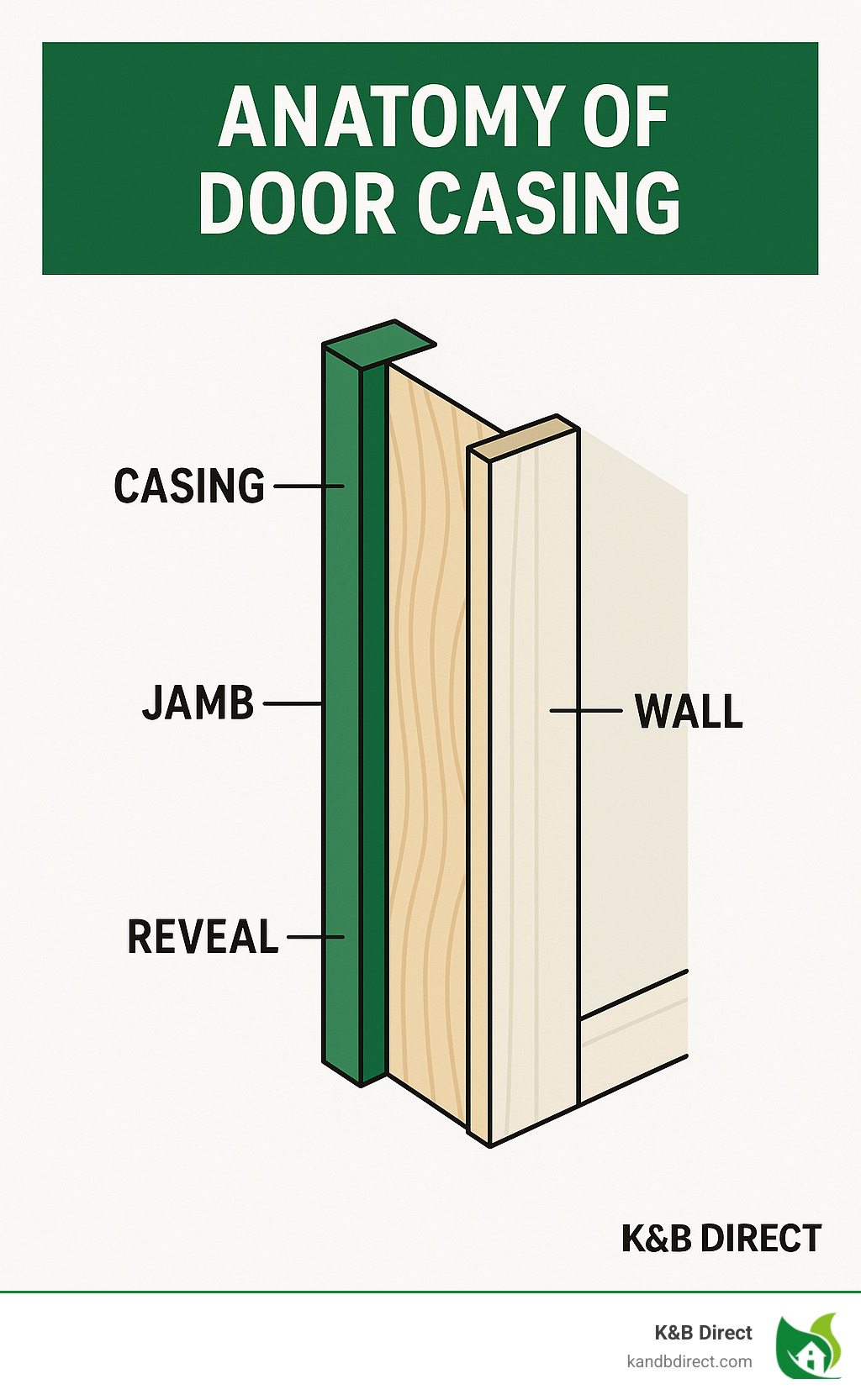
Think of door casing as the finishing touch that transforms a rough opening into a polished entryway. While it might seem like a small detail, this trim serves multiple important purposes in your home. Beyond making your doorways look complete, casing creates a seamless transition between the door jamb and wall, prevents energy-wasting drafts, reduces sound transfer between rooms, and helps satisfy building code requirements in many areas.
What is Door Casing?
Door casing is essentially the picture frame for your doorway. Just like a good frame improves artwork, quality casing lifts the appearance of any door opening. A typical casing consists of three main pieces: two vertical side pieces (sometimes called legs or jambs) and one horizontal head piece that spans the top.
The primary job of door casing is practical—it covers that unsightly gap between your door jamb and wall surface. Without it, you’d see the rough framing and unfinished drywall edges every time you walked through a doorway.
Interior and exterior casings share the same basic purpose but differ in important ways. Inside your home, casings tend to be more decorative and are often made from materials like pine, poplar, or MDF that add visual appeal but aren’t necessarily weather-resistant. For exterior doorways, casings must battle the elements—rain, temperature swings, and harsh sunlight—so they’re typically crafted from more durable materials like PVC, treated lumber, or hardwoods protected with weather-resistant finishes.
As one specialist from The Moulding Company puts it, “Door casing is the finishing touch to a design in progress. It’s often the most visible moulding in a room and sets the tone for the entire space.”
Door Casing vs. Trim & Moulding
I’ve noticed many homeowners use the terms casing, trim, and moulding interchangeably, which can lead to confusion when planning projects. Here’s a simple breakdown to clear things up:
Door casing specifically refers to the trim that frames door openings, while trim is a broader term encompassing all decorative woodwork in your home. Moulding refers to any decorative strip used to cover transitions or add visual interest to your space.
Other common trim elements that work alongside your door casing include baseboards (the trim where walls meet floors), window casing (similar to door trim but sized for windows), and crown moulding (the decorative elements where walls meet ceilings).
For a harmonious look throughout your home, your door casing should coordinate with these other trim elements. Design experts recommend that your casing thickness should generally match or be slightly thinner than your baseboards to maintain visual continuity and create a cohesive flow from room to room.
When selected thoughtfully, door casing does more than just cover gaps—it ties together your home’s entire design story, adding character and definition to every doorway. As you plan your next renovation project, don’t underestimate the impact this seemingly small detail can have on your home’s overall appearance and function.
Types & Styles of Door Casing
The style of door casing you choose can dramatically impact your home’s character. From simple, clean-lined profiles to ornate historical reproductions, the options are nearly endless. Here are some of the most popular styles:
Butted Door Casing Style
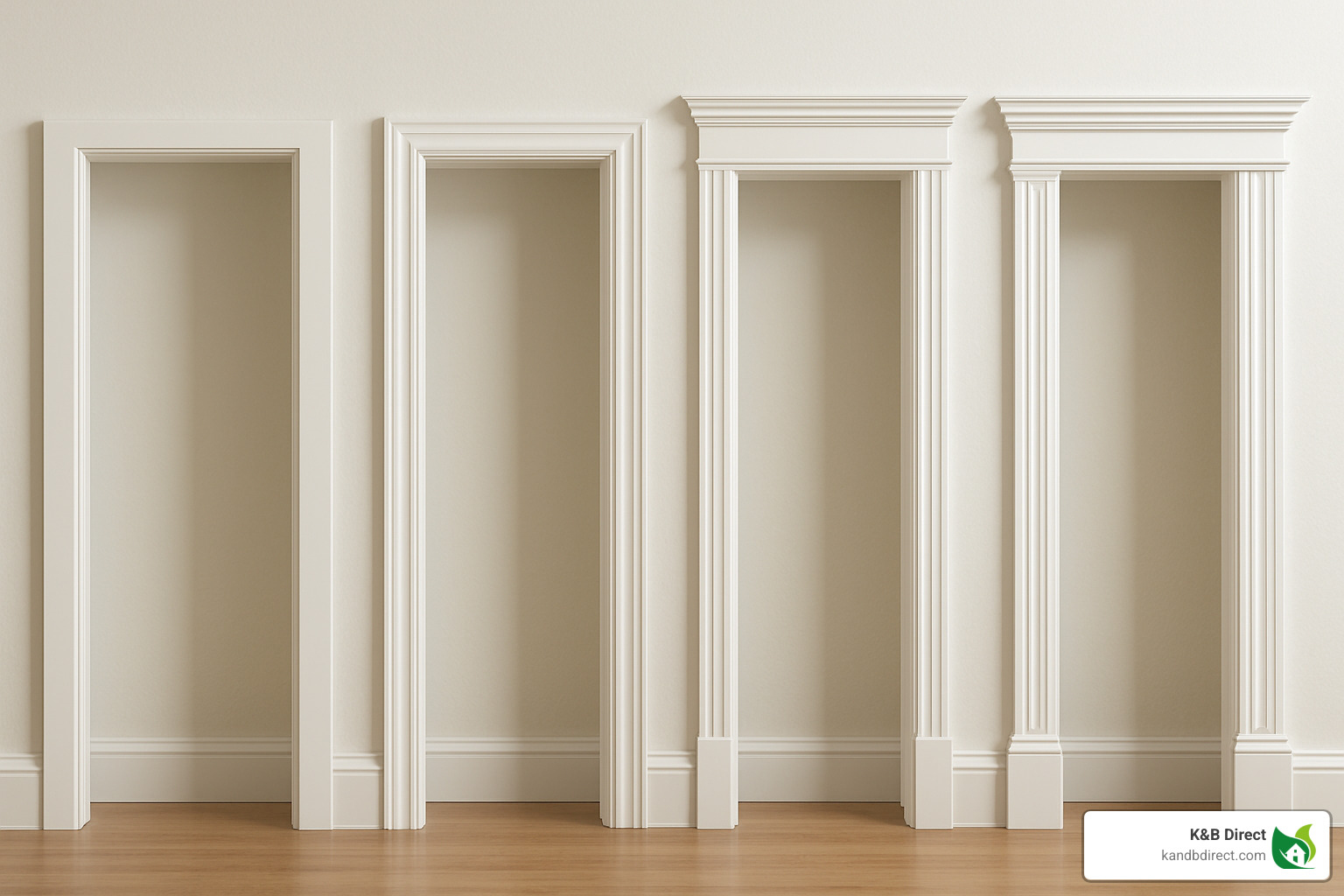
When you walk through a home with butted door casing, you’ll notice the clean, straightforward look it creates. This style features straight, 90-degree cuts where the pieces meet, with side casings extending all the way to the floor and the head casing sitting directly on top. There’s no fancy angled cut—the pieces simply butt against each other, creating a sturdy, architectural feel.
I’ve found that this style works wonders in homes with high ceilings because it naturally draws your eye upward. The vertical emphasis creates a sense of height and grandeur that can make even modest rooms feel more spacious. Plus, if you’re a DIY enthusiast like many of our customers at K&B Direct, you’ll appreciate that butted casings are much more forgiving to install. Since you’re making straight cuts rather than precise angles, you can achieve professional-looking results with basic tools.
Many homeowners also love incorporating decorative corner blocks (sometimes called rosettes) at the top corners, which add a touch of elegance while eliminating the need for those tricky angled cuts altogether. It’s a win-win for both style and simplicity.
Mitered Door Casing Style
There’s something undeniably sleek about mitered door casing with its 45-degree angle cuts creating seamless corner joints. When I’m helping customers select trim for more contemporary homes or formal spaces, I often steer them toward this refined option. The clean lines and seamless transitions particularly complement modern or minimalist aesthetics, where every detail matters.
While mitered casing offers that polished, custom appearance many homeowners desire, I always give a gentle reminder about installation. Even small errors in the angle can result in visible gaps at the corners that are difficult to hide. For this reason, mitered installations are often best left to professionals or experienced DIYers with a quality miter saw and steady hands. The extra effort pays off in a doorway that looks custom-crafted and intentional.
Specialty & Historic Profiles
Walking through a historic neighborhood in Chicago, you’ll notice how door casing instantly signals a home’s architectural period. For homeowners looking to honor their home’s heritage or add distinctive character, specialty and historic profiles offer authentic details that transform ordinary doorways into architectural statements.
Greek Revival casings bring bold, simple lines with pronounced corners and flat surfaces that beautifully complement the classical proportions found in homes built during the early to mid-19th century. These profiles have a timeless quality that feels both substantial and neat. For those interested in this architectural style, research on Greek Revival architecture offers fascinating historical context.
If you’re restoring a Colonial, Federal, or Georgian-style home, consider dentil moulding with its small, tooth-like blocks that create a formal, traditional appearance. I’ve seen this detail completely transform entryways, adding historical authenticity that modern alternatives simply can’t match.
For a touch of Victorian charm, ornamental backband adds an extra layer of trim to the outer edge of the casing, creating depth and visual interest. This was a common feature in homes built during that era, and it’s amazing how this single detail can anchor a renovation in historical accuracy.
At our K&B Direct showrooms in Chicago and Schiller Park, I always encourage customers to explore our wide range of historical and specialty profiles before making a decision. There’s nothing like seeing and touching these materials in person to understand how they’ll transform your doorways and, by extension, your entire home.
Choosing the Right Door Casing for Your Home
Selecting the perfect door casing involves more than just picking a style you like. You’ll need to consider several factors to ensure your choice improves your home’s architecture and meets your practical needs.
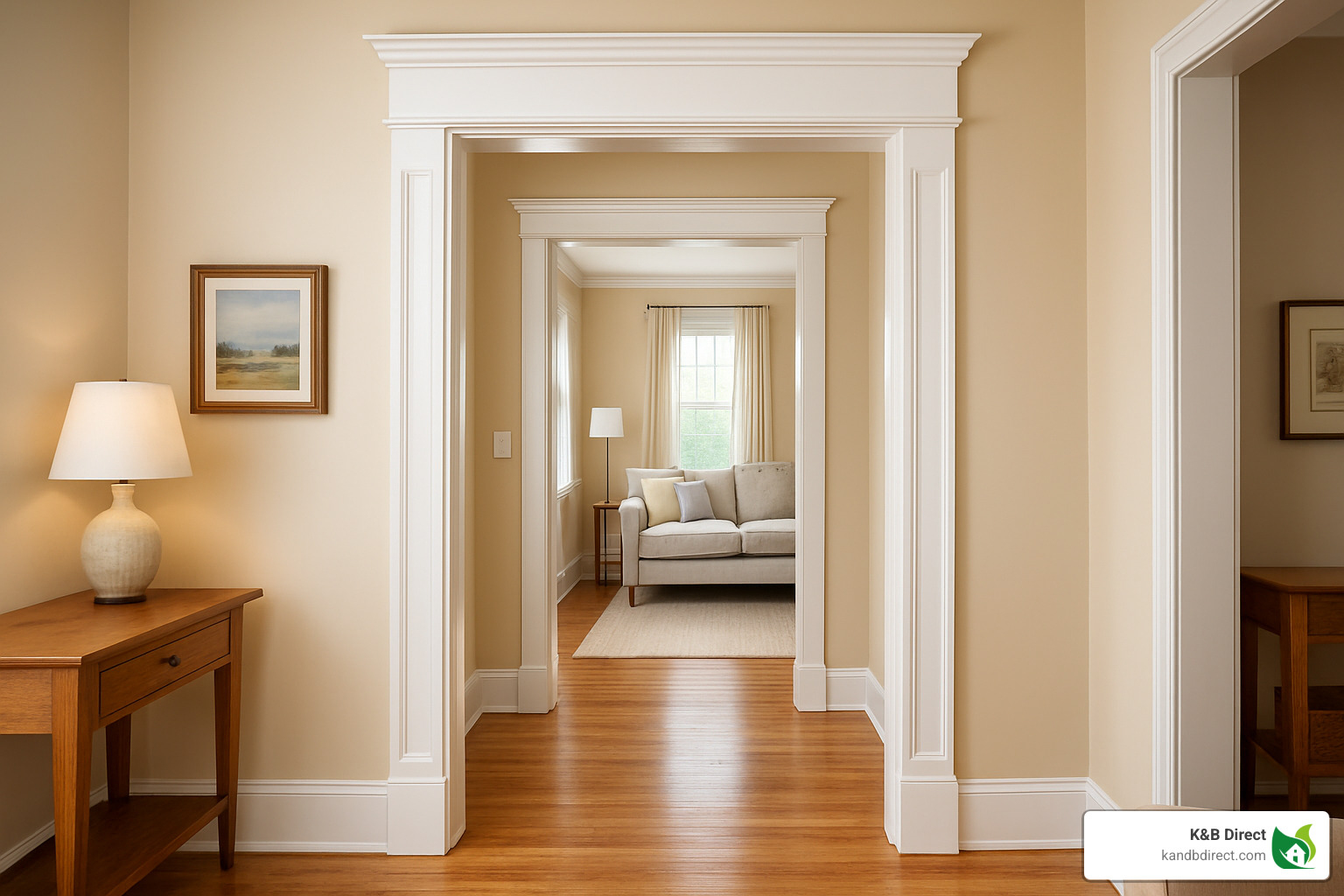
When I’m helping customers at our showroom, I always ask about their home’s scale first. A grand entryway with soaring ceilings calls for more substantial casing than a cozy hallway. Your room height naturally dictates proportions—taller rooms can handle wider, more dramatic casings without feeling overwhelmed.
Consider your home’s architectural period too. A Victorian home begs for something more ornate than a mid-century modern ranch. And don’t forget practical concerns: areas exposed to moisture need different materials than dry spaces, and your budget and DIY skills might limit certain options.
Match With Existing Millwork
One of the most important considerations when choosing door casing is how it will coordinate with your existing trim. For a cohesive look, your new casing should complement the style and scale of your baseboards, crown moulding, and window casings.
“Match new casings to existing trim in style and thickness,” recommends The Moulding Company. This doesn’t mean everything must match exactly, but there should be a visual relationship between different trim elements.
Your door casing should generally be similar in thickness to your baseboards—this creates a harmonious flow as your eye travels around the room. If you have crown moulding, consider how your door casing will transition to or complement it. The profiles don’t need to be identical, but they should feel like part of the same family.
Color harmony matters too. Whether painted or stained, your door casing should coordinate with existing trim colors. I’ve seen many homeowners struggle with this balance—too many different trim colors can make a space feel disjointed.
At K&B Direct, our Casing 421 profile (3/4″ x 3-1/4″) offers a versatile option that works well with many baseboard styles. Its clean lines make it adaptable to both traditional and transitional interiors.
Design Tips & Current Trends
I’ve noticed several exciting trends in door casing design over the past few years. Square-edge minimalism continues to dominate in modern homes—these clean, simple profiles with minimal ornamentation let other design elements shine. They’re perfect if you want your space to feel contemporary and uncluttered.
On the other end of the spectrum, wide craftsman heads are making a comeback. These asymmetrical casings with wider head pieces create visual interest and a sense of substance. They’re particularly striking in craftsman, farmhouse, or transitional homes.
While white casings remain ever-popular, I’m seeing more homeowners accept dark-stained contrast casings. These create dramatic definition against light walls and can highlight beautiful doorways as architectural features.
Eco-conscious homeowners are increasingly drawn to sustainable wood species and composite materials. These options satisfy both environmental concerns and practical needs for durability.
For those wanting something truly custom, layered build-ups combine multiple moulding profiles to create looks with exceptional depth and character. This approach lets you create something unique that still honors your home’s architectural style.
“Don’t be afraid to add your own style,” a specialist from The Moulding Company once told me, and I couldn’t agree more. While it’s important to respect your home’s architectural integrity, your trim choices should ultimately reflect your personal taste and vision for your space.
Materials, Sizes & Profiles Explained
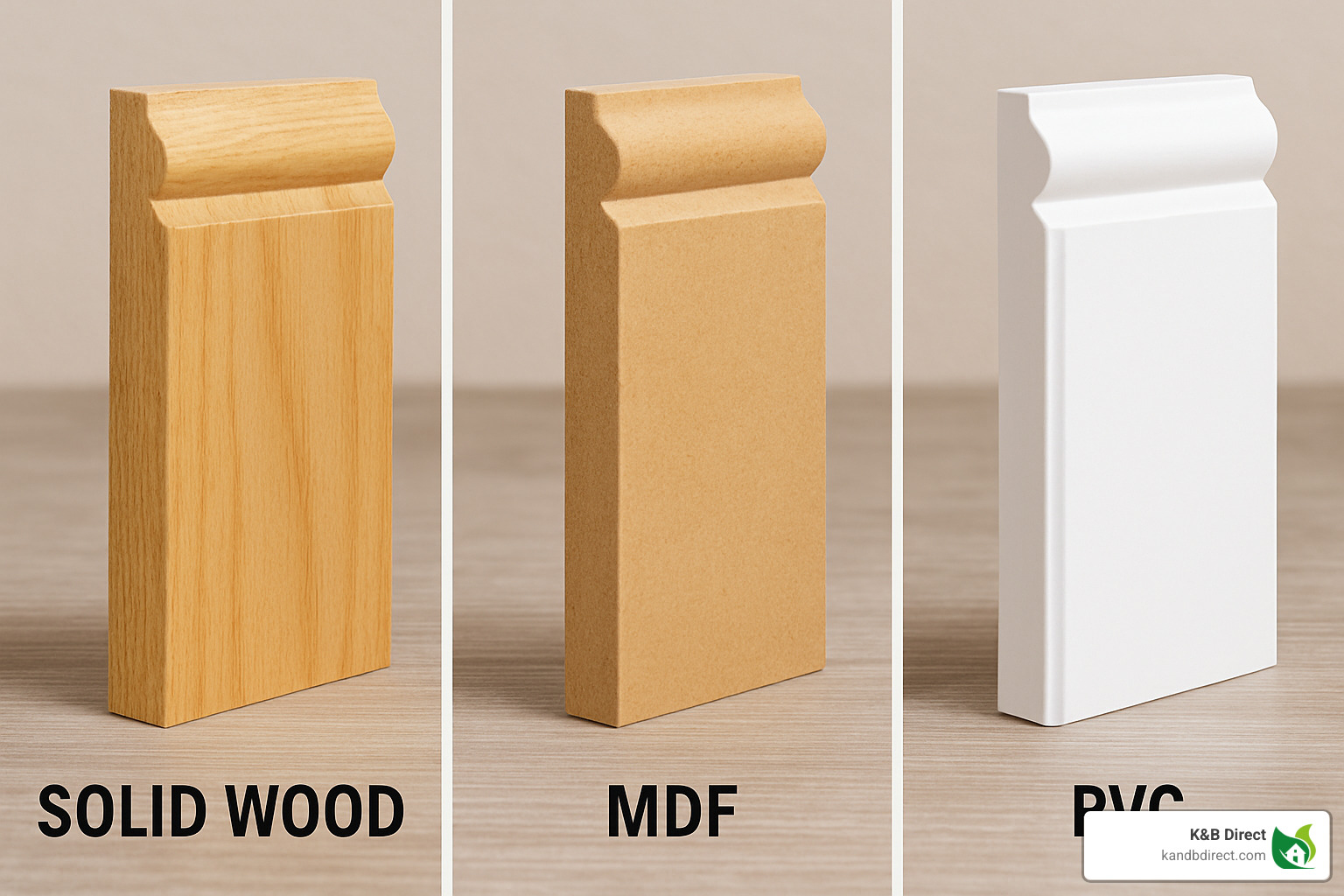
The material you choose for your door casing affects not only its appearance but also its durability, maintenance requirements, and cost. Understanding the options will help you make an informed decision.
| Material | Cost | Paintability | Moisture Resistance | Durability |
|---|---|---|---|---|
| Solid Wood | $$$-$$$$ | Excellent | Fair (species dependent) | Excellent |
| MDF | $-$$ | Excellent | Poor | Good |
| PVC | $$-$$$ | Limited | Excellent | Excellent |
| Polyurethane | $$-$$$ | Excellent | Excellent | Good |
| Finger-Jointed Pine | $-$$ | Excellent | Fair | Good |
Pros & Cons of Popular Materials
Walking through a client’s home recently, I pointed out how the solid wood casings had developed a beautiful patina over the years. That’s the magic of natural wood—it ages gracefully, telling the story of your home. Oak, maple, poplar, and pine remain popular choices, each bringing their unique character to your doorways. While wood offers timeless charm and repairability, it does come with a higher price tag and requires more attention to prevent warping in humid environments.
“I’ve had clients fall in love with the grain pattern in their oak casings,” I often tell customers at K&B Direct. “It’s like each doorway has its own fingerprint.”
Medium Density Fiberboard (MDF) has become the darling of budget-conscious homeowners, and for good reason. Its smooth, consistent surface takes paint beautifully, creating that perfect clean line around your doorways. I’ve installed MDF casings in countless Chicago homes where the owners wanted a crisp, painted finish without breaking the bank. The downside? Keep it away from moisture—bathrooms and basements aren’t ideal locations for MDF unless properly sealed.
I remember one client who insisted on MDF in her bathroom. “Six months later,” I tell new customers, “she was calling me about swelling and deterioration. Sometimes saving money upfront costs more down the road.”
For spaces where moisture is a concern, PVC and composite materials shine. These modern marvels won’t rot, warp, or attract hungry insects. While they lack the authentic feel of wood, they make up for it in durability and peace of mind. A basement renovation I completed last year in Schiller Park featured PVC casings throughout—the homeowner’s previous basement had suffered water damage, and he wasn’t taking chances with the new build.
Standard Sizes & Custom Profiles
When it comes to sizing your door casing, think of it like choosing the right frame for a cherished photograph—proportion matters. Most casings range from 2-1/4″ to 3-1/2″ in width, though craftsman styles often go wider at 5-1/4″ or more. Thickness typically falls between 9/16″ and 3/4″ for interior applications, with the standard reveal (visible portion of the jamb) usually measuring about 1/4″.
The profile you choose speaks volumes about your home’s personality. Ranch profiles (2-1/4″) offer a streamlined, contemporary look that works beautifully in modern homes. Colonial profiles (3-1/2″) bring more substantial presence and traditional detailing, while Craftsman profiles (5-1/4″) accept the bold, straightforward aesthetic of Arts and Crafts design.
At K&B Direct, we’ve seen a growing interest in our Casing 356 FJP (11/16″ x 2-1/4″)—it strikes that perfect balance between classic styling and affordability. For homeowners wanting to make more of a statement, our Casing BG312 provides a bolder presence that frames doorways with confidence.
I recently worked with a couple renovating a 1920s bungalow in Chicago. They brought in a piece of the original casing, worn but full of character. “Can you match this?” they asked. Through our custom CAD matching service, we recreated the profile exactly, preserving the home’s architectural integrity while providing new, stable materials. That’s the beauty of custom profiles—they honor history while embracing modern craftsmanship.
Whether you’re building new or renovating old, the right door casing material and profile creates that perfect finishing touch that makes a house feel like home. And remember—these aren’t just functional elements; they’re the frames through which you’ll view your life at home for years to come.
Installing Door Casing: Tools & Step-by-Step Guide
Installing door casing is a satisfying weekend project that can dramatically lift your home’s interior. With some basic tools and a bit of patience, you can achieve professional-looking results without calling in the pros.
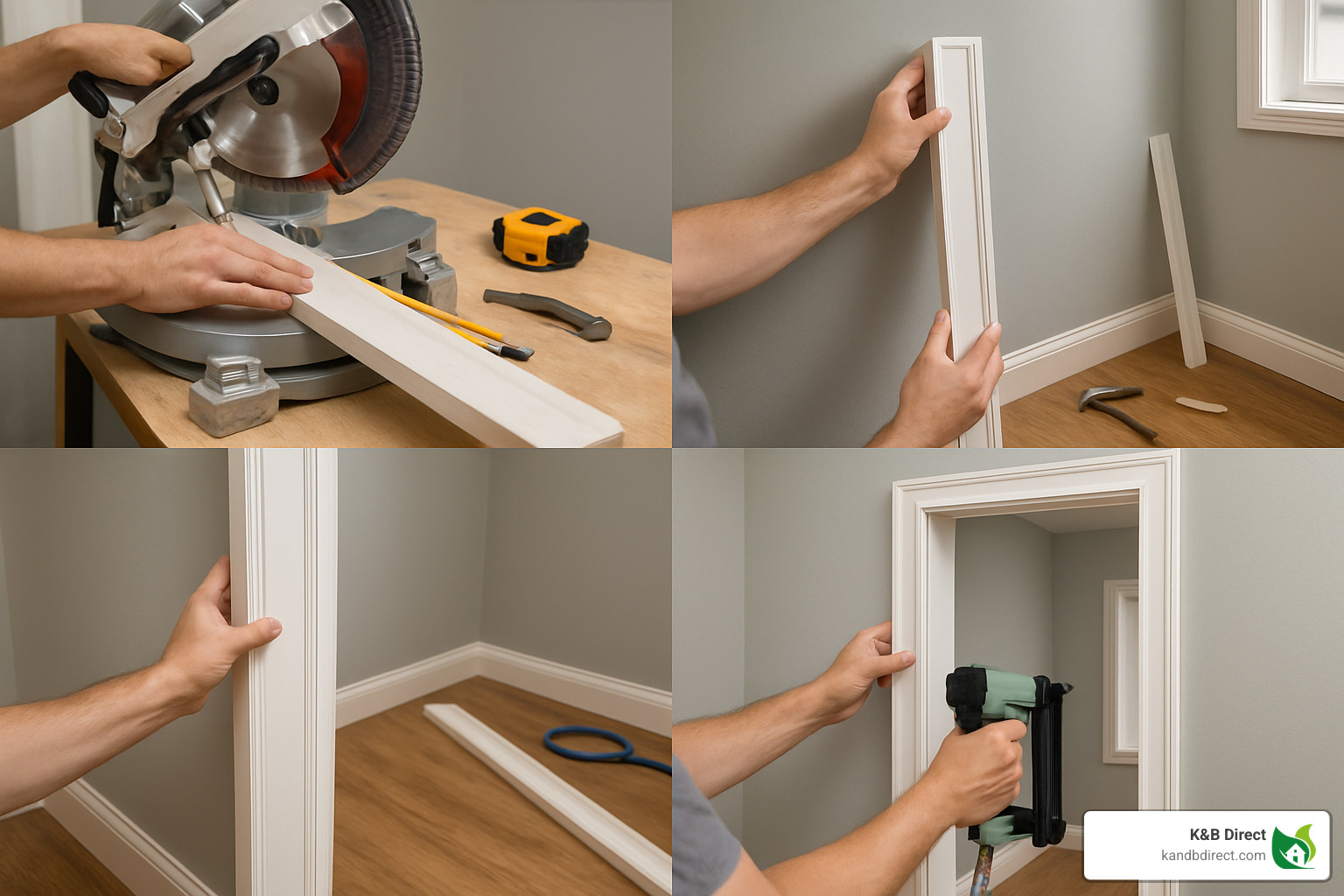
Before you begin, gather your essential tools: a miter saw for those precise angle cuts, a brad nailer (or hammer and finishing nails if you’re going old-school), a level, tape measure, and a reveal gauge. You’ll also need wood glue, caulk, wood putty, and a sanding block to finish things up nicely. Don’t forget primer and paint or stain for that polished look!
Pre-Installation Prep
I can’t stress this enough – proper preparation makes all the difference between a professional-looking job and one that screams “amateur hour.”
Start by measuring your door opening carefully, adding twice your reveal (that small gap between the door jamb and casing, typically 1/4″) to both height and width. Next, grab your level and check if your door jamb is perfectly vertical (plumb). If it’s a bit off, don’t panic – you can adjust your casing to compensate.
“I always tell my first-time DIYers to create a detailed cut list before making a single cut,” says Tom from our K&B Direct showroom. “Planning all your cuts in advance saves material and prevents those frustrating ‘oops’ moments.”
Before you start installing, make sure to remove any existing casing, patch any wall damage, and ensure your work surface is clean and dry. Trust me – trying to install new trim over damaged drywall is a recipe for disappointment.
Step-by-Step Interior Installation
For the classic mitered installation (those pretty 45-degree angle joints at the corners):
Begin with the head casing – measure the width of your door plus twice the reveal plus twice the width of your side casing. Cut those 45-degree miters at both ends. When I’m teaching new installers, I always emphasize the “measure twice, cut once” rule – it’s saved me countless times!
Next, do a dry fit. Hold the head casing in place and mark where your side casings will meet it. Cut those 45-degree miters on the top ends of the side casings. This test run helps catch any issues before the glue comes out.
Install the head casing first, applying a thin bead of wood glue to those mitered edges. Position it with your planned reveal and secure it with 2″ finishing nails into both the jamb and wall studs. Then install your side casings, again using glue on those mitered edges and aligning carefully with the head casing. Keep checking that your reveal stays consistent all the way around.
Once everything’s in place, use a nail set to recess those nail heads below the surface. Fill the dimples with wood putty, let it dry thoroughly, then sand everything smooth before applying your finish of choice.
If you’re going with a butted installation (straight 90-degree cuts), the process is similar but more forgiving. Cut your side casings to length with square cuts, install them with the proper reveal, then measure between their outer edges for your head casing length. The head casing simply sits on top of the side pieces – much more beginner-friendly!
Special Considerations for Exterior Doorways
Exterior door casing needs extra attention to battle the elements. Choose materials that can handle whatever Mother Nature throws at them – PVC, treated wood, or hardy exterior-grade hardwoods are your best bets.
“The biggest mistake I see with exterior casings is treating them like interior trim,” notes Sarah, our exterior specialist. “Water is your enemy out there, so you need to think defensively.”
Install flashing above the door to direct water away, and use exterior-grade sealant on all joints. Be thorough about sealing all surfaces – including edges and backs – to prevent moisture from sneaking in. A drip cap above the head casing is also essential for directing water away from your door.
Exterior casings need regular maintenance checks. Even the best installation will eventually need some TLC to keep looking great and functioning properly.
Common Mistakes & How to Avoid Them
After helping countless customers through their door casing projects, I’ve seen the same mistakes pop up again and again:
Uneven reveals make even the most expensive trim look sloppy. Make yourself a simple reveal gauge from scrap material – this little tool ensures consistency around the entire door.
Over-nailing is a rookie move that can split your beautiful new casing. For most trim, 2-3 nails per side is plenty to hold things secure.
Using the wrong material for the location is a costly error. That beautiful MDF casing might look perfect in your living room, but put it in a bathroom or exterior doorway and you’ll be replacing it before you know it. Our Casing BG312 from K&B Direct is a versatile option that works well in most interior applications.
Skipping primer might save you an hour today but cost you days of frustration later. Always prime raw wood before painting – it creates a better surface for paint adhesion and gives you a smoother, more professional finish.
Poor caulking can ruin the look of an otherwise perfect installation. Apply a thin bead of caulk to gaps and smooth it with a slightly damp finger for that seamless look the pros achieve.
With these tips and a bit of patience, you’ll be admiring your handiwork and accepting compliments from impressed friends in no time. And remember – the team at K&B Direct is always happy to answer questions and help you select the perfect door casing for your next project!
Maintenance, Costs & Emerging Trends
Taking care of your door casing doesn’t have to be complicated, but a little attention goes a long way in keeping it looking fresh for years to come.
Wood casings have a timeless appeal but do need some TLC. I recommend wiping them down with a slightly damp cloth every few months to prevent dust buildup. Those bottom sections of exterior casings? They’re particularly vulnerable to moisture damage, so make a habit of inspecting them at least once a year. You’ll want to touch up any chips in paint or worn spots in stain as they appear – small fixes now prevent bigger problems later. For exterior wood casings, plan to reseal them every 2-3 years to protect against our Chicago weather extremes.
If you’ve opted for MDF, PVC, or composite materials, your maintenance routine is even simpler. A quick wipe with mild soapy water keeps them looking clean, and an annual check of caulk lines will reveal any areas needing fresh sealant. These materials may occasionally have nails or screws work loose over time, so tighten them as needed.
When it comes to costs, door casing runs the gamut from budget-friendly to high-end, depending on your material choices:
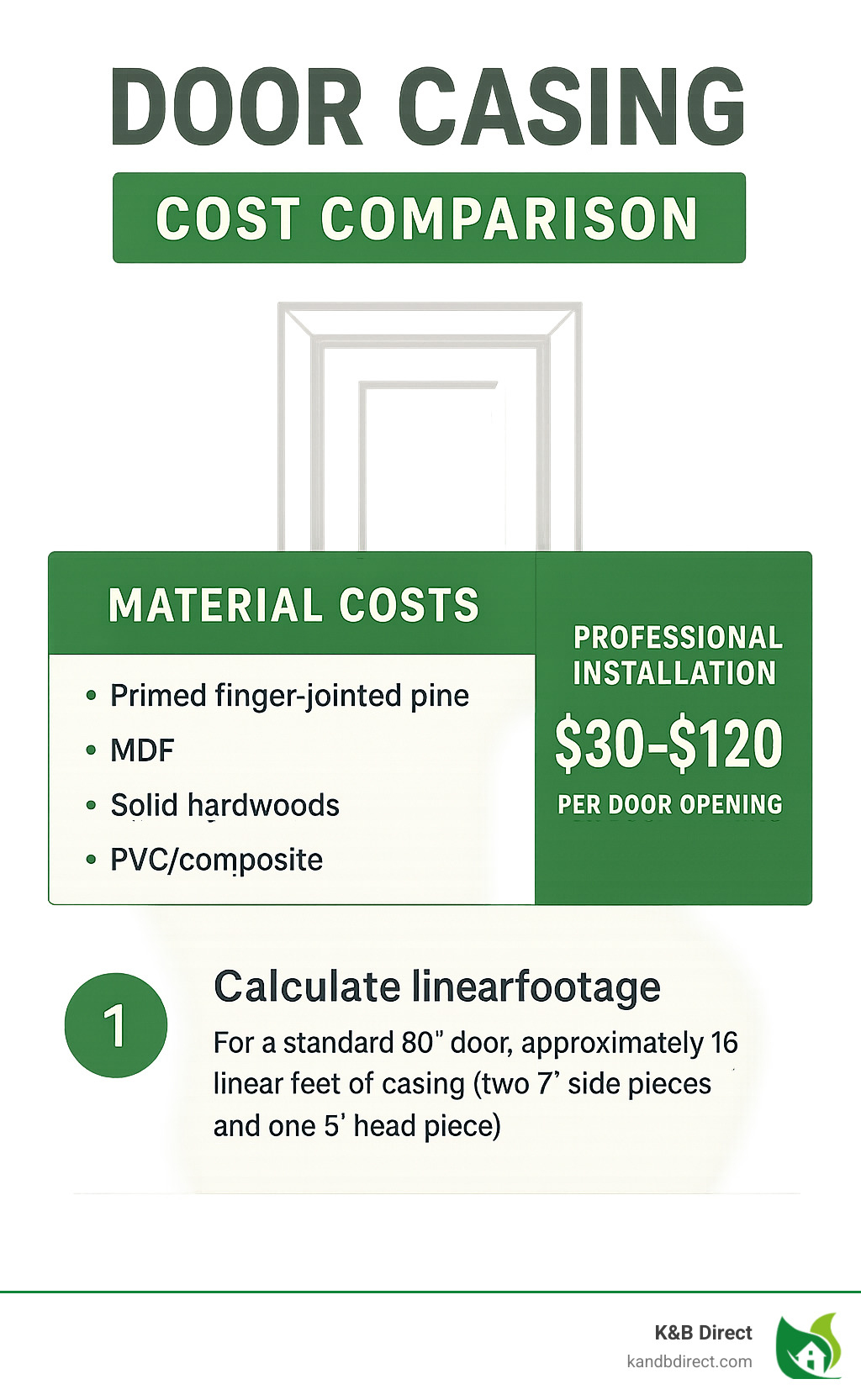
- Our primed finger-jointed pine options at K&B Direct start around $1 per linear foot, making them perfect for budget-conscious renovations
- MDF casings offer similar pricing ($1-3 per linear foot) with a smooth, paintable surface
- Solid hardwoods make a luxurious statement but come with a higher price tag ($3-10+ per linear foot)
- PVC and composite materials strike a middle ground at about $2-5 per linear foot, with the added benefit of moisture resistance
Professional installation typically adds between $30-$120 per door opening. The wide range reflects the difference between a simple installation and more complex setups with multiple pieces or challenging angles.
I’ve noticed some exciting trends emerging in the door casing world lately. Prefabricated kits have become increasingly popular – they include all the pre-cut pieces you need for standard door sizes, taking the guesswork out of measuring and cutting. For ultra-modern spaces, minimalist metal trims are making a statement with their clean lines and industrial feel. There’s also a growing integration with smart-home technology, featuring flush jambs designed to accommodate hidden wiring and components. And for the environmentally conscious homeowner, eco-friendly composites made from recycled materials offer sustainability without sacrificing style.
Budgeting Your Door Casing Project
Planning your budget doesn’t have to be intimidating. For a standard 80″ door, you’ll typically need about 16 linear feet of casing – that’s two 7′ side pieces and one 5′ head piece. Always add a 10-15% waste allowance; even professional installers account for the occasional mismeasurement or cutting error.
Don’t forget to factor in those little extras that can add up. If your design includes corner blocks, backbands, or plinth blocks, be sure to include those in your calculations. The finishing materials matter too – primer, paint or stain, caulk, and putty are essential for a polished look.
“I always remind my customers to think about tools,” says our trim specialist at K&B Direct. “If you’re DIYing, do you already own a miter saw and brad nailer? If not, would renting make more sense than buying?” These considerations can significantly impact your overall project cost.
While DIY installation can save you considerable money, be honest about your skill level and available time. Sometimes hiring a professional for a few hours saves days of frustration and potential costly mistakes. At K&B Direct, we’re happy to help you estimate materials accurately so you don’t end up with expensive leftovers or maddening mid-project supply runs.
Finishing Like a Pro
The finish you choose for your door casing isn’t just about looks – it also affects how well it stands up to daily life in your home.
For painted casings, preparation makes all the difference. Start by sanding all surfaces until they’re smooth to the touch. Apply a high-quality primer specifically designed for trim – this extra step ensures better paint adhesion and a more professional result. I’ve found semi-gloss or satin finishes work best for door casing because they’re easier to clean than flat paint but not as reflective as high-gloss.
When applying paint, thin coats are your friend. Use a high-quality brush or foam roller designed for smooth surfaces, and don’t rush the process. A light sanding between coats with fine-grit sandpaper (220 or higher) removes any bubbles or brush marks, leaving you with a finish that looks professionally sprayed.
If you’re going with a stained finish to showcase beautiful wood grain, start with sanding to a fine 180-220 grit. A pre-stain wood conditioner is worth every penny – it helps prevent blotchiness, especially on pine and other softwoods. Apply your chosen stain color, being careful to wipe away excess promptly for an even appearance. Protect your work with multiple coats of clear polyurethane, lightly sanding between coats for a silky-smooth result.
“The profile thickness you choose dramatically affects the visual impact,” notes our design specialist. “Thicker moulding makes more of a statement in larger rooms, while thinner casings give a softer, more subtle feel in smaller spaces.” Consider how your finishing choices – both color and sheen – will either emphasize or downplay your chosen profile.
Frequently Asked Questions about Door Casing
How do interior and exterior door casings differ?
While both types frame your doorways, interior and exterior door casings have important differences that affect their performance and longevity.
Interior casings enjoy the comfort of being sheltered from the elements, which means they can be crafted from a wider variety of materials. You’ll commonly find them made from MDF, pine, poplar, or other softer woods that wouldn’t stand a chance against Mother Nature’s mood swings. These materials are perfect for indoor use because they’re affordable, easy to work with, and take paint beautifully.
Exterior casings, on the other hand, need to be tough enough to face rain, snow, sun, and whatever else the weather throws at them. That’s why they’re typically made from materials like PVC, treated lumber, or naturally rot-resistant woods such as cedar or mahogany. Think of them as the rugged outdoor triprs of the trim world!
“The difference between interior and exterior casing isn’t just about looks—it’s about survival,” explains a seasoned contractor. “Your exterior casing needs to be your home’s first line of defense against the elements.”
The installation process differs too. When installing exterior door casing, you’ll need to include weatherproofing measures like flashing above the door, proper caulking at all joints, and often a drip cap to direct water away from the opening. Every surface—even the hidden ones—needs to be sealed to prevent moisture infiltration.
Can I replace casing without removing the door?
Absolutely! This is one of the things I love about door casing projects—they deliver major visual impact without requiring you to mess with the door itself. It’s like giving your doorways a makeover without major surgery.
To replace your casing while keeping your door in place:
- Gently pry off the old casing using a putty knife or pry bar, working carefully to avoid damaging your walls
- Clean up the revealed area and patch any wall damage
- Measure and cut your new casing pieces according to your chosen style
- Install the new casing following proper techniques for your chosen style
“Replacing just the casing is one of the most cost-effective ways to update your interior,” notes a home improvement specialist. “You get a fresh look without the hassle and expense of replacing entire door units.”
This approach is perfect for homeowners looking to refresh their space or update from dated trim styles to something more current. The door stays functional throughout the process, and you’ll be amazed at how such a seemingly small change can transform the feel of your entire room.
What’s the best material for high-humidity rooms?
When it comes to bathrooms, laundry rooms, and other moisture-prone spaces, choosing the right door casing material can save you from future headaches and repair bills.
PVC is the champion of wet environments. It’s completely waterproof, won’t rot or warp, and doesn’t provide a friendly home for mold or mildew. While some homeowners hesitate because of its synthetic nature, modern PVC trim products offer surprisingly realistic appearances and can be painted if desired.
Composite materials offer another excellent option, combining wood fibers with moisture-resistant resins to create durable trim that stands up to humidity while maintaining a more wood-like appearance and feel. These products have come a long way in recent years and offer a good middle ground between traditional wood and fully synthetic options.
If you prefer the warmth and character of real wood, look to naturally rot-resistant species like cedar, redwood, or cypress. These woods contain natural oils and compounds that help them resist decay, even in challenging environments. With proper finishing, they can provide years of beautiful service in humid conditions.
“The bathroom isn’t the place to compromise on materials,” cautions a design expert from The Moulding Company. “What seems like a small savings now could lead to costly repairs down the road.”
At K&B Direct, we typically steer customers away from standard MDF in high-moisture areas. While affordable and smooth, MDF’s particleboard-like composition means it can swell dramatically when it gets wet, leading to unsightly and potentially costly damage. If you’re on a budget but need moisture resistance, consider finger-jointed pine with a good primer and paint system—it offers better water resistance at a similar price point.
Conclusion
Door casing may seem like a small detail in your home renovation journey, but as we’ve explored throughout this guide, it plays an outsized role in both protecting your home and defining its character. The right casing transforms ordinary doorways into architectural statements that tell your home’s story.
Think about it – we walk through doorways dozens of times each day, yet rarely pause to appreciate how these transitions shape our experience of home. Well-chosen door casing creates visual rhythm, guides the eye, and subtly reinforces your home’s architectural style. It’s the frame that gives purpose and definition to the spaces we move between.
I’ve seen how homeowners’ faces light up when they see newly installed trim that perfectly complements their space. That moment when everything just “clicks” is what makes working with door casing so rewarding for our team at K&B Direct.
We’re proud to serve Chicago-area homeowners with quality mouldings that stand the test of time. From traditional colonial profiles that honor historic homes to sleek, contemporary designs that create clean lines in modern spaces, we believe every doorway deserves thoughtful consideration.
Door casing is an investment that pays daily dividends in enjoyment. Unlike trendy decor that might feel dated in a few years, quality trim installed with care becomes part of your home’s permanent character and value.
The beauty of door casing lies in its dual nature – it’s both highly practical and deeply aesthetic. It seals gaps, insulates your home, and provides acoustic benefits while simultaneously framing the portals between your living spaces. Few home elements work this hard while looking this good!
We invite you to explore our full selection of mouldings and millwork at our Schiller Park and Chicago locations. Our team understands that choosing trim can feel overwhelming, and we’re here to make the process enjoyable and stress-free. Whether you’re updating a single doorway or renovating your entire home, we’ll help you find the perfect finishing touch that brings your vision to life.
After all, it’s the details that make a house truly feel like home – and door casing is one detail that makes a world of difference.