
Understanding Interior Door Pricing
Interior door prices can vary dramatically based on material, style, and installation, making it essential to understand the cost landscape before starting your project. Whether you’re replacing a single door or outfitting an entire home, knowing what to expect helps you budget effectively.
Quick Interior Door Price Overview:
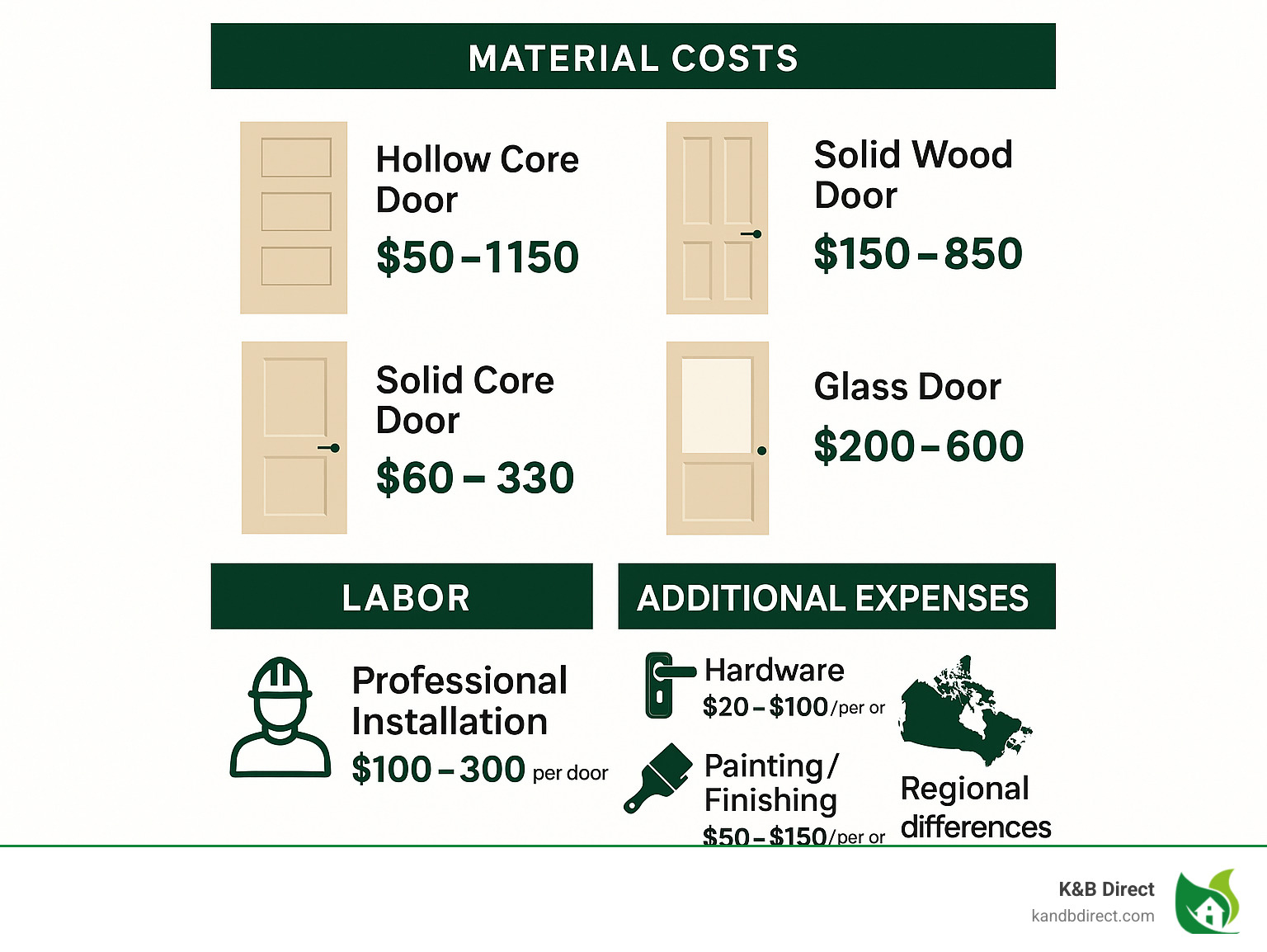
- Hollow Core Doors: $50 – $150
- Solid Core Doors: $60 – $330
- Solid Wood Doors: $150 – $850+
- Glass Doors: $200 – $600
- Professional Installation: $100 – $300 per door
- Hardware (handles, hinges, locks): $20 – $100 per door
- Painting/Finishing: $50 – $150 per door
The total cost for replacing an interior door typically ranges from $226 to $824 including materials and labor, though premium options can push costs well above $1,000 per door.
“Replacing interior doors is a significant home improvement project that can improve both the functionality and aesthetic appeal of your living space,” advises the 2025 HomeAdvisor Remodeling Cost Guide. The key is balancing your design goals with your budget.
Beyond the door itself, you’ll need to factor in costs like trim ($30-$100), potential frame modifications, and old door disposal ($20-$50). Regional differences also play a role, with major cities like Chicago typically commanding higher prices for materials and labor.
I’m Eryk Piatkowski, Owner at K&B Direct, and I’ve helped homeowners steer interior door prices and selections for over ten years. My experience has taught me that understanding the full cost picture upfront prevents budget surprises and leads to better renovation outcomes.
Simple interior door prices word guide:
Breaking Down Costs by Door Material and Type
The biggest factor impacting interior door prices is the material and construction. The difference between a hollow, lightweight door and a solid, substantial one directly translates to cost and performance.
Average interior door prices by material
Let’s walk through the options, from budget-friendly to premium.
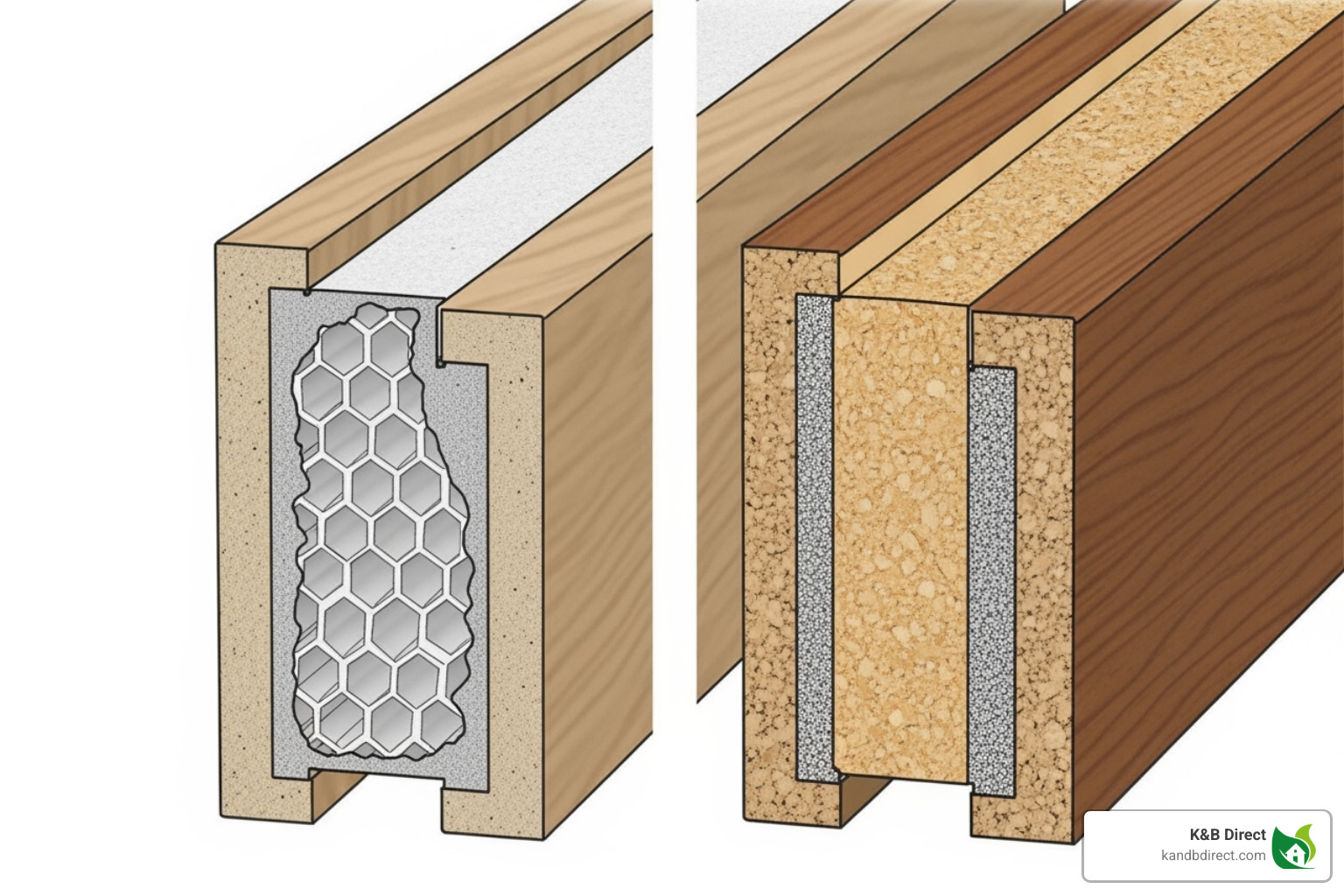
Hollow core doors are the most affordable, typically running between $50 and $150. Constructed with a honeycomb of cardboard or plastic between thin wood veneer skins, they are lightweight and best for closets or low-traffic areas where sound blocking isn’t a priority.
Solid core doors are a significant step up, ranging from $60 to $330. They contain dense engineered wood, making them heavier and better at insulating sound. This makes them ideal for bedrooms, bathrooms, and home offices.
Solid wood doors represent the premium end, starting around $150 and climbing to $850 or more. Made from genuine wood like pine, oak, or maple, these doors offer superior durability and natural beauty. They are an investment that adds character and value to your home.
Glass doors bring light and openness to a space, typically costing between $200 and $600. The price depends on the type and amount of glass. French doors are a popular glass option that can transform a room’s feel, but offer less privacy.
MDF doors are a great middle ground, priced between $30 and $400. This engineered wood product has a smooth surface that’s perfect for painting and resists warping better than some solid wood options.
Here’s how the main door types stack up:
| Door Type | Cost Range ($) | Durability | Soundproofing | Best Use |
|---|---|---|---|---|
| Hollow Core | $50 – $150 | Low | Low | Closets, low-traffic areas, tight budgets |
| Solid Core | $60 – $330 | Medium | Medium | Bedrooms, bathrooms, offices |
| Solid Wood | $150 – $850+ | High | High | Main living areas, luxury applications |
How door style impacts the bottom line
After material, the door’s style is the next major price factor. Simple designs are cheaper, while intricate or space-saving styles often require specialized hardware that increases the cost.
Flush doors are minimalist, with flat, smooth surfaces. As the most affordable option ($20 to $200), they suit modern homes with clean lines.
Panelled doors add character with raised or recessed sections. These classic doors cost between $25 and $500, depending on the complexity of the panel design.
French doors feature multiple glass panes for a light-filled transition between spaces. Single doors run $200 to $2,000, while double sets can cost $400 to $6,000.
Barn doors offer rustic charm and save space with a sliding mechanism. Basic models start around $150, but custom designs can exceed $2,000. They require adequate wall space for the track.
Bifold doors are a practical, space-saving choice for closets and pantries, folding in half when opened. Prices range from $40 for basic models to $2,000 for premium versions.
Pocket doors are the ultimate space-savers, sliding into the wall. While the door slab may start at $120, the complex installation can bring the total cost to $2,500 or more.
Understanding the Key Factors That Influence Interior Door Prices
Several behind-the-scenes factors can dramatically impact your final bill. Understanding these cost drivers for interior door prices helps you budget accurately and avoid surprises.
Standard vs. Custom-Sized Doors
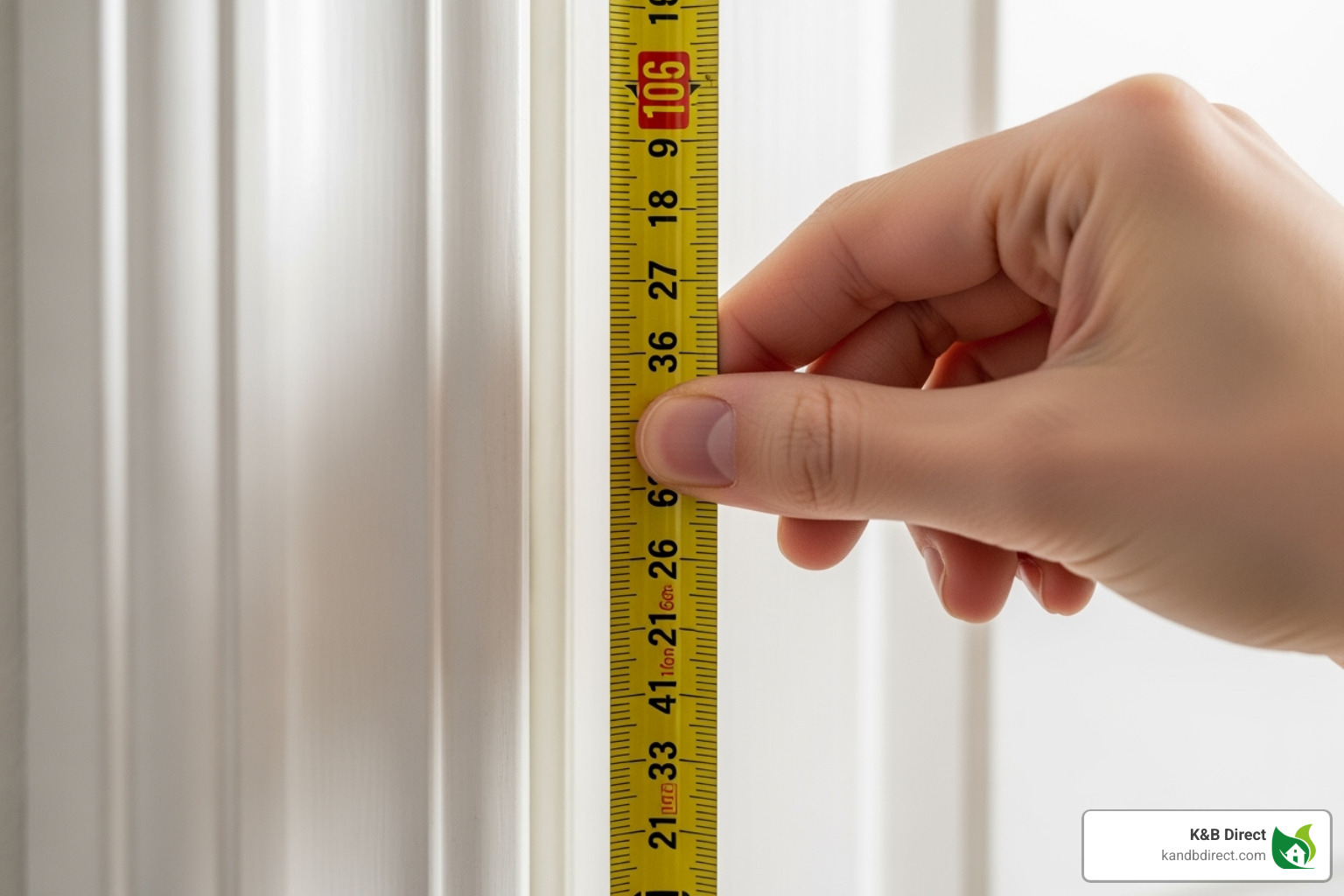
Size matters for your wallet. Standard door sizes are the most cost-effective choice. Most interior doors come in common widths of 24, 28, 30, 32, and 36 inches, with a typical height of 80 inches. Manufacturers produce these in large quantities, keeping prices reasonable and availability high.
Custom dimensions get expensive quickly. Older homes or unique doorways may require custom doors, which involve special manufacturing, higher material costs, and longer wait times. Installation is also more complex, as your contractor may need to modify the frame, adding to labor costs.
The Impact of Special Features and Finishes
Adding special features will increase the price, but they can be worth it for the right application.
Glass inserts can transform a plain door. Clear glass is the most affordable, while frosted glass offers privacy. Etched or patterned glass costs more but adds significant visual interest.
For peace and quiet, consider soundproofing features. These doors use denser core materials and improved seals to minimize noise, making them valuable for home offices, theaters, or bedrooms.
The door’s finish also impacts interior door prices. Primed doors are the most budget-friendly, arriving ready for you to paint. Pre-finished doors come already painted or stained, saving you time and ensuring a professional look, though they cost more upfront.
Regional Price Differences
Where you live can affect what you’ll pay for the same door and installation. Materials and labor simply cost more in some areas.
Major cities like Chicago typically have higher prices for doors and installation services due to a higher cost of living and greater demand for skilled labor. Regional labor rates for professional installation, which generally run $100 to $300 per door, reflect local wage standards. A carpenter in downtown Chicago will likely charge more per hour than one in a smaller Midwestern town.
Local supply and demand also play a role. Areas with multiple suppliers and healthy competition often offer better deals. For a more accurate estimate, you can use online tools like Homewyse’s cost estimator to get pricing for your area.
At K&B Direct, we help customers across the Chicago area find the right balance of quality, style, and value for their specific needs and location.
Factoring in Installation and Additional Expenses
The sticker price on a new door is just the beginning of your interior door prices journey. You also need to account for installation and other extras.
DIY vs. Professional Installation Costs
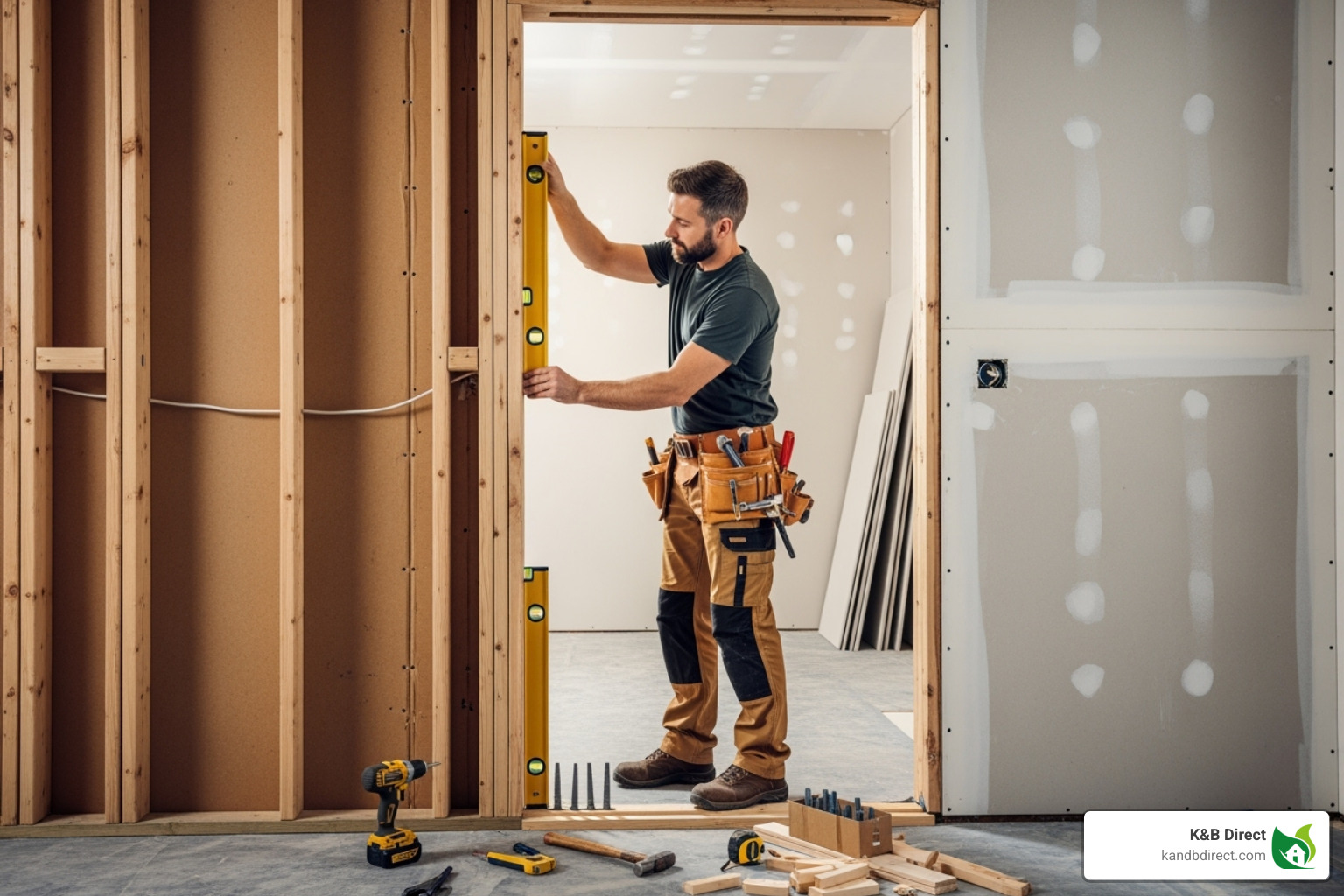
DIY installation can lower your costs if you have the right tools and skills. However, installing a door requires precision. A small mistake can result in a door that doesn’t close properly.
Professional installation typically runs $100 to $300 per door, with pros charging $40 to $90 per hour. While it costs more upfront, professionals guarantee their work, ensuring your door is level and latches smoothly.
The choice between pre-hung and slab doors also affects labor costs. Pre-hung doors come as a complete package (door, frame, hinges) and are quicker to install (around $120-$260 for labor). Slab doors are just the door panel, which are cheaper to buy ($30-$300) but require more skilled labor to fit into an existing frame ($200-$570 for labor).
Breaking down additional interior door prices and fees
Don’t overlook these additional costs:
Hardware costs add $20 to $100 per door. Basic knobs might be $20-$40, but decorative handles and locks will cost more. Hinges typically run $8-$50 per door.
Painting or staining is necessary unless you buy pre-finished doors. Professional painting adds $50 to $150 per door, but you can do it yourself to save on labor.
Trim and molding provides a finished look around the frame. This casing is essential for a polished appearance and costs $30 to $100 per door for materials and installation.
Old door removal and disposal can cost $20 to $50 per door. Some installers include this in their quote. A money-saving tip: consider donating old doors to organizations like Habitat for Humanity to avoid disposal fees.
When you add everything up, your total interior door prices can be much higher than the initial sticker price. Understanding these costs upfront helps you budget properly.
Smart Savings: Getting the Best Value on Your New Doors
Navigating interior door prices doesn’t mean choosing between quality and affordability. With smart planning, you can get beautiful, durable doors that fit your budget.
Tips for Saving Money Without Sacrificing Quality
Knowing where to splurge and where to save is key to getting great value.
- Choose standard sizes: Sticking to common dimensions like 30, 32, or 36-inch widths avoids custom manufacturing premiums.
- Opt for simpler designs: A clean flush or classic 2-panel door often costs much less than ornate French or trendy barn doors.
- Shop during sales: Look for end-of-season clearances and holiday promotions for substantial savings.
- Reuse existing hardware: If your current hinges and handles are in good shape, keeping them can save you $20 to $100 per door.
- Use hollow core doors strategically: These are perfect for closets and pantries, allowing you to invest more in solid core doors for bedrooms and main living areas.
- Consider DIY installation: For pre-hung doors, DIY can cut labor costs, but be honest about your skill level to avoid costly mistakes.
- Get multiple quotes: Obtain at least three estimates from contractors to ensure a fair price for installation.
What to Look for in Door Warranties and Guarantees
A great price is meaningless if the door doesn’t last. Understanding warranties is crucial for protecting your investment.
Manufacturer warranties should cover defects in materials and construction, like warping or cracking, for at least 5-10 years. Understand what actions, such as improper installation, might void the warranty.
An installation guarantee from your contractor should cover their workmanship for at least one year. This protects you from issues like a door that doesn’t latch properly or hangs unevenly.
Clarify what is covered under coverage for defects, as this can vary. The best warranties also include labor coverage, meaning the manufacturer or retailer pays for re-installation if a door is defective.
At K&B Direct, we are transparent about warranties because we want you to be confident in your investment. A quality door with a solid warranty provides long-term peace of mind.
Frequently Asked Questions about Interior Door Prices
Interior door prices can be confusing, so we’ve answered some of the most common questions we hear at K&B Direct.
What is the average total cost to replace an interior door?
Most homeowners spend between $226 to $824 to replace a single interior door, including all materials and labor. This breaks down as follows:
- Door: $50 to $600+
- Professional Installation: $100 to $300
- Hardware: $20 to $100
- Painting/Finishing: $50 to $150
- Trim/Molding: $30 to $100
- Old Door Disposal: $20 to $50
A simple bedroom door replacement may cost a few hundred dollars, while a project with multiple or high-end doors can run into the thousands.
Which interior door material offers the best value?
Value depends on your needs and budget:
- Hollow core doors are the most budget-friendly option, ideal for closets and pantries.
- Solid core doors offer the best balance of durability, sound insulation, and price. They are our top recommendation for most living spaces, including bedrooms and bathrooms.
- Solid wood doors are the premium choice. While their interior door prices are higher, they offer maximum durability, beauty, and can increase your home’s value.
For most homeowners, solid core doors provide the best overall value, hitting the sweet spot between performance and price.
How much more do custom interior doors cost?
Custom doors typically cost 25% to 100% more than standard sizes. This price premium is due to special manufacturing processes and the increased labor required for a custom fit. Lead times are also longer. If your door frames can accommodate standard sizes (widths of 24, 28, 30, 32, or 36 inches), sticking with them will save you money and time.
Conclusion
Understanding interior door prices is about breaking down the key factors. Material is the biggest driver, from budget-friendly hollow core ($50-$150) to premium solid wood ($850+). Style, installation ($100-$300), hardware, and finishing also add to the total cost. Prices can vary based on your location, with major metro areas often being more expensive.
Smart shopping can save you hundreds. Choosing standard sizes, opting for simpler styles, and reusing existing hardware are effective ways to lower costs. For most homes, solid core doors offer the best balance of affordability and performance.
At K&B Direct, we know every project is unique. We are committed to helping you balance your vision with your budget. Our focus on top-quality products at unbeatable, lowest possible prices ensures you get great value.
Investing in quality interior doors pays off in daily enjoyment and long-term home value. Take your time, compare your options, and choose a door that will serve your family for years.