
Modern Base Moulding: What to Know for a Sleek Look
Modern base moulding is a minimalist trim style that emphasizes clean lines, simple profiles, and flat or subtly detailed surfaces, typically ranging from 3 to 7 inches in height. Here’s what defines it:
- Simple profiles: Flat, square, or eased-edge designs with minimal ornamentation
- Common materials: Primed MDF, solid wood (poplar, pine, oak), or moisture-resistant PVC
- Popular styles: Eased Edge, Contemporary Step, and flat angular profiles
- Key characteristics: Sharp corners, smooth surfaces, and shadow lines created through subtle reveals rather than decorative curves
- Best for: Modern Farmhouse, Contemporary Craftsman, Industrial, and Scandinavian interiors
If you’ve ever felt a room was missing something despite great paint and furniture, the culprit might be your baseboards. This seemingly minor detail plays a huge role in tying a design together. Modern base moulding strips away ornate curves for simplicity and purpose. It features clean, straight lines that protect your walls while quietly enhancing your space rather than demanding attention.
The demand for modern and minimalist designs is growing, with the baseboard market projected to reach $1.8 billion by 2030. MDF baseboards are a large part of this trend, offering a cost-effective way to achieve a modern look.
Choosing the right modern base moulding involves considering ceiling height, design style, material durability, and installation. Get it right, and your baseboards will create a polished, cohesive look that makes your space feel complete.
As Eryk Piatkowski, owner at K&B Direct, I’ve helped countless homeowners select modern base moulding to complement their renovations. Since 2011, our team has specialized in guiding customers through these crucial decisions that make a big difference in your home’s overall aesthetic.

What Defines Modern Baseboard Styles?
The magic of modern base moulding is its ability to feel intentional but not overdone. Unlike traditional baseboards loaded with decorative details, modern styles accept clean lines and simple profiles. Their beauty lies in restraint, featuring flat surfaces, gentle angles, or softly eased edges. They protect walls from scuffs while maintaining a sleek, uncluttered look that fits contemporary design. This shift from “builder grade” trim to more personal profiles is a growing trend we’ve seen at K&B Direct. Homeowners want baseboards that lift a space without overwhelming it. If you’re curious about how baseboards fit into the bigger picture of trim work, check out more info about different moulding types on our site.
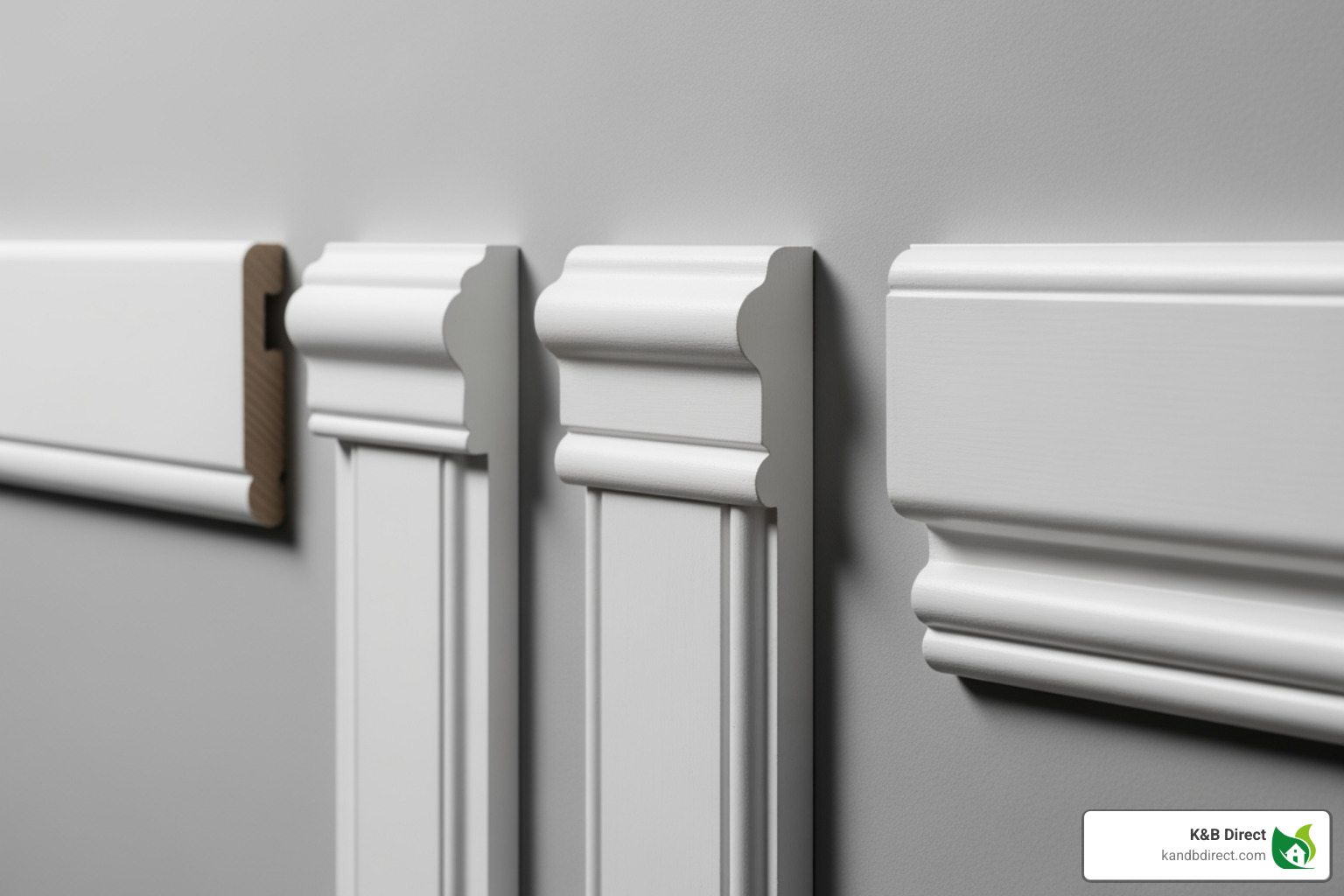
Let’s look at the modern baseboard styles that our customers keep coming back to:
Flat or Square Baseboards
Flat baseboards are the epitome of minimalism, featuring straight lines and sharp, geometric corners with no embellishments. The Eased 1 Edge Modern style is a popular example, delivering a crisp, uncluttered look ideal for Contemporary Craftsman homes that prioritize precise execution over decorative flourishes. These baseboards work best when you want your trim to create a clean boundary without competing with other design elements, allowing them to blend in seamlessly.
Step and Reveal Baseboards
For a touch more personality without sacrificing the modern aesthetic, step and reveal baseboards are an excellent choice. These profiles use subtle recesses and shadow lines to create visual interest through depth. Styles like the Contemporary Step MDF Moulding and the Atherton Modern Baseboard Molding add architectural detail without traditional ornamentation. The small steps cast gentle shadows, giving walls dimension and a sophisticated look that is modern but not stark.
Tapered and Eased Edge Profiles
For a softer take on modern design, tapered and eased edge profiles are ideal. An Eased Edge Baseboard has a gently rounded or beveled top edge, creating a smooth transition from wall to trim. This style is contemporary yet approachable, working well in modern and transitional spaces. It offers clean lines without the hard geometry of other modern profiles, making it a versatile and inviting option for homeowners throughout Illinois.
Choosing the Right Materials for Modern Base Moulding
When selecting modern base moulding, the material is as important as the profile. Your choice affects budget, durability, finish options, and ease of installation. While MDF is popular for its affordability and versatility, solid wood and PVC also offer distinct advantages. Let’s review what each material offers so you can make the right choice for your space.
| Material | Cost-Effectiveness | Durability | Ease of Installation | Best Use Cases |
|---|---|---|---|---|
| Medium-Density Fiberboard (MDF) | High | Good (prone to moisture damage if not sealed) | Very Easy | Painting applications, budget-friendly projects, areas with low moisture, smooth finishes. |
| Solid Wood (Poplar, Pine, Oak) | Medium to Low | Excellent (durable, can be repaired) | Easy to Moderate | Staining or clear coating, high-traffic areas, traditional and modern designs where wood grain is desired, custom profiles. |
| PVC and Polymer Composites | Medium | Excellent (waterproof, rot/termite/scratch resistant) | Easy | Bathrooms, kitchens, basements, high-moisture areas, commercial applications, indirect lighting, flexible installations. |
Medium-Density Fiberboard (MDF)
MDF is made from wood fibers, resin, and wax pressed into dense, smooth panels. It’s popular for modern base moulding because it offers a perfectly consistent surface with zero grain or knots, resulting in a flawless, glass-smooth painted finish. The baseboards we carry typically come pre-primed, making painting easier. Best of all, MDF is budget-friendly, costing significantly less than solid wood. It’s also lightweight and easy to install. The main caveat is its sensitivity to moisture; if not properly sealed, it can swell. We advise against using it in bathrooms or basements unless fully sealed. For high-moisture spots, consider our PVC Floor Moulding alternatives.
Solid Wood (Poplar, Pine, Oak)
Solid wood baseboards in poplar, pine, or oak offer natural beauty and excellent durability. Poplar is a great, affordable choice for painting. Pine works well for painting or staining. Oak, with its bold grain, is a showpiece when you want the natural wood to be part of your design. The advantage of solid wood is its versatility. You can stain it to add warmth and texture, and it stands up well to impacts. If damaged, it can be sanded and refinished. While it costs more upfront than MDF, many find the investment worthwhile for high-traffic areas or for its natural aesthetic. We have an extensive collection of wood moulding options to fit your modern design.
PVC and Polymer Composites
For moisture-prone areas like bathrooms, kitchens, and basements, PVC and polymer composite baseboards are game-changers. These materials are waterproof and won’t rot, warp, or attract termites. High Definition Polymer System moulding, for example, is about 20% stronger than pine and resists scratches and dents, making it ideal for high-traffic and commercial spaces. Many polymer baseboards are also flexible, which is a huge plus for curved walls. These products often come pre-primed or pre-painted, reducing installation time. They are an excellent choice when durability and moisture resistance are top priorities.
Design and Proportions: Getting the Modern Look Right
The beauty of modern base moulding lies in how it relates to the rest of your room. Achieving a sleek, polished look requires considering scale, proportion, and coordination with walls, ceilings, and other trim. Like a picture frame, your baseboards need to be sized correctly for the space to create a harmonious, intentional look.
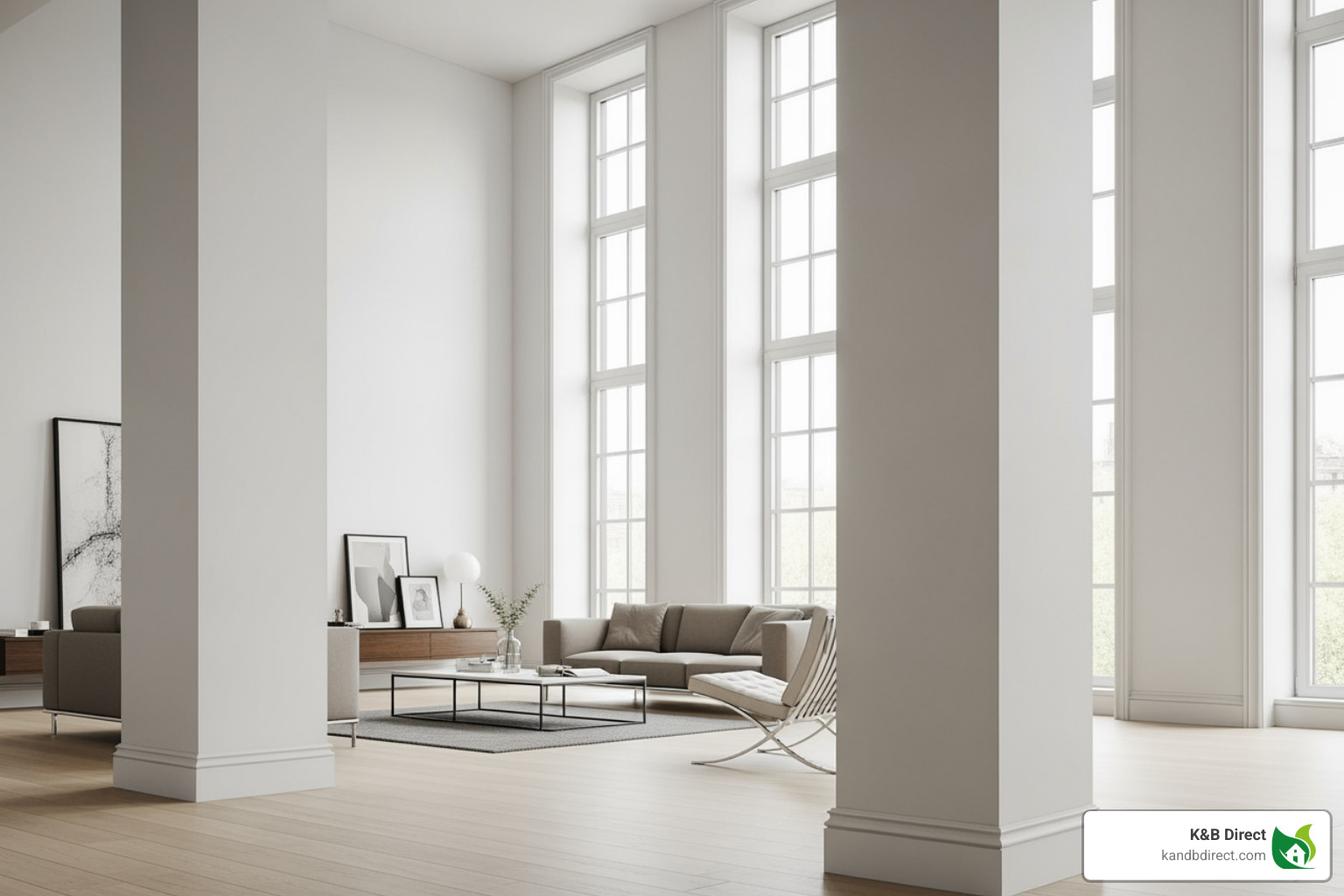
How to Select the Right Height and Width
A common question is about baseboard height, which depends on your ceiling height. Rooms with 9- or 10-foot ceilings can handle taller baseboards (up to 7-1/2 inches) to create a strong visual anchor. For standard 8-foot ceilings, a 5 to 6-inch baseboard is usually best, providing presence without being overwhelming. Slimmer profiles work well for lower ceilings. Width also matters: slimmer profiles feel minimalist, while thicker ones add substance. For a cohesive design, coordinate your baseboards with your window and door casings in both height and style. We help customers in Chicago and the surrounding Illinois suburbs steer these details.
The Latest Trends in Colors and Finishes for modern base moulding
Color choices for modern base moulding can transform a room. While crisp white is a classic, more adventurous options are gaining popularity. Matching baseboards to the wall color creates a seamless, architectural look that can make rooms feel more spacious. Conversely, high-contrast trim, like black baseboards against white walls, offers a bold, sharp definition ideal for industrial or contemporary spaces. According to Arris Interiors, beautiful browns are a major trend for 2025, adding richness to neutral palettes. Natural wood tones, like light oak or walnut, bring warmth and organic quality to Scandinavian and Mid-Century Modern interiors. Many of our mouldings come primed, offering complete flexibility for painting.
Pairing modern base moulding with Interior Design Styles
Modern base moulding is highly adaptable to different design styles.
- Modern Farmhouse: Flat, angular baseboards in white or cream complement the rustic-chic aesthetic without competing with other elements.
- Contemporary Craftsman: Substantial but simple flat profiles in high-quality wood or MDF honor the focus on craftsmanship.
- Industrial: Straight lines and square profiles, often in dark, high-contrast colors, create a raw, utilitarian edge.
- Scandinavian: Simple flat or eased-edge baseboards in white or light wood maintain a minimalist, serene atmosphere.
- Mid-Century Modern: Tapered profiles in natural wood or warm, muted colors complement the era’s blend of organic shapes and clean lines.
The right baseboard choice can pull your entire design together, changing a good room into a great one. It’s a small detail that makes all the difference in achieving your dream home aesthetic.
Installation, Finishing Touches, and Common Mistakes
Getting your modern base moulding installed might look simple, but there’s a real difference between a DIY job and that crisp, professional finish that makes a room feel complete. The clean lines and minimal profiles of modern trim actually make imperfections more noticeable, so precision matters more than ever. Whether you’re tackling this project yourself or hiring someone, knowing what to watch for will help you get that polished look you’re after.
The good news? Modern baseboards are generally easier to install than ornate traditional styles. There are fewer curves and decorative elements to align, which means fewer opportunities for things to go wrong. But “easier” doesn’t mean foolproof. We’ve seen plenty of homeowners get tripped up by seemingly small details that end up making a big visual impact.
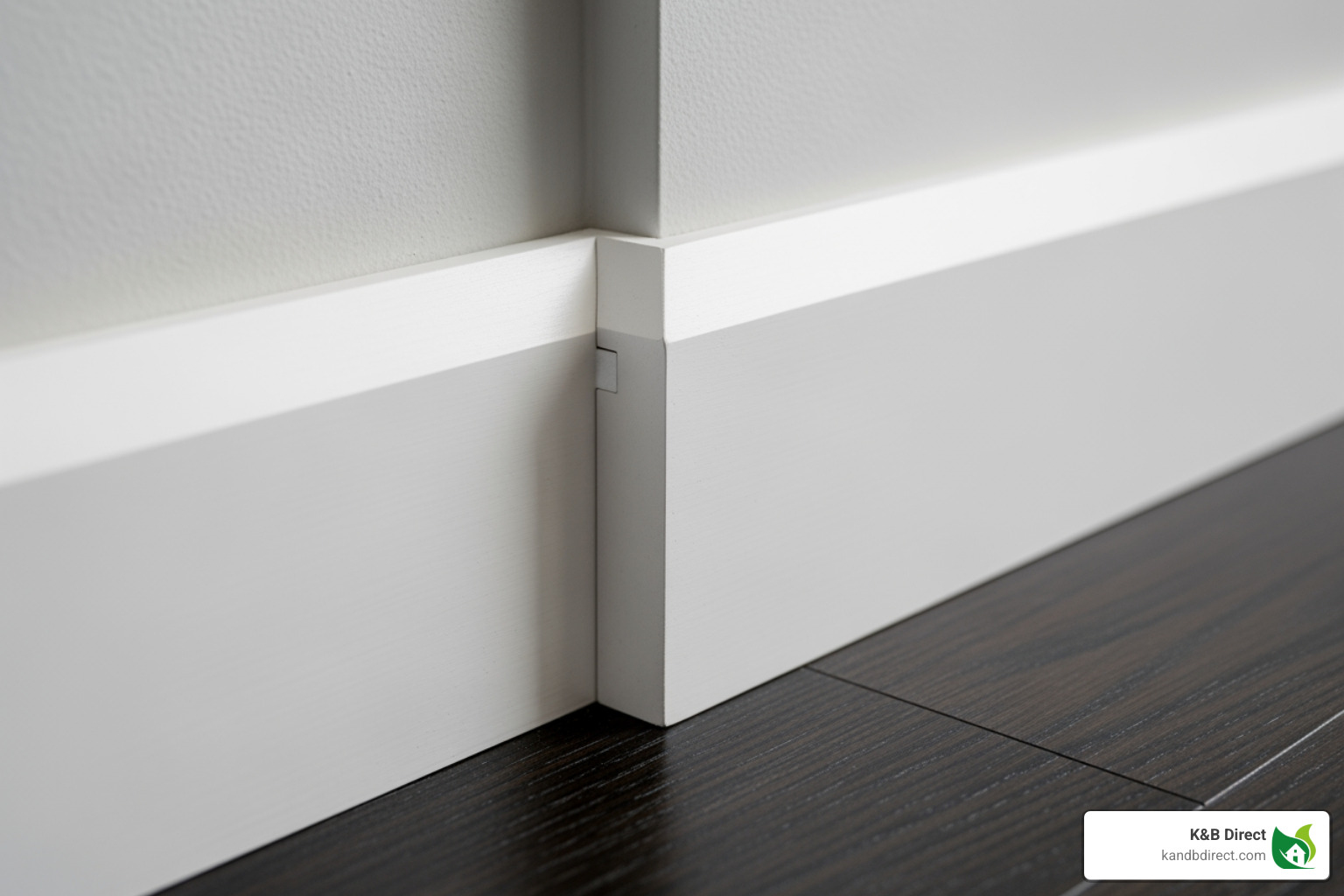
The Role of Shoe Moulding and Quarter Round
Here’s something that surprises a lot of people: even perfectly installed baseboards often need a little help at the bottom. That’s where shoe moulding comes in. This thin strip of trim sits right where your baseboard meets the floor, and it’s honestly a lifesaver.
Why? Because floors are rarely perfectly level. Your beautiful new modern base moulding is relatively stiff, and it won’t flex to follow every dip and rise in your flooring. Shoe moulding is thin and flexible enough to bend with those imperfections, covering up gaps that would otherwise catch your eye every time you walk past. It creates that seamless transition that makes the whole installation look intentional and finished.
Shoe moulding differs from quarter round in its profile—it’s slightly more refined and elongated, which tends to complement the clean lines of modern baseboards better. You can paint or stain it to match your trim or create subtle contrast. Either way, it adds depth and polish to the overall look. If you’re exploring different trim options, you might also want to check out Base Cap Moulding, which traditionally caps the top of baseboards but can sometimes be adapted for creative modern applications.
Common Mistakes to Avoid
We’ve been helping homeowners in the Chicago area since 2011, and we’ve seen just about every baseboard installation mistake you can imagine. The good news is that most are completely avoidable once you know what to watch for.
Incorrect measurements top the list. It sounds basic, but rushing through the measuring stage causes more problems than anything else. Measure each wall section individually—don’t assume opposite walls are the same length, because they rarely are. And yes, measure twice and cut once. It’s a cliché for a reason.
Poorly cut corners are the other telltale sign of amateur installation. Those mitered corners where two pieces meet at a 45-degree angle? They need to be precise. Even a degree or two off creates a visible gap that screams “DIY disaster.” A quality miter saw and taking your time make all the difference. If you’re feeling uncertain about this step, we have a helpful Guide on how to cut baseboard corners that walks you through the process.
Ignoring wall imperfections will haunt you. Even brand-new walls aren’t perfectly flat or straight. If you try to force a rigid piece of baseboard against a wavy wall, you’ll end up with gaps that no amount of caulk will hide convincingly. Sometimes you need to use shims behind the baseboard or scribe it to fit the wall’s actual contours. It takes extra time, but the result is worth it.
Choosing the wrong material for the room is another mistake we see often. MDF we talked about earlier? It’s fantastic for most applications, but it absolutely should not go in your bathroom or basement without serious moisture protection. Using standard MDF in humid areas leads to swelling, warping, and eventual failure. Match your material to your environment—PVC or polymer composites for wet areas, MDF or wood for everywhere else.
Finally, not priming or preparing properly before painting will leave you with a finish that looks amateurish no matter how precise your cuts were. If your baseboards aren’t pre-primed, don’t skip this step. Clean surfaces, fill nail holes, sand smooth, prime, then paint. Yes, it’s more work, but that’s what separates a professional-looking result from one that just looks “done.”
The reality is that modern base moulding installation rewards patience and precision. The simple, clean profiles that make modern trim so appealing also make every imperfection visible. But when you get it right—those perfectly tight corners, seamless transitions, and smooth painted surfaces—the result is incredibly satisfying. Your walls get the protection they need, and your room gets that finished, intentional look that pulls everything together.
Where to Find and Purchase Modern Baseboards
Now comes the fun part—actually finding and purchasing the perfect modern base moulding for your project. With contemporary designs becoming more popular, you have more choices than ever, from readily available stock profiles to fully customized creations that match your exact vision.
For homeowners across the Chicago area and throughout Illinois—including Glen Ellyn, West Chicago, Lombard, Schiller Park, Arlington Heights, Barrington, Crystal Lake, Des Plaines, Elk Grove Village, Glenview, Hawthorn Woods, Kildeer, Lake Zurich, Long Grove, Buffalo Grove, Northbrook, Palatine, Mount Prospect, Schaumburg, Wood Dale, Melrose Park, Franklin Park, Park Ridge, Elmhurst, Wilmette, Skokie, Morton Grove, Evanston, Winnetka, Glencoe, Northfield, Prospect Heights, South Barrington, Deerfield, Riverwoods, Niles, Addison, Itasca, Bensenville, Roselle, Glendale Heights, Bloomingdale, Streamwood, and Rolling Meadonds—we’ve made it easy to find exactly what you need.
You can start by exploring our extensive online selection. We carry a variety of modern styles in different materials, heights, and finishes, so you can find something that fits both your design aesthetic and your budget. Whether you’re looking for sleek flat profiles, subtle step reveals, or softened eased-edge designs, we’ve got you covered. Visit our website to Browse our baseboard selection and see what speaks to you.
When you’re comparing your options, think about whether stock or custom profiles make more sense for your project. Stock profiles are ready to go and typically more budget-friendly, which works great for most modern renovations. But if you have a unique architectural vision or need to match existing custom trim in your home, we can help you create custom profiles that are truly one-of-a-kind. This customization allows for unique and personalized design elements that make your space distinctly yours.
Also consider material availability when planning your timeline. While we keep popular materials like MDF, poplar, and PVC in stock, certain wood species or specialty profiles might require a special order. It’s worth checking with us early in your planning process.
Pricing is always a consideration, and we pride ourselves on offering top-quality products at the lowest possible prices. When you’re comparing options, look at the price per linear foot and ask about bulk pricing if you’re tackling a larger project. Sometimes ordering everything at once can save you money and ensure consistency across all your rooms.
We’re here to help you every step of the way. Our team knows that choosing modern base moulding can feel overwhelming with so many options, so don’t hesitate to reach out with questions or to discuss your specific needs. We’re dedicated to helping you find the perfect trim to complete your home’s sleek, modern look—and to make sure you’re getting the best value for your investment.
Conclusion
Think about the last time you walked into a beautifully designed room. What caught your eye first? Probably the furniture, the paint color, or maybe a striking piece of art. But here’s the thing—it’s often those finishing touches at floor level that quietly tie everything together. Modern base moulding might seem like a small detail, but it’s one of those elements that can make your entire space feel intentional, polished, and complete.
Throughout this guide, we’ve walked through what makes modern baseboards special. It’s all about embracing simplicity—those clean lines and minimal ornamentation that let your walls breathe and your design choices shine. Whether you’re drawn to the stark geometry of flat and square profiles, the subtle architectural interest of step and reveal designs, or the softer approach of eased edge profiles, there’s a modern base moulding style that fits your vision perfectly.
We’ve also covered the practical stuff that matters just as much as aesthetics. Choosing between MDF for its smooth, paint-ready surface and affordability, solid wood for its natural beauty and durability, or PVC and polymer composites for moisture-prone areas isn’t just about budget—it’s about matching the right material to each room’s specific needs. Your bathroom baseboards face different challenges than those in your living room, and selecting wisely means your investment will last.
Getting the proportions right makes all the difference too. Taller baseboards for higher ceilings, coordinating with your door and window casings, and choosing finishes that either blend seamlessly or create striking contrast—these decisions shape how your room feels. With trends moving toward beautiful browns, high-contrast dark tones, and even matching your baseboards to your wall color, you have more creative freedom than ever to make your space uniquely yours.
And let’s not forget those finishing touches. The right shoe moulding covers those inevitable gaps on uneven floors, while avoiding common installation mistakes—like poorly cut corners or choosing moisture-sensitive materials for humid spaces—ensures your modern base moulding looks professional and stands the test of time.
At K&B Direct, we’ve been helping homeowners across Chicago and the surrounding Illinois areas since 2011 make these kinds of decisions. We know that choosing the right trim might seem overwhelming at first, but it doesn’t have to be. Our team is here to guide you through every step, offering top-quality products at unbeatable, lowest possible prices with the friendly service you deserve.
Your baseboards are more than just wall protection—they’re the frame that completes your home’s picture. A thoughtful upgrade to modern trim can transform your interiors from “almost there” to “absolutely perfect,” giving you that sleek, contemporary aesthetic that feels both timeless and current.
Ready to bring that polished, modern look to your home? Explore our full collection of mouldings and millwork and find how the right modern base moulding can help you realize your dream home aesthetics. We’re here to help you find exactly what you need.