
Why Heavy Duty Bi-Fold Door Hardware Makes or Breaks Your Renovation
Heavy duty bi-fold door hardware is the difference between doors that glide effortlessly for years and ones that sag, bind, or fail under real-world use.
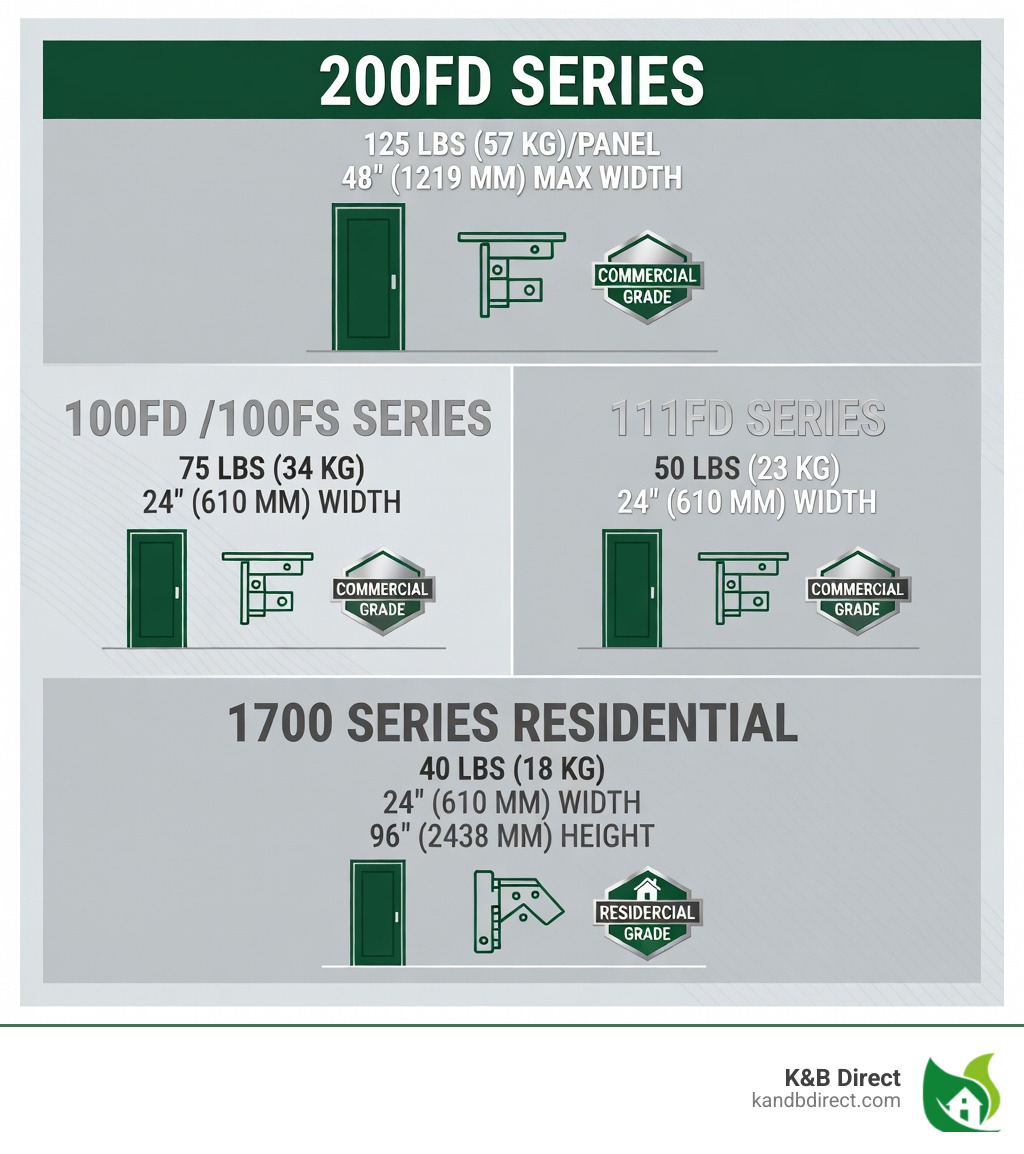
Here are the top high-capacity bi-fold hardware systems to know:
| Series | Max Panel Weight | Max Panel Width | Max Panel Height | Grade |
|---|---|---|---|---|
| 200FD | 125 lbs (57 kg) | 48″ (1219 mm) | 108″ (2743 mm) | Commercial |
| 100FD / 100FS | 75 lbs (34 kg) | 24″ (610 mm) | 108″ (2743 mm) | Commercial |
| 111FD | 50 lbs (23 kg) | 24″ (610 mm) | 108″ (2743 mm) | Commercial |
| 1700 Series | 40 lbs (18 kg) | 24″ (610 mm) | 96″ (2438 mm) | Residential |
Standard residential hardware simply isn’t built for heavy panels, tall openings, or frequent use. Heavy-duty systems use 12-14 gauge steel, sealed ball bearing rollers, and extruded aluminum tracks — materials that hold up where lighter hardware fails.
Whether you’re outfitting a pantry, a wide closet opening, or a high-traffic interior space, choosing the right hardware from the start saves you from unnecessary replacements later.
I’m Eryk Piatkowski, owner of K&B Direct, where I’ve spent over a decade helping homeowners and renovators source the right heavy duty bi-fold door hardware for their projects. In this guide, I’ll walk you through the top-rated systems so you can choose with confidence.
Defining Heavy Duty Bi-Fold Door Hardware Standards
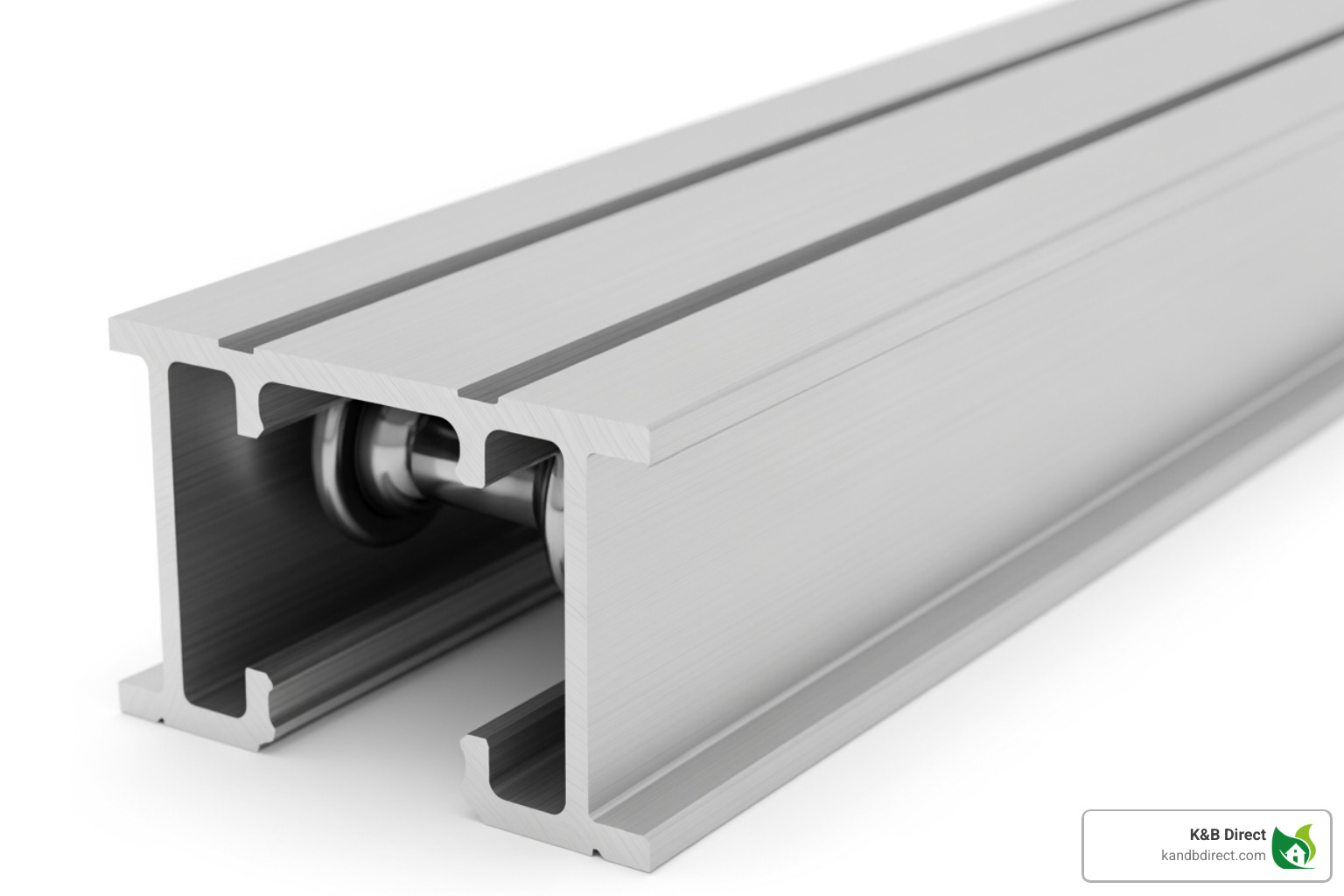
When we talk about heavy duty bi-fold door hardware, we are referring to systems designed to withstand significant weight and frequent cycling without degrading. The structural integrity of these systems starts with the raw materials. Most commercial-grade tracks are constructed from 6063T6 extruded aluminum, a material known for its high strength-to-weight ratio and resistance to corrosion.
The internal components are equally robust. Steel components in these kits typically feature 12-14 gauge thickness. To help prevent rust and support long service life, these parts often receive Zinc Trivalent Plating. This level of engineering is what separates a standard kit from a truly heavy-duty one.
Commercial vs. Residential Grades
Understanding the distinction between grades is essential for a successful installation. Commercial hardware is often evaluated by ANSI (American National Standards Institute) metrics. ANSI grading helps you understand why Grade 1 hardware is considered the gold standard for durability. If you want a neutral overview of what ANSI is, see American National Standards Institute.
Key features of commercial-grade hardware include:
- ANSI Grade 1: This signifies the most heavy-duty hardware available, capable of withstanding the rigors of high-traffic environments.
- UL Listing: In many commercial settings, UL Listing is important because it indicates the hardware has been tested against defined safety and performance standards.
- ADA Compliance: High-capacity systems are often designed to support accessible operation in many public-facing interiors.
For residential applications that involve solid core doors or oversized openings, we often recommend these commercial-grade systems over standard residential options. While a residential 1700 series is excellent for lighter doors up to 40 lbs, it may struggle with the 125 lb panels that a 200FD series handles with ease.
Performance Features
Smooth operation is achieved through the use of 1-inch diameter nylon encapsulated sealed ball bearing wheels. These rollers are machine-turned and balanced to help ensure they glide without chatter. To keep everything aligned, heavy-duty setups utilize panel aligners and specialized adjustment wrenches, allowing the door position to be fine-tuned even after the initial setup.
Mortise hinges are also commonly paired with heavy-duty bi-fold installations because they help maintain consistent panel alignment over time, especially when doors are cycled frequently.
Top-Rated High-Capacity Hardware Series Comparison
Selecting the right series depends on the specific demands of your project. We have found that the following three series cover the vast majority of high-capacity needs in the Chicago area.
| Feature | 200FD Series | 100FS Series | 111FD Series |
|---|---|---|---|
| Max Weight per Panel | 125 lbs | 75 lbs | 50 lbs |
| Max Panel Width | 48″ | 24″ | 24″ |
| Max Panel Height | 108″ | 108″ | 108″ |
| Hanger Type | Top-Mount | Side-Mount | Top-Mount |
| Best For | Extra Large/Heavy Doors | Standard Heavy Doors | Light Commercial |
The 200FD is the powerhouse of the group. It is specifically designed for very large panels, supporting widths up to 48 inches. This makes it a favorite for bifold closet doors that span wide master bedroom openings.
The 100FS series offers a unique advantage with its side-mounted hangers. This is particularly useful when the top edge of the door panel is not accessible or if the installation requires the hardware to be mounted to the side of the door rather than the top. The 100FS is rated for 75 lbs per panel and is compatible with panels ranging from 1-1/8″ to 1-3/4″ thick.
In contrast, the 111FD series is a “light-heavyweight” option. It supports 50 lbs per panel and is ideally suited for solid core doors that don’t quite reach the extreme weight of the 200FD panels. It still maintains the 108-inch height capacity, making it perfect for standard-width but extra-tall pantry or laundry room doors.
Selecting the Right Hardware for Large Openings
When we work with large openings, the scale of the hardware must match the scale of the space. For massive spans, the 100 Series track can be ordered in lengths up to 192 inches. This allows for seamless operation across very wide rooms.
Installation Considerations
Successful setup requires a few basic tools: a drill and a screwdriver are the primary requirements for most kits. Nevertheless, because every home is unique, track customization is often necessary. If you find that a standard track length doesn’t perfectly fit your opening, you can use a metal saw to cut the aluminum track to the exact size needed.
When planning your layout, you must choose between 2-panel and 4-panel configurations. A 2-panel set typically covers one side of an opening, while a 4-panel set (two panels folding to each side) is used for larger closet spans. Installation guides are available for each model to ensure the pivots and hangers are placed with mathematical precision.
Choosing Heavy Duty Bi-Fold Door Hardware by Panel Weight
Weight is the most critical factor in your decision. If you are using solid core birch doors or heavy mirrored panels, you must calculate the total weight per panel before purchasing. Overloading a track leads to “binding,” where the door becomes difficult to move and eventually damages the rollers.
- 125 lbs limit: Use the 200FD for the heaviest applications.
- 75 lbs limit: The 100FD or 100FS is the standard for most heavy residential doors.
- 50 lbs limit: The 111FD or 1601 “Full Access” series works effectively for doors that need more support than standard hardware but aren’t extremely heavy.
Always ensure your header (the wood frame above the door) is structurally sound enough to support the weight of the track and the doors combined. For more information on sizing, check our guide on bifold door sizes.
Sizing Tracks and Panels for Heavy Duty Bi-Fold Door Hardware
Beyond weight, the physical dimensions of the panels matter. Most heavy duty bi-fold door hardware is designed for a panel thickness range of 1-1/8″ to 1-3/4″. Some specialized side-mount hangers can even accommodate panels up to 2-1/4″ thick.
The maximum panel height for these systems is typically 108 inches. If your doors are taller than this, additional stabilization may be required. When measuring your opening width, the track must be perfectly level. Even a slight tilt can cause a heavy door to slide open or closed on its own.
Frequently Asked Questions about High-Capacity Tracks
Necessity of floor tracks for heavy-duty systems
One of the most common questions we hear is whether a floor track is required for heavy doors. For most of these high-capacity systems, the answer is no. These are “top-hung” designs, meaning the weight is entirely supported by the top track and the pivots.
This creates a clean look with no tripping hazards on the floor. Nevertheless, for very tall or heavy doors, a bottom guide track (like the 1050 guide track) can be used to prevent the doors from swinging back and forth. This doesn’t support the weight, but it keeps the movement path straight and predictable.
Noise levels and fluid operation
Will heavy-duty hardware be loud? Quite the opposite. Because these systems use high-quality ball bearing rollers and machine-turned nylon wheels, they are often much quieter than their residential counterparts. The factory-greased wheels reduce friction to nearly zero, resulting in a silent, fluid motion. If you hear grinding or squeaking, it usually indicates that the track needs to be cleaned of dust or that the doors are out of alignment.
Track customization and sizing limits
As mentioned, tracks can be customized easily. If you have a 34-inch opening, you would purchase a 36-inch track kit and use a metal saw to trim the excess. This applies to the valances as well. The aluminum rail construction is sturdy but easy to work with using standard metal-cutting tools.
Conclusion
At K&B Direct, we believe that the right hardware is the foundation of beautiful home aesthetics. Whether you are in Arlington Heights, Glenview, or right here in Chicago, we are dedicated to providing the highest quality heavy duty bi-fold door hardware at the lowest possible rates.
When ordering oversized items like 192-inch tracks, keep in mind that shipping considerations apply. These items are often packaged in rigid cardboard tubes to prevent bending during transit. If you are ready to transform your space with doors that function as beautifully as they look, we invite you to Explore our full range of bifold doors and hardware.
From the initial measurement to the final adjustment with your 1712 wrench, we are here to help you realize your dream home. Visit us at one of our many locations across Illinois, from Lake Zurich to Melrose Park, and let’s get your project moving on the right track.