Why Two-Piece Base Molding Transforms Your Space
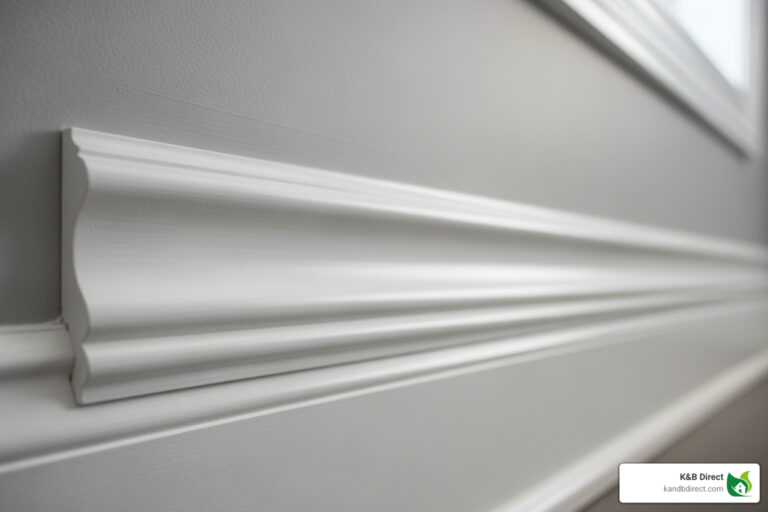
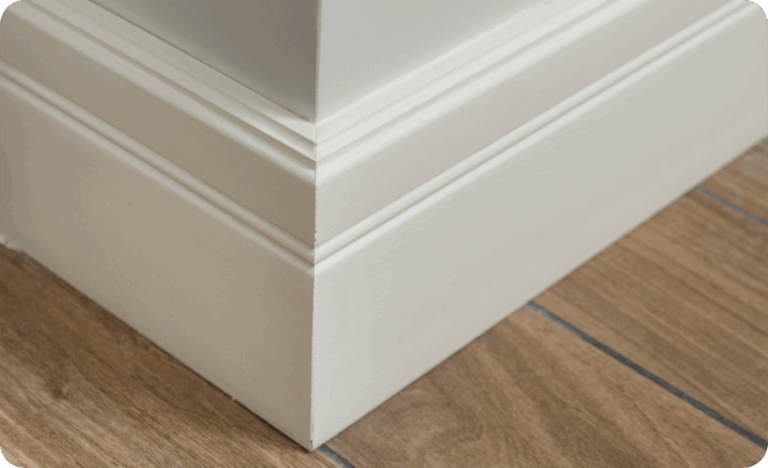
2 piece base molding is a trim system combining a flat baseboard with a separate decorative cap molding on top. Here’s what you need to know:
Quick Answer: Installing Two-Piece Base Molding
- Flat Stock First – Install the wider, flat baseboard piece along the wall, fastening it to studs with 15-gauge finish nails.
- Cap Molding Second – Add the decorative cap piece on top, using coped joints at inside corners for a seamless fit.
- Key Benefits – Better at hiding wall waves, creates tighter corner joints, and delivers a professional custom look.
What Makes It Different:
- Flexibility – The cap molding can float slightly away from wavy walls and be caulked for a perfect finish.
- Durability – Two separate pieces create stronger, more stable joints than single-piece baseboard.
- Appearance – Achieves a high-end, built-up look that lifts any room.
The two-piece system takes slightly longer to install than single-piece baseboard, but it provides more control when dealing with real-world imperfections. As one professional carpenter notes, “It’s better at hiding waves in walls, and it keeps joints tighter in corners.”
Most paint-grade installations use primed finger-jointed pine for the flat stock, while the cap molding comes in various profiles. The flat stock gets fastened with pairs of 2-1/2-inch finish nails into each stud, and mitered corner pieces receive wood glue before assembly.
I’m Eryk Piatkowski, Owner at K&B Direct, where we’ve helped homeowners create beautiful spaces since 2011. Through years of working with contractors and home renovators, I’ve seen that 2 piece base molding delivers the professional finish that makes kitchens, bathrooms, and living spaces truly stand out.
The Foundation: Prepping for Your Project
Starting a 2 piece base molding project is an exciting step towards elevating a room’s aesthetic. Before diving into cuts and fasteners, careful preparation is crucial. This involves understanding why this system is often the superior choice and gathering the necessary tools and materials.
Why Choose a Two-Part System?
While single-piece baseboard offers quicker installation, we at K&B Direct and many seasoned professionals advocate for the 2 piece base molding system for several compelling reasons:
- Hiding Wall Imperfections: Its primary advantage is concealing imperfections on walls that are rarely straight. The flat stock conforms to slight waves, but the flexible cap molding is key. It can “float” away from severe waves, and the gap is filled with caulk for a smooth, uninterrupted line—a finish single-piece options can’t match.
- Tighter Corner Joints: For corners that aren’t perfectly square, a two-piece system excels. The cap molding can be adjusted and coped to create tighter joints than a single-piece baseboard, which often shows gaps. This method accommodates seasonal movement, preventing cracks and keeping joints tight.
- Improved Durability: The two-component design creates a robust, stable trim system. The flat stock is a strong foundation, and the cap molding adds stability and protection, resulting in a resilient finish that withstands daily wear.
- Professional Aesthetic: This system provides a high-end, custom look, adding depth and architectural detail. The design flexibility allows for a wide range of Baseboard Cap Profiles to match any home’s style.
Gathering Your Tools and Materials
A successful installation hinges on having the right equipment. Here’s a comprehensive list of what you’ll need:
- Miter Saw: For precise angle cuts.
- Finish Nailer (15-gauge): For securing the flat stock to wall studs with 2-1/2-inch nails.
- Brad Nailer (18-gauge): For fastening the more delicate cap molding.
- Tape Measure: For accurate length measurements.
- Stud Finder: To locate wall studs.
- Level: To ensure the baseboard is horizontal.
- Angle-Finder: An indispensable tool for checking corner angles, saving you from frustrating trial-and-error cuts.
- Coping Saw: Crucial for creating clean, tight coped joints on the cap molding.
- Wood Glue: For strengthening mitered joints and splices.
- Caulk (paintable acrylic latex): To fill small gaps.
- Wood Filler: For concealing nail holes.
- Sandpaper (180-grit and 220-grit): For smoothing edges and preparing surfaces.
- Scribing Tools: A pencil and shim, or a scribing compass.
- Block Plane and Jigsaw: For refining scribed cuts.
- Clamps (e.g., Collins miter clamps): Helpful for holding mitered joints while glue dries.
- Safety Gear: Eye protection and a dust mask are non-negotiable.
For materials, primed finger-jointed pine is common for paint-grade applications. We also offer various Wood Moulding options, including MDF and poplar. MDF and primed pine are excellent for painting, while woods like poplar, oak, and maple are beautiful when stained.
Precision in Practice: Measuring, Cutting, and Scribing the Flat Stock
With tools and materials ready, the next phase is about precision. This is where raw lumber is transformed into perfectly fitted trim, a process demanding patience and attention to detail.
Room Preparation
First, prepare the workspace. For remodels, remove old baseboard, pull nails, and scrape away caulk for a clean surface. Mark stud locations with a pencil for fastening. Protect floors and seal doorways to minimize dust.
Accurate Measurements and a Detailed Cut List
Accurate measurement is paramount. Start at a doorway and work clockwise, measuring each wall at floor level and recording the lengths.
Use an angle-finder to check all corners, as they are rarely a perfect 90 degrees. Knowing the true angle allows for precise miter cuts. For instance, a 92-degree corner requires two 46-degree cuts.
Once you have measurements and angles, create a detailed cut list with three columns: length, inside cut angle, and outside cut angle. This systematic approach minimizes errors. Always cut pieces slightly long for fine-tuning.
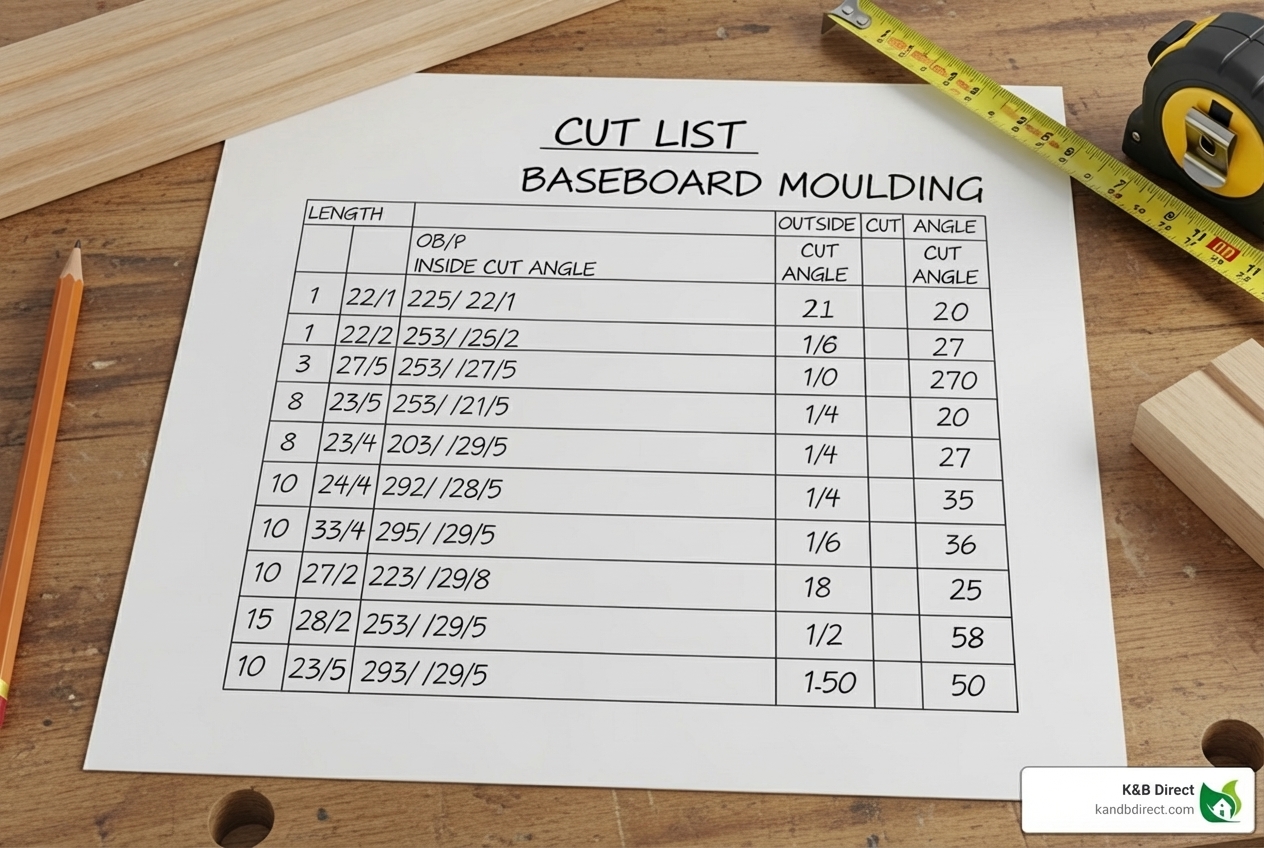
When cutting, remember the rule: cut from the long points of inside miters to the short points of outside miters. This ensures pieces form a tight, professional joint.
Mastering the Art of Scribing for Uneven Floors
Uneven floors are a common challenge that can cause gaps. Scribing solves this by marking the floor’s contour onto the flat stock’s bottom edge. Cutting along this line creates a perfect, custom fit.
The approach varies for dips and humps:
- Scribing Dips: Position an extra-wide piece of flat stock over the dip. Set your scribing tool (a pencil taped to a shim or a scribing compass) to the desired height at the highest point. Keeping the tool level, trace the floor’s contour onto the baseboard.
- Scribing Humps: For humps, shim both ends of the baseboard until it’s level over the hump. Then, set the scribing tool to the finished height at the highest point and mark the entire piece.
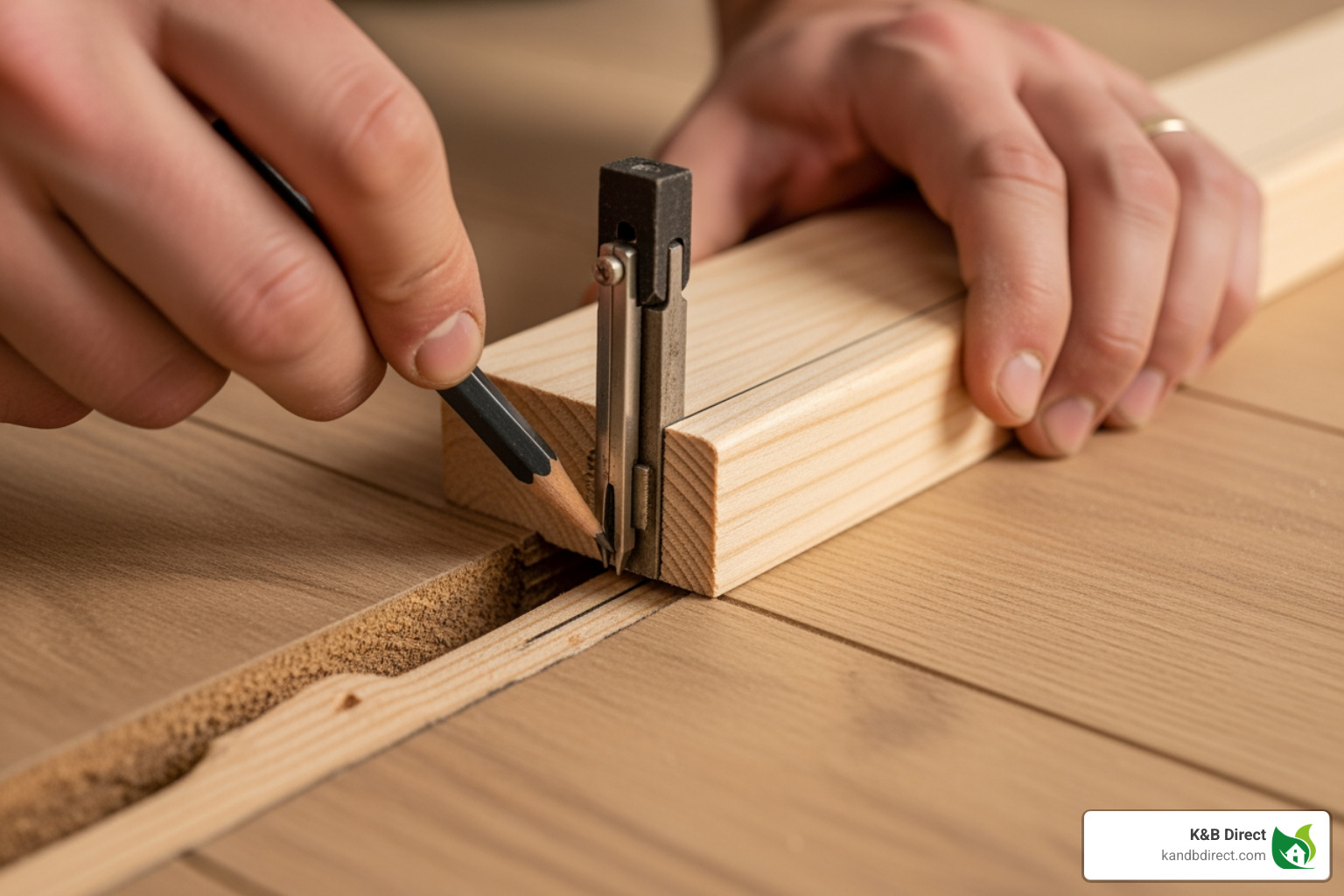
After marking, remove most waste with a jigsaw, following the line. Fine-tune the fit with a block plane or sandpaper. This process ensures the 2 piece base molding sits flush with the floor, eliminating gaps for a finished look.
Assembling the Base: Joints, Splices, and Installation of Your 2 piece base molding
With the flat stock cut and scribed, it’s time to assemble the pieces. This stage focuses on creating strong, seamless connections.
Achieving Tight and Flush Corner Joints
The quality of the corner joints defines the final look. Both inside and outside corners require careful attention:
- Inside Corners: For inside corners, use mitered joints. After cutting pieces to the precise angles from your angle-finder, apply a thin bead of wood glue to the mating surfaces before fitting them together. Adjust for a perfect seam before securing.
- Outside Corners: These are often more visible. Again, use mitered joints with wood glue. It can be easier to assemble small runs on a workbench. For longer pieces, assemble corners in place, using miter clamps to hold them securely while the glue dries. Ensure surfaces are perfectly aligned and flush before nailing.
Wood glue reinforces all corner joints, keeping them strong and tight through seasonal movement.
Creating Strong and Seamless Splices
On long walls, two pieces of flat stock must be joined, or spliced. Best practices ensure both strength and appearance:
- Scarf Joints: The traditional method is the scarf joint, where ends are cut at opposing 45-degree angles. This creates a large, overlapping surface for a strong glue bond.
- Reinforced Butt Joints: We often prefer reinforced butt joints. Cut trim pieces slightly long and spring them into place, creating tension that holds the joint tight. Reinforcing with small tenons adds strength but may require specialized tools.
Always locate splices in low-visibility areas to help them blend in seamlessly with the rest of the 2 piece base molding.
Fastening to Studs
Once pieces are assembled, secure them to the wall. Use a 15-gauge finish nailer with 2-1/2-inch nails. Drive a pair of nails into each marked wall stud for a strong, lasting hold for the base of your 2 piece base molding.
The Finishing Touch: Installing the Cap Molding
With the flat stock secure, we move to the artistic part of the 2 piece base molding installation: adding the cap molding. This is where the system shines, hiding remaining wall imperfections and adding sophisticated detail.
Installing the cap molding differs from the flat stock. Being thinner and more flexible, it can follow wall contours the flat stock cannot, concealing minor waves and gaps.
Creating Perfect Coped Joints for Your 2 piece base molding
For inside corners, we recommend coped joints over mitered ones. Coped joints are more forgiving of non-square corners and accommodate seasonal wood movement without creating gaps, ensuring a durable, professional finish.
Our process for clean coped joints:
- Cut the First Piece Square: Install the first piece of cap molding into the corner with a square cut.
- Miter the Second Piece: On the second piece, cut an inside miter (e.g., 45-degree) on the end to be coped.
- Use the Coping Saw: The miter cut reveals the molding’s profile. Use a coping saw to carefully cut along this profile, slightly back-cutting it. This ensures only the front edge makes contact, allowing for a tight fit.
- Fine-Tune: Use files or 180-grit sandpaper to perfect the coped edge for a seamless fit.
This technique results in a beautifully integrated corner, superior to a simple miter.
Clean Returns and Flawless Outside Corners
Outside corners for the cap are mitered. When a run terminates mid-wall, a miter return is needed to cleanly finish the end.
To create them:
- Cut the Main Piece: Cut the main piece to length with a square end.
- Cut the Return Piece: From a scrap, cut a tiny triangular piece with a 45-degree outside miter and a 45-degree inside miter.
- Assemble with CA Glue: These tiny returns can split if nailed. Assemble them to the main piece using fast-setting CA glue. For information on fast-setting adhesives, you can refer to resources like fastcap.com. Install the main piece and its attached return as one unit.
This provides a polished finish in visible areas.
Securing the Cap and Hiding Wall Imperfections
Secure the cap molding pieces with an 18-gauge brad nailer, which is less likely to split the profile. Nail into the top of the flat stock or into a stud.
This stage is critical for hiding wall imperfections. The cap molding can follow slight contours or be “floated” away from severe waves. The resulting gap is filled with paintable caulk, creating a smooth, continuous line that masks the wall’s unevenness. This is a key benefit of 2 piece base molding, providing a flawless, paint-ready surface.
Finishing and Final Touches
The project is complete only after applying the finishing touches. This final stage transforms raw wood into polished trim, integrating it into your home’s design.
Finishing Techniques
The finishing technique—painting or staining—depends on the material and desired aesthetic.
- Painting Primed Materials: For primed materials like FJP or MDF, painting is recommended. Use a quality semi-gloss paint for durability. Two finish coats are ideal. Painting before installation is easier and provides better coverage. If painting after, mask adjacent surfaces and remove tape immediately.
- Staining Natural Wood: For natural Wood Moulding like oak or maple, staining or varnishing improves the grain. Poplar can be stained or painted. Ensure surfaces are smooth and use matching wood filler for any nail holes.
After the finish is applied, fill nail holes with wood filler, let it dry, and lightly sand smooth with fine-grit sandpaper (220-grit is a good choice).
Common Installation Challenges
Even with careful planning, a few challenges can arise during 2 piece base molding installation:
- Non-Standard Corners: As discussed, corners are rarely perfect. Use an angle-finder for precise miters. For cap molding inside corners, coping accommodates deviations from square.
- Extremely Wavy Walls: For very uneven walls, “float” the cap molding away from the wall and use caulk to bridge the gap. This creates a visually straight line.
- Scribing Around Obstacles: To scribe around door casings, mark the contour and carefully cut. Patience and a sharp block plane are invaluable.
- Ensuring Consistency in Reveal: The “reveal” is the visible flat stock above the cap. Maintain a consistent reveal using a small spacer for a professional look.
New Construction vs. Remodel Considerations
The installation process varies for new construction versus remodels:
- New Construction: Walls are generally straighter and floors more level, meaning less scribing and caulking.
- Remodels: Older homes present more challenges like uneven floors and wavy walls. This requires more time for preparation, scribing, and strategic use of caulk.
Frequently Asked Questions about Two-Piece Base Molding
What is the main advantage of two-piece baseboard?
The main advantage of 2 piece base molding is its flexibility and ability to hide imperfections. The separate flat stock and cap molding conform to wavy walls and uneven floors better than single-piece options. This design allows for tighter, more durable corner joints and creates a high-end, custom-built appearance. The cap molding can be floated and caulked to create a visually straight line on imperfect walls.
Why are inside corners coped instead of mitered on the cap molding?
Inside corners of cap molding are coped to accommodate seasonal wood movement and forgive non-square corners. A coped joint is a profile cut that fits against the adjoining piece, allowing the joint to remain tight as the wood moves with humidity changes. Mitered inside corners are prone to opening over time, creating visible gaps. Coped joints prevent this, maintaining a professional and durable finish.
What is the method for handling a floor that isn’t level?
An unlevel floor is managed with a technique called scribing. This involves marking the exact contours of the floor onto the bottom edge of the flat baseboard stock. A pencil and shim or a scribing tool are used to trace the floor’s irregularities. Then, the scribed line is cut with a jigsaw and fine-tuned. This custom cut ensures the baseboard sits perfectly flush with the floor, eliminating gaps.
Conclusion
Installing 2 piece base molding is a rewarding project that, while requiring a bit more effort than single-piece alternatives, delivers truly exceptional results. We’ve explored the myriad advantages, from its unparalleled ability to hide wall imperfections and create tighter joints, to its contribution to a high-end, custom aesthetic.
We’ve walked through every critical step: from meticulous preparation and accurate measurements, to the art of scribing for uneven floors, and the precision required for strong corner joints and seamless splices. The installation of the cap molding, with its unique challenges like coping inside corners and crafting miter returns, is where the true finesse of this system shines, allowing us to achieve a flawless finish even on imperfect walls.
By understanding these techniques and applying them with care, we can transform any room, adding a layer of architectural detail and sophistication that significantly improves our home’s appeal. The durability and timeless elegance of 2 piece base molding make it an investment that will be appreciated for years to come.
At K&B Direct, we offer a wide selection of high-quality Mouldings Millwork designed to help you achieve these professional results. Explore our extensive collection of Baseboard Moulding to find the perfect style for your home, and let us help you create spaces that truly stand out.