
Crown Moulding & Cornice in Schiller Park
We supply crown moulding and cornice to Schiller Park homeowners who want a clean, finished ceiling line. Every profile we carry is available in-store at our Schiller Park location. Whether you are installing crown above kitchen cabinets or running a full cornice around a formal room, we help you pick the right profile and size. As your local cabinet store, we know what fits the homes in this area.
Choosing the Right Crown Moulding Profile for Your Schiller Park Home
Crown moulding profile is the first decision to get right. A profile too large overwhelms a small room. A profile too flat loses its presence on a tall wall. Most Schiller Park homes built mid-century have 8-foot ceilings, so we guide you toward profiles that work at that height without looking out of scale.
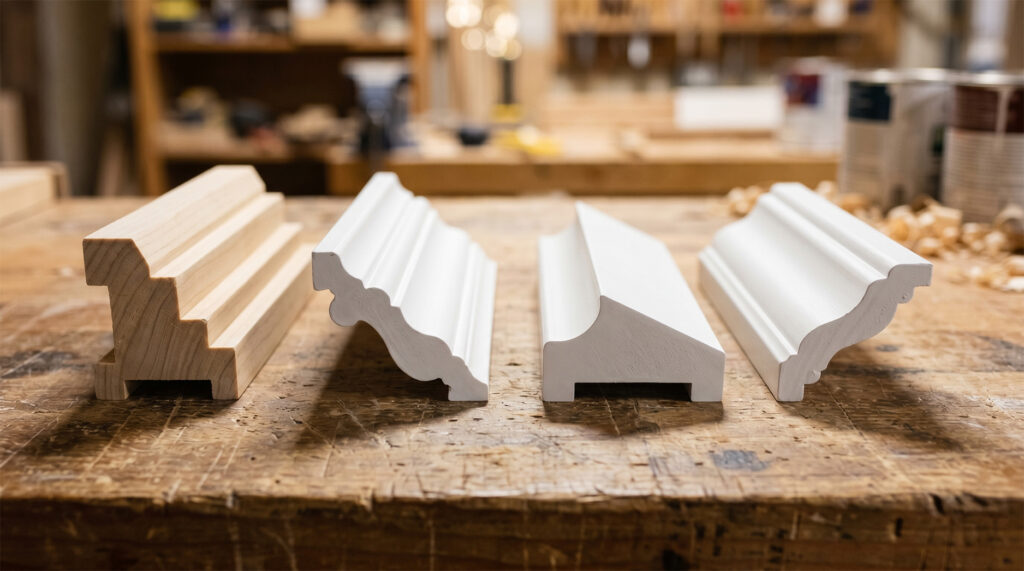
We carry crown moulding and cornice in MDF and solid wood across a range of profile widths and spring angles. Bring a photo of your existing trim and we will match the style or suggest something that complements it. Getting the profile right before you cut saves material and time. We stock the most common sizes for same-day pickup.
How Crown Moulding Changes the Feel of a Room
Crown moulding does more than cover the gap between wall and ceiling. It adds visual weight to the top of a room and makes the space feel more deliberate. In Schiller Park homes with modest square footage, a well-chosen crown profile can make a room feel taller and more complete without any structural work.
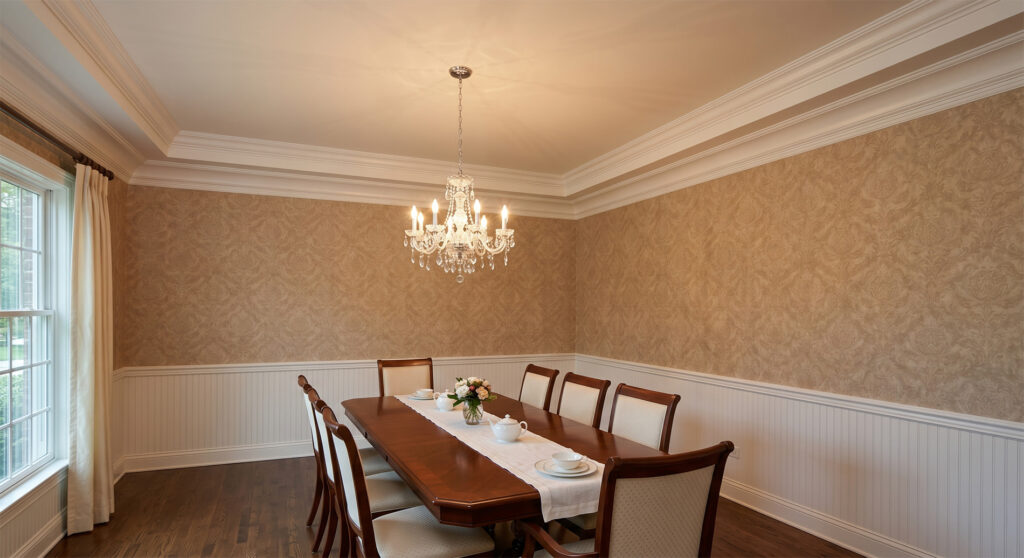
The profile shape — whether it is a simple cove, an ogee, or a stepped cornice build-up — affects how formal or casual the room reads. Traditional interiors in Schiller Park often use a deeper ogee with a cove return. More contemporary spaces use a flat-back or spring-angle profile that sits tighter to the wall. We can show you both on a sample board.
Crown Moulding & Cornice in Schiller Park — What to Know Before You Buy
Crown moulding finishes the ceiling line in living rooms, dining rooms, kitchens, and bedrooms. In Schiller Park, most homes use a single-piece crown profile nailed to the wall plate and ceiling joists. Common widths run from 3 to 5.5 inches. Wider stacked cornice assemblies are used in formal rooms where a more architectural look fits the space.
- Selecting the right profile width and spring angle for your ceiling height
- Choosing between paint-grade MDF and stainable solid wood based on your finish plan
- Buying the correct linear footage with waste built in so you are not short on install day
Installing Crown Moulding Above Kitchen Cabinets in Schiller Park
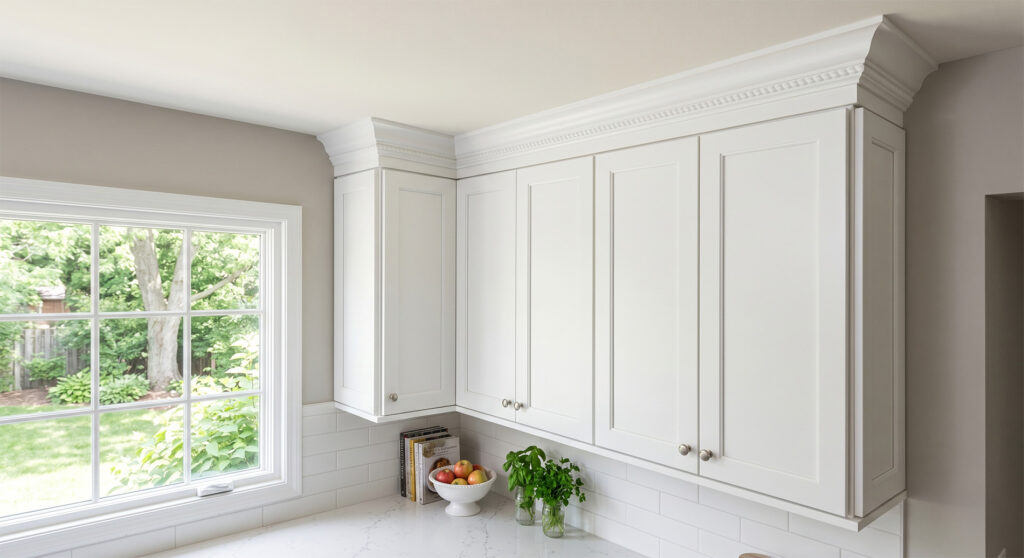
Running crown moulding above kitchen cabinets is one of the most common requests we see from Schiller Park homeowners. It closes the open space between the cabinet top and the ceiling and gives the kitchen a more built-in look. The key is matching the spring angle of the crown to the cabinet face angle so the profile sits flat without gaps.
In Schiller Park kitchens with upper cabinets that stop short of the ceiling, a 3.5 to 4.5-inch crown profile is usually the right fit. We help you calculate the reveal — how much of the cabinet face the crown will cover — before you buy. Getting that number right means the profile looks intentional, not like an afterthought.
MDF vs. Solid Wood Crown Moulding — Which One to Use
MDF crown moulding is the most common choice for painted interiors. It is consistent in density, takes primer and paint evenly, and does not have grain that shows through. It costs less than solid wood and is available in more profiles. For rooms without major humidity swings, MDF holds up well over time.
Solid wood crown is the right call when the trim will be stained or when you are matching existing wood trim in an older Schiller Park home. It machines cleanly at the corners and holds detail better in thicker profiles. We stock paint-grade and stain-grade options so you can choose based on your finish plan and budget.
What to Bring When You Visit Our Crown Moulding Counter
A short visit goes further when you come prepared. Bring the total linear footage of the rooms you are trimming — measure the perimeter of each room and add 10 to 15 percent for waste. If you are matching existing crown, bring a short cut piece or a close-up photo showing the profile shape and the spring angle.
If you are not sure which profile to use, bring your measurements and we will walk you through the options at the counter. We keep sample lengths in-store so you can hold them against your photo and compare widths side by side. Most customers leave with material the same day. No appointment needed.
Preparing Walls and Ceilings Before Crown Moulding Goes Up
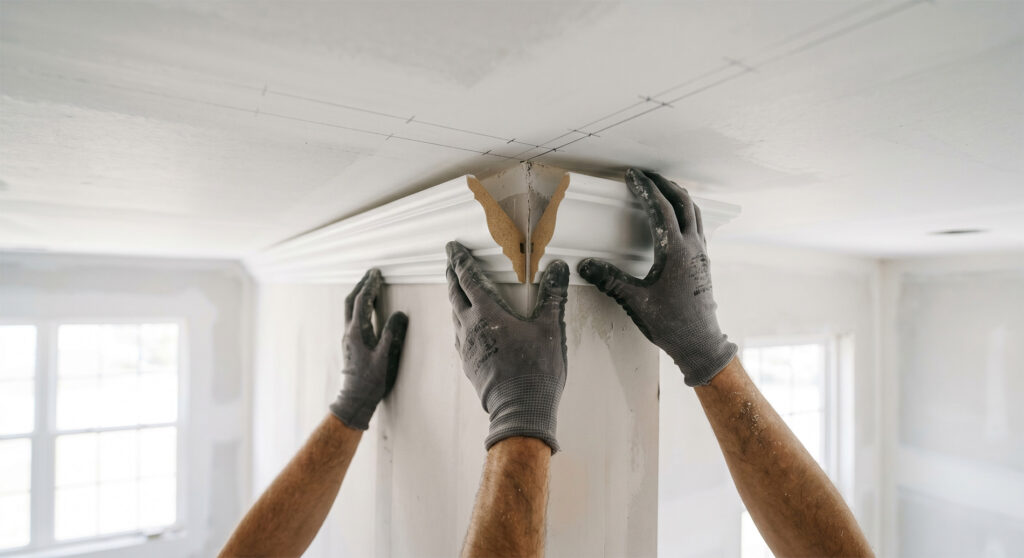
Crown moulding goes up faster and looks better when the surfaces are ready first. Fill and sand any cracks or nail holes at the wall-ceiling joint before the profile goes up. If the ceiling has texture near the edges, sand it back a few inches so the crown sits flat. Paint the ceiling and walls before the moulding is installed, not after.
For most crown moulding projects in Schiller Park, no permit is required. The work is cosmetic and involves no structural changes. If your installation includes moving a ceiling fixture or adding recessed lights near the cornice line, confirm permit requirements with your electrician before the trim goes up.
Frequently Asked Questions (FAQ)
Buying crown moulding in Schiller Park comes with specific questions. We have gathered the most common ones from homeowners and contractors who stop in. If your question is not listed here, call us at (224) 781-2925 or visit us at 3977 25th Ave, Schiller Park, IL 60176.
1. What is the difference between crown moulding and cornice?
2. What size crown moulding works in a room with 8-foot ceilings?
3. Does crown moulding require a permit in Schiller Park?
4. Can I paint MDF crown moulding the same color as my walls?
5. How do I handle crown moulding at outside corners?
6. What is the best way to find the wall studs for nailing crown?