
Understanding the Power of Decorative Trim in Your Home
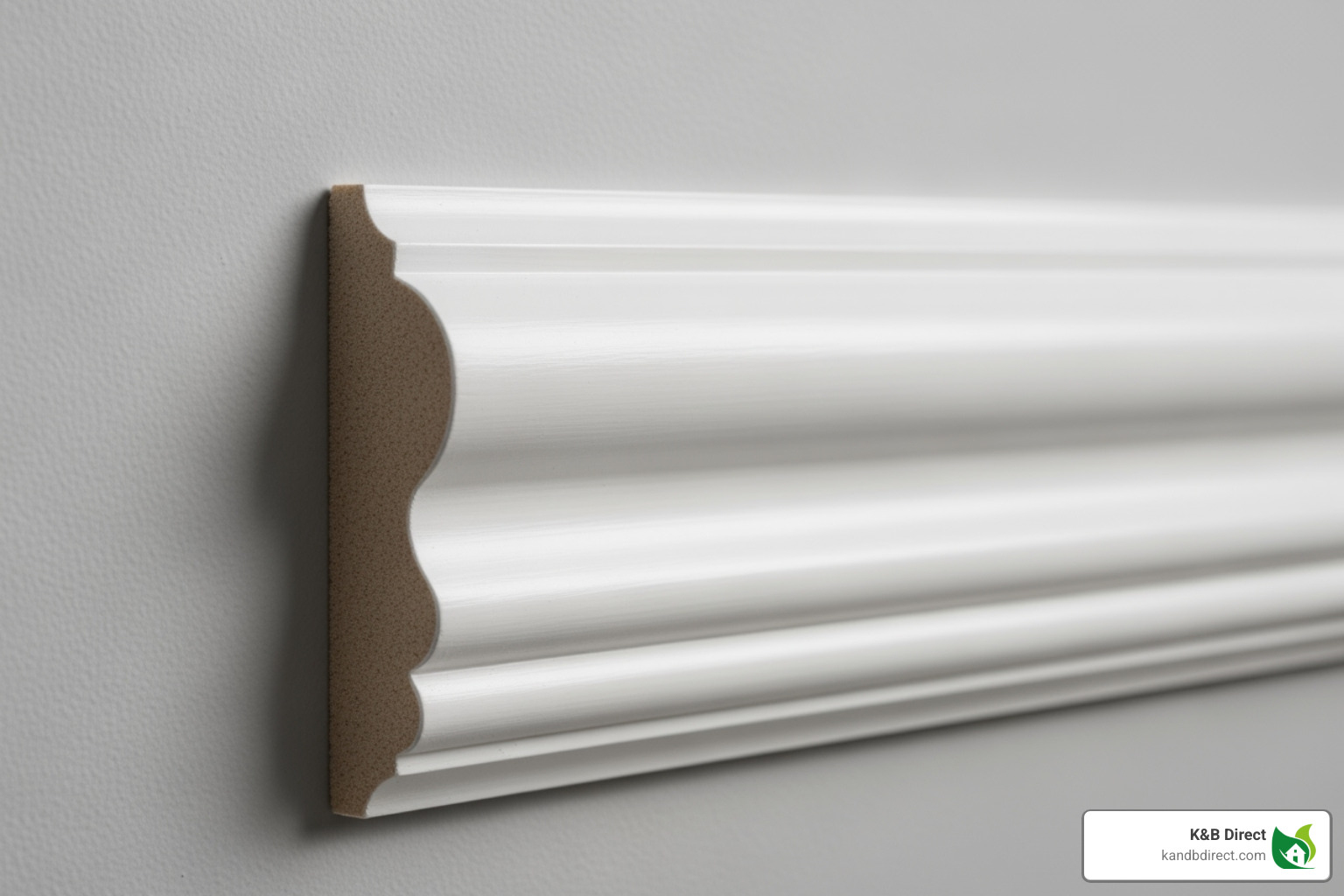
Base cap moulding profiles are decorative wood or composite strips that sit on top of baseboards to create a more sophisticated, finished appearance. These versatile trim pieces transform simple flat baseboards into architectural features that add height, visual interest, and custom character to any room.
Quick Guide to Base Cap Moulding Profiles:
- Primary Function: Adds decorative detail and height to existing baseboards
- Placement: Sits flush against the wall on top of flat baseboard lumber
- Profile Variety: Available in over 350 different designs from simple curves to complex ornate patterns
- Materials: MDF, finger-jointed pine, PVC, and various wood species
- Cost: Generally less expensive than full-sized moulding profiles due to smaller size
- Versatility: Can also be used for picture frame moulding, wainscoting, and casing upgrades
Whether you’re looking to upgrade plain baseboards in your kitchen renovation or add architectural character to your bathroom remodel, understanding these profiles opens up countless design possibilities. From modern clean lines to traditional ornate curves, the right base cap profile can turn ordinary trim into a focal point that complements your personal aesthetic while staying within budget.
As Eryk Piatkowski, owner of K&B Direct, I’ve helped homeowners find how base cap moulding profiles can transform their spaces affordably for over a decade. My experience in kitchen and bathroom renovations has shown me that these simple additions often provide the biggest visual impact for the investment.
The Fundamentals of Base Cap Moulding
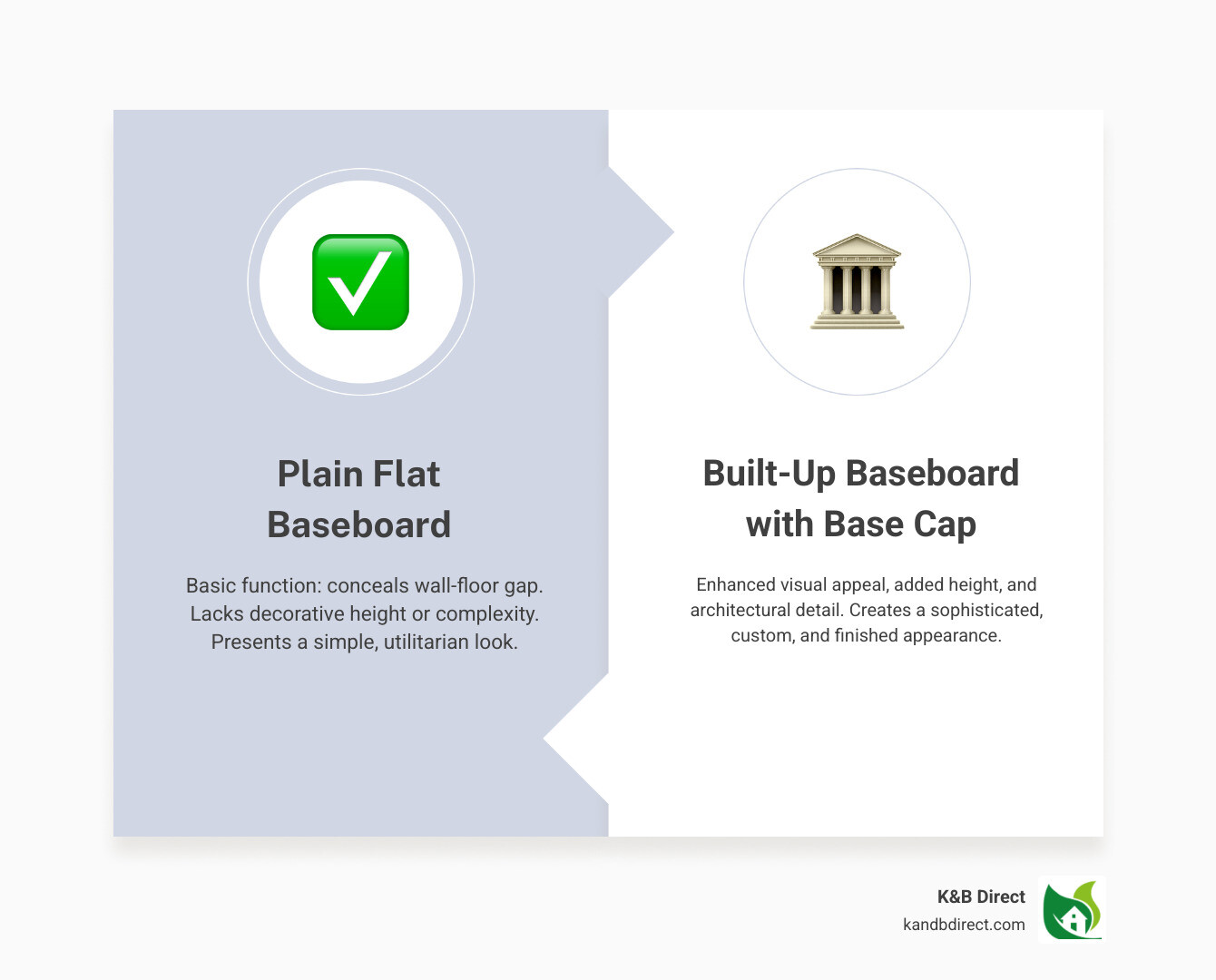
Think of your baseboards as the foundation of your room’s style. While they do the important job of covering the gap where your wall meets the floor, they also play a huge role in how your space feels. A simple, flat baseboard is functional, but with the magic of base cap moulding profiles, it can become a true design feature!
At its heart, base cap moulding is all about elevating the look of your baseboards. It adds that extra touch of height, depth, and decorative charm that transforms an ordinary trim into something truly special. It’s like giving your baseboards a beautiful crown! Plus, it can even help subtly hide any minor unevenness where the wall meets the floor, giving you an even cleaner, more polished finish.
What is the Primary Function of Base Cap Moulding?
The main goal of base cap moulding profiles is to make your baseboards shine. They take a simple, functional strip of wood and turn it into a beautiful architectural detail that catches the eye. By adding a base cap, you bring in visual interest and a sense of depth that a plain baseboard just can’t achieve on its own. It’s how we make the everyday look truly extraordinary!
This addition isn’t just for looks, though it certainly delivers on that front. When you place a base cap on top of a simple flat board, you instantly create the look of taller, more substantial baseboards. This is a smart trick because it’s often much more budget-friendly than buying custom-milled, full-sized baseboards. The base cap fits right against the wall, sitting perfectly on your flat board, adding height, character, and a touch of elegance. It’s the perfect choice if you want to boost your interior design without overspending. For even more insights into baseboard options, take a peek at our detailed guide on Baseboard Trim.
Base Cap vs. Base Shoe Moulding
It’s easy to mix up base cap moulding profiles with base shoe moulding, but they actually have very different jobs and go in different places. Knowing the difference is key to getting that perfect, finished look in your home!
Base cap moulding goes on top of your baseboard. Its whole purpose is to add decorative flair and extra height to the baseboard itself. It helps your base trim look more elaborate and grand, giving it a beautiful vertical dimension.
Base shoe moulding, on the other hand, is a slender piece of moulding that runs along the very bottom of your baseboard, right where it meets the floor. Its main job is to cover any tiny gaps that might appear between the baseboard and your flooring, especially if your floors aren’t perfectly level. As Bob Vila wisely points out, base shoe “adds a decorative touch while covering any gaps that might lie between the bottom of baseboard and the floor.” It ensures a smooth, seamless transition.
So, while both base cap moulding profiles and base shoe moulding help create a polished look, they work on different parts of your baseboard. Base cap builds up your baseboard for a touch of elegance, and base shoe neatly finishes it down to the floor, hiding imperfections and adapting to uneven surfaces. If you’re looking for specific base shoe options, check out our General Purpose Base Shoe 1/2 x 3/4 PFJP. You can also dive deeper into various moulding types and their uses on Bob Vila’s website in “Know Your Moldings” via this link: Know Your Moldings.
Exploring the Versatility of Base Cap Moulding Profiles
Here’s where base cap moulding profiles get really exciting. While they’re called “base cap” for good reason, thinking of them as one-trick ponies would be a missed opportunity. These versatile little strips are like the Swiss Army knife of trim work – once you start seeing their potential, you’ll spot opportunities to use them everywhere.
I’ve watched homeowners find this versatility firsthand, and it’s always fun to see that lightbulb moment. That simple profile sitting on your baseboard? It can also become wall trim that creates stunning accent panels, or transform into wainscoting details that make your dining room look like it belongs in a magazine.
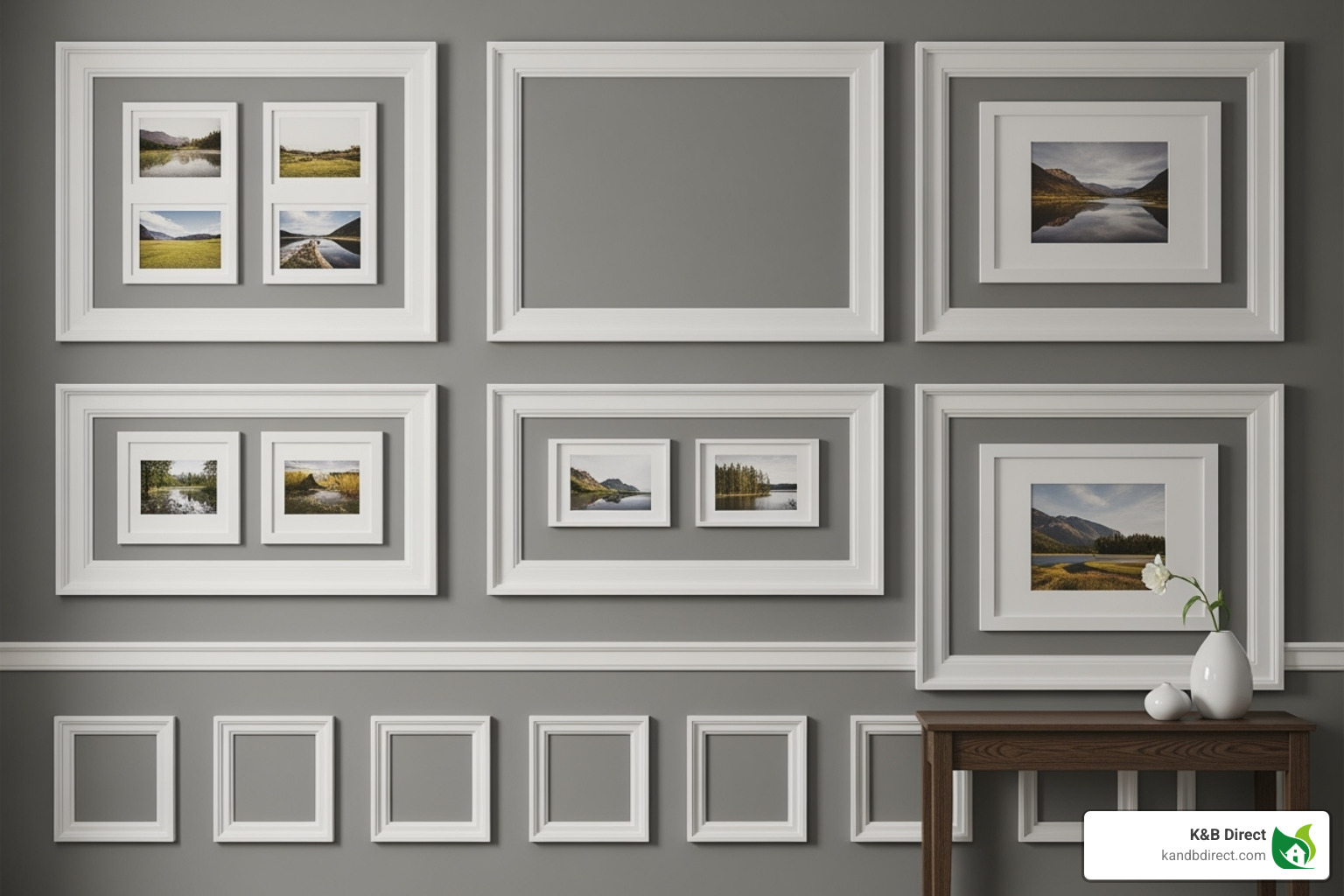
The magic happens when you start thinking beyond the floor. Picture frame moulding is one of my favorite applications – you can create beautiful frames directly on your walls around artwork or mirrors, giving them that custom, built-in look. Door casing improvement is another winner; adding base cap to plain door trim instantly makes it look more substantial and finished.
Even your crown moulding can benefit. If your existing crown feels a bit thin, layering base cap on top adds depth and richness without starting from scratch. For more creative wall applications, check out our full range of Wall Trim options.
Popular Design Aesthetics Using Base Cap Moulding
Base cap moulding profiles are design chameleons – they adapt beautifully to whatever style you’re going for. In modern design, they add subtle texture without overwhelming clean lines. As interior designers often point out, using a monochromatic color scheme allows the moulding to create visual interest through texture rather than color contrast.
Traditional style homes are where base cap really shines. The layered, detailed look that defines traditional design practically begs for the added complexity that base cap brings. Craftsman aesthetic homes benefit too, though you’ll want to choose profiles with cleaner lines that respect the style’s emphasis on honest, handcrafted details.
The key is understanding that monochromatic texture can be just as impactful as bold color choices. When everything is painted the same color, the shadows and depth created by different profiles become the stars of the show. This approach works beautifully in everything from cozy kitchens to formal dining rooms.
For design inspiration and real-world examples, browse through our Gallery to see how other homeowners have used base cap in their projects.
How to Improve a Room with Different Base Cap Moulding Profiles
Let’s get practical about changing your space. Building up plain baseboards is the obvious starting point – take those flat 1×4 or 1×6 boards and give them personality with the right profile. It’s like giving your room a subtle facelift that guests will notice without being able to pinpoint exactly what changed.
Adding detail to window and door casings is another game-changer. Plain casings often feel unfinished, but adding base cap to their outer edge creates that custom millwork look for a fraction of the cost. Your windows suddenly become architectural features rather than just holes in the wall.
Creating neat wainscoting panels becomes much easier when you use base cap to trim the inside edges. It gives you that crisp, finished look that makes DIY wainscoting look professionally installed. Framing artwork or mirrors directly on the wall with base cap creates a sophisticated, gallery-like feel that lifts your entire room.
Don’t overlook window treatments either – our Window Trim collection offers additional ways to create cohesive design throughout your space.
The beauty of base cap moulding profiles is that these small additions create big visual impact. Whether you’re tackling one room or planning a whole-house refresh, these versatile profiles give you the flexibility to create custom looks without custom prices.
Selecting the Perfect Profile: Materials and Key Considerations
When you’re standing in front of hundreds of beautiful base cap moulding profiles, it’s easy to get swept away by the gorgeous curves and intricate details. But here’s the thing – the material your moulding is made from matters just as much as the pattern you choose. I’ve seen too many homeowners fall in love with a profile only to find later that their material choice wasn’t quite right for their space.
The material you select affects everything from how your moulding looks when installed to how it holds up over time. Durability is crucial, especially in busy hallways where kids and pets might bump into walls. Appearance matters too – some materials take paint beautifully while others showcase natural wood grain. Cost-effectiveness keeps your project on budget, and moisture resistance becomes essential in bathrooms and kitchens where humidity can wreak havoc on the wrong material.
At K&B Direct, we’ve helped thousands of homeowners steer these choices. The key is matching your material to your specific needs, lifestyle, and budget.
How Material Affects Your Base Cap Moulding
Think of choosing moulding material like picking the right fabric for a favorite chair. Each option has its own personality and performs differently depending on where you put it and how you use it.
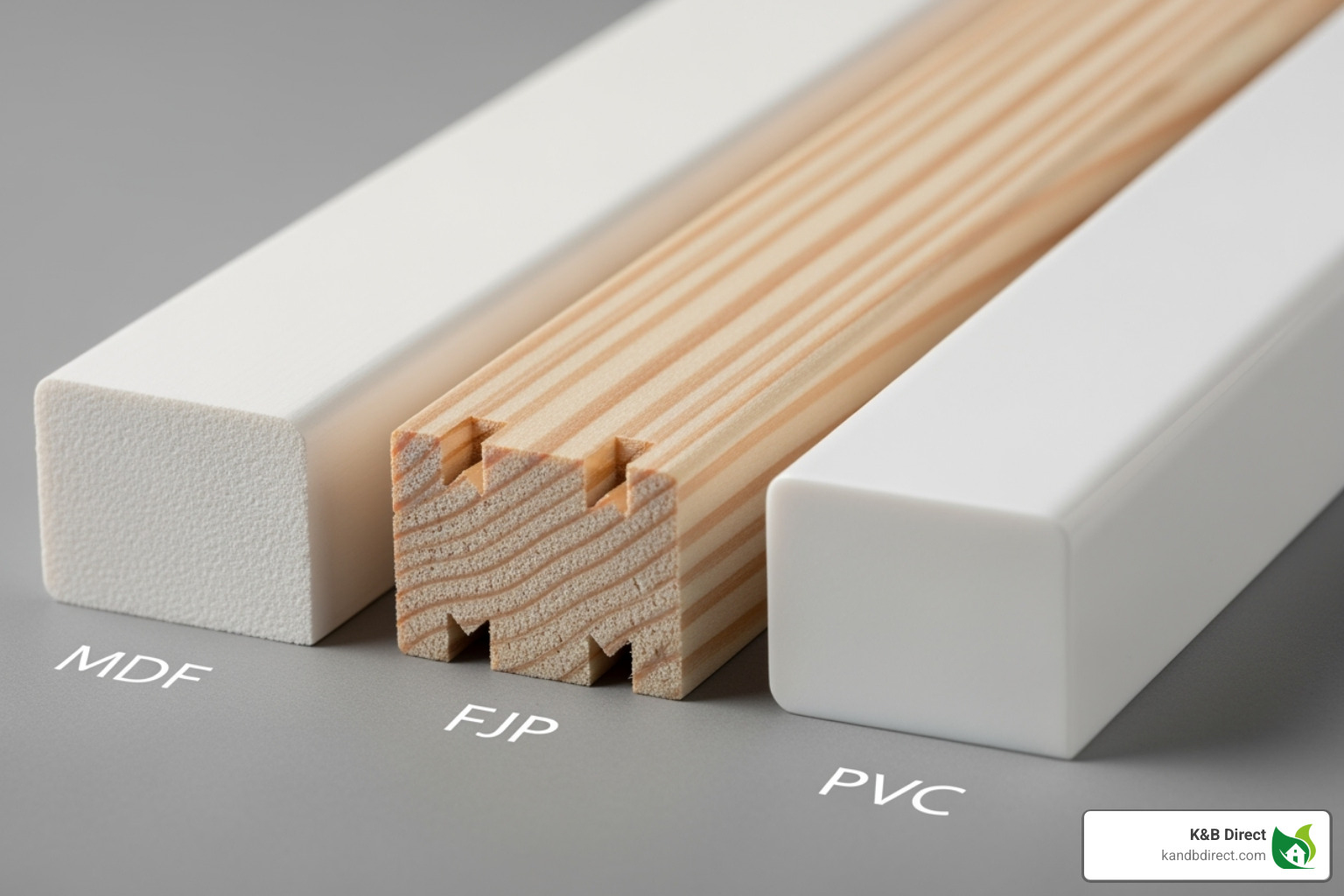
MDF (Medium Density Fiberboard) is like the reliable friend who always shows up when you need them. It’s incredibly smooth, takes paint like a dream, and won’t break your budget. The downside? It doesn’t love moisture, so skip it for bathrooms and laundry rooms. MDF also requires careful handling during installation since it can chip if you’re not gentle with it.
Finger-Jointed Pine (FJP) brings that authentic wood feel that many homeowners crave. It’s stronger than MDF and can handle a bit more moisture. You can paint it for a clean modern look or stain it to show off those beautiful wood tones. The trade-off is a higher price tag, and you might notice some slight color variations between the joined pieces – though most people find this adds character rather than detracts from it.
PVC moulding is the superhero of the bunch. It laughs at moisture, resists dents and dings, and never needs repainting. It’s perfect for bathrooms, basements, or anywhere humidity might be an issue. The only downside is that it can only be painted (no staining), and it costs a bit more upfront – though many homeowners find the long-term savings worth it.
For traditional wood lovers, our selection of Wood Moulding offers beautiful natural options. If you’re dealing with moisture-prone areas, explore our PVC Floor Moulding collection for worry-free performance.
Key Considerations for Choosing Base Cap Moulding Profiles
Choosing the perfect base cap moulding profiles is like putting together a puzzle – every piece needs to work together to create the complete picture you’re envisioning.
Start by looking at your room style. A sleek modern kitchen calls for clean, simple profiles, while a traditional dining room can handle more ornate details. The moulding should feel like it belongs, not like an afterthought.
Next, consider your existing trim. Your base cap should complement your door casings, window trim, and crown moulding. If your current trim has simple, straight lines, an overly ornate base cap might look out of place. The goal is harmony, not competition between different elements.
Desired height and scale matter more than you might think. A tiny profile on a tall wall can look lost, while an oversized profile in a small powder room might feel overwhelming. The moulding should feel proportional to the space it’s in.
Your paint or stain finish preference will guide your material choice. If you’re dreaming of rich, dark wood tones, you’ll need a natural wood or finger-jointed pine that can be stained. If you want crisp white trim that matches your doors and windows, MDF or PVC might be your best bet.
Finally, let’s talk budget. Quality moulding is an investment, but it doesn’t have to break the bank. Base cap moulding profiles are generally less expensive than full-sized decorative baseboards because they’re smaller. You’re getting custom-looking results without the custom price tag.
Our complete Mouldings & Millwork collection offers options for every style and budget, helping you create the look you want without compromising on quality.