
Why Wall Trim Is the Secret to a Professional-Looking Home
Wall trim is the finishing material installed around walls, ceilings, floors, and doors to create clean transitions and add architectural detail. Also known as molding or millwork, these elements serve both functional and aesthetic purposes that can dramatically transform any space.
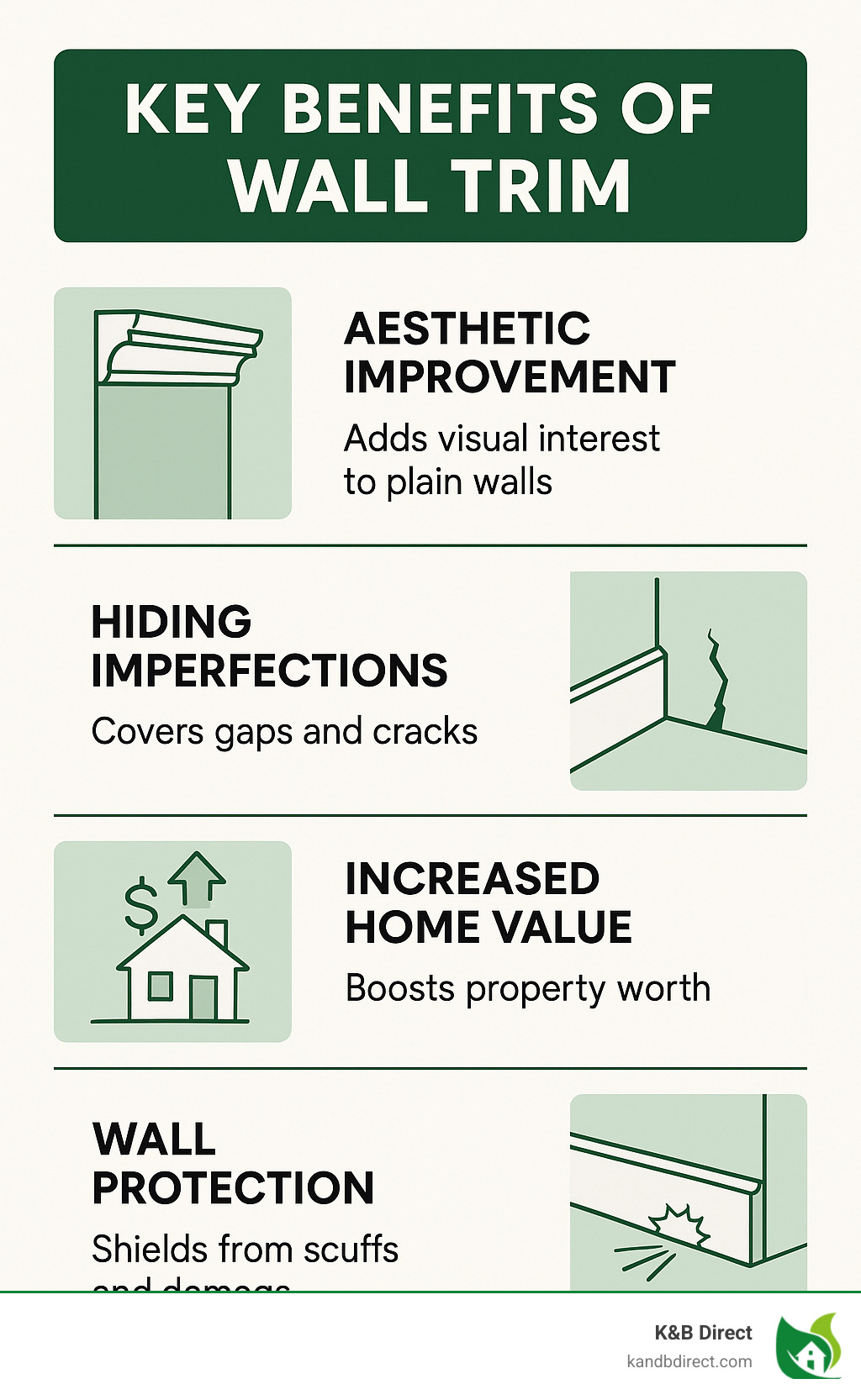
Key benefits of wall trim include:
- Aesthetic Improvement: Adds character, sophistication, and visual interest.
- Practical Function: Hides gaps, covers imperfections, and protects walls.
- Increased Home Value: Creates a polished look that appeals to buyers.
- Design Flexibility: Available in countless styles to match any decor.
From basic baseboards to elaborate crown molding, wall trim grounds a room and provides the visual contrast that makes spaces feel complete. It’s the secret to elevating a house from looking DIY to professionally designed.
I’m Eryk Piatkowski, Owner of K&B Direct. For over a decade, I’ve helped homeowners transform their spaces with quality wall trim. This guide will walk you through everything you need to know about selecting, installing, and finishing wall trim to achieve that polished look in your home.
The Foundation of Finish: What is Wall Trim and Why Does It Matter?
Wall trim is the finishing touch that transforms a house into a home, serving a dual purpose as both a practical problem-solver and an aesthetic improver. While the terms “trim” and “molding” are often used interchangeably, trim generally refers to functional pieces covering gaps, while molding is typically more decorative. Both are architectural details that add craftsmanship and can significantly increase your home’s value.
More Than Just Decoration: The Practical Perks
Behind the scenes, wall trim performs several critical jobs:
- Hiding Gaps & Imperfections: Walls and floors are never perfectly straight. Trim expertly covers the small gaps, cracks, and flaws where different surfaces meet, creating clean, defined lines.
- Protecting Walls: Baseboards absorb impacts from vacuums and furniture, while chair rails guard against scuffs from chairs. This protection saves you money on wall repairs.
- Masking Settling: As houses naturally settle over time, trim can hide the minor cracks that appear where walls meet ceilings or floors.
- Creating Transitions: Trim provides a seamless, intentional transition between different surfaces, like walls and floors, making the entire space feel purposeful.
Elevating Your Aesthetic: The Design Impact
Here’s how wall trim can transform the look and feel of your space:
- Adding Character & Visual Interest: Trim adds architectural personality to plain rooms. The play of light and shadow across its profiles creates depth and dimension on flat surfaces.
- Enhancing Proportions: The right trim can be an optical illusion. Wide baseboards can balance tall walls, while crown molding draws the eye upward, making ceilings look higher.
- Grounding & Defining Spaces: Substantial baseboards provide a visual anchor for the room. In open-concept homes, different trim styles can subtly define distinct areas, like a dining room from a living room, without adding walls.
The key is choosing the right profiles and proportions for your space, whether your home is traditional or ultra-modern.
A Guide to the Different Types of Wall Trim and Molding
Let’s explore the diverse world of wall trim. Each type serves a unique purpose, from foundational elements to decorative accents that add a “wow” factor.
Ceiling and Floor Essentials
These are the hardworking heroes you’ll find in nearly every well-finished home.
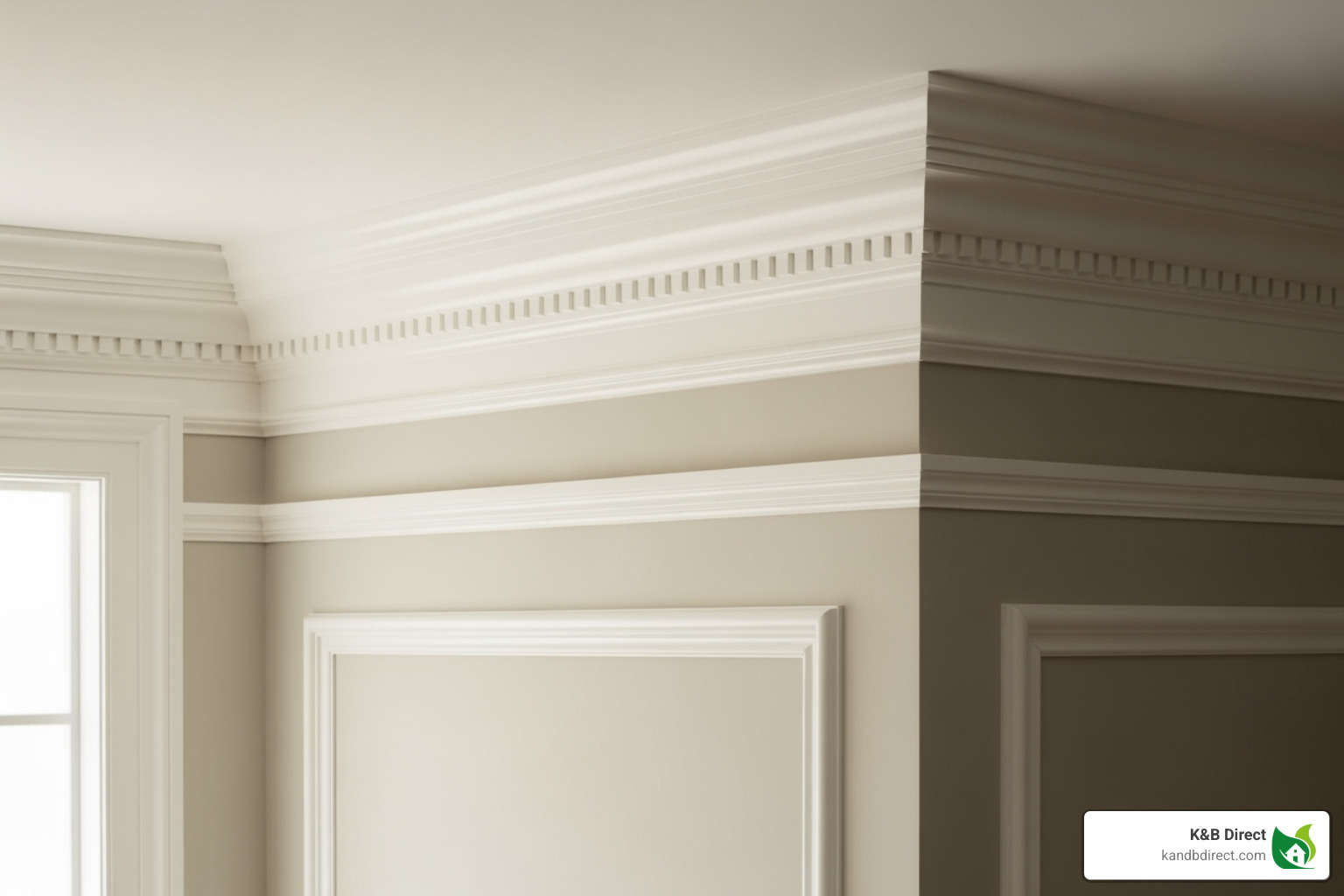
- Crown Molding: Installed where walls meet the ceiling, it instantly lifts a room, making it feel grander and ceilings appear taller. Our Crown 49 offers a timeless look.
- Baseboards: The most essential trim, running along the bottom of walls to protect them from scuffs and create a clean transition to the floor. Browse our Baseboard Trim collection for various styles.
- Shoe Molding & Quarter Round: These slender pieces are used with baseboards to cover any small gaps between the baseboard and uneven flooring, ensuring a professional finish. Our General Purpose Quarter Round Base Shoe is perfect for this.
Decorative and Functional Wall Accents
These pieces add personality and character to your walls.
- Chair Rail: Historically used to protect walls from chairs, it’s now a decorative element that adds visual interest and can cap off wainscoting. Our Chair Rail 390 MDF adds classic elegance.
- Wainscoting: Decorative paneling on the lower portion of a wall, adding texture and traditional charm. Common styles include beadboard, raised panel, and board and batten.
- Picture Frame Molding: Also called box trim, this uses thin molding to create decorative frames on walls for a high-end, custom look. Our Panel Mould 2448 is ideal for these details.
- Door and Window Casing: This trim frames doors and windows, covering the gap between the frame and the wall for a polished look. See our selection of Door Casing.
Choosing Your Material: Wood, MDF, and PVC
The material you choose affects cost, durability, and finish. Here’s a quick comparison:
| Material | Cost (per linear foot) | Durability | Finish Options | Best Use Cases |
|---|---|---|---|---|
| Solid Wood | Higher ($1.20+) | Excellent, but can warp/crack with humidity changes | Staining, painting, natural finish | Traditional, high-end, areas where natural wood look is desired |
| Medium-Density Fiberboard (MDF) | Lower ($0.60+) | Good, stable, but susceptible to moisture damage | Painting (very smooth finish) | Painted trim, dry areas, cost-effective projects |
| Polyvinyl Chloride (PVC) | Mid-range ($1.20+) | Excellent, resistant to moisture, rot, pests | Painting | Bathrooms, basements, exterior applications, high-humidity areas |
| Polyurethane | Mid-range | Excellent, resistant to moisture, lightweight | Painting | Decorative molding, intricate designs, areas where lightweight material is beneficial |
Medium-Density Fiberboard (MDF) is a budget-friendly choice for painted trim in dry areas, offering a very smooth finish. For moisture-prone areas like bathrooms, Polyvinyl Chloride (PVC) is the ideal choice, as it’s impervious to water and rot. Check out our PVC Floor Molding for durable options. For more guidance, explore our complete selection at Mouldings & Millwork.
Selecting the Perfect Style for Your Home
Choosing wall trim is like picking the perfect frame for a picture; it should improve the overall look, not overwhelm it. The key is to select a style that complements your home’s existing architectural character for a harmonious feel.
Matching Trim to Your Home’s Architectural Style
Different eras have distinct trim personalities. Matching your trim to your home’s style creates an authentic, timeless look.
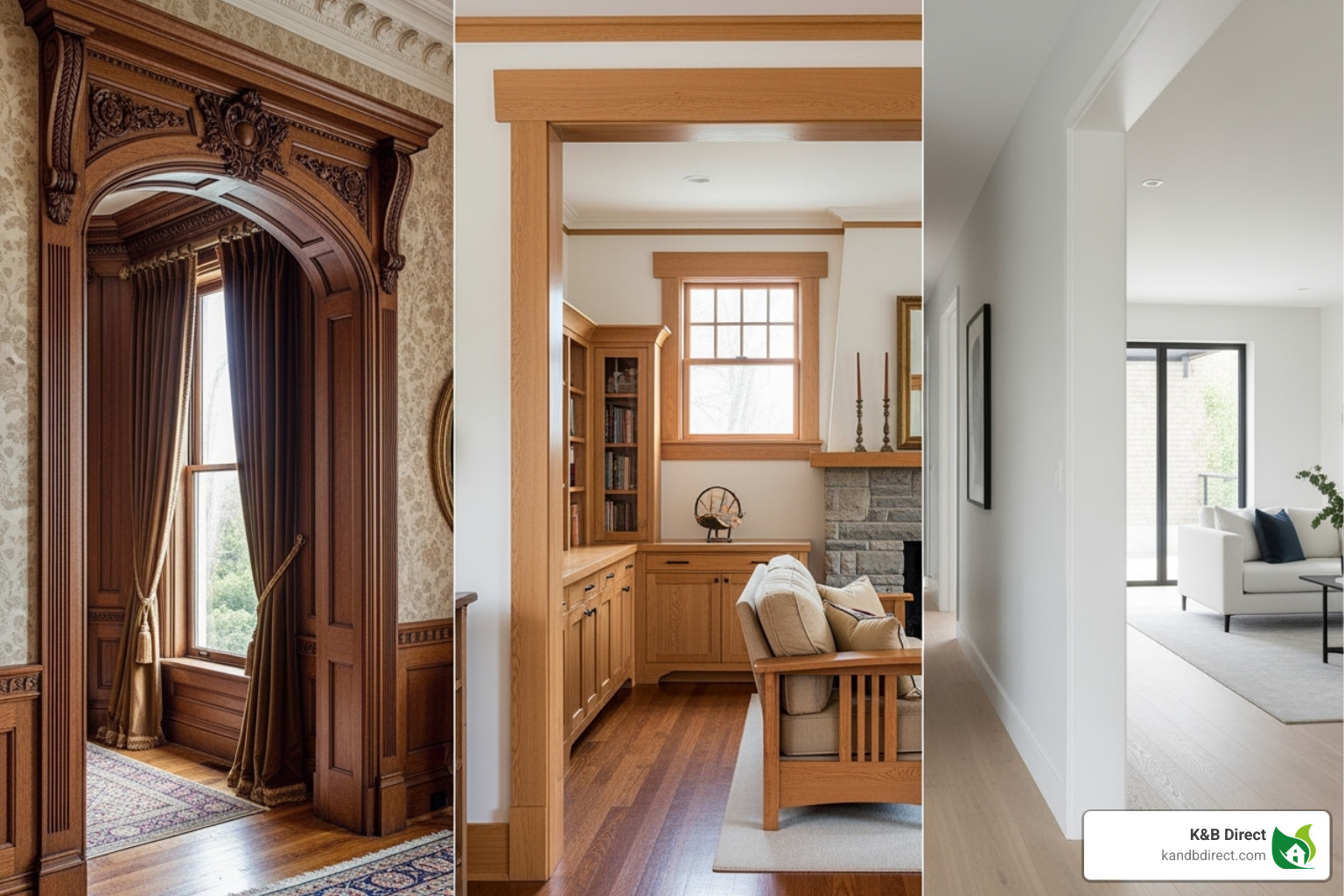
- Victorian: Ornate, elaborate, and wide (4-5 inches or more) with detailed profiles.
- Craftsman: Substantial and clean-lined, often celebrating natural wood finishes.
- Colonial: Classic, built-up profiles that feel both sophisticated and welcoming.
- Mid-Century & Modern: Minimalist and sleek, with thin profiles (2-3 inches) that often blend into the wall.
- Contemporary Farmhouse: Simple, clean profiles often painted crisp white, complemented by elements like shiplap.
Pro-Tips for Proportion and Scale
Getting the proportions right is crucial for visual harmony.
- Consider Ceiling Height: High ceilings can handle wider, more substantial wall trim to feel grounded. Low ceilings look best with more modest profiles that won’t feel cramped.
- Match the Room’s Formality: Formal spaces like dining rooms can feature more elaborate trim, while casual family rooms and bedrooms suit simpler, cleaner lines.
- Create Flow: While sizes can vary slightly based on ceiling height, keeping the trim style consistent throughout your home creates a cohesive, intentionally designed feel.
The goal is to create a space that feels balanced and right for your home. For personalized guidance, explore our custom millwork solutions to create your ideal look.
The Ultimate Guide to Installing Wall Trim
Installing wall trim is one of the most satisfying home improvement projects, but it’s also okay to call in a pro for complex jobs. With the right tools and techniques, you can achieve a gorgeous finish.
Gearing Up: Essential Tools and Techniques
Having the right equipment makes all the difference. Your essential toolkit should include:
- Miter Saw: For clean, precise angle cuts.
- Tape Measure & Level: For accurate measurements, as walls are rarely perfectly straight.
- Brad Nailer: A battery-operated model is a fantastic, accessible investment for DIYers.
- Caulk Gun & Wood Filler: The secret weapons for a professional finish.
- Sandpaper: For smoothing surfaces before painting.
For planning, use painter’s tape on the wall to visualize your layout before cutting. For corners, miter cuts work well for outside corners, while coping joints are often better for inside corners to accommodate wall imperfections. For a step-by-step guide, see our post on How to Cut Baseboard Corners. When fastening, always try to nail into wall studs for a secure attachment. Avoid using glue, as it can damage drywall upon removal.
The Finishing Touches: How to Finish Your Wall Trim
This is where the magic happens. Follow these steps for a flawless result:
- Fill Nail Holes: Use wood filler on all nail holes, let it dry, and sand it smooth.
- Caulk Gaps: This is the most crucial step. Caulk every seam where trim meets the wall or another trim piece. It creates a seamless, built-in look.
- Final Sanding: Lightly sand the entire surface to ensure it’s perfectly smooth for paint.
- Prime and Paint: Use a quality primer, followed by a durable semi-gloss paint. The subtle sheen is easy to clean and helps the trim stand out.
See installation videos for inspiration on our YouTube channel.
DIY Project or Hire a Pro?
Deciding whether to DIY or hire a professional depends on a few factors:
- Complexity: Simple baseboards are a great DIY project. Intricate crown molding or wainscoting may be best left to a pro.
- Budget: DIY saves significantly on labor costs. Professional installation can cost several dollars per linear foot on top of materials. See this Cost to Install Trim from HomeAdvisor for estimates.
- Time & Skill: Be realistic about your time commitment and skill level. If a project feels overwhelming, hiring a professional ensures a flawless finish.
Ready to start? Our guide on How to Install Base Cap Moulding is a great place to begin.
Common Pitfalls and Modern Trends
To ensure your wall trim looks timeless, it’s helpful to know what mistakes to avoid and what’s currently trending in the design world.
Dated Trends and Mistakes to Avoid
- Thin Honey-Oak Trim: The narrow (2-3 inch) honey-oak trim from the mid-20th century can instantly date a home.
- Incorrect Proportions: Trim that’s too thin for a large room with high ceilings will look lost, while oversized trim can overwhelm a small space.
- Poor Installation: Visible gaps, misaligned cuts, and unfilled nail holes signal an amateur job and detract from the final look.
- Skipping Caulk: This is a critical mistake. Caulking the seams where trim meets the wall is essential for a seamless, professional finish.
- Overly Ornate Designs: Elaborate trim can look out of place in a modern or minimalist home. The style should complement, not fight, your home’s architecture.
What’s Trending in Wall Trim for 2025?
Keep an eye on these exciting developments in wall trim design:
- Geometric Patterns: Designers are using trim to create bold accent walls with hexagons, diamonds, and other interesting shapes.
- Fluted and Reeded Profiles: These textured profiles with vertical grooves or rounded ridges add subtle, sophisticated detail.
- Monochromatic Color Schemes: Painting walls and trim the same color creates a seamless, modern look that makes rooms feel larger.
- Sustainable Materials: Trim made from reclaimed wood, bamboo, and recycled composites is growing in popularity.
- LED-Integrated Trim: An emerging trend in high-end design involves integrating LED lighting into baseboards or crown molding for ambient light.
The best choice balances current trends with a style that is authentic to your home. At K&B Direct, we can help you find that perfect balance.
Frequently Asked Questions about Wall Trim
Over my decade in the wall trim business at K&B Direct, I’ve answered many great questions from homeowners. Here are the most common ones.
What is the difference between trim and molding?
While the terms are often used interchangeably, there’s a subtle difference. Trim is the general term for the finishing material used to cover gaps around floors, ceilings, windows, and doors. Molding is a type of trim that is typically more decorative, featuring profiles and details designed to add architectural character. Simply put: all molding is trim, but not all trim is molding.
Should wall trim be painted the same color as the walls?
This is a design choice with two popular approaches. The traditional option is to paint trim a contrasting color (like crisp white) to make architectural details pop. The modern trend is a monochromatic look, where walls and wall trim are the same color. This creates a seamless, sophisticated effect that can make a room feel larger.
What is the most popular type of wall trim?
Without a doubt, baseboards are the most popular and essential type of wall trim. Found in nearly every home, they provide the critical function of creating a clean transition between the wall and floor. More importantly, they protect the base of your walls from daily wear and tear from vacuums, furniture, and foot traffic, making them a practical necessity for a finished room.
Transform Your Home with the Perfect Finishing Touch
When you walk into a beautifully designed home, it’s the finishing touches that create that polished, put-together feeling. Wall trim is the secret ingredient that lifts a house into a home, providing both essential practical benefits and a significant aesthetic impact.
From hiding imperfections to making ceilings feel taller, the right trim adds character, proportion, and a sense of intentional design to any space. Whether your style is classic or modern, there is a trim profile that will perfectly complement your vision.
At K&B Direct, we’ve seen the transformative power of quality millwork. We are committed to helping you achieve your dream aesthetic by offering top-quality products at the lowest possible prices. The investment in well-chosen wall trim pays dividends in both daily enjoyment and long-term home value.
Don’t let your home’s potential go unrealized. The difference between a house and a home often comes down to these thoughtful details. Give your walls the finishing touch they deserve.
Ready to see what wall trim can do for your space? Explore our full collection of Mouldings & Millwork to find the perfect style for your home and find how easy it is to achieve that professional look.