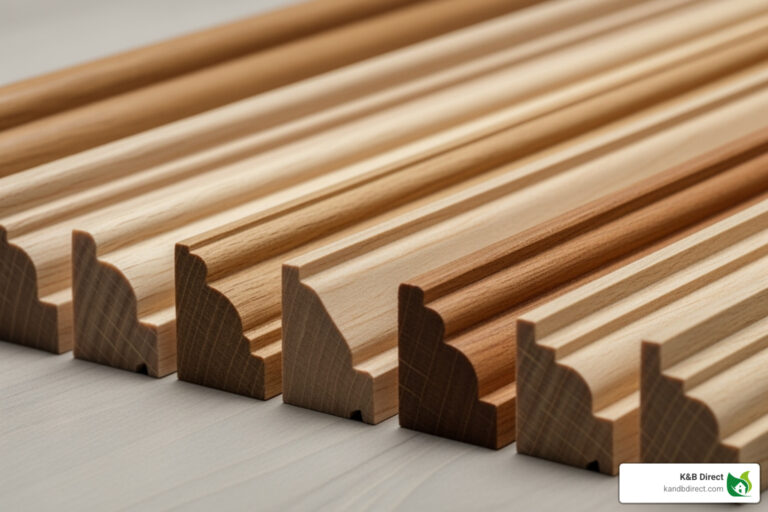
Why Column Base Trim Matters for Your Home
Column base trim is a decorative molding that wraps around the bottom of columns, posts, or pillars to create a polished, architectural look. Here’s what you need to know:
- Purpose: Provides a finished appearance while hiding gaps between the column and floor
- Function: Purely decorative (not load-bearing) – acts as a sleeve around the column shaft
- Materials: Available in wood, MDF, PVC, polyurethane, and composite options
- Styles: Ranges from simple Tuscan to ornate Ionic and Craftsman designs
- Installation: Typically ships in two pieces that wrap around existing columns
- Sizing: Usually adds 2-4 inches to your column’s total footprint
Whether you’re renovating your kitchen, upgrading a porch, or finishing a basement, column base trim transforms plain posts into eye-catching architectural features. It’s the difference between a column that looks unfinished and one that looks like it belongs in a high-end home.
The right base trim doesn’t just hide construction gaps – it creates a visual anchor that grounds your columns and ties together your entire design. Think of it as the foundation of your column’s style, much like baseboard trim finishes your walls.
I’m Eryk Piatkowski, Owner at K&B Direct, and over the past decade I’ve helped countless homeowners select the perfect column base trim to complement their cabinet installations and complete their renovation visions. Understanding how column base trim works with your overall design is key to creating spaces you’ll be proud of for years to come.
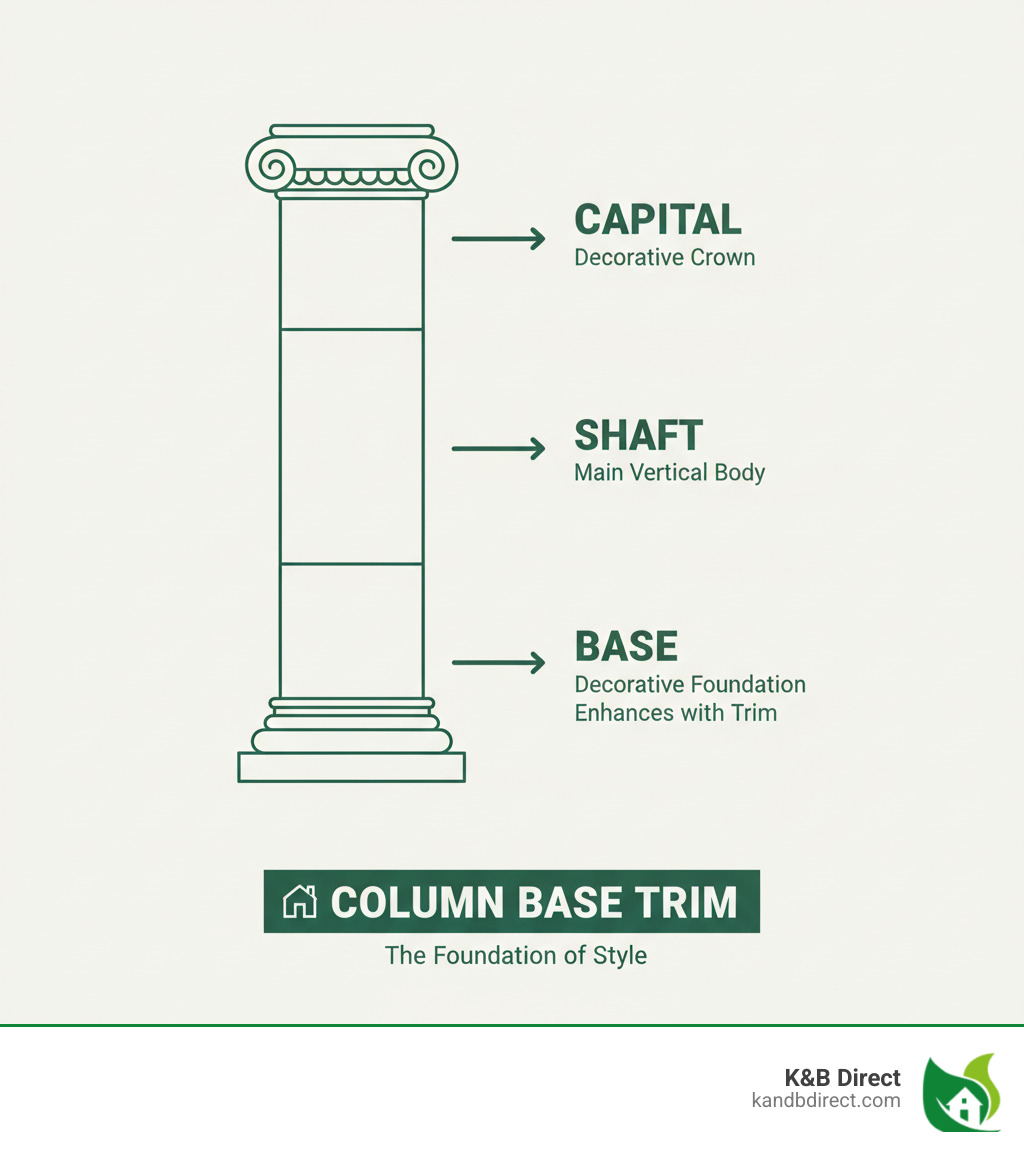
What is Column Base Trim and Why is it Essential?
Think of column base trim like the perfect pair of shoes that completes an outfit. Your column might be structurally sound and doing its job, but without that finishing touch at the bottom, something just feels… incomplete.
Column base trim is a decorative element that wraps around the base of columns, posts, or pillars, creating a visual anchor that grounds the column and connects it naturally to the floor. It transforms what might look like a plain structural element into an intentional design feature that catches the eye and adds character to your space.
Here’s the thing: this trim is essentially a decorative sleeve around the column shaft. It’s not load-bearing, which means it doesn’t affect the structural integrity or installed height of your column. Its entire purpose is to make your columns look incredible while solving a few practical problems along the way.
Hiding gaps and imperfections is one of the most appreciated benefits. Construction rarely leaves perfect joints where columns meet the floor. Small gaps, uneven cuts, or minor imperfections are normal, but they don’t look finished. Column base trim conceals these issues beautifully, creating that clean, professional appearance you’d expect in a high-end home. It works the same way different types of moulding like baseboards hide the joint between walls and flooring.
The trim also offers protection from everyday damage. Column bases take a beating from foot traffic, vacuum cleaners, furniture bumps, and cleaning equipment. A quality base trim acts as a shield, especially important if you’re working with wood columns that can dent, scuff, or absorb moisture. While it’s not structural protection, it definitely saves your columns from the wear and tear of daily life.
Beyond the practical benefits, column base trim creates visual continuity throughout your space. It bridges the gap between your columns and flooring, tying together the architectural elements of a room. This continuity is what separates a space that feels thoughtfully designed from one that feels like an afterthought.
We’ve seen countless projects where adding the right base trim was the final detail that brought everything together. It’s a small investment that makes a significant impact on how polished and intentional your space feels.
For more information on how quality trim can transform your home, explore our selection of wood moulding.
Exploring the Types and Materials of Column Base Trim
The world of column base trim offers something for everyone, whether you’re restoring a Victorian home or finishing a modern farmhouse. Think of it as choosing the right shoes for an outfit – the style and material need to match both the occasion and the environment.
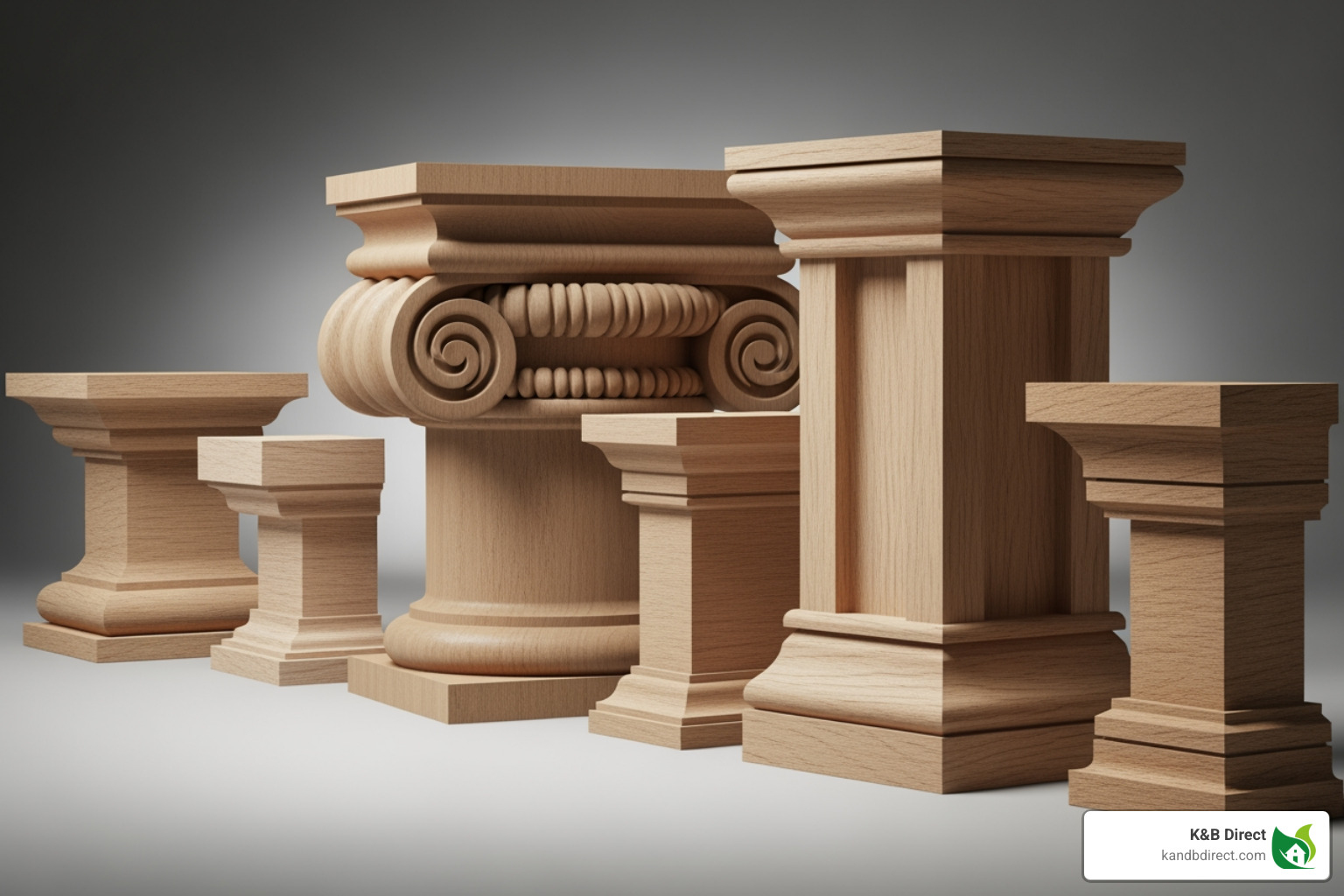
When you’re browsing for the perfect base trim, you’ll encounter several classic style categories. The Tuscan style brings timeless elegance with its simple, clean lines. The Ionic (sometimes called Attic base) adds sophisticated detail with its more elaborate profile. The Doric style offers sturdy, straightforward beauty that speaks to strength. And for those who love contemporary or Craftsman aesthetics, square-style bases provide geometric simplicity that feels both modern and grounded.
Each of these styles works beautifully for both interior columns and exterior applications, though your material choice will determine how well they stand up to the elements.
A Deep Dive into Common Materials
Here’s where things get practical. The material you choose for your column base trim affects everything from your maintenance schedule to your budget to how long your trim will look beautiful.
Wood remains a favorite for many homeowners, and for good reason. Oak, poplar, maple, and cherry each bring their own character with natural grain patterns you simply can’t replicate. You can stain wood to highlight its beauty or paint it to match existing trim. The catch? Wood demands attention, especially outdoors. Without proper sealing and maintenance, moisture can lead to rot, warping, or insect damage. If you’re installing in a bathroom or high-humidity area, wood might not be your best friend.
MDF (Medium-Density Fiberboard) is the budget-conscious choice for interior projects. It paints beautifully with an ultra-smooth finish, making it popular for rooms where you want a crisp, clean look. But here’s the important part – keep MDF strictly indoors and away from moisture. A splash of water can cause permanent damage, so it’s not suitable for bathrooms, basements, or anywhere humidity runs high.
PVC (Cellular PVC) is the workhorse of exterior applications. If your columns live on a porch or anywhere exposed to weather, PVC deserves serious consideration. It laughs at rain, ignores insects, and won’t rot no matter how long it’s been installed. Maintenance is minimal – just occasional cleaning and painting if you want to refresh the color. The trade-off is that it doesn’t have the natural warmth of real wood, though quality PVC can look quite convincing once painted. For more weather-resistant options, check out our PVC floor moulding selection.
Polyurethane and composite materials (including fiberglass composite, PolyStone®, and stucco-cement coated options) represent the premium end of the spectrum. These materials give you the best of both worlds – they’re lightweight yet incredibly durable, weather-proof yet detailed enough to mimic high-end stone or concrete. They arrive ready to paint and work equally well inside or outside. The investment is higher than MDF, but the longevity and versatility often justify the cost.
| Feature | Wood | PVC | Polyurethane/Composites |
|---|---|---|---|
| Durability | Good (with maintenance) | Excellent (weather, insect, rot-proof) | Excellent (weather, insect, rot-proof) |
| Cost | Moderate to High | Moderate | Moderate to High |
| Maintenance | High (painting, sealing, checking) | Low (cleaning, occasional painting) | Low (cleaning, occasional painting) |
| Aesthetics | Natural, classic | Smooth, paintable, clean | Can mimic stone/concrete, detailed, paintable |
| Use | Interior/Exterior (treated) | Exterior (ideal), Interior | Interior/Exterior |
Matching Your Column Base Trim to Architectural Designs
The secret to making column base trim look like it was always meant to be there? Match it to your home’s architectural personality.
Our Tuscan bases are customer favorites for good reason – they bring that traditional classical look that never goes out of style. These bases feature the kind of simple elegance you’d see in ancient Roman architecture, making them perfect for traditional homes or anyone wanting to add timeless sophistication.
Ionic (or Attic) bases step up the formality with more elaborate profiles and refined details. If your home has columns with those distinctive scroll-like volutes at the top, an Ionic base completes the classical look with appropriate grandeur. These work beautifully in formal entryways or dining rooms where you want to make a statement.
Doric bases accept strength and simplicity. They’re robust without being fussy, providing a solid visual foundation that works in formal settings or anywhere you want columns that feel substantial and permanent.
For homes with Craftsman, modern, or farmhouse aesthetics, square column base trim is your answer. These bases celebrate clean lines and geometric simplicity, emphasizing the hand-crafted, natural feel that defines these styles. They look equally at home supporting a front porch roof or framing a kitchen island.
Just as baseboard trim creates visual continuity along your walls, the right column base trim grounds your columns in a way that feels intentional and complete. When you match the style to your home’s architecture, everything just clicks.
Ready to see your options? Explore our extensive collection of column bases to find the perfect match for your project.
How to Choose the Perfect Column Base Trim
Selecting the ideal column base trim involves more than just picking a style you like. It requires careful consideration of your project, the column’s specifics, and your budget. We’re here to guide you through making the best choice.
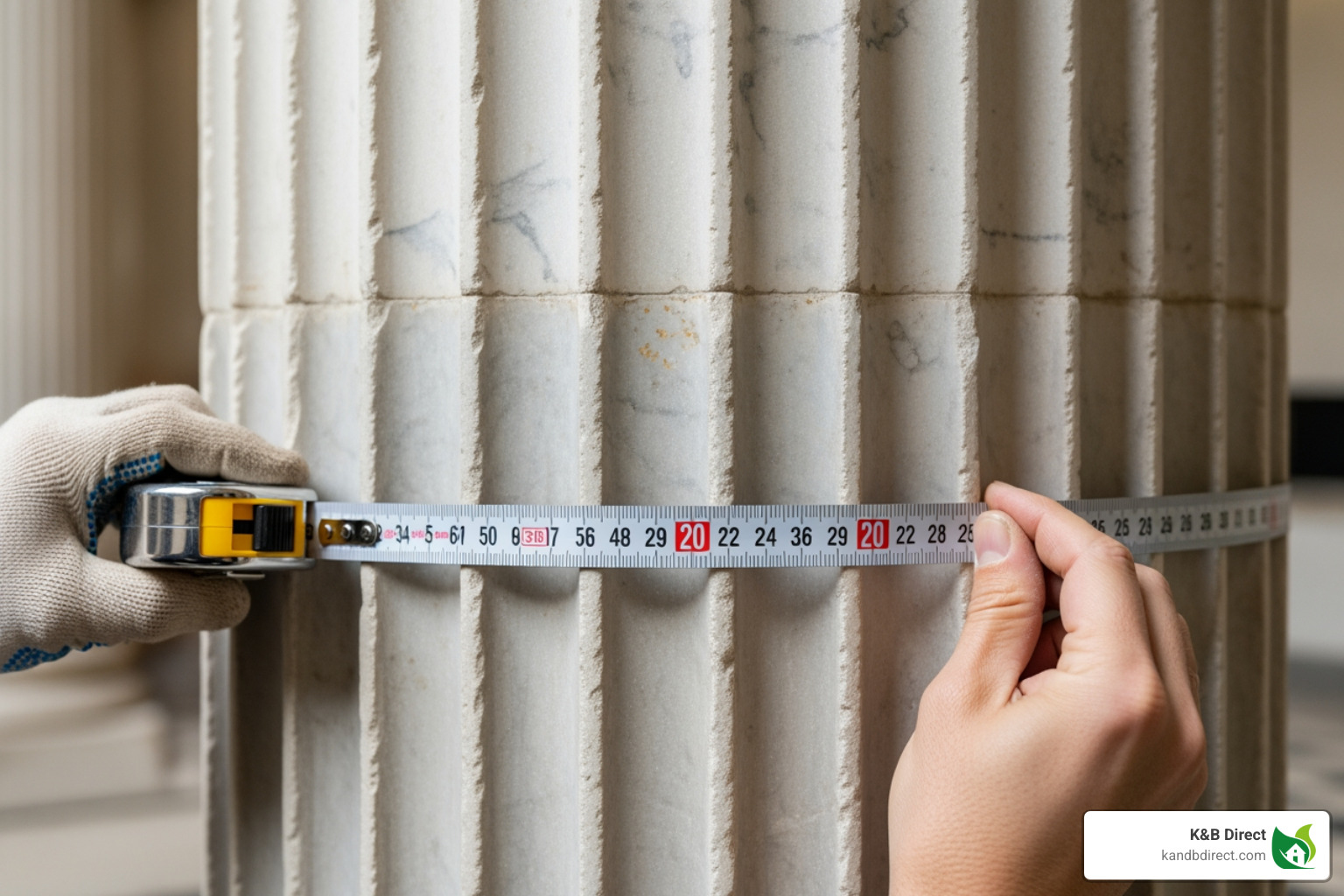
The first step is understanding your project’s unique needs. Is your column round or square? What’s its exact size? These details matter more than you might think. Many columns, especially porch columns, are round and tapered, which means they need a base designed to accommodate that shape. Square columns, on the other hand, work best with square-styled trim that complements their clean geometric lines.
Sizing and Proportions
Getting the measurements right is absolutely crucial to ensure your column base trim fits perfectly and looks proportional. Trust me, there’s nothing worse than ordering trim only to find it doesn’t fit your column properly.
If you’re working with an existing column, start by measuring the column diameter accurately. Here’s a simple trick we share with all our customers: measure the circumference of your column at the base, then divide that number by 3.14 (Pi). The result is your column’s diameter. Double-check this measurement, especially if your columns weren’t originally purchased from us. Why? Because actual column sizes can sometimes be slightly smaller than their nominal size. For example, an “8-inch” column might actually measure 7 5/8 inches in diameter at the bottom.
Once you know your column diameter, you’ll need to understand the trim dimensions and how they relate to your column. Our column base trim typically adds specific dimensions to create that polished, proportional look. The base top is usually about 1 inch larger than the column diameter, while the base bottom extends about 3.75 inches larger, giving you a total height of approximately 4.75 inches. These proportions aren’t random – they’re designed to create visual balance and architectural harmony.
That column base trim will increase your column’s overall footprint. Depending on the style you choose, this can add about 2 to 4 inches to the total footprint of the shaft. This matters if you’re working with tighter spaces, narrow walkways, or doorways where every inch counts.
Most of our column base trim options feature a convenient wrap-around design. They’re shipped in two halves that fit together around your existing column, which means you won’t need to remove or replace the entire column. This design makes the trim act as a decorative sleeve that seamlessly encloses the column shaft. For more options and inspiration, explore our resin column bases.
Budgeting for Your Project
Understanding the typical cost range for column base trim helps you plan your project effectively without surprises. Prices vary significantly based on material, style, size, and level of detail.
Let’s talk numbers. Simple fiberglass composite bases typically start around $50 to $130, making them accessible for most budgets. More elaborate or larger bases, especially those crafted in high-quality polyurethane or composite materials, can range from $100 to over $2,000, depending on size and intricacy. Smaller components might be as affordable as $10, while very large or highly detailed architectural pieces can reach $2,000 or more.
The material you choose has a direct impact on price. As we discussed earlier, MDF and some wood options tend to be more budget-friendly for interior applications. PVC, fiberglass, and polyurethane composites represent a mid-to-higher range investment, but they offer superior durability and weather resistance that pays off over time, especially for exterior use.
When budgeting, consider whether you’ll tackle DIY installation or hire a professional. Many of our column base trims are designed with straightforward DIY installation in mind – the two-piece wrap-around design makes it manageable even if you’re not a seasoned contractor. However, if you prefer professional installation, factor in labor costs to get the complete picture of your project budget.
Here’s the good news: at K&B Direct, our direct-to-consumer model helps us offer top-quality products at unbeatable, lowest possible prices by cutting out the middleman. This can potentially reduce your costs by about 50% compared to traditional retail channels. This value extends across our entire product line, from column base trim to base cap moulding, helping you achieve your dream home aesthetics without breaking the bank.
Installation 101: A Guide to Fitting Your Trim
Installing column base trim might seem daunting at first, but we promise it’s more straightforward than you’d think. With the right tools and a clear understanding of the process, you can transform plain columns into architectural showpieces in just a few hours. We’re here to walk you through every step.
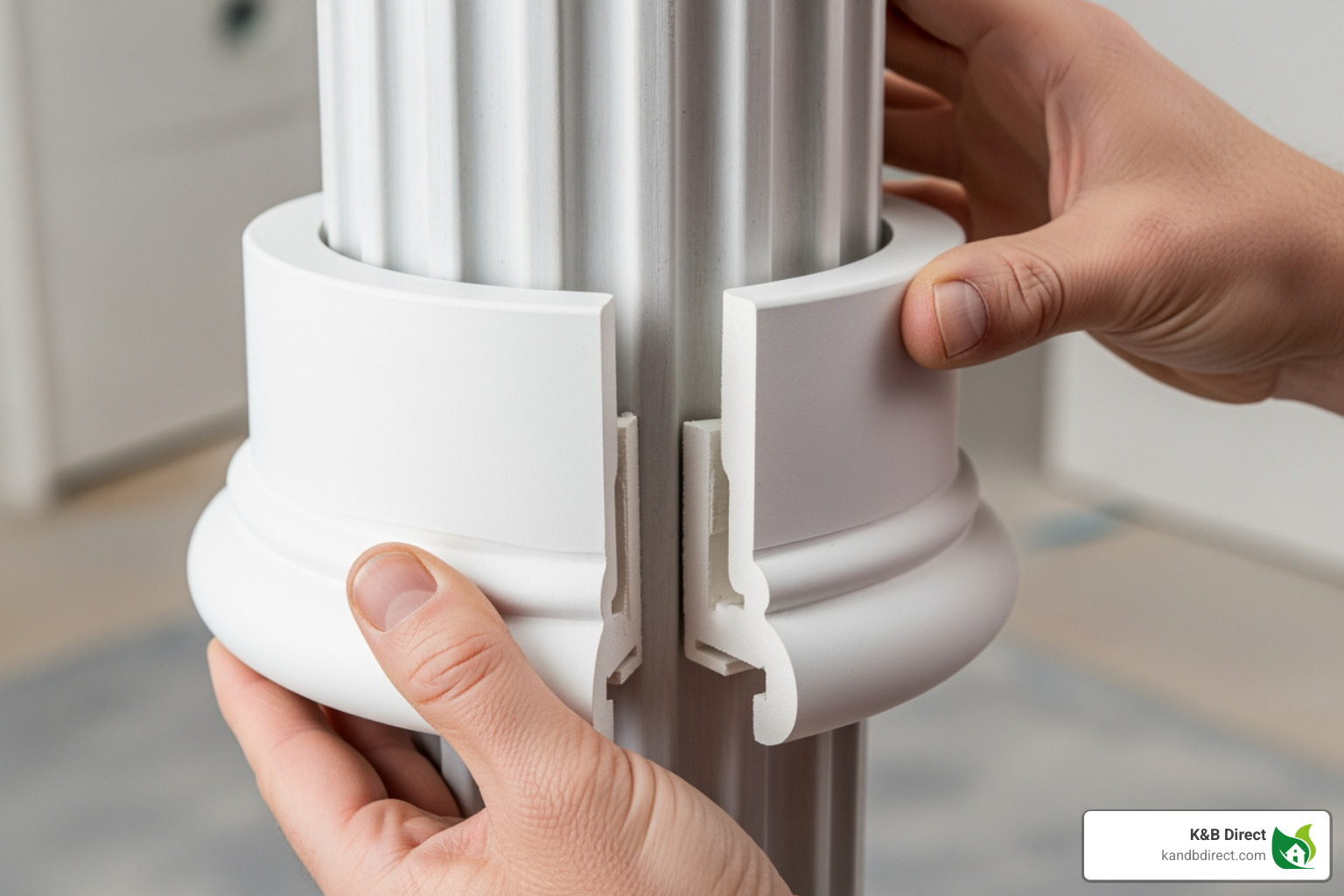
The beauty of modern column base trim is its wrap-around design. Most trims ship in two halves that simply wrap around your existing column shaft, which means you won’t need to remove the column itself. This makes the installation process accessible even if you’re not a seasoned DIYer.
Before you begin, gather your tools. You’ll need a measuring tape and pencil for marking, a miter saw or chop saw for precise cuts (especially for angled joins), and a fine-tooth saw as a backup for hand-cutting if needed. For securing the trim, grab some construction adhesive (an improved-cement/stucco adhesive works great for masonry, while PL-premium handles other surfaces beautifully), a caulk gun, and some finishing nails or screws if you’re mechanically fastening. A hammer or nail gun, level, and sandpaper for smooth edges round out your toolkit. Don’t forget your primer and paint for the finishing touches, plus safety glasses and gloves to protect yourself.
Now let’s walk through the installation. Start by carefully measuring your column’s diameter, just as we discussed in the sizing section. Measure the height where your column base trim will sit, then dry-fit the two pieces around the column to ensure they meet correctly. There’s nothing worse than finding a gap after you’ve already applied adhesive.
Next, cut your trim to fit. If your trim needs sizing adjustments or mitered corners for a perfect join, use your miter saw. Many composite materials cut beautifully with standard woodworking tools. Universal PVC options often ship in two 30-inch pieces that you can cut on-site with a chop saw to match your column’s circumference perfectly.
When you’re ready to attach the trim, apply a generous bead of construction adhesive to the back edges that will meet both the column and the floor. Don’t be shy with the adhesive—it’s what keeps everything secure. For masonry surfaces, stick with an improved-cement/stucco adhesive. For other surfaces, PL-premium adhesive is your friend.
Carefully wrap the first half of the column base trim around the column, pressing it firmly into place. Repeat with the second half, making sure you get a tight seam where the two pieces meet. If you’re using a mechanically fastened trim (common with PVC options), you can also secure it with finishing nails or screws, counter-sinking the fasteners for a smooth, professional finish.
Immediately wipe away any excess adhesive that squeezes out—it’s much easier to clean now than after it dries. Allow the adhesive to cure according to the manufacturer’s instructions, which typically ranges from a few hours to overnight. Once everything’s dry, run a bead of caulk along any seams for a flawless transition.
The final step is painting and finishing. Most column base trim comes ready-to-paint, which gives you complete control over the final look. We recommend starting with an acrylic-latex primer, followed by an exterior-grade masonry or stucco paint. This not only makes your trim look stunning but adds an extra layer of protection against the elements.
Here’s something that makes column base trim even more versatile: you can install it during initial construction or add it to an existing column after your project is complete. This flexibility means you can upgrade your columns whenever you’re ready, whether that’s during a full renovation or as a standalone weekend project.
For more detailed guidance on trim installation techniques, including tips for creating seamless joins, explore our resources on base cap mouldings.
Frequently Asked Questions about Column Base Trim
Over the years, we’ve heard just about every question imaginable about column base trim. Here are the answers to the ones that come up most often, straight from our experience helping homeowners just like you.
Is column base trim load-bearing?
Here’s the short answer: No, column base trim isn’t load-bearing at all. We get this question a lot, and it’s completely understandable – after all, these trims sit at the foundation of your columns, so it’s natural to wonder if they’re doing some heavy lifting.
The truth is, column base trim is purely decorative. Think of it as a beautiful sleeve that wraps around your column shaft to give it that finished, polished look. It doesn’t contribute to the structural integrity of the column, and it won’t affect the column’s overall installed height. Your column is doing all the structural work; the base trim is just making it look fantastic while doing it.
So while your column base trim might look substantial and important – and it is important for aesthetics – it’s the column itself that’s holding things up, not the trim around it.
Can I install column base trim on an existing column?
Yes, and this is one of the best things about column base trim! You don’t need to tear anything down or start from scratch. Most column base trim comes in a clever two-piece wrap-around design that makes retrofitting a breeze.
Here’s how it works: the trim arrives in two halves that simply wrap around your existing column shaft. You measure your column, apply adhesive to the back of each half, position them around the column, secure them together, and you’re done. No need to remove the column, no major construction project, no headaches.
These wrap-around kits are specifically designed for this exact purpose – upgrading columns that are already in place. Whether you’re refreshing your front porch or finishing a basement, you can add column base trim to existing columns in an afternoon. It’s a simple upgrade that makes a dramatic difference.
How do I clean and maintain my column base trim?
The maintenance requirements for your column base trim depend entirely on what material you’ve chosen. Let’s break it down by material type.
PVC and polyurethane or composite trims are the low-maintenance champions. These materials resist rot, warping, and insects, so you won’t be dealing with the typical problems that plague wood. For cleaning, just wipe them down with a damp cloth and mild soap whenever they look dusty or dirty. If you’ve painted them, you might need to do occasional touch-ups, but the material itself practically takes care of itself. This is why we recommend these materials for exterior applications – they just keep looking good year after year.
Wood trim requires more attention, especially if it’s outdoors. Regular cleaning with mild detergent keeps it looking fresh. If your wood trim is painted, check it periodically for chips or peeling, then re-prime and re-paint those spots as needed. For stained wood, you’ll want to re-seal or re-stain every few years to protect it from moisture and sun damage. It’s more work, but many homeowners love the natural beauty of wood and consider the maintenance worth it.
MDF trim is the simplest to maintain, but only because it should be used indoors. A quick dusting and occasional wipe-down is usually all it needs. If it’s painted and gets scuffed, just touch up those spots with matching paint.
No matter which material you choose, if you’re painting your column base trim, use high-quality exterior-grade masonry or acrylic-latex paint. This provides a durable finish that protects the material and keeps it looking beautiful for years.
The right maintenance routine keeps your column base trim looking as good as the day you installed it, continuing to lift your home’s appearance for the long haul.
Conclusion: Lift Your Home’s Style from the Ground Up
Think back to when we started this journey together. Column base trim might have seemed like a small detail, but now you know it’s one of those finishing touches that separates a house from a home you’re truly proud of. It’s not just about hiding those awkward gaps where columns meet the floor – though it does that beautifully. It’s about creating that visual anchor that makes your columns look intentional, polished, and perfectly integrated into your space.
We’ve walked through everything you need to know: the protective benefits that shield your columns from daily wear and tear, the stunning variety of materials from weather-resistant PVC to classic wood, and the architectural styles that can transform your space from ordinary to extraordinary. You’ve learned how to measure accurately, choose the right material for your specific needs, and even tackle installation yourself if you’re feeling handy.
The beauty of column base trim is that it works quietly in the background, grounding your design and tying everything together. Whether you’re going for timeless Tuscan elegance, clean Craftsman lines, or ornate Ionic sophistication, the right base trim brings your vision to life from the ground up.
At K&B Direct, we’ve spent over a decade helping homeowners just like you make these decisions. We know that every detail matters when you’re creating your dream space, and we’re committed to offering you top-quality products at the lowest possible prices – no middleman markup, just honest value and friendly service. That’s our promise to you.
Your columns deserve a foundation as beautiful as the rest of your home. Ready to find the perfect foundation for your columns? Explore our extensive collection of baseboard trim today!