
Fire-Rated Door Solutions in Schiller Park
We supply fire-rated doors to Schiller Park homeowners and contractors who need code-compliant protection between attached garages, stairwells, and living spaces. We carry 20-minute and 60-minute rated units in standard residential sizes. Whether you are replacing a garage entry door or meeting a building inspection requirement, we help you find the right rated unit for your opening. As your local cabinet store, we know what local inspectors look for.
Understanding Fire Door Ratings — What 20-Minute and 60-Minute Mean
Fire door ratings measure how long a door assembly resists the passage of fire and smoke under controlled test conditions. A 20-minute rating means the door passed a standard fire test for 20 minutes without allowing flame or hot gases to penetrate to the other side. A 60-minute rating means it held for a full hour under the same conditions. The rating is assigned to the complete assembly — door, frame, and hardware — not just the slab.
We carry 20-minute and 60-minute rated doors in standard residential sizes. Most garage-to-home openings in Schiller Park require a 20-minute unit — that is the minimum under the International Residential Code as adopted in Illinois. Bring the rough opening dimensions and tell us the application and we will point you to the right rated unit. We stock the most common sizes for same-day pickup.
Where Fire-Rated Doors Are Required in Schiller Park Homes
The most common fire door requirement in Schiller Park single-family homes is at the door between an attached garage and the living space. The International Residential Code requires this opening to be protected by a solid wood door at least 1-3/8 inches thick, a solid or honeycomb steel door, or a 20-minute fire-rated door. Most building departments and inspectors in Cook County accept a listed 20-minute door as the standard for this location.
Other locations in Schiller Park homes that may require rated doors include the door from an attached garage to a habitable room above it, stairwell enclosures in two-story homes, and utility room openings in multi-unit buildings. If you are not sure whether your specific opening requires a rated door, your local building department or a licensed contractor can confirm the requirement before you purchase.
Fire-Rated Door Solutions in Schiller Park — What to Know Before You Buy
Fire-rated doors create a time delay between a fire source and the occupied space on the other side. In Schiller Park residential construction, the most common application is the garage entry door — garages contain combustible materials and are statistically one of the most common fire origin points in a home. A listed fire door at this location gives occupants time to exit before the fire spreads into the living area.
- Identifying which openings in your home require a fire-rated door under Illinois residential code
- Selecting the correct rating — 20-minute or 60-minute — for your specific application
- Ensuring the door carries a listed label from a recognized testing agency such as UL or Intertek
Garage-to-Home Fire Doors — The Most Common Application in Schiller Park
The garage-to-home entry is the single most common fire door application we see from Schiller Park homeowners. Many homes in the area were built in the 1950s through 1970s with standard hollow-core interior doors at this location — a door that provides no meaningful fire separation. Replacing that door with a listed 20-minute unit is one of the most cost-effective fire safety upgrades a homeowner can make.
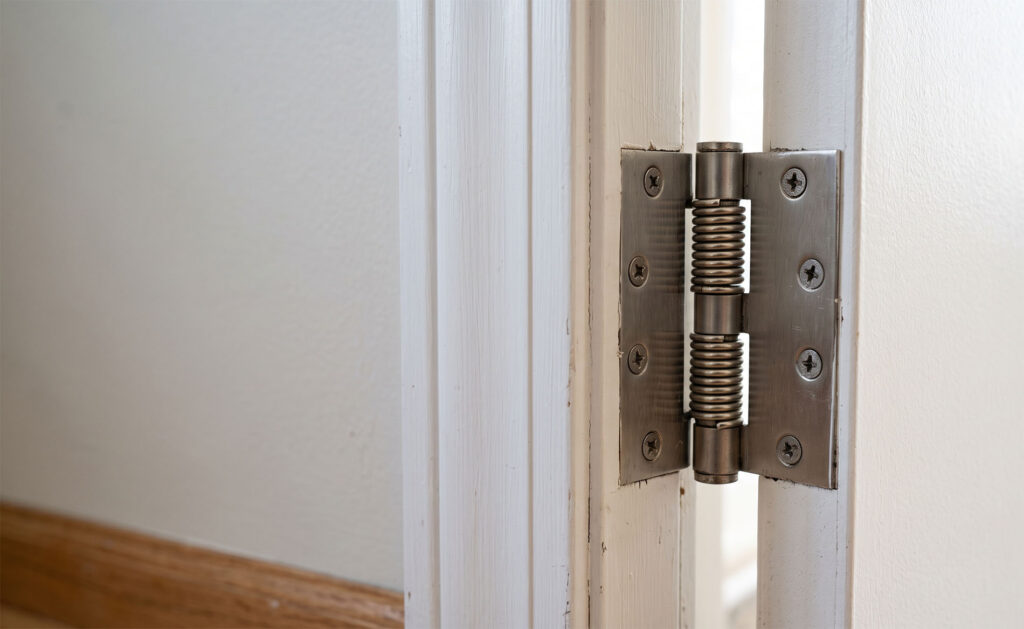
The garage entry door in most Schiller Park homes is a standard 2-8 or 3-0 width by 6-8 height — the same sizes we stock in rated units. Installation is the same as a standard interior prehung door, with one addition: the door must include a self-closing hinge or overhead closer so it returns to the closed position after each use. We carry self-closing hardware compatible with the units we sell.
Fire Door Labels and Hardware — What the Code Requires
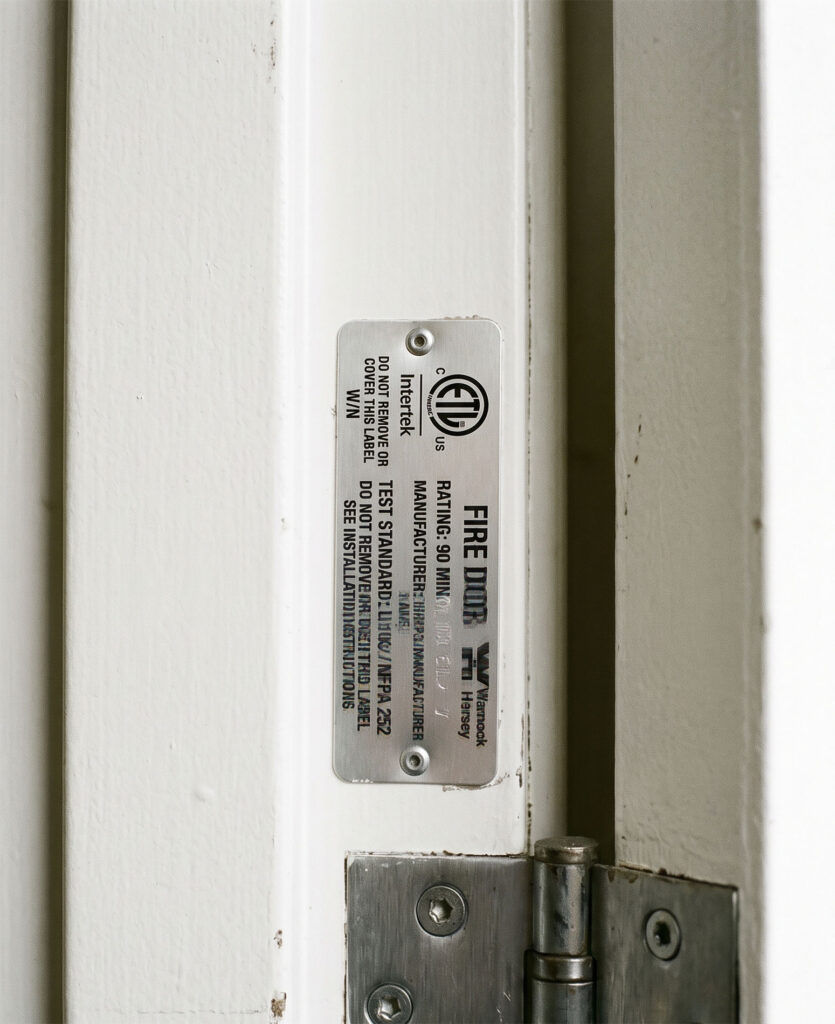
Every listed fire door carries a label — a permanently attached tag from the testing agency that identifies the door manufacturer, the rating, and the test standard. The label is required to remain on the door after installation. If a door has been painted over and the label is no longer legible, the door may not pass inspection even if it was originally a rated unit. When you purchase from us, the label is present and intact.
Hardware on a fire door opening must also be compatible with the rating. Hinges must be steel and rated for fire door use — standard brass hinges do not qualify. The latch set must be a positive-latching unit that keeps the door closed without a deadbolt engaged. Lever handles and knobs both work as long as the latch mechanism is positive-latching. We carry rated hardware to go with the door units we sell.
How to Measure for a Fire-Rated Door Replacement
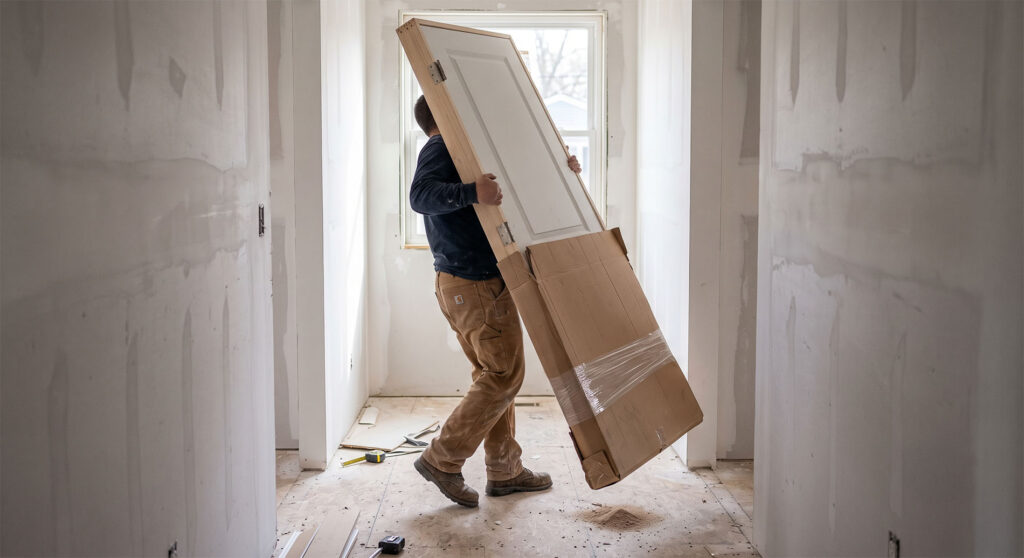
Measuring for a fire door replacement follows the same process as any interior door replacement. Measure the rough opening width and height — the framed opening in the wall before any frame is installed. Standard residential rough openings are 2 inches wider and 2 inches taller than the nominal door size. A 2-8 door requires a rough opening of 34 inches wide by 82 inches tall.
Also measure wall thickness — the distance from the face of the drywall on the garage side to the face of the drywall on the living space side. Standard interior walls are 4.5 inches. Garage walls with extra insulation or drywall layers may be thicker. The jamb width on the prehung unit must match the wall thickness for the frame to sit flush. Bring those three numbers and we will find the right unit.
Preparing the Opening Before a Fire Door Goes In
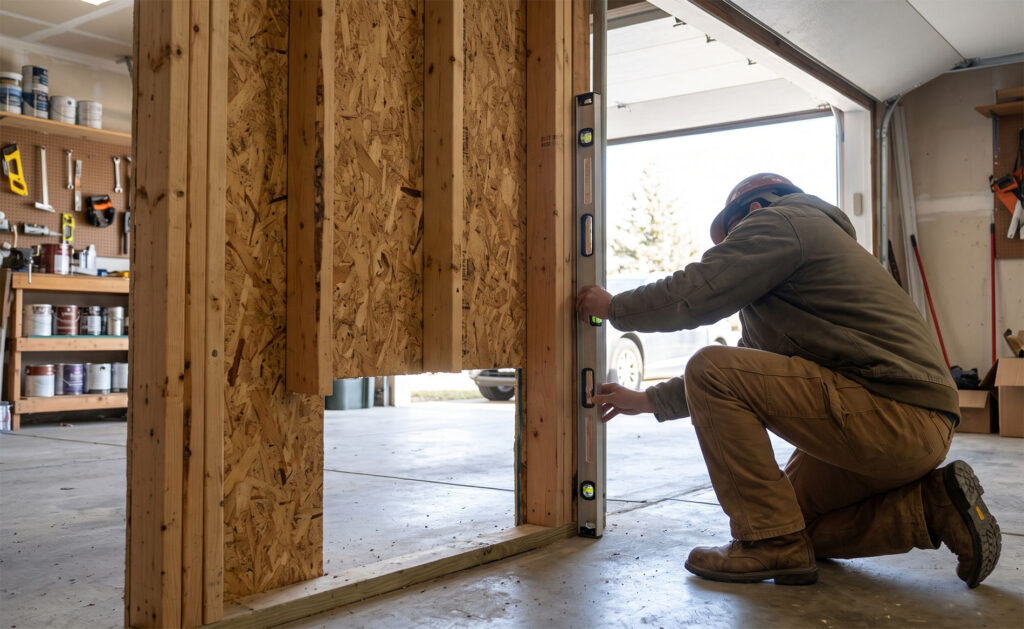
Before the new fire door goes in, confirm the rough opening is plumb and square. Fire doors must close and latch completely to function — an opening that is out of plumb will cause the door to swing open or fail to latch, defeating the fire separation entirely. Check the opening with a level on both the hinge side and the head before the unit arrives.
Remove the old door and frame completely. Garage entry openings in older Schiller Park homes sometimes have non-standard framing or a step-down threshold between the garage floor and the interior floor — confirm the threshold condition before ordering. The self-closing device must be installed at the same time as the door; do not defer it. A fire door without a self-closer is not a compliant installation regardless of the door rating.
Frequently Asked Questions (FAQ)
Buying fire-rated doors in Schiller Park comes with specific questions. We have gathered the most common ones from homeowners and contractors who visit our store. If your question is not listed here, call us at (224) 781-2925 or stop in at 3977 25th Ave, Schiller Park, IL 60176.
1. What is the difference between a 20-minute and 60-minute fire door?
2. Do fire-rated doors look different from standard interior doors?
3. Does installing a fire door require a permit in Schiller Park?
4. Can I use a standard solid-core door instead of a rated fire door?
5. Does a fire door require a self-closing hinge?
6. Can I buy a fire-rated door without installation?