
Why the Right 32×74 Mobile Home Door Makes a Bigger Difference Than You Think
A 32×74 mobile home door is one of the most common exterior door sizes used in manufactured homes — and finding the right one is easier than most people expect.
Here’s a quick overview of what’s available:
| Feature | Details |
|---|---|
| Standard size | 32 inches wide x 74 inches tall |
| Rough opening needed | 34″ x 76″ |
| Common materials | Steel, fiberglass, aluminum |
| Popular styles | 9-lite window, diamond window, cottage, solid, half-lite |
| Hinge options | Left-hand (LH) or right-hand (RH) |
| Swing direction | Inswing or outswing |
| Jamb depth options | 4-inch or 6-inch |
| Compliance standard | HUD standard 3280-405 |
Whether you’re replacing a worn-out entry door or upgrading your entryway’s look, knowing your options upfront saves time and prevents costly mistakes.
I’m Eryk Piatkowski, and through my work at K&B Direct helping homeowners select quality doors and building products, I’ve guided many clients through choosing the right 32×74 mobile home door for their specific opening and style needs. In this guide, I’ll walk you through everything — from specs and materials to styles and installation considerations — so you can make a confident choice.
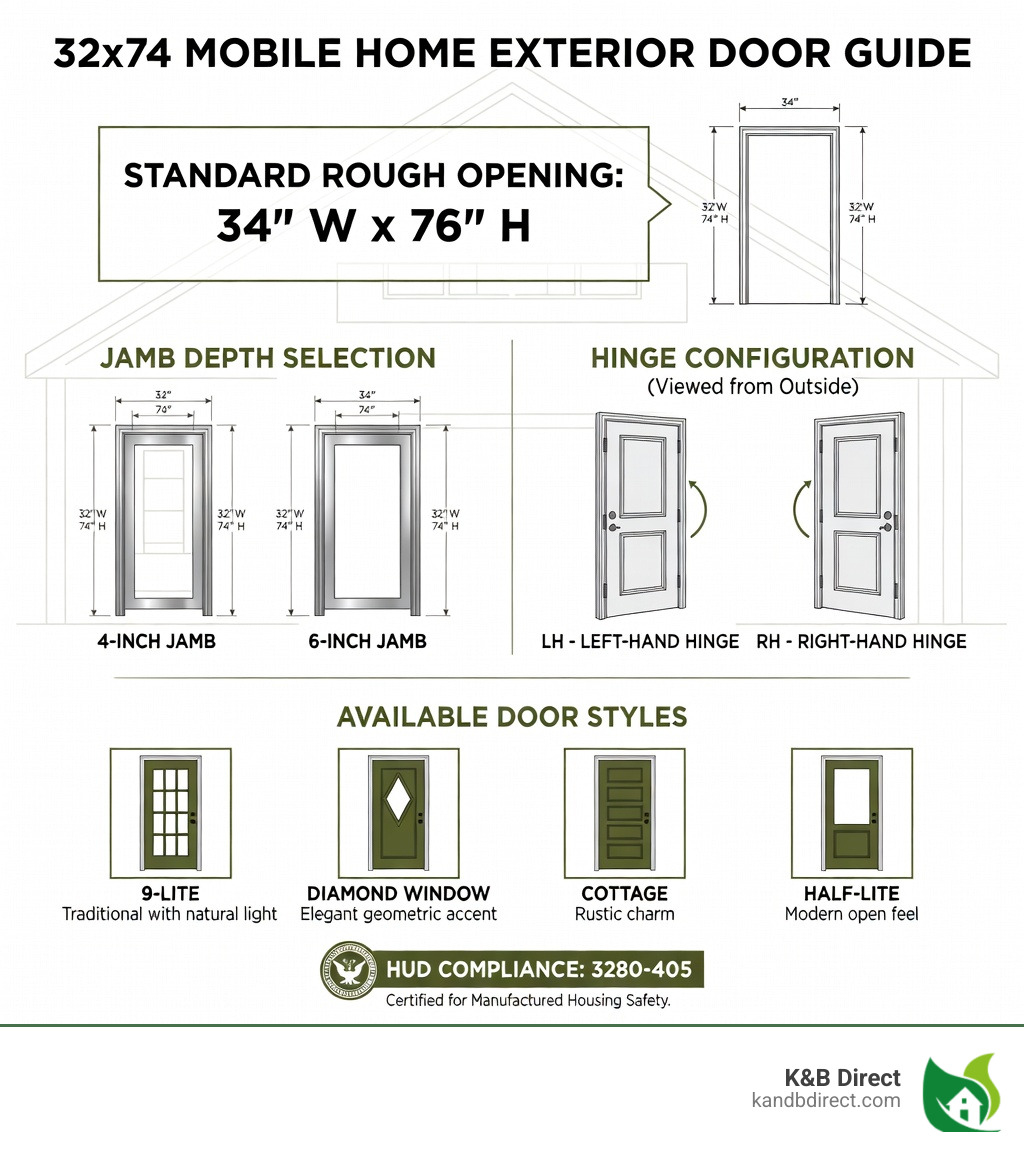
32×74 mobile home door vocabulary:
Understanding the 32×74 Mobile Home Door Specifications
When we talk about a 32×74 mobile home door, we are typically referring to the size of the door jamb opening, also known as the “call size.” However, the actual physical unit you purchase involves more than just those two numbers. In manufactured housing, precision is paramount because these structures rely on specific engineering standards.
Rough Opening and HUD Compliance
One of the most critical aspects of selecting a door is understanding the rough opening. For a standard 32×74 unit, the rough opening—the actual hole in the wall of your home—is typically 34 inches wide by 76 inches tall. This extra space allows for the door frame (jamb) to be inserted and leveled properly.
Furthermore, any exterior door installed in a manufactured home should ideally meet HUD standard 3280-405. This federal standard ensures that the door provides adequate structural integrity, egress capability, and wind resistance. We always recommend checking for this compliance to ensure your home remains safe and up to code. For those looking for a visual reference, this Rough Opening Measurement Guide provides an excellent breakdown of how these dimensions translate from the wall to the door unit.
Jamb Depth and Structural Frames
The “jamb” is the frame that surrounds the door. In manufactured homes, wall thicknesses can vary. Most commonly, you will find 4-inch or 6-inch jamb depths.
- 4-inch frames: These are standard for many older or single-wide homes with 2×3 or 2×4 wall construction.
- 6-inch frames: Often found in modern manufactured homes or those with thicker insulation and 2×6 wall studs.
Choosing the correct jamb size ensures that the interior and exterior trim (or brickmould) fits flush against your siding and interior wall panels.
Measuring for a 32×74 Mobile Home Door
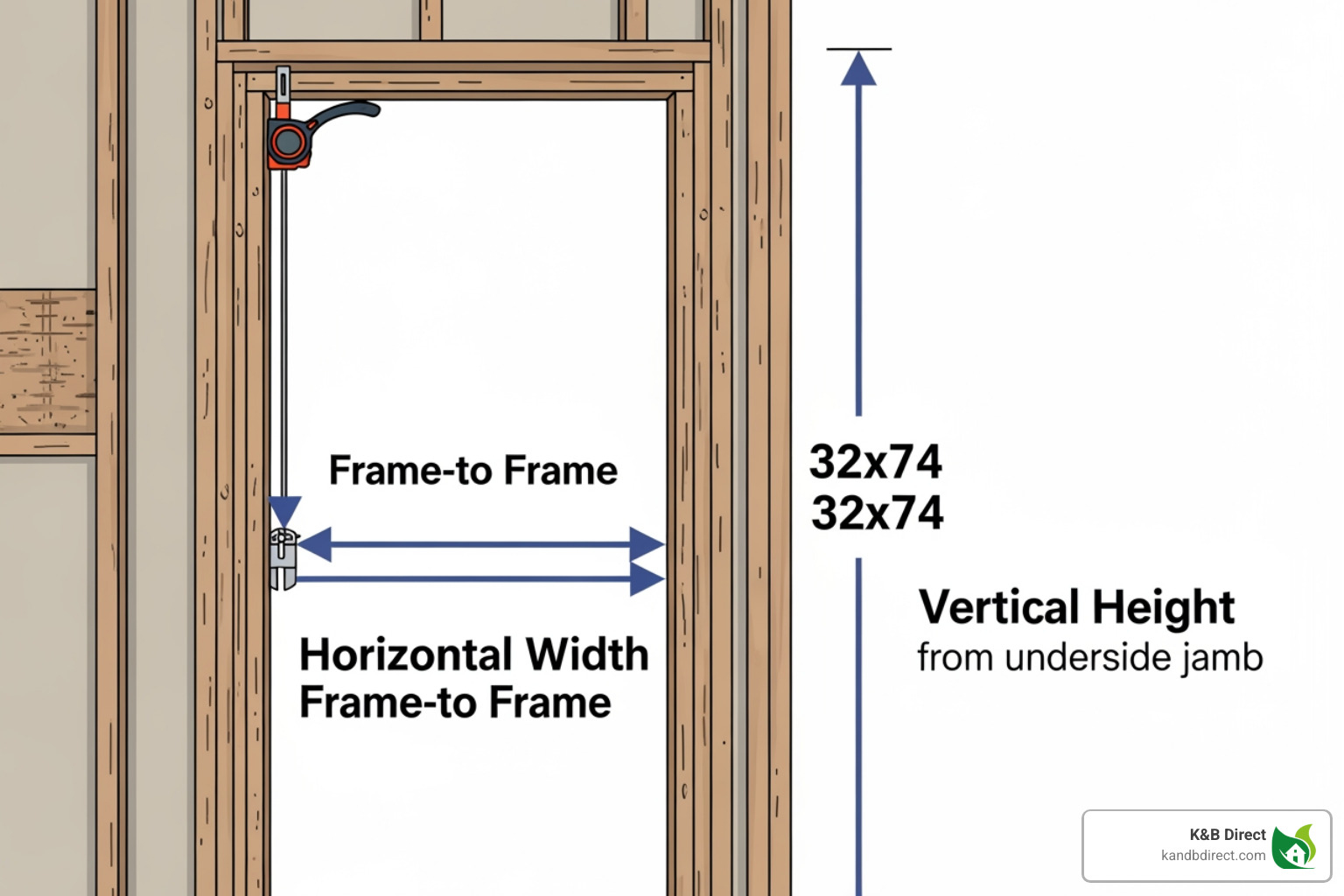
We cannot emphasize this enough: measure twice, order once. To ensure your new door fits, you must measure the “opening” of your current door jamb from frame-to-frame.
- Width: Measure the horizontal distance between the inside of the left jamb and the inside of the right jamb.
- Height: Measure the vertical distance from the threshold (bottom) to the underside of the top jamb.
If your measurements are approximately 32″ x 74″, you are in the right place. Most units come as Pre-hung Doors, meaning the door is already attached to its frame. This makes the installation process significantly smoother as the hinges are pre-aligned and the weather-stripping is already in place.
Popular Styles and Features for Exterior Entryways
Just because a door is functional doesn’t mean it can’t be beautiful. The 32×74 mobile home door comes in several distinct styles that can completely change the “curb appeal” of your home.
The Classic 9-Lite Window
The 9-lite configuration is a perennial favorite. It features a window in the top half of the door, divided into nine individual panes (or “lites”) by a grid. This style allows a generous amount of natural light into your mudroom or kitchen while maintaining a traditional, welcoming look. Typically, these window inserts are about 20 inches wide and 36 inches high.
The Diamond Window
For a more vintage or unique aesthetic, the diamond window style is a fantastic choice. These often come as “combination doors,” which include both the main entry door and a built-in self-storing storm door. You can find high-quality options like the 32 x 74 RH Mobile Home Combo Front Door W/Diamond Window that offer both style and durability.
Cottage Style Doors
Cottage doors are known for their large, partitioned windows. A common configuration includes a 36″H x 20″W window that provides an expansive view of the outdoors. These are often used as back doors or side entries where you want maximum visibility.
Ventilation and Self-Storing Features
Many 32×74 mobile home door units are designed as “combination” doors. This means they have an integrated storm door with a sliding window and a mesh panel. This allows you to slide the window down to let in a breeze while keeping insects out, all without needing to install a separate storm door unit.
Selecting the Right 32×74 Mobile Home Door Style
When choosing your door, consider how you use the space. Are you looking for maximum security, or is natural light your priority?
- Solid Steel Doors: If privacy is your main concern, a solid steel door with a peephole is a robust option. For example, a 32×74 Steel Solid Door with Peephole RH provides a clean, modern look and excellent security.
- Half-Lite Options: These offer a middle ground, with a window in the top half and a solid panel in the bottom half. These are great for front entries where you want to see who is at the door.
- Slider Options: Some specialty units, such as the Mobile Home Slider Door 32×74 RH, feature a built-in sliding window with a screen, perfect for laundry rooms or kitchens that need extra airflow.
For more information on coordinating your exterior choices with your home’s interior, check out our Interior Doors Ultimate Guide.
Comparing Materials: Fiberglass vs. Steel
Choosing the right material for your 32×74 mobile home door depends on your local climate and how much maintenance you want to perform.
| Material | Durability | Insulation | Maintenance | Best For |
|---|---|---|---|---|
| Steel | High (secure) | Excellent (foam core) | Low (requires paint) | Security & Energy Efficiency |
| Fiberglass | Very High (dent resistant) | Excellent (polystyrene) | Very Low (molded color) | High-traffic & Humidity |
| Aluminum | Moderate | Fair | Low (corrosion resistant) | Back doors & Storm units |
Fiberglass Resilience
Fiberglass is an incredible material for manufactured homes. It doesn’t dent like steel and won’t rot like wood. Many fiberglass doors feature a wood-grain texture that can be stained or painted, giving you the look of a high-end timber door without the upkeep. These doors often utilize a polystyrene foam core, providing excellent thermal resistance to keep your home warm in Chicago winters and cool in the summer.
Steel Security
Steel remains the gold standard for security. These doors are typically made from galvanized steel to prevent rust and are “pre-cambered,” meaning they have a slight intentional curve that ensures a tight seal against weather-stripping when the door is latched. Most high-quality steel doors include a thermal break, which prevents the exterior temperature from transferring through the metal frame to the interior of your home.
Maintenance-Free Finishes
Many modern 32×74 mobile home door options come with a primed or “textured white” finish. This means they are ready for a final coat of paint or can sometimes be left as-is if the white matches your home’s trim.
Essential Hardware and Installation Considerations
Installing a 32×74 mobile home door is a straightforward task if you have the right components. Because these doors are often outswing (opening toward the outside), the hardware and hinge orientation are vital.
LH vs. RH: Understanding Handing
“Handing” refers to which side the hinges are on. This is always determined by standing outside the home and facing the door:
- Left-Hand (LH): The hinges are on the left, the handle is on the right, and the door swings open to the left. You can find these in styles like the 32×74 LH Cottage Door.
- Right-Hand (RH): The hinges are on the right, the handle is on the left, and the door swings open to the right. A popular example is the Mobile Home Cottage Door 32×74 RH.
Outswing vs. Inswing
In most manufactured homes, exterior doors are “outswing.” This saves interior floor space and provides better resistance against high winds, as the wind actually pushes the door tighter against the frame’s seals.
Locksets and Deadbolts
Most 32×74 mobile home door units come “double-bored,” meaning there are two holes: one for the entry knob and one for a deadbolt. If your chosen door is only bored for a knob, many models (like the cottage or slider styles) feature a pre-positioned mechanism inside the frame. This allows you to easily drill a second hole if you decide to add a deadbolt later for extra security.
Installation Essentials
When installing, we recommend using:
- Putty Tape: Applied behind the door flange to create a water-tight seal against the siding.
- Mounting Screws: Usually included in a hardware kit, these should be driven through the pre-drilled holes in the door’s mounting flange.
- New Weather-stripping: While most pre-hung doors include this, ensure it’s a high-quality bulb vinyl or pile weather-strip to prevent drafts.
Frequently Asked Questions
What is the difference between LH and RH hinge configurations?
As mentioned, handing is determined from the exterior. If you are standing in your yard looking at your door and the hinges are on the right side, you need a Right-Hand (RH) door. This is one of the most common points of confusion, so always double-check before ordering!
Can a 32×74 door be upgraded with a deadbolt?
Yes! Most modern steel and fiberglass units are designed with this in mind. Even if the door only has one hole visible, the internal “lock block” is usually large enough to accommodate a second bore for a deadbolt. Always check the product specifications to see if it is “double-bored.”
What are the benefits of a self-storing combination door?
A self-storing door is a massive convenience. It combines your main entry door and your storm door into one single unit. The window in the storm door section can be lowered to reveal a screen, allowing for instant ventilation without the hassle of storing a separate glass panel during the summer months.
Conclusion
Upgrading to a new 32×74 mobile home door is one of the most effective ways to improve your home’s energy efficiency, security, and aesthetic appeal. Whether you prefer the classic look of a 9-lite steel door or the low-maintenance durability of a fiberglass cottage door, there is an option that fits your needs perfectly.
At K&B Direct, we are dedicated to helping homeowners across the Chicago area—from Glen Ellyn and Lombard to Arlington Heights and Lake Zurich—realize their dream home aesthetics. We believe in providing top-quality products at the lowest possible prices with the friendly service you deserve.
Ready to transform your entryway? Explore our full range of options, including the perfect Main Entrance Door for your home, and let us help you make a grand entrance every time you come home.
For those in our local service areas, including Schiller Park, Des Plaines, and Schaumburg, reach out to our team for expert advice on your next home improvement project.