Why a Loose Bifold Door Knob Needs Your Attention
How to fix a bifold closet door knob depends on whether your door is solid or hollow-core. For solid doors, tighten the screw or fill stripped holes with wood filler. For hollow-core doors, use one of these methods:
- Quick Fix: Add a fender washer behind the screw to distribute pressure
- Strong Fix: Drill out the hole, glue in a wooden dowel, then redrill for the screw
- Fill Fix: Inject epoxy or wood putty into the hole, let it harden, then reattach
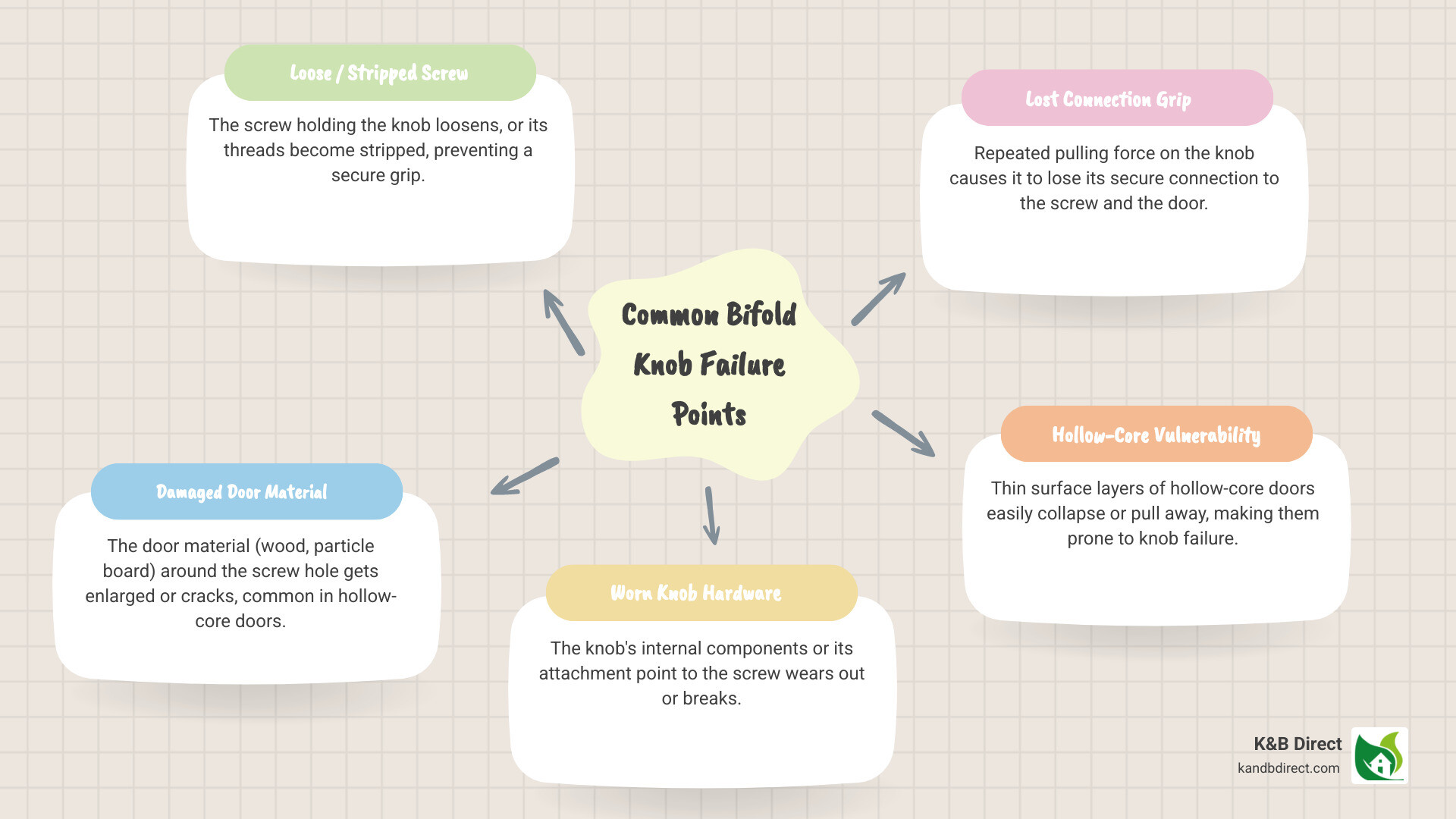
Are your bifold closet door knobs loose, spinning around, or falling off completely? You’re not alone. This is one of the most common frustrations homeowners face with bifold doors. The problem usually isn’t the knob itself—it’s the door material around the screw hole that has become stripped, enlarged, or damaged from repeated use.
Hollow-core bifold doors are especially vulnerable. These doors have thin surfaces with very little solid material inside. When you pull on a knob over time, the screw can pull through the thin wood veneer or particle board, creating a hole that’s too large to hold the hardware securely. The knob then spins freely, making the door difficult or impossible to open.
The good news? Most bifold door knob problems are straightforward DIY fixes that take less than an hour and cost under $20. You don’t need to replace the entire door or hire a professional. With the right approach for your door type, you can have your closet functioning smoothly again.
As Eryk Piatkowski, owner of K&B Direct with over a decade of experience helping homeowners select and maintain quality door hardware, I’ve guided countless customers through how to fix a bifold closet door knob and prevent future issues. The key is understanding your door’s construction and choosing the repair method that creates a lasting solution, not just a temporary patch.
Tools and Materials You’ll Need
Ready to tackle that wobbly knob? Fantastic! Before we get our hands dirty and show you exactly how to fix a bifold closet door knob, let’s make sure you’ve got everything you need. Think of it like preparing for a fun DIY project – having your tools ready makes everything smoother and much more enjoyable. No one wants to stop mid-fix for a hardware store run, right?
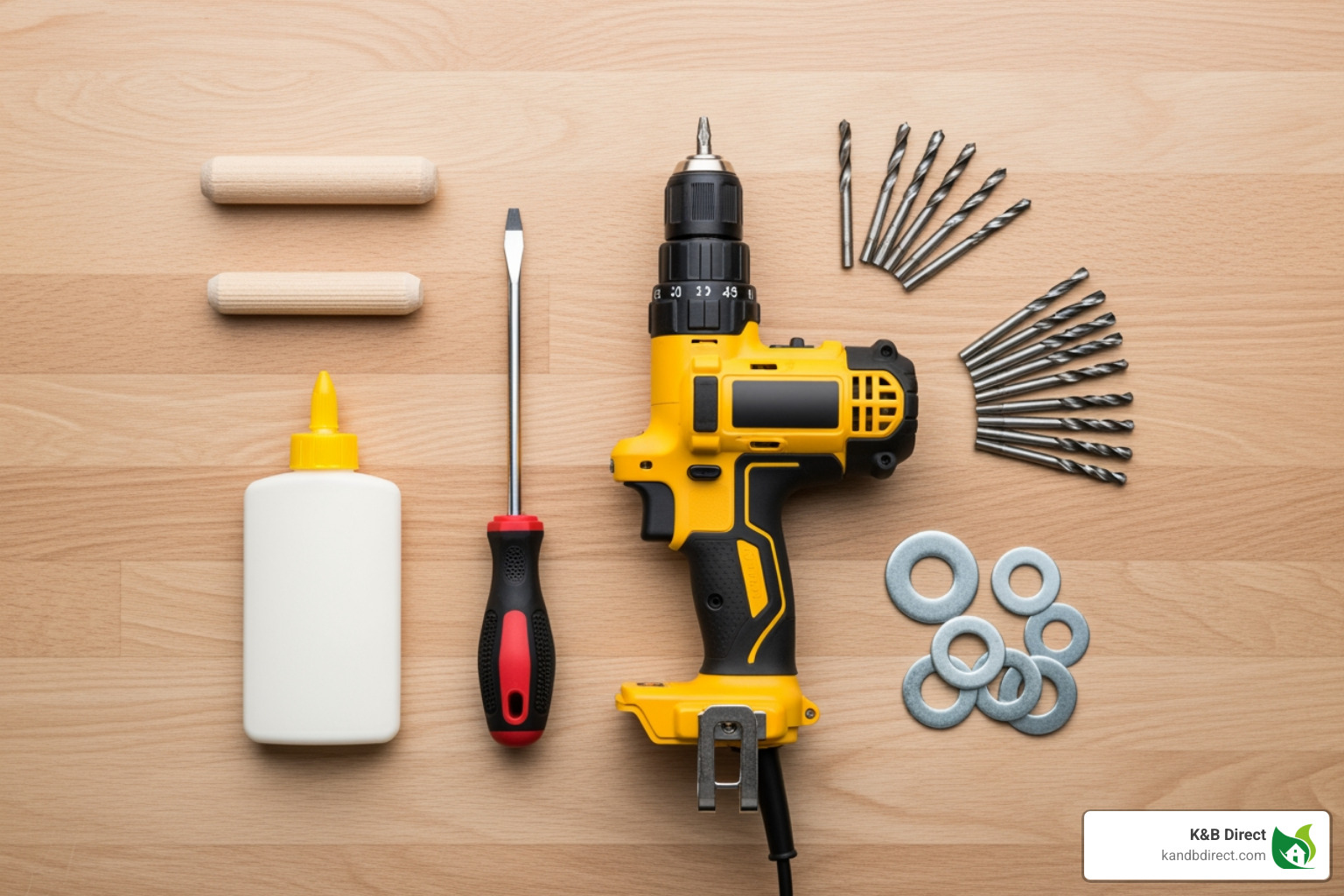
Here’s a rundown of what you’ll likely need to gather:
First up, you’ll definitely need a screwdriver. Depending on your knob, this could be a Phillips head or a flathead. It’s your trusty sidekick for getting that knob on or off! Next, a drill and a few drill bits will be super helpful, especially for making new pilot holes or getting ready for a dowel plug.
Then, for those trickier fixes, grab some wood glue. This sticky stuff is key for making dowels hold tight or firming up stripped screw holes in solid doors. Speaking of dowels, some wooden dowels are little heroes for hollow-core doors – they give you something solid to screw into. And don’t forget fender washers! These wide, flat rings are a hollow-core door’s best friend, spreading out the pressure so your screw doesn’t just pull right through the thin door material.
Sometimes, you might need a bit more muscle in the hole. That’s where epoxy or wood putty comes in. They’re great for filling bigger gaps and creating a super strong base for your screws. If you’re feeling adventurous with a hollow-core door, a can of polyurethane foam (the expanding kind!) can fill up that empty space inside, giving you an even more solid anchor point. And to keep things from loosening up again, a tiny drop of thread-locking compound on your screw threads can work wonders.
For the finishing touches, a rubber mallet can gently persuade dowels into place without damaging your door. A tape measure and a pencil are always handy for getting things just right and marking where you need to drill. And finally, a utility knife or chisel can help trim any excess dowel or putty, followed by some sandpaper to make everything smooth and neat.
Here are the basics we recommend keeping handy for any bifold door knob emergency:
- A multi-bit screwdriver
- A small tube of wood glue
- A few wooden dowels (various sizes)
- A pack of fender washers
- A small container of wood putty or quick-set epoxy
Having these on hand means you can tackle most common bifold door knob issues quickly and efficiently, keeping your home looking its best!
How to Fix a Bifold Closet Door Knob: Step-by-Step
Now that we have our tools and materials ready, let’s roll up our sleeves and get to work on how to fix a bifold closet door knob. The repair approach depends heavily on your door type—solid-core doors offer more forgiveness, while hollow-core doors need a bit more finesse. Let’s walk through the most common repair scenarios, from the simplest quick fix to more comprehensive reinforcement methods.
For Solid-Core Doors & Simple Tightening
If you’re working with a solid wood door or a door made of composite material throughout, you’re in luck. These doors have structural integrity on your side, making repairs more straightforward.
Simple reattachment often starts with the most basic solution: just tightening the screw. It sounds almost too easy, but you’d be surprised how often this works. Most bifold knobs attach with a single screw that passes through the back of the door and threads into the knob itself. Hold the knob firmly from the front side, then use your screwdriver on the back to turn the screw clockwise until it feels snug.
The key phrase here is “feels snug”—not “tighten until your knuckles turn white.” Ensuring a snug fit without over-tightening is crucial. Too much force can strip the screw hole or even crack the knob, creating a bigger problem than you started with. Think of it like tightening a jar lid: firm enough that it won’t come loose, but not so tight that the next person can’t open it.
Filling stripped screw holes becomes necessary when tightening doesn’t help because the screw just spins endlessly. This means the wood fibers inside the hole have been damaged and can no longer grip the screw threads. Don’t worry—this is fixable.
Start by removing the knob and cleaning out any loose wood particles from the hole. Now you have two excellent options, depending on the size of the damage.
The toothpick and glue trick is a time-honored method that works beautifully for smaller stripped holes. Take a few wooden toothpicks (or wooden matchsticks with the heads removed) and dip them generously in wood glue. Insert these glue-coated toothpicks into the stripped screw hole, packing them in tightly until the hole is completely filled. Break off the excess flush with the door surface, then let the glue dry completely—usually a few hours, but check your product instructions.
Once dry, use a drill bit slightly smaller than your screw to pre-drill a new pilot hole directly into the center of those glued toothpicks. When you reattach your knob, you’re screwing into a newly reinforced, solid anchor point. It’s like giving your door a wooden bone graft.
Using wood filler works better for larger or more severely damaged holes. After removing the knob and cleaning the area, pack the stripped hole tightly with wood filler, smoothing it flush with the door surface using a putty knife. Allow it to dry and harden completely—this might take several hours or overnight, so patience pays off here. Once hardened, pre-drill a new pilot hole into the center of the filler, then reattach your knob to this solid new base.
How to Fix a Bifold Closet Door Knob on a Hollow-Core Door
Here’s where things get interesting. Hollow-core doors present unique challenges because, as the name suggests, they’re mostly hollow inside. These doors have thin veneer or particleboard skins with a honeycomb cardboard core—lightweight and economical, but not exactly robust when it comes to mounting hardware.
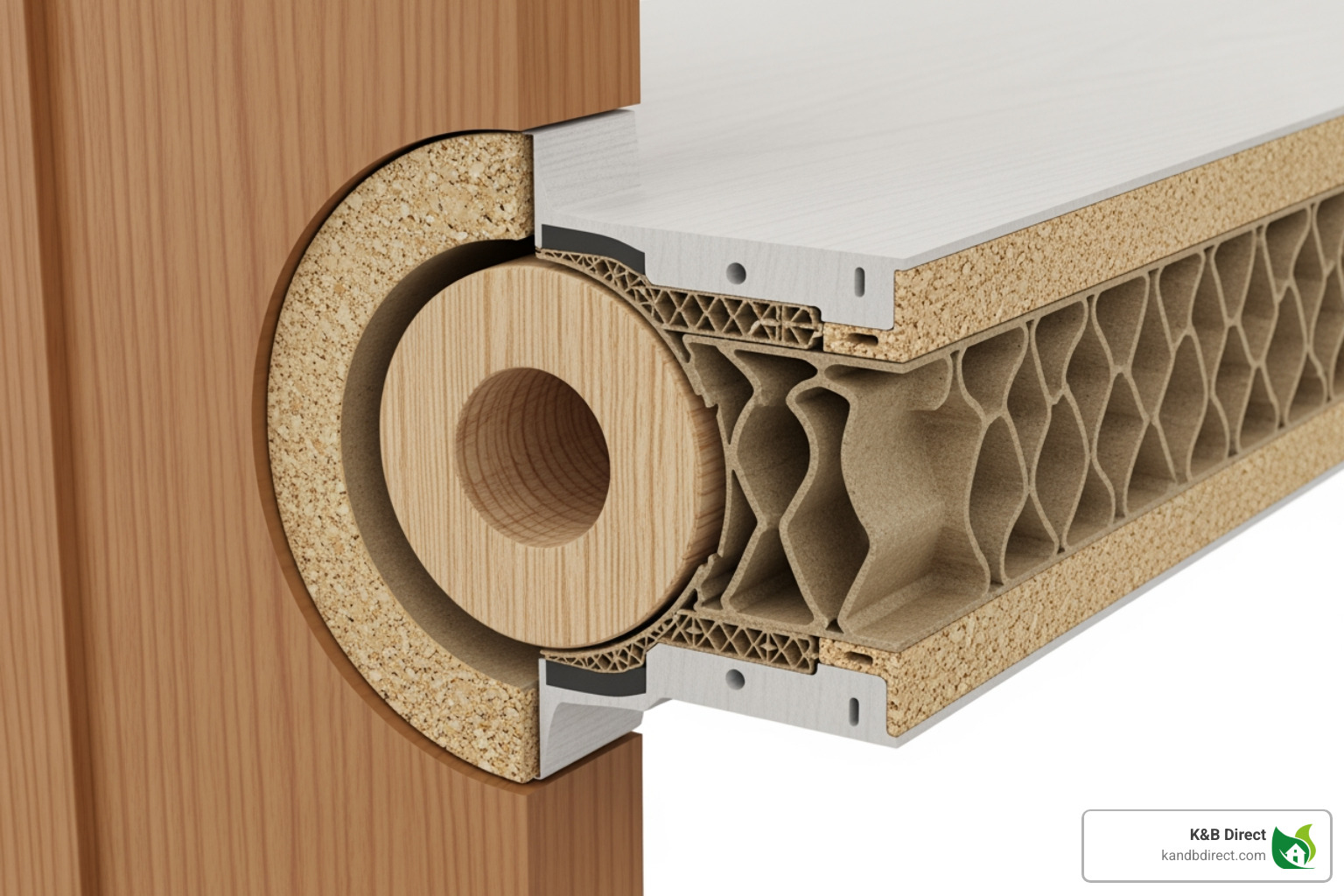
Hollow-core door challenges center around one main issue: when you tighten a screw through these thin panels, there’s nothing substantial for it to grip. The screw can pull through the thin material, or the surface can bend and crack under pressure. Preventing surface cracking means we need to create or reinforce a solid mounting point rather than just tightening harder.
The good news? You have three proven methods to choose from, ranging from quick-and-easy to robust-and-permanent.
Method 1: The Washer Fix
This is your go-to solution when you need a fast, effective repair. Fender washers are the secret weapon here—these wide, flat washers have a small center hole but a large outer diameter, which means they spread the pressure of the screw head across a much wider area of your door’s thin surface.
Remove your loose knob and take a look at the back side of the door. You’ll likely see a depression or slightly enlarged hole where the screw head has been pulling through. Place a fender washer onto the screw, then insert the screw through the door hole from the back. If the front hole is also enlarged, add another washer there before attaching the knob.
Distributing pressure is the whole point of this method. When you tighten the screw gently but firmly, those washers act like mini-reinforcement plates, preventing the door’s thin skin from collapsing inward. The repair is surprisingly strong for how simple it is. If the silver washers bother you aesthetically, a quick coat of paint matching your door or knob makes them virtually invisible.
Method 2: The Dowel Plug
When you want a repair that’s stronger than the original installation, the dowel plug method is your answer. This approach creates an actual piece of solid wood inside your hollow door—essentially turning that section into a solid-core door.
Start by removing the knob, then use a drill bit slightly larger than the damaged area to drill a clean, round hole completely through both sides of the door. This removes all the compromised material and gives you a fresh start. Cut a wooden dowel to match the exact thickness of your door, ensuring it fits snugly in your newly drilled hole.
Gluing a dowel requires a generous application of wood glue both on the dowel itself and around the inside edges of the hole. Insert the dowel, making sure it sits flush with both door surfaces, then wipe away any excess glue immediately with a damp cloth. Now comes the hard part: waiting. Let the glue cure completely—ideally overnight—for maximum strength.
Creating a solid anchor point is what makes this method so effective. Once that glue has dried, you’ve essentially installed a small block of solid wood inside your hollow door. Pre-drill a new pilot hole into the center of your dowel using a bit slightly smaller than your knob screw, then attach the knob. This repair often outlasts the door itself.
Method 3: The Epoxy or Putty Fill
This versatile method uses a hardening compound to build a solid core exactly where you need it. After removing the loose knob and screw, clean out any loose debris from the enlarged hole. For better adhesion, you might gently enlarge the hole slightly with a utility knife to create cleaner edges.
Injecting hardening product requires a bit of preparation. If you’re working with a larger hole, tape off the back side of the door to contain your epoxy or putty. Mix your two-part epoxy or prepare your wood putty according to the package directions, then inject or pack it into the hole, filling it completely and smoothing it flush with the door surface.
Creating internal support is what makes this repair work. For an even more robust solution on severely damaged hollow-core doors, some experienced DIYers use polyurethane foam. This involves removing the door and laying it flat, enlarging the knob hole slightly to fit a dispensing wand, then injecting a 3-4 second burst of foam. The foam expands to fill the internal cavity, and once it cures overnight, you can redrill for your screw. The foam prevents the hollow walls from collapsing when you tighten the knob.
Whichever product you choose, patience is essential. Let your epoxy, putty, or foam cure completely—this could take anywhere from several hours to a full day. Once hardened, pre-drill a new pilot hole into the solidified material and reattach your knob. You’ve essentially created a custom mounting block inside your door.
If you’re more of a visual learner, watch a video tutorial that walks through the installation process for bifold door hardware.
With these methods in your toolkit, you’re well-equipped to tackle how to fix a bifold closet door knob regardless of what type of door you’re working with. The key is matching the repair method to both your door type and the severity of the damage—sometimes the simplest solution is all you need, while other situations call for a more substantial fix.
Prevention and Proper Placement for a Lasting Fix
Now that you’re a pro at how to fix a bifold closet door knob, let’s talk about keeping it that way! Preventing future looseness is just as important as the repair itself. Many issues stem from improper initial installation or placement, leading to unnecessary strain on the hardware.
When you’re thinking about optimal knob placement, imagine the door opening smoothly without a struggle. The sweet spot for your bifold door knob is usually right in the middle of the leading door – that’s the panel you primarily grab to open your closet. Why here? Because it gives you the best leverage and minimizes strain. If the knob is too close to the hinge, you’ll have to tug harder, which puts a lot of unnecessary stress on the screw and the door itself. Place it too far towards the outer edge, and it might get in the way of the door’s neat folding action. And don’t forget to center the knob vertically on that panel; it’s all about balanced pressure and a comfortable reach for everyone.
Beyond placement, consider a few clever tricks to keep things tight. A tiny drop of thread-locking compound on your screw threads before you put the knob back on can work wonders. This little helper, found at any hardware store, keeps screws from wiggling loose over time – a simple step for a big difference! Also, while classic knobs are charming, if you’re replacing hardware, think about choosing pulls instead of knobs. Pulls offer a larger gripping surface, which can spread the force of your pull more evenly across the door, potentially saving your door material from undue stress.
Finally, make it a habit to do regular hardware checks. Every few months, give your bifold knobs a gentle test. If anything feels loose, a quick tighten now can prevent a bigger repair later. It’s all about being proactive!
Understanding your bifold door’s dimensions can also help with proper hardware selection and placement. You can learn more about standard door sizes here: Learn about standard door sizes
Frequently Asked Questions about Bifold Door Knobs
It’s completely normal to have questions about those sometimes-tricky bifold door knobs! We often hear similar inquiries from our wonderful customers, both here in Illinois and beyond. Think of these as little troubleshooting gems from us to you. Here are answers to some of the most common questions that pop up:
What is the best method for repairing a large hole where the knob used to be?
Oh, the dreaded large hole! When your knob has completely pulled through, leaving a gaping space, it can feel like a big problem. But don’t worry, we have a champion solution for you: the dowel plug method. This technique is truly the most robust and lasting way to bring your door back to life.
Here’s why it works so well: It involves carefully drilling out the damaged area to create a clean, round hole. Then, you glue in a solid wooden dowel, cut precisely to your door’s thickness. Once that glue dries, you’ve essentially created a brand new, solid piece of wood right where you need it! From there, you simply drill a fresh, secure pilot hole into this new dowel for your knob screw. This gives your knob a solid anchor, often even stronger than the original door material, especially for those hollow-core doors. It’s like giving your door a sturdy new foundation for its knob.
How do I ensure the knob is secure without cracking the thin door surface?
This is a fantastic question, especially when you’re dealing with hollow-core doors, which are known for their delicate surfaces. The secret here is all about distributing that pressure! You don’t want the screw to act like a tiny hammer, pushing right through the thin skin of your door.
The simplest and most effective trick is to use a wide fender washer on the back of the door. This little disc works wonders by spreading the pressure of the screw head over a much larger surface area, preventing it from pulling through or collapsing that thin door skin. It’s a small change that makes a huge difference! Beyond that, remember our golden rule: never, ever over-tighten the screw. Just tighten it until it feels snug and the knob is steady, but stop before you feel like you’re forcing it. Excessive force is the quickest way to stress and crack the door material. If you’ve opted for the dowel or epoxy fill methods, you’ve already created a fantastic internal solid point, giving you even more protection against cracking.
What is the ideal placement for a bifold door knob?
Getting the placement right isn’t just about looks; it’s key to how easily your doors operate and how long your hardware lasts! The ideal spot for your bifold door knob is right in the horizontal center of the leading door panel. This is the panel you naturally grab to open your closet.
Why here? This position provides the best leverage, making it super easy to open your doors without undue strain. When the knob is well-placed, you’re not putting extra stress on the door itself or the hardware. Vertically, it should sit at a comfortable height for you and your family, typically aligning with other doorknobs or handles throughout your home – usually somewhere between 34-38 inches from the floor. Incorrect placement can lead to awkward tugging, which, over time, can make your knob loose or even damage the door. A little planning here goes a long way in keeping your doors happy and functional!
A Strong Finish for Your Closet Doors
There you have it—you’ve mastered how to fix a bifold closet door knob and transformed what started as a frustrating wobble into a solid, satisfying repair! Whether you tackled a simple screw-tightening on a solid door or went the extra mile with a dowel plug in a hollow-core door, you’ve given your closet the attention it deserves.
These small victories matter. A properly functioning bifold door knob might seem like a minor detail, but it’s one of those things you interact with multiple times every day. When it works smoothly, you barely notice it. When it doesn’t, it becomes a constant irritation. Now that yours is fixed, you can enjoy the simple pleasure of opening your closet without that annoying wiggle or spin.
The real secret to a lasting repair goes beyond just the technique—it’s about using quality hardware from the start. At K&B Direct, we’ve built our reputation on offering top-quality products at the lowest possible prices because we believe your dream home shouldn’t come with a nightmare budget. Our customers throughout Chicago and the greater Illinois area trust us to provide the hardware that holds up to daily use without breaking the bank.
If you’re thinking about upgrading your bifold door knobs to something more substantial, or if you need other hardware for your doors, windows, or cabinets, we’re here to help. Our friendly service means you’ll get honest advice about what works best for your specific situation, not just what’s on sale. And our extensive selection ensures you’ll find exactly what you need to complete your project with confidence.
Ready to give your closet doors a fresh look with hardware that actually stays put? Explore our collection of bifold door handles and hardware and find how the right pieces can make all the difference in your home.