
Why Interior Doors Are Essential for Every Home
Interior doors are more than functional barriers; they’re key design elements that improve your home’s style, privacy, and sound control. Whether building or renovating, the right interior doors can transform your living spaces and add significant value.
Quick Interior Door Selection Guide:
- Solid Core Doors: Best for soundproofing and durability (bedrooms, offices)
- Hollow Core Doors: Budget-friendly option for low-traffic areas (closets, pantries)
- Panel Doors: Traditional style with raised or flat panels (living rooms, bedrooms)
- Flush Doors: Smooth, minimalist design for modern homes
- French Doors: Glass panels for light and openness between rooms
- Barn Doors: Space-saving sliding option with rustic or modern appeal
- Bifold Doors: Perfect for closets and small spaces
Solid wood doors offer excellent sound and temperature insulation, while MDF doors provide stability and warp resistance at a lower cost. Pre-hung doors, complete with frames, are ideal for new construction, whereas slab doors are best for replacing existing doors within their frames.
Custom interior door builds typically take 5-7 business days, giving you the flexibility to match your specific style and room requirements. The right choice depends on your home’s architecture, budget, and each room’s needs.
I’m Eryk Piatkowski, Owner of K&B Direct. For over a decade, we’ve helped homeowners select quality interior doors and home improvement products. My experience has shown me that the right doors completely transform how your spaces look and function.
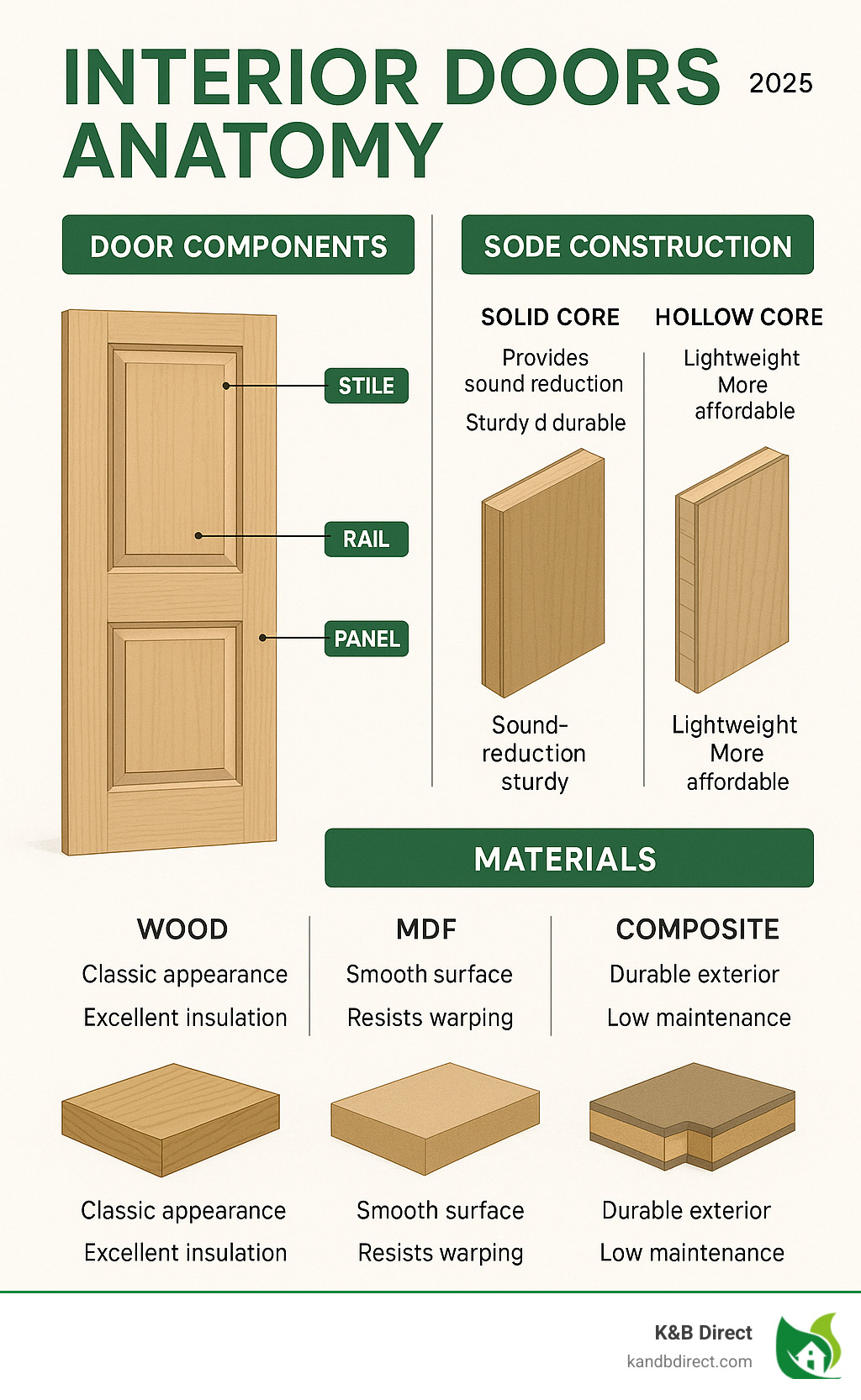
Essential interior doors terms:
Understanding Door Construction and Materials
Understanding the construction and materials of interior doors is crucial, as these factors determine a door’s appearance, durability, sound insulation, and cost. The right door can make a bedroom a peaceful retreat, while the wrong one offers little privacy. Let’s break down the key considerations.
For a deeper dive into material choices, check out our guide on Pros and Cons of Different Materials for Interior Doors.
Solid Core vs. Hollow Core
The core is your door’s foundation, and it makes all the difference in its daily performance.
Hollow core doors are the budget-friendly choice. They have a lightweight frame, often filled with a honeycomb cardboard structure, covered by a thin wood veneer or molded composite skin. They are easy to install and affordable. The trade-off is durability and sound control; they can be easily damaged and offer minimal sound insulation. These doors are best for closets, pantries, and low-traffic hallways.
Solid core doors are packed with dense engineered wood or composite material, then wrapped in veneer or MDF. They are heavier, requiring sturdy installation, but this weight provides significant benefits. The sound insulation is far superior, creating quiet spaces in bedrooms or home offices. They also improve temperature control. Though more expensive than hollow core, they provide a substantial, high-quality feel that improves your home.
The choice depends on the room’s needs. A master bedroom benefits from solid core construction, while a linen closet works perfectly with hollow core. Browse our full selection of Interior Doors to see these constructions in real applications.
Wood, MDF, and Composite Doors
Your door’s surface material determines its look and long-term performance.
Solid wood doors, made from natural woods like oak or pine, are the gold standard. Each door has a unique grain and character, and the weight conveys quality. Solid wood provides excellent natural insulation for sound and temperature and can last for decades. However, they are the most expensive option and can be susceptible to warping from humidity if not properly sealed.
MDF doors (Medium-Density Fiberboard) are made from compressed wood fibers, creating a smooth, uniform surface ideal for painting. Their warp resistance is a major advantage over solid wood, especially in humid areas. They are more affordable and still feel substantial. The downside is lower impact resistance and susceptibility to moisture damage, making them unsuitable for steamy bathrooms.
Composite materials offer the best of multiple worlds, such as engineered wood with a real wood veneer over a less expensive core. These options let you balance appearance, durability, and cost. Our Modern Interior Doors collection shows how these materials create stunning, clean-lined designs.
The key is matching the material to your style and practical needs. A solid wood door might be perfect for a living room, while MDF is ideal for kids’ bedrooms where you might want to change paint colors.
A Showcase of Popular Interior Doors and Styles
Interior doors are integral to your home’s narrative, acting as statement pieces or finishing touches. Your choice of door style profoundly influences a room’s aesthetic, so it’s important to balance design impact with room functionality.
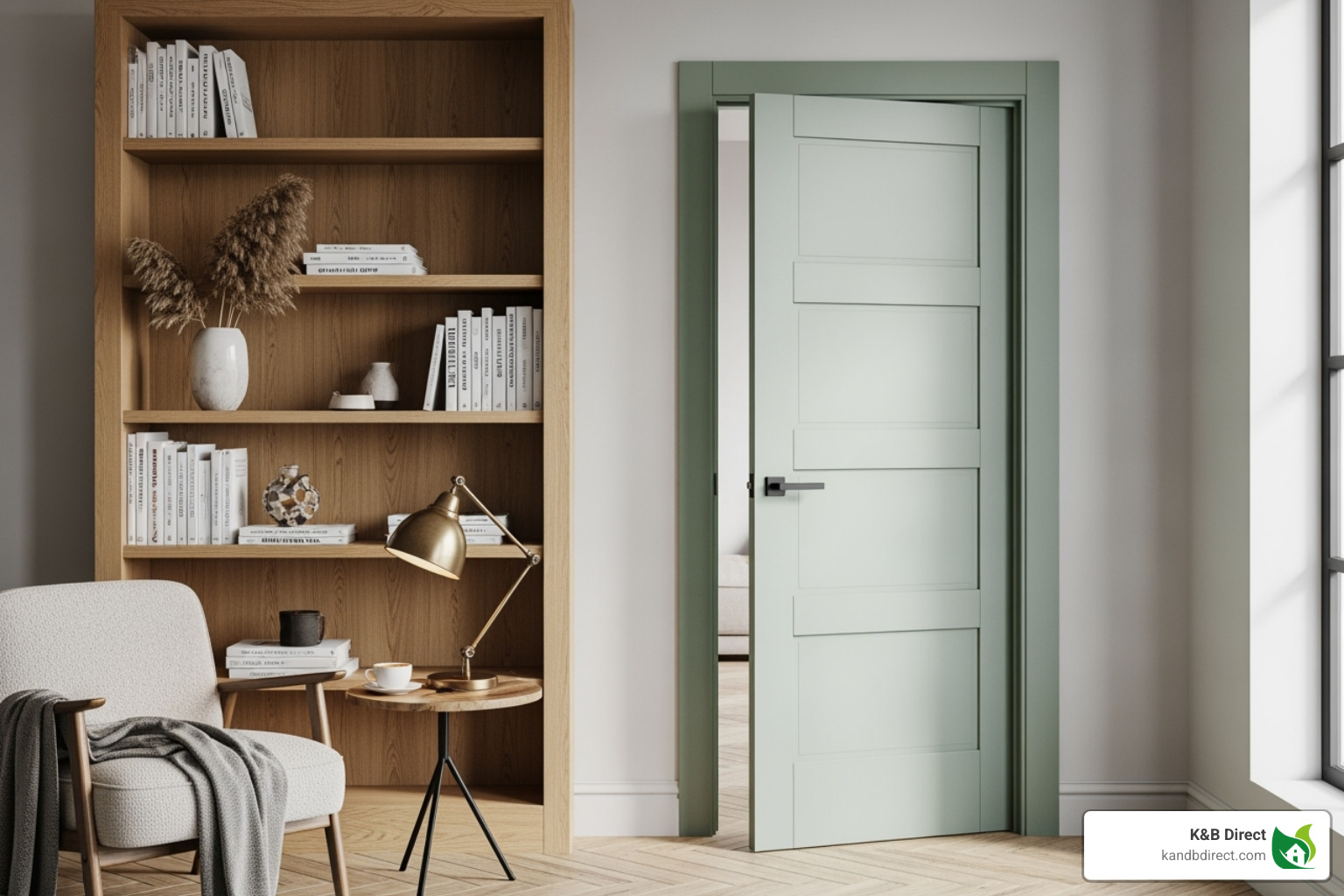
To inspire your project, we’ve outlined popular interior door styles. You can also explore our comprehensive guide on 13 Different Types of Interior Door Styles.
Classic Panel and Flush Doors
Panel doors are a timeless, versatile choice recognized by their raised or recessed panels. Historically, panel doors became popular in the eighteenth century and remain a staple in traditional homes. Available in configurations like two, four, or six panels, they offer a classic look, such as our Interior Doors – 6 Panel.
The Shaker style door is a popular variation known for clean lines and flat recessed panels. This adaptable style, seen in our Interior Doors – 1 Panel Shaker, fits both traditional and contemporary settings. Panel doors also help reduce sound transfer, contributing to quieter living spaces.
Flush doors are ideal for a sleek, minimalist aesthetic. They feature a completely smooth, flat surface that blends seamlessly with walls, complementing modern design. Our Interior Doors – Flush exemplify this understated elegance. They can be painted to match the wall or finished with a wood veneer, creating a sense of spaciousness in smaller rooms.
Space-Saving and Statement-Making Interior Doors
Innovative interior door styles can offer both unique aesthetics and significant space-saving benefits.
Barn doors slide on an exposed track, offering a rustic or industrial look. They are popular for their eye-catching design and functionality in tight spaces where a swinging door is impractical, making a bold statement in any room.
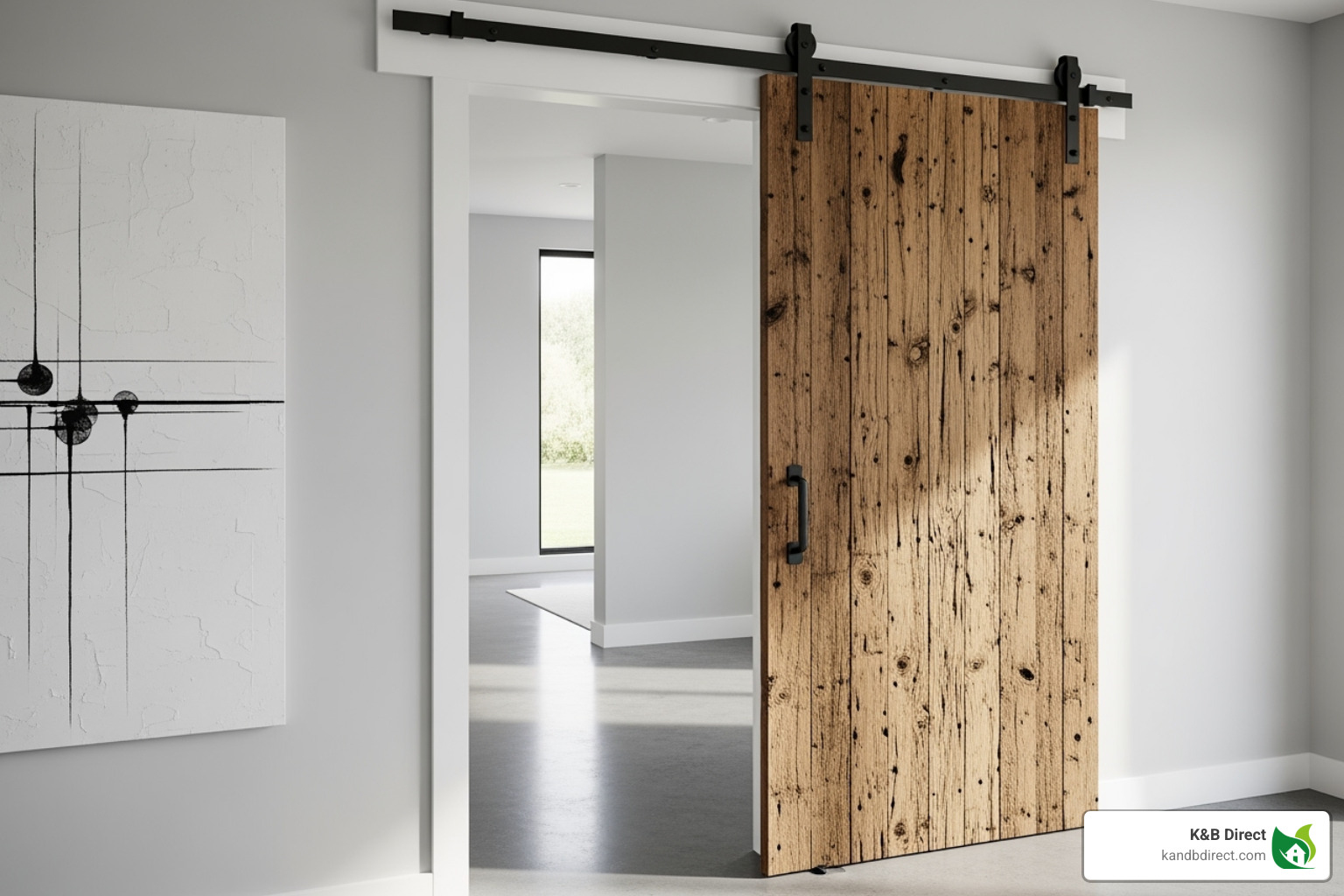
Pocket doors slide into a pocket within the wall, eliminating swing space. This makes them perfect for small rooms like bathrooms or closets. While installation is more involved, the space saved is invaluable.
Bifold doors fold in half as they open, making them an excellent solution for closets, laundry rooms, and pantries. Our Bifold Closet Doors offer a practical and attractive option for these spaces.
Sliding doors operate on a track, moving horizontally. They are fantastic for modern homes, offering sleek lines and efficient access to closets or between rooms.
Neat French and Louvered Doors
To maximize light or improve airflow, consider French and louvered doors.
French doors, characterized by multiple glass panels, connect spaces while allowing light to flow freely. Typically installed as a pair, they create a grand, inviting entryway between rooms, making spaces feel larger and brighter.
Louvered doors feature horizontal slats (louvers) that allow for continuous air circulation even when closed. This makes them ideal for laundry rooms, utility closets, and pantries to prevent mustiness while maintaining privacy. For more in-depth information on all sorts of interior doors, check out our Guide to Interior Doors.
Your Practical Guide to Choosing and Installing Doors
Now that you’ve explored styles and materials, it’s time for the practical side of bringing new interior doors into your home. Choosing the perfect doors involves considering installation, hardware, and maintenance to ensure they function flawlessly. For more tips, see our guide on How to Replace an Interior Door.
Pre-Hung vs. Slab Doors
You’ll generally choose between two installation options: pre-hung doors and slab doors.
Pre-Hung Doors: A pre-hung door is a complete package: the door is already hinged within its frame, often with a pre-drilled hole for the handle. This all-in-one unit simplifies installation, making it ideal for new construction or when replacing the entire door unit. The factory alignment saves time and ensures a perfect fit. Our Pre-Hung Doors make for a straightforward, hassle-free setup.
Slab Doors: A slab door is just the door panel, without a frame or hardware. It’s the right choice when your existing door frame is in good condition and you only need to replace the door. Slab doors require more DIY skill, as you must mortise for hinges, drill for hardware, and ensure a perfect fit within the existing frame. It’s a cost-effective solution if your frame is sound.
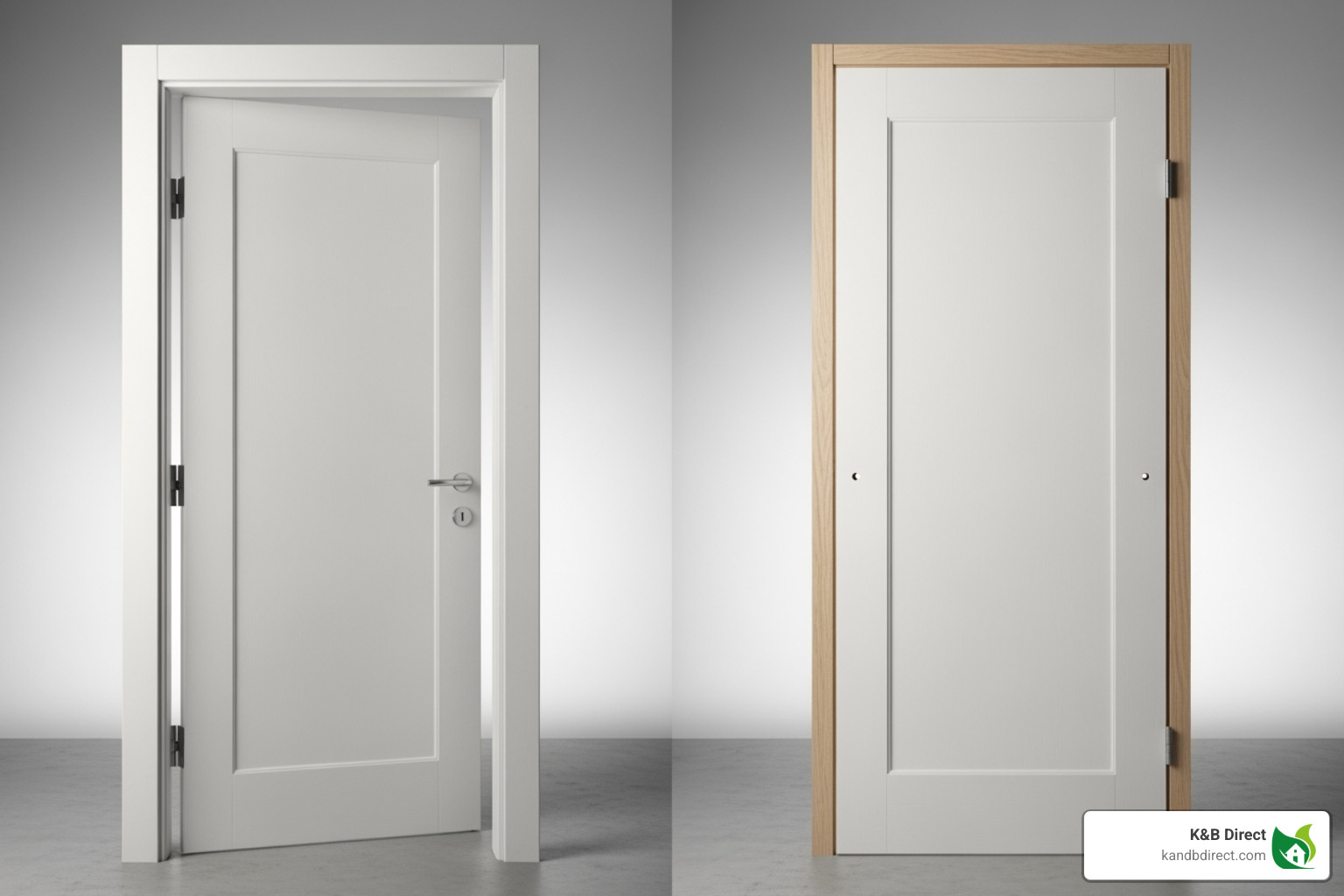
Essential Hardware and Accessories
Hardware is the finishing touch for your interior doors, completing the look while ensuring smooth, secure function.
Handles and knobs are key touchpoints. Choose a style that complements your home’s aesthetic, from timeless brass to modern matte black or polished chrome. Different types serve different needs:
- Privacy Knobs: For bedrooms and bathrooms, with a lock on one side.
- Passage Knobs: For hallways and closets, where a latch is needed but no lock.
- Dummy Knobs: Purely decorative pulls for bifold or pantry doors.
Hinges are vital for a smooth swing. They must be strong enough for the door’s weight and should match your other hardware finishes for a cohesive look. Properly installed hinges prevent sagging.
Locks for interior doors are typically for privacy. A good privacy lock or latch is essential for personal spaces. For doors with glass, consider frosted or patterned glass for added privacy.
Key Factors for Selecting the Perfect Interior Doors
To select the best interior doors, balance these key factors:
- Budget: Hollow core doors are the most affordable, while MDF and solid core doors offer a step up in quality. Solid wood doors are a premium investment in durability and appearance.
- Room Function: The room’s purpose dictates the door type. Bedrooms and offices need solid core or solid wood for sound insulation, while closets can use hollow core or space-saving bifold doors.
- Aesthetics: Match the door’s style, material, and finish to your home’s decor, whether it’s traditional panel doors or modern flush doors.
- Soundproofing Needs: For quiet spaces like nurseries or home offices, solid core or solid wood doors are the best choice for blocking sound.
- Durability: In high-traffic households, robust solid core or solid wood doors are built to withstand daily use.
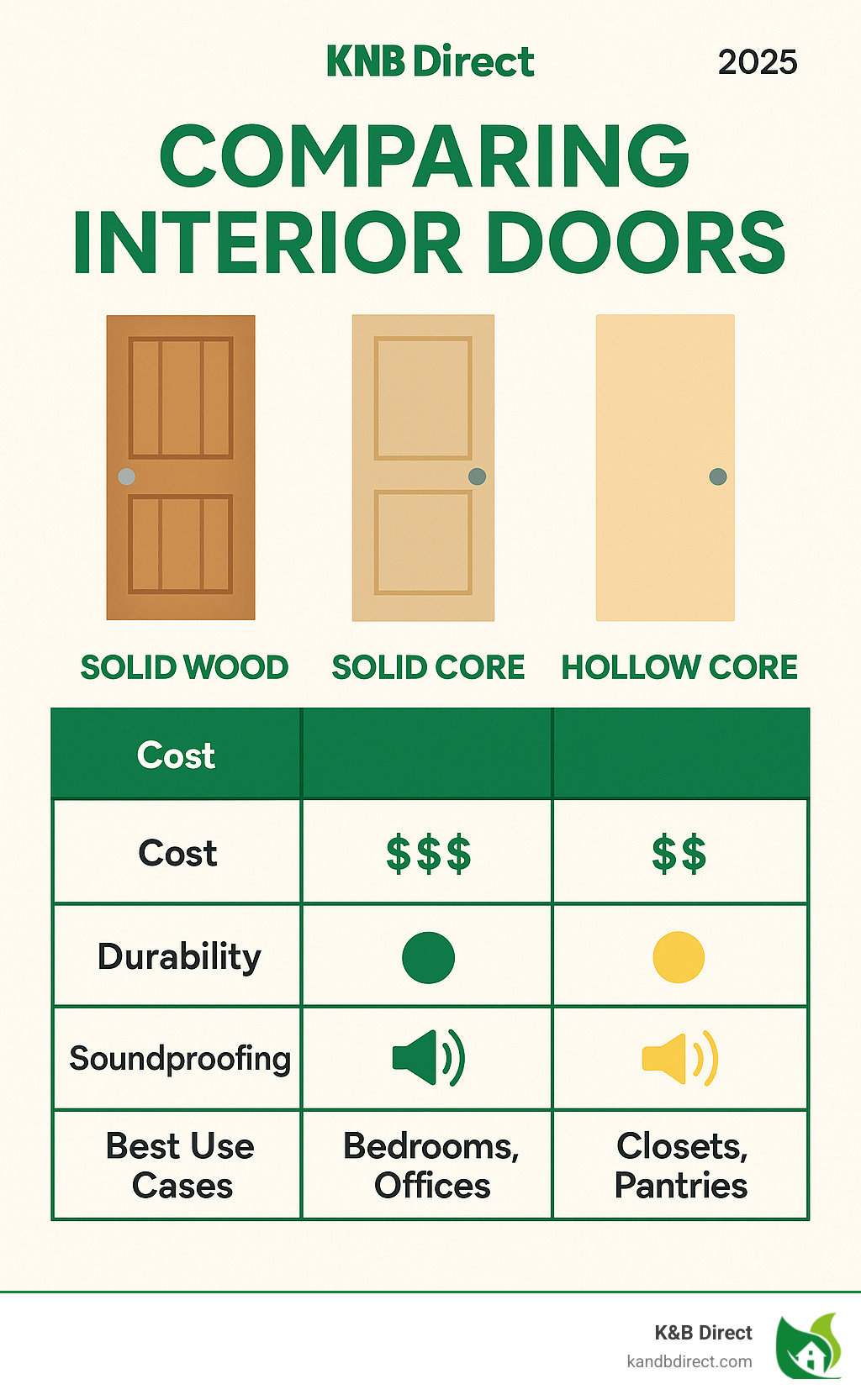
Considering these factors will help you select doors that are both beautiful and functional. For more guidance, check out A comprehensive guide to choosing interior doors.
Frequently Asked Questions
Here are answers to the most common questions we receive about interior doors at K&B Direct.
What are the latest trends in interior door design?
Current interior door trends blend timeless appeal with modern touches.
- Minimalist styles: Clean-lined Shaker and sleek flush doors offer a sophisticated, versatile look.
- Glass accents: French doors or single doors with frosted glass inserts connect spaces while maximizing light and maintaining privacy.
- Natural wood finishes: Light or natural stains that showcase the wood’s authentic grain are increasingly popular.
- Bold colors: Painting doors in deep navy, forest green, or other bold colors creates a stunning focal point.
- Custom hardware: Finishes like matte black or brass are used to personalize doors and complete the aesthetic.
- Space-saving doors: Barn doors, pocket doors, and sliding options continue to gain popularity for their blend of character and functionality.
How do I choose the right door for a specific room like a bathroom or bedroom?
Matching the door to the room’s needs is crucial for performance.
- Bedrooms: Prioritize privacy and quiet with solid core or solid wood doors to block sound. Use privacy hardware that locks from the inside.
- Bathrooms: Choose moisture-resistant materials like solid core or properly sealed solid wood or MDF doors. Privacy locks are essential.
- Closets: For closets, space-saving Bifold Closet Doors or sliding doors are ideal. Since soundproofing isn’t needed, hollow core doors are a cost-effective choice.
- Home offices: Use solid core or solid wood doors for sound insulation. French doors with glass can maintain a visual connection to the rest of the home.
- Utility and laundry rooms: Louvered doors are a smart choice as they provide ventilation to prevent mustiness.
- Safety: For rooms opening to stairwells, building codes may require fire-rated doors like our Fire Doors – 1 Panel Taylor Series.
How long does it take to get custom interior doors?
The timeline depends on your choice between prefabricated and custom doors.
Prefabricated doors are the fastest option, available in standard sizes and popular styles. If in stock, they can be ready for installation within days.
Custom doors offer ultimate flexibility but require more time. They allow for specific wood species, unique finishes, non-standard sizes, and personalized designs. At K&B Direct, custom interior door builds typically take 5-7 business days after the design and measurements are finalized. This allows our craftspeople to carefully build your doors to your exact specifications. While it takes longer than an off-the-shelf option, the result is a door made uniquely for your home.
Conclusion: Lift Your Home with the Perfect Doors
Selecting the right interior doors is a home improvement decision that shapes how you experience your space every day. From providing quiet privacy to making a design statement, the right doors are essential.
We’ve covered the key choices, from the soundproofing of a solid core door to the space-enhancing look of a flush door. We’ve seen how MDF doors provide a perfect paintable surface, while solid wood offers timeless warmth. Whether you prefer classic panel doors or a statement-making barn door, there is a perfect solution for every room.
Understanding practicalities like pre-hung vs. slab doors and choosing the right hardware will ensure your doors are both beautiful and functional. As one customer told us, upgrading to solid core doors was “like getting a completely new house” because of the newfound peace and quiet.
Your home deserves doors that are both hard-working and beautiful. At K&B Direct, we are committed to offering high-quality products at unbeatable prices, helping you love your living space without breaking the budget.
Ready to find your perfect doors? We’re here to help you every step of the way.