
Baseboards & Trim in Schiller Park
We supply baseboards and interior trim to Schiller Park homeowners and contractors who want clean, finished walls throughout their home. Every profile we carry is available in-store at our Schiller Park location. Whether you are replacing old baseboard in one room or trimming an entire house, we help you find the right profile and calculate the right quantity. As your local cabinet store, we stock what works in the homes around here.
Choosing the Right Baseboard Profile for Your Schiller Park Home
Baseboard profile is the first choice to get right. A profile too ornate looks out of place in a casual ranch home. A flat, thin board looks unfinished in a formal dining room. Most Schiller Park homes built mid-century use a simple colonial or ranch profile, and we guide you based on what your home already has.
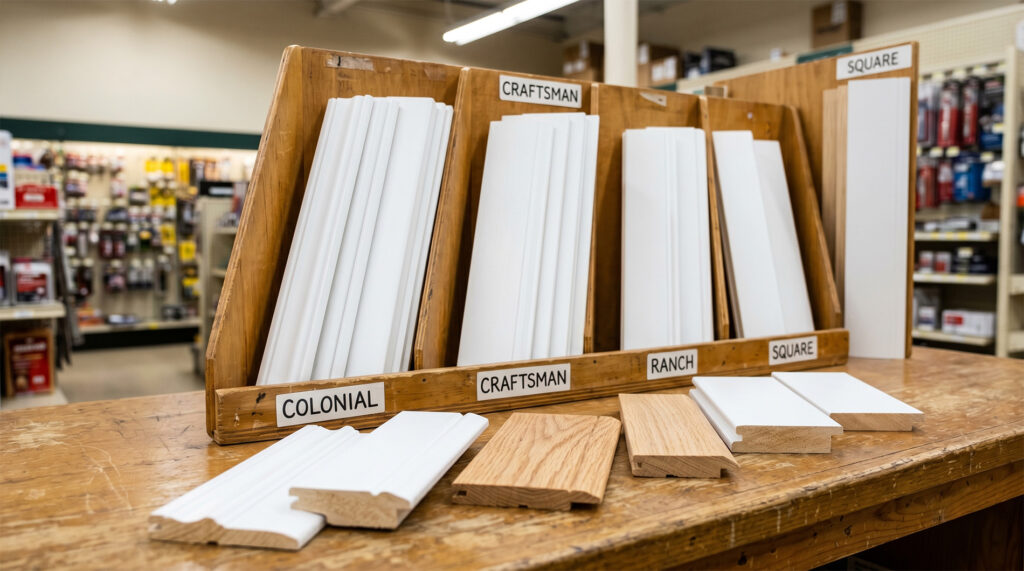
We carry colonial, craftsman, ranch, and square profiles in multiple heights. Bring a cut piece or a close-up photo of your current baseboard and we can match it or find something close. Getting the profile right before you start avoids wasted cuts and extra trips. We stock common sizes for same-day pickup.
How Baseboard Height Affects the Look of a Room
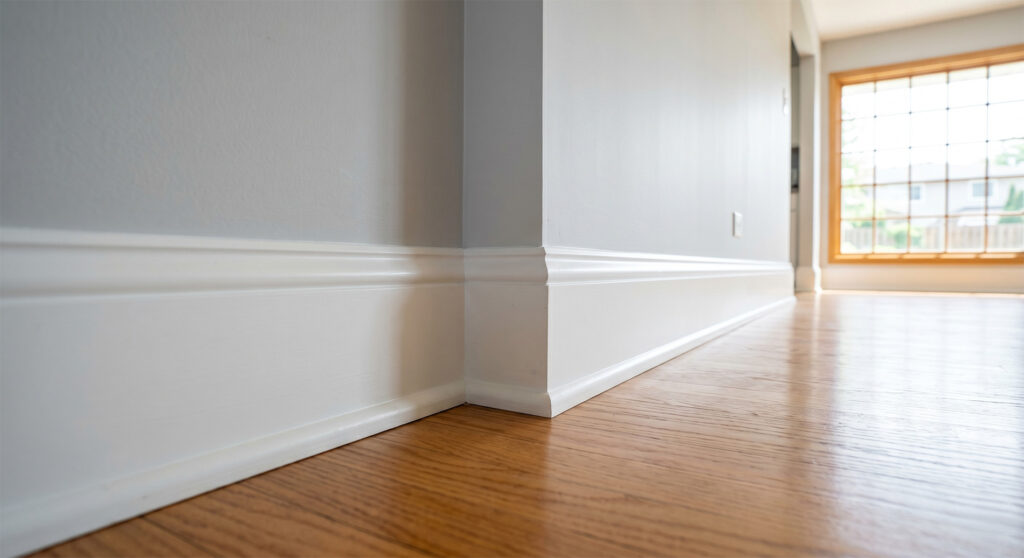
Baseboard height shapes how a room reads before you add any furniture or paint. A taller board pulls the eye down and makes walls feel more grounded. A shorter board keeps things light and simple. In Schiller Park homes with low ceilings, a 3.5-inch profile is usually the right balance — enough presence without feeling heavy.
Taller baseboard — 5 to 5.5 inches — works well in living rooms and dining rooms where the ceiling is higher or you want the room to feel more finished. We carry that range as well. If you are trimming multiple rooms, we can help you decide which height fits each space so the house reads consistently from room to room.
Baseboards & Trim in Schiller Park — What to Know Before You Buy
Baseboards and interior trim give every room a finished edge at the floor, around doors, and at the ceiling line. In Schiller Park, most projects start with base molding along the floor and door casing around each opening. Common baseboard heights run from 3 to 5.5 inches. Profile style should match or coordinate with door casing in the same room for a consistent look.
- Choosing the right profile height and style for each room in your home
- Calculating linear footage with waste allowance so you buy correctly the first time
- Selecting between paint-grade MDF and solid wood based on room use and finish plan
Matching New Baseboard to Existing Trim in Older Schiller Park Homes
Matching new baseboard to existing trim is the most common challenge in older Schiller Park homes. Many mid-century homes use profiles that are no longer in standard production. In most cases we can get close enough with a current profile that reads as intentional rather than mismatched. Bring a cut piece from your current baseboard and we will compare it to what we have in stock.
If an exact match is not available, we can suggest a coordinating profile at the same height that works alongside what is already there. In rooms where you are replacing all the trim at once, this is not an issue — you choose a new profile and run it throughout. We carry enough variety that most Schiller Park homeowners find something that works on the first visit.
MDF vs. Solid Wood Baseboard — What to Use and Where
MDF baseboard is the right choice for most painted interiors. It is consistent in density, machines cleanly, and takes primer and paint without showing grain. It costs less than solid wood and is available in more profiles. For rooms without significant moisture, MDF holds up well and is the most common choice we sell.
Solid wood baseboard is the better call when the trim will be stained, when you are working in a bathroom or laundry room with floor-level moisture, or when you are matching existing wood trim in an older home. It is heavier, costs more, and takes more time to cut, but it holds detail better and lasts longer in wet conditions. We stock both and can show you samples at the counter.
How to Measure and Buy the Right Amount of Baseboard
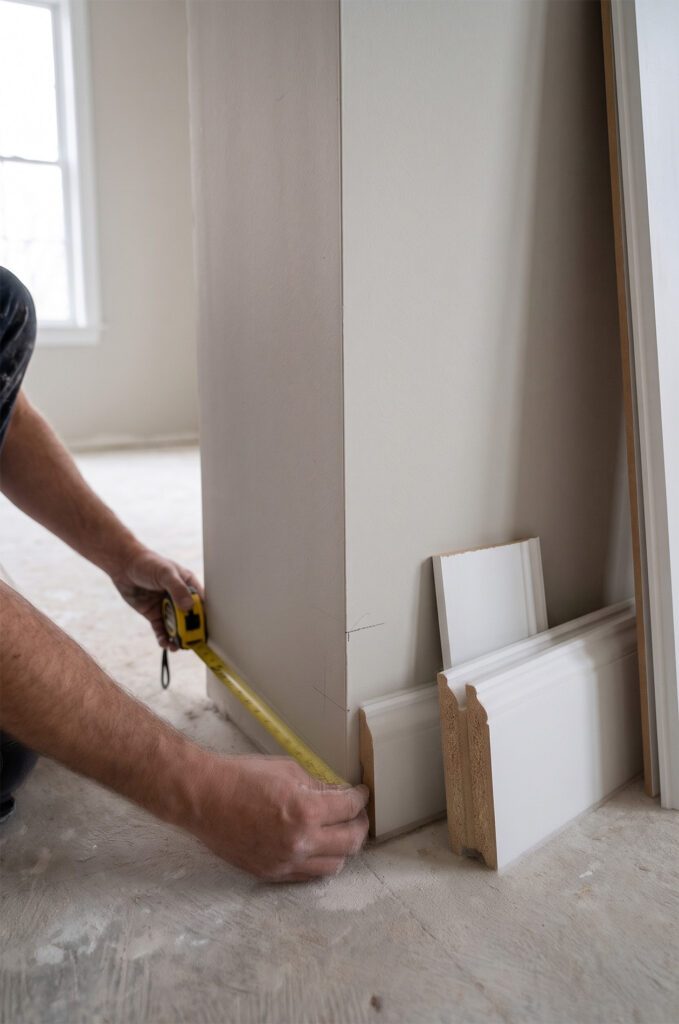
Measuring for baseboard is straightforward but easy to underbuy. Measure the total perimeter of each room — the full length of every wall, including doorways. Then subtract the width of each door opening. Add 10 percent for waste on straight runs and 15 percent if the room has many corners or angles. Write each room’s total separately so we can pull the right quantity.
If you are not sure which profile to use, come in with your measurements and we will walk you through the options at the counter. We keep samples in-store so you can compare profiles side by side and hold them against a photo of your existing trim. Most customers leave with material the same day. No appointment needed.
Preparing Floors and Walls Before Installing Baseboard
Good prep at the floor and wall line makes baseboard installation faster and cleaner. Remove the old baseboard first if you are replacing it. Fill and sand any wall damage at the base before the new board goes up. If the floor is uneven or the wall bows near the bottom, address those spots so the new board sits flat without gaps.
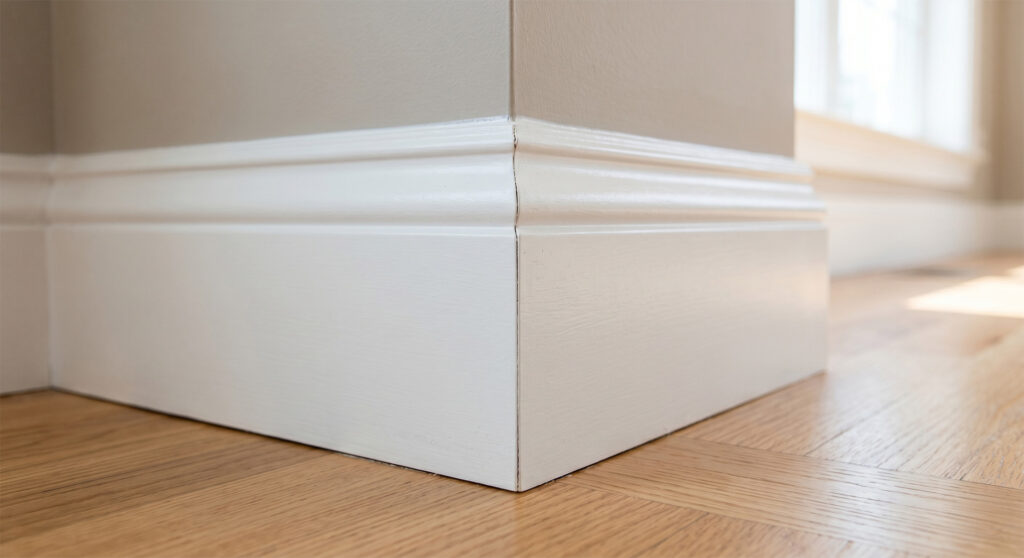
Paint the walls before installing baseboard, not after. It is much easier to cut in at the floor on bare wall than to cut a clean line against an installed board. If you are painting the baseboard white, prime it first and let it dry fully before the final coat. Seal the bottom edge of MDF baseboard before it goes down, especially in kitchens and bathrooms.
Frequently Asked Questions (FAQ)
Buying baseboards and trim in Schiller Park comes with specific questions. We have gathered the most common ones from homeowners and contractors who visit our store. If your question is not listed here, call us at (224) 781-2925 or stop in at 3977 25th Ave, Schiller Park, IL 60176.
1. What is the standard baseboard height for homes in Schiller Park?
2. Do I need to remove old baseboard before installing new?
3. Does installing baseboard require a permit in Schiller Park?
4. How do I handle baseboard at door openings?
5. Can I use the same baseboard in bathrooms and kitchens?
6. What is the best way to cut inside corners on baseboard?