What You Need to Know About a 32×72 Exterior Door Inswing
A 32×72 exterior door inswing is a pre-hung entry door sized for a 32-inch wide by 72-inch tall rough opening, where the door swings inward into the home. Here’s a quick snapshot of what to know:
- Actual door size: Approximately 31½” x 71⅝” — slightly smaller than the rough opening for a proper fit
- Swing direction: Opens inward, toward the interior of the home
- Common materials: Steel, fiberglass, and polyethylene
- Insulation: Typically features polyurethane foam core for thermal efficiency
- Compliance: Quality units meet HUD standard 3280-405
- Hinge orientation: Available in left-hand or right-hand configurations, determined by viewing the door from the exterior
These doors are a popular choice for homeowners looking to upgrade their entry with a combination of durability, energy efficiency, and clean aesthetics.
The 32×72 size is not a standard residential door height — most standard homes use 80-inch doors. This 72-inch height is common in specific applications, so accurate measurement before purchasing is essential.
I’m Eryk Piatkowski, owner of K&B Direct, and over more than a decade of helping homeowners select quality doors and building products, I’ve guided countless clients through choosing the right 32×72 exterior door inswing for their specific opening and style. In the sections below, I’ll walk you through everything from materials and measurements to installation and hardware so you can make a confident, informed decision.
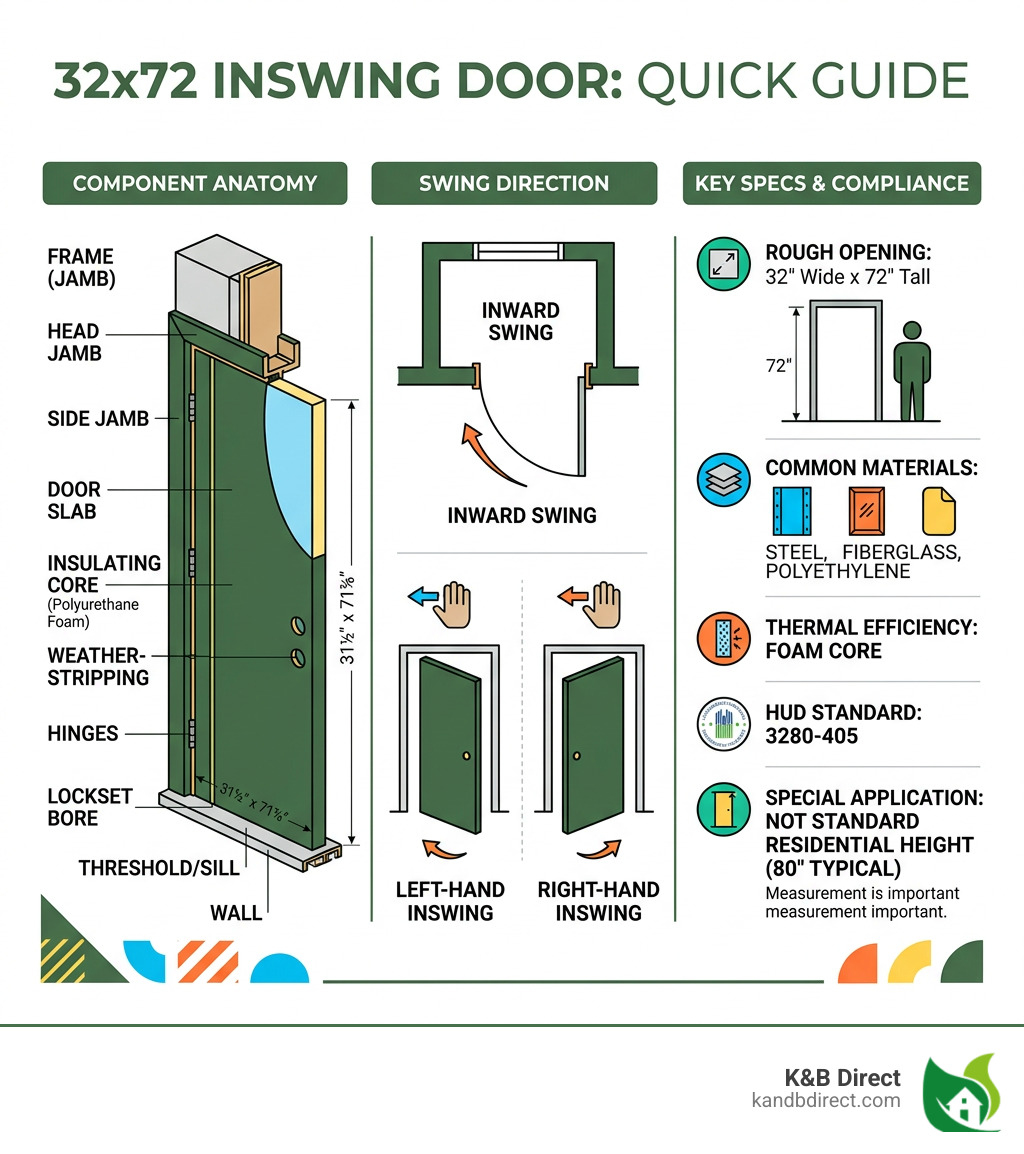
32×72 exterior door inswing terminology:
Key Features of a 32×72 Exterior Door Inswing
When we look at a 32×72 exterior door inswing, we aren’t just looking at a piece of wood or metal; we are looking at a critical barrier that protects your home from the elements while providing a welcoming entrance. For residents in the Chicago area, from Arlington Heights to Skokie, having a door that can handle the shifting Illinois seasons is paramount.
One of the standout features of these doors is their energy efficiency. Most high-quality 32×72 models are constructed with a 1 3/8″ thick polyurethane foam core. This insulation acts as a thermal break, keeping the heat inside during those biting Chicago winters and the cool air inside during the humid summers. Furthermore, these doors often feature a dual sealing system, utilizing both bulb vinyl and extruded flap vinyl to ensure a tight, weather-resistant seal against drafts.
Another vital aspect is compliance. If you are looking for a door that meets rigorous industry standards, you’ll want to ensure it aligns with HUD standard 3280-405. This certification ensures the door is manufactured to specific safety and performance benchmarks. Whether you are browsing our Exterior Doors Category for a sleek 6-panel design or a flush modern look, these technical specifications provide peace of mind regarding the door’s longevity and structural integrity.
Measuring Your Opening for a 32×72 Exterior Door Inswing
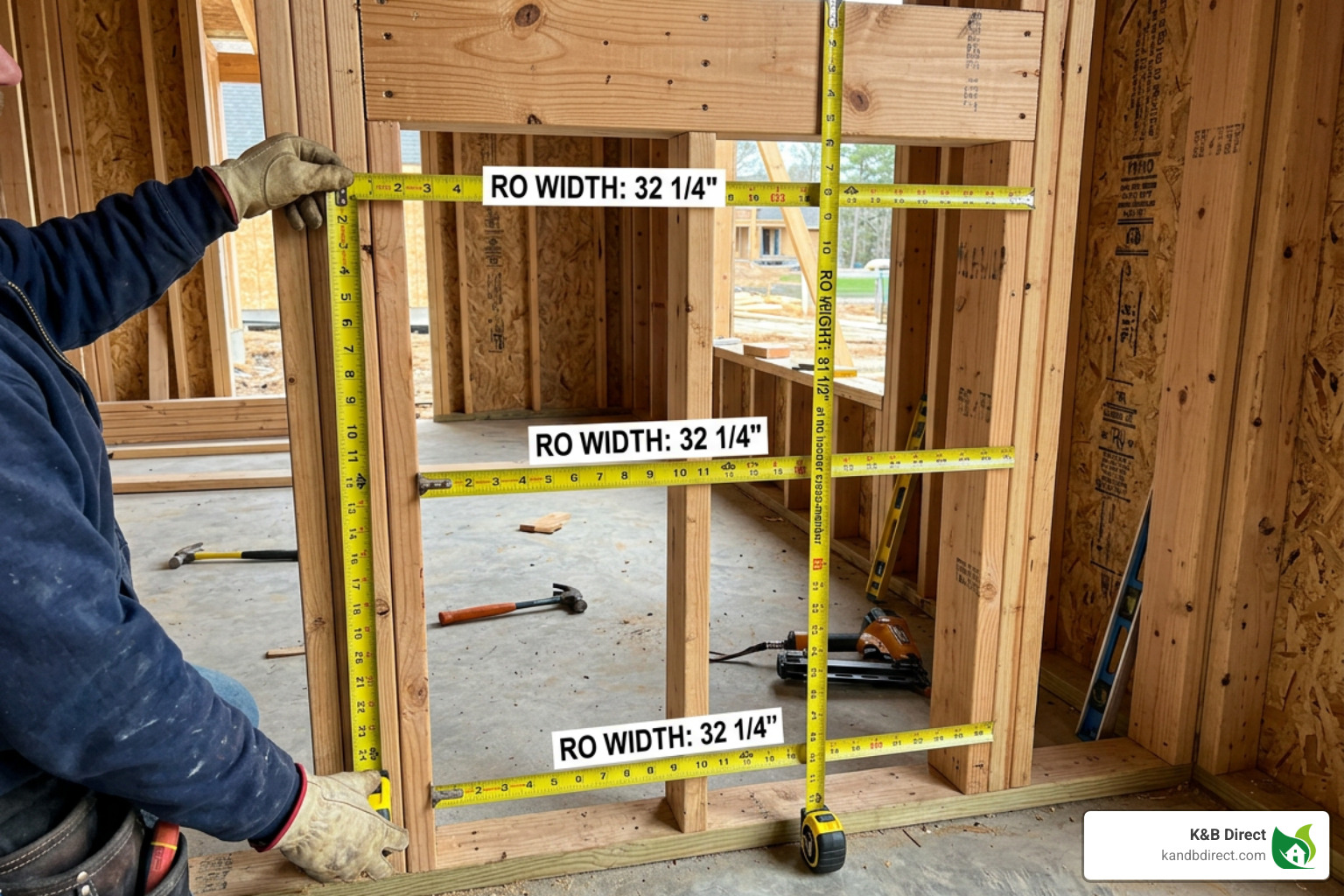
We cannot stress this enough: measure twice, buy once! A common point of confusion is the difference between the “nominal” size and the “actual” size. When you see a door labeled as 32″ x 72″, that refers to the rough opening of the wall, not the size of the door slab itself.
To ensure your new 32×72 exterior door inswing fits like a glove, follow these steps:
- Measure the Width: Measure the horizontal distance between the studs (the rough opening) in at least three places (top, middle, and bottom). Use the smallest measurement. For a 32″ door, your rough opening should be exactly 32 inches wide.
- Measure the Height: Measure from the floor to the bottom of the header (the top of the opening). For a 72″ door, the opening should be 72 inches tall.
- Check for Square: Use a level or measure diagonally from corner to corner. If the measurements are the same, your opening is square. If not, you’ll need to account for shimming during installation.
The actual door unit usually measures about 31 1/2″ x 71 5/8″. This slight undersizing is intentional—it gives us the room needed to level and plumb the door during the installation process. For a visual aid, you can refer to this Rough Opening Measurement Guide to visualize how the door sits within the frame.
Determining Left-Hand vs Right-Hand 32×72 Exterior Door Inswing
Choosing the correct hand orientation is one of those things that seems simple until you’re standing in front of the opening scratching your head. For an inswing door, the rule of thumb is to stand on the outside of the house and look at the door.
- Left-Hand (LH) Inswing: If the hinges are on the left side and the door swings away from you (into the house), it is a left-hand inswing.
- Right-Hand (RH) Inswing: If the hinges are on the right side and the door swings away from you (into the house), it is a right-hand inswing.
Getting this right is crucial because it determines where your Pre-Hung Doors will have their lockset and striker plates positioned. If you have a tight entryway inside, consider which way the door will swing to avoid hitting furniture or walls.
Selecting Accessories for Your 32×72 Exterior Door Inswing
Once you have the door and the orientation sorted, it’s time to think about the finishing touches. Accessories aren’t just for looks; they add security and functionality.
- Locksets and Striker Plates: Most 32×72 doors come pre-drilled for a standard lockset. Look for units with adjustable striker plates, which allow you to fine-tune the latch for a perfect, “no-rattle” fit.
- Window Inserts: If you want natural light, many 32×72 doors offer window options, such as a 9-lite design. Ensure these use safety glazing or tempered glass for added security.
- Thresholds and Seals: A heavy-duty threshold plate is essential for protecting the bottom of the frame from foot traffic and moisture.
- Safety Chains: In some installations, especially in windier parts of Illinois, a safety chain can prevent the door from being caught by a gust and swinging too far.
For those looking to make a statement, you might even consider how a Front Door with Side Panel could work if you have the extra rough opening width available, though most 32×72 applications are focused on maximizing a compact space.
Material Options and Optimal Performance
The material of your 32×72 exterior door inswing dictates how much maintenance you’ll do and how long the door will last. At K&B Direct, we prioritize materials that offer the best “bang for your buck” while maintaining high quality.
- Fiberglass: This is often the gold standard for modern entryways. Fiberglass doors can be manufactured with a grain that mimics the look of a traditional Main Entrance Door but without the warping or rotting associated with wood. They are incredibly stable in the fluctuating temperatures of the Chicago suburbs.
- Galvanized Steel: Steel doors are the champions of security. They often feature a heavy-duty galvanized steel frame and a steel core. For added durability, many come with a PVC skin that resists dents and scratches.
- High-Density Polyethylene: Often used in specialized applications, these panels are bonded to a foam core. They are lightweight, resistant to moisture, and offer excellent thermal performance.
Regardless of the material, look for a “precambered” lock side. This means the door has a very slight curve built into the frame that flattens out when the door is latched, creating a positive, airtight seal.
Installation Best Practices and Hardware
Installing a 32×72 exterior door inswing is a rewarding project that can significantly improve your home’s curb appeal. Since these are usually Doors that come pre-hung, the hardest part—mounting the door to the jamb—is already done for you.
Step-by-Step Overview:
- Preparation: Ensure the mounting surfaces around the perimeter of the rough opening are flat and secure. Remove any old debris or protruding nails.
- Seal the Flange: Apply a generous layer of putty tape or a non-hardening sealant to the back of the mounting flange. This is your primary defense against moisture.
- The “Closed Door” Rule: Keep the door closed and locked during the entire installation. This keeps the unit “pre-squared.” If you open it before it’s secured, you might lose the factory alignment.
- Fastening: Insert the door into the opening. Start by driving hex head screws through the hinge side middle first, then the lock side middle. This centers the unit. Proceed to fasten the rest of the perimeter.
- Final Touches: Once the frame is secure, install your lockset and threshold plate. If the door has shipping clips holding it in place, remove them only after the frame is fully fastened.
One common mistake is over-tightening the screws, which can bow the frame. Use shims where necessary to keep the jambs perfectly straight.
Frequently Asked Questions
What are the actual dimensions of a 32×72 door?
As we mentioned, the “32×72″ refers to the rough opening. The actual door slab and frame assembly (the unit you hold in your hands) usually measures approximately 31 1/2″ wide by 71 5/8″ tall. This allows for about a 1/4” gap on either side and the top for adjustments.
Is an inswing door better for weather resistance?
Inswing doors are generally very effective at weather resistance because the door is pushed against the weatherstripping by the force of the wind. However, they do require a well-designed threshold and sweep to prevent water from being blown under the door. In high-wind areas like the “Windy City,” the quality of the seals (like bulb vinyl) is more important than the swing direction itself.
What maintenance is required for steel entry doors?
Steel doors are relatively low-maintenance, but they aren’t “no-maintenance.” You should periodically check the finish for any chips or scratches; if the steel is exposed, it can rust. A quick touch-up with matching paint will prevent this. Also, lubricate the hinges once a year and check the weatherstripping to ensure it hasn’t become brittle or cracked.
Very fast delivery and wonderful customer service is a hallmark of the brands we carry, ensuring that when you decide to upgrade, you aren’t waiting weeks for your home to be secure again.
Conclusion
Choosing a 32×72 exterior door inswing doesn’t have to be a complicated process. By focusing on accurate measurements, selecting the right material for your climate, and following proper installation steps, you can ensure your home stays warm, secure, and stylish.
At K&B Direct, we are dedicated to helping our neighbors throughout Illinois—from the busy streets of Chicago to the quiet neighborhoods of Barrington and Lake Zurich—achieve their dream home aesthetics. We believe that everyone deserves top-quality products at the lowest possible prices, backed by friendly, expert service.
Ready to find the perfect fit for your home? Explore our Exterior Doors today and let us help you find a door that offers optimal functionality and lasting beauty. Whether you need a 6-panel steel door or a modern fiberglass unit, we have the selection and expertise to get the job done right.