What Are Acrylic Cabinet Doors — and Are They Right for Your Kitchen?
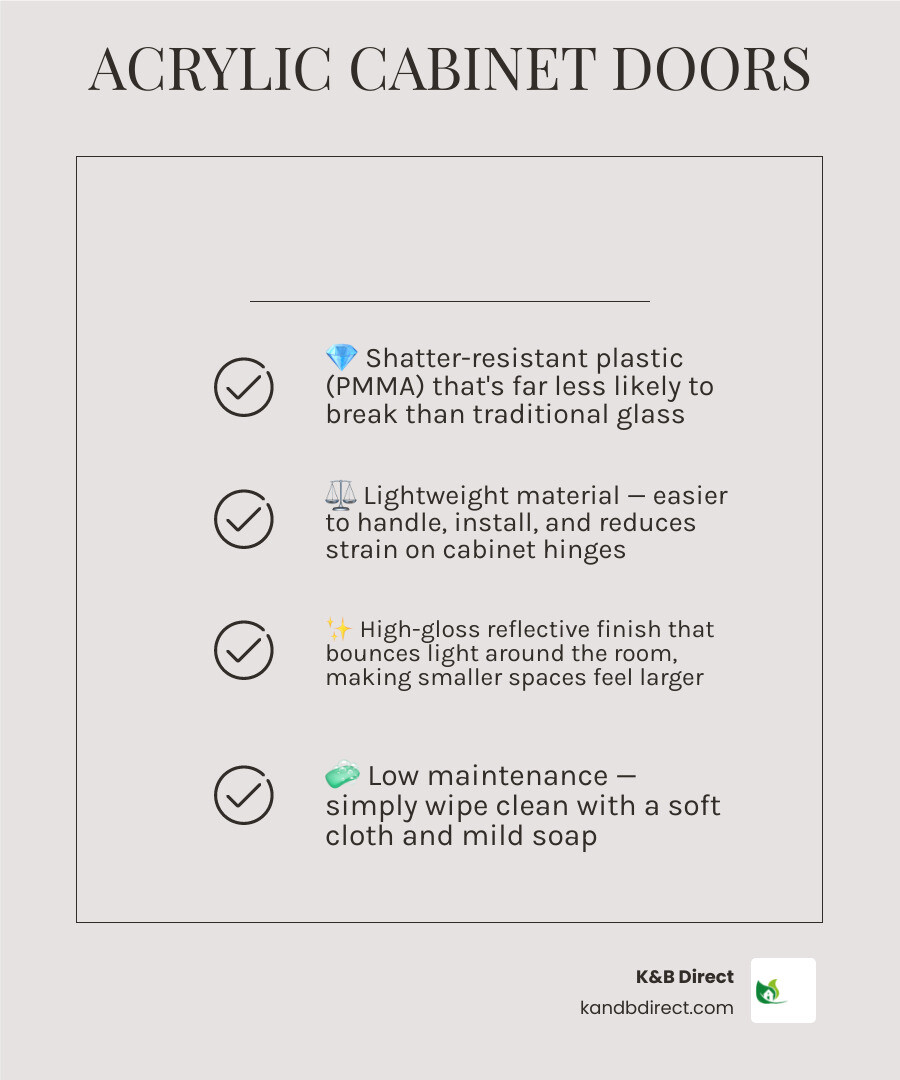
Acrylic cabinet doors are panels made from polymethyl methacrylate (PMMA) — a lightweight, shatter-resistant plastic that delivers a sleek, high-gloss finish. They’re a popular choice for modern kitchens and bathrooms because they combine visual appeal with practical durability.
Here’s a quick summary of why homeowners choose acrylic panels:
- Shatter-resistant — far less likely to break than traditional glazing
- Lightweight — easier to handle and install than heavier alternatives
- High-gloss finish — creates a clean, modern aesthetic
- Customizable — available in frosted, clear, and colored finishes
- Low maintenance — easy to wipe clean with a soft cloth
If you’re renovating your kitchen or bathroom and want a material that looks sharp and holds up to daily use, acrylic is worth a serious look.
I’m Eryk Piatkowski, owner of K&B Direct, where I’ve spent over a decade helping homeowners select the right acrylic cabinet doors and cabinetry solutions to match their style and budget. In this guide, I’ll walk you through everything you need to make a confident, informed decision.
Designing Modern Kitchens with Acrylic Cabinet Doors
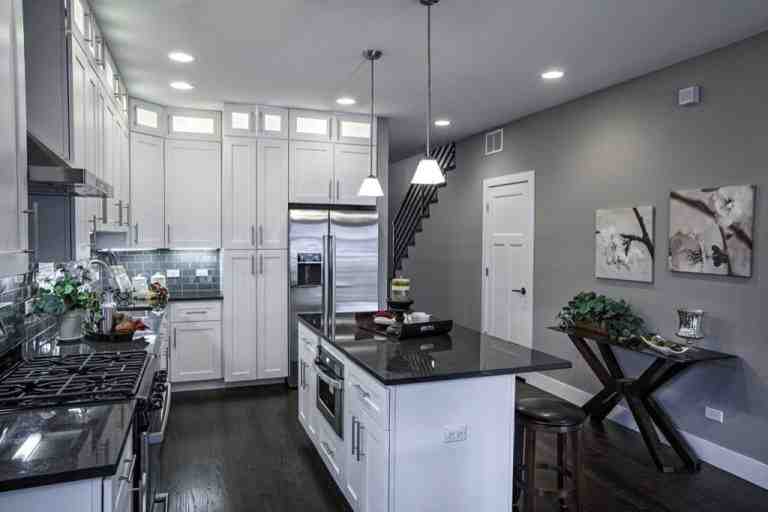
Modern kitchen design focuses heavily on clean lines, reflective surfaces, and minimalist styles. Incorporating acrylic cabinet doors into your layout is one of the most effective ways to achieve this high-end aesthetic. The reflective, mirror-like quality of high-gloss acrylic panels bounces light around the room, making smaller spaces feel larger and brighter. This visual expansion is a key reason why these panels are highly favored in modern apartments and homes throughout the Chicagoland area, from Niles and Norridge to Schaumburg and Oak Brook.

When planning a modern kitchen, the choice of cabinet construction plays a significant role in the final look. To maximize the sleek, continuous appearance of acrylic, we highly recommend pairing these doors with frameless cabinet styles. If you are unfamiliar with this construction method, you can learn more by reading our detailed guide, What Is a Frameless Cabinet?.
Frameless construction eliminates the face frame, allowing the high-gloss panels to sit flush against one another with minimal gaps. For a stunning, ultra-modern white kitchen, our Frameless Gloss Blanco Kitchen Cabinets offer the perfect combination of contemporary style and exceptional durability, creating a seamless, brilliant finish that elevates the entire room.
Selecting the Right Thickness for Acrylic Cabinet Doors
Choosing the correct material thickness is vital to ensure your cabinet fronts remain structurally sound and visually perfect over time. If a panel is too thin, it may bow or flex under its own weight or when subjected to daily use.
- 3mm Panels (Approximately 1/8 Inch): This is the industry-standard recommendation for larger cabinet door inserts or panels that are prone to frequent impact. A thickness of 3mm provides the necessary structural stability to prevent flexing, ensuring the door remains perfectly flat and retains its high-gloss reflection without distortion.
- 2mm Panels: Thinner sheets are suitable for smaller, recessed inserts or decorative panels that are fully supported by a solid backing material.
Using the appropriate thickness ensures that your cabinet fronts maintain their premium look and structural integrity, preventing the warping that often plagues lower-quality synthetic alternatives.
Cast vs. Extruded Material Options
Polymethyl methacrylate (PMMA) sheets are manufactured using two primary methods: casting and extrusion. Understanding the differences between these two options is essential for choosing the right material for your kitchen cabinetry.
- Cast Acrylic: This premium material is manufactured by pouring liquid monomer into molds, usually made of two sheets of high-quality silica panels. The liquid is then heated and cured. This process results in a highly stable material with superior optical clarity, excellent scratch resistance, and outstanding thermal stability. Cast acrylic is highly recommended for cabinet doors because it cuts cleanly without melting and offers the most pristine, mirror-like finish.
- Extruded Acrylic: This version is produced by continuously pushing molten plastic through a series of rollers. While it is more budget-friendly and features highly consistent thickness tolerances, it is softer, more prone to minor surface imperfections, and more susceptible to scratching. It also has a lower melting point, which makes it trickier to cut cleanly during self-installed customization projects.
For high-visibility kitchen cabinet fronts, cast acrylic is the superior choice, ensuring your kitchen remains free of optical distortions and holds up better against the wear and tear of daily culinary activities.
Material Comparison: Acrylic vs. Polycarbonate vs. Traditional Glazing
To help you choose the best material for your cabinet door inserts, we have compiled a comparison of the three most common transparent materials used in home cabinetry.
| Material Property | Acrylic (PMMA) | Polycarbonate (Lexan) | Traditional Glazing (Silica) |
|---|---|---|---|
| Impact Resistance | High (17x stronger than silica) | Extremely High (250x stronger) | Low (Shatters easily) |
| Weight | Very Lightweight | Lightweight | Heavy |
| Clarity & Light Transmission | Outstanding (92% transmission) | Good (88% transmission) | Excellent |
| Scratch Resistance | Moderate (Superior to Lexan) | Low (Scratches very easily) | Extremely High |
| Yellowing Resistance | Excellent (UV resistant) | Poor (Tends to yellow over time) | Outstanding |
| Safety | High (Shatter-resistant) | High (Virtually unbreakable) | Low (Unless tempered) |
All polymeric materials compared here are tested and rated according to ASTM International standards for plastics to ensure compliance with safety and performance guidelines.
Polycarbonate Properties
Polycarbonate, often known by the brand name Lexan, is a popular thermoplastic polymer known for its incredible impact strength. It is often advertised as being up to 250 times stronger than standard silica panels, making it virtually unbreakable.
While this extreme durability is appealing, polycarbonate has several notable drawbacks when used for indoor cabinet doors. First, it is a much softer material than polymethyl methacrylate, making it highly vulnerable to scratching from everyday contact, cleaning cloths, or kitchen utensils. Second, polycarbonate has a strong tendency to yellow over time when exposed to UV light from windows or certain types of indoor lighting. Because of these factors, it is generally less suited for long-term kitchen aesthetics where a pristine, clear look is desired.
Traditional Glazing Alternatives
Traditional silica-based panels have been the standard choice for transparent cabinet inserts for decades. They offer unmatched scratch resistance and excellent long-term clarity. However, they present significant safety considerations and practical challenges.
Standard silica panels are heavy and fragile. If a cabinet door is slammed, or if a child accidentally hits the panel with a toy, it can shatter into dangerous, sharp shards. To mitigate this risk, homeowners must invest in tempered safety options, which increases the weight and requires heavy-duty hinges to support the doors. Acrylic, by comparison, provides a lightweight, shatterproof alternative that delivers the same high-end clarity without the safety hazards, making it ideal for busy household environments.
Crafting and Installing Custom Acrylic Panels
For homeowners who enjoy customizing their cabinetry, working with acrylic sheets is highly accessible. Whether you are adding clear inserts to existing frames or creating custom panels for your Cabinet Boxes, using the right tools and techniques is key to achieving a professional finish.
When cutting acrylic sheets, a fine-tooth circular saw blade designed specifically for plastics is recommended to prevent chipping. Alternatively, you can use a scoring tool to make deep grooves along a straight edge, then carefully snap the sheet along the line.
To achieve smooth, polished edges, use a sanding pad or a sanding drum on a rotary tool with 320-grit sandpaper, working up to a finer grit. Always wear a protective mask and work in a properly ventilated area when sanding plastics.
Securing Panels in Cabinet Frames
Once your acrylic panels are cut to size, they must be properly secured inside the cabinet door frames to prevent movement and annoying rattling when the doors are opened or closed.
- Silicone Sealant: Applying a thin bead of clear silicone caulk along the routed channel of the door frame is an excellent way to cushion the panel. The silicone absorbs vibrations and keeps the acrylic firmly in place.
- Retainer Clips: Plastic or metal retainer clips (such as Hafele clips) can be screwed into the back of the frame to hold the panel securely. It is best to drill a small recess for these clips so they lie flush and do not interfere with the cabinet face when closed.
- Wood Trim: Small wood trim pieces can be nailed into the rabbet behind the acrylic panel to hold it securely while providing a clean, finished look from the back of the door.
To further minimize vibration, we highly recommend installing soft-close hinges on all your cabinet doors. This simple upgrade eliminates harsh slamming, protecting both the cabinet frames and the inserts.
Thermoforming and Curved Designs
One of the most unique advantages of polymethyl methacrylate is its thermoforming capability. Unlike rigid silica panels, acrylic can be heated and bent to fit curved or custom-shaped cabinet frames.
Using a heat gun, you can gently heat a thin (3mm) sheet of acrylic along a specific line until it becomes pliable. Once softened, the material can be molded over a form — such as a curved wooden template — and held in place until it cools and solidifies.
That acrylic has a melting point near 300°F. It should never be exposed to an open flame or extreme direct heat, as this will cause bubbling, warping, or ignition. Always apply heat evenly and gradually to achieve a smooth, professional curve.
Frequently Asked Questions About Acrylic Cabinetry
Maintenance Tips for Long-Lasting Acrylic Cabinet Doors
To keep your high-gloss cabinet fronts looking pristine, proper cleaning techniques are essential. Because acrylic is softer than traditional silica-based glazing, using the wrong cleaning tools can result in fine hairline scratches that dull the finish over time.
- Do Use: Always use a clean, ultra-soft microfiber cloth dampened with lukewarm water and a drop of mild dish soap. Microfiber is designed to lift dust and grime without scratching the surface.
- Do Not Use: Avoid paper towels, which contain abrasive wood fibers. Never use window sprays, ammonia-based cleaners, or abrasive scouring powders, as these chemicals can degrade the plastic, causing it to become cloudy or cracked.
- Anti-Static Treatment: Acrylic tends to attract dust due to static electricity. Wiping the doors occasionally with an anti-static plastic cleaner will keep dust from settling on the reflective surfaces.
What Are the Main Drawbacks of Acrylic Panels?
While acrylic offers numerous advantages, it is important to be aware of its limitations before making your selection:
- Scratch Susceptibility: Even high-quality cast acrylic can scratch if cleared with abrasive materials or bumped by sharp kitchen utensils.
- Thermal Limits: With a melting point around 300°F, acrylic cabinet doors should not be placed directly adjacent to high-heat sources, such as uninsulated ovens or open flames, without proper clearance.
- Static Charge: As mentioned, the material naturally attracts dust, requiring regular wiping with appropriate microfiber cloths to maintain its brilliant shine.
What Is the Financial Investment Comparison for Acrylic Panels?
When planning a kitchen remodel, evaluating the financial commitment of different materials is a key step. Polymethyl methacrylate panels represent a premium material choice that offers outstanding long-term value.
While the initial monetary outlay for high-quality cast acrylic is higher than that of standard laminate or melamine cabinet fronts, it is highly comparable to the expense of premium painted wood or high-quality tempered safety glazing. Given its shatter-resistant nature, ease of maintenance, and resistance to yellowing, acrylic represents an excellent investment that keeps your kitchen looking brand new for years to come.
If you are looking to explore premium cabinet options for your home renovation, browse our selection of Modern Kitchen Cabinets to find the perfect style for your space.
Conclusion
Upgrading your home with acrylic cabinet doors is a fantastic way to achieve a bright, modern, and highly durable kitchen or bathroom. Whether you choose sleek, high-gloss solid panels for a frameless contemporary look or clear, shatterproof inserts for a classic touch, acrylic delivers exceptional beauty and safety that traditional glazing simply cannot match.
At K&B Direct, we are dedicated to helping homeowners across Chicagoland — including Schiller Park, Rosemont, Park Ridge, Franklin Park, River Grove, Des Plaines, Elmhurst, and Schaumburg — bring their dream home aesthetics to life. We offer top-quality cabinetry, doors, and mouldings at unbeatable, honest rates, accompanied by friendly, expert service.
Ready to transform your kitchen? Explore our complete range of premium Kitchen Cabinets today, or visit us to find the perfect fit for your next home improvement project!