
Style Guide: Types and Benefits of Arched Kitchen Cabinet Doors
Architectural details bring warmth and character into cooking spaces. The arched door shape has evolved from centuries of classical woodworking, offering curves that break up straight lines across upper cabinetry. Across modern homes, arched kitchen cabinet doors provide a welcoming visual flow while blending soft contours with structured storage. Incorporating subtle sweeps or dramatic cathedral crowns creates an elevated focal point that softens the rigid geometric angles typical of residential kitchens.
Several traditional and updated architectural curved options exist:
- Cathedral Style: Features an arched top rail where the curve meets sharp corners at the sides, forming a crown shape on the upper cabinet door.
- Double Cathedral: Includes cathedral curves on both the upper and lower edges of the panel frame, adding formal, symmetrical detailing.
- Roman Arch: Displays a continuous, smooth semicircular arch across the entire top portion of the frame without pointed angles.
- Soft Arch (Eyebrow Arch): Features a subtle, gentle curve across the top edge, delivering a modern organic look.
Understanding these structural differences helps when choosing new finishes or organizing a complete room update with our custom Kitchen elements.
| Arched Door Style | Distinct Visual Features | Best Suited Aesthetic | Maintenance Considerations |
|---|---|---|---|
| Cathedral Arch | Distinct top crown with pointed outer corners | Traditional, Rustic, Country | Deep inner profile grooves need detailed dust wiping |
| Double Cathedral | Arched curves on top and bottom frame rails | Formal Classic, Vintage Colonial | Extra ornamental carving requires meticulous cleaning |
| Roman Arch | Smooth, rounded semicircular top curve | Mediterranean, Classic European | Smooth outer sweep makes wiping down straightforward |
| Soft / Eyebrow Arch | Low-profile top curve with soft radius | Organic Modern, Transitional | Minimal grooves allow simple surface cleaning |
Characteristics of Cathedral and Soft Arch Styles
Traditional cathedral doors highlight dramatic curves paired with raised middle panels and distinct interior grooves. These details create depth and shadow lines across solid timber. In contrast, soft eyebrow arches feature shallow curves and flatter inner panels, perfect for contemporary Scandinavian or organic designs.
Whether your home features classic raised frame patterns like our Kitchen Cabinet Doors or smooth modern shapes, curved elements soften vertical lines in a kitchen. The key is balancing heavy timber grain with complementary hardware finishes that accentuate the door profile without overwhelming the surrounding layout.
Evaluating the Pros and Cons
Incorporating arched elements offers unique design strengths along with maintenance trade-offs:
Pros:
- Adds architectural charm and breaks up monotonous straight cabinetry runs.
- Softens kitchen angles, harmonizing with arched doorways or curved kitchen islands.
- Brings timeless texture when paired with rich wood grain or contemporary paint shades.
Cons:
- Deep carved grooves require attentive cleaning to prevent dust buildup.
- Sanding around detailed curves requires patience during refinishing projects.
- Specific traditional crown curves can feel dated if paired with older countertops or backsplashes.
Guide to Painting and Refinishing Arched Cabinet Doors
A fresh coat of paint remains one of the most effective methods to update dated wooden cabinet fronts. Color disguises heavy oak grain patterns and brings soft curves right into modern color palettes. Modern high-adhesion formulations bond securely to smooth frames and deep detail carvings alike, providing long-lasting durability for busy family homes.
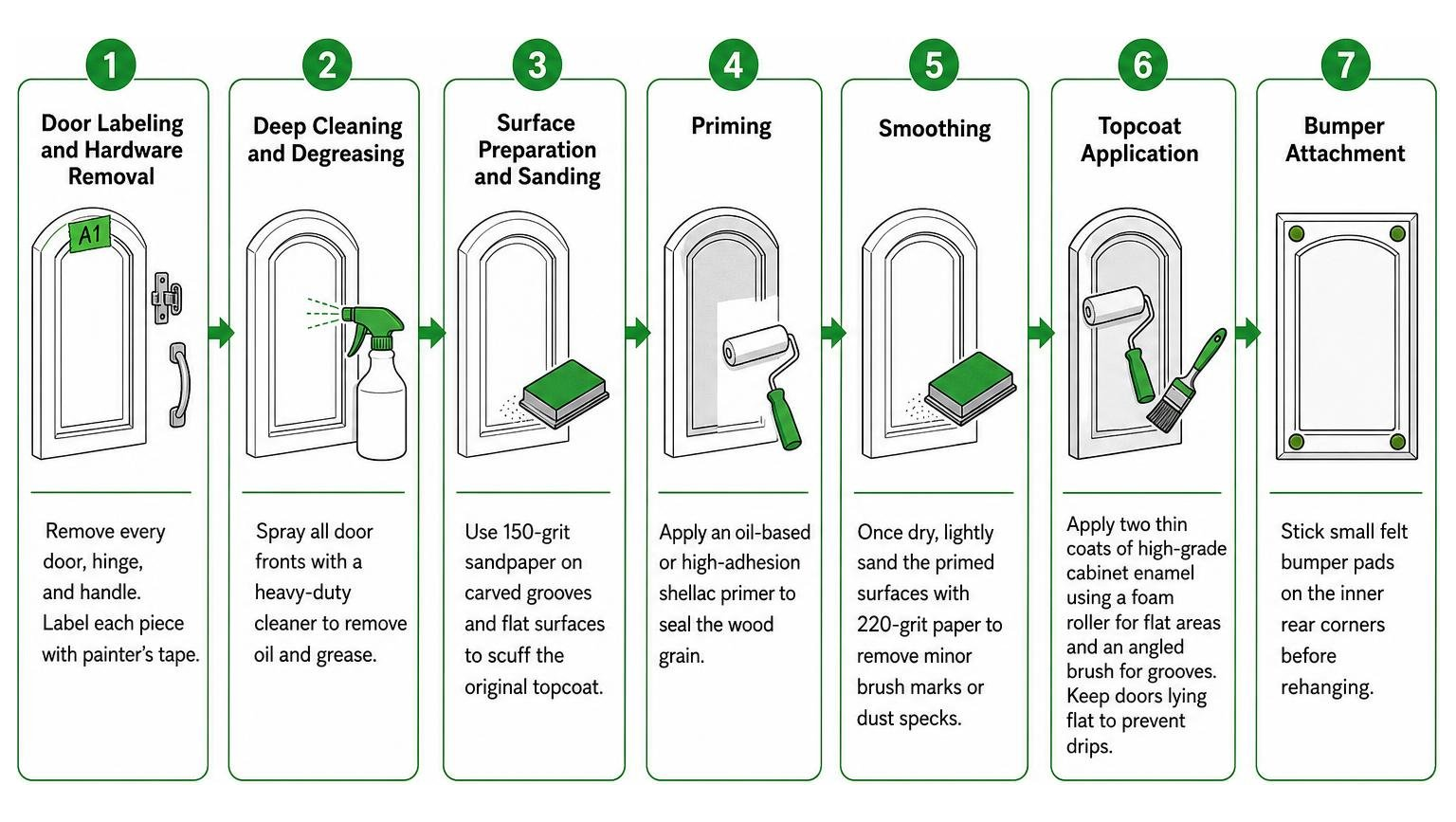
Step-by-Step Painting Process
Executing a clean paint application requires thorough prep work:
- Door Labeling and Hardware Removal: Remove every door, hinge, and handle. Mark each piece with painter’s tape to ensure correct reinstallation later.
- Deep Cleaning and Degreasing: Spray all door fronts with Krud Kutter or a heavy-duty cleaner to remove oil grease around the arched edges.
- Surface Preparation and Sanding: Use 150-grit sandpaper along the carved inner grooves and flat surfaces to scuff up the original topcoat.
- Priming: Apply an oil-based or high-adhesion shellac primer to seal the wood grain and prevent bleed-through.
- Smoothing: Once dry, lightly sand the primed surfaces with 220-grit paper to remove minor brush marks or dust specks.
- Topcoat Application: Apply two thin coats of high-grade cabinet enamel using a foam roller for flat sections and an angled brush for arched grooves. Keep doors lying flat in a ventilated area to prevent paint drips.
- Bumper Attachment: Stick small felt bumper pads onto the inner rear corners before rehanging.
Selecting Paint Colors for Arched Kitchen Cabinet Doors
Choosing the right paint shade turns an older curved profile into an intentional feature piece.
- Two-Tone Palette: Painting lower cabinets a grounding tone while keeping uppers soft and neutral draws positive visual focus toward the upper arches.
- Sage and Earth Tones: Muted greens like our Kitchen Cabinet Doors introduce an inviting, organic atmosphere that pairs beautifully with soft wooden arches.
- Matching Existing Trim: Selecting upper cabinet paint that matches your surrounding architectural wall trim creates smooth visual harmony across the space.
Converting Arched Doors with Transparent Inserts, Texture, and Hardware
Modifying existing door fronts allows you to customize store-bought or existing cabinetry without full replacement.
Replacing Center Panels with Inserts
Removing solid wood centers in favor of translucent acrylic) panes or metal grilles converts dark upper cabinets into light-reflecting display hubs.
To modify your doors:
- Use a jigsaw to slice out the center panel near the inner perimeter edge.
- Use a router fitted with a straight bit to clear away the rear lip and create a clean resting ledge.
- Measure the open frame carefully, sizing your clear acrylic pane or wire mesh insert roughly half an inch wider than the inner opening.
- Secure the new insert along the back frame ledge using clear silicone adhesive or rubber retainer splines.
This modification works exceptionally effectively in butler’s pantries and upper corner units.
Adding Tactile Texture and Modern Hardware
For solid doors, applying textured materials directly inside the arched frame introduces modern depth:
- Cane Webbing or Woven Sheet Materials: Soaking natural cane netting and securing it inside the center panel gives a relaxed, coastal feel.
- Beadboard and Fluted Strips: Adding thin vertical wood strips inside the arch accentuates vertical height.
- Hardware Upgrades: Swapping old ornate pulls for sleek matte black handles or brushed brass knobs instantly modernizes the door profile.
For frameless or streamlined cabinet layouts, explore our guide on What is a Frameless Cabinet? to match your aesthetic goals.
Cabinet Refacing vs. Replacement
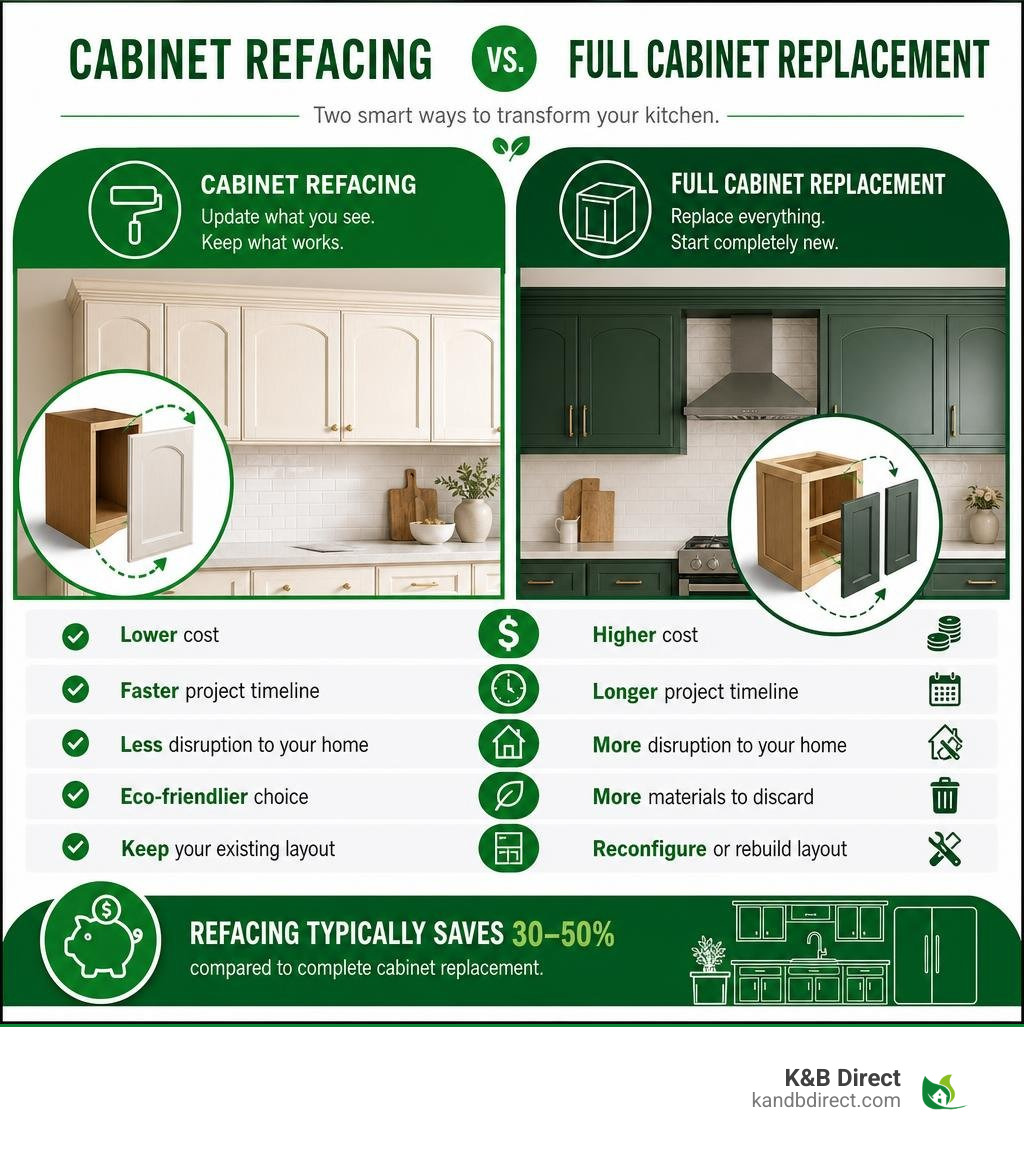
When original cabinet boxes remain structurally sturdy, updating the outer faces offers substantial savings over building brand-new framework.
Data shows cabinet refacing typically saves 30 to 50 percent compared to complete cabinet box replacement while dramatically speeding up project completion timelines.
Refacing Options and Panel Choices
Refacing involves covering existing box frames with matching wood veneer and replacing only the doors and drawer fronts. This allows homeowners to switch from curved traditional doors to modern slim shaker or flat designs without reconfiguring room plumbing or layout structure.
Review options in our comprehensive Kitchen Cabinets Chicago Ultimate Guide to weigh material selections for your area home.
Step-by-Step Installation for Arched Kitchen Cabinet Doors
Installing new cabinet fronts requires proper mounting and alignment:
- Attach Hinge Hardware: Secure modern adjustable soft-close hinges into pre-bored cup holes along the inside door face.
- Mount Hinges to Cabinet Frame: Screw hinge mounting plates into side walls inside the cabinet box.
- Level and Adjust: Adjust side, vertical, and depth screws on the hinges to align all doors perfectly level across the full run.
- Drill Pilot Holes: Mark handle location points using a cabinet hardware template, then drill holes from front to back.
- Mount Handles: Drive mounting screws tightly through the rear into knobs or pulls.
Frequently Asked Questions About Arched Cabinets
Are arched cabinet doors popular in 2026?
Yes! Soft architectural arches are experiencing a major design revival. Modern kitchens feature subtle eyebrow curves and warm oak tones that elevate warm, organic aesthetics, blending timeless woodworking with fresh modern finishes.
Can you flatten cathedral arched cabinet doors without replacing them?
Flattening deeply carved cathedral grooves directly onto wood requires extensive labor with wood filler or thin overlay panels. Most homeowners find swapping door panels or applying thin wood veneer overlays far cleaner and more durable long-term.
What hardware finishes look best with arched cabinet doors?
Matte black provides high contrast that modernizes traditional curves. Brushed brass and warm bronze offer rich depth on white or natural wood doors, while polished chrome suits classic European traditional styling.
Transforming Your Kitchen with K&B Direct
Whether you decide to paint existing arches, swap out panels for textured inserts, or select brand-new cabinet fronts, updating your kitchen brings fresh energy to your entire home. At K&B Direct, we bring homeowners premium craftsmanship at unbeatable direct values across Schiller Park, Rosemont, Park Ridge, Des Plaines, Elmhurst, Schaumburg, and surrounding communities.

Ready to create your ideal cooking and dining space? Explore Kitchen Cabinets from K&B Direct today or stop by our local showroom to explore our wide selection in person!