
What Crown Moulding Brings to Your Home
Crown moulding is a decorative trim installed where walls meet ceilings, creating a neat transition that adds architectural interest and sophistication to any room. Also called cornice, this finishing touch has been elevating homes since ancient Greece, and it remains one of the most effective ways to transform a space from builder-grade to custom.
Key Benefits of Crown Moulding:
- Aesthetic Appeal – Creates visual interest and draws the eye upward
- Hides Imperfections – Covers gaps and uneven joints between walls and ceilings
- Increases Home Value – Adds perceived quality and craftsmanship
- Makes Ceilings Appear Higher – Creates the illusion of more spacious rooms
- Completes the Look – Provides a polished, finished appearance
Common Materials:
- Wood – Stainable, paintable, traditional ($1.50-$10+ per linear foot)
- MDF – Cost-effective, smooth finish, paint-only ($4-$10 per linear foot)
- Polyurethane – Lightweight, moisture-resistant ($5-$10 per linear foot)
Best Rooms for Crown Moulding:
Living rooms, dining rooms, master bedrooms, and any space where you want to make a statement. Kitchens and bathrooms work well with simpler profiles.
I’m Eryk Piatkowski, owner of K&B Direct. Over the past decade, I’ve seen how the right crown moulding can dramatically transform a kitchen or bathroom renovation, adding significant value while staying within budget.
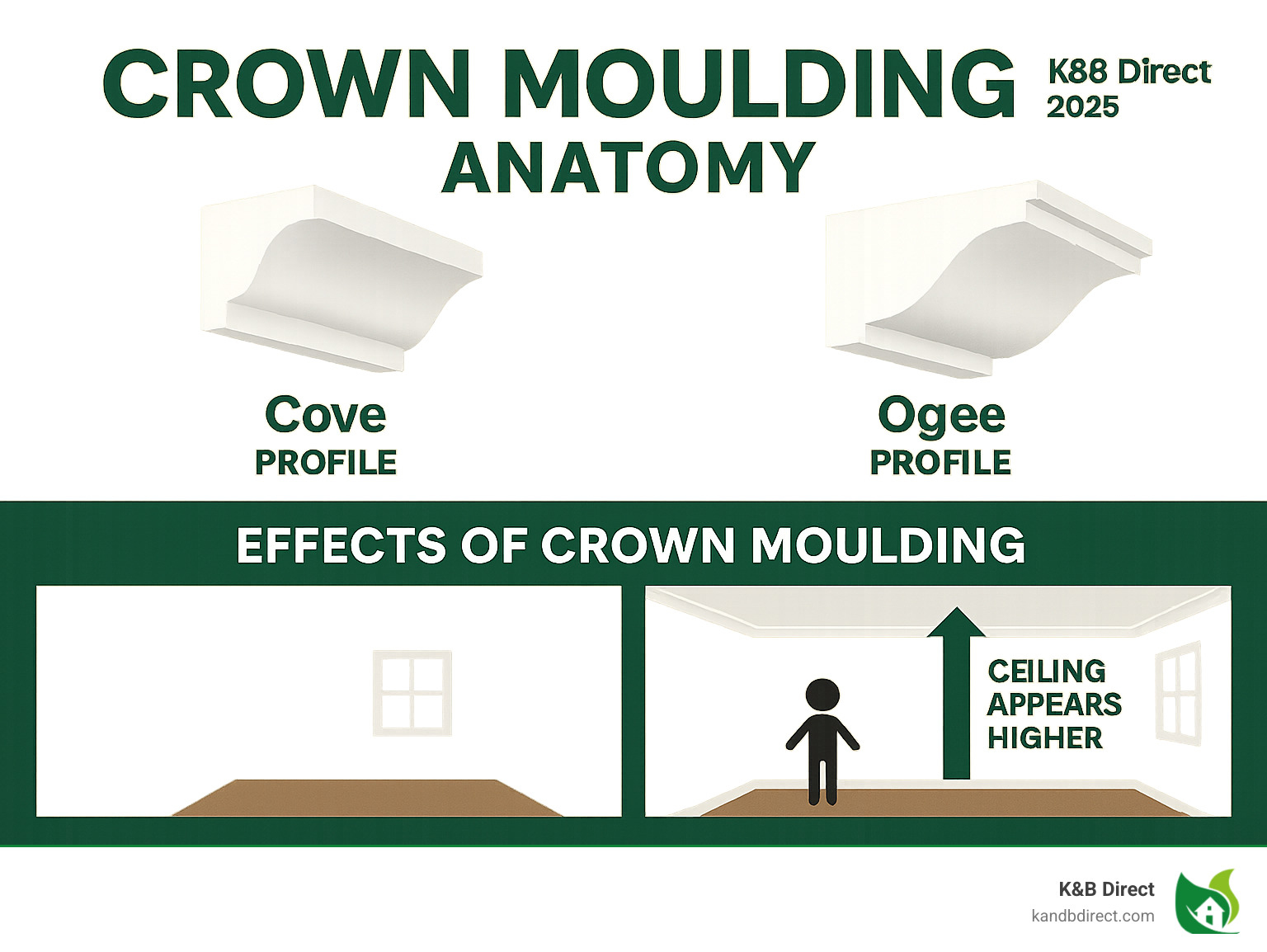
Essential crown moulding terms:
Choosing the Right Crown Moulding: A Guide to Materials
The material you select for your crown moulding affects its appearance, durability, cost, and ease of installation. This guide covers the most common materials to help you find the perfect match for your home’s style and needs.
| Material | Cost (per linear foot) | Durability | Ease of Installation | Best Use Cases |
|---|---|---|---|---|
| Wood | $1.50 – $15+ | Very durable, can be dented/scratched | Moderate to Difficult (requires precise cuts, can split) | Traditional homes, areas where natural wood grain is desired, staining, high-traffic areas where robustness is key. |
| MDF | $4 – $10 | Stable, but susceptible to moisture damage | Easy (cuts cleanly, stable) | Paint-grade applications, budget-friendly projects, areas with consistent humidity, can be used for ornate designs without the high cost of wood. |
| Polyurethane | $5 – $10 | Highly durable, moisture/insect resistant | Easy (lightweight, flexible, cuts easily) | Bathrooms, humid areas, exterior applications, intricate designs, mimicking plaster, DIY projects where ease of handling is a priority. |
Wood Moulding (Pine, Poplar, Oak)
Wood is the classic, gold-standard material for crown moulding, prized for its timeless and versatile appeal.
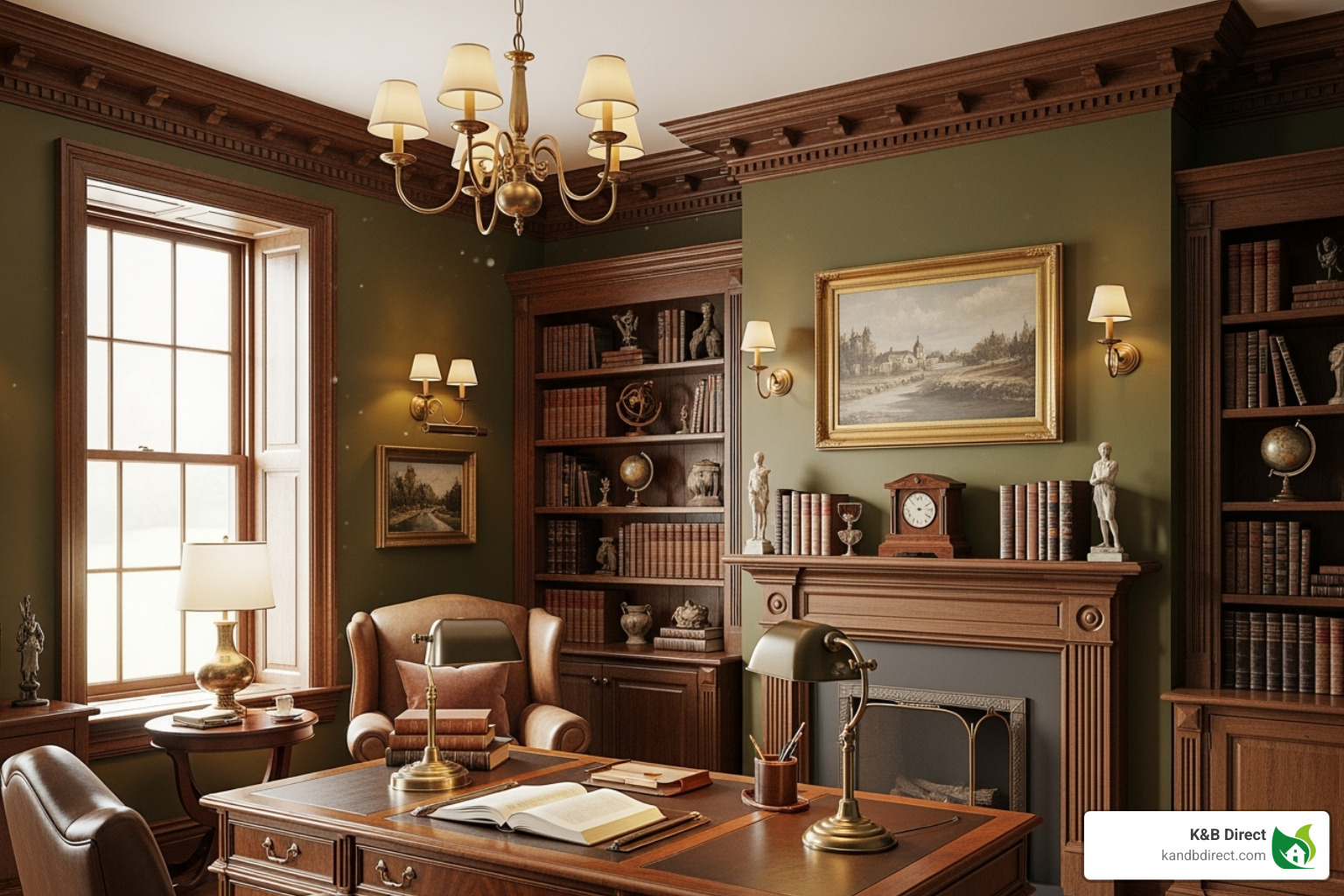
Solid wood offers two main options. Stain-grade wood, like oak, showcases the natural grain and is ideal for creating a warm, rich look. It costs more (from $1 to over $10 per linear foot), but the texture is best.
Paint-grade wood, made from softer woods like pine or poplar, is designed for a smooth, painted finish. It’s more budget-friendly, starting around $1.50 per linear foot for primed pine, allowing your paint color to be the focus.
Durability is a key benefit of wood; properly cared for, it can last for generations. The natural grain provides an authenticity that synthetic materials can’t replicate. However, the cost can be high, and installation requires skill, as wood can split and requires precise miter joints. It can also warp or swell in high humidity if not properly sealed.
At K&B Direct, we’ve carefully selected wood options that deliver both quality and value. Our Crown 47 and Crown 45L showcase the timeless appeal that makes wood the first choice for so many homeowners.
Medium-Density Fiberboard (MDF)
MDF is a practical, engineered wood product that offers a polished look without the high cost. It combines wood fibers, resin, and wax into dense, stable panels.
The cost-effectiveness of MDF ($4-$10 per linear foot installed) makes it perfect for larger projects. Its key feature is its smooth finish, which provides a perfectly consistent surface for paint with no knots or grain variations.
Stability is another advantage. MDF remains flat and straight, resisting the warping that can affect solid wood. This makes installation easier, with clean cuts and minimal splintering.
MDF does have limitations. It’s paintable only, as there’s no natural grain to stain. Its biggest weakness is moisture sensitivity; it can swell if it gets wet, making it unsuitable for bathrooms or basements. It is also surprisingly dense and heavy, which can make long pieces difficult to handle alone.
For most interior spaces where you plan to paint, MDF is an excellent balance of quality and budget. Our Crown 530 and Crown 730 prove that cost-effective doesn’t mean compromising on the final result.
Polyurethane & Polystyrene Foam
Polyurethane and polystyrene foam are modern materials that have revolutionized trim work, especially for DIY projects and challenging, humid environments.
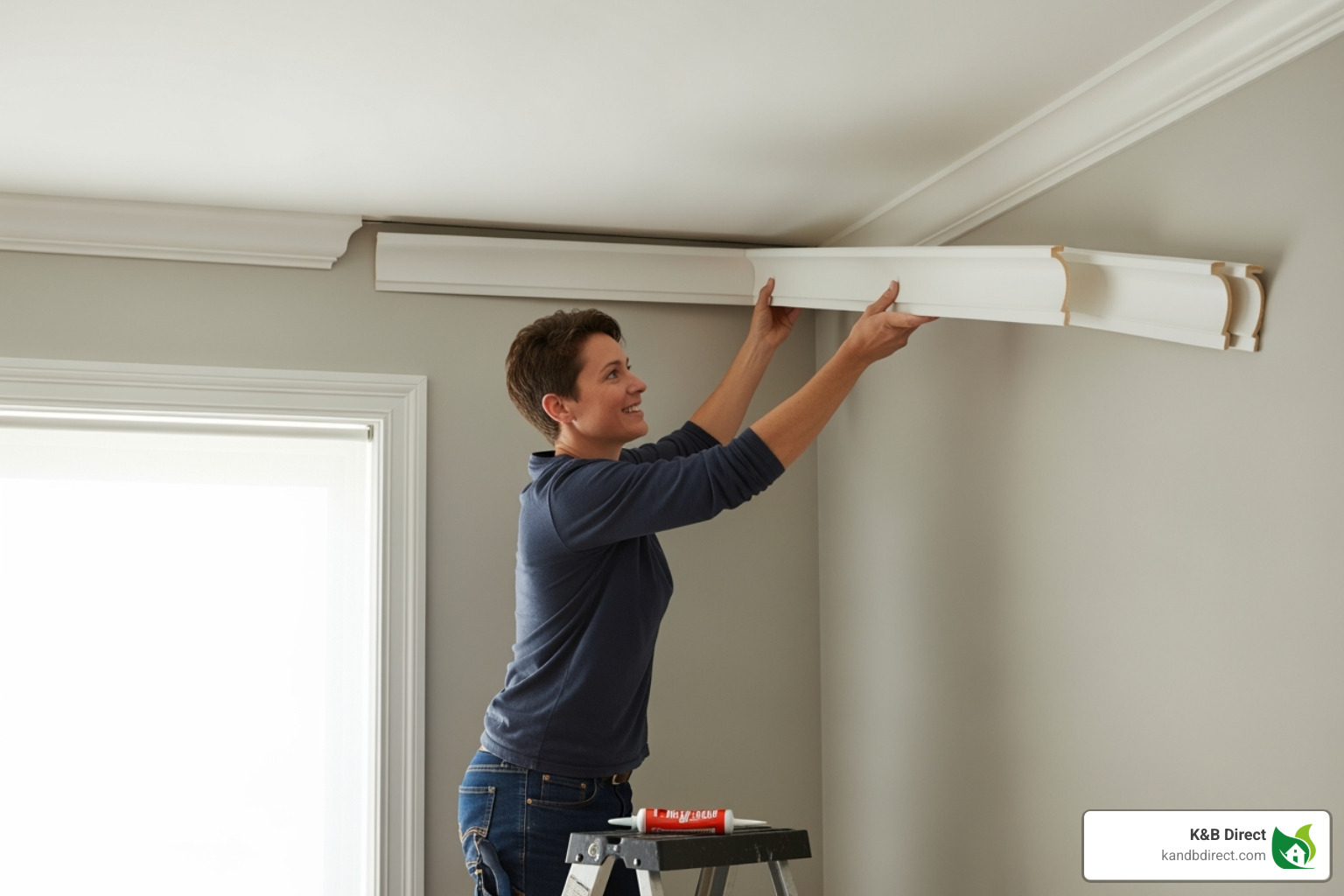
Polyurethane is lightweight yet dense enough to hold detailed profiles that would be very expensive in wood. It’s moisture resistant and insect-proof, so it won’t rot, warp, or attract pests. It can also mimic plaster, delivering an ornate look at a fraction of the cost and weight.
Polystyrene foam is an ultra-lightweight, DIY-friendly material that can be cut with a utility knife. It’s also moisture resistant, making it suitable for areas where wood or MDF would fail.
Both materials are great for bathrooms and humid areas. Polyurethane typically runs $5-$10 per linear foot installed, while polystyrene is $3.50-$8. The main trade-offs are durability; polyurethane can be brittle, and polystyrene is less durable and dents easily.
Our Crown PL700 demonstrates the quality and detail you can achieve with polyurethane moulding, proving that modern materials can deliver traditional beauty.
Plaster, Flex, and Other Specialty Materials
For unique projects, specialty materials like plaster and flex moulding offer solutions that standard options can’t. They aren’t for every job, but they are essential for specific needs.
Plaster is the original, high-end crown moulding material, offering incredible detail and a seamless appearance. It’s also fire-resistant. However, it’s an investment at $5-$30+ per linear foot. It is also very heavy and fragile, requiring highly skilled professional installation.
Flex moulding is a pliable, polymer-based material designed to solve the problem of curved walls, bay windows, and arched doorways. It conforms to almost any curve, but its flexibility can make it tricky to keep straight on flat surfaces and requires specific adhesives.
These specialty materials are often chosen for custom designs or historical accuracy, where the extra cost and complexity are worthwhile investments.
Matching Moulding to Your Home: Style, Size, and Profile
Once you’ve chosen a material, the next step is finding a style that complements your home’s architecture. Selecting the right design is crucial for a cohesive look. For example, ornate Victorian crown moulding would feel out of place in a sleek, modern condo. The goal is to find a profile that feels like a natural fit for your space.
Common Crown Moulding Styles
Crown moulding styles should match your home’s personality. Here are the most popular options and where they work best.
Traditional and ornate styles feature intricate patterns like dentils, egg-and-dart, or acanthus leaves. These are perfect for adding grandeur to Victorian, Colonial, or classic homes, especially in formal dining rooms or master bedrooms.
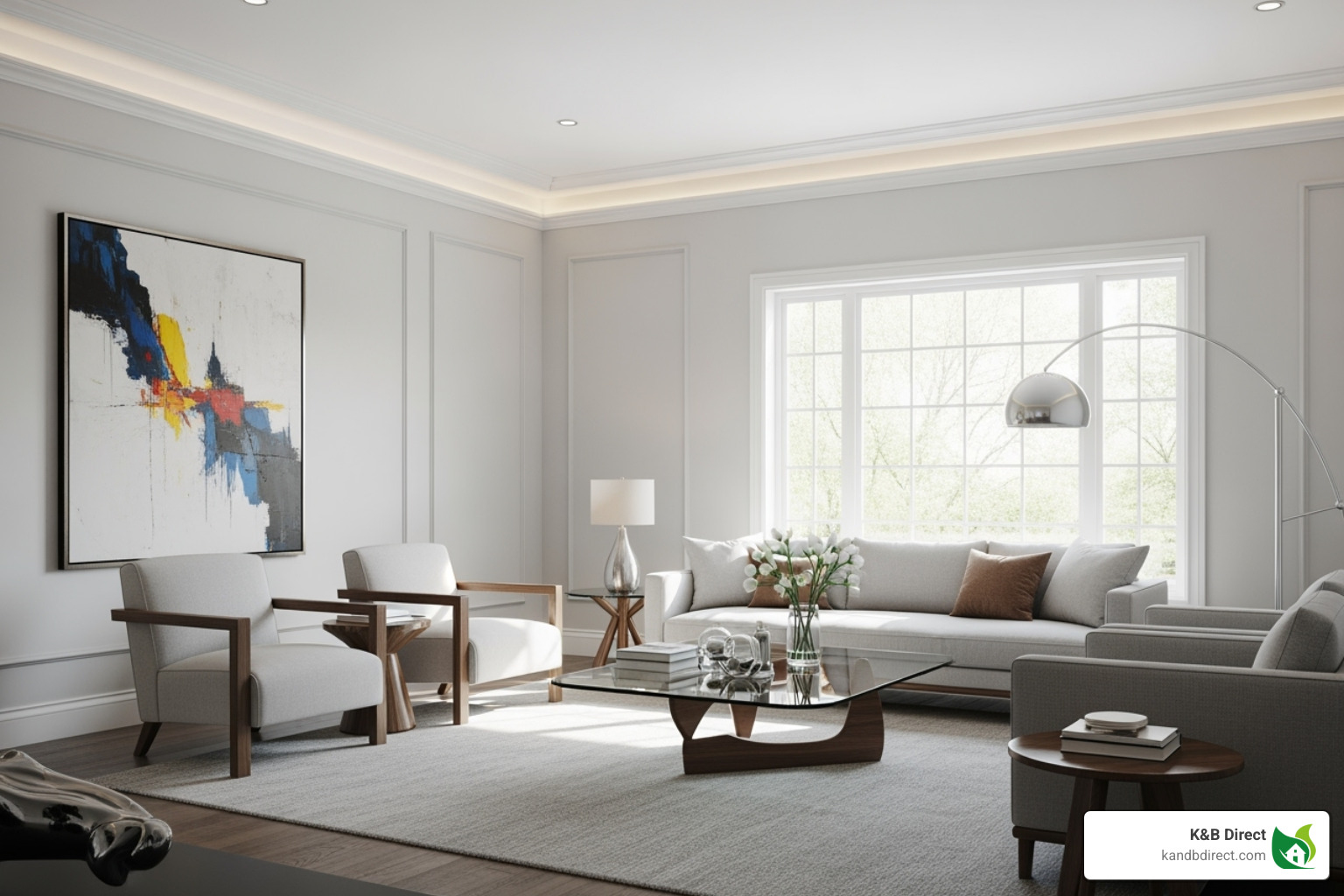
Modern and minimalist profiles prove crown moulding is still in style. They feature clean lines and simple curves that add architectural interest without clutter. They are ideal for contemporary homes and open-concept spaces. Our Crown 93263 and Crown 043 are perfect examples.
Colonial styles typically feature substantial, layered profiles that reflect the robust aesthetic of early American homes.
Arts and Crafts moulding emphasizes clean lines with less ornamentation, perfect for bungalows and craftsman homes.
Rustic approaches, like simple cove profiles in natural wood, can complement farmhouse or cabin-style interiors, adding warmth and texture.
Key Considerations for Your Crown Moulding Project
To ensure your crown moulding looks right, pay close attention to scale and proportion. Even the most beautiful moulding can look awkward if it’s the wrong size for the room.
Ceiling height is the primary guide for moulding size. For standard 8-foot ceilings, use moulding that’s 2.5 to 6 inches high. For 9-foot ceilings, you can go 3 to 7.5 inches, and for 10-foot ceilings, 3.5 to 8 inches. For ceilings over 10 feet, you can build up a larger cornice with multiple pieces.
Room size matters. A large, open-concept living room can handle substantial, elaborate moulding that would overwhelm a small powder room. Always consider the scale of the room when selecting a profile.
Coordinating with existing trim creates a professional, pulled-together look. Your crown moulding should feel like it belongs with your baseboards and window casings. If your existing trim is modern, choose a similarly clean crown profile. Our Crown ACR 5 1/4 and Crown 93265 are designed to coordinate with various trim styles.
Consider your architectural features, like fireplaces, built-ins, or kitchen cabinets. Crown moulding can extend cabinetry to the ceiling, creating an expensive, custom built-in look. The goal is to improve your space, not overwhelm it.
Installation and Cost: What to Expect
After selecting your crown moulding, the next step is understanding the installation process and costs. This guide will help you make the best decision for your project and budget.
DIY vs. Professional Crown Moulding Installation
Crown moulding installation can be deceptively complex, particularly the corner joints. However, with the right approach, it can be a rewarding DIY project.
Taking the DIY Route:
If you’re handy and patient, a DIY installation can save significantly on labor costs. You’ll need the right tools: a miter saw is essential for corner cuts. For inside corners, a coping saw is used for the coping technique, which creates a tighter fit than a simple miter.
A nail gun is much easier than hammering overhead, and a stud finder ensures a secure installation. Keep plenty of caulk on hand to fill gaps for a seamless finish. The main challenge is mastering the miter cuts for outside corners, as most rooms are not perfectly square. The Online Angle Generator and Crown Molding Installation Tutorials can help calculate the correct angles.
For simpler installations, corner blocks eliminate the need for miter cuts. Backing strips can also be installed behind the moulding for extra stability.
Calling in the Professionals:
For rooms with many corners, curved walls, or for heavy materials like plaster, hiring a professional is often the smart choice. They have the specialized tools and experience to handle complex situations efficiently and typically guarantee their work, providing peace of mind.
Budgeting for Your Project
Understanding the costs upfront helps you plan your project effectively.
The Big Picture:
The national average cost for crown moulding installation is around $1,291, but this varies widely. Contractors typically price by the linear foot. Material costs range from $1 to $15 per linear foot, while installation labor adds another $3 to $20 per linear foot.
What Drives the Price Up:
Several factors affect your final cost. The material choice is a primary driver—plaster costs more than MDF. More intricate profiles also cost more to buy and take longer to install.
Room layout also impacts labor costs. A simple rectangular room is cheaper than one with bay windows or many corners. High ceilings may require scaffolding, increasing the price. Custom work or matching historical moulding will also command a premium.
When measuring, always add 10-15% extra material for waste (20% for rooms with many corners). It’s better to have extra than to run short.
At K&B Direct, we work hard to offer competitive pricing on quality options like our Crown 24168CCR and Crown 47 L47. Our goal is helping you achieve that dream home look without the nightmare budget.
Frequently Asked Questions about Crown Moulding
Here are answers to the most common questions homeowners ask about crown moulding.
Is crown moulding still in style?
Yes, absolutely. Crown moulding has been a classic architectural element for centuries and isn’t a passing trend. What has changed is the variety of styles available. While ornate profiles are perfect for traditional homes, today’s designers also use clean, simple lines that work beautifully in modern and transitional spaces. Think of it as a timeless element that adapts to current tastes.
Should crown moulding match the baseboards?
Traditionally, crown moulding, baseboards, and other trim match in color for a cohesive look. This creates a clean, polished feel, and a crisp white is a classic choice that makes rooms feel larger. However, modern design is more flexible. Painting the crown moulding a contrasting color or matching it to the wall color can create a stunning, intentional design statement. The key is to be purposeful with your choice.
Can you put crown moulding on vaulted or sloped ceilings?
Yes, and it can look stunning. The crown moulding is installed on the wall, following the line where it meets the sloped ceiling. This creates a straight, level line around the room that helps define and ground the space, which is especially effective in large, open rooms.
However, this is not a simple DIY project. Installing crown moulding on vaulted ceilings requires precise, complex angle cuts. One small mistake can throw off the entire installation. For this type of job, we always recommend hiring an experienced professional to ensure a seamless, beautiful finish.
Conclusion: Lift Your Home with the Perfect Finishing Touch
Crown moulding is a high-impact home improvement. It’s more than a decorative strip; it’s a finishing touch that transforms a room’s look and feel.
Crown moulding hides gaps, makes rooms feel taller, and adds a custom, high-end look that increases home value. Whether you choose the classic warmth of wood, the budget-friendly smoothness of MDF, or the lightweight convenience of polyurethane, you’re investing in your home’s beauty.
Success lies in matching the crown moulding to your home’s style. A sleek profile can finish a contemporary space, while an ornate design brings elegance to a classic interior.
While installation can be tricky, the results are worth it. Whether you DIY or hire a professional, you’ll love how crown moulding completes your rooms.
At K&B Direct, we’ve seen how the right crown moulding can make homeowners fall in love with their spaces all over again. We’re passionate about offering you the highest quality options at the lowest possible prices, because everyone deserves to have a home that feels custom and beautiful.
Your walls are waiting for that perfect finishing touch. Explore our full range of mouldings and millwork and let’s help you create the home of your dreams – one beautiful detail at a time.