Why Your 32 x 76 Inswing Exterior Door Choice Matters More Than You Think
A 32 x 76 exterior door inswing is one of the most common entry door configurations for standard and manufactured homes — and picking the right one comes down to a few key factors: material, handing, and rough opening fit. According to standards set by the International Code Council, proper installation is key to safety and performance.
Here’s a quick overview to help you decide:
| Factor | What to Know |
|---|---|
| Size | 32″ wide x 76″ tall; corresponds to rough opening, not slab size |
| Swing Type | Inswing means the door opens into the home |
| Handing | Left-hand (LH) or right-hand (RH) based on hinge placement |
| Materials | Fiberglass, steel, or wood — each with different durability and maintenance needs |
| Prehung vs. Slab | Prehung includes frame and jamb; slab is door only |
| Key Features | Look for deadbolt prep, weatherstripping, and an energy-efficient core |
This size is slightly shorter than the more common 80-inch height, making it especially popular in manufactured and older residential construction.
I’m Eryk Piatkowski, owner of K&B Direct, where I’ve spent over a decade helping homeowners find the right exterior doors — including the 32 x 76 exterior door inswing — that balance quality, style, and function. Let’s walk through everything you need to know to make a confident choice.
32 x 76 exterior door inswing glossary:
Understanding the 32 x 76 Exterior Door Inswing Specifications
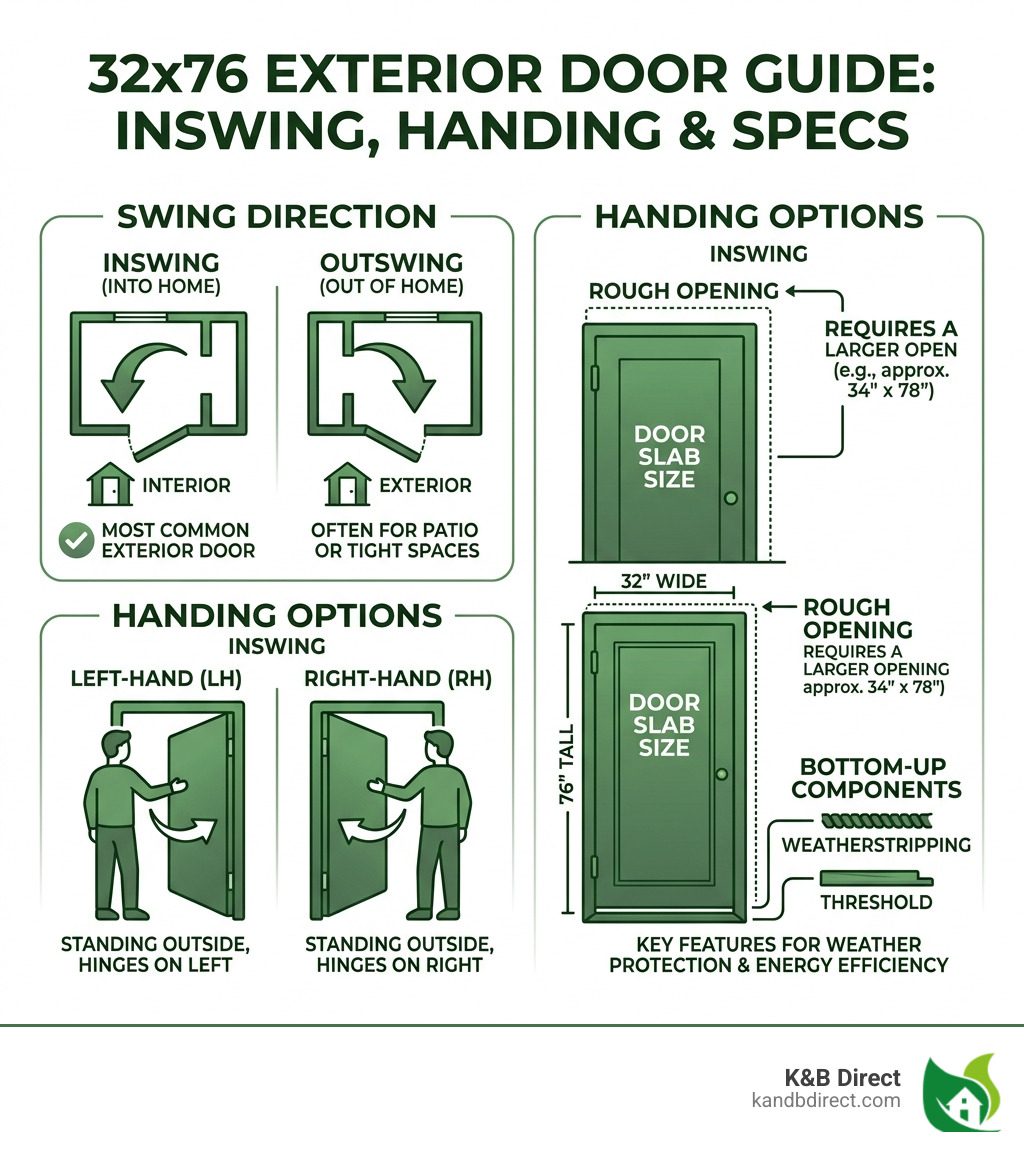
When we talk about a 32 x 76 exterior door inswing, we are looking at a specific set of dimensions that often cause confusion. It is vital to understand that in specialized exterior doors, the listed size usually refers to the “nominal” size or the rough opening it is intended to fill.
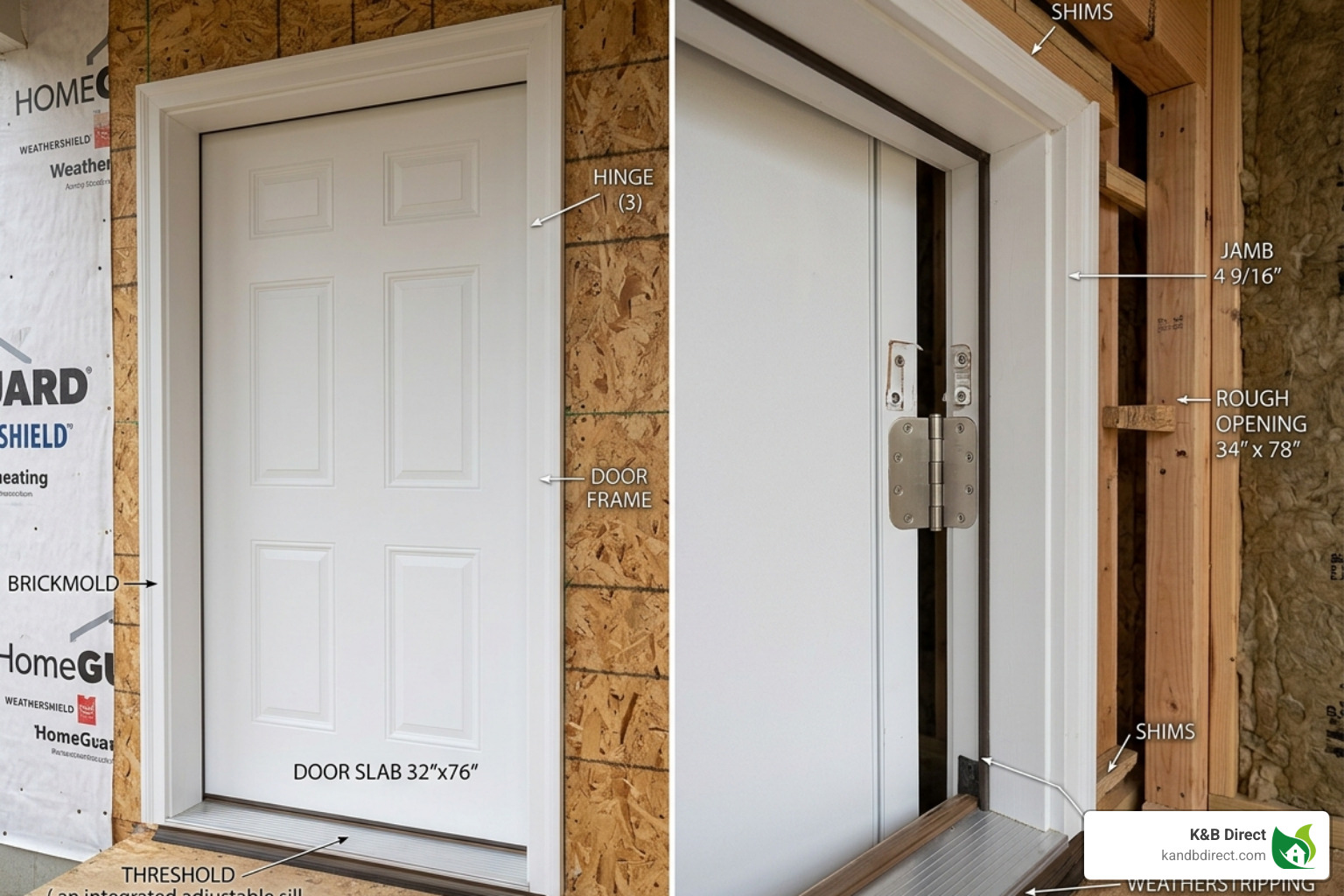
For a standard 32-inch by 76-inch unit, the actual slab—the moving part of the door—is typically slightly smaller to allow for the frame and seasonal expansion. For example, some storm doors in this category may have an actual measurement of 31.75 inches by 75.625 inches. If you are purchasing a prehung unit, which includes the door already attached to its frame, you are looking at a complete main entrance door system ready for installation.
The jamb width is another critical specification. Most homes in the Chicago and surrounding Illinois suburbs use a standard 4-9/16″ jamb, but if you have thicker walls (common in older homes or those with specific siding), you might require a 6-9/16″ jamb. At K&B Direct, we emphasize checking these measurements twice. You can explore our full range of category exterior doors to see the way these specifications vary across different styles.
Material Durability: Fiberglass, Steel, and Wood
Choosing the right material for your 32 x 76 exterior door inswing is about balancing aesthetics with the harsh Illinois winters and humid summers. We see three main contenders in the market today.
Fiberglass
Fiberglass is often the “gold standard” for modern homeowners. It offers a no-dent, low-maintenance surface that can mimic the look of traditional painted wood perfectly. Many high-quality 6-panel fiberglass doors come with a light brush-stroke finish that improves paint adhesion. They are incredibly energy-efficient due to their insulated cores and won’t rot or warp like natural wood might when exposed to the elements.
Steel
Steel doors are the heavy hitters of security and value. Often used in category exterior doors, steel units are usually pre-primed and ready for a topcoat of paint. They provide excellent protection and are frequently used in “combo” setups where a steel primary door is paired with a storm door for extra insulation.
Wood (Mahogany and Oak)
For those seeking unmatched beauty, premium unfinished mahogany or red oak is the way to go. These doors often feature a solid engineered wood core for stability, topped with a thick veneer of real hardwood. While they require more maintenance (regular staining or painting), the aesthetic appeal of a mahogany main entrance door is hard to beat.
Determining Handing for your 32 x 76 Inswing Exterior Door
Getting the “handing” right is the most common hurdle our customers face. Since we are discussing an inswing door—one that opens into your home—the handing is determined by where the hinges are located when you are standing outside the house.
- Left-Hand (LH) Inswing: When standing outside, the hinges are on the left. You push the door away from you, and it swings into the house toward the left wall.
- Right-Hand (RH) Inswing: When standing outside, the hinges are on the right. You push the door away from you, and it swings into the house toward the right wall.
Always visualize the swing path. You don’t want your new door swinging into a closet, a kitchen island, or blocking a light switch!
Essential Features for Security and Efficiency
A high-quality 32 x 76 exterior door inswing should be more than just a barrier; it should be an appliance that works for your home.
- Energy Efficiency: Look for doors with a polyurethane foam core. This provides significantly better insulation than a hollow core. In our Illinois climate, keeping the heat in during January is a top priority.
- Deadbolt Prep: Most modern doors come “pre-bored,” meaning the holes for the handle and the deadbolt are already drilled. This saves a massive amount of time during installation.
- Weatherstripping: A tight seal is non-negotiable. Look for bronze or high-grade rubber weatherstripping along the jambs and a sturdy “sweep” at the bottom of the door to stop drafts.
- Storm Door Compatibility: Many 32×76 units are designed to work in tandem with exterior storm doors. A “combo unit” often includes both doors in a single frame, providing a secondary layer of protection and a mesh for summer ventilation.
Comparing the 32 x 76 Inswing Exterior Door to Other Sizes
While 32×76 is a popular size, it’s worth noting the way it stacks up against its siblings. The “standard” residential door is usually 32×80 or 36×80. The 76-inch height is a specialized “short” door.
- 32 x 76 vs. 34 x 76: The 34-inch width is common in newer manufactured homes to allow for wider furniture passage, but the 32-inch width remains the standard for most replacement scenarios in existing openings.
- 32 x 76 vs. 32 x 80: If you have the vertical space, moving to an 80-inch door requires reframing the header. Most people stick with the 76-inch height to avoid major structural changes.
Availability for the 32 x 76 exterior door inswing is excellent in fiberglass and steel, though custom wood options may take longer to source.
Logistics: Shipping and Rough Opening Requirements
Because an exterior door is a large, heavy item, logistics play a huge role in your project.
LTL Freight (Less-Than-Truckload): Unlike a small box, a 32 x 76 exterior door inswing usually ships on a pallet via LTL freight. This ensures the door stays upright and protected. Shipping times typically range from 10 to 14 business days. When the truck arrives, it will often have a liftgate to lower the pallet to the ground.
Rough Opening: To ensure your door fits, your rough opening (the hole in the wall) should be exactly 32″ x 76″ for most “house-type” prehung units. However, always check the manufacturer’s specific requirements. Some frames require an extra half-inch of “wiggle room” for shimming and leveling. We recommend visiting our K&B Direct Exterior Doors page to view specific framing guides for our products.
Frequently Asked Questions
Which material offers the best insulation for 76-inch entries?
Fiberglass is the champion here. Because fiberglass doors are constructed with a high-density thermal core, they provide superior R-values compared to wood. If you are looking for maximum protection, you might also consider a mexicano fire door for interior-to-utility transitions, which offers both insulation and fire-rated safety.
Are there options for arched entries in this size?
Yes! While a standard 6-panel door is common, you can find arched entry doors or doors with arched glazing inserts to add a bit of architectural flair. These often require custom frames but can dramatically increase the curb appeal of a home with a 76-inch height restriction.
Can I add side panels to a 32-inch wide door?
Adding a front door with side panel (sidelights) to a 32-inch door is possible if your total entryway width allows for it. For a 32-inch door with one 12-inch sidelight, you would need a rough opening of approximately 46-48 inches. This is a great way to let more light into a narrow hallway.
Conclusion
Upgrading to a new 32 x 76 exterior door inswing is one of the most impactful ways to improve your home’s security, energy efficiency, and overall look. Whether you choose the rugged durability of steel, the low-maintenance beauty of fiberglass, or the classic warmth of mahogany, getting the specifications right is the first step toward a successful installation.
At K&B Direct, we are proud to serve the Chicago area—from Glen Ellyn to Arlington Heights and everywhere in between—offering top-quality products that help you realize your dream home aesthetics without breaking the bank. If you’re ready to find the perfect fit for your home, check out more info about exterior doors on our website or visit us at one of our Illinois locations. We’re here to help you get the job done right!