
Why Black Vinyl Baseboard Trim Never Goes Out of Style
Black vinyl baseboard trim is one of the most versatile and enduring finishing touches you can add to any room. Here are the top options to consider:
| Product Type | Height | Length | Thickness | Best For |
|---|---|---|---|---|
| Self-adhesive vinyl | 4 in. | 20 ft. | 0.080 in. | Quick residential installs |
| Glue-down vinyl coil | 4 in. | 120 ft. | 1/8 in. | Large commercial runs |
| Flexible PVC trim | 4 in. | 40 ft. | 0.08 in. | Uneven or curved walls |
| Thermoplastic rubber | 4 in. | 120 ft. | 1/8 in. | High-traffic durability |
| Wood grain vinyl | 4 in. | 60 ft. | 0.080 in. | Decorative aesthetic finish |
Black trim has a way of making a room feel intentional. It anchors the space, creates a clean boundary between wall and floor, and works with nearly every interior style — from modern minimalist to industrial to classic farmhouse.
Beyond looks, vinyl wall base is practical. It protects your walls from scuffs, hides expansion gaps, and resists moisture — all without the maintenance demands of painted wood trim.
And in 2026, with bold contrasts and clean lines dominating interior design trends, black is more relevant than ever.
I’m Eryk Piatkowski, owner of K&B Direct, and after more than a decade helping homeowners and renovation professionals make smart finishing choices, black vinyl baseboard trim remains one of the most consistently requested products in our store. Let’s walk through exactly what’s available and how to choose the right option for your space.
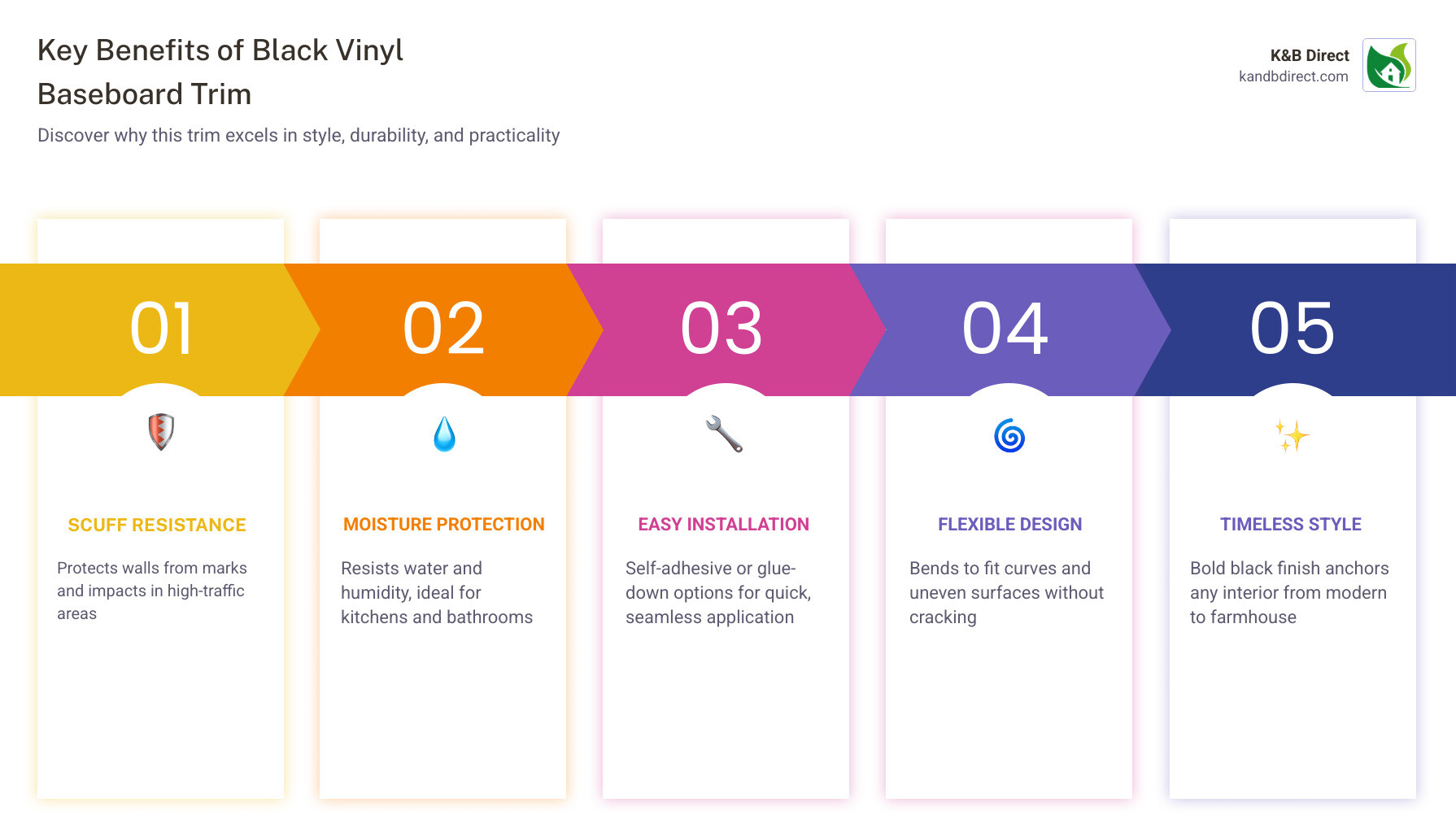
Learn more about black vinyl baseboard trim:
Choosing the Right Black Vinyl Baseboard Trim for Your Space
When we talk about black vinyl baseboard trim, we aren’t just talking about a single strip of plastic. Modern manufacturing has transformed this category into a high-performance design element. The primary material used is high-quality PVC (polyvinyl chloride) or thermoplastic vinyl.
One of the most significant advancements we’ve seen leading into 2026 is the shift toward sustainability. Many of our top-tier vinyl products now utilize bio-based, phthalate-free plasticizers sourced from rapidly renewable resources. This means you can achieve that sleek, dark aesthetic without compromising indoor air quality.
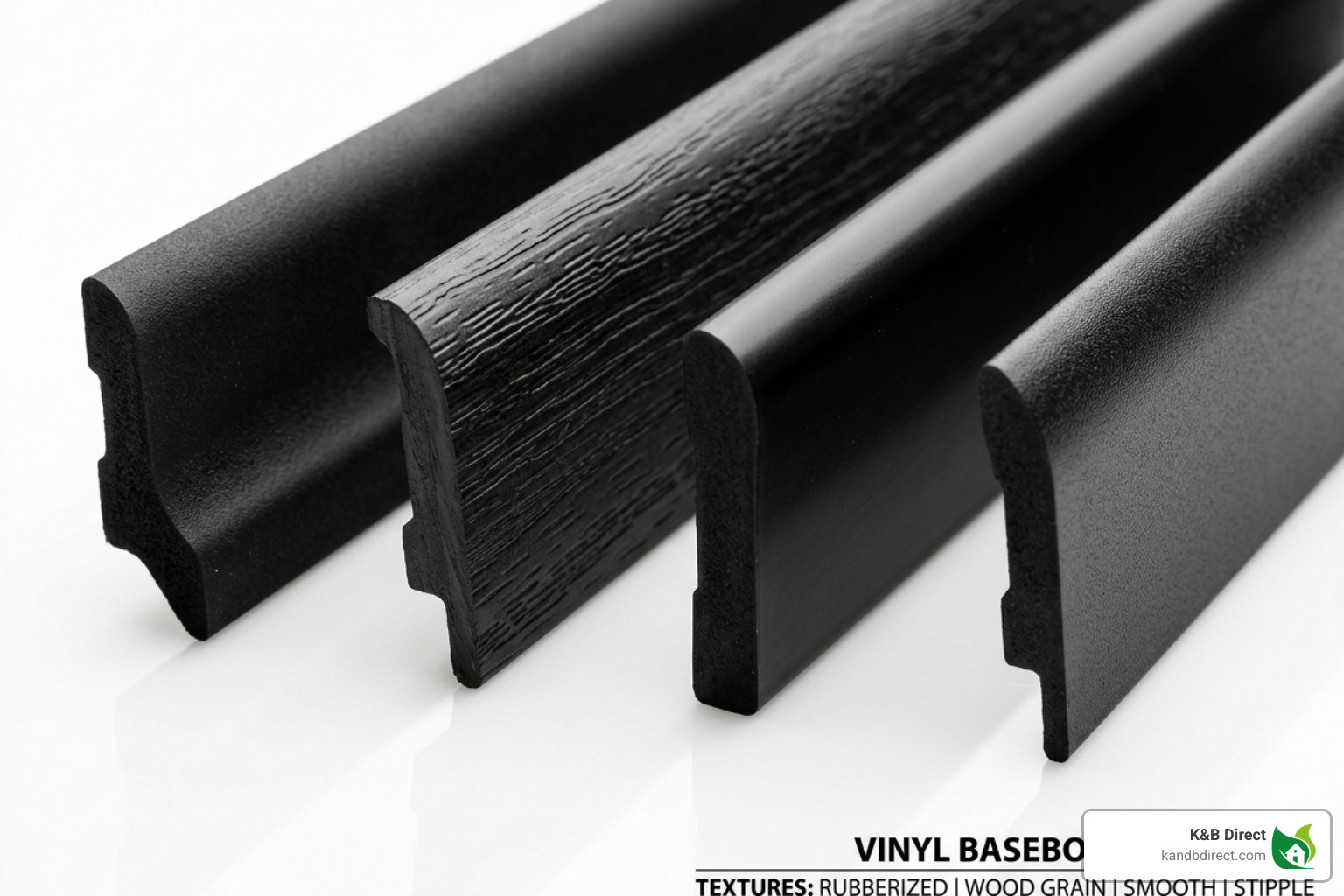
Durability is another hallmark of quality vinyl. Premium brands often use co-extrusion technology, which creates a tough, scuff-resistant top layer while keeping the core flexible. This flexibility is vital for ensuring the trim follows the natural contours of your walls, even if they aren’t perfectly straight. For a deeper look at how these materials fit into your overall design, check out our Baseboard Moulding Guide.
Standard Dimensions for Black Vinyl Baseboard Trim
Selecting the right size is crucial for both function and proportion. In the Chicago and Glen Ellyn areas, we see a wide variety of project scales, and fortunately, vinyl trim comes in several standard formats:
- Height: The most common height is 4 inches, which offers a balanced look for standard 8-to-9-foot ceilings. However, 6-inch heights are becoming increasingly popular for commercial spaces or rooms with higher ceilings to provide better wall protection.
- Length: You can find these in 48-inch (4-foot) rigid pieces, which are great for small sections, or massive 100-unit to 120-unit coils. Coils are the gold standard for large rooms because they allow for long, seamless runs without visible joints.
- Thickness (Gauge): Most residential and light commercial options come in a 0.080-inch thickness. For heavy-duty environments like hospitals or schools, a 1/8-inch (0.125-inch) gauge is recommended to withstand impact from carts or cleaning machinery.
For those looking for specific lengths to minimize waste, options like this Flexible PVC Moulding provide a great balance of coverage and ease of handling.
Profile Options for Black Vinyl Baseboard Trim
The “profile” refers to the shape of the trim when viewed from the side. Your choice here depends on your flooring type and your aesthetic goals:
- Cove Base: This profile features a small “lip” or “toe” at the bottom that curves outward to meet the floor. It’s excellent for hiding expansion gaps and creating a sanitary seal that blocks dust and moisture.
- Toeless (Straight) Design: A flat profile that sits flush against the wall. This is often preferred when installing over carpet or when you want a strictly minimalist, modern look.
- Top Return: Higher-end vinyl often features a “top return” design, which ensures the very top edge of the trim curves back toward the wall for a tight, professional fit.
- Wood Grain Textures: If you love the look of wood but need the durability of vinyl, there are Vinyl Wall Base with Wood Grain options available that mimic the deep swirls of black walnut.
Regardless of the profile, these products serve as the perfect Baseboard Trim to bridge the gap between your beautiful new flooring and your walls.
Material Comparisons: Vinyl vs. Rubber
A common question we get at our Schiller Park and Lombard locations is: “Is vinyl better than rubber?” The answer depends on your environment.
| Feature | Vinyl (Type TV) | SBR Rubber (Type TS) | Thermoplastic Rubber (TPR) |
|---|---|---|---|
| Flexibility | Good | Excellent | High |
| Longevity | High | Superior | High |
| Impact Resistance | Moderate | Very High | High |
| Aesthetic | Glossy/Satin | Matte/Smooth | Matte/Satin |
Vinyl is typically more economical and offers a wider range of colors and finishes. It is incredibly resistant to scuffs and scratches thanks to that co-extruded top layer. SBR Rubber, on the other hand, is known for its extreme “memory”—it can be stretched and will return to its original shape, making it ideal for tight corners. TPR (Thermoplastic Rubber) is a hybrid that offers the best of both worlds: the durability of rubber with the processing ease of vinyl.
Performance in High-Traffic Areas
In high-traffic zones—think hallways, kitchens, or commercial lobbies—black vinyl baseboard trim is a powerhouse. It doesn’t chip like painted wood and it doesn’t dent like metal. Because the color is often solid throughout the material, a deep scratch won’t reveal a different color underneath.
For those aiming for a Modern Base Moulding look, vinyl provides that crisp black line that defines the space while standing up to the daily abuse of vacuum cleaners and foot traffic.
Installation Techniques for Black Vinyl Baseboard Trim
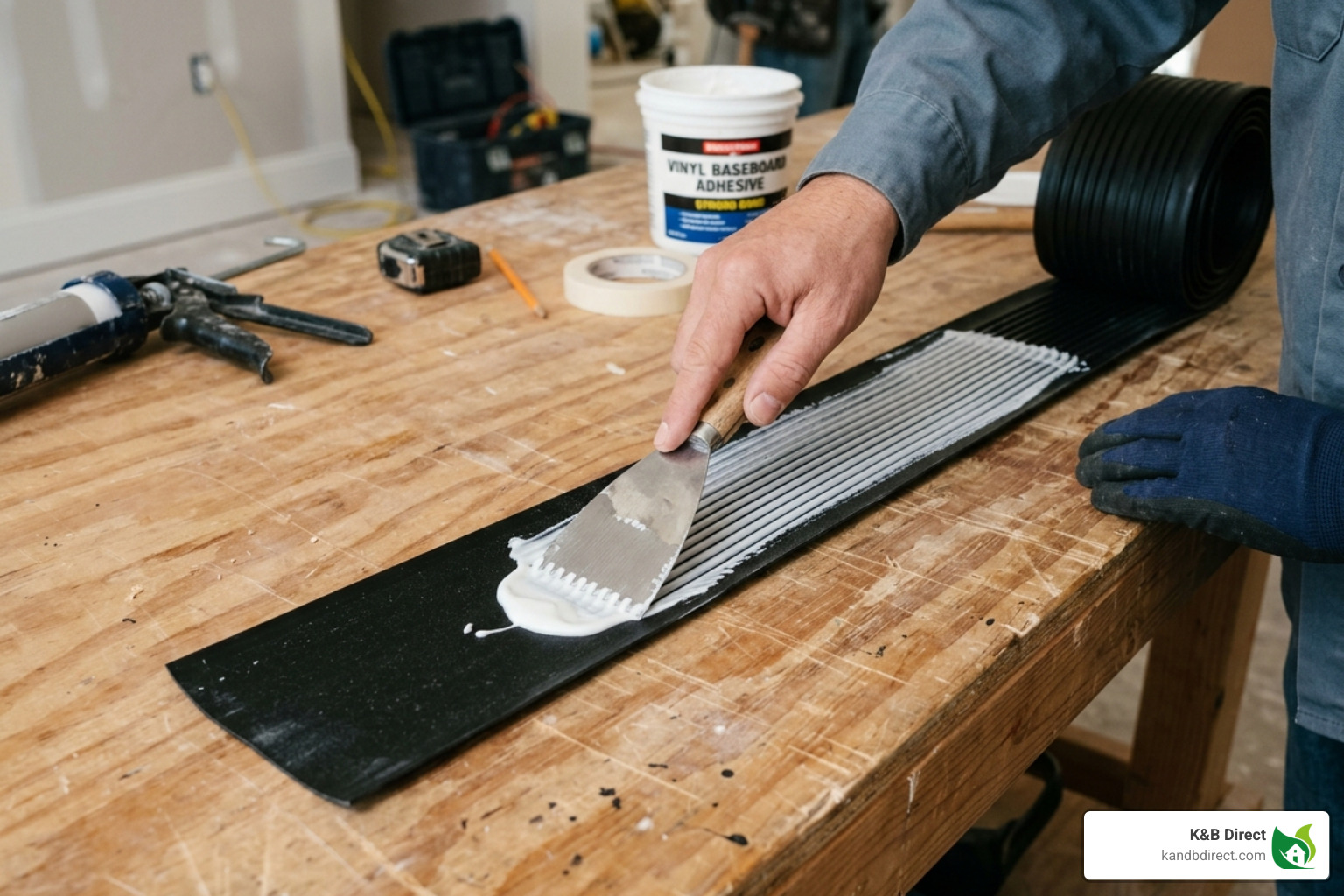
Installing vinyl trim is generally much faster than wood because there is no nailing or painting involved. However, the secret to a professional finish lies in the preparation. Surfaces must be clean, dry, and flat. If you are working with a coil, it’s often helpful to unroll it and let it “relax” at room temperature for 24 hours before installation to remove any tension.
When it comes to corners, precision is key. You can learn the trade secrets in our guide on Cutting Baseboard Corners.
Self-Adhesive vs. Glue-Down Methods
There are two main ways to stick your trim to the wall:
- Self-Adhesive (Peel-and-Stick): These products come with a pressure-sensitive tape already applied to the back. They often feature a thick isolation film that protects the adhesive until you’re ready to press it into place. This is a fantastic option for smaller rooms or quick updates.
- Glue-Down (Adhesive Applied): For large-scale projects or commercial environments, we recommend using a dedicated cove base adhesive. Many professional-grade vinyl trims feature “V-groove” glue lines on the back. These grooves increase the surface area for the glue, ensuring a much stronger bond to the wall.
Whether you choose a Baseboard Trim Guide approach or go with a self-stick option, the goal is a seamless transition that stays put for years.
Maintenance and Longevity in 2026
One of the reasons we love black vinyl baseboard trim is how low-maintenance it is. Unlike white wood trim, which shows every speck of dirt, black vinyl is very forgiving.
Because the surface is non-porous, it doesn’t absorb spills or odors. A simple wipe-down with a damp cloth and a mild detergent is usually all that’s needed to keep it looking brand new. Many of our 2026 products also feature UV-coated finishes, which prevent the deep black color from fading even in rooms with heavy sunlight.
For those who want to add a bit more architectural detail, you can even pair vinyl base with Base Cap Moulding Profiles to create a more layered, sophisticated look.
Frequently Asked Questions about Black Trim
What are the standard thickness options?
The two industry standards are 0.080-inch (approx. 2mm) and 1/8-inch (approx. 3.2mm). The 0.080-inch gauge is the standard for most homes, providing plenty of protection while remaining very flexible. The 1/8-inch gauge is thicker and stiffer, offering maximum impact protection for heavy-use areas.
Which profile is best for covering floor gaps?
If you have gaps between your flooring and the wall—common with floating floors or older homes—the Cove Base profile is your best friend. The “toe” at the bottom covers those expansion gaps perfectly and acts as a dust obstruction, preventing debris from falling into the crevices.
Is this material suitable for moist environments?
Absolutely. High-quality PVC is naturally waterproof. When installed correctly with a continuous bead of adhesive, it creates a barrier that is perfect for bathrooms, kitchens, and laundry rooms.
Conclusion
At K&B Direct, we believe that the right moulding can transform a house into a dream home. Whether you are in Chicago, Arlington Heights, or Lake Zurich, our mission is to provide you with top-quality products like black vinyl baseboard trim at unbeatable values.
Black trim is more than just a trend; it’s a durable, stylish, and practical solution for modern living. If you’re ready to elevate your space with a clean, professional finish and friendly service, we invite you to explore our full range of options at category/baseboard. Let us help you realize your home’s full potential today!