Navigating Interior Doors: Key Terms & Concepts
Understanding interior doors manual keywords is crucial for a successful project. These terms cover everything from door types and construction to hardware and installation, ensuring you make the right choices for your home.
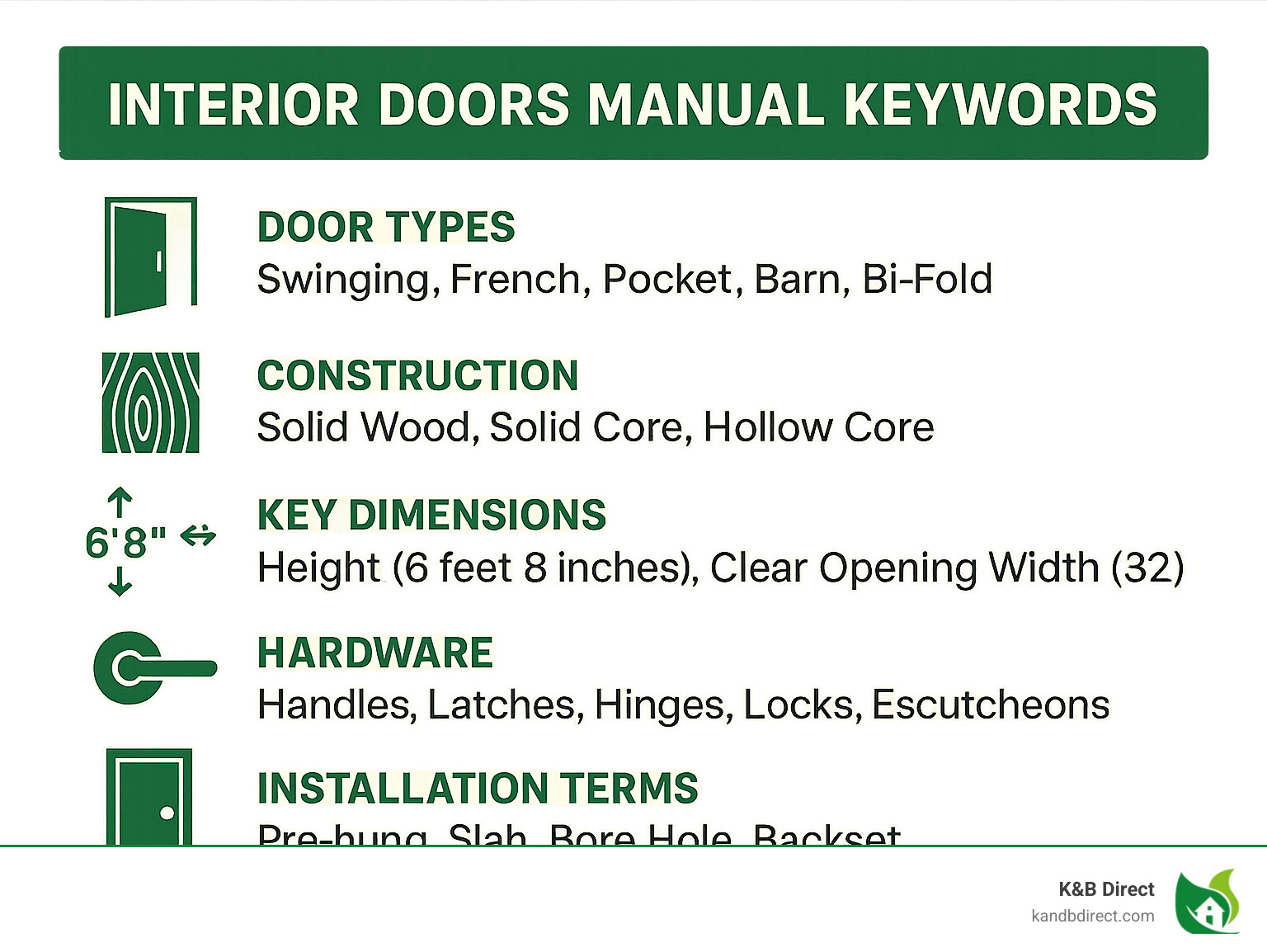
Key categories include:
- Door Types: Swinging, French, Pocket, Barn, Bi-Fold.
- Construction: Solid Wood, Solid Core, Hollow Core.
- Hardware: Handles, Latches, Hinges, Locks.
- Installation Terms: Pre-hung, Slab, Bore Hole, Backset.
Interior doors define a home’s style, provide privacy, and block sound. Choosing and installing them can be complex, but this guide simplifies the process into five key methods to help you achieve professional results.
I’m Eryk Piatkowski, owner at K&B Direct. With over a decade of experience helping homeowners create beautiful spaces, I’m here to share my knowledge of interior doors manual keywords to help you with your renovation goals.
Method 1: Understanding the Fundamentals and Building Codes
Before starting any project, learn the basics. Understanding the interior doors manual keywords and building codes ensures your installation is not only beautiful but also safe and compliant.
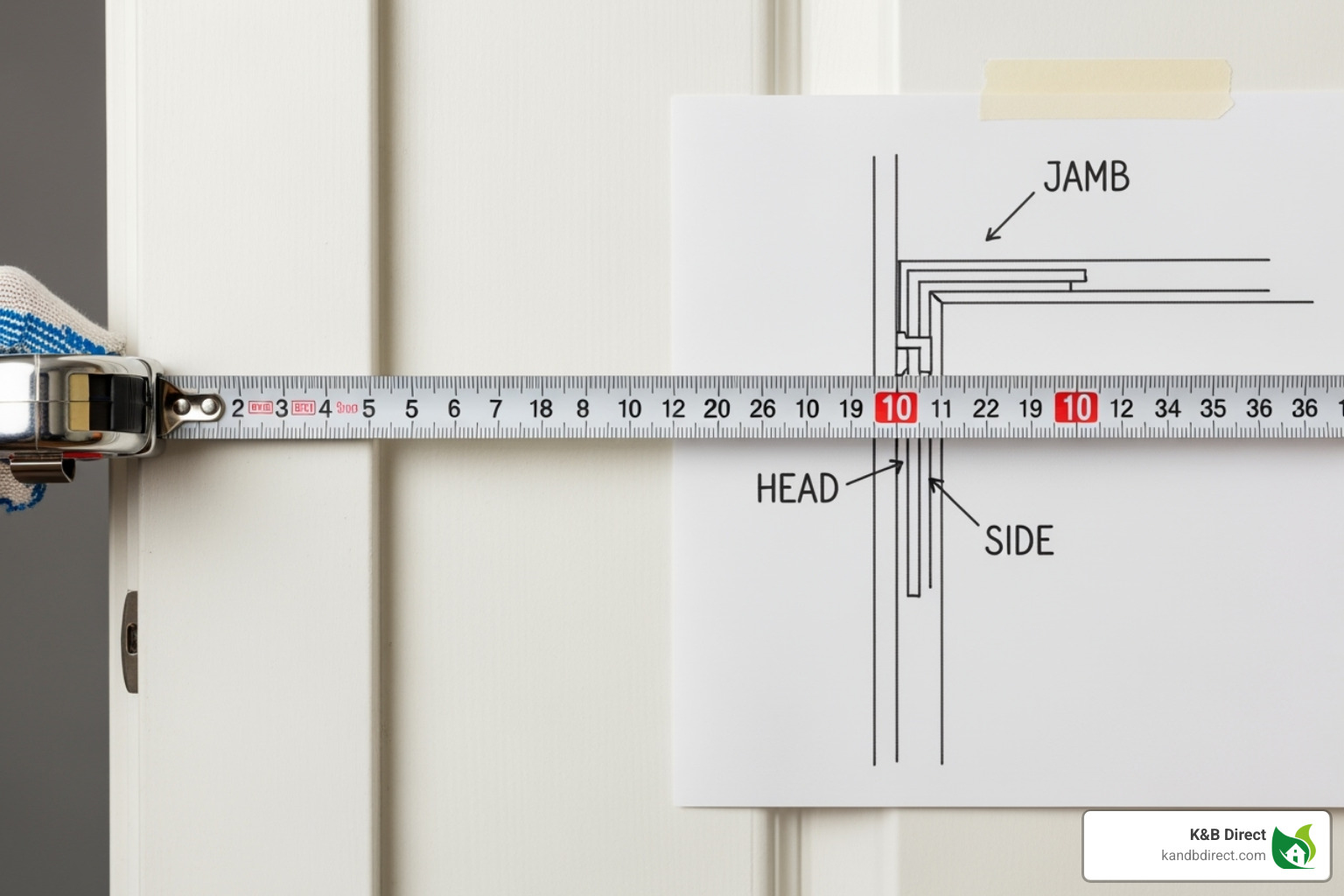
Decoding Door Terminology
Knowing the language of doors helps you communicate effectively and understand what you’re buying.
- Jamb: The frame surrounding the door, consisting of two vertical sides and a top piece.
- Stile: The vertical pieces on the edges of a door panel.
- Rail: The horizontal pieces connecting the stiles in a door panel.
- Casing: The decorative trim around the door frame that covers the gap between the frame and the wall. Find More info about Door Casing on our site.
- Threshold: A strip of wood or metal at the bottom of the door frame, common on exterior doors but also used for interior transitions.
- Slab: The door panel itself, without a frame, hinges, or hardware.
- Core: The material inside the door, which affects its weight, durability, and sound insulation.
Navigating Building Code Requirements for Interior Doors
Building codes ensure safety and accessibility. While interior doors have fewer regulations than exterior ones, key dimensions are critical.
- Standard Door Height: Most codes require a minimum height of 6 feet 8 inches (80 inches).
- Clear Opening Width: For swinging doors, the clear walk-through space must be at least 32 inches wide when the door is open 90 degrees. This is a key requirement for accessibility, as detailed in the Americans with Disabilities Act (ADA) standards.
- Double Doors: If you have double doors, at least one must provide the 32-inch clear width.
Adhering to these codes prevents costly fixes and ensures a safe environment.
A Primer on Interior Doors Manual Keywords: Pre-hung vs. Slab Doors
One of your first choices is between a pre-hung or a slab door. Understanding this interior doors manual keywords distinction is vital.
- Pre-hung Door: A complete package including the door slab, frame (jambs), and hinges, all pre-assembled. They are ideal for new construction or when replacing the entire frame, as they simplify installation.
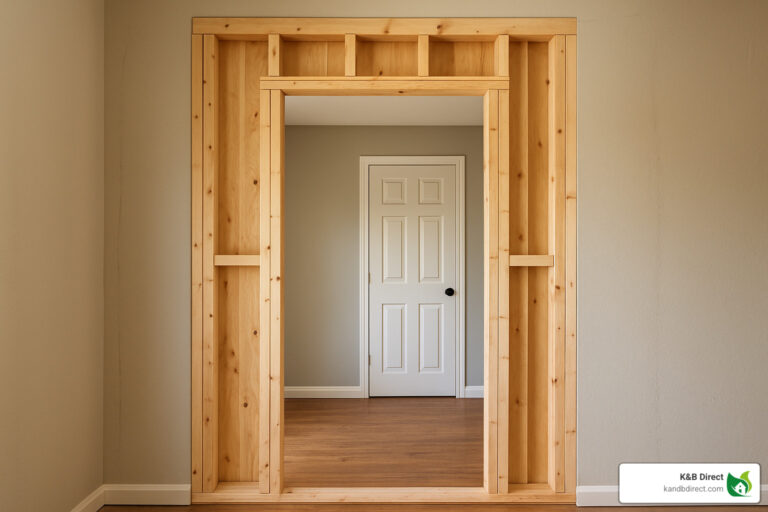
- Slab Door: Just the door panel, with no frame or hardware. Slab doors are perfect if your existing frame is in good condition or for custom applications like barn or pocket doors. They require more work, such as mortising for hinges and drilling for hardware, but offer greater flexibility. If you’re up for the task, you can Learn How to Frame an Interior Door on our site.
At K&B Direct, we offer both options to ensure you find the right fit for your project.
Method 2: Selecting the Right Type and Style of Interior Door
Now for the fun part: choosing a door that complements your home’s personality. With many options available, understanding the key interior doors manual keywords will help you find the perfect match for your style and functional needs.
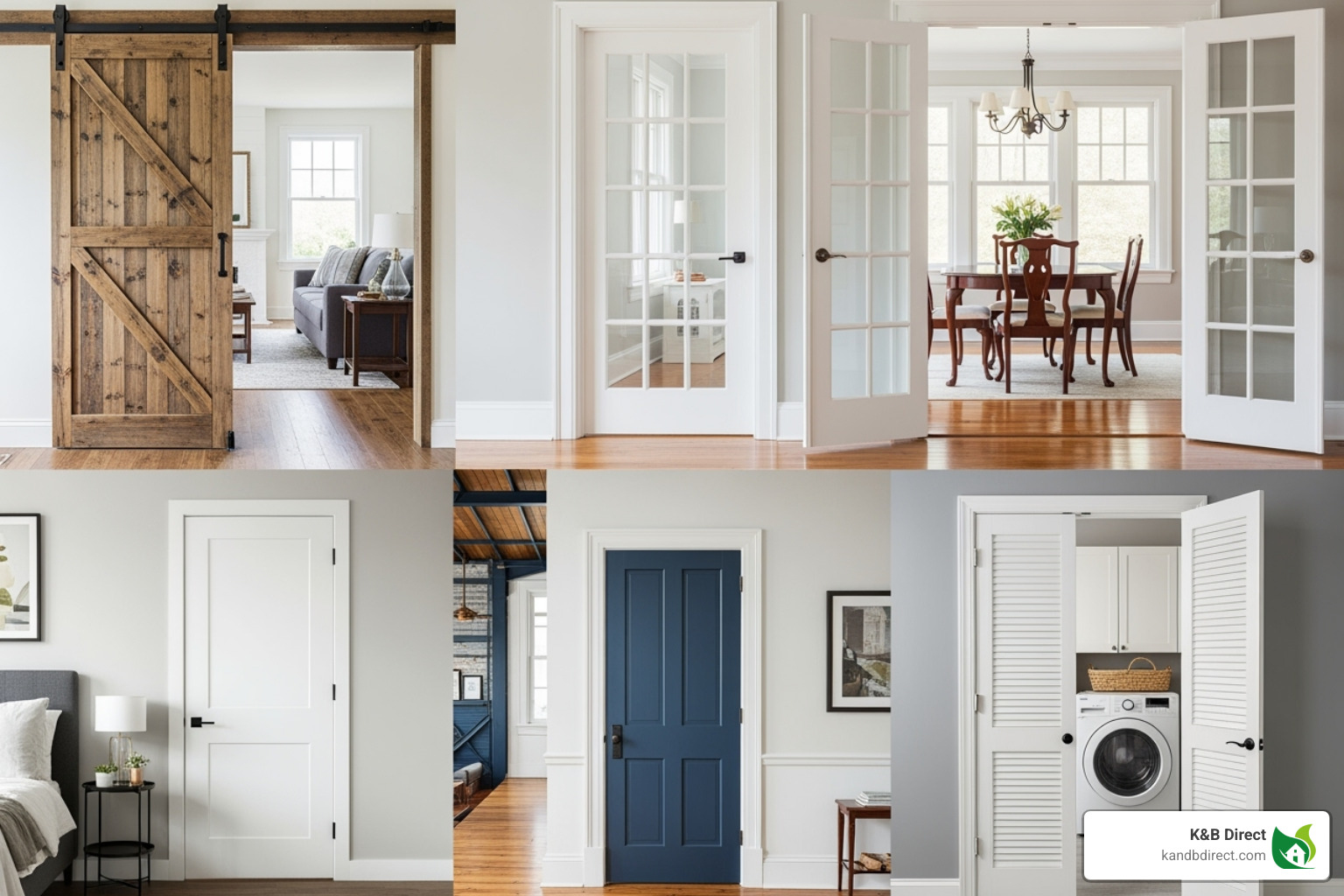
Common Interior Door Styles
Door style impacts both aesthetics and function. Swinging doors are the classic choice, but they require clear space to open. For tight areas, bifold closet doors fold in half, saving significant floor space. Pocket doors are the ultimate space-savers, sliding directly into the wall, while barn doors slide along a track on the wall’s surface for a rustic or modern look. For elegance and light, French doors feature glass panels and create an open feel. Finally, louver doors have slats that allow for air circulation, ideal for closets and utility rooms.
Popular Panel Designs
The panel design sets the tone for your space. Flush doors are completely flat, offering a clean, minimalist look perfect for modern homes. Our Interior Doors – 2 Panel Square design is a versatile classic, while 3 Panel Shaker doors offer timeless, understated elegance. For a more traditional look, Interior Doors – 6 Panel doors provide classic charm. Raised panels create a formal, ornate look, whereas flat panels offer a sleeker, contemporary feel.
Door Construction: Core Differences
Understanding the door’s core is a critical part of interior doors manual keywords, as it affects cost, durability, and performance.
| Door Type | Cost | Durability | Sound Insulation | Ideal Use Case |
|---|---|---|---|---|
| Solid Wood | High | Excellent; can last hundreds of years | Excellent | High-end homes, custom builds, noise reduction |
| Solid Core | Medium | Very Good; resistant to impact and wear | Good | Bedrooms, bathrooms, offices, high-traffic areas |
| Hollow Core | Low | Fair; susceptible to dents and punctures | Poor | Closets, low-traffic areas, budget projects |
| MDF | Low/Mid | Good; stable, resists warping | Moderate | Painted doors, areas with humidity fluctuations |
Solid wood doors are the premium, long-lasting choice. Solid core doors are my top recommendation for most homeowners, offering a quality feel and good sound insulation without the high cost of solid wood. Hollow core doors are a budget-friendly option for low-traffic areas like closets but offer poor sound blocking. MDF doors are stable, resist warping, and are an excellent surface for painting.
At K&B Direct, we carry all these options. You can explore our Modern Interior Doors to find the perfect style and construction for your home.
Method 3: Choosing the Perfect Hardware – A Guide to Interior Doors Manual Keywords
Door hardware is the finishing touch that combines function and style. These interior doors manual keywords are essential for defining how you interact with your space daily.
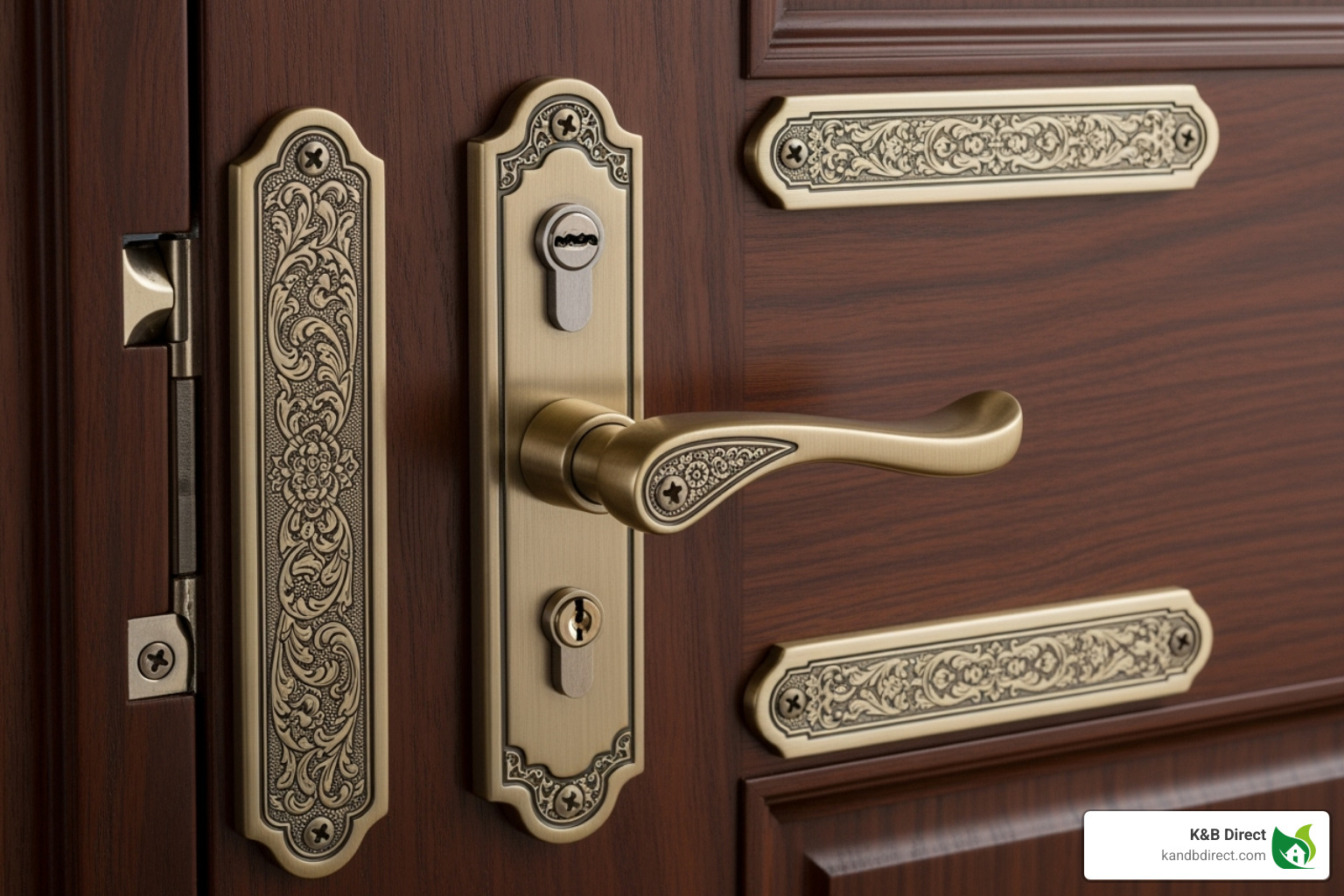
Understanding Door Handle Components and Mechanisms
A few key parts work together to operate a door handle. The handle (knob or lever) turns a spindle (a square rod) that passes through the door to retract the latch. The rose (circular plate) or backplate (long plate) covers the drill hole and secures the handle. Most modern handles are sprung, meaning they have an internal spring to help them return to position, which reduces wear on the latch mechanism. For more details, see our Technical guide to door hardware.
A Practical Guide to Interior Doors Manual Keywords: Selecting Locks and Finishes
Choosing the right lock depends on the room’s function.
- Passage sets: Non-locking handles for closets or hallways.
- Privacy sets: Have a simple push-button or turn-lock on the inside, ideal for bedrooms and bathrooms. They can typically be opened from the outside in an emergency.
- Keyed entry locks: Require a key and are used for rooms needing extra security, like a home office.
- Dummy handles: Non-functional handles used for pulling, often on closet or pantry doors.
Hardware finishes add personality. Popular choices include polished chrome, brushed nickel, matte black, and oil-rubbed bronze. While finishes don’t need to match perfectly throughout your home, they should complement each other. K&B Direct offers a wide variety of finishes to suit any decor.
Essential Ironmongery: Hinges, Latches, and More
Beyond handles, other hardware is crucial for proper function. Hinges allow the door to swing; butt hinges are standard, while ball-bearing hinges are great for heavy doors. The latch holds the door closed, and it engages with the strike plate on the door frame. Escutcheons are decorative plates that surround a keyhole. For a cohesive look, match the finish of your hinges and other hardware to your handles. At K&B Direct, we’re proud to offer a comprehensive range of hardware. View our range of hardware to find the perfect pieces for your project!
Method 4: The Pre-Installation Checklist and Door Preparation
Proper preparation is the key to a smooth installation. A little planning now prevents major headaches later. This is where knowing your interior doors manual keywords for measurement and prep is essential.
Measuring and Preparing the Opening
Accurate measurements are the foundation of a successful installation. When measuring the rough opening, measure the height from the subfloor to the header. For a standard 80-inch door, the rough opening height should be about 82 inches. Next, measure the width at the top, middle, and bottom, and use the smallest measurement. For a 32-inch door, the rough opening width should be about 34 inches. This extra space accommodates the frame and shims.
Check if the opening is square by measuring diagonally from corner to corner; the two measurements should be identical. Also, use a level to ensure the floor is level across the opening. If you’re replacing an old door, carefully remove the old slab and frame, being careful not to damage the drywall. Our Guide on How to Replace an Interior Door can walk you through this process.
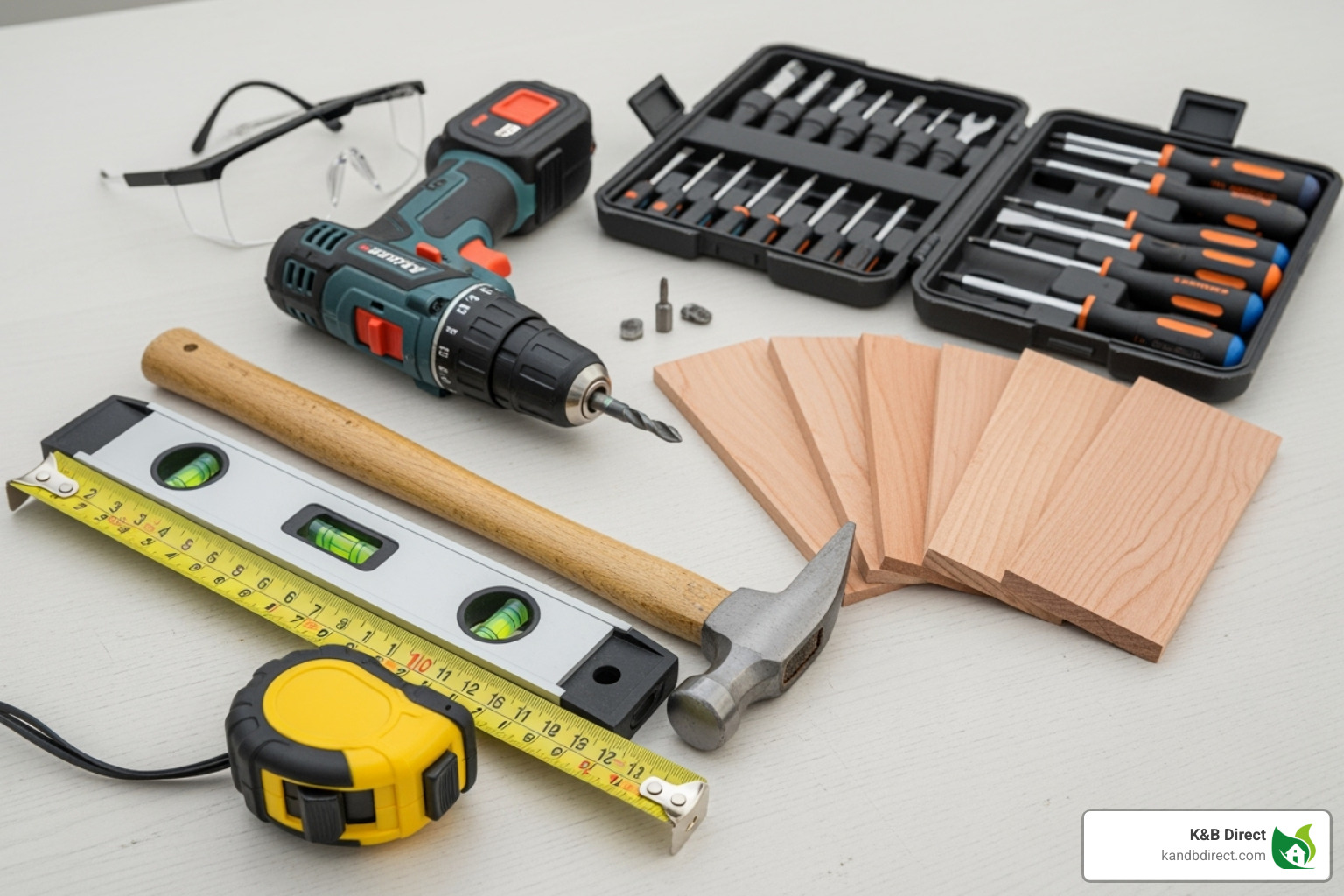
Essential Tools and Materials
Having the right tools makes the job safer and easier. Gather these items before you begin:
- Tape measure
- Level (4-foot or 6-foot)
- Hammer
- Shims (wood or composite)
- Drill and screwdriver set
- Finish nails (2 to 2.5-inch)
- Wood filler
- Safety glasses
- Utility knife
- Pry bar
- Caulk gun and caulk
Method 5: Step-by-Step Installation and Finishing Touches
With your opening prepped, it’s time to install your new door. These interior doors manual keywords will guide you through the process for a professional result, whether you’re using a pre-hung unit or a slab door.
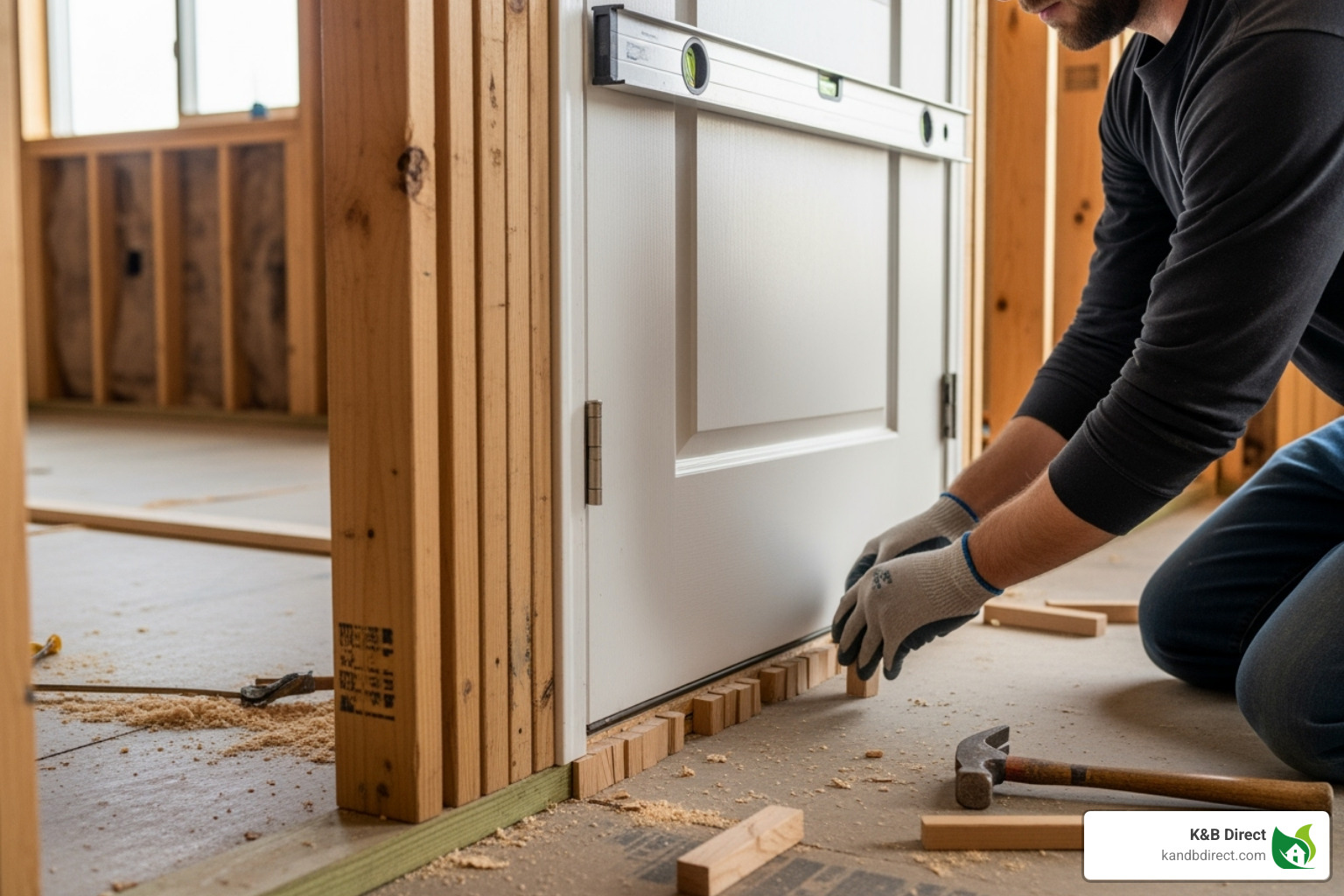
Installing a Pre-hung Door
Pre-hung doors simplify installation by providing a complete, pre-assembled unit.
- Position the Unit: Center the pre-hung door in the rough opening.
- Plumb the Hinge Side: Place shims behind each hinge location and use a level to ensure the hinge-side jamb is perfectly plumb (vertically straight). This is critical for proper door swing.
- Secure the Hinge Side: Drill pilot holes and drive screws through the jamb and shims into the wall framing.
- Shim the Latch Side: Close the door and check the reveal (the gap between the door and frame). It should be a consistent 1/8 inch. Add shims to the latch side to achieve this even gap.
- Test and Secure: Open and close the door to test its swing. Once it operates smoothly, secure all shimmed areas with finish nails and install the decorative casing.
Fitting a Slab Door
Installing a slab door requires more precision but offers greater customization.
- Size the Door: Trim the door to fit the frame, leaving about 1/8-inch clearance on the top and sides and 1/2 to 3/4-inch at the bottom.
- Mortise for Hinges: Transfer hinge locations from the frame to the door and use a chisel or router to create shallow recesses (mortises) so the hinges sit flush.
- Drill for Hardware: Drill the bore hole for the lockset and the cross bore for the latch, ensuring the backset (distance from edge to center) matches your hardware (typically 2 3/8″ or 2 3/4″).
- Hang the Door: Attach hinges to the door, then hang it in the frame.
- Install Strike Plate: Mark where the latch hits the frame, mortise the area, and install the strike plate.
Finishing Your New Door
Final touches ensure a professional look and long-lasting durability.
- Fill and Sand: Use wood filler on all nail holes, then sand smooth once dry.
- Prime: Apply primer to all six sides of the door—top, bottom, front, back, and both edges—to prevent moisture damage.
- Paint or Stain: Apply your final finish. For guidance, see our Tips on How to Paint an Interior Door.
Patience and attention to detail are key to a successful installation.
Frequently Asked Questions about Interior Doors
At K&B Direct, we often hear the same questions about interior doors. Here are the answers to the most common ones to help you master your interior doors manual keywords and make confident decisions.
What is the standard size for an interior door?
The standard height for an interior door is 80 inches (6 feet 8 inches). This is nearly universal in modern construction. Standard widths are typically 24, 28, 30, 32, and 36 inches. The 32-inch width is the most common for main doorways and bedrooms, as it meets most accessibility code requirements for a clear opening.
What is the difference between a solid core and a hollow core door?
This is a key construction detail among interior doors manual keywords that impacts cost and comfort. Hollow core doors are lightweight and affordable, with a honeycomb cardboard interior. They are best for low-traffic areas like closets but offer poor sound insulation and are easily damaged. Solid core doors have a dense engineered wood interior, making them heavier and more expensive. However, they provide excellent sound insulation and a premium, durable feel, making them ideal for bedrooms, bathrooms, and offices.
How do I choose the right door handle for my bathroom?
For a bathroom, you need a privacy lockset, which has a push-button or thumb-turn lock on the inside. For safety, ensure it has an emergency release slot on the outside. When choosing a finish, consider the humid environment. Finishes like brushed nickel, chrome, or stainless steel are resistant to moisture and corrosion. Finally, match the handle’s style and finish to your other bathroom fixtures, like faucets and towel bars, for a cohesive look.
Conclusion
We’ve covered everything from decoding interior doors manual keywords to installation and finishing touches. The key to a successful project is combining quality materials with expert installation. A well-chosen door improves your home’s aesthetics, functionality, and value.
At K&B Direct, we’re committed to helping you achieve your dream home. We offer top-quality doors, windows, cabinets, and mouldings at unbeatable prices, backed by friendly service. With locations in Chicago, Glen Ellyn, West Chicago, Lombard, and Schiller Park, Illinois, we’re here to help you get professional results.
Armed with this knowledge, you can make smart choices for your next project. We’re here to support you every step of the way.
Browse our complete collection of high-quality Interior Doors