
The Enduring Allure of Architectural Detail
Vintage base cap moulding brings timeless character to any home renovation project. This decorative trim, applied to the top of baseboards, transforms simple wall-to-floor transitions into neat architectural statements that reflect the craftsmanship of bygone eras.
Key vintage base cap moulding styles include:
- Victorian Era (1837-1901): Ornate profiles with complex ogee curves and intricate details
- Arts & Crafts Movement (1880-1920): Simple, clean lines emphasizing handcrafted beauty
- Colonial Revival (1880-1955): Classic symmetrical designs with bead and cove elements
- Common profiles: Ogee (S-curve), bead, cove, and quirk shapes
- Traditional materials: Solid oak, poplar, and chestnut wood
- Modern reproductions: Available in MDF and finger-joint pine for cost-effective alternatives
As one homeowner shared in a woodworking forum about their 1900 house renovation: “Our house has some nice old woodwork… I’m not sure what style of home it is but [it] has some nice old woodwork and hardware on the pocket doors and swing doors.” This sentiment captures why vintage base cap moulding remains so sought after – it connects us to the superior craftsmanship and attention to detail of earlier generations.
A base cap is essentially a decorative wood profile applied to the top of a baseboard to create an attractive, neat look. Unlike today’s standardized profiles, vintage designs varied significantly by region and era, making each style unique and historically significant.
I’m Eryk Piatkowski, owner of K&B Direct, and over the past decade helping homeowners renovate their spaces, I’ve seen how vintage base cap moulding can completely transform a room’s character. Our experience with quality millwork has shown me that the right architectural details make all the difference in creating spaces that homeowners truly love.
What Defines “Vintage” in Moulding? A Look Through History
Picture walking into a grand 1890s Victorian home, then stepping into a cozy 1920s Craftsman bungalow. The baseboards in each tell completely different stories, don’t they? That’s the magic of vintage base cap moulding – each piece carries the fingerprint of its era.
When we say “vintage” in the moulding world, we’re talking about designs crafted before World War II. This was a time when craftsmen took pride in every curve and detail, creating profiles that varied dramatically from region to region. A Chicago bungalow from the 1920s might sport completely different trim than a Pittsburgh folk Victorian from 1904, or a stone farmhouse in Gettysburg from the 1850s.
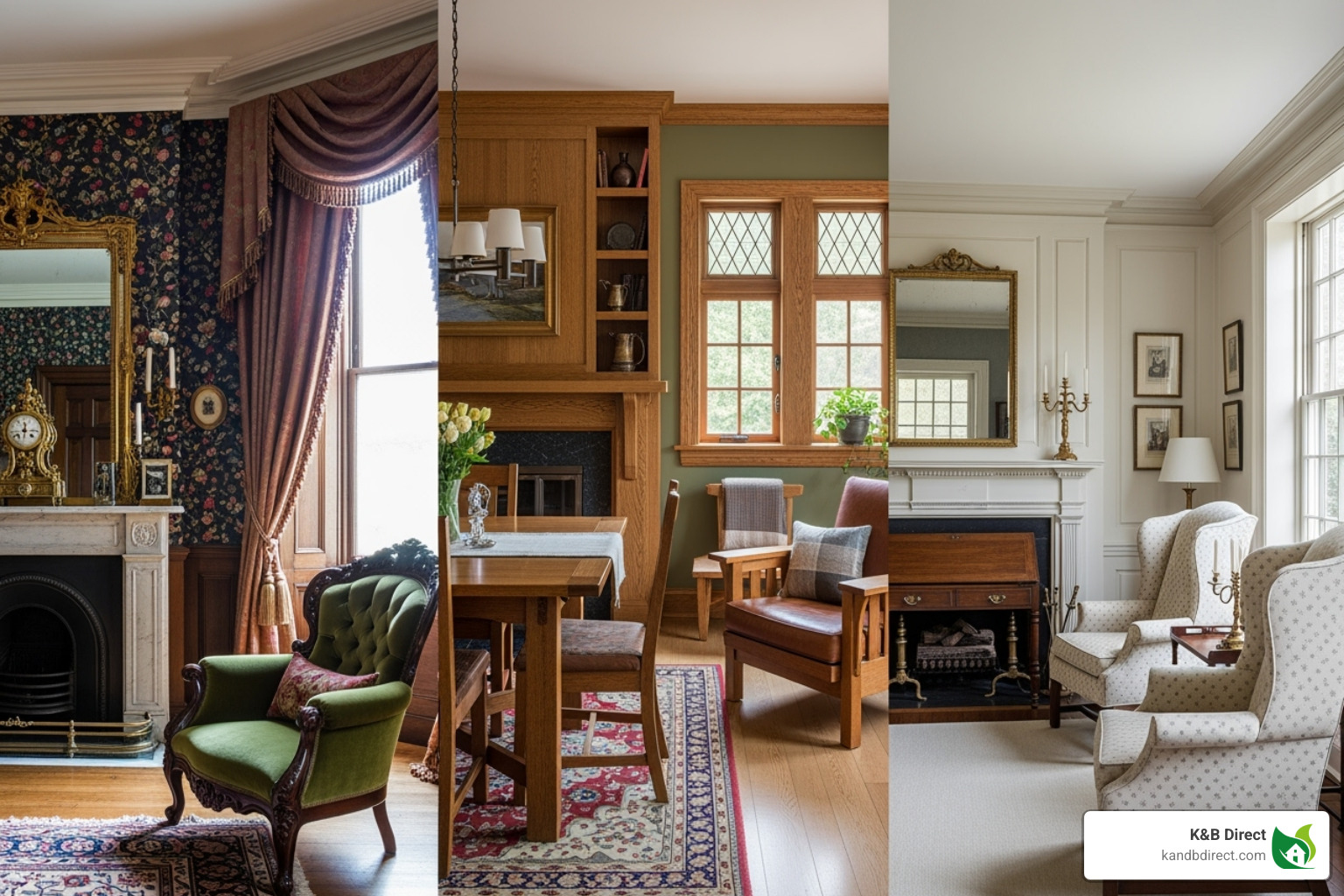
This lack of national standards created a delightful treasure hunt for today’s homeowners. What makes hunting for authentic vintage base cap moulding both exciting and challenging is this very uniqueness. You won’t find these distinctive profiles at your average home improvement store – they’re one-of-a-kind pieces of history.
Understanding the different Types of Moulding means taking a journey through America’s design evolution. Each architectural movement left its mark on trim work, creating distinct styles that still captivate us today.
Victorian Era (circa 1837-1901)
The Victorians never met an ornate detail they didn’t love. Vintage base cap moulding from this period screams elegance with its complex ogee curves – those beautiful S-shaped profiles that create dramatic shadows on the wall. These weren’t subtle accents; they were statements of wealth and sophistication.
Victorian base caps typically featured deep, pronounced profiles with intricate details that demanded attention. In grand homes with soaring ceilings, these ornate pieces held their own against elaborate wallpapers and heavy furnishings.
Arts & Crafts Movement (circa 1880-1920)
By the 1880s, people grew tired of Victorian excess. The Arts & Crafts movement said “enough!” and championed simple lines, natural materials, and honest craftsmanship. Vintage base cap moulding from this era reflects this philosophy beautifully.
These profiles celebrated the handcrafted feel and functional beauty that defined the movement. While still substantial and well-made, they avoided fussy details. Instead, they let the natural wood grain shine through clean, sturdy shapes that felt both neat and approachable.
Colonial Revival (circa 1880-1955)
Colonial Revival brought back America’s early architectural roots with classic elegance and perfectly balanced proportions. The vintage base cap moulding from this period strikes a perfect middle ground – more refined than Arts & Crafts, yet more restrained than Victorian.
Bead and cove details were the stars of this era, offering subtle decoration without overwhelming a room. These symmetrical profiles created a sense of order and timelessness that works beautifully in both traditional and transitional homes today.
Key Characteristics of Vintage Base Cap Moulding
What makes vintage base cap moulding so special? It’s all about the details that craftsmen from earlier eras built into every piece. The profile complexity, built-up construction, material authenticity, and historical significance work together to create something truly remarkable.
Unlike today’s simplified trim options, vintage pieces often featured intricate curves and multiple elements combined into a single design. This wasn’t just showing off – it was a reflection of an era when taking time to get the details right was simply how things were done.
Materials: A Comparison of Then and Now
The story of vintage base cap moulding is really a tale of two eras. The materials used then versus now tell us a lot about what we’ve gained – and what we might have lost along the way.
| Characteristic | Vintage Materials (Solid Oak, Poplar, Chestnut) | Modern Materials (MDF, Finger-Joint Pine) |
|---|---|---|
| Durability | Excellent, especially old-growth lumber; resistant to wear | Good, but can be susceptible to moisture damage (MDF); FJP is more stable than solid wood |
| Cost | Higher, due to material scarcity and milling complexity | Lower, due to engineered wood and efficient manufacturing |
| Authenticity | High, original to historical periods; natural wood grain | Moderate to low, often painted; lacks natural wood character |
| Finish | Stained or painted; reveals natural wood beauty if left natural | Primarily painted; smooth surface for uniform finish |
| Workability | Can be harder to cut/shape; prone to splitting if not careful | Easy to cut and shape; consistent density |
Back in the day, craftsmen worked with traditional woods like solid oak, chestnut, and pine – often from old-growth forests that produced incredibly dense, durable lumber. Poplar was especially popular for paint-grade work because it gave such a smooth, even surface. These materials had character you could feel with your hands.
Today’s modern composites like MDF and Finger-Joint Pine offer their own advantages. They’re much more budget-friendly, resist warping better than solid wood, and give you that perfectly smooth surface that’s ideal for painting. Our Wood Moulding selection includes both traditional and modern options, so you can choose what works best for your project and budget.
The trade-off? Modern materials might lack some of that deep, rich character that comes from natural wood grain, but they make vintage-style trim accessible to more homeowners.
Distinguishing Profiles and Designs
Here’s where vintage base cap moulding really shines – in the beautiful profiles that were carefully crafted by skilled millworkers.
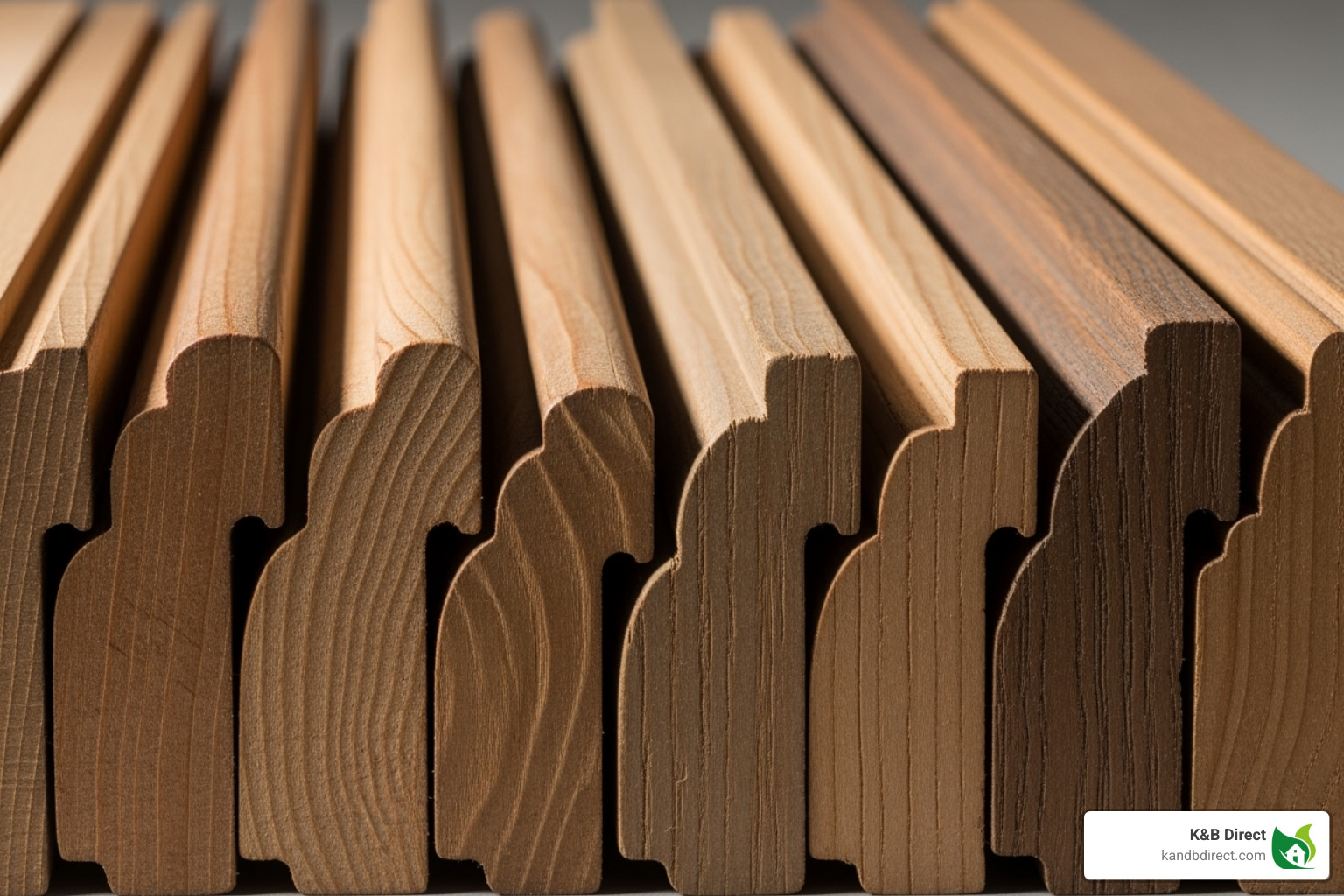
The common shapes you’ll see include the ogee (that graceful S-curve that catches light beautifully), the bead (a gentle rounded bump), the cove (a scooped-out curve), and the quirk (a sharp little groove that adds definition). These might sound simple, but when combined thoughtfully, they create incredibly sophisticated designs.
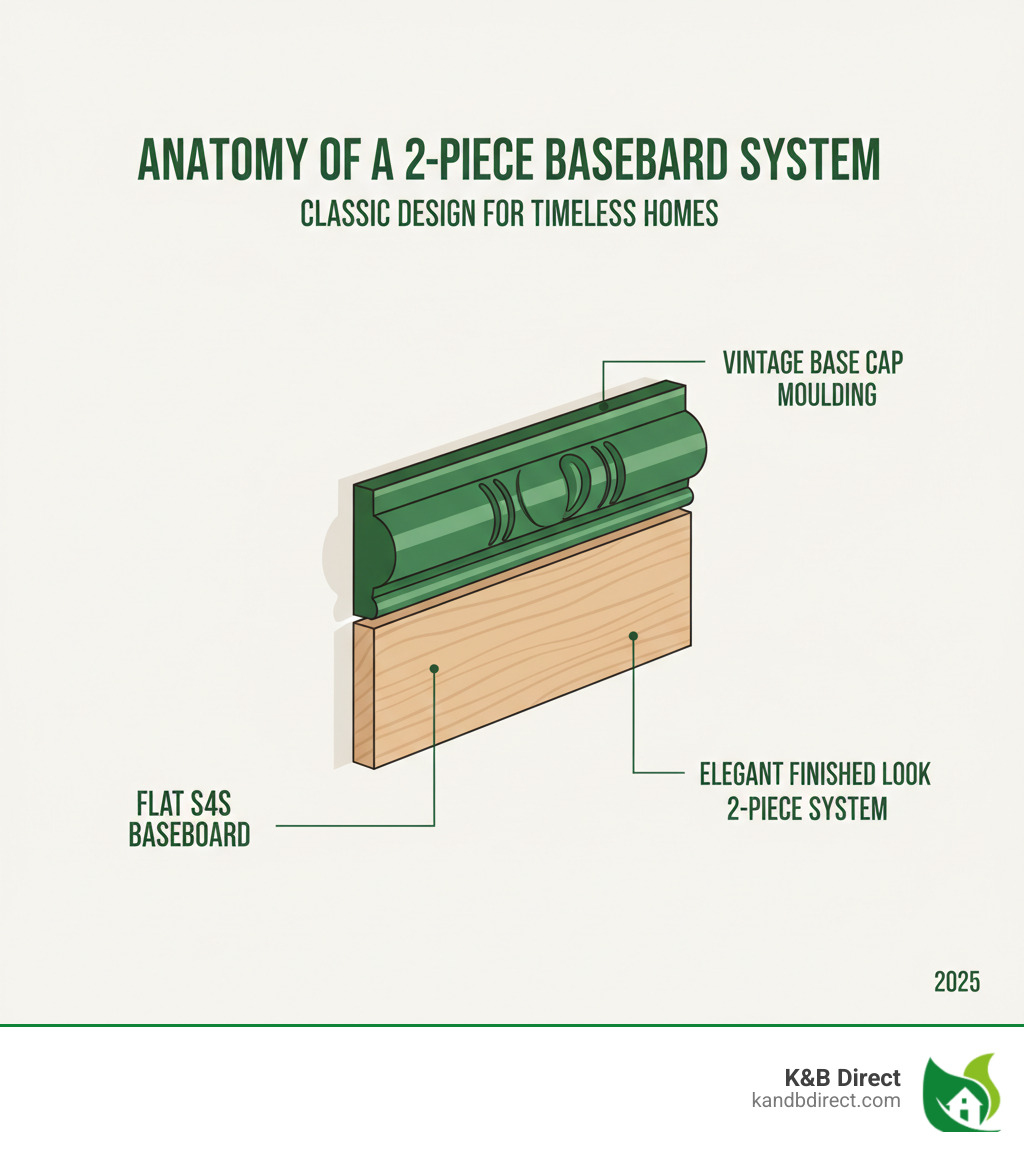
What really set vintage work apart was the built-up baseboard approach. Instead of using one thick piece of trim, craftsmen would start with flat S4S lumber for the main baseboard, then add a decorative cap on top. This technique gave them endless flexibility and created that substantial, layered look that makes vintage trim so appealing.
It’s also why base cap designs are generally more affordable than full-sized profiles – you’re adding character to existing lumber rather than milling one massive piece.
Notable Examples of vintage base cap moulding
Every vintage base cap moulding profile tells a story about the era it came from. A classic Victorian ogee cap might feature a deep, flowing S-curve with a small bead at the base, creating dramatic shadows that change throughout the day. Meanwhile, a simpler Colonial bead cap would offer understated elegance with its series of gentle rounded profiles.
These weren’t just decorative choices – they were historical significance markers. The complexity and size of your mouldings showed your neighbors exactly how well you were doing. Larger, more intricate profiles required skilled craftsmen and expensive custom knives to create, making them a real luxury item.
Even today, we see this influence in modern designs. Profiles like the ornate yet simple styles suitable for eclectic homes, or larger-than-standard base caps ideal for rooms with higher ceilings, show how vintage aesthetics continue to inspire contemporary design choices.
Sourcing, Restoring, and Installing Vintage Base Cap Moulding
Working with vintage base cap moulding can feel like detective work mixed with craftsmanship. You’re not just installing trim – you’re preserving history and bringing timeless character to your home. But let’s be honest, it comes with some unique challenges that modern trim simply doesn’t have.
The biggest hurdle? Finding pieces that actually match. Unlike today’s standardized profiles, vintage mouldings were often one-of-a-kind regional designs. Add in the cost of custom millwork and the intricate restoration work these pieces often need, and you’ve got a project that requires both patience and skill.
Finding Authentic and Reproduction Pieces
Your treasure hunt for authentic vintage base cap moulding should start at architectural salvage yards. These places are like museums you can actually buy from – filled with reclaimed materials that carry decades of character. Reuse centers, often run by nonprofits, are another goldmine where you might stumble upon exactly what you need at a fraction of the cost.
But here’s the reality: finding enough authentic material for an entire room, let alone a whole house, can be nearly impossible. That’s where reproductions become your best friend.
Specialty millwork suppliers have stepped up to fill this gap in a big way. We’re talking about companies with catalogs featuring over 350 base cap designs – that’s an incredible variety to choose from. When you can’t find an exact match in their existing inventory, many suppliers offer custom knife grinding services. You simply send them a sample piece or even a detailed sketch, and they’ll create custom cutting tools specifically for your profile.
The process is pretty straightforward: they’ll grind a set of knives that match your vintage profile perfectly. Yes, custom work costs more, but when you’re trying to match a 1920s Arts & Crafts bungalow or a Victorian-era home, it’s often the only way to get it right.
Restoration and Replication Challenges
Once you’ve sourced your vintage base cap moulding, the real work begins. Restoration and replication require a completely different skill set than working with modern materials.

The replication process starts with creating an exact template of your original profile. This template becomes the blueprint for grinding custom knives that fit industrial moulding machines. Those custom knives can run around $190 per set, which might seem steep for a small project, but when you consider the alternative of mismatched trim throughout your home, it’s usually worth every penny.
Restoration work is where things get really interesting – and challenging. You’re often dealing with layers of old paint that need to be carefully stripped without damaging the delicate profiles underneath. Chips and cracks need filling and sanding, but try sanding an intricate ogee curve with regular sandpaper – it’s nearly impossible.
This is where specialized tools become essential. A Sand-O-Flex, which is basically an abrasive wheel with flexible brushes, can conform to complex curves and profiles. Just remember – these tools are aggressive and work fast, so start with the finest grit and keep the tool moving to avoid gouges. Fine sanding sponges with sharp angled edges are also invaluable for getting into those tight grooves and corners that regular sandpaper can’t reach.
The key is patience. Rushing through restoration work on vintage base cap moulding usually means starting over, and nobody wants that. For more guidance on preparing wood and dealing with moisture issues that often come with older materials, check out our resource on Understanding Moisture & Mold In Your Home.
Installation Techniques for Vintage Base Cap Moulding
Installing vintage base cap moulding gives you a choice between honoring traditional craftsmanship methods or taking advantage of modern shortcuts that can save you hours of frustration.
Traditional methods require real skill but deliver seamless results. The technique called “coping” involves cutting one piece of moulding to fit precisely against the profile of the adjacent piece at inside corners. Outside corners get mitered at perfect 45-degree angles. When done right, these joints are nearly invisible and showcase the kind of craftsmanship that built these profiles’ reputation in the first place.
Modern shortcuts can be a lifesaver, especially for DIY enthusiasts. Using decorative plinth blocks at door casings and corner blocks at both inside and outside corners eliminates those tricky cuts entirely. Instead of wrestling with complex miters and copes, you simply make square cuts and let the blocks handle the transitions. The result still looks traditional and professional – you just saved yourself a lot of headaches getting there.
The actual application process is refreshingly straightforward. The base cap attaches to the wall and sits along the top edge of your Baseboard Trim. It’s like adding the perfect finishing touch to a well-custom suit – that final detail that makes everything look intentional and complete.
For step-by-step guidance on getting this right, our detailed guide on How to Install Base Cap Moulding walks you through the entire process from start to finish.
Incorporating Vintage Moulding in Today’s Interiors
The beauty of vintage base cap moulding is its versatility. It’s not just for period homes; it can dramatically improve modern interiors, adding depth, character, and a touch of unexpected elegance.
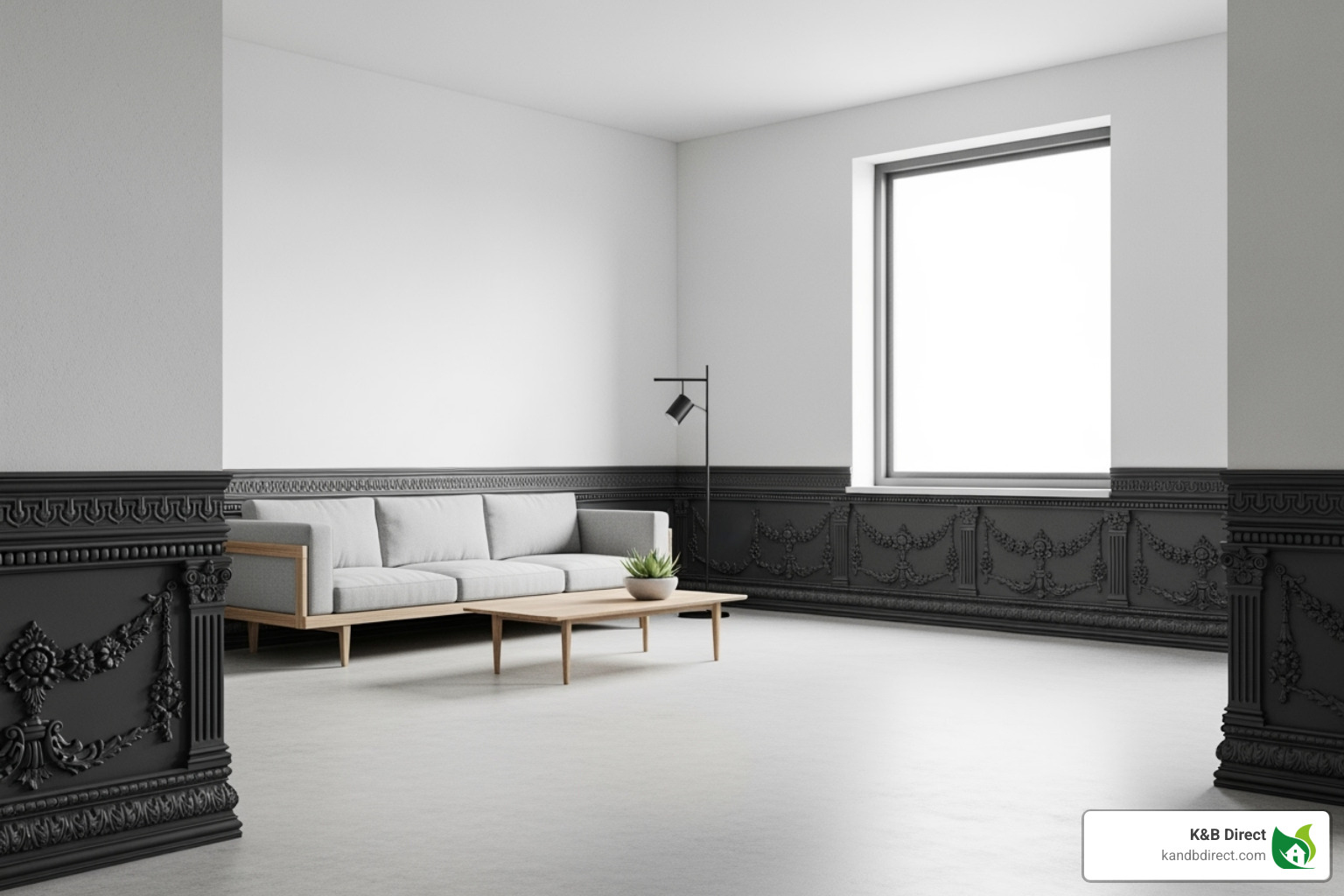
Aesthetic Goals: Incorporating vintage base cap moulding is an excellent way to add character to a new build or to inject historical charm into a contemporary space. It can create a focal point, draw the eye around a room, and achieve a sophisticated, eclectic look that feels curated rather than generic. Imagine a sleek, minimalist room with the rich, detailed base cap of a Victorian design – the contrast can be stunning!
Modern Applications:
- Layered Baseboards: As we discussed, vintage base caps are designed to sit atop a flat baseboard. This built-up look creates a more substantial and luxurious trim.
- Pairing with Other Mouldings: Don’t be afraid to mix and match. A simpler Crown Moulding can beautifully complement an intricate vintage base cap, creating a balanced and harmonious design.
- Cabinetry and Built-ins: Extend the charm to your custom elements. Vintage base cap moulding can be used to add detail to the base of kitchen islands, built-in bookshelves, or custom Cabinet Trim Options, elevating their appearance beyond standard finishes.
- Panel Effects: By combining base cap with other trim pieces, you can create decorative wall panels, adding architectural interest to plain walls.
Cost Considerations: The cost of vintage base cap moulding can vary widely. Authentic vintage pieces, due to their scarcity and historical value, might command a premium, especially if you need to buy in bulk. Reproductions, on the other hand, offer a more predictable cost. As we learned, materials like MDF and Finger-Joint Pine are generally more budget-friendly than solid hardwoods. Custom knives for unique profiles also add to the expense, but the investment often pays off in achieving an exact, historically accurate match. For example, a “MC28 Vintage Base” might range from $15.60 – $31.20 depending on species and length, while a “Base Cap Style 585 Moulding” in Poplar hardwood might come in 6′ packs or contractor packs. When planning your project, consider the balance between authenticity, material, and your budget.
Design Tip: When selecting base cap moulding, always consider the scale of your room. In spaces with high ceilings, a taller baseboard with a more substantial vintage base cap moulding will create a better proportion and feel more appropriate. A smaller, more delicate profile might get lost in a grand room, whereas a large, ornate one could overwhelm a cozy space. The “Base Cap Style 585 Moulding,” for instance, is explicitly noted as being “larger than standard base cap” and “ideal for larger rooms,” demonstrating this principle in action.
Conclusion: Bring Timeless Elegance to Your Home
Vintage base cap moulding offers something truly special that modern trim simply can’t replicate – a genuine connection to the skilled craftsmen who built America’s most beautiful homes. Throughout this guide, we’ve explored how these architectural details can transform ordinary rooms into spaces with real character and historical significance.
The authenticity of vintage base cap moulding speaks for itself. Whether you choose original pieces from architectural salvage yards or carefully crafted reproductions, you’re investing in designs that have stood the test of time. The superior craftsmanship evident in every ogee curve and delicate bead detail reflects an era when builders took pride in every finishing touch.
What makes vintage base cap moulding so appealing is its unique style that you simply won’t find in today’s cookie-cutter options. From the ornate complexity of Victorian profiles to the honest simplicity of Arts & Crafts designs, these mouldings tell stories and create focal points that give your home a distinctive personality.
Whether you’re lovingly restoring a 1900s bungalow or adding architectural interest to a brand-new build, vintage base cap moulding bridges the gap between past and present. The beauty lies in how these timeless details work just as well in a minimalist modern space as they do in a traditional setting – it’s all about creating that perfect balance.
At K&B Direct, we understand that achieving your dream home aesthetic shouldn’t break the bank. That’s why we’re committed to offering a wide selection of high-quality mouldings at the lowest possible prices, backed by the friendly service you deserve. Our goal is to help you steer the wonderful world of architectural trim and find exactly what you need to bring your vision to life.
Ready to add some timeless elegance to your space? Explore our extensive collection of Base Cap Moulding to find the perfect style for your project. Your walls – and your guests – will thank you for choosing quality details that truly make a difference.