
Why Cabinet Trim Makes All the Difference
Cabinet trim options are the key to changing basic cabinets into custom-looking masterpieces. The right trim can lift your entire kitchen or bathroom by serving two main purposes: decorative improvement and functional gap-filling. It creates a polished, high-end look while also covering gaps and ensuring a clean, professional installation.
Essential Cabinet Trim Types:
- Crown Molding: Adds elegance and height to the tops of cabinets.
- Light Rail Molding: Conceals under-cabinet lighting fixtures.
- Base Molding: Gives base cabinets a furniture-like appearance.
- Scribe Molding: Covers gaps between cabinets and walls.
- Toe Kick Molding: Provides a finished look at the base of cabinets.
- Filler Strips: Fills spaces between cabinets and appliances.
The right trim choices can significantly increase your home’s value by making builder-grade cabinets look like expensive custom work. There’s a trim style for every aesthetic, from traditional to modern.
I’m Eryk Piatkowski, Owner of K&B Direct, and I’ve spent over ten years helping homeowners select the perfect cabinet trim options for their renovation projects. My experience has taught me that the right molding choices can transform any kitchen or bathroom into a space you’ll be proud to show off.
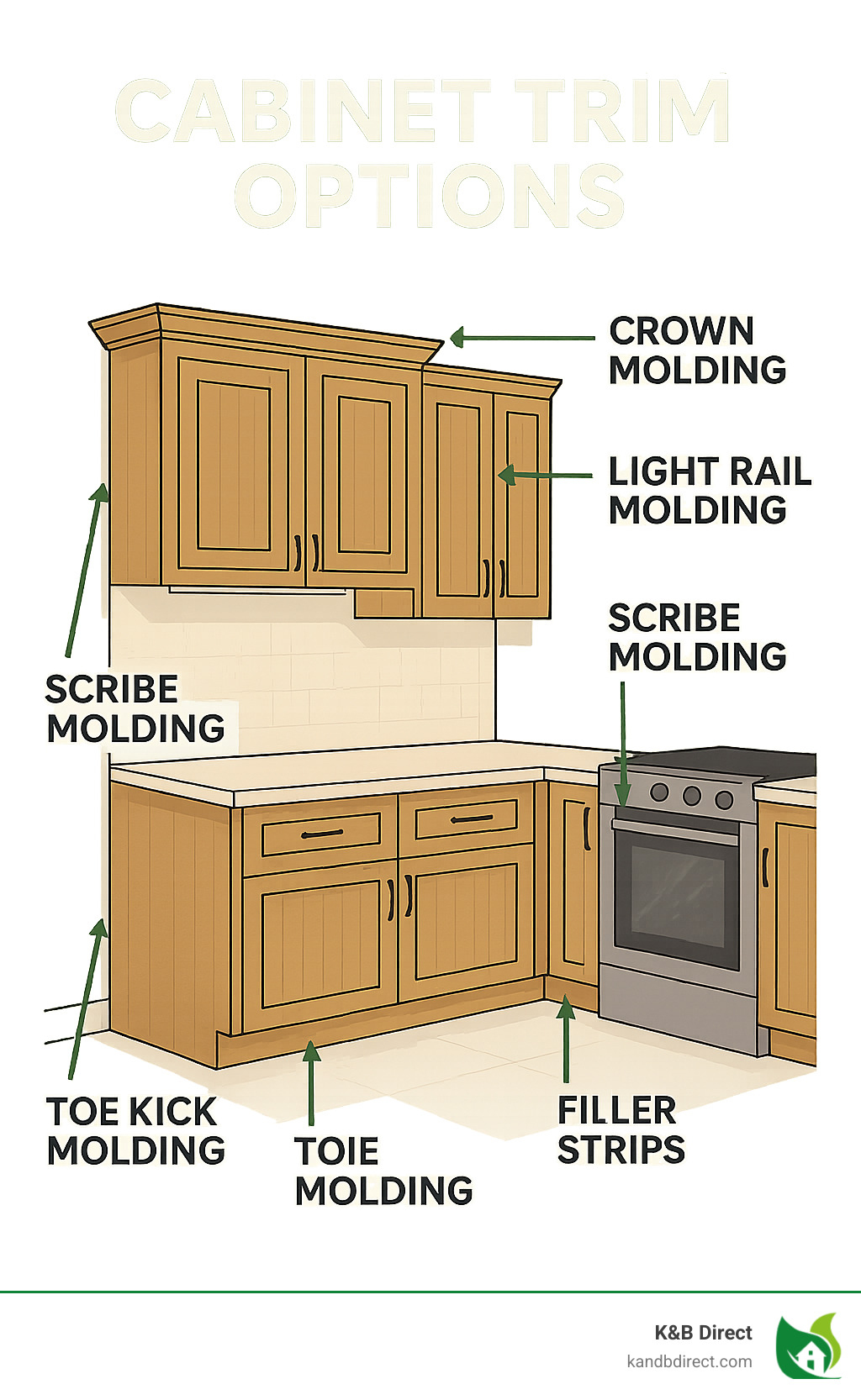
Cabinet trim options terms at a glance:
The Ultimate Guide to Cabinet Trim Options
Cabinet trim, often called molding, is more than just a decorative flourish; it’s an integral part of cabinetry design that marries aesthetics with functionality. These details define the character of your kitchen or bathroom, providing a polished, custom-built appearance that can significantly improve your home’s appeal and value. Understanding the different types of trim is the first step in making informed decisions for your renovation. Let’s explore the various forms of cabinet trim options and how each contributes to a refined space.
For a quick primer on common profiles and terminology, see Crown molding.
Top-of-Cabinet Trim: Reaching for the Ceiling
The trim used on top of your cabinets is often the most visually impactful, drawing the eye upward and creating a sense of grandeur.
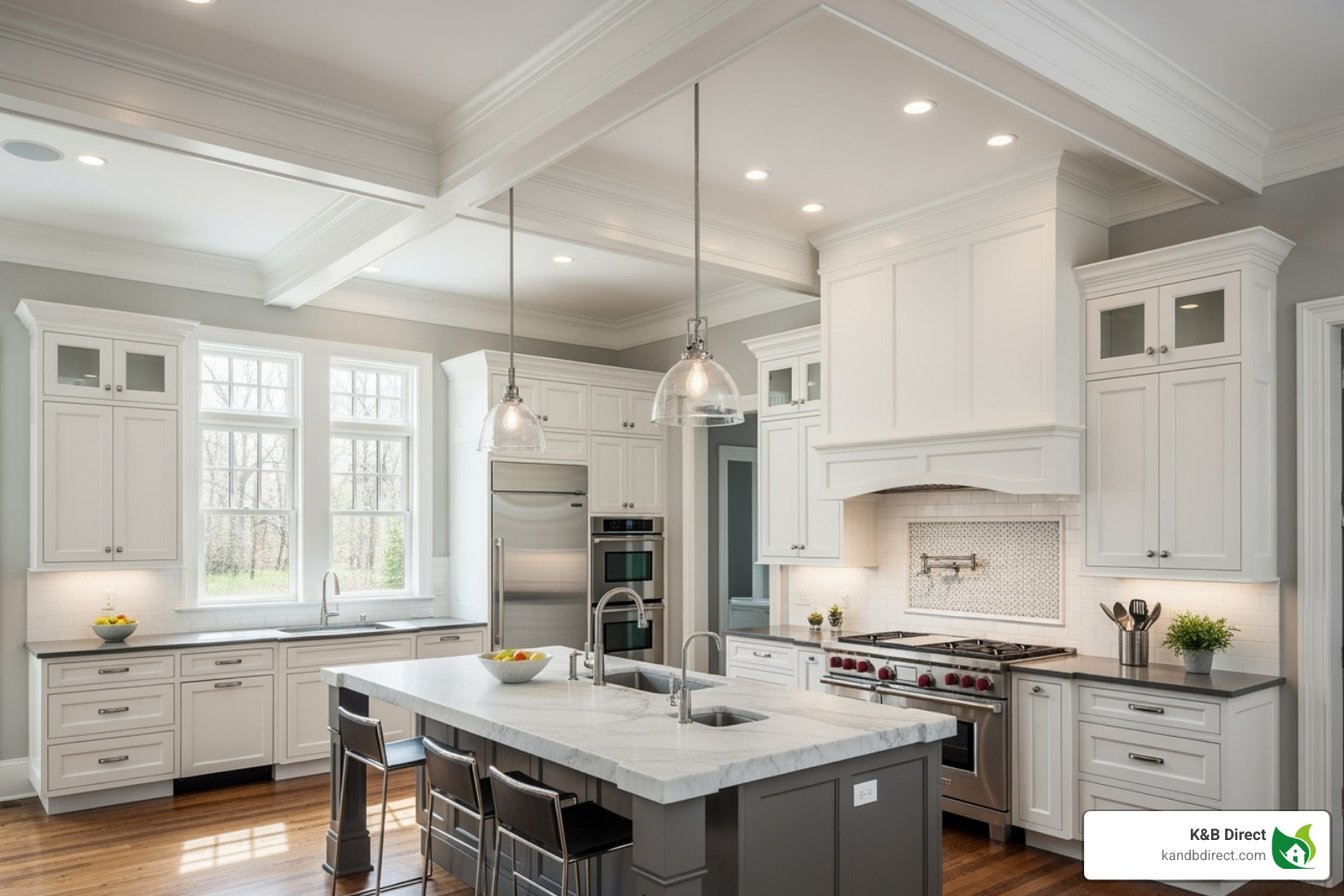
Crown molding is the most popular top-of-cabinet trim. It creates a seamless transition between cabinets and the ceiling, making rooms appear taller and more sophisticated. It also gracefully hides any gaps or irregularities. When considering Crown Moulding, you’ll find several styles:
- Traditional: Features intricate, classic profiles for a formal, ornate look.
- Stepped: Creates a layered “step” effect for a more dramatic, architectural feel.
- Stacked: Combines multiple pieces of molding for a grand, elaborate profile, ideal for kitchens with high ceilings.
- Riser Molding: A flat piece used to add height or provide a solid base for crown molding, helping to close gaps to an uneven ceiling.
- Minimalist: Features clean lines and simple profiles, perfect for modern or contemporary kitchens.
We offer a wide selection of crown molding options at unbeatable prices, helping you achieve that upscale look.
Bottom-of-Cabinet Trim: Function and Finesse
Trim at the bottom of your cabinets focuses on functionality, concealment, and adding a refined finish.
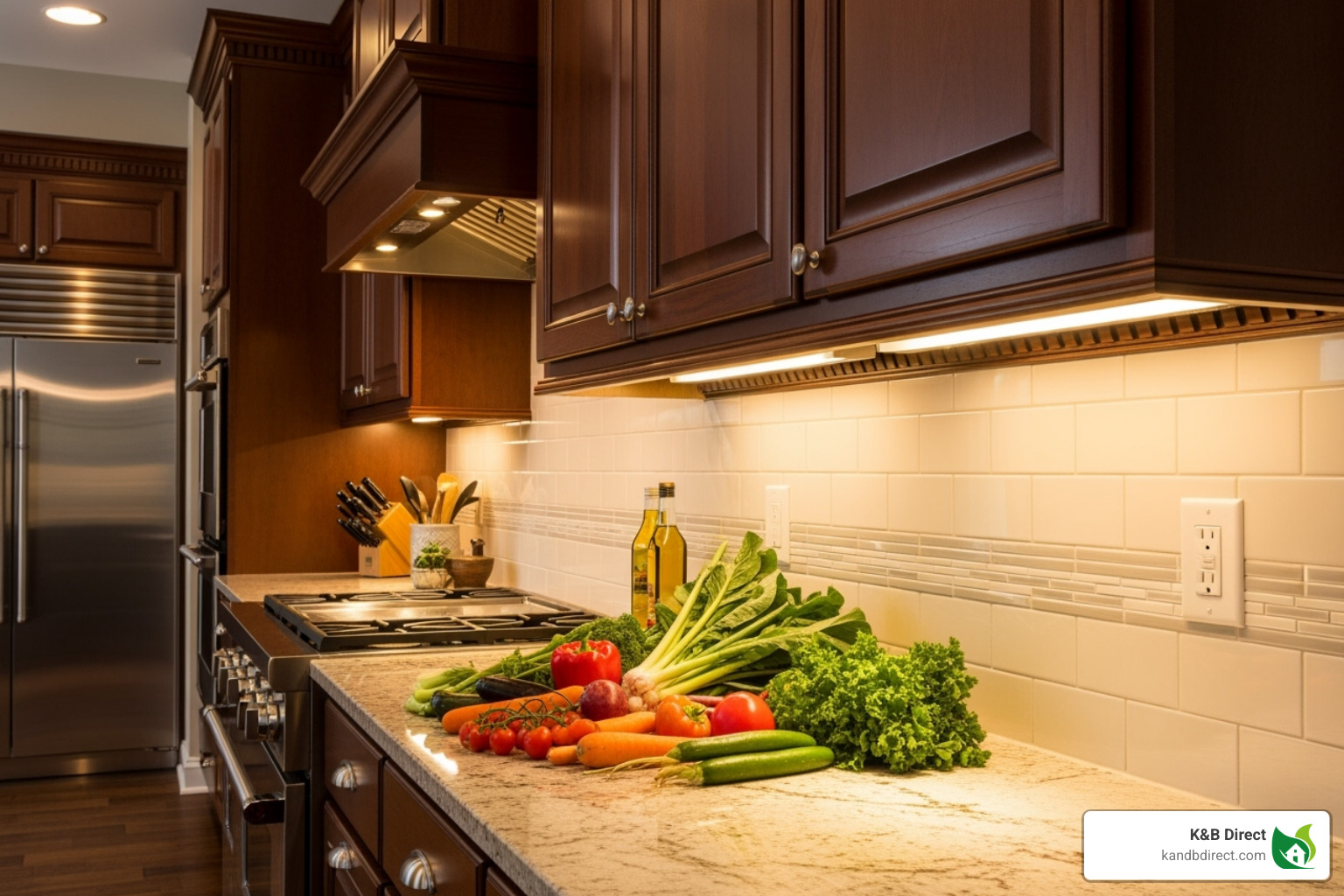
- Light Rail Molding: Installed under upper cabinets to conceal under-cabinet lighting fixtures, reducing glare and adding a decorative finish.
- Base Molding: Applied at the foot of base cabinets or islands to add architectural interest and create a more furniture-like appearance.
- Toe Kick Molding: Covers the recessed area at the base of your cabinets, providing a clean, finished look that matches your cabinet fronts. Our selection of Baseboard Trim often includes suitable options.
- Shoe Rail Molding: A small trim piece applied where cabinets meet the floor, covering small gaps and hiding flooring imperfections for a seamless transition.
Key Functional Cabinet Trim Options
Beyond decoration, several cabinet trim options play crucial functional roles in achieving a seamless installation.
- Scribe Molding: A thin, flexible strip used to cover gaps or inconsistencies where a cabinet meets an uneven wall or ceiling. It conforms to irregularities, creating a professional, built-in look. We offer various Wall Trim options that include scribe molding.
- Filler Molding: Also known as filler strips, these are used to fill awkward gaps between cabinets and walls or appliances. They are essential for a finished appearance and to ensure cabinet doors don’t bind against a wall.
- Outside Corner Molding: Used to cover and protect the raw edges of exposed cabinet end panels, such as on an island or peninsula. It provides a clean, finished edge and adds a touch of sophistication.
How to Choose the Perfect Cabinet Trim for Your Home
Choosing the right cabinet trim options is about creating harmony between your cabinets, your space, and your personal style. The key is to think of trim as part of your kitchen’s personality, not just an add-on. When everything flows together, you’ve made the right choice.
Matching Trim to Your Cabinet and Kitchen Style
Your trim should speak the same design language as your cabinets. Consider the cabinet’s character before choosing molding.
- Shaker Cabinets: With their clean lines and timeless appeal, Shaker cabinets pair best with simple, classic, or stepped crown molding that adds a polished look without being distracting.
- Traditional Cabinets: These cabinets, with their raised panels and rich details, can handle more ornate and detailed crown molding profiles to complement their architectural character.
- Modern Cabinets: Flat-panel doors and clean edges call for minimalist molding that maintains sharp, contemporary lines. Our Modern Kitchen Cabinets For Sale collection often inspires streamlined trim choices.
Also, consider your cabinet door style and existing home trim to ensure a cohesive look. As seen in projects like our Kitchen Cabinets Downers Grove Project, every detail should feel intentional and reinforce your overall aesthetic.
Choosing Materials and Finishes for Your Cabinet Trim Options
The material you choose affects durability, maintenance, and cost.
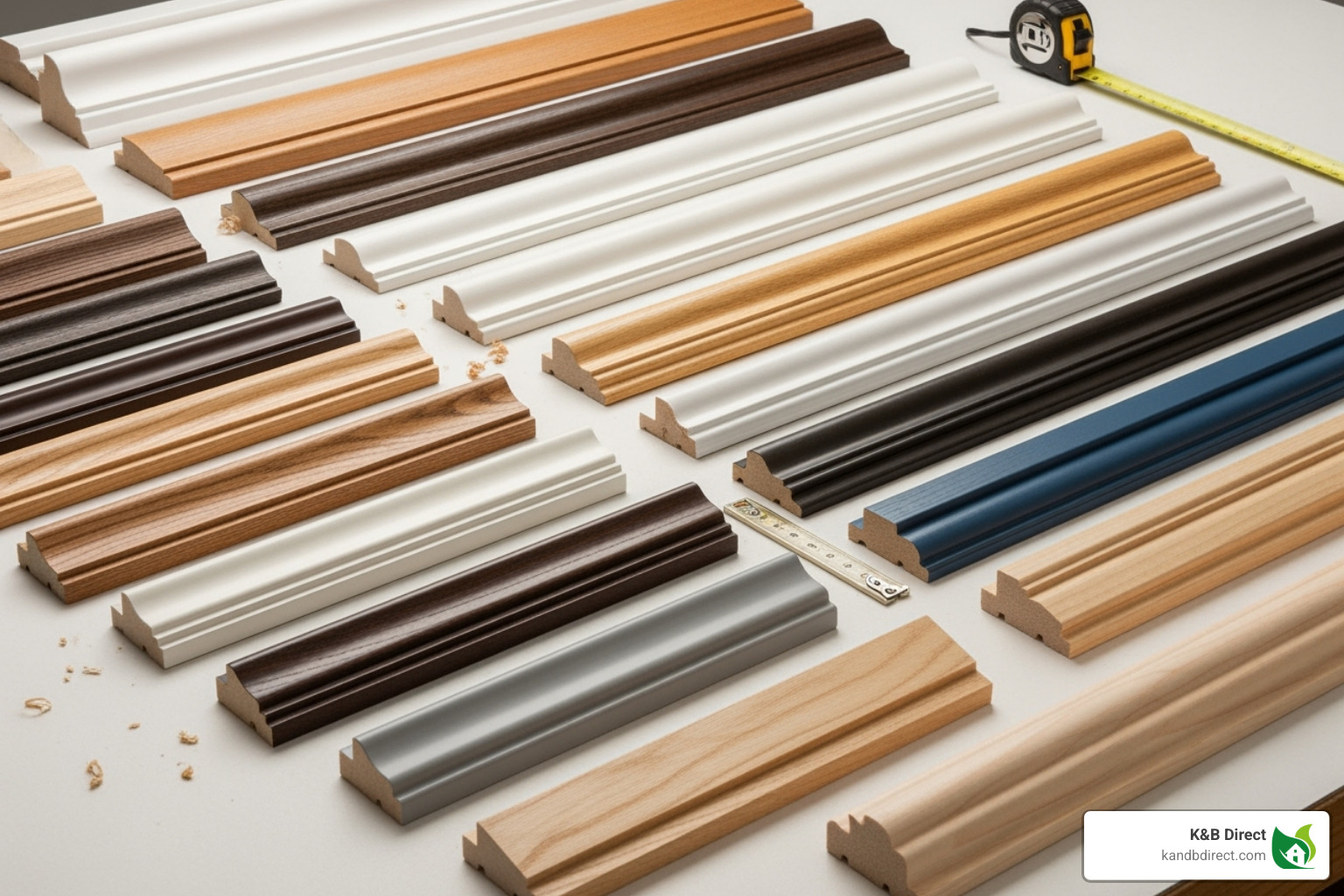
- Solid Wood: The classic choice, known for its durability and authentic beauty. It can be stained to showcase its grain but is typically the most expensive option. Our Wood Trim selection offers this timeless quality.
- MDF (Medium-Density Fiberboard): A budget-friendly option that is smooth, consistent, and ideal for painted applications as it won’t warp or crack like wood.
- Polymer/PVC: These materials are highly resistant to moisture, making them perfect for bathrooms. They are durable, low-maintenance, and can mimic wood profiles.
For finishes, you can choose paintable trim for custom colors, stainable trim to match wood cabinets, or pre-finished trim for a guaranteed match to specific cabinet lines.
| Feature | Solid Wood | MDF | Polymer/PVC |
|---|---|---|---|
| Cost | Higher | Moderate | Moderate to High |
| Durability | Excellent, can be repaired | Good, but susceptible to moisture damage | Excellent, water & rot resistant |
| Flexibility | Good, but can warp/crack with humidity changes | Good, consistent | Excellent, can be bent for curves |
| Finish | Stains beautifully, can be painted | Best for painting | Usually pre-finished or painted |
| Aesthetics | Natural grain, rich appearance | Smooth, uniform | Consistent, can mimic wood profiles |
Considering Your Space: Ceiling Height and Room Size
Your room’s proportions should guide your trim choices.
- High Ceilings (above 8 feet): These spaces can handle more dramatic, stacked crown molding to fill the vertical space and create a grand look.
- Low Ceilings: Bulky molding can make a room feel cramped. Opt for simple, streamlined profiles to get a finished look without overwhelming the space.
Good trim can also improve a room’s perceived size. Light-colored, simple molding can make small spaces feel larger and more open. In larger rooms, layered moldings can add depth and architectural interest. We’ve learned from projects like our Kitchen Cabinet Installation Project Chicago that the right trim can transform any room when you work with your space, not against it.
A DIY Guide to Cabinet Molding Installation
Ready to install your cabinet trim options yourself? With the right approach, many homeowners can achieve professional-looking results. The secret is to take your time, measure twice, and work methodically. The satisfaction of admiring your beautifully finished cabinets makes the effort worthwhile.
Tools and Preparation
Having the right tools on hand is essential for a smooth project. Your basic toolkit should include:
- Miter saw for precise angle cuts
- Nail gun (pneumatic or battery-powered)
- Wood glue for strong joints
- Measuring tape and pencil
- Level and stud finder
- Safety gear (safety glasses and hearing protection)
- Caulk, wood putty, and sandpaper for finishing
A pro tip: Pre-finish your trim by painting or staining it before installation. Applying the first coat on sawhorses is much easier than doing it on the wall.
Key Steps for a Flawless Finish
Measure Accurately: The old saying “measure twice, cut once” is crucial, especially for crown molding corners that need precise angles.
Cut Angles: For most inside and outside corners, you’ll make 45-degree miter cuts. For an even tighter fit on inside corners, many pros prefer “coping,” which involves shaping one piece to fit the profile of the other. You can find detailed guides on this technique from woodworking experts. Our guide on How to Cut Baseboard also provides step-by-step instructions for basic cuts.
Nail and Glue: Apply a thin bead of wood glue where the molding meets the cabinet. Use your nail gun to secure it, checking with a level as you go. Use scarf joints (angled overlapping cuts) for long runs to make seams less visible.
Finish and Touch-Up: Fill nail holes with wood putty. Once dry, apply touch-up paint or stain and use paintable caulk to fill any small gaps between the trim and the walls or cabinets. This final step creates that seamless, custom look. For more finishing techniques, see How to Install Base Cap Moulding.
Don’t be afraid to practice on scrap pieces first. Your patience will pay off with stunning results.
Frequently Asked Questions about Cabinet Trim
As an expert in cabinet trim options, I get these questions all the time. Let me clear up some common points of confusion for your kitchen or bathroom project.
What is the difference between cabinet trim and molding?
While the terms are often used interchangeably, there’s a subtle distinction. Trim is the broad category for any piece that finishes an area, including baseboards, casings, and all cabinet finishing pieces. Molding is a specific type of trim that has a shaped, decorative profile designed to add architectural interest.
Essentially, all molding is trim, but not all trim (like a flat filler strip) is molding. When we discuss cabinet trim options, we’re referring to the entire family of functional and decorative pieces that give your cabinetry a complete, custom look.
Can you add molding to existing cabinets?
Absolutely! This is one of the smartest and most cost-effective upgrades you can make. Adding molding to existing cabinets is a common project that transforms the look of a kitchen or bathroom without a full renovation.
You can easily improve builder-grade cabinets by adding trim. Crown molding can make basic cabinets look expensive and custom-built. Scribe molding is perfect for hiding gaps after installation between cabinets and uneven walls. Light rail molding allows you to add custom details like under-cabinet lighting that wasn’t part of the original design. It’s a transformative upgrade that adds significant visual appeal.
What is the most popular type of cabinet molding?
Hands down, crown molding is the most popular choice. It consistently delivers the biggest visual impact and has a timeless appeal that suits nearly any kitchen style, from traditional to modern.
Crown molding adds significant value by creating the custom, built-in appearance that homebuyers love. It also serves a practical purpose by hiding the gap between your cabinet tops and the ceiling, eliminating a common dust trap. Because of its versatility in styles, there is a crown molding profile to complement any cabinet door. While other trims are essential, crown molding is the feature that most people think of when they want to lift their kitchen’s design.
Conclusion: The Finishing Touch for Your Dream Kitchen
Think of cabinet trim options as the perfect frame around a beautiful painting – without them, even the most expensive cabinets can look unfinished and ordinary. Throughout this guide, we’ve seen how these seemingly small details make an enormous difference in changing basic cabinetry into something that looks truly custom-built.
The magic happens when all these pieces work together. Crown molding draws your eye upward and makes your kitchen feel grander. Light rail molding gives you beautiful task lighting without the harsh glare. Scribe molding makes everything look seamlessly built-in, even when your walls aren’t perfectly straight (and let’s be honest, whose are?).
Beyond making everything look polished and expensive, the right trim actually makes your kitchen work better. It hides those inevitable gaps that occur during installation, conceals wiring and lighting fixtures, and protects cabinet edges from daily wear and tear. Most importantly, it ties your entire kitchen together into one cohesive design that feels intentional and complete.
Here’s what we’ve learned really matters: matching your trim to your cabinet style, choosing materials that will last, and considering how your space’s unique characteristics – like ceiling height – affect your choices. Whether you’re going bold with stacked crown molding in a kitchen with soaring ceilings or keeping things sleek and minimal for a modern look, there’s a perfect trim solution for every style and budget.
At K&B Direct, we’ve spent over a decade helping homeowners just like you find how these finishing touches can completely transform a space. We’ve seen builder-grade cabinets become showstoppers and outdated kitchens turn into magazine-worthy spaces – all thanks to the right molding choices.
We believe everyone deserves a kitchen that makes them smile every time they walk into it. That’s why we work hard to offer the highest quality mouldings at prices that won’t make you wince. From our locations throughout Illinois – whether you’re in Chicago, Glen Ellyn, West Chicago, Lombard, or Schiller Park – we’re here to help you find exactly what you need with the friendly service you deserve.
Your dream kitchen is closer than you think. Explore all our cabinet trim and moulding options and let’s add that perfect finishing touch together. After all, it’s these details that turn a house into a home you’ll love for years to come.