
Why Interior Doors Are More Than Just a Barrier Between Rooms
Interior Doors are a crucial design element, serving multiple purposes beyond simply closing off spaces. They impact your home’s privacy, sound control, natural light, and overall aesthetic.
Key Interior Door Types:
- Slab Doors – Just the door panel, no frame or hardware.
- Prehung Doors – A complete unit with a frame, hinges, and hardware pre-installed.
- Bifold/Sliding Doors – Space-saving options for closets and tight areas.
- French Doors – Glass-paneled doors that allow light to flow between rooms.
- Barn Doors – Track-mounted doors for rustic or modern aesthetics.
Main Construction Types:
- Hollow Core – Lightweight, affordable, with minimal sound insulation.
- Solid Core – Heavier, with better soundproofing, at a mid-range price.
- Solid Wood – Premium quality, with excellent sound control, at the highest cost.
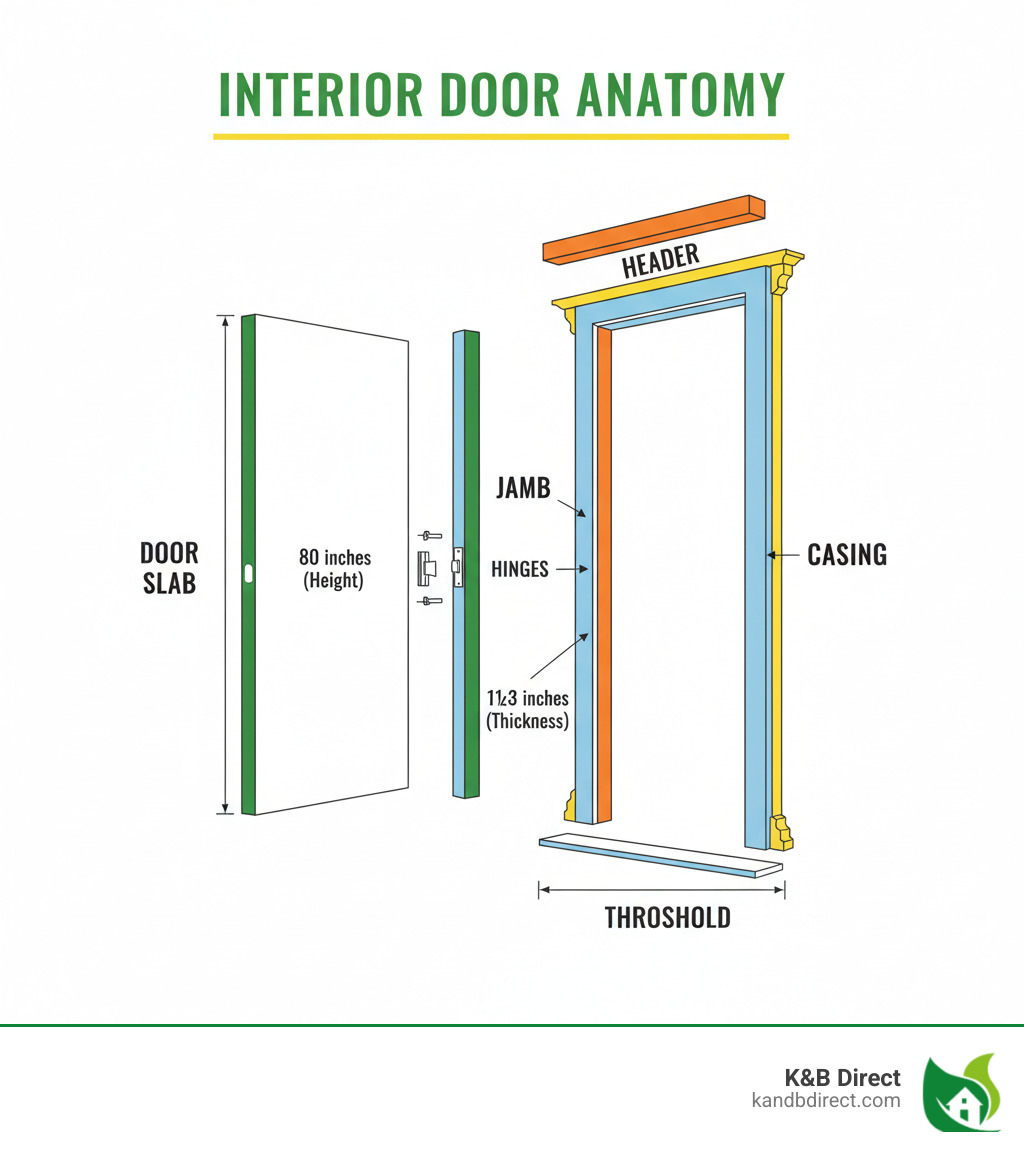
Standard interior doors are typically 80 inches tall, 24 to 36 inches wide, and 1⅜ inches thick. Understanding the differences in construction will help you balance your budget with your functional needs, whether you’re building, renovating, or replacing.
I’m Eryk Piatkowski, Owner of K&B Direct. With over a decade of experience helping homeowners select Interior Doors, I’ve created this guide to walk you through everything you need to know to make the right choice for your home.
Understanding the Fundamentals: Door Types and Styles
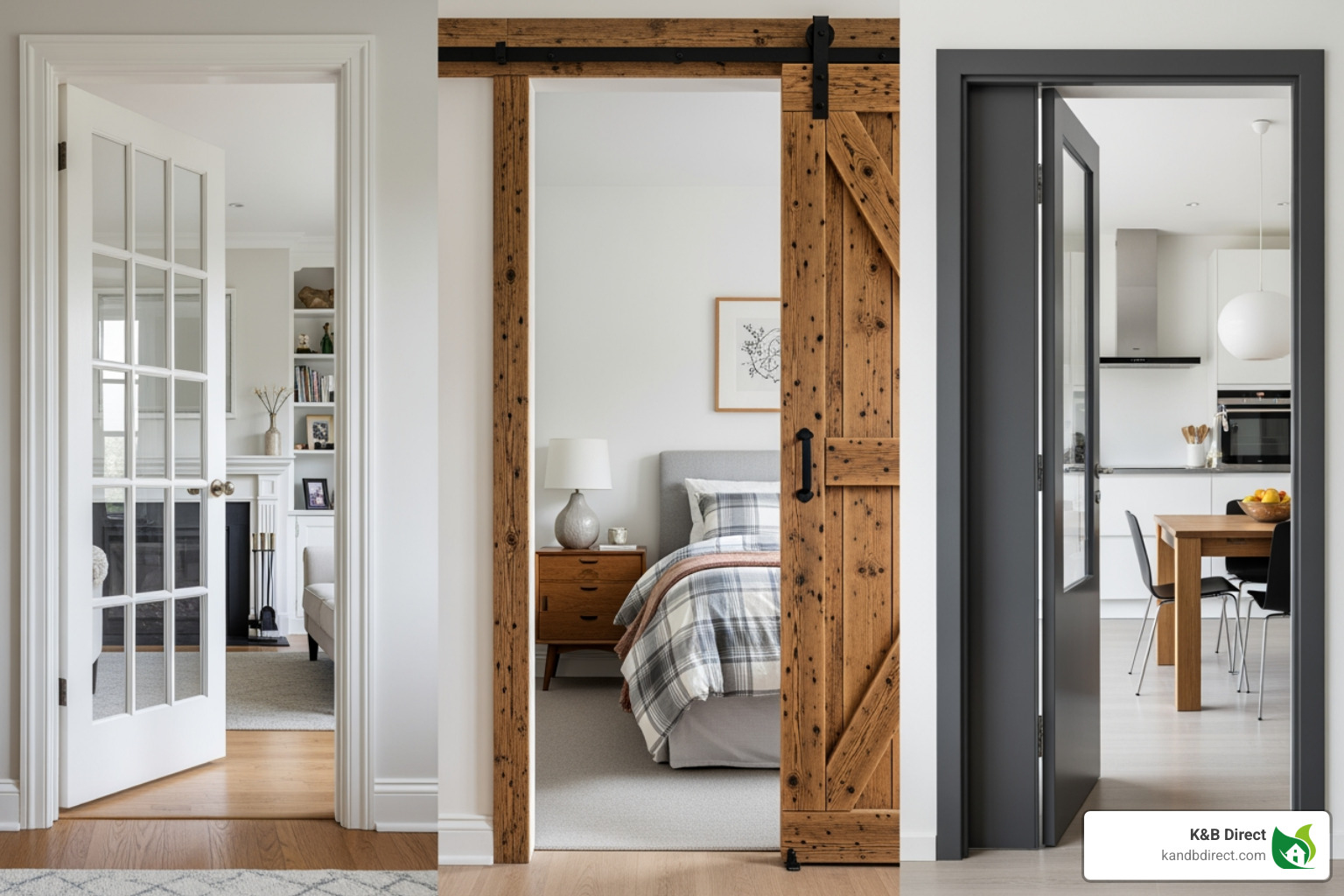
Choosing the right Interior Doors can transform a room’s feel, improve your home’s flow, and improve privacy. The best doors blend seamlessly into your home’s design. Let’s explore the main types to find the right fit for you.
Swinging Doors: Slab vs. Prehung
Most doors are traditional swinging doors, available as a door slab or a prehung door system.
A door slab is just the door panel, without a frame or hardware. Slabs are ideal for replacing a door when the existing frame is in good condition, offering customization and cost savings. However, installation requires more skill to hang the door and fit the hardware.
A prehung door is an all-in-one solution, with the door already mounted in its frame (jamb) with hinges attached. This is the best choice for new construction or when an old frame is warped, as it simplifies installation by ensuring everything is aligned. For a complete breakdown, see our Interior Door Unit Complete Guide.
Space-Saving Door Styles
In homes where square footage is at a premium, space-saving Interior Doors provide privacy without the floor space required by a swinging door.
- Bifold doors consist of two panels that fold together on a track, making them perfect for closets and pantries in tight hallways.
- Pocket doors slide into a pocket in the wall, disappearing completely when open. They are excellent for small bathrooms or laundry areas where floor space is valuable.
- Barn doors slide on an exposed track above the opening, adding a rustic or modern accent. They are a stylish solution for pantries, closets, and playrooms. See more styles on our Modern Interior Closet Doors page.
- Sliding doors (or bypass doors) feature two or more panels that slide past each other, commonly used for wide closets.
Decorative and Specialty Doors
Interior Doors are an easy way to make a style statement and set the tone for a room.
- French doors are double doors with glass panes that let light flow between rooms, adding elegance and making spaces feel larger. They are often used between living rooms and dining rooms or sunrooms.
- Panel doors are a classic choice with recessed or raised panels that add architectural interest. Configurations range from the traditional six-panel to a contemporary two-panel shaker style, which has become a bestseller for its clean, versatile lines. Explore our Modern Interior Doors collection or our popular Interior Doors 2 Panel Shaker.
- Flush doors have a completely smooth, flat surface, perfect for minimalist and contemporary homes. They offer a clean look and can be painted any color.
- Louver doors feature horizontal slats that allow for air circulation, making them practical for closets, utility rooms, and pantries to prevent moisture and mustiness.
A Look Inside: Construction and Materials
A door’s appearance is important, but its internal construction and materials determine its durability, sound insulation, and price. Understanding what’s inside your Interior Doors is key to making a choice that works for your home and budget.
Core Construction: Hollow vs. Solid
The door’s core affects its weight, feel, and ability to block sound.
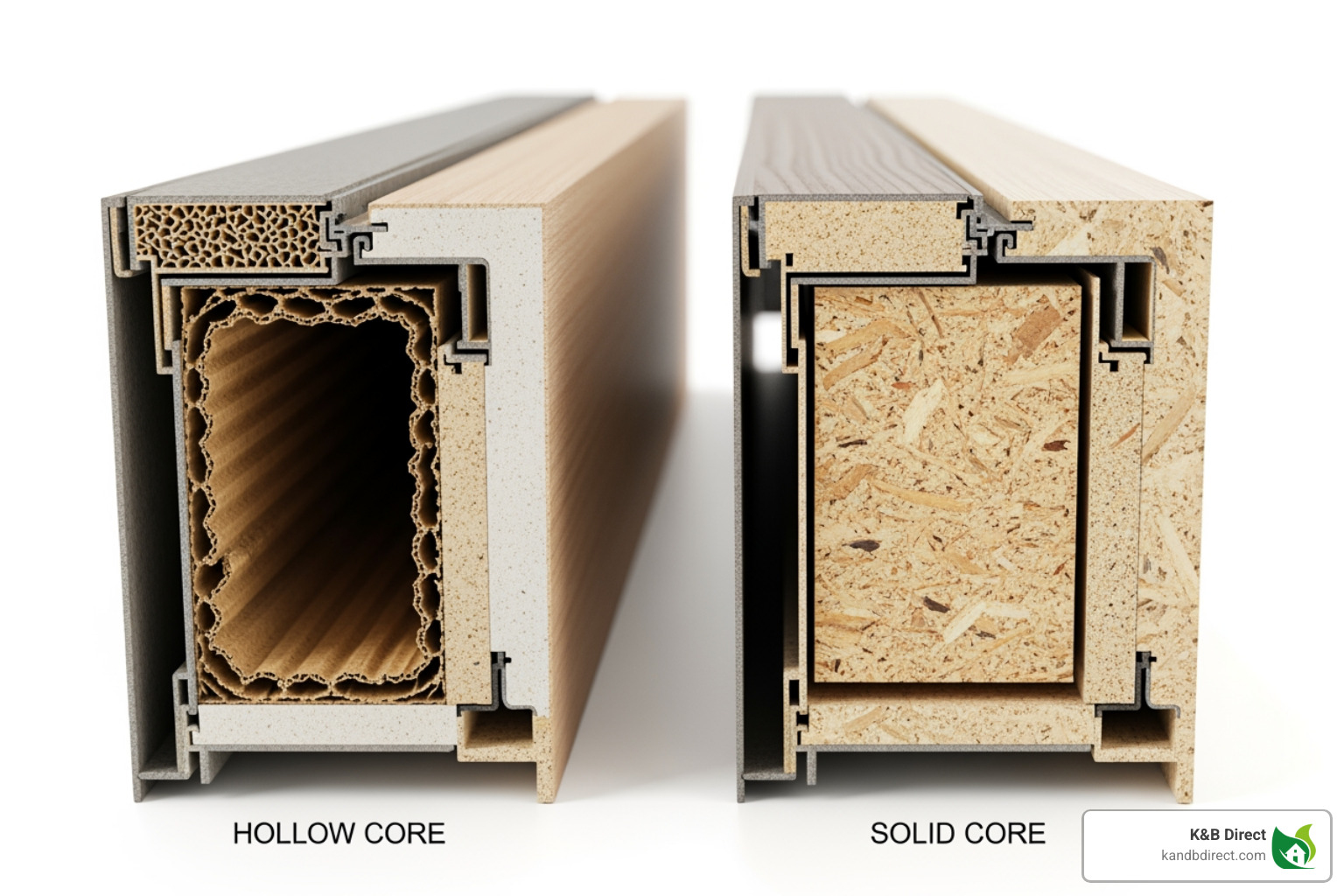
Hollow core doors are a budget-friendly option. They consist of a wood frame with a cardboard honeycomb filler, wrapped in a wood veneer or molded composite skin. Their lightweight nature makes them easy to install, perfect for closets or rooms where soundproofing is not a priority. They are less durable and offer minimal noise reduction. We offer nine panel styles and nine prefinished options in hollow core.
Solid core doors have a denser core of composite wood, like particleboard. This results in a heavier door with significantly better sound insulation and a more substantial feel. We recommend solid core Interior Doors for bedrooms, bathrooms, and home offices where privacy and quiet are important. They offer excellent performance at a mid-range price point. Three panel styles are available in solid core.
Stile and rail construction is a traditional method using vertical stiles and horizontal rails to frame individual panels. This creates exceptionally stable and character-rich doors, with fourteen panel styles available across eight different species and materials.
Molded composite doors are made by molding wood fibers and resin into panel designs, which are then applied over a hollow or solid core. They offer a consistent look and are resistant to warping, shrinking, and cracking.
| Feature | Hollow Core Doors | Solid Core Doors |
|---|---|---|
| Price | Most affordable | Mid-range |
| Weight | Lightweight, easy to handle | Heavy, requires stronger hinges |
| Sound Insulation | Minimal, sound travels easily | Good, significantly reduces noise transmission |
| Durability | Susceptible to dents and impacts | More resistant to impacts, very durable |
| Best Use | Closets, low-traffic areas, budget-conscious | Bedrooms, bathrooms, offices, high-traffic areas |
Common Materials for Interior Doors
The material affects the door’s appearance and finish.
Solid wood doors offer the best in durability, sound insulation, and natural beauty. Popular species include Knotty Alder, Knotty Pine, Maple, Oak, and Poplar. As a premium investment, they add significant value and character to a home. Learn more in our Modern Interior Wood Doors Guide.
MDF (Medium-Density Fiberboard) is an engineered wood product with a very smooth surface, making it ideal for painting. MDF doors are stable, resist warping, and are more affordable than solid wood, making them a smart choice for painted Interior Doors like modern shaker styles.
Composite materials blend wood fibers, plastic, and resin, creating doors that are highly resistant to moisture and temperature changes. Many molded panel doors use composite materials, offering durability and stability at an accessible price.
Finally, consider the finish. Primed doors are ready for you to paint, offering full customization. Prefinished doors are factory-finished and ready to install, saving time and ensuring a professional look. We offer nine prefinished options for our hollow core doors.
Choosing the Right Interior Doors for Your Home
The right Interior Door does more than close off a room; it improves home value, improves flow, and reflects your personal style. Matching a door’s features to a room’s function is key to daily comfort and satisfaction.
Selecting Doors by Room Function
Different rooms have different needs, and your door choice should reflect that.
- Bedroom Doors: We recommend solid core or solid wood doors to block noise and ensure privacy, creating a peaceful retreat.
- Bathroom Doors: Solid core doors are also ideal here for privacy. Ensure the material and finish can handle moisture.
- Living Room Doors: These doors often make a design statement. French doors are popular for letting light flow between spaces, while solid panel doors add sophistication.
- Closet Doors: Space-saving designs like bifold, sliding, or pocket doors are perfect, especially where a swinging door would be obstructive.
- Home Office Doors: Solid core or solid wood doors are crucial for sound insulation, helping you focus during work calls and tasks. For more guidance, see our Quality Interior Doors Chicago page.
- Pantry Doors: Bifold or louver doors are practical choices. Louver doors are especially smart as they allow air circulation, keeping stored food fresh.
Key Factors to Consider: Privacy, Sound, and Style
Getting these three factors right ensures long-term satisfaction with your doors.
- Privacy: Solid core or solid wood doors offer the most privacy, blocking sight and sound. For areas where you want a visual connection, doors with clear or frosted glass panels are excellent choices.
- Sound Insulation: The difference between door cores is dramatic. Hollow core doors offer minimal sound dampening. Solid core doors provide good noise reduction, while solid wood doors offer the best sound blocking available.
- Style and Aesthetics: Your Interior Doors should complement your home’s character. Modern style favors clean lines and shaker designs. Traditional style features raised panel doors in rich wood tones. Rustic style incorporates barn doors and distressed wood. For more advice, consult our Interior Door Supply Ultimate Guide.
The Impact of Glass and Panels
Details like glass and panel design can transform a door’s look and function.
Glass panes change how light moves through your home. Clear glass offers maximum light and an open feel. Frosted glass provides privacy while still allowing light to filter through, making it ideal for home offices and bathrooms. Woodgrain offers 23 different glass options to suit your needs.
Panel styles define a door’s personality. The number and shape of the panels set the tone. A 1-panel shaker door, like our Interior Doors 1 Panel Shaker, offers a clean, contemporary look. In contrast, multi-panel designs typically create a more traditional aesthetic. Mastercraft offers a wide range of panel styles to match any design vision.
The Practical Side: Measurement, Hardware, and Care
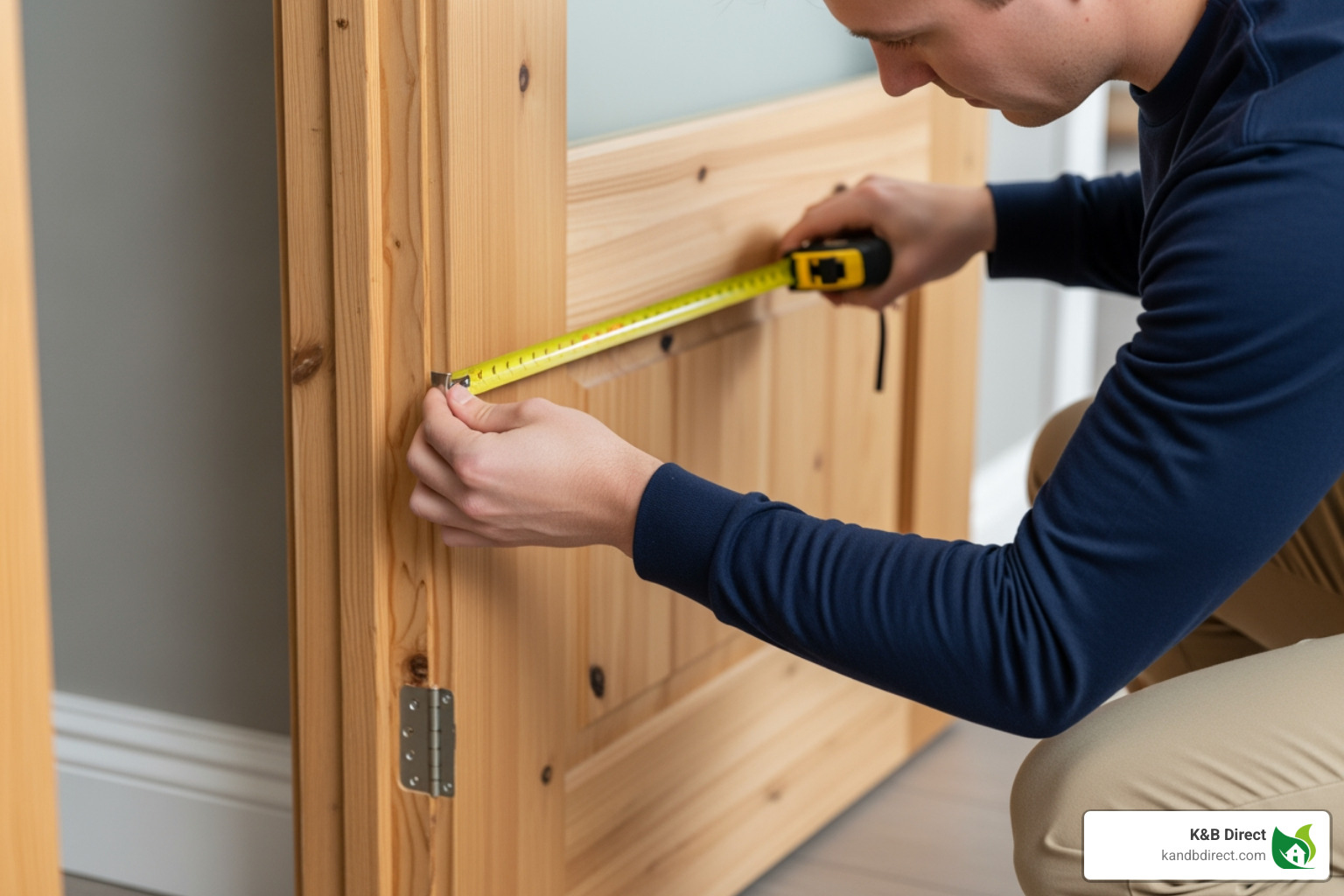
Once you’ve chosen a style, it’s time for the practical details. Correct measurements, complementary hardware, and proper care for your Interior Doors are essential for a smooth installation and long-term satisfaction. A little preparation saves significant time and effort.
How to Measure for a New Door
Accurate measurements are critical. For a replacement door slab, measure the height, width, and thickness of the existing door. Common dimensions are 80 inches tall, 24-36 inches wide, and 1⅜ inches thick.
For a prehung door or new construction, measure the rough opening: the width between wall studs and the height from the subfloor to the header.
Also, determine the door swing. Stand with your back to the hinge side of the jamb; if the door swings open to your left, it’s a left-hand door. If it swings to your right, it’s a right-hand door. Getting this right is crucial for prehung units. For detailed guidance, see our guide on How to Frame an Interior Door and this excellent tutorial from This Old House.
Finishing Touches: Hardware and Frames
Hardware and trim complete the installation and define the final look.
Door hardware like knobs, levers, and hinges act as the jewelry for your doors. Choose finishes like brushed nickel or matte black for modern styles, or oil-rubbed bronze for traditional looks. Heavier solid core and solid wood doors require more robust hinges to prevent sagging.
The door frame (jamb) is included with prehung doors. If you need a separate jamb kit, note the processing time is typically 14-25 business days.
Moulding and casing cover the gap between the frame and the wall. Simple, flat casing suits contemporary spaces, while ornate profiles add character to traditional homes. If you’ve chosen primed doors, our guide on How to Paint an Interior Door will help you achieve a professional finish.
Long-Term Care and Maintenance for Interior Doors
Interior Doors require minimal maintenance to stay looking and working like new.
- Cleaning: Regularly wipe doors with a soft, damp cloth and mild soap. Avoid harsh or abrasive cleaners.
- Damage Prevention: Install doorstops to prevent handles from hitting walls. Close doors gently to extend their lifespan.
- Adjustments: Over time, hinges may need tightening to fix a sticking or misaligned door. A few turns of a screwdriver can often solve the problem.
- Touch-Ups: Keep a small amount of matching paint for quick fixes on chips or scratches. For solid wood doors, occasional furniture polish will maintain their luster.
- Humidity: Ensure doors in high-humidity areas like bathrooms are properly sealed and check for any signs of swelling or warping.
Frequently Asked Questions about Interior Doors
Here are answers to the most common questions we receive from homeowners at our Chicago showroom about choosing Interior Doors.
What is the typical price range for interior doors?
The price of Interior Doors varies by construction and material. Here’s a general breakdown per door slab:
- Hollow Core Doors: $100-$200. The most budget-friendly option, ideal for closets.
- Solid Core Doors: $200-$500. A popular mid-range choice for bedrooms and bathrooms, offering good sound insulation.
- Solid Wood Doors: $300-$900+. A premium investment in durability and style, with prices varying by wood species and design. Some premium doors can be priced at $999.00.
Specialty doors (French, barn) and prehung units cost more. Remember to budget for hardware, finishing, and installation. For a detailed breakdown, see our Interior Door Prices Guide 2025.
What is the difference between a slab and a prehung door?
This is a crucial distinction to understand before you buy.
A slab door is just the door panel itself, with no frame or hardware. It’s a good choice if you’re replacing a door and your existing frame is in great shape. Installation requires carpentry skills to mortise hinges and drill for hardware.
A prehung door is a complete package: the door comes already hung in its frame (jamb) with hinges attached. It’s the recommended choice for new construction or major renovations, as it simplifies installation and ensures a perfect fit. For more details, see our guide on How to Replace an Interior Door.
What is the lead time for custom or special order doors?
Project timelines are critical. Here are our typical lead times:
- Standard In-Stock Doors: Processing time is 6-7 business days.
- Jamb Kits: These components take 14-25 business days to process.
- Custom/Special Order Doors: Through programs like Mastercraft’s “Your Door, Your Way®,” we can deliver custom doors in approximately 7 days, which is faster than many expect.
We advise placing your order as soon as you know your requirements to keep your project on schedule. Always confirm current lead times when you order.
Conclusion
This guide has covered everything from construction types to style choices, equipping you to select the perfect Interior Doors for your home. The right doors improve light, control sound, and define your home’s aesthetic. A well-chosen door can make a room more private, brighten a hallway, or add a touch of elegance.
At K&B Direct, we’ve learned that the best choice balances your aesthetic vision, practical needs, and budget. You don’t have to sacrifice quality for price or style for durability. Whether you prefer modern shaker doors, timeless solid wood panels, or space-saving barn doors, there is a solution that fits your home perfectly.
Upgrading your doors is a high-impact change that can increase your home’s value and your daily enjoyment of the space. At K&B Direct, our commitment is to offer top-quality Interior Doors at the lowest possible prices, with friendly, helpful service. We believe everyone deserves to create their dream home without breaking the bank.
Ready to get started? Explore our full collection of Interior Doors and find the options that will bring your vision to life. We’re here to help you find exactly what you need.