
Why Bifold Doors Interior Are the Smartest Space-Saving Upgrade You Can Make
Bifold doors interior applications have become one of the most popular choices for homeowners who want to reclaim usable space without sacrificing style. Whether you’re renovating a bedroom closet, carving out a laundry room, or dividing an open-plan living area, bifold doors solve a problem that traditional swing doors simply can’t: they fold neatly to the side, eliminating the need for swing clearance entirely.
Here’s a quick snapshot of what makes interior bifold doors stand out:
| Feature | Bifold Doors | Traditional Swing Doors |
|---|---|---|
| Space required to open | Minimal — folds flat | Requires full swing arc |
| Best for | Closets, pantries, room dividers | Standard doorways |
| Common styles | Shaker, louvered, raised panel, flush | Panel, flush, French |
| Materials available | Pine, MDF, oak, birch | Same, plus more solid options |
| Installation | Track-based system | Standard hinges and frame |
The appeal is straightforward. A bifold door collapses into itself along a top-mounted track, so your floor space remains clear. That’s a big deal in tighter rooms where every inch counts.
I’m Eryk Piatkowski, owner of K&B Direct, and over the past decade-plus of helping homeowners transform their spaces, bifold doors interior projects have been some of the most impactful upgrades I’ve seen clients make. In this guide, I’ll walk you through the styles, materials, and configurations worth considering for your home.
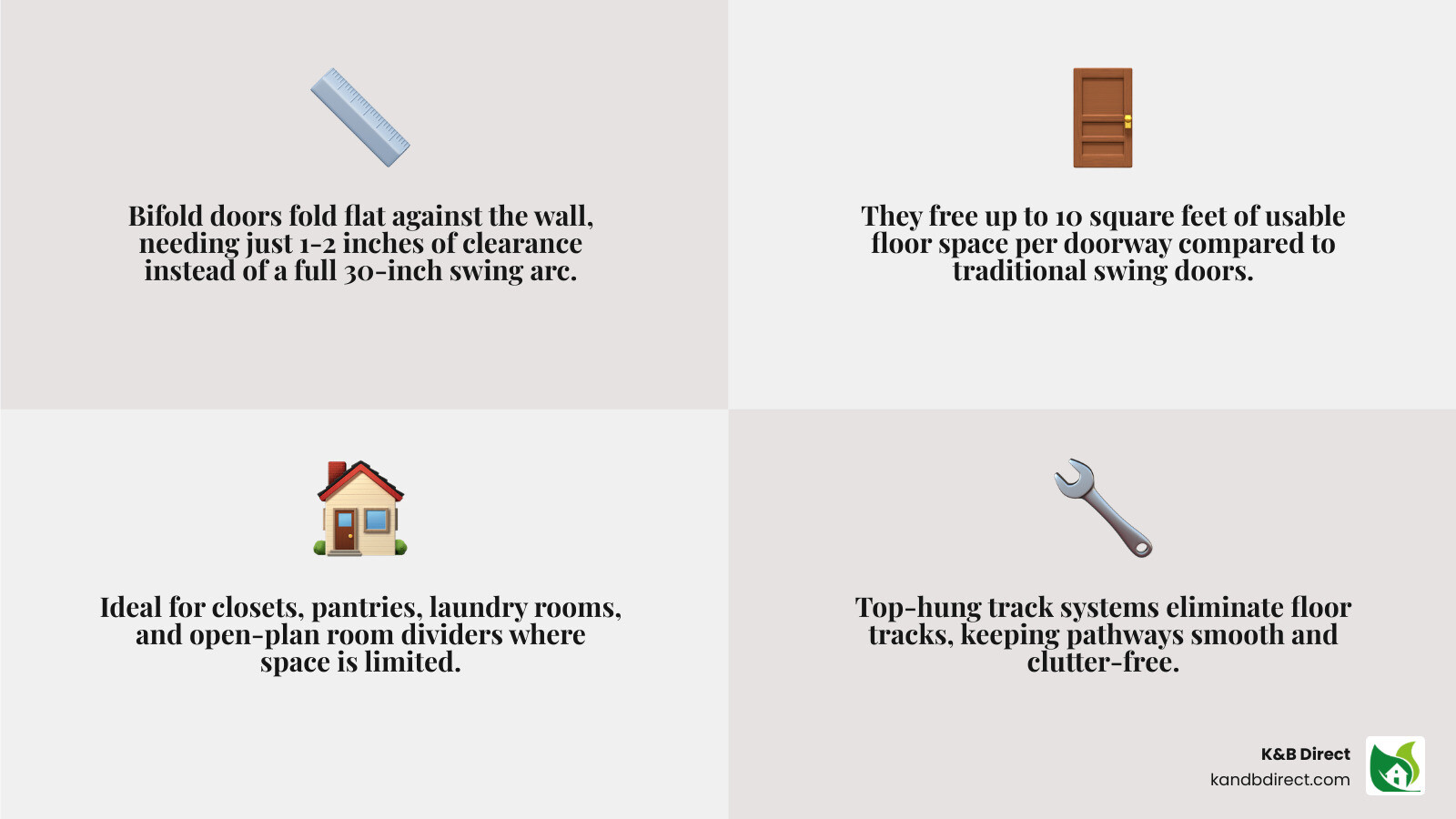
Bifold doors interior terms at a glance:
Understanding Bifold Doors vs. Traditional Options
To appreciate the value of a folding setup, it helps to look at the physical space standard doors demand. A traditional single swing door requires a wide, clear semi-circle of floor space just to open and close. In a compact bedroom, a narrow hallway, or a crowded laundry area, this swing clearance restricts where you can place furniture, hang art, or even stand comfortably.
Sliding doors and pocket doors offer alternative ways to save space, but they come with their own limitations. Sliding bypass doors always obstruct at least half of the opening, meaning you can never view or access your entire closet at once. Pocket doors are fantastic, but they require tearing open your drywall to install an internal wall frame—a major undertaking that is not always structurally possible.
This is where the folding mechanism shines. By joining two or more panels with center hinges, the system collapses the door’s footprint. Instead of swinging outward into the room, the panels fold flat against each other and slide smoothly along a track. This action optimizes every inch of your floorplan.
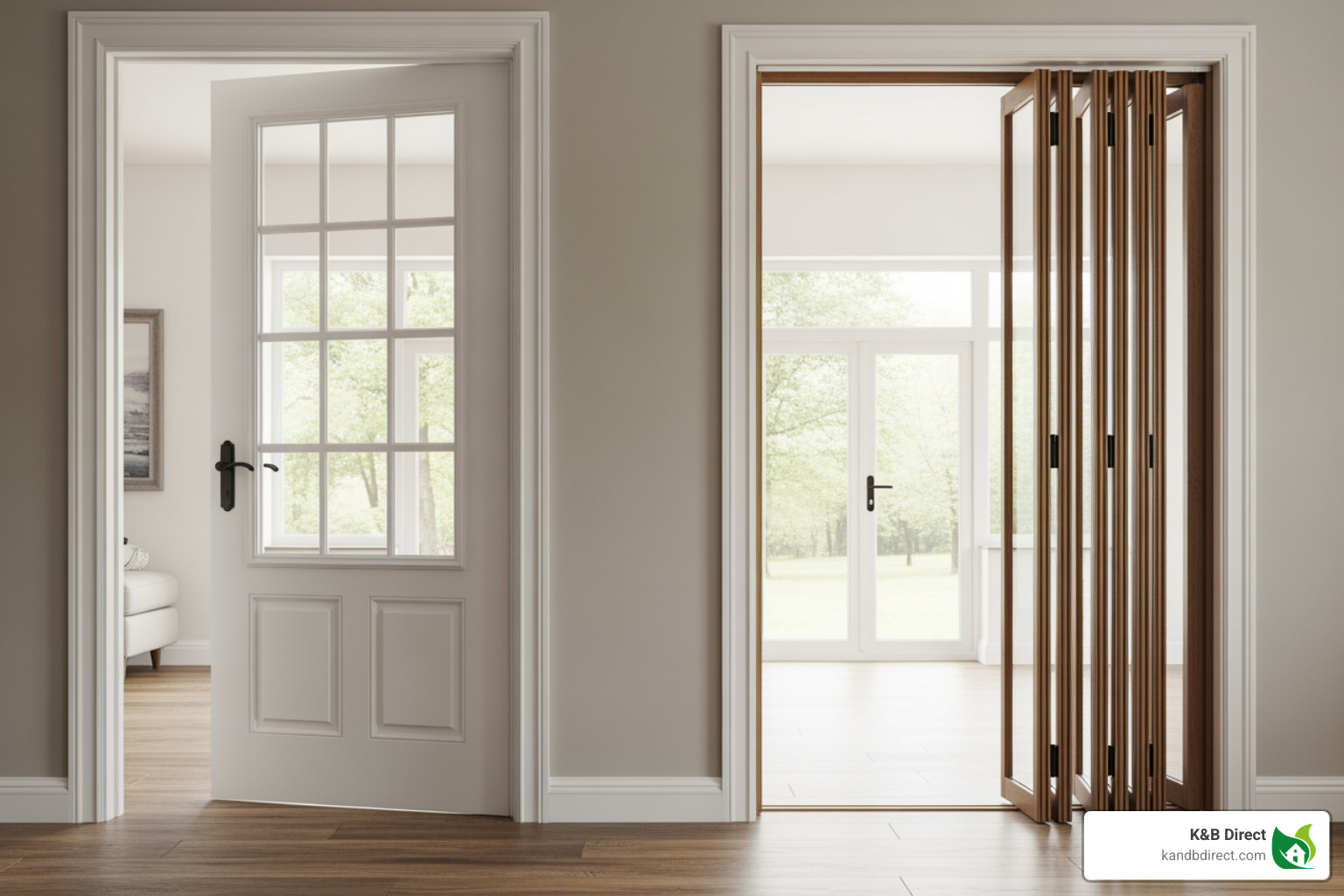
For a deeper look into maximizing tight layouts, explore our guide on Space Saving Closet Doors.
Choosing the Perfect Bifold Doors Interior Styles for Your Home
Selecting the right style is about balancing functional needs with the architectural theme of your home. Because these doors occupy prominent visual real estate—especially when used as large room dividers—their design influences the entire room’s atmosphere.
For modern and minimalist aesthetics, clean lines are key. Shaker-style panels, flush surfaces, and minimalist profiles keep the focus on sleek simplicity. If your home has a more traditional or transitional design, raised panels or classic colonial configurations add depth and elegance.
Those looking to split larger living spaces into cozy, adaptable zones often opt for glazed configurations. For example, systems like the White P10 Roomfold Deluxe Bifold Doors utilize large glazed panes to let natural light flow between rooms even when the doors are fully closed. This allows you to create quiet home offices or intimate dining areas without making the house feel dark or boxed in.
Popular Materials for Bifold Doors Interior Systems
The material you choose impacts the weight, longevity, sound dampening, and overall feel of your doors.
- Solid Wood (Pine & Oak): Solid wood offers unmatched natural beauty and a satisfying, heavy feel. Oak veneer options, such as the Prefinished P10 Oak Roomfold Deluxe (4 X 610mm Doors) Bifold Doors At Climadoor , provide the luxurious look of real timber with excellent structural stability. Solid wood can also be stained or painted to match your custom trim.
- MDF (Medium-Density Fiberboard): MDF is incredibly stable because it does not expand or contract with temperature and humidity changes. It provides a perfectly smooth surface for paint. High-quality options like the 24 in. x 84 in. Smooth Flush Solid Core White MDF Interior Closet Bi-Fold Door with Matching Trim offer the dense, premium feel of solid wood while resisting warping.
- Hollow Core: These doors feature a cellular inner honeycomb structure wrapped in a wood or MDF veneer. They are lightweight, making them very easy to operate, and are highly practical for standard utility closets where heavy soundproofing is not a priority.
Where to Install Bifold Doors Interior Panels
While closets are the most common home for these systems, their versatility makes them useful throughout the entire household:
- Bedroom Closets: Traditional swinging doors can restrict bed placement or nightstand positioning. Installing Bifold Closet Doors allows you to place furniture right up near the opening without obstructing access to your wardrobe.
- Kitchen Pantries: A folding door keeps your pantry items hidden away when closed, yet folds completely out of the way when you are preparing meals and need quick access to ingredients.
- Laundry Rooms and Utility Closets: These areas are often tucked into narrow hallways or tight mudrooms. A folding system keeps the walkway clear even when the washing machine is being loaded.
- Large Room Dividers: Using wider multi-panel systems allows you to open up or close off entire rooms, such as separating a dining room from a living room during gatherings.
Sizing, Configurations, and Installation Systems
Getting a flawless fit requires understanding the physical dimensions of your opening and the mechanics of the track system.
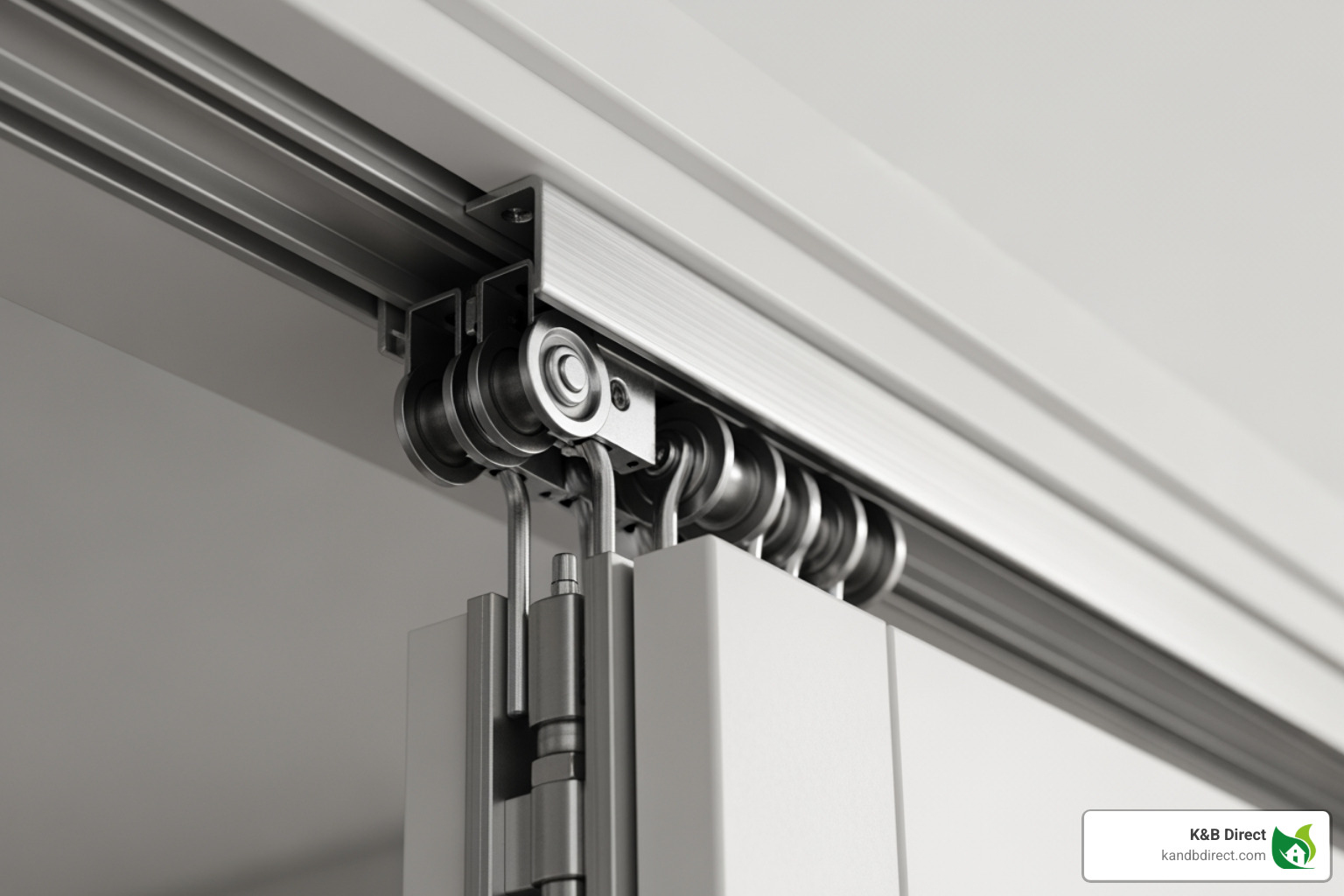
Most interior folding setups rely on a top-hung track system. In this setup, the weight of the doors is suspended from a sturdy aluminum or steel track mounted to the top jamb. This keeps the floor clean and clear of tracks, creating a seamless transition between rooms. For heavier or exceptionally wide multi-panel configurations, a bottom guide channel may be added to ensure the panels slide in a straight line without swaying.
To explore standard dimensions and find the perfect fit for your home, review our comprehensive guide on Bifold Door Sizes.
Selecting the Right Dimensions and Configurations
When preparing to order, you must measure the finished opening—the inside width and height of the door frame after the drywall or trim is completely installed.
Standard folding door panels are manufactured slightly smaller than their nominal sizes to allow room for the tracks, pivots, and clearances between panels. For example, a standard 24-inch system typically features two panels that measure slightly under 12 inches each.
The configuration you choose depends on the width of your opening:
- Two-Panel Configurations: Ideal for smaller openings like pantries or single closets. Both panels fold to one side.
- Four-Panel Configurations: Perfect for double closets or wider hallway openings. Two panels fold to the left, and two fold to the right, meeting in the center when closed.
- Multi-Panel Room Dividers: Larger spaces can accommodate three, five, or even more panels folding in a single direction or splitting down the middle.
Hardware, Tracks, and Assembly Options
The quality of your hardware determines the entire user experience. A high-quality system should glide with the push of a single finger.
Key hardware components include:
- Top Track: The guide rail that houses the wheeled rollers.
- Snugger and Pivots: Heavy-duty pins that secure the door to the floor and top jamb at the pivot side, allowing the door to rotate and slide.
- Hinges: Connect the individual panels. High-quality systems use flush-mounted or mortised hinges for a clean look.
- Drop Bolts: Used on multi-panel room dividers to lock specific panels in place for stability.
You can purchase these doors as individual slabs, allowing you to select your own custom tracks and hinges, or as complete, ready-to-assemble systems that include matching frames, pre-fit tracks, and pre-drilled panels.
Frequently Asked Questions
What is the difference between solid core and hollow core bifold doors?
Solid core doors are filled with dense wood composite or solid timber. This construction makes them heavy, highly durable, and excellent at dampening sound—making them the perfect choice for bedrooms, home offices, and laundry rooms where you want to muffle machine noise. Hollow core doors contain a lightweight honeycomb interior. They are easier to hang and operate, making them highly practical for linen closets, pantries, and spaces where sound transmission is not a concern.
Can bifold doors be trimmed to fit custom openings?
Yes, many wood and MDF doors offer trimming allowances. But, the amount you can trim depends entirely on the door’s construction. Solid wood doors offer the greatest flexibility, often allowing you to trim up to an inch or more from the sides and bottom. Molded or hollow-core doors have much smaller trimming limits—often a fraction of an inch—because cutting too deep can compromise the internal support structures. Always check the manufacturer’s technical specifications before trimming.
Do bifold doors require a bottom track?
Standard closet setups do not require a bottom track. They use a top-hung track to support the weight, combined with a floor pivot on one side to keep the door anchored. This keeps your flooring continuous and eliminates a potential tripping hazard. Yet, very large, heavy, or multi-panel room partitioning systems often utilize a subtle bottom guide channel to keep the doors perfectly stable and sliding smoothly in a straight line.
Conclusion
Maximizing the usable space in your home does not mean you have to compromise on style. By folding flat and sliding smoothly along a compact track, bifold doors interior systems eliminate the cumbersome swing path of traditional doors, giving you complete freedom over your floor plan. From elegant oak-veneered room dividers to clean, modern Shaker closet doors, there is a configuration to fit every room’s unique needs.
At K&B Direct, we are dedicated to helping homeowners across the Chicagoland area—including Schiller Park, Chicago, Rosemont, Park Ridge, Franklin Park, River Grove, Norridge, Des Plaines, Elk Grove Village, Bensenville, Schaumburg, Oak Brook, Arlington Heights, Mount Prospect, Elmhurst, Glenview, Oak Park, Niles, and Maywood—find top-quality doors, windows, and cabinetry. We believe in providing the absolute best products at unbeatable, lowest possible rates, backed by friendly, expert service to help you achieve your dream home aesthetic.
Ready to explore more space-saving options? Check out our Modern Sliding Closet Doors Complete Guide or contact our team today to find the perfect fit for your next home improvement project!