Why Cabinet Trim Installation Makes All the Difference
Cabinet trim installation is the secret to changing basic cabinets into custom-looking masterpieces. From decorative crown molding at the top to toe kicks at the bottom, every piece plays a role. Filler strips close gaps between cabinets and walls, light rail molding conceals under-cabinet lighting, and end panels give a finished look to exposed sides.
The process involves careful measuring, precise cutting, and secure attachment, followed by filling, caulking, and painting to achieve a seamless, professional finish.
The difference between amateur and professional-looking cabinets often comes down to the trim work. As one DIY enthusiast noted: “I thought about replacing them, but really I didn’t want to spend a lot of money on this mini makeover and the cabinets functioned perfectly fine, so I decided to add trim to the flat cabinets to give them a little style upgrade and a modern look.”
Cost savings are significant – crown molding installation typically costs $8 per linear foot, while complete cabinet replacement can cost thousands more.
I’m Eryk Piatkowski, owner of K&B Direct, and I’ve been helping homeowners achieve professional cabinet trim installation results for over a decade. My experience has taught me that the right trim can make any kitchen or bathroom look custom-built.
Planning Your Project: Trim, Tools, and Materials
Proper planning is the key to a successful cabinet trim installation. Before you start, understand your materials, choose the right trim for each job, and gather the necessary tools.
Understanding Cabinet Trim Types and Their Functions
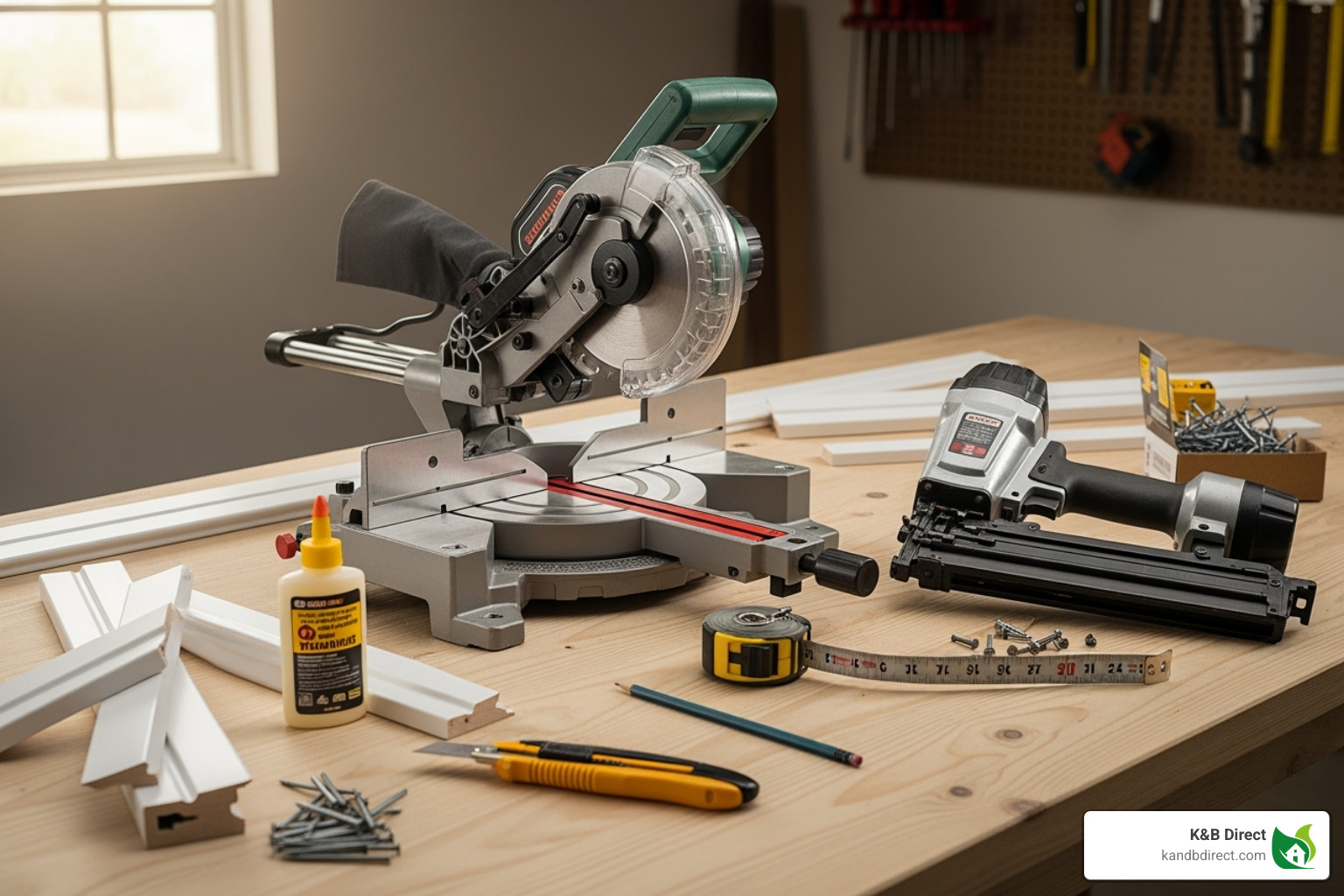
Each piece of cabinet trim has a specific purpose to create a seamless, built-in look.
- Filler strips bridge gaps between cabinets or between a cabinet and a wall.
- Scribe molding is a thin, flexible strip that hides gaps where cabinets meet uneven walls or ceilings.
- Crown Moulding is the decorative trim that sits atop your upper cabinets, adding a high-end, custom feel.
- Toe kicks cover the space at the bottom of your base cabinets for a clean line at the floor.
- Light rail molding conceals under-cabinet lighting fixtures and wiring.
- End panels cover exposed cabinet sides, which is crucial for islands and peninsulas.
- Outside corner molding finishes 90-degree corners where cabinet sides and backs meet.
- Base Cap Mouldings and other decorative elements can add extra architectural character.
Choosing the Right Materials
The choice between wood and MDF is a common one for cabinet trim installation.
- Wood trim, available in our Wood Trim collection, offers natural beauty and durability. It can be stained and is more resistant to dents, but it costs more.
- MDF is a budget-friendly option that’s perfect for painted finishes. It cuts cleanly but is more susceptible to dents and moisture damage.
For humid areas like bathrooms, consider polystyrene or PVC options, which are moisture-proof and easy to install.
Essential Tools and Supplies for Cabinet Trim Installation
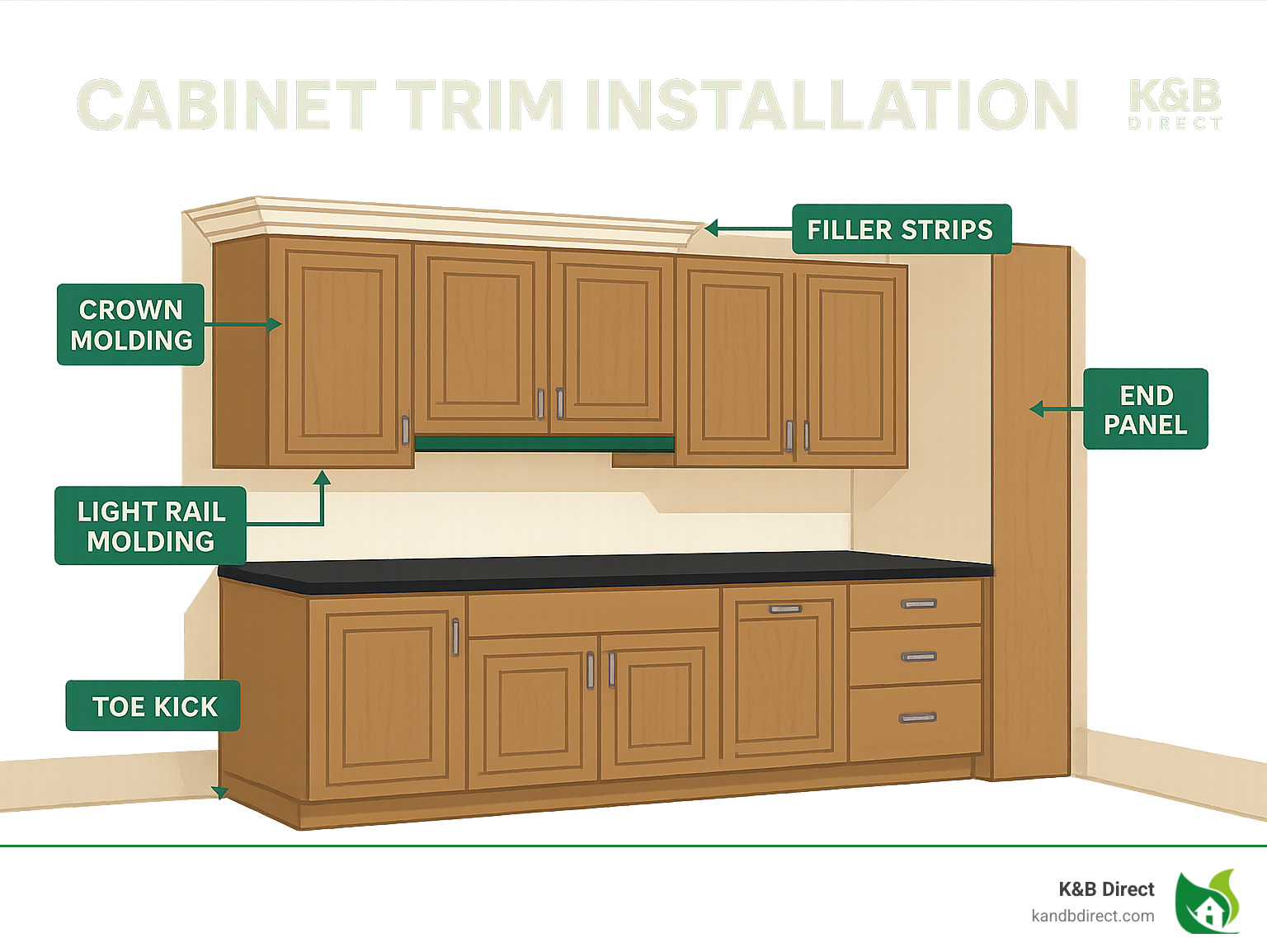
Having the right tools makes the job smoother and more professional.
- Miter Saw: Essential for accurate angle cuts.
- Tape Measure: For precise measurements.
- Brad Nailer: Speeds up installation and leaves tiny, easy-to-fill holes.
- Wood Glue: Strengthens mitered joints.
- Caulk Gun & Paintable Caulk: For sealing gaps.
- Wood Filler: To fill nail holes.
- Sandpaper (various grits): For smoothing surfaces.
- Level: To ensure everything is straight.
- Safety Glasses: Non-negotiable eye protection.
- Clamps: To hold pieces while glue dries.
- Stud Finder: To locate solid attachment points.
- Dust Mask: Especially important when cutting MDF.
The Ultimate Guide to Cabinet Trim Installation
Now it’s time to transform your cabinets. This guide will walk you through each step of cabinet trim installation for professional-level results.
Step 1: Preparing Cabinets and Measuring for Trim
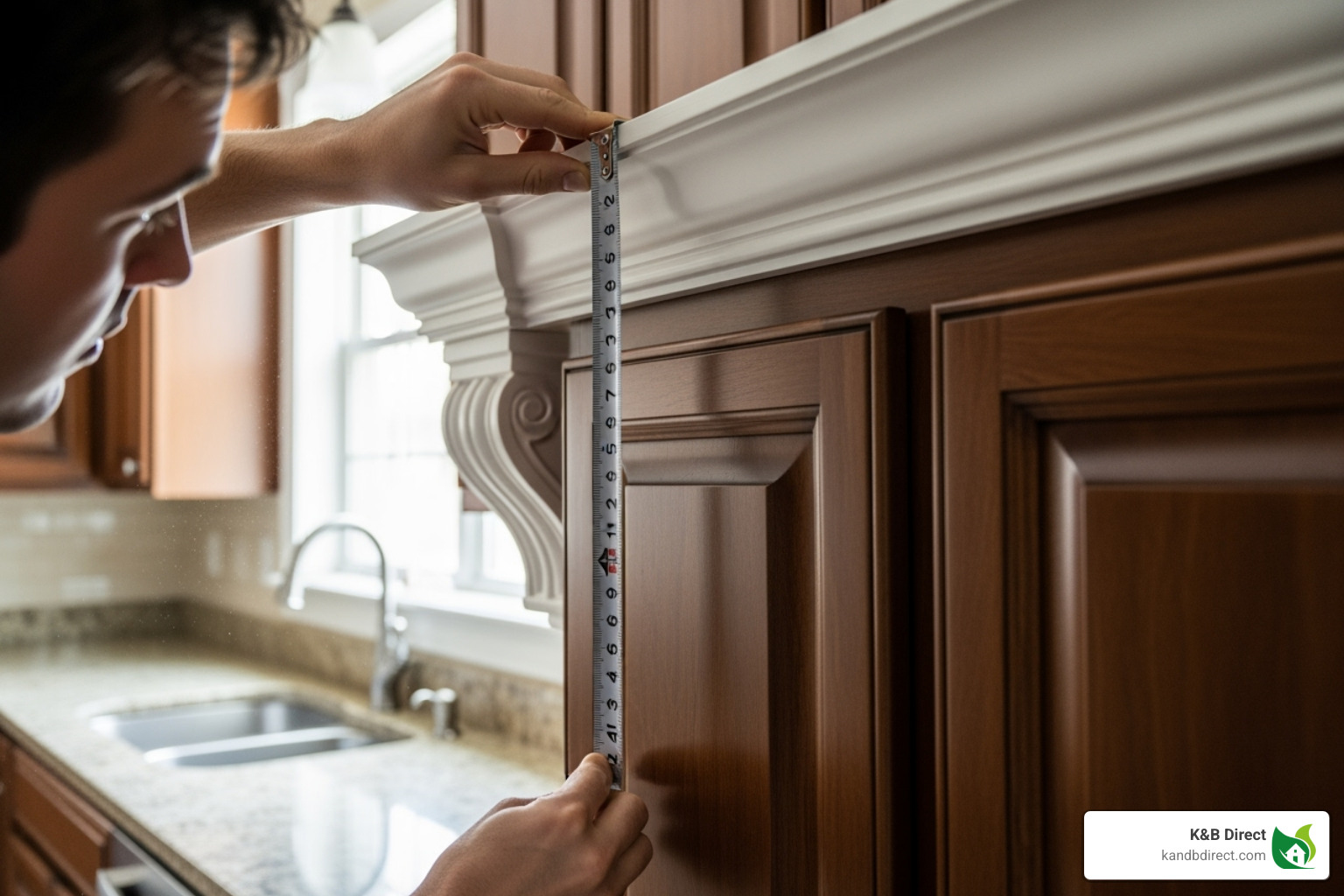
“Measure twice, cut once” is the mantra here. Start by cleaning all cabinet surfaces where trim will be attached. Adjust cabinet door hinges to ensure they are level and evenly spaced.
Next, measure the linear feet required for each type of trim. A pro tip: always buy 10-15% extra material to account for miscuts or imperfections. This is far better than an extra trip to the store mid-project. For more on measurement principles, see our guide on How to Cut Baseboard.
Step 2: Mastering the Cut for a Perfect Fit
Precise cuts are critical. For most 90-degree corners, you’ll need two pieces cut at 45-degree angles. A miter saw is essential for this.
The simplest method for crown molding is the “upside-down and backward” technique. Place the molding on your saw so the bottom edge (that touches the cabinet) is against the saw’s fence, and the top edge is flat on the saw’s table. This way, you only need to set the miter angle (usually 45 degrees) without worrying about complex compound angles.
- For outside corners, the left piece is cut with the saw swung left, and the right piece with the saw swung right.
- For inside corners, the direction is reversed: the left piece is cut with the saw swung right, and the right piece with the saw swung left.
Our guide on How to Cut Baseboard Corners has more tips that apply here. Always dry fit your pieces to check for a tight joint before fastening them.
Step 3: A Guide to Proper Cabinet Trim Installation
With your pieces cut, you’re ready to install.
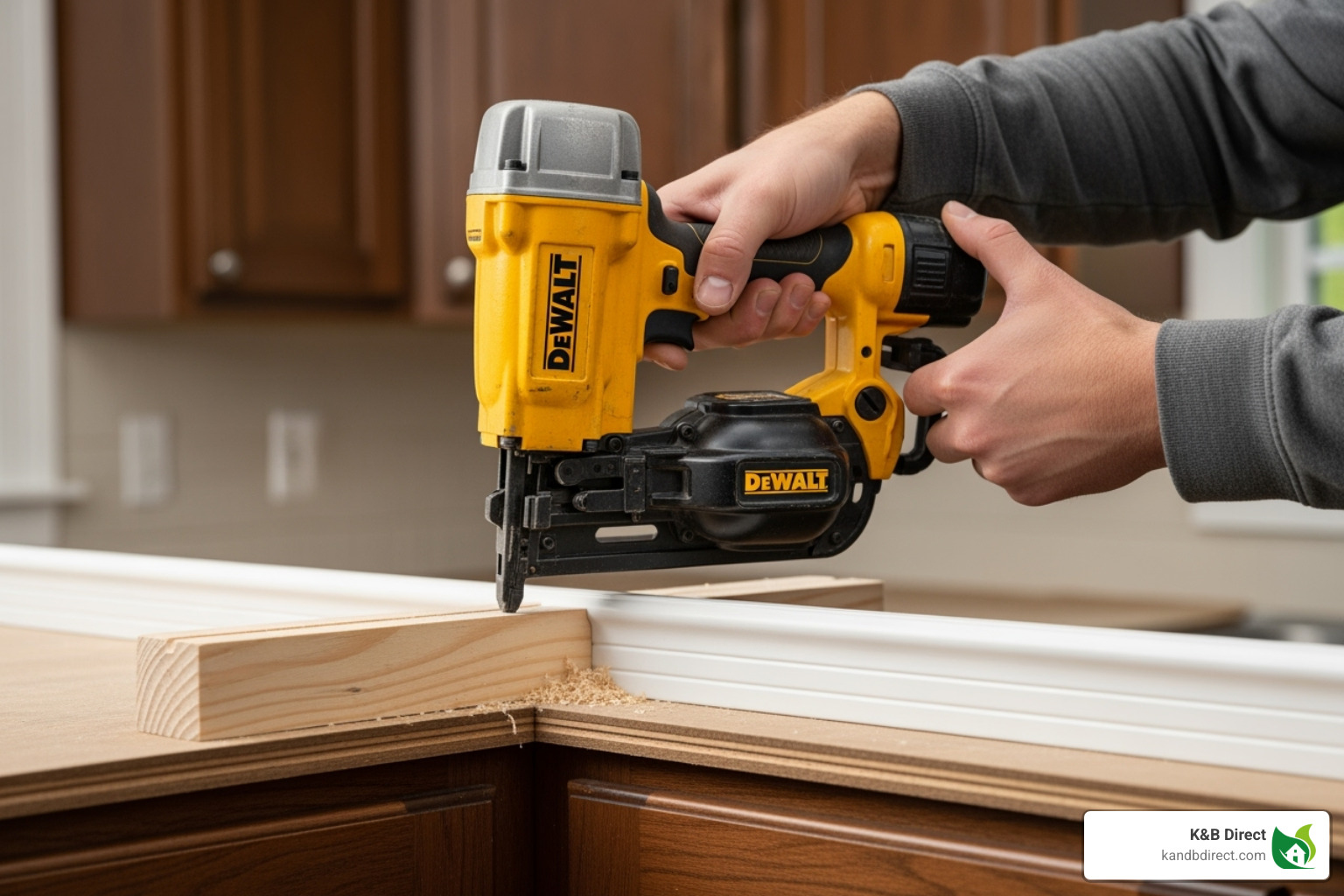
- Crown Molding: For full overlay or frameless cabinets, attach a nailing cleat (a 1×2 or 1×3 strip of wood) to the top of the cabinets. Extend the cleat about one inch past the cabinet face so the molding sits flush with the doors. You can then nail the molding to this cleat.
- Filler Strips: Attach to the face frame of the adjacent cabinet with wood glue and brad nails.
- Toe Kicks: These usually slide into clips or are nailed directly to the cabinet base. Keep them level across the entire run.
- End Panels: Typically screwed to the cabinet box from the inside. Ensure they are well-secured, especially dishwasher side panels that support the countertop.
Before installing trim, ensure your cabinets are securely joined together to prevent future gaps.
Step 4: Special Considerations for Your Cabinet Trim Installation
- Adding Trim to Flat Doors: This is a great upgrade. Use smaller trim profiles and measure carefully, typically placing them 1 inch from the door edge. Strong adhesive can often replace nails for a cleaner look.
- Working Around Appliances: Dishwasher end panels provide crucial countertop support and must be secured well. Refrigerator panels help create a built-in look.
- Light Rail Molding: You may need to adjust full overlay doors up by 1/4 inch to prevent them from hitting the molding. Use 1-inch pin nails (18 or 23 gauge) under the front frame to attach it discreetly.
Achieving a Flawless, Professional Finish
These final steps are what separate a good DIY project from a great one. This is where you transform your cabinet trim installation into a seamless, professional-looking feature.
Filling, Caulking, and Sanding
This trio of techniques makes imperfections disappear.
- Fill Holes: Use a quality, sandable wood filler for all nail holes and any small gaps in mitered joints. Overfill slightly, as it will shrink as it dries.
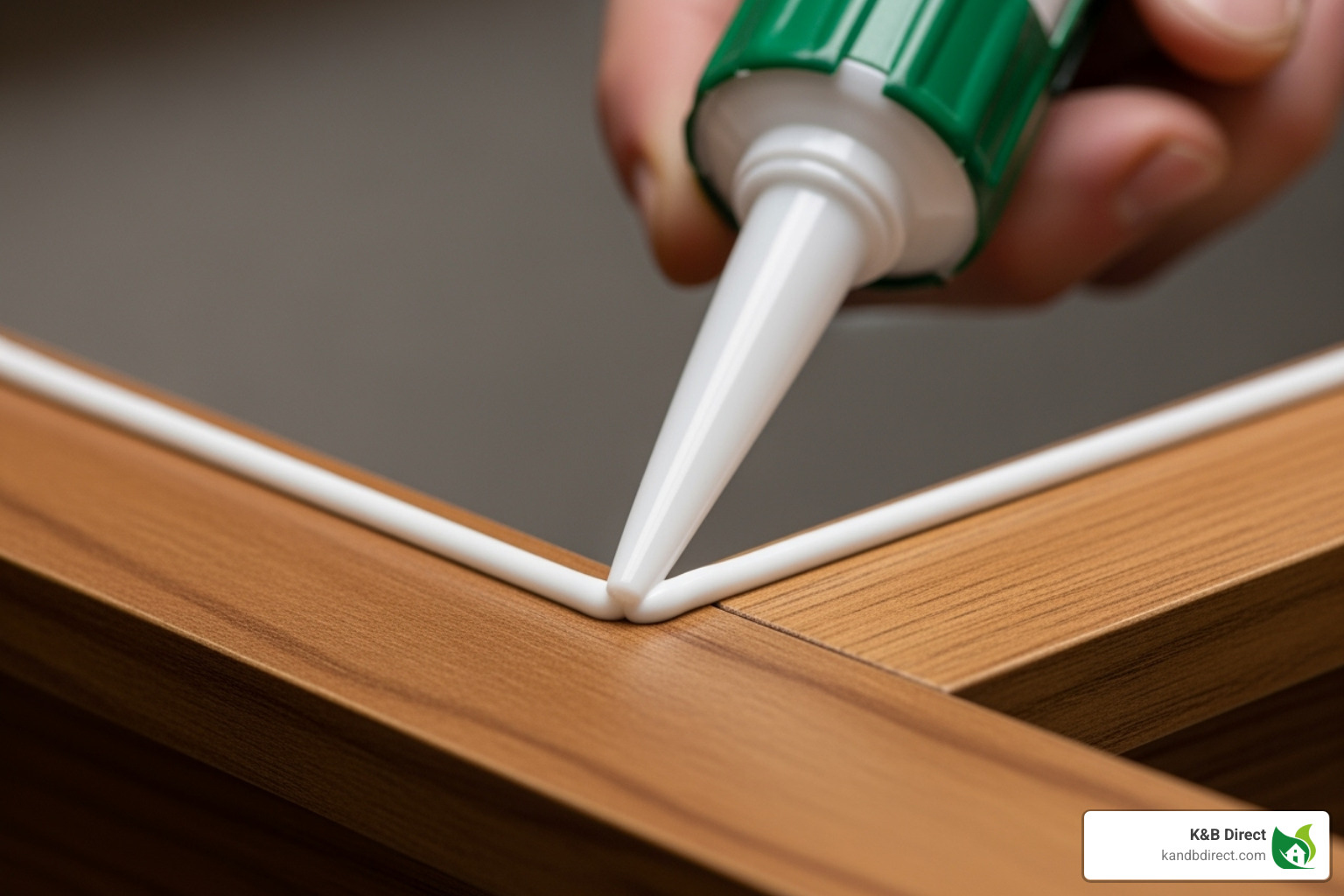
- Caulk Seams: Apply a thin, consistent bead of paintable caulk along every seam where trim meets a wall, ceiling, or cabinet. Cut a small, 45-degree opening on your caulk tube tip for better control.
- Smooth Lines: Immediately after applying caulk, smooth the bead with a damp finger or a caulk tool. For extra-crisp lines, use painter’s tape on either side of the seam, removing it before the caulk skins over.
- Sand Smooth: Once the wood filler is completely dry, sand the filled areas flush with the surrounding trim, starting with 120-grit and finishing with 220-grit sandpaper. Lightly sand the entire trim surface to prepare it for primer.
Priming and Painting for a Durable Finish
Proper painting provides a beautiful and durable finish.
- Paint After Installation: This is crucial. Painting after you’ve filled and caulked allows you to create a truly seamless, monolithic look, avoiding the patchy appearance of touch-ups.
- Choose the Right Primer: A quality acrylic latex primer works for most wood or MDF. For surfaces prone to bleed-through, use a shellac-based primer for superior adhesion and stain blocking.
- Use Cabinet Enamel: For the final coats, choose a high-quality cabinet enamel paint. These are formulated for durability and a smooth, hard finish that resists daily wear and tear. A pearl or satin finish is a popular choice.
- Application Method: For the smoothest finish, a paint sprayer is ideal. However, excellent results can be achieved with high-quality brushes and small foam rollers. Apply two or three thin coats rather than one thick coat, allowing each to dry completely.
Common Mistakes to Avoid
Learning from common pitfalls can save you time and frustration. Here are some frequent mistakes to avoid during your cabinet trim installation.
- Measurement Mishaps: This is the most common error. Always measure twice and cut once. Purchase at least 10% extra material to have on hand for any corrections.
- Door Overlay Confusion: Forgetting how your doors open and close can be a critical error, especially with light rail molding. With full overlay doors, ensure there’s clearance for them to open without hitting the new trim.
- Poor Miter Cuts: Gaps or crooked joints are a clear sign of amateur work. Practice on scrap wood first, ensure your saw is calibrated, and never rush your cuts.
- Skipping the Dry Fit: Always place your cut pieces in position without fasteners first. This allows you to check the fit and make adjustments before committing with nails and glue.
- Wrong Fasteners and Adhesives: Using fasteners that are too long or too short can cause problems. Use 1 to 1.5-inch brad nails for most trim. For delicate pieces, a strong construction adhesive can be a better choice than nails.
- Messy Caulking: Over-applying caulk creates sloppy lines that highlight imperfections. Apply a thin bead and smooth it immediately for a clean, professional seam.
- Not Joining Cabinets Properly: Before adding trim, ensure individual cabinet boxes are securely fastened to each other. Shifting cabinets will cause your trim work to develop gaps over time.
- Painting Before Installation: While it seems efficient, pre-painting often leads to a patchy finish. You’ll have to fill and caulk after installation anyway, and touch-up paint rarely blends perfectly. For the best result, paint everything after it’s installed.
Frequently Asked Questions about Cabinet Trim Installation
At K&B Direct, we often hear the same smart questions from homeowners. Here are the answers to help you achieve professional results with your cabinet trim installation.
Should I paint cabinet trim before or after installing it?
Always paint after installation. While it seems logical to paint first, you will still need to fill nail holes and caulk all the seams after the trim is in place. Touching up these spots rarely creates a perfect match. When you fill, caulk, and then paint everything at once, you achieve a seamless, factory-like finish that looks truly professional.
How do you attach crown molding to cabinets that don’t reach the ceiling?
The secret is to create a nailing cleat. This is a strip of wood (typically 1×2 or 1×3) that you attach to the top perimeter of your cabinets, giving you a solid surface to nail into. For a high-end look, extend the cleat about one inch past the cabinet face. This allows the crown molding to sit flush with your cabinet doors rather than behind them. You can pre-assemble the molding to the cleat on a workbench and then install it as a single unit.
What is the best way to fill gaps between cabinets and an uneven wall?
Walls are rarely perfectly straight. For small, inconsistent gaps, scribe molding is the ideal solution. This thin, flexible trim can be shaped to follow the wall’s contours, hiding imperfections. For larger, more uniform gaps, use filler strips. Once your trim is installed, apply a thin bead of paintable caulk to any remaining hairline gaps and smooth it for a perfect transition. This combination makes your cabinets look like they were custom-built for the space.
Conclusion
Cabinet trim installation is an exciting home improvement project where the results far exceed the effort. By following these steps, you can transform basic, builder-grade cabinets into a feature that looks like it came from a high-end custom shop.
Beyond the satisfaction of a job well done, there are real benefits. Well-installed cabinet trim not only improves the beauty of your kitchen or bathroom but also adds tangible value to your home. The clean lines and professional finish signal quality to any potential buyer.
The skills you learn here are transferable to other projects around your home, from adding chair rail in a hallway to dressing up plain doors with decorative molding.
At K&B Direct, we are passionate about providing the high-quality materials that make your vision possible, without the premium prices. We’ve seen thousands of customers succeed with these projects, and we take pride in helping you create a home you love.
Ready to turn your cabinet dreams into reality? Browse our complete collection of Mouldings & Millwork and find the perfect pieces for your project. Your future self will thank you.