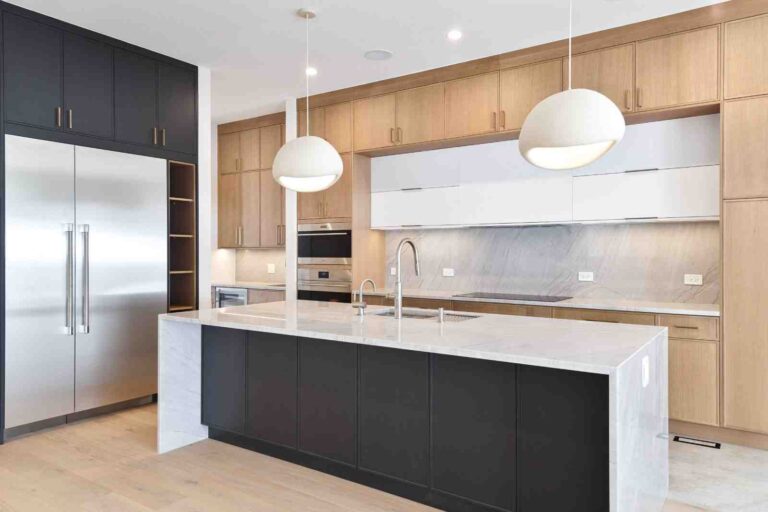
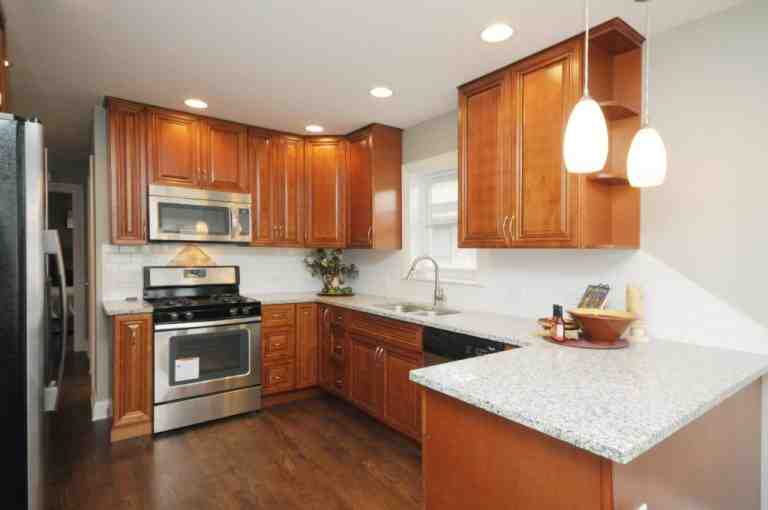
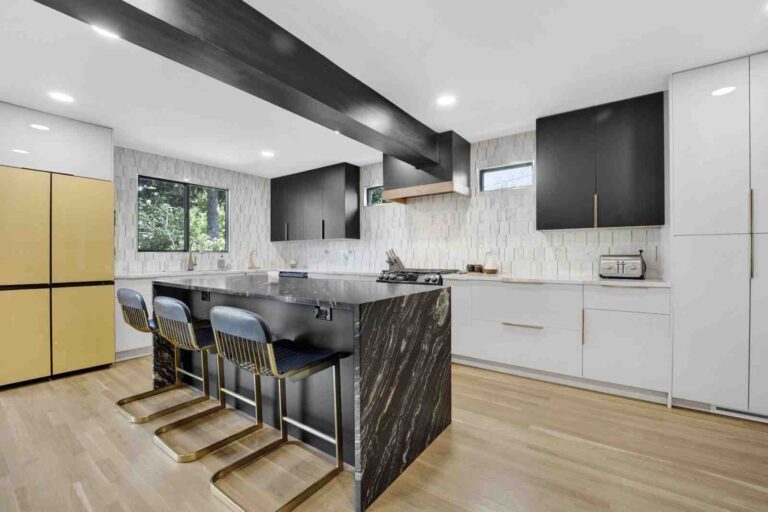
Why Beveled Shaker Cabinet Doors Fit Classic and Modern Spaces
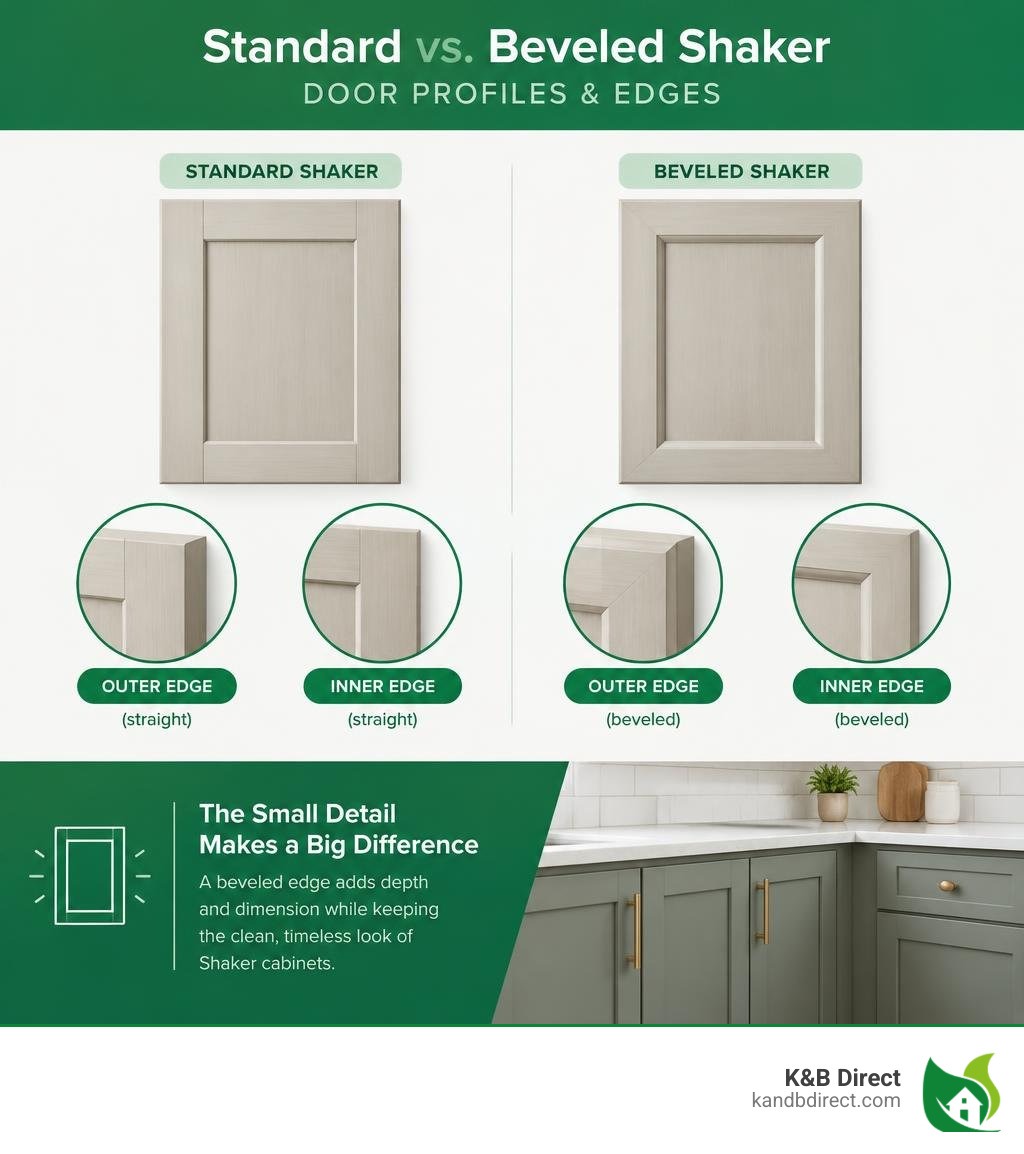
Beveled edge cabinet doors have a sloped edge instead of a straight one. On a Shaker door, a bevel may shape the outer edge or the frame around the recessed center panel. That small detail adds depth while keeping the clean lines that make Shaker cabinets easy to pair with both classic and modern rooms. Before choosing a style, check where the bevel sits and whether it appears on one or both sides of the door.
I’m Eryk Piatkowski, owner of Kitchen And Bath Direct. I draw on our cabinet experience since 2011 to help you assess beveled edge cabinet doors for your kitchen or bathroom.
For visual examples, browse beveled-edge Shaker cabinet ideas.
Beveled edge cabinet doors word guide:
Design Anatomy of Beveled Edge Cabinet Doors
Every cabinet door slab is defined by its geometry. In traditional woodwork, an edge treatment is the specific shaping, chamfering, or sloping applied to the borders of the slab or along the inner rails and stiles. A standard Shaker profile utilizes crisp 90-degree right angles that step straight down into a recessed center panel. In contrast, beveled edge cabinet doors introduce a deliberate slope along those meeting points or around the perimeter of the door.
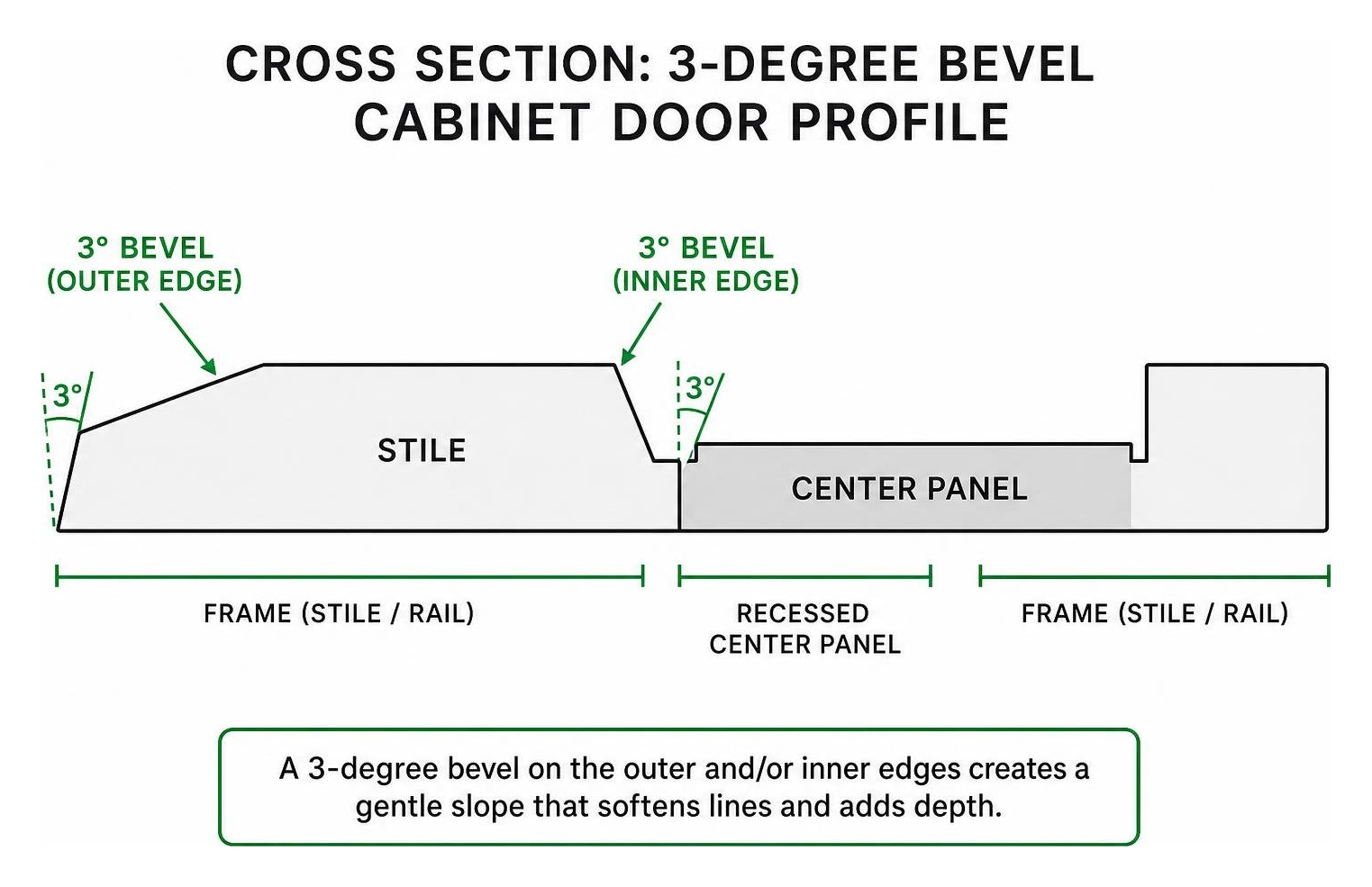
This slope is engineered to modify the way ambient lighting hits the surface. Rather than creating a harsh, abrupt shadow line, an angled edge produces a gentle gradient. Think of a bevel as an edge that went on a slight architectural diet: it trims away the rigid sharpness without sacrificing structural substance. Whether you are building custom kitchen storage or updating a bathroom vanity, understanding the anatomy of these profiles helps you achieve the right balance between crisp contemporary lines and warm, inviting depth.
Edge Profile Variations and Angle Specifications
The visual impact of an edge treatment depends heavily on the specific angle cut into the material. The most common standard in fine architectural millwork is a 3-degree bevel, though slopes can range upward depending on the desired profile depth.
- 3-Degree Bevel: This subtle slant softens the corner, easing the transition across the door thickness while remaining virtually unnoticeable from across the room.
- 15- to 30-Degree Chamfer: A more pronounced angle along the interior stile and rail assembly creates dramatic shadow lines and emphasizes the inner recessed panel.
- 45-Degree Classic Bevel: Commonly found on contemporary finger-pull doors or decorative transitional pieces, this angle delivers bold, crisp geometric definition.
When configuring a custom wood cabinet, verifying the exact degree of the slope ensures that your doors align seamlessly with adjacent panels, molding, and architectural trim.
Single-Sided Versus Double-Sided Edge Treatments
Edge profiles can be applied to one or both sides of a cabinet door slab, and your choice influences both aesthetics and functional operation.
- Single-Sided Edge Treatment: The bevel is carved exclusively on the front exterior face of the door. The backside maintains a straight 90-degree perpendicular edge. This setup is standard for most overlay cabinetry because it preserves flat mounting planes for interior hardware and bumper pads.
- Double-Sided Edge Treatment: Symmetrical slopes are machined into both the front and rear perimeter edges. This configuration is especially valuable in full-inset cabinetry where the door sits flush inside a frame, allowing balanced clearance when swinging past the cabinet jamb and stops.
Confirming the door operating configuration with your installer ensures that dual-sided treatments do not interfere with internal latching mechanisms or hinge placement.
Style and Performance Advantages of Beveled Shaker Profiles
The traditional Shaker look has remained a staple in home design for generations, but its flat 90-degree inside corners are notorious for trapping dust, grease, and breadcrumbs. Beveled Shaker doors solve this everyday problem while elevating the overall design aesthetic.
| Profile Style | Edge Angle | Dust Resistance | Aesthetic Versatility | Visual Shadow Line |
|---|---|---|---|---|
| Standard Shaker | 90° Right Angle | Moderate (Dust settles in flat corners) | Traditional to Transitional | Hard, defined shadow |
| Beveled Shaker | 3° to 45° Sloped | High (Debris slides away easily) | Transitional to Modern Classic | Soft, graded transition |
| Flat Slab | None (Flush) | Maximum (Completely flat surface) | Minimalist / Ultra-Modern | No interior shadow |
Aesthetic Advantages of Beveled Edge Cabinet Doors
Beveled edge profiles serve as the ultimate bridge between eras. In transitional interior spaces, homeowners often want the warmth of classic woodwork without the heavy, ornate mouldings of traditional raised panels. At the same time, flat slab doors can occasionally feel too sterile or industrial for warm family living areas.
A beveled profile introduces architectural dimension that catches daylight from multiple angles. When paired with modern kitchen cabinets, these doors provide refined visual texture that complements quartz countertops, sleek stainless appliances, and minimalist backsplashes without overwhelming the room.
Durability and Long-Term Maintenance Benefits
Kitchens and bathrooms endure constant humidity, cooking oils, and physical contact. The sloped design of beveled doors offers distinct structural and functional advantages:
- Effortless Cleaning: Because the joint between the frame and center panel slopes downward, you can wipe away spills and dust with a single microfiber cloth stroke instead of picking debris out of sharp 90-degree crevices.
- Enhanced Moisture Defense: Liquids that splash onto the door naturally run down the slope rather than pooling in the interior frame joint, reducing the risk of moisture penetration.
- Finish Longevity: Paint and clear topcoats tend to adhere more evenly over eased, beveled transitions than over sharp, razor-thin corners, which are prone to chipping over years of daily use.
Material Selection, Finishes, and Construction Methods
The overall strength, stability, and visual appeal of beveled doors depend directly on the core substrates and finishing methods selected during manufacturing. Knowing proper lumber selection for cabinet doors helps prevent warping and joint separation across varying seasons.
Best Material Substrates for Beveled Profiles
Not all materials machine with equal precision. Crisp bevel cuts require dense, stable core components that will not tear or fray under high-speed shaping cutters:
- Hard Maple: Renowned for its tight, consistent grain structure, hard maple is an exceptional hardwood choice for painted beveled doors. It machines smoothly and resists denting from everyday kitchen traffic.
- Paint-Grade High-Density Fiberboard (HDF / MDF): For painted cabinetry, one-piece routed MDF or solid HDF center panels eliminate the seasonal expansion and contraction that causes hairline paint cracks along stile-and-rail joints.
- Quarter-Sawn White Oak: If you prefer natural wood grain, quarter-sawn oak provides straight, uniform grain patterns that accentuate beveled slopes while offering outstanding dimensional stability.
Pairing Paint and Stain Finishes with Beveled Edges
The finish you choose interacts dynamically with the sloped surfaces of your doors:
- Satin and Matte Paints: These low-sheen finishes diffuse light gently across the bevel, creating a velvety, sophisticated appearance that suits modern neutral palettes like warm taupe, charcoal, and classic off-white.
- Translucent Wood Stains: Stains highlight the natural growth rings of hardwoods. As the wood grain crosses the machined angle of the bevel, it creates a subtle shift in tone, accentuating custom craftsmanship.
- Moulding Coordination: To maintain design harmony throughout your space, coordinate your door profile with complementary cabinet trim options along the ceiling line and baseboard runs.
Installation Specifications and Hardware Considerations
Precise installation is essential to ensure that beveled profiles function flawlessly without rubbing against neighboring panels or face frames.

When upgrading your space, our professional cabinet installation services ensure every door reveal is calibrated with sub-millimeter precision across full runs of cabinetry.
Selecting Hardware for Beveled Edge Cabinet Doors
Hardware placement requires careful planning when working with angled profiles:
- Knob and Pull Setback: Hardware must be mounted entirely on the flat portion of the stile, away from where the inner or outer bevel begins. Placing a screw through an angled slope can cause hardware bases to seat unevenly or tilt.
- Hinge Cup Clearances: When using European-style concealed cup hinges, verify that the hinge bore depth and edge distance (tab size) do not break through the slope of an outer edge bevel.
- Opening Clearances: In frameless cabinetry, tight door-to-door reveals require precise hinge adjustment so the outer beveled edges do not bind when adjacent doors open simultaneously.
Integration with Face Frames and Cabinet Boxes
Whether you choose full overlay, partial overlay, or flush inset door configurations, the relationship between the door and the cabinet structure is critical.
- Overlay Doors: An outer 3-degree bevel creates a soft perimeter shadow against the cabinet box, providing a clean reveal that conceals minor variances in wall alignment.
- Inset Doors: Pairing beveled profiles with sturdy cabinet face frames creates a tailored, furniture-grade look. The subtle angle along the door edge provides the necessary clearance to prevent sticking during seasonal humidity changes.
Frequently Asked Questions About Beveled Cabinet Profiles
What Distinguishes a Beveled Edge from a Traditional Shaker Profile?
A traditional Shaker door features straight 90-degree interior joints where the outer frame meets the recessed flat panel. A beveled Shaker replaces that right angle with an intentional slant (often between 3 and 30 degrees). This slope softens the shadow line and prevents dust, crumbs, and moisture from accumulating in the interior corners.
Can Beveled Edges Be Applied to Both Sides of a Cabinet Slab?
Yes. Double-sided edge treatments apply matching bevels to both the front and rear edges of the door. This is frequently specified in flush inset cabinetry or custom passage doors to maintain visual symmetry and ensure adequate swing clearance past interior jamb stops.
Which Architectural Styles Pair Best with Beveled Shaker Cabinetry?
Beveled profiles are among the most versatile options available. They integrate seamlessly into transitional kitchens, modern farmhouses, Scandinavian-inspired spaces, and updated Craftsman homes. Their clean geometry complements contemporary fixtures while maintaining the inviting warmth of traditional craftsmanship.
Conclusion
Beveled edge cabinet doors bring together the timeless structure of classic millwork and the streamlined beauty of modern design. By softening harsh interior corners and casting gentle architectural shadows, these doors offer an easy-to-clean, visually rich solution for kitchens, bathrooms, and built-in storage.
At Kitchen And Bath Direct, we are dedicated to helping you realize your dream home aesthetics with top-quality cabinetry, doors, and mouldings built to last. Whether you are planning a full home remodel or updating individual rooms across Schiller Park, Chicago, Des Plaines, Schaumburg, or nearby communities, our team provides expert guidance every step of the way.
Ready to transform your home with stunning, durable cabinetry? Explore kitchen cabinets in our collection today to find the perfect profile, finish, and layout for your space.