
Why Wood Moulding is Essential for Every Home Renovation
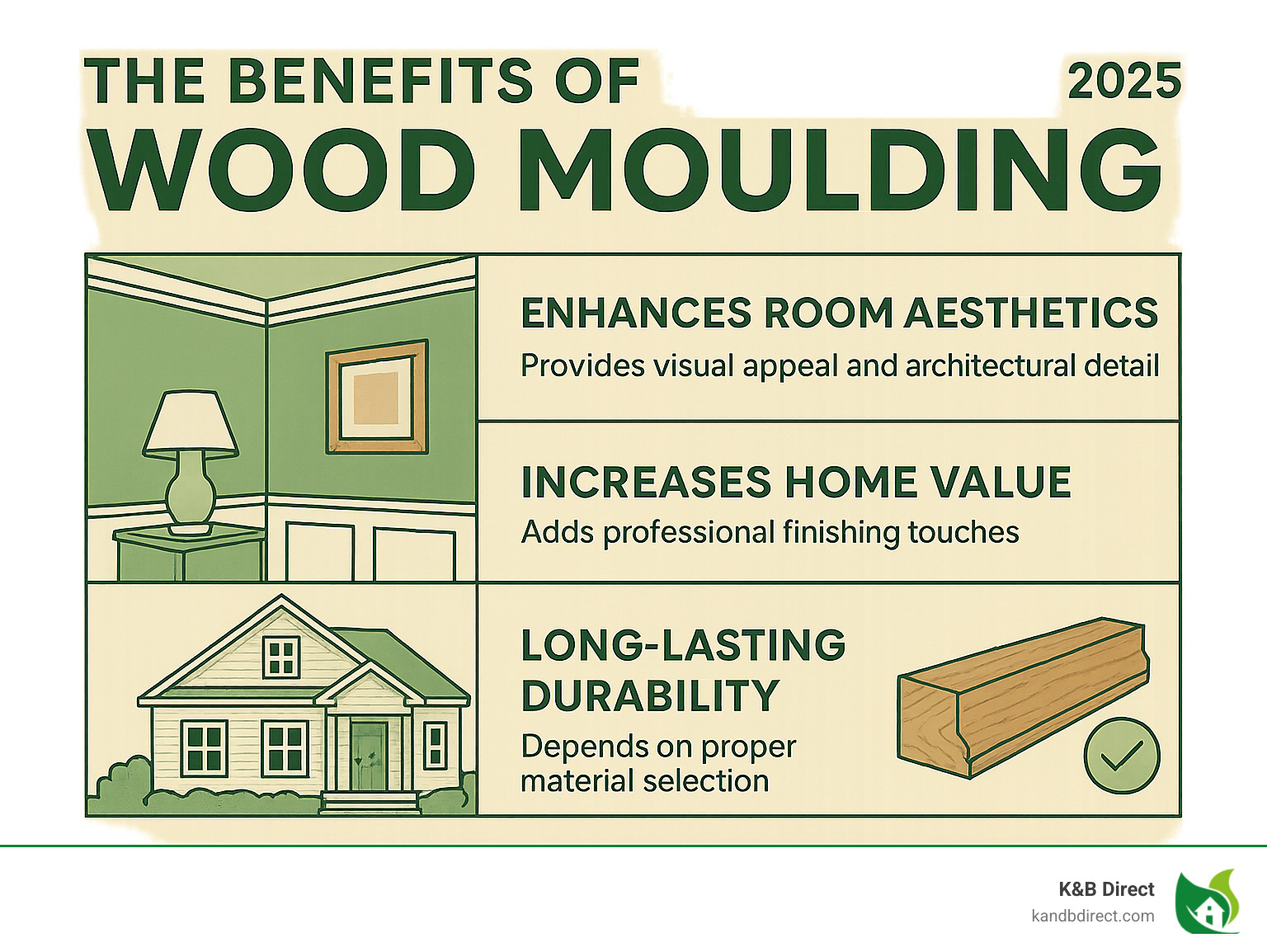
Wood moulding transforms ordinary rooms into polished, professional spaces that feel complete and intentional. Whether you’re installing crown moulding, baseboards, or window casings, these finishing touches can dramatically increase your home’s value and visual appeal.
Top Wood Moulding Types and Their Uses:
- Crown Moulding – Creates neat transitions between walls and ceilings
- Baseboards – Protects walls while providing a finished floor-to-wall transition
- Casing – Frames doors and windows for a clean, architectural look
- Chair Rail – Adds visual interest and protects walls from furniture damage
- Quarter Round – Covers gaps between baseboards and flooring
Trim mouldings represent the broadest category of wood moulding products, with thousands of different options available. From simple quarter rounds starting at under $1 per linear foot to elaborate crown moulding profiles, there’s a solution for every budget and style preference.
Wood moulding serves both practical and aesthetic purposes – hiding unsightly gaps, protecting wall surfaces, and adding the architectural details that give your space personality. As one industry expert notes, these finishing touches “play a critical role in improving the aesthetics of your interior space.”
I’m Eryk Piatkowski, Owner at K&B Direct, and I’ve been helping homeowners select the perfect wood moulding solutions for their renovation projects for over ten years. Through our cabinet store and home improvement services, I’ve seen how the right trim choices can completely transform a space while staying within budget.
Wood moulding helpful reading:
Understanding the Types and Applications of Wood Moulding
When you walk into a beautifully finished room, it’s often the wood moulding that makes the difference between “nice” and “wow.” This section breaks down the most common moulding profiles, explaining where and why they are used to help you find the perfect fit for any room.
Think of wood moulding as the jewelry of your home – it adds those finishing touches that tie everything together. Whether you’re hiding an awkward seam, protecting a wall from daily wear, or simply adding character to a plain space, there’s a moulding profile designed for the job.
Wall and Ceiling Moulding
Adding architectural detail to walls and ceilings with wood moulding solves practical problems while making your space feel more polished. These profiles excel at creating clean, decorative transitions that make your room feel professionally finished.
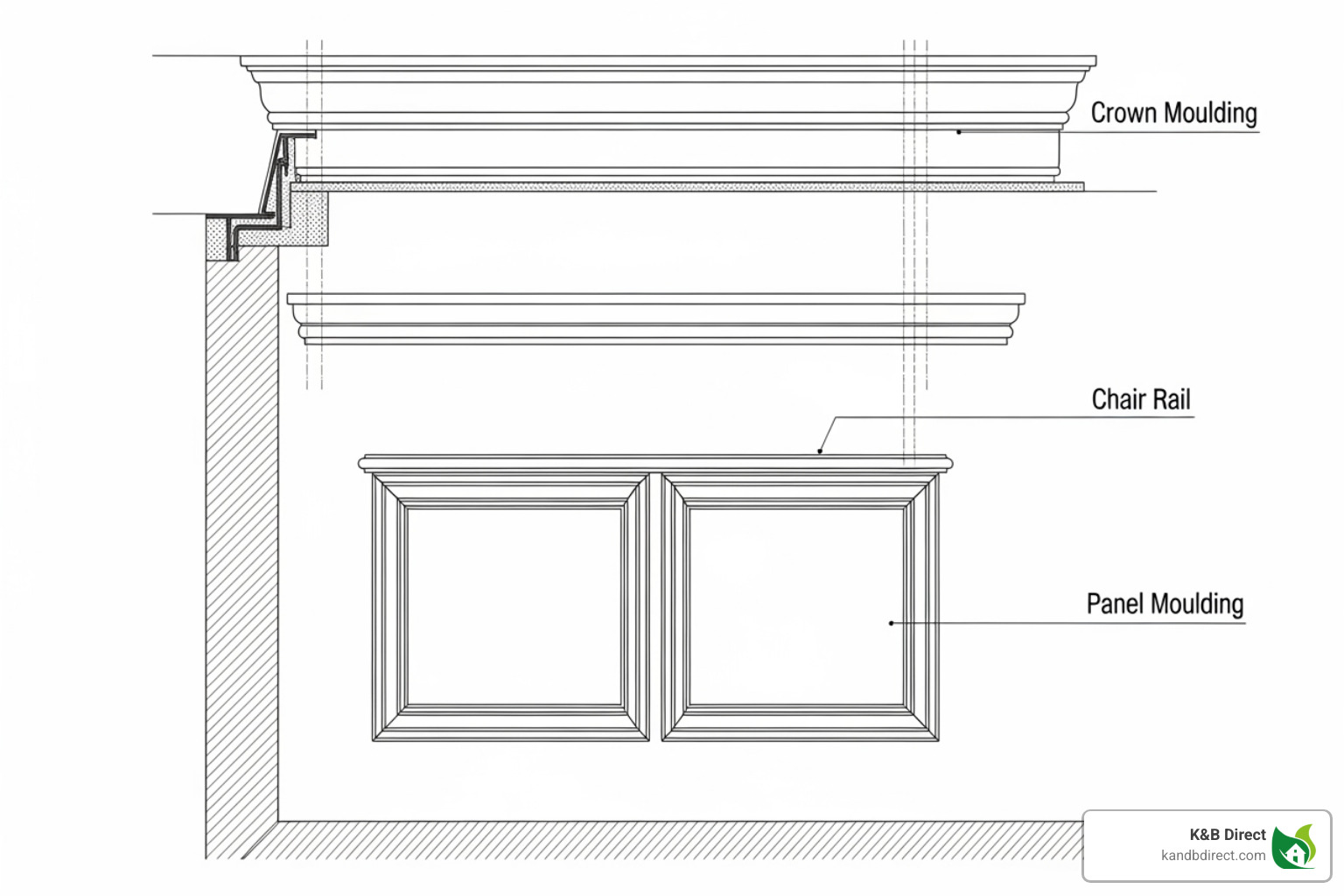
- Crown Moulding: This decorative trim creates a smooth transition between walls and the ceiling, instantly making any room feel more grand and complete. It’s also excellent for hiding uneven ceiling lines.
- Chair Rail Moulding: Originally meant to protect walls from furniture, chair rail is now a stylistic element. Installed about a third of the way up a wall, it allows for creative use of paint or wallpaper and covers rough edges.
- Panel Moulding: Also known as picture frame moulding, this trim creates decorative frames on flat walls, adding depth and sophistication without a high cost.
- Wainscoting: This covers the lower portion of walls with decorative paneling. Our Shiplap Wainscot adds farmhouse charm while protecting walls from scuffs.
- Picture Rail: Installed near the ceiling, this moulding lets you hang art with hooks and cords, preserving your walls from nail holes and adding historical charm.
Floor Moulding
Floor wood moulding is a small detail that does heavy lifting for both aesthetics and protection. It provides a finished look and protects walls from daily wear.
- Baseboard Trim: The workhorse of floor moulding, baseboards protect the bottom of your walls from scuffs and hide the necessary expansion gap left around flooring.
- Shoe Moulding & Quarter Round: These smaller profiles sit where the baseboard meets the floor, covering any small gaps for a neat, intentional finish.
- Base Cap Moulding: This trim is installed on top of a simple baseboard to create a more elaborate, custom look affordably. It’s a great way to make your trim look more expensive and detailed.
Door and Window Moulding
Door and window wood moulding, known as casing, frames these openings and is crucial for defining your home’s architectural personality.
- Door Casing & Window Trim: This decorative trim frames doors and windows, covering the gap between the wall and the frame. The style you choose, from sleek and modern to rich and traditional, sets the tone for the entire space.
- Jambs & Stops: Jambs form the door or window frame, while stops are small mouldings that prevent a door from swinging too far. They work with the casing for a complete look.
- Backband: This adds another layer of depth around your casing, like a frame for your frame. It makes standard casing look like expensive, custom millwork.
Choosing the Right Material and Style
The material and style you choose will define the final look. Learn about popular wood species and current design trends to match your home’s aesthetic.
Choosing wood moulding is like picking the perfect frame for a painting. The material affects durability and finish (paint vs. stain), while the style must match your home’s architectural language.
Choosing the Best Wood Species for Your Wood Moulding
Each material has its own personality and best use. Here’s a breakdown of what I recommend based on your needs and budget.
| Material Type | Best Use | Paintable/Stainable | Durability | Cost (Relative) |
|---|---|---|---|---|
| Solid Wood (Hardwoods) | Fine architectural detail, high-traffic areas, staining | Both | Very durable, long-lasting | High |
| – Oak | Staining, traditional styles | Both | Excellent | High |
| – Maple | Staining, contemporary styles | Both | Excellent | High |
| – Cherry | Staining, rich warm tones | Both | Excellent | High |
| Solid Wood (Softwoods) | General trim, painting, cost-effective | Both (paint preferred) | Good | Medium |
| – Pine | Paint-grade, cost-effective, easy to work with | Both (paint preferred) | Good | Medium |
| – Poplar | Paint-grade, smooth finish | Paint | Good | Medium |
| MDF (Medium-Density Fiberboard) | Paint-grade, intricate profiles, cost-effective | Paint | Good, less impact resistant | Low |
| PVC (Polyvinyl Chloride) | Bathrooms, basements, exterior applications, high moisture | Paint | Excellent (waterproof, rot-proof) | Medium-High |
- Hardwoods (Oak, Maple, Cherry): The premium choice for staining. These are incredibly durable, showcasing beautiful natural wood grain, but come at a higher cost.
- Softwoods (Pine, Poplar): The sweet spot for many homeowners. Pine, especially finger-jointed, offers real wood character affordably. Poplar is my go-to for paint-grade projects due to its smooth finish.
- MDF: The budget-friendly champion for painted trim. It allows for detailed profiles and provides a flawless paint surface, but it is not suitable for high-moisture areas. For a deeper dive into how MDF is manufactured and performs, see this detailed Medium-Density Fibreboard overview.
- PVC: The moisture-fighting superhero. I recommend our PVC Floor Moulding for bathrooms, basements, or anywhere water is an issue. It’s waterproof, rot-proof, and can be painted.
Matching Moulding to Your Home’s Design
Your wood moulding should feel like it belongs. Consistency is key; while profiles don’t have to be identical everywhere, they should feel like part of the same design family.
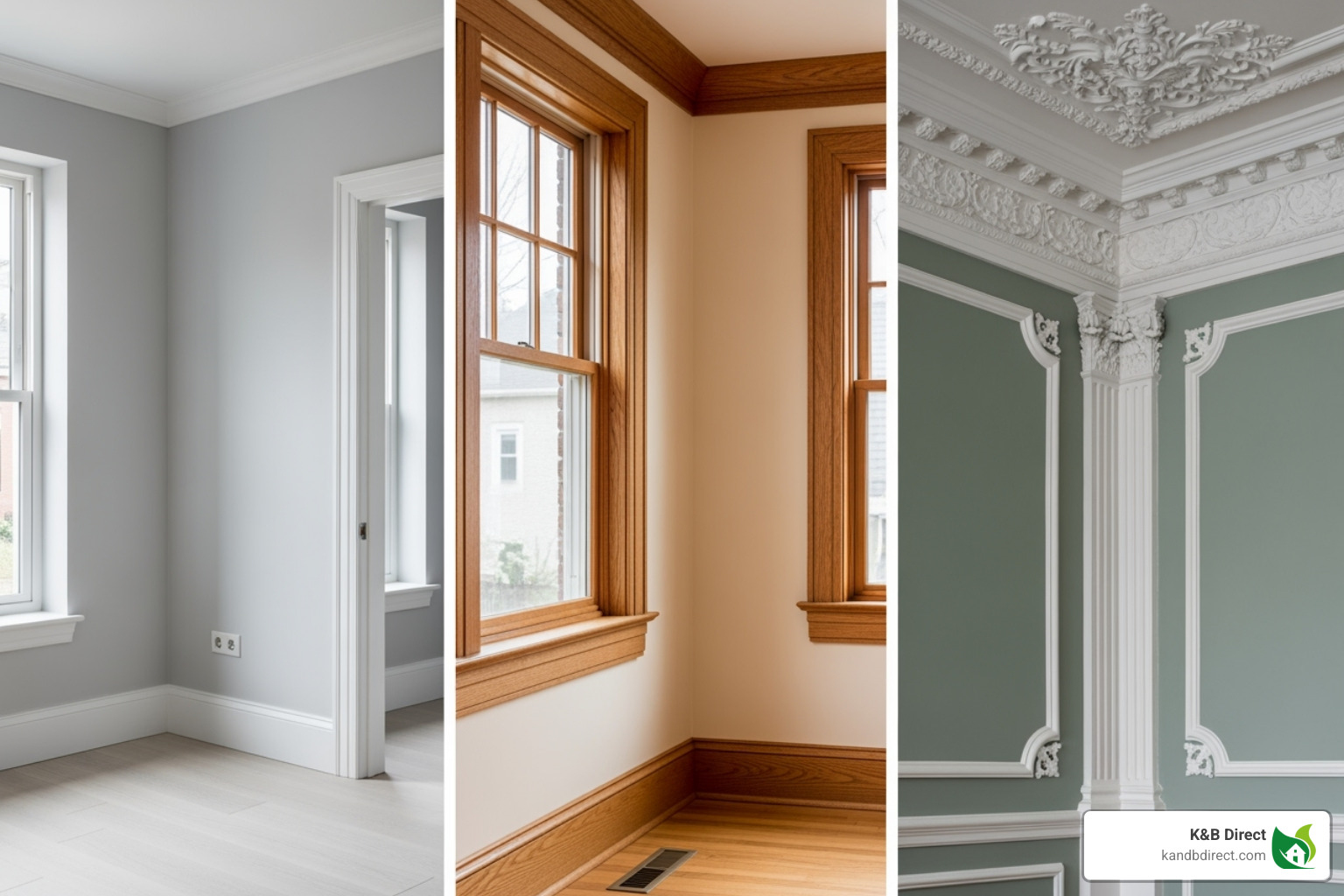
- Modern & Contemporary: Think clean and simple. Use minimalist profiles with straight lines and subtle curves.
- Traditional & Colonial: These styles handle more personality. Ornate patterns and classic details add architectural richness. Colonial styles in particular call for bolder, substantial profiles.
- Craftsman: This style celebrates the material. Use wider, flatter profiles that showcase the wood’s natural beauty. Our General Purpose Moulding works beautifully here due to its versatile, understated profile.
A Simple Guide to Installation and Maintenance
Installing wood moulding is a rewarding DIY project that can completely transform your home. With the right tools and patience, you can achieve professional results. Let me walk you through the essentials.
How to Install Your Wood Moulding
Professional-looking installation lies in careful preparation and taking your time with each step. Rushing will only lead to frustration and imperfect results.
-
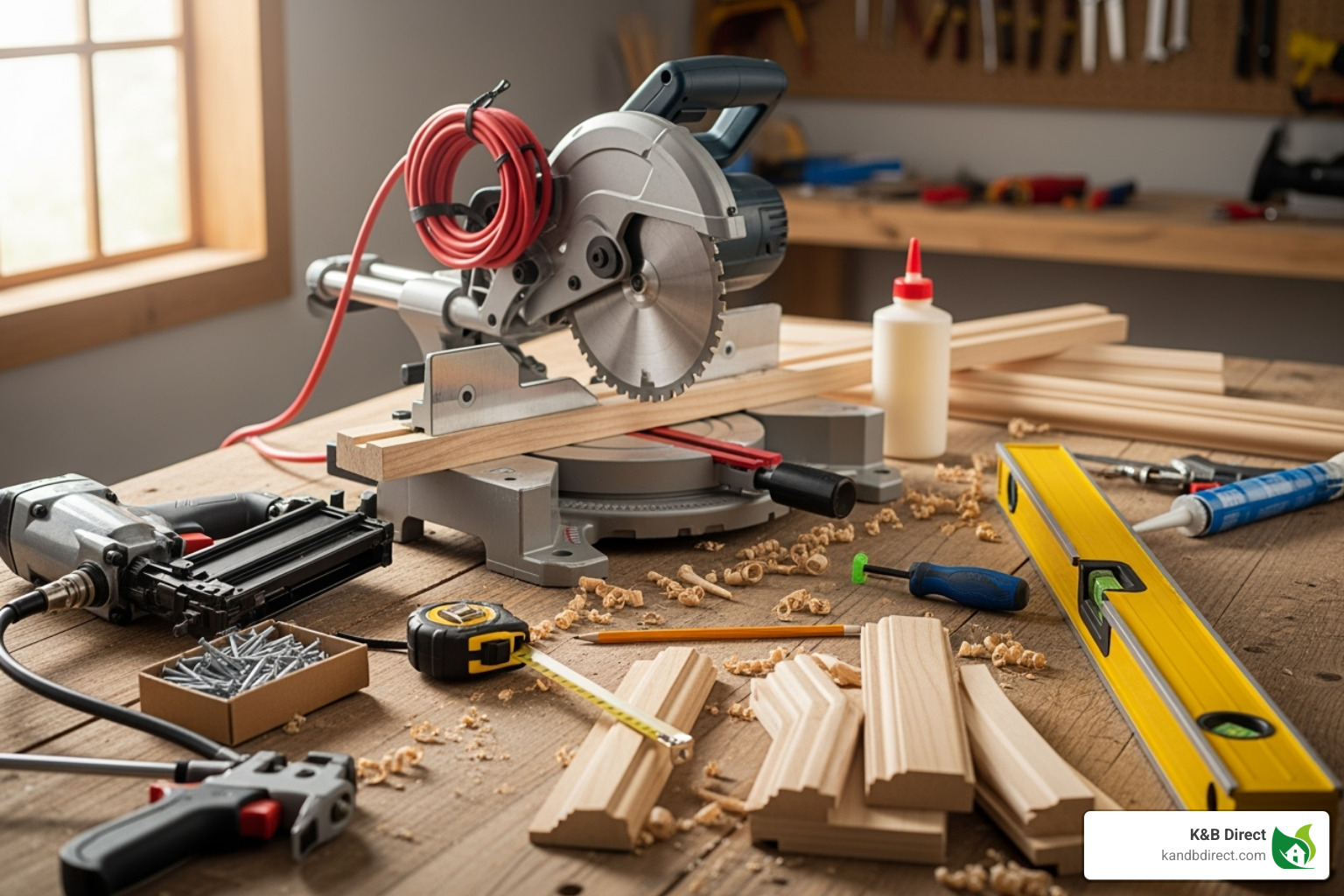
Measure Carefully: Use a quality tape measure and follow the carpenter’s rule: “measure twice, cut once.” This saves headaches and wasted material. Account for moulding thickness around corners.
-
Cut with Precision: Miter cuts (angled cuts, typically 45 degrees) allow two pieces to meet seamlessly at corners. For an even tighter fit on inside corners, consider using coping joints. This technique involves cutting one piece straight and shaping the second to fit the first’s profile perfectly. This type of scribe joint is excellent at hiding gaps that may form as wood expands and contracts. For detailed steps, see our guides on How to Cut Baseboard and How to Cut Baseboard Corners.
-
Secure the Moulding: Apply a bead of construction adhesive to the back of the moulding, then use finishing nails to attach it to wall studs. A nail gun speeds up this process.
-
Finish Like a Pro: Fill all nail holes and gaps with wood filler. Once dry, sand everything smooth. For painted finishes, prime the surface before your final coat for a durable, flawless look.
For more complex projects, our guide on How to Install Base Cap Moulding provides specific techniques for layered trim applications.
Care and Maintenance Tips
Keeping your wood moulding looking great requires minimal effort.
- Cleaning: Dust weekly with a soft cloth or vacuum brush. For deeper cleaning, use a slightly damp cloth with mild soap, but avoid soaking the wood.
- Touch-ups: Keep extra paint or stain for quick fixes. Lightly sand damaged spots on painted moulding, prime if needed, and touch up. For stained moulding, a stain pen can make scratches disappear.
- Damage Prevention: Be mindful when moving furniture. In moisture-prone areas like bathrooms, ensure you’ve used appropriate materials like PVC or properly sealed wood.
- Humidity Control: Maintaining indoor humidity between 35-55% helps minimize wood movement, preventing gaps and warping.
Finding Your Perfect Moulding Online
Shopping for wood moulding online gives you access to a vast selection of profiles from the comfort of your home. At K&B Direct, we’ve streamlined this process to get you quality trim at prices that won’t break your budget.
Cost Considerations
Understanding wood moulding costs helps you plan a realistic budget.
- Price Per Linear Foot: Most trim is sold this way (1 linear foot = 12 inches). Prices can range from under $1 for simple profiles to much more for elaborate hardwood moulding.
- Material Choice: MDF and paint-grade woods like pine are budget-friendly. Hardwoods like oak and maple cost more but offer superior durability and natural beauty.
- Stock vs. Custom: Stock profiles are economical and readily available. Custom profiles, for matching historical trim or unique designs, involve setup fees and higher per-foot costs.
- Budgeting for Waste: Always add 10-15% extra to your total linear footage. This buffer covers miscuts and material imperfections, preventing project delays.
- Pro Packs: For larger projects, these bundles can offer a better per-foot price than buying individual pieces.
Where to Buy Quality Moulding
While the internet offers an overwhelming selection, K&B Direct focuses on providing the profiles you actually need, with the quality you want, at prices that make sense.
- Unbeatable Prices: We believe creating your dream home shouldn’t require a second mortgage. We work hard to offer top-quality products at the lowest possible prices.
- High-Quality Materials: We source only materials that will look great and last, whether you choose solid hardwood, paint-grade softwood, or moisture-resistant PVC.
- Wide In-Stock Selection: We stock 194 different wood moulding profiles, covering everything from baseboards to crown moulding, so you get what you need quickly. We can also explore custom options for unique requirements.
- Friendly Service: Our team is here to help you find the right moulding for your space and budget. Whether you visit our Illinois locations or shop online, you’ll get helpful guidance to make your project a success.
Frequently Asked Questions about Wood Moulding
Over my years at K&B Direct, I’ve noticed the same questions come up again and again. Here are the answers to the most common ones.
What’s the difference between paint-grade and stain-grade moulding?
This choice depends on your desired final look.
- Paint-grade moulding is for a smooth, solid color finish. It’s made from materials like MDF, poplar, or finger-jointed pine, which have a uniform surface ideal for painting.
- Stain-grade moulding is for showcasing natural wood beauty. It’s crafted from solid hardwoods like oak, cherry, or maple, which have attractive grain patterns you want to see under a clear or stained finish.
Can I mix different moulding styles in my home?
Yes, but with a few guidelines to ensure a cohesive look.
- Design Consistency: Try to use the same baseboard and crown moulding profiles throughout open floor plans or on the same floor to create a unified feel.
- Architectural Harmony: Avoid dramatic clashes, like ornate Victorian crown with stark modern baseboards. Choose profiles from similar design families or scales that complement each other.
- Room-Specific Accents: It’s perfectly fine to use more elaborate moulding in a formal dining room than in a casual family room. The key is to be intentional with your choices.
How do I measure my room for moulding?
Getting measurements right from the start saves time and money.
- Calculate Linear Feet: Measure each wall where moulding will be installed and add the lengths together. For baseboards, subtract the width of doorways.
- Add for Waste: This is essential. Add 10-15% to your total measurement. This extra material covers miscuts, imperfections, and the extra length needed for miter cuts at corners.
Careful measuring with a realistic waste allowance will make your wood moulding installation go much more smoothly.
Conclusion
Wood moulding is a game-changer for any home renovation. These architectural details have the power to transform your space, turning a house that feels unfinished into a home that feels polished and intentional.
From crown moulding that lifts a room to baseboards that protect walls and casing that frames your windows, the right trim adds both character and value. As we’ve covered, choosing the right material and style is key, and installation is an achievable DIY project with a little patience.
What I love most about wood moulding is how it adds lasting value. It’s an improvement you’ll notice every day, and it signals quality to potential buyers.
At K&B Direct, we’re passionate about helping you achieve your dream home aesthetics without breaking the bank. Our commitment to top-quality products at unbeatable prices means you can tackle that trim project you’ve been dreaming about.
Explore our complete collection of Mouldings & Millwork and start your change today.