
Why Molding and Baseboards Matter in Your Home
Molding and Baseboards are architectural elements that serve both functional and decorative purposes in every room of your home. Here’s what you need to know when choosing them:
Key Selection Criteria:
- Function – Baseboards protect walls from damage and cover gaps between floors and walls
- Material – Choose from solid wood (durable, stainable), MDF (practical choice, paintable), or PVC (moisture-resistant)
- Style – Select profiles that match your home’s architecture (flat for modern, sculpted for traditional)
- Size – Match baseboard height to ceiling height (3-5 inches for standard height ceilings, 5-7 inches for taller ceilings)
Baseboards might seem like a small detail, but they can transform the look and feel of a room. As one expert noted, replacing floor trim “can transform the look of your home and tie your stylistic vision together.” They cover the gap where your floor meets the wall, protect your drywall from scuffs and moisture, and add that finished, polished appearance that makes a space feel complete.
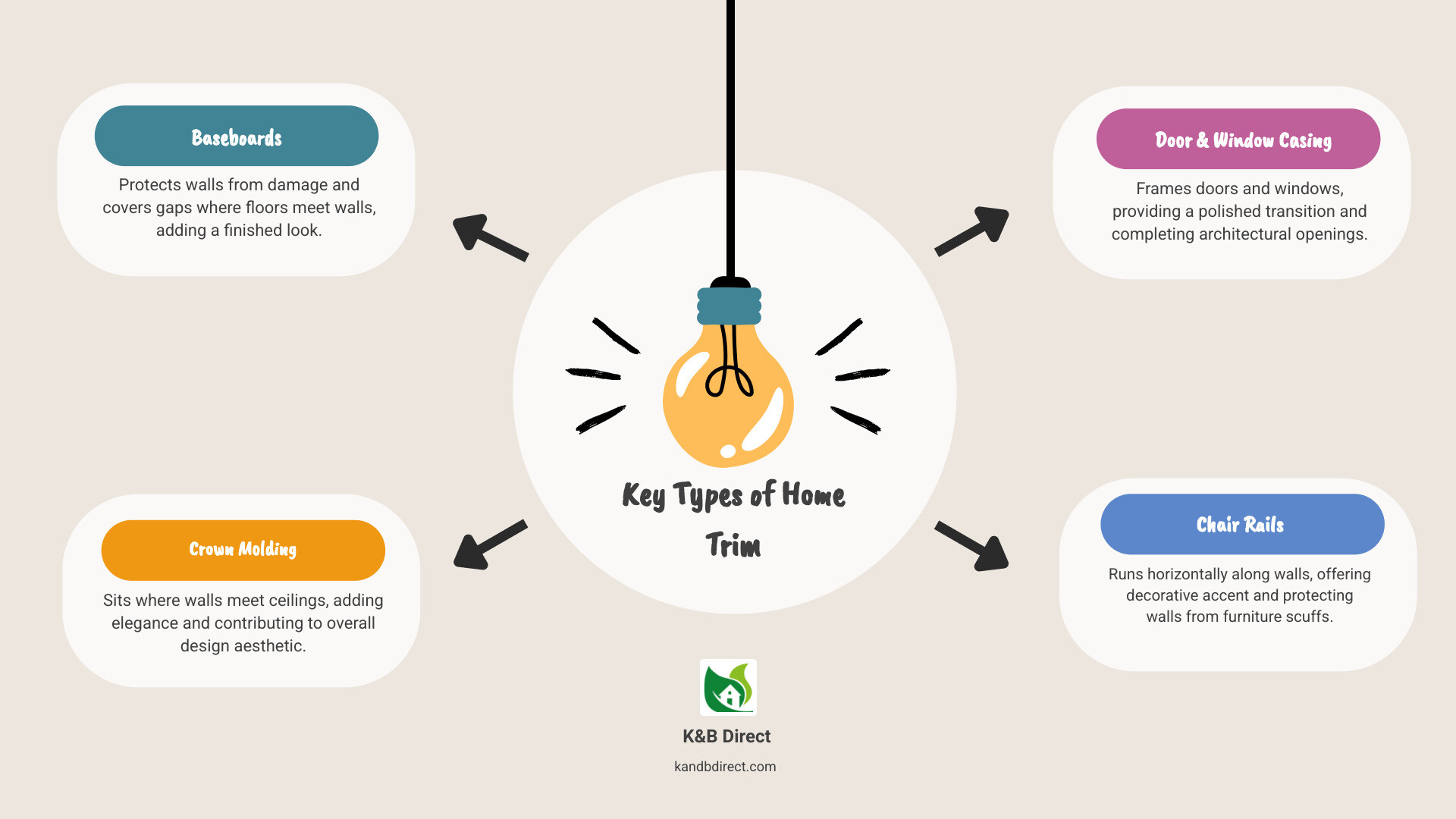
Beyond baseboards, molding encompasses several types of trim throughout your home. Crown molding sits where walls meet ceilings. Casing frames doors and windows. Chair rails run horizontally along walls. Each serves a specific purpose while contributing to your home’s overall design aesthetic.
The material you choose impacts both appearance and longevity. Solid wood offers timeless beauty and durability but requires a greater investment. MDF provides a smooth, paint-ready surface at a more accessible point. PVC resists moisture, making it ideal for bathrooms and basements. Understanding these differences helps you make the right choice for each room in your home.
I’m Eryk Piatkowski, owner of K&B Direct, and for over a decade I’ve helped homeowners select quality Molding and Baseboards that perfectly complement their kitchen and bathroom renovations. My team and I focus on guiding customers through these choices so they end up with spaces they’re truly proud of.
The Essential Role of Baseboards in Your Home
Molding and Baseboards are far more than just decorative accents; they are foundational elements that combine crucial functional benefits with significant aesthetic impact. When we consider the role of baseboards in a room, we understand why they are an indispensable part of interior design.
Functional Benefits: Protection and Perfection
One of the primary functions of baseboards is protection. They act as a critical barrier between your walls and the everyday wear and tear of life. Think about daily traffic, the occasional bump from furniture, or even cleaning equipment – baseboards absorb these impacts, shielding your drywall from scuffs, dents, and other damage. This protective layer is vital for maintaining the longevity and appearance of your walls.
Beyond physical protection, baseboards also play a significant role in concealing imperfections and creating a seamless transition between surfaces. They effectively cover any gaps or unevenness where the floor meets the wall. This is especially useful in older homes that may have crooked or warped walls, or in new constructions where minor inconsistencies can occur. For homes with hardwood floors, baseboards are essential for covering the small gaps that naturally form as wood expands and shrinks with changes in temperature and humidity. These gaps, while necessary for the flooring’s integrity, can be unsightly without proper baseboard coverage.
Furthermore, baseboards can help protect against water damage. By creating a barrier between the drywall and the floor, they prevent spills or moisture from seeping into the wall structure, which can be particularly beneficial in areas prone to dampness. This makes them a smart choice for any room, safeguarding your investment in your home. Our selection of Wood Trim offers excellent durability and protection.
Aesthetic Impact: Defining Your Room’s Character
While their protective functions are paramount, baseboards also make a substantial contribution to the overall aesthetic and design of a room. They provide a finished, polished look that can truly pull a space together. Without baseboards, a room can feel incomplete, with a jarring visual break where the wall meets the floor.
Baseboards act as an architectural element, defining the boundaries of a room and complementing its style. Whether your home embodies a modern, minimalist aesthetic or a more traditional, ornate design, there’s a baseboard style that improves its character. They contribute to room unity, creating a visual flow that lifts the entire space. By carefully selecting your baseboards, you can reinforce your home’s design narrative, adding depth and sophistication. Explore our range of Wall Trim to see the ways these elements can transform your interiors.
Baseboards vs. Other Trim: A Quick Comparison
It’s helpful to understand the differences between baseboards and other types of trim you might find in a home. While all trim contributes to a room’s finished look, they each have distinct locations and purposes:
- Baseboards: These are installed along the bottom of the wall, where the wall meets the floor. Their primary functions are protection and concealing gaps, as we’ve discussed.
- Crown Moulding: Unlike baseboards, Crown Moulding is installed at the junction where the walls meet the ceiling. It adds an neat, luxurious touch, often making a room feel grander and more complete by softening the transition between wall and ceiling.
- Door Casing: Door Casing refers to the trim that frames your doors and windows. It covers the gap between the door or window unit and the wall structure, providing a decorative border and a finished look to these architectural features.
- Chair Rail: This is a horizontal trim piece typically installed about a third of the way up the wall, at the height of a chair back. Historically, it protected walls from furniture damage; today, it’s primarily used for decorative purposes, adding visual interest or separating different wall treatments.
Each type of trim plays a unique role in enhancing your home’s interior, working together to create a cohesive and refined environment.
A Guide to Molding and Baseboards Materials
The material you choose for your Molding and Baseboards significantly impacts their appearance, durability, and suitability for different areas of your home. We offer a variety of options, each with its unique advantages.
The Enduring Appeal of Solid Wood

Solid wood baseboards are a timeless choice, offering a natural and classic look that many homeowners cherish. Materials like pine, oak, or maple provide a warm aesthetic and exceptional durability. Wood is generally considered the sturdiest option available for baseboards, capable of withstanding impacts and lasting for many years with proper care.
A significant benefit of solid wood is its versatility in finishing. It can be stained to highlight its natural grain patterns, offering a rich, organic feel that complements traditional or rustic designs. Alternatively, it can be painted to match any room’s color scheme, providing a smooth finish. This adaptability makes solid wood a preferred choice for those seeking both beauty and resilience. For those looking for natural elegance, our Natural Wood Casing options are an excellent complement.
MDF (Medium-Density Fiberboard): The Versatile Alternative
MDF (Medium-Density Fiberboard) has become a widely used alternative to solid wood, particularly for baseboards that will be painted. This engineered wood product is made from wood fibers combined with resin under high pressure, resulting in a dense, stable, and incredibly smooth surface.
One of the main draws of MDF is its smooth finish, which takes paint beautifully, creating a flawless, professional look. It’s also less prone to warping or splitting than some natural woods, offering good stability. While not as impact-resistant as solid hardwood, MDF is a practical choice for many interior applications, especially where a painted finish is desired. Our Baseboard Trim options include high-quality MDF profiles, ready for your chosen paint color.
PVC and Vinyl: Solutions for High-Moisture Areas
For areas where moisture is a concern, such as bathrooms, basements, or laundry rooms, PVC (polyvinyl chloride) and vinyl baseboards are highly recommended. These synthetic polymer materials are inherently water-resistant, making them impervious to humidity, spills, and even direct contact with water. This characteristic prevents the swelling, warping, or rotting that can affect wood or MDF in damp environments.
PVC and vinyl baseboards are also remarkably durable and easy to maintain. They can be cleaned with water and mild detergents, and they resist mildew and mold growth. While they often come pre-finished in white or other colors, some PVC options can be painted if desired, offering a degree of customization. Polystyrene baseboards share similar characteristics, providing another excellent water-resistant option that can resemble wood and be painted. For moisture-prone spaces, our PVC Floor Molding provides a robust and long-lasting solution.
Selecting the Perfect Baseboard Style for Your Space
Choosing the right baseboard style is crucial for harmonizing with your home’s architecture and creating the desired aesthetic. The profile, or shape, of your baseboard can subtly or dramatically influence the feel of a room.
Popular Profiles for Molding and Baseboards
We offer a range of profiles to suit diverse tastes and architectural designs. Understanding the characteristics of each can help you make an informed decision:
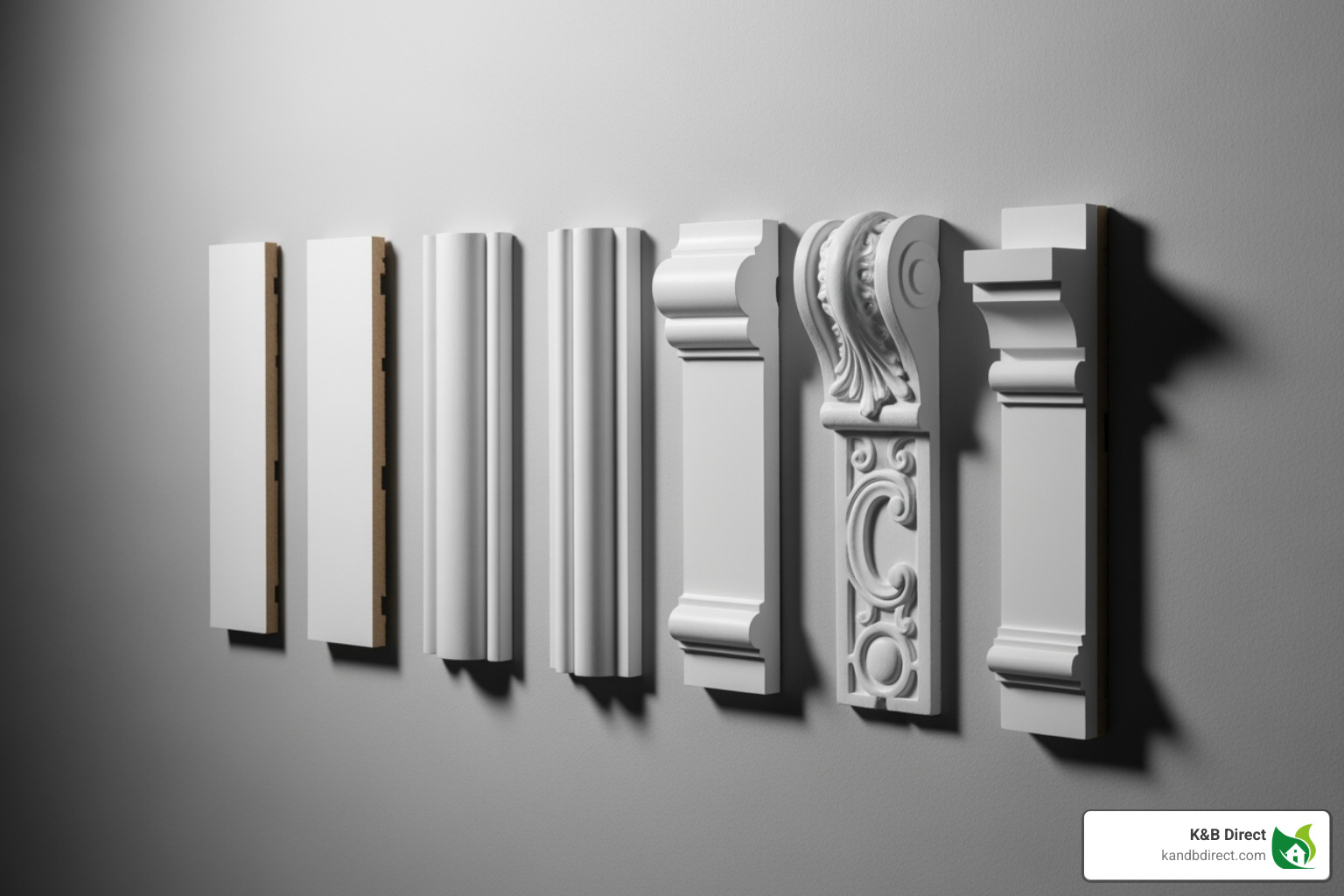
- Sculpted Baseboards: These feature intricate, ornamental designs and are perfect for homes with a traditional, Victorian, Colonial, Craftsman, or farmhouse style. They add a distinguished and neat touch, especially effective in rooms with tall ceilings.
- Rounded or Stepped Baseboards: These profiles offer a clean, softer look compared to sculpted designs. A popular type is a three-inch rounded or stepped baseboard. They are ideally suited for modern homes and simple spaces, and their simpler design makes them easier to keep clean.
- Flat Baseboards: Characterized by their minimalist and sleek appearance, flat baseboards are ideal for modern and minimalist designs. They allow other room features to be the focal point and can be paired with quarter round or shoe molding for added detail.
- Bullnose Baseboards: With their refined, rounded top edge and no sharp corners, bullnose baseboards offer a classic and smooth aesthetic. They are often found in historical and mid-century modern homes, providing a subtle elegance.
- Flush Baseboards: These baseboards sit flush with the wall surface, creating an incredibly seamless and clean transition. They are a hallmark of modern and minimalist interiors, making a room feel expansive and contemporary.
- Floating Baseboards: Creating a unique negative space, floating baseboards are set slightly away from the wall, giving the illusion that the wall is floating above the floor. This style is highly modern and minimalist, offering a distinct design statement.
- Quarter Round or Shoe Molding: While not a baseboard profile itself, these are smaller, rounded trim pieces often used in conjunction with baseboards. They are installed at the very bottom edge of the baseboard, covering any small gaps between the baseboard and uneven flooring, adding a polished finish.
For more inspiration on the ways these styles can transform your home, explore resources like Floor Trim Moldings and Styles For Your Home .
Key Factors in Your Selection Process
When selecting the perfect baseboard for your space, several factors should guide your decision:
- Ceiling Height: This is a crucial consideration for visual balance. For rooms with standard height ceilings, a baseboard height of 3-1/2 to 5 inches is typically appropriate, creating a harmonious proportion. For rooms with taller ceilings, a taller baseboard of 5 to 7 inches can make the space feel grander and more balanced, preventing the baseboard from looking disproportionately small.
- Room Proportions: Consider the overall scale of the room. A very wide or long room might benefit from a slightly taller or more substantial baseboard to carry the eye around the space.
- Existing Trim: If you have existing trim around doors, windows, or crown molding, you’ll want your baseboards to complement those styles. Consistency in trim throughout your home creates a cohesive and beautifully designed interior.
- Architectural Style: Your home’s architectural style should inform your baseboard choice. A highly ornate baseboard might look out of place in a minimalist modern home, just as a very simple flat baseboard might detract from a Victorian-era property.
- Visual Balance: The goal is to achieve visual balance. The baseboards should improve the room without overwhelming it or disappearing entirely.
By considering these elements, you can confidently choose Molding and Baseboards that perfectly suit your home’s unique character. Our Baseboard Moulding Guide offers further insights into making the best selection.
Bringing Your Vision to Life with Custom Mouldings
Sometimes, standard profiles simply won’t capture the unique vision you have for your home, or the specific requirements of a restoration project. This is where custom mouldings become invaluable, allowing for unparalleled personalization and historical accuracy.
Creating Unique Profiles for a Signature Look
For homeowners in the Chicagoland area and throughout Illinois seeking a truly distinctive touch, or for architects working on precise restoration projects, we offer services for custom baseboard profiles. This means we can mill unique designs from architectural drawings, blueprints, or even existing samples. This capability is particularly beneficial for:
- Historic Buildings: When restoring an older property, matching existing mouldings is often essential to preserve its historical integrity. Custom milling allows us to replicate intricate patterns and dimensions, ensuring a seamless and authentic restoration. Many historic buildings in areas like Glen Ellyn, IL, or Barrington, IL, can benefit from this specialized service.
- Unique Designs: If you have a specific design aesthetic in mind that isn’t met by standard profiles, custom mouldings enable you to create a one-of-a-kind look. This could be anything from a subtly modified contemporary profile to an elaborately carved traditional design that becomes a signature element in your home.
- Matching Existing Trim: Even if you’re not restoring a historic building, you might want to match a baseboard in one part of your home that is no longer readily available. Providing us with a sample allows us to reproduce it, ensuring continuity throughout your living spaces.
Our expertise in Wood Moulding extends to crafting these bespoke pieces, helping you achieve a truly individualized and refined aesthetic. We pride ourselves on working closely with our clients to bring their precise visions to life, ensuring that every detail contributes to their dream home aesthetic.
Conclusion: Making Your Final Decision with Confidence
Choosing the right Molding and Baseboards is a decision that significantly impacts the beauty and functionality of your home. We’ve explored the essential roles they play, from protecting your walls and concealing imperfections to defining your room’s character and complementing its architectural style.
We’ve also dug into the various materials available—solid wood for its enduring beauty and strength, MDF for its smooth finish and practicality, and PVC for its exceptional moisture resistance. Understanding the nuances of different profiles, from sculpted to flat, and considering factors like ceiling height and existing trim, will empower you to make selections that are both visually appealing and perfectly suited to your space.
At K&B Direct, we are committed to providing top-quality products that help you realize your dream home aesthetics. Our friendly service and extensive selection are designed to guide you through every step of the process, ensuring you find the ideal Molding and Baseboards for your home in the Chicagoland area and beyond.
We invite you to explore our extensive collection of Mouldings & Millwork and discover the ways these vital architectural elements can lift your home’s design.