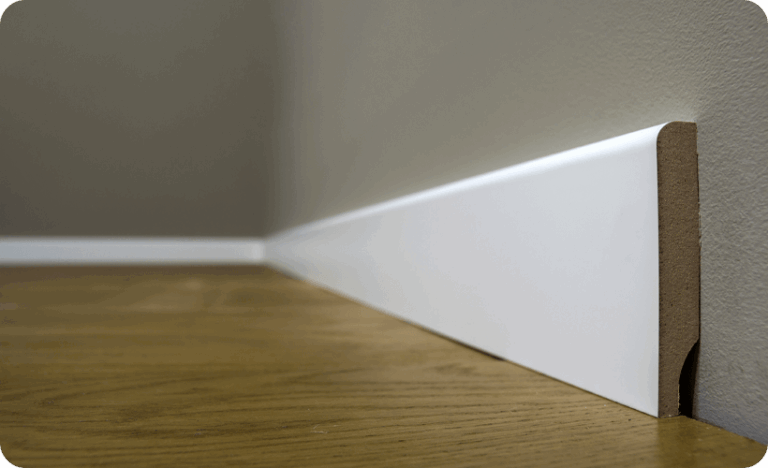
Why 18mm Wood Trim Is a Game-Changer for Home Interiors
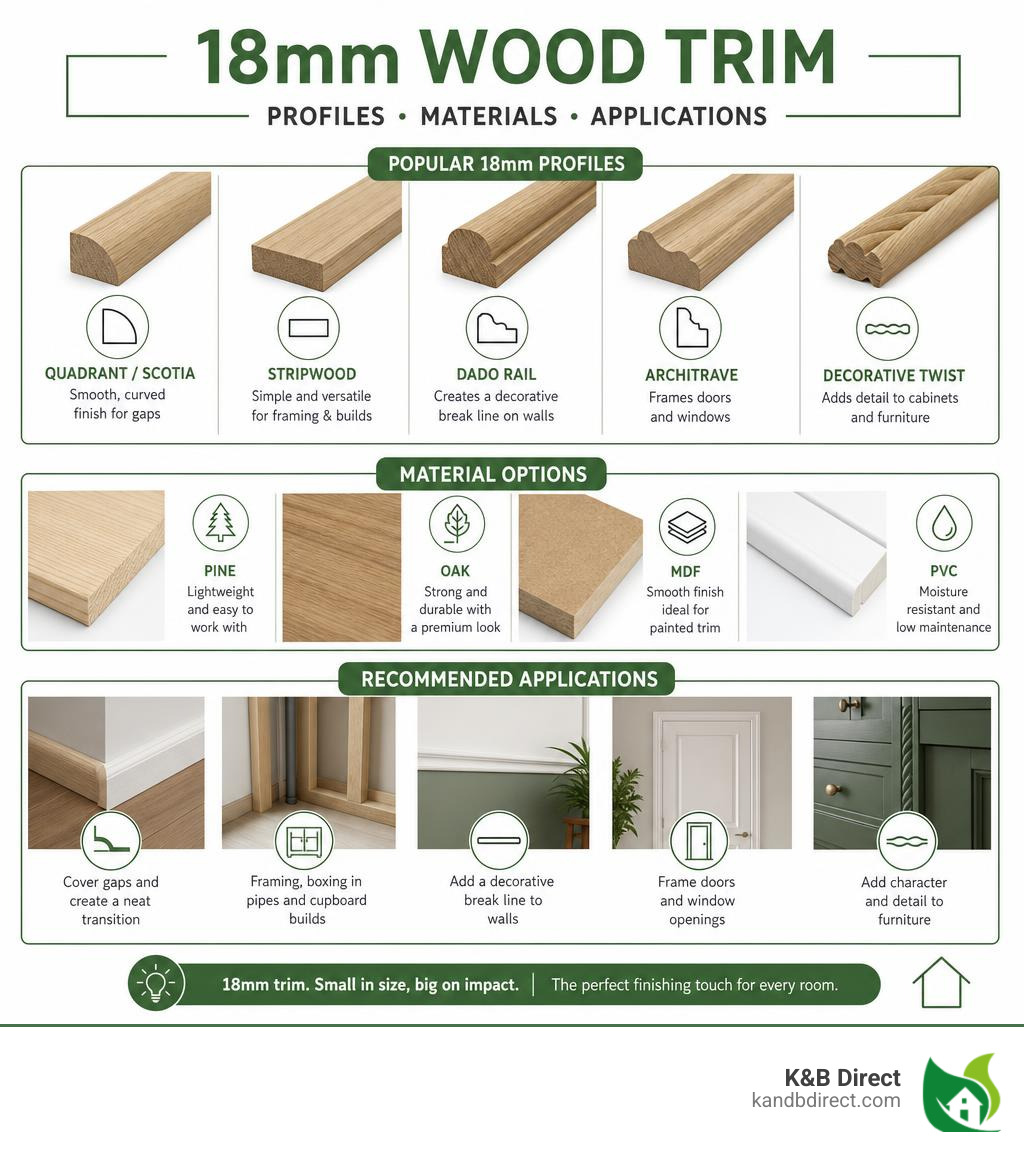
Quick answer — common uses for 18mm wood trim:
| Profile Type | Best Used For |
|---|---|
| Quadrant / Scotia | Covering gaps at floor-wall or cabinet joints |
| Stripwood | Framing, boxing in pipes, cupboard builds |
| Dado rail | Creating a decorative break line on walls |
| Architrave | Framing door and window openings |
| Decorative twist | Adding detail to cabinets and furniture |
18mm wood trim is one of those small details that quietly transforms a room. At just 18 millimetres, it sits in a sweet spot — substantial enough to make a visual impact, but slim enough to work in tight spaces without overwhelming a design.
Whether you’re freshening up a kitchen, renovating a bathroom, or adding character to a hallway, 18mm mouldings give you a versatile, practical tool. They cover gaps, define transitions, and add a finished, professional look to walls, cabinets, and door frames.
And the demand is real. Products like the Natural Pine Quadrant Moulding in this size sold 173 units in just 48 hours at major UK retailers — a clear sign that homeowners and renovators are reaching for this profile again and again.
You’ll find 18mm trim in a range of materials — pine, oak, MDF, and PVC — each suited to different rooms and finishes. The right choice depends on your space, your style, and how much prep work you want to do.
I’m Eryk Piatkowski, owner of K&B Direct, and with over a decade of helping homeowners find the right finishing touches for their kitchens and bathrooms, 18mm wood trim is a product category I’ve seen make a real difference in the final look of a renovation. Let’s walk through everything you need to know to choose and use it well.
Relevant articles related to 18mm wood trim:
Choosing the Right Materials for Your 18mm Wood Trim
Selecting the ideal material for your 18mm wood trim depends on where it will live, the level of wear and tear it will face, and the final aesthetic you want to achieve. Different materials behave differently under environmental conditions like humidity, which is especially important in kitchens and bathrooms.
Below is a comparison of the most common materials used for 18mm mouldings:
| Material | Durability | Moisture Resistance | Best Suited For | Finishing Options |
|---|---|---|---|---|
| Redwood Pine | Moderate | Moderate (requires sealing) | Living areas, bedrooms, internal framing | Paint, stain, wax, varnish |
| Oak / Hardwood | High | Moderate to High (with sealant) | High-traffic areas, door frames, flooring transitions | Stain, clear varnish, oil |
| Moisture-Resistant MDF | High (stable) | High | Bathrooms, kitchens, wainscoting | Paint-ready primed finish |
| PVC / Composite | Very High | Excellent (waterproof) | Wet zones, high-moisture areas | Pre-finished, low maintenance |
Material Durability and Environmental Stability
When choosing timber, the growing conditions of the tree play a massive role in how the finished moulding behaves in your home. For instance, slow-grown trees that mature over 80 years produce much more stable timber. This slow growth results in tight grain patterns, making the wood far less likely to split, twist, or warp over time.
Kiln-drying is another critical process. By carefully extracting moisture in a controlled kiln environment, suppliers improve the straightness and stability of the timber, making it ideal for interior joinery. If you want to explore more options, you can find More info about wood moulding options to guide your design choices.
Moisture Resistance in Wet Areas
In high-humidity spaces like bathrooms and kitchens, moisture resistance is paramount. Standard MDF can swell and blow apart if it absorbs water. However, moisture-resistant MDF (often tinted green in its raw state) utilizes specialized resins that keep the board stable. This material is excellent for wainscoting and dado rails where humidity fluctuates. For areas with direct water contact, PVC or treated hardwoods are the safest options to prevent rot and structural failure.
Selecting Profiles for 18mm Wood Trim
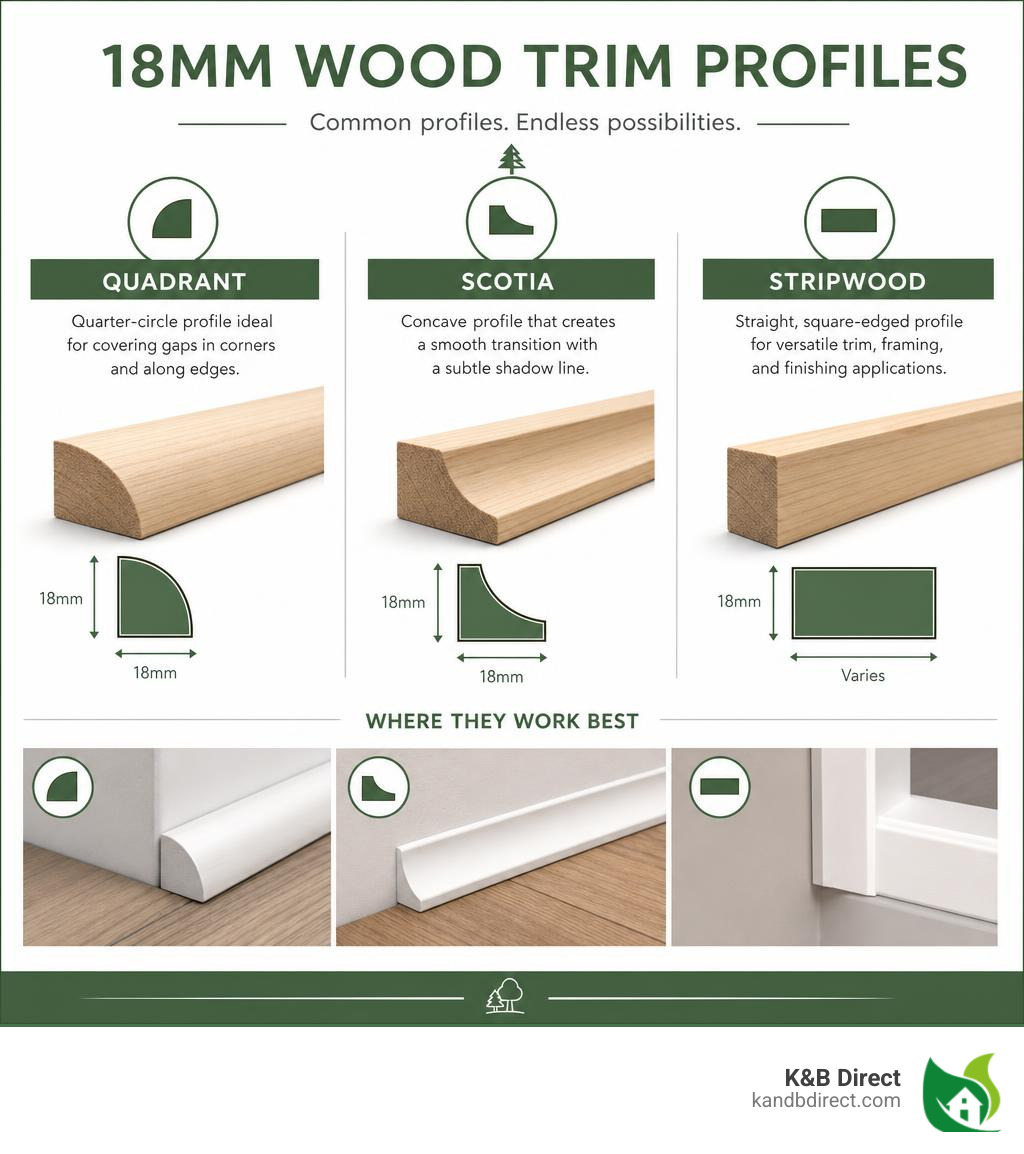
The profile of your trim determines both its function and its architectural style. For 18mm applications, several classic shapes dominate the market due to their sheer utility:
- Quadrant Moulding: Featuring a curved, quarter-circle profile, this is the ultimate solution for hiding gaps. It is frequently applied where flooring meets baseboards or where countertops meet walls. A primed white pine quadrant moulding is incredibly popular, with some suppliers moving over 140 units in a single weekend.
- Scotia Moulding: Similar to a quadrant but with a concave, inward curve, scotia provides a softer, recessed shadow line that is highly favored in modern and traditional flooring transitions.
- Stripwood: A simple, clean, rectangular profile. Stripwood is highly versatile and acts as a fantastic utility trim. For example, thin profiles like the 18mm x 4mm or 10mm x 18mm options are perfect for building support battens, constructing lightweight cupboard frames, or neatly boxing in exposed pipework.
If you are planning a project with clean lines, you can check out the Pine Stripwood Moulding Options or browse the various Whitewood Timber Profiles to find the exact dimensions required for your framing and cabinetry needs.
Pre-Primed versus Unfinished Options
One of the biggest decisions you will make when purchasing 18mm wood trim is whether to buy pre-primed or unfinished materials.
Primed MDF and Primed Pine
These options come factory-coated with a smooth, white primer.
- Pros: Massive time-saving benefits. You completely bypass the tedious steps of sanding raw wood, applying knots-sealer, and painting multiple base coats. They are ready for a final topcoat right out of the box.
- Cons: You cannot stain or wax these products. They must be painted.
Unfinished Redwood Pine and Hardwoods
These are supplied as raw, planed timber.
- Pros: Unmatched beauty and versatility. You can apply stains, oils, waxes, or clear varnishes to highlight the natural grain of the wood. This is essential if you are matching existing hardwood furniture or traditional oak flooring.
- Cons: High prep work. You must sand the surfaces, seal any knots (to prevent sap from bleeding through), and apply primer before you can even think about your final paint color.
For a deeper dive into sizing and material choices, take a look at our comprehensive Decorative Wood Trim Sizes Guide.
Creative Applications for 18mm Mouldings in Home Design

Because of its slim profile, 18mm wood trim is an exceptional tool for adding architectural depth without eating into your living space. Let’s look at some creative ways to implement these mouldings.
Wall Paneling and Wainscoting
Creating a traditional wainscot look is a fantastic way to elevate a dining room, hallway, or bathroom. By running vertical matchboard panels up to waist height, you can cap them off with an 18mm matchboard dado rail. A primed, moisture-resistant MDF dado rail measuring 18mm x 55mm acts as a crisp, traditional break line. It sits snugly over the top edge of your paneling, hiding the raw cuts and providing a clean ledge. For high-humidity bathrooms, opting for moisture-resistant options is highly recommended. Learn more about these components by exploring our Moisture Resistant MDF Dado Rails collection.
Furniture and Cabinetry Enhancements
If you have plain, flat-panel cabinets or a basic chest of drawers, adding 18mm trim can instantly make them look like high-end, custom-built pieces. You can use thin stripwood to build shaker-style frames on flat doors, or use small quadrant trims to soften the sharp edges of shelving units.
Architraves and Door Frames
Your doors and windows are the natural focal points of any room. Framing them with the right architrave can define the entire architectural style of your home, whether you prefer a clean modern look or a detailed historical aesthetic.
- Bullnose Hardwood Architrave: Featuring a gently rounded upper edge, the bullnose profile is a timeless, minimalist favorite. An 18mm thickness provides a sturdy, elegant frame that stands up to the daily bumps of vacuum cleaners and busy households. You can explore our Bullnose Hardwood Architrave Options to find premium hardwood solutions that can be oiled or stained to perfection.
- Lambs Tongue Profile: If you want something more decorative, the lambs tongue profile features a classic, flowing s-curve. This profile adds a gorgeous traditional detail to door casings and looks spectacular in period properties. For detailed profiles, browse the Lambs Tongue Hardwood Architrave Profiles to match your home’s vintage charm.
Decorative Wall and Cabinet Accents
Sometimes, you want a trim that stands out as an artistic feature. This is where decorative 3D mouldings come into play.
A popular design trend involves using textured trims, such as an unfinished 3D twist wood trim. These trims feature repeating spherical or rope-like patterns that add incredible texture to flat surfaces.
Where to use decorative twist trim:
- Cabinet Doors: Apply them as an inner border on shaker cabinet doors to add a touch of elegance.
- Wallpaper Borders: Use them to neatly trim out the edges of a wallpaper accent wall, creating a framed picture-frame effect.
- Furniture Upcycling: Run the twist moulding along the apron of an old dining table or the top drawer of a refinished nightstand.
Because these decorative pieces are typically supplied in unfinished real wood, they can be easily stained to match your furniture or painted in a bold accent color. To see the full range of creative shapes available, explore the different Types of Moulding we offer.
Installation and Finishing Best Practices

Achieving a professional finish with 18mm wood trim does not require a lifetime of carpentry experience, but it does require patience, precision, and the right sequence of steps. Whether you are installing a simple quadrant or a detailed architrave, following these best practices will ensure seamless joints and a beautiful finish. For a broad overview of baseboard and moulding installation, refer to The Ultimate Guide to Molding and Baseboards.
Preparing and Cutting the Timber
The secret to a flawless trim installation lies entirely in the prep work. Wood is a natural material that reacts to its environment, so giving it the proper attention before it goes on the wall is critical.
- Acclimatization: Before cutting, let your timber sit in the room where it will be installed for at least 48 hours. This allows the wood to adjust to the room’s temperature and humidity, minimizing future shrinking or warping.
- Sanding: Even planed timber can have minor surface imperfections. Give your unfinished trim a light sand with 220-grit sandpaper. Always sand in the direction of the wood grain to avoid leaving scratch marks.
- The Right Tools: To get clean, tight joints, a high-quality mitre box and a fine-tooth tenon saw (or a power mitre saw) are essential. For 18mm profiles, a saw with more teeth per inch (TPI) will prevent the wood from splintering at the edges.
- Safety First: Always wear safety glasses and a dust mask when cutting or sanding wood.
To explore the essential tools and millwork options for your project, take a look at our Mouldings Millwork resource page.
Finishing and Painting Your 18mm Wood Trim
Once your trim is cut and dry-fitted, it is time to apply your finish. Doing this before final installation can often make the process much cleaner.
- For Unfinished Wood (Staining/Varnishing): If you are highlighting raw wood grain, apply a wood conditioner first to ensure the stain absorbs evenly. Apply your stain with a cloth or brush, wipe away the excess, and finish with a protective clear polyurethane sealer or wax.
- For Painted Finishes: If you are working with unfinished wood, you must apply a wood primer first. If using pine, do not skip the knot-blocking sealer, or the natural resins will eventually turn your paint yellow. For pre-primed MDF, you can skip straight to your topcoat.
- Adhesive and Fixing: For lightweight 18mm profiles, a high-strength grab adhesive combined with fine headless pins (panel pins) is the best method. The adhesive does the heavy lifting, while the pins hold the trim securely in place while the glue cures.
- Filling the Gaps: No wall is perfectly straight. Use a flexible acrylic caulk (painters caulk) to fill the gap between the trim and the wall. For the nail holes, use a high-quality wood filler, sand it smooth once dry, and apply a final touch-up coat of paint.
For detailed tips on matching paint finishes and managing transitions, visit our guide on Molding and Baseboards.
Frequently Asked Questions about 18mm Mouldings
What sustainability certifications should I look for?
When purchasing timber products, it is vital to ensure they are sourced from responsibly managed forests. Look for certifications such as FSC (Forest Stewardship Council) or PEFC (Program for the Endorsement of Forest Certification). These labels guarantee that the timber is harvested using sustainable forestry practices that protect biodiversity, respect local communities, and ensure the long-term health of our woodlands. At K&B Direct, we prioritize responsibly sourced timber across our product ranges.
What are the typical delivery and collection options for these products?
We understand that getting your materials quickly and safely is a top priority. For our customers in the Chicagoland area — including Schiller Park, Des Plaines, Schaumburg, Oak Brook, Arlington Heights, Elmhurst, Glenview, and Oak Park — we offer highly convenient options:
- Click & Collect: Order your trim online and pick it up from our local collection points, saving you shipping fees.
- Local Home Delivery: We provide reliable local delivery straight to your home or job site across all our listed service locations.
- Flexible Returns: If you buy too many lengths or select the wrong profile, our straightforward return policy ensures you can exchange or return unused, uncut trim pieces without any hassle.
Is professional installation recommended for 18mm profiles?
Because 18mm trim is lightweight and relatively easy to cut, many homeowners successfully manage the installation themselves using basic hand tools. However, if your project involves complex angles, detailed mitre joints around historic door frames, or high-value hardwoods like oak, securing professional assistance is highly recommended. A professional joiner has the specialized equipment to guarantee perfectly tight joints and a flawless, seamless finish that enhances the overall value of your home.
Conclusion
Small details truly make a home. While an 18mm wood trim might seem like a minor component in a major renovation, its ability to hide unsightly gaps, frame elegant doorways, and add rich architectural texture is unmatched. From moisture-resistant MDF dado rails in the bathroom to rich oak architraves framing your living room doors, choosing the right material and profile will help you realize your dream home aesthetics.
At K&B Direct, we are dedicated to helping you achieve premium results. We offer an extensive selection of high-quality kitchen and bathroom cabinets, doors, windows, and mouldings at unbeatable, lowest possible rates, accompanied by friendly, personalized service.
Ready to add those perfect finishing touches to your space? Explore our premium 18mm wood trim selection or visit one of our local showrooms today!