
Why the Best Trim for House Choices Matter More Than You Think
The best trim for house projects depends on your home’s architectural style, the room’s scale, and where the trim will be installed. Here’s a quick breakdown:
| Trim Type | Best For | Top Materials |
|---|---|---|
| Baseboards | Wall-floor transition, all rooms | Wood, MDF, PVC |
| Crown Moulding | Wall-ceiling transition, formal spaces | Wood, MDF, polyurethane |
| Door & Window Casing | Framing openings, all styles | Pine, poplar, oak, MDF |
| Chair Rail | Wall protection, dining/hallways | Wood, MDF |
| Exterior Trim | Fascia, soffits, window frames | PVC, fiber cement, composite |
| Wainscoting | Lower wall paneling, kitchens/baths | MDF, wood, PVC |
Trim might seem like a small detail. But it’s one of the first things people notice when they walk into a room — or pull up to your home. The right trim pulls everything together. The wrong trim makes even expensive finishes feel unfinished.
Think of it like a picture frame. A great painting looks completely different with the right frame around it. Trim works the same way for your walls, floors, doors, and windows. It defines transitions, adds depth, and tells the story of your home’s style.
And the choices go well beyond “wood or white.” Material, profile, proportion, and color all play a role in getting it right.
I’m Eryk Piatkowski, owner of K&B Direct, where I’ve spent over a decade helping homeowners find the right millwork — including the best trim for house renovations across every style and budget. In this guide, I’ll walk you through everything you need to make a confident decision.
Similar topics to best trim for house:
Essential Interior and Exterior Trim Types
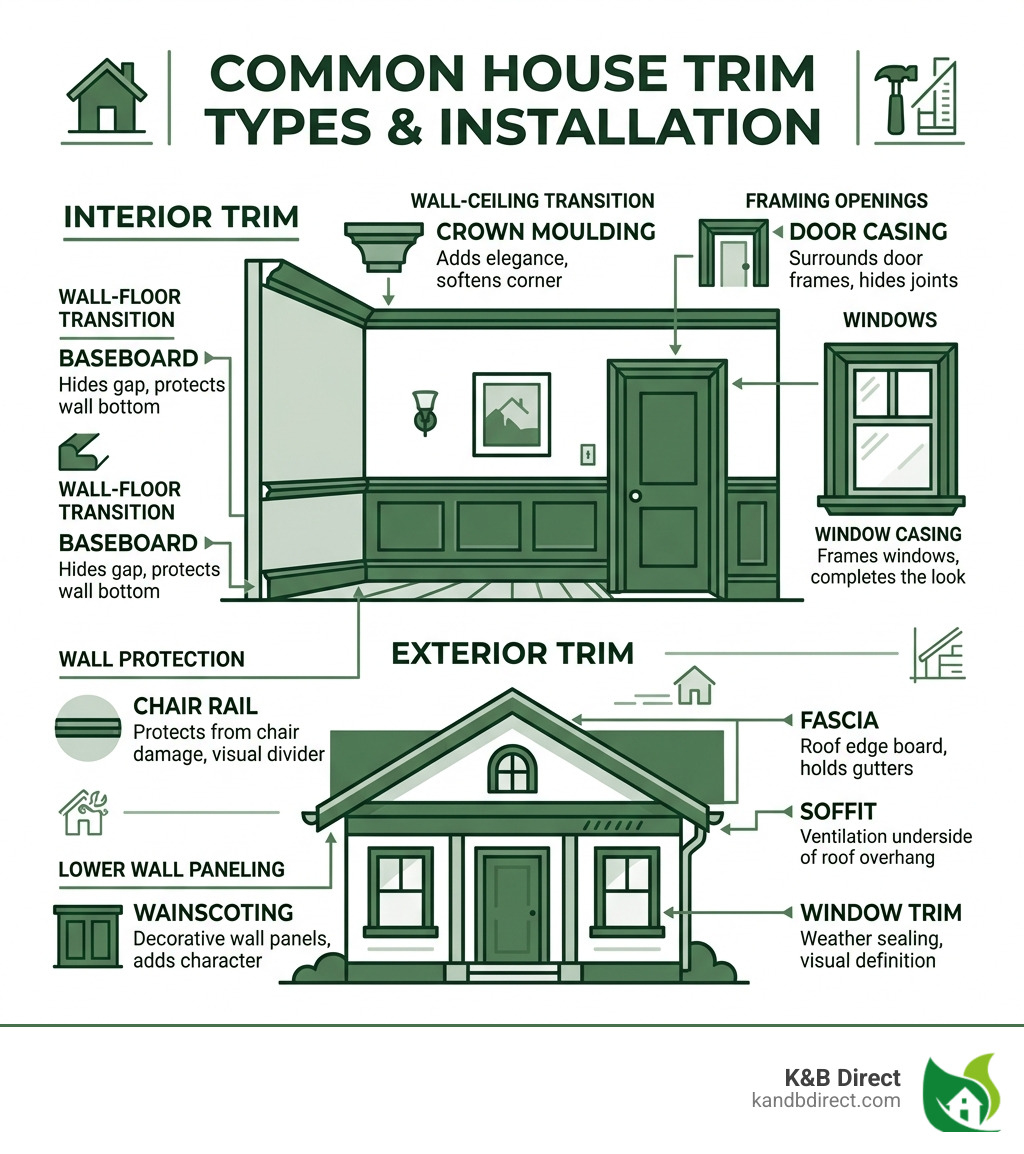
When we talk about the best trim for house design, we are looking at a system of architectural details that work together. Trim isn’t just one piece of wood; it’s a collection of types of moulding that serve both functional and aesthetic purposes.
Baseboards
Baseboard trim is the workhorse of the home. It sits at the junction where the wall meets the floor. Its job is to hide the gap required for flooring expansion and to protect the bottom of your walls from vacuum cleaners, pets, and wandering toes. In many Chicagoland homes, we see everything from simple “eased edge” profiles to elaborate multi-piece assemblies.
Crown Moulding
If baseboards anchor the room, crown moulding elevates it. This trim is installed where the wall meets the ceiling. It draws the eye upward, making ceilings feel higher and rooms feel more formal. It’s a hallmark of traditional design, though modern versions use simpler, flatter profiles to achieve a similar sense of completion.
Wall Protection and Decoration
Beyond the top and bottom of the wall, we use several other types of trim:
- Chair Rails: Originally designed to protect walls from being scuffed by chair backs, these are now used to divide wall colors or textures (like paint above and wallpaper below).
- Picture Rails: These sit higher up the wall and were traditionally used to hang art without damaging the plaster. Today, they add a vintage, sophisticated feel.
- Wainscoting and Board and Batten: These involve wall trim panels that cover the lower portion of a wall, adding incredible texture and durability to high-traffic areas like mudrooms or hallways.
Exterior Trim: Fascia and Soffits
The best trim for house exteriors does more than just look pretty; it seals your home against the elements. Fascia is the forward-facing board along the roofline (where gutters are often attached), while the soffit is the material installed underneath the roof overhang. Together with window trim, these components prevent moisture from entering your attic and wall cavities.
Door Casing and Frame Profiles
Door casing is the trim that frames your door openings. It covers the messy gap between the door jamb and the drywall. For those who want a truly high-end look, we often recommend natural wood casing because of its warmth and durability.
In more formal or traditional homes, you might see architraves (the decorative header above the door), plinth blocks (the sturdy blocks at the base of the casing), and rosettes (decorative squares at the top corners). These elements provide a visual “frame” that makes a simple door feel like a grand entrance.
Choosing the Best Trim for House Materials
Selecting the right material is just as important as the style. In our experience serving the Illinois area, from Glen Ellyn to Arlington Heights, the local climate—with its humid summers and freezing winters—dictates which materials will last.
| Material | Pros | Cons | Best Use |
|---|---|---|---|
| Solid Wood | Extremely durable, can be stained or painted, easy to sand/repair. | Higher investment, can warp with humidity. | Living rooms, high-traffic areas, stain-grade projects. |
| MDF | Very smooth surface for painting, uniform (no knots), budget-friendly. | Vulnerable to moisture, can’t be stained. | Bedrooms, dining rooms, dry interior spaces. |
| PVC | 100% moisture-proof, rot-resistant, no painting required (but possible). | Can look “plastic” if not finished well, expands/contracts in sun. | Bathrooms, kitchens, exterior window frames. |
| Fiber Cement | Fire-resistant, incredibly durable, holds paint well. | Heavy, requires special tools to cut. | Exterior fascia and siding transitions. |
Wood Trim
Wood trim remains the gold standard for many. If you love the look of natural grain, wood moulding made from oak, maple, or cherry is unbeatable. For painted looks, poplar or finger-jointed pine are excellent choices because they are more stable than solid pine but offer the strength of real timber.
Low Maintenance Options
For those who want to “set it and forget it,” Trim Options for Low Maintenance usually involve synthetic materials. PVC is a favorite for exterior work because it won’t rot or be eaten by insects. Indoors, MDF (Medium-Density Fiberboard) is the go-to for painted trim because it provides a perfectly smooth finish that won’t show wood grain through the paint.
Best Trim for House Proportions and Scale
One of the biggest mistakes we see is choosing trim that is too small for the room. A tiny 3-inch baseboard in a room with 10-foot ceilings will look like an afterthought.
According to the “1/10th rule,” your baseboard height should be roughly one-tenth of your ceiling height:
- 8-foot ceilings: 5–6 inch baseboards.
- 9-foot ceilings: 6–7.5 inch baseboards.
- 10-foot ceilings: 7–9 inch baseboards.
For the exterior, The Ideal Exterior Window Trim Width is usually between 3 and 6 inches. Larger windows need wider trim to maintain architectural balance. If the trim is too thin, the window looks “naked”; if it’s too wide, it can overwhelm the siding.
Architectural Styles and Profile Selection
The profile—the shape of the trim when viewed from the side—should match your home’s “bones.”
- Modern Minimalism: Look for modern base moulding with “eased edges” or simple square profiles. The goal is clean lines that don’t distract from the architecture.
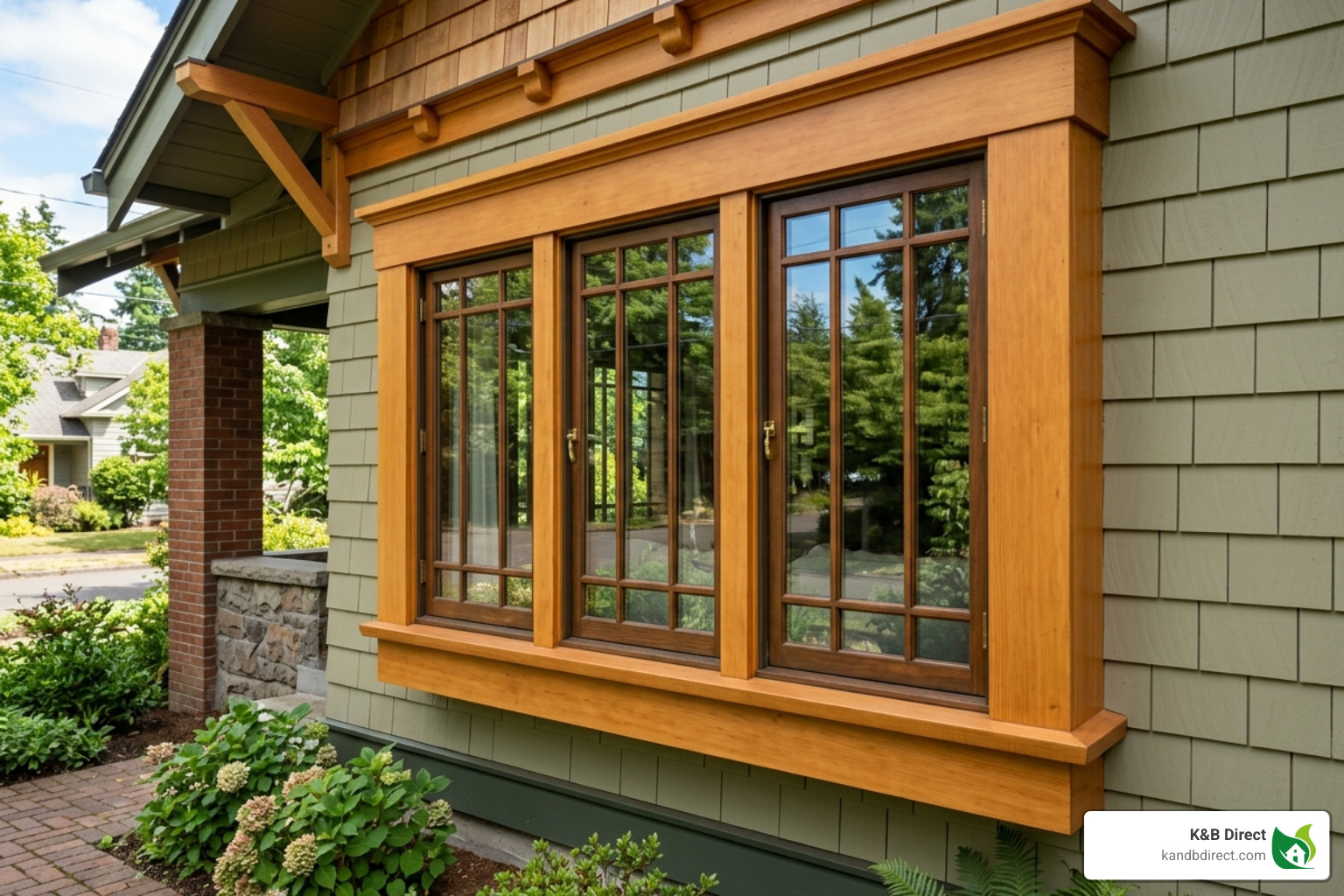
- Craftsman Simplicity: This style uses wide, flat boards with very little ornamentation. It emphasizes honest materials and sturdy construction.
- Traditional Elegance: Here, you want layers. Using a base cap moulding on top of a flat baseboard creates a custom, “stacked” look. You can explore more options in our base cap moulding profiles complete guide.
- Colonial and Victorian: These styles love detail. Think Ogee curves, fluted casings, and large, ornate crown moulding.
Best Trim for House Value and Curb Appeal
Investing in high-quality trim is one of the most effective ways to boost your property value. It’s what we call “perceived quality.” A home with thick, well-proportioned trim feels more expensive and better built than one with thin, “builder-basic” millwork.
On the exterior, using high-contrast colors—like black trim on a white house—creates a sharp, intentional look that instantly boosts curb appeal. It signals to buyers that the home has been cared for and designed with an eye for detail.
Maintenance and Color Coordination
Once you’ve picked the best trim for house style, you need to keep it looking sharp.
Color Selection
Choosing the Best Trim Color for a House can be tricky.
- Monochromatic: Painting the trim the same color as the walls (but in a different sheen) makes a room feel larger and more modern.
- High Contrast: White trim against dark walls is a classic look that highlights the architectural lines of the room.
- Earthy Tones: For brick or stone exteriors, warm neutrals or greens can help the home blend into its natural surroundings.
Finish and Care
We always recommend a semigloss or satin finish for trim. These sheens are more durable and much easier to wipe down than flat paint. For unpainted wood trim, a little wood oil once a year can keep the grain looking rich and prevent the wood from drying out.
Exterior trim should be inspected annually. Look for gaps in the caulk or peeling paint, especially around window sills where water tends to sit. Catching a small crack early can prevent expensive rot down the road.
Mixing Different Trim Styles
Can you mix styles? Yes, but you have to be intentional. We often suggest keeping the “public” areas of the house (entryway, living room, dining room) more formal with layered base cap moulding and crown, while keeping bedrooms a bit simpler. The key is to maintain a consistent “weight” or scale so the transition between rooms feels natural, not jarring.
Durable Materials for Wet Areas
In bathrooms and kitchens, moisture is the enemy. This is where PVC really shines. Unlike wood or MDF, PVC won’t swell or grow mold when exposed to steam or occasional splashes. We often use PVC for baseboards in bathrooms and for cabinet trim near sinks to ensure the kitchen stays looking beautiful for years.
Matching Baseboards and Window Casings
To achieve a unified appearance, your baseboards and casings should “speak the same language.” If you have a very detailed, curvy casing around your doors, your baseboards should have a similar profile. Repeating these shapes creates an architectural flow that makes the whole house feel like it was designed by a pro.
Conclusion
Finding the best trim for house upgrades doesn’t have to be overwhelming. Whether you are looking for the timeless beauty of wood trim or the modern ease of MDF and PVC, the right choice will transform your space.
At K&B Direct, we pride ourselves on helping our neighbors across the Chicagoland area—from Barrington to Melrose Park—achieve their dream home aesthetics. We offer high-quality millwork at unbeatable prices because we believe everyone deserves a home that looks and feels finished.
Ready to start your project? We’re here to help you find the perfect profiles and materials to make your home pop. Happy remodeling!