
Why Decorative Wood Trim Matters for Your Home
1 inch decorative wood trim is a versatile moulding profile that adds architectural detail and refined finishing touches to cabinets, walls, furniture, and millwork projects. This size offers subtle elegance without overwhelming smaller spaces, making it ideal for picture frames, cabinet accents, shelf edging, and wall paneling details.
Quick Reference Guide:
| Trim Type | Primary Use | Best For |
|---|---|---|
| 1-inch Panel Mould | Cabinet accents, wall panels | Creating intricate designs, layering details |
| 1-inch Casing | Picture frames, small openings | Framing artwork, mirror borders |
| 1-inch Base Cap | Topping flat baseboards | Adding height and detail to baseboards |
| 1-inch Decorative Carved | Furniture, mantels | Ornamental accents, custom millwork |
Decorative wood trim transforms a basic room into a polished, finished space. It protects walls while defining your home’s architectural style. From upgrading kitchen cabinets to framing windows, the right trim profile makes all the difference. The growing demand for aesthetically pleasing interiors is reflected in the wood trim market, which is projected to reach $17.8 billion by 2030, driven by home improvement projects.
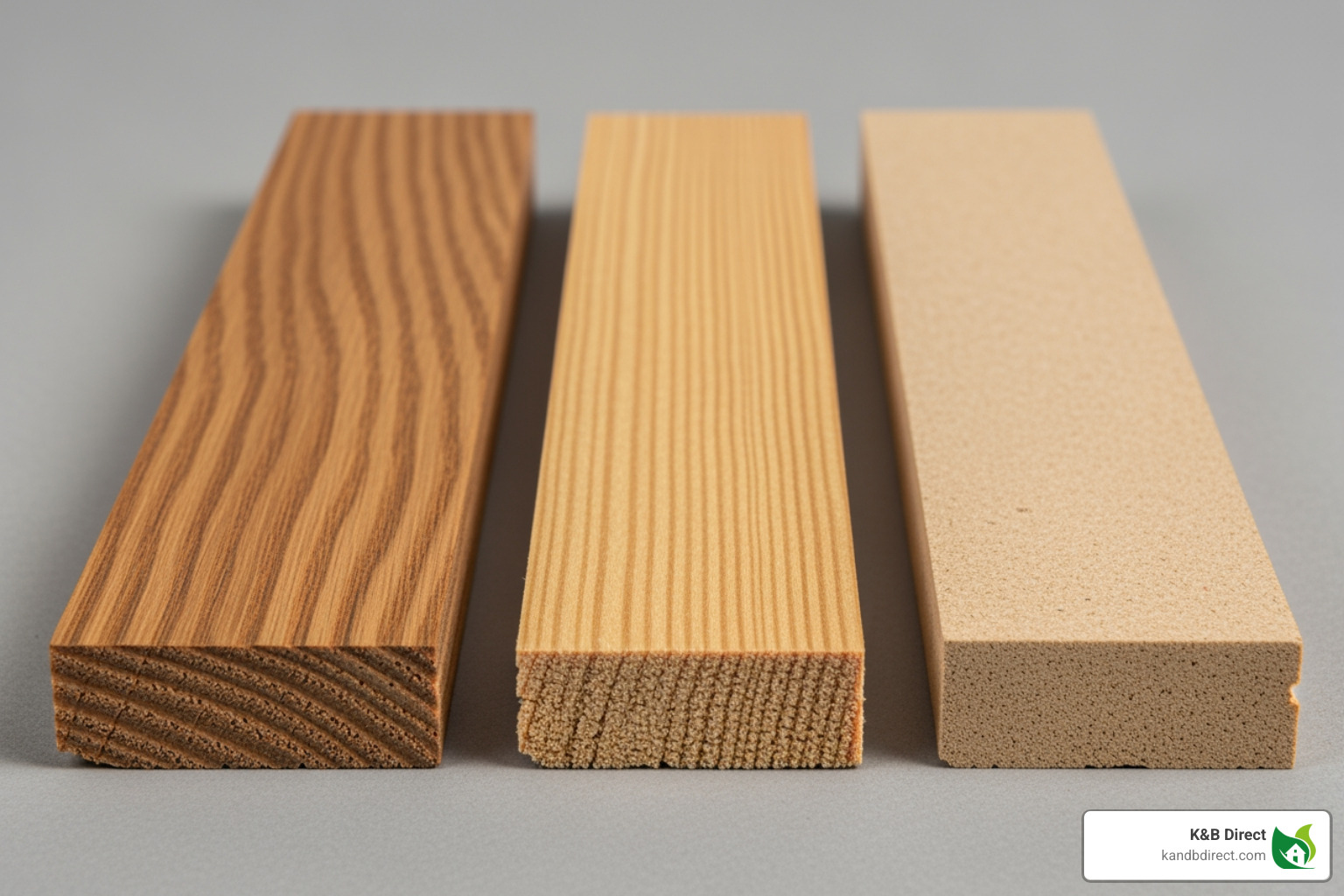
Trim materials range from solid woods like oak and poplar to composites like MDF. Each offers unique benefits for workability, durability, and finishing. Choose primed mouldings for a ready-to-paint surface or unfinished wood for custom staining to highlight natural grain patterns.
I’m Eryk Piatkowski, Owner at K&B Direct. With over a decade of experience, I’ve helped homeowners select quality 1 inch decorative wood trim and moulding products to transform their living spaces. We focus on service and value to help you find the right profile for your design vision.
Understanding Decorative Wood Trim Profiles and Materials
Decorative wood trim adds character, depth, and elegance, changing a space from ordinary to extraordinary. It defines a room’s style and protects walls. The market for moulding is growing as more homeowners seek aesthetically pleasing interiors. Understanding the different profiles and materials is the first step. With the right knowledge, you can select the perfect trim to meet your functional needs and complement your design.
Common Decorative Trim Profiles
Moulding comes in many shapes and sizes, each designed to improve a room’s aesthetic. Think of these profiles as the jewelry of your home, adding definition where it’s needed most. Whether you’re looking for a subtle accent or a grand statement, there’s a trim profile ready to fulfill your design dreams.
Let’s explore some of the most common profiles:
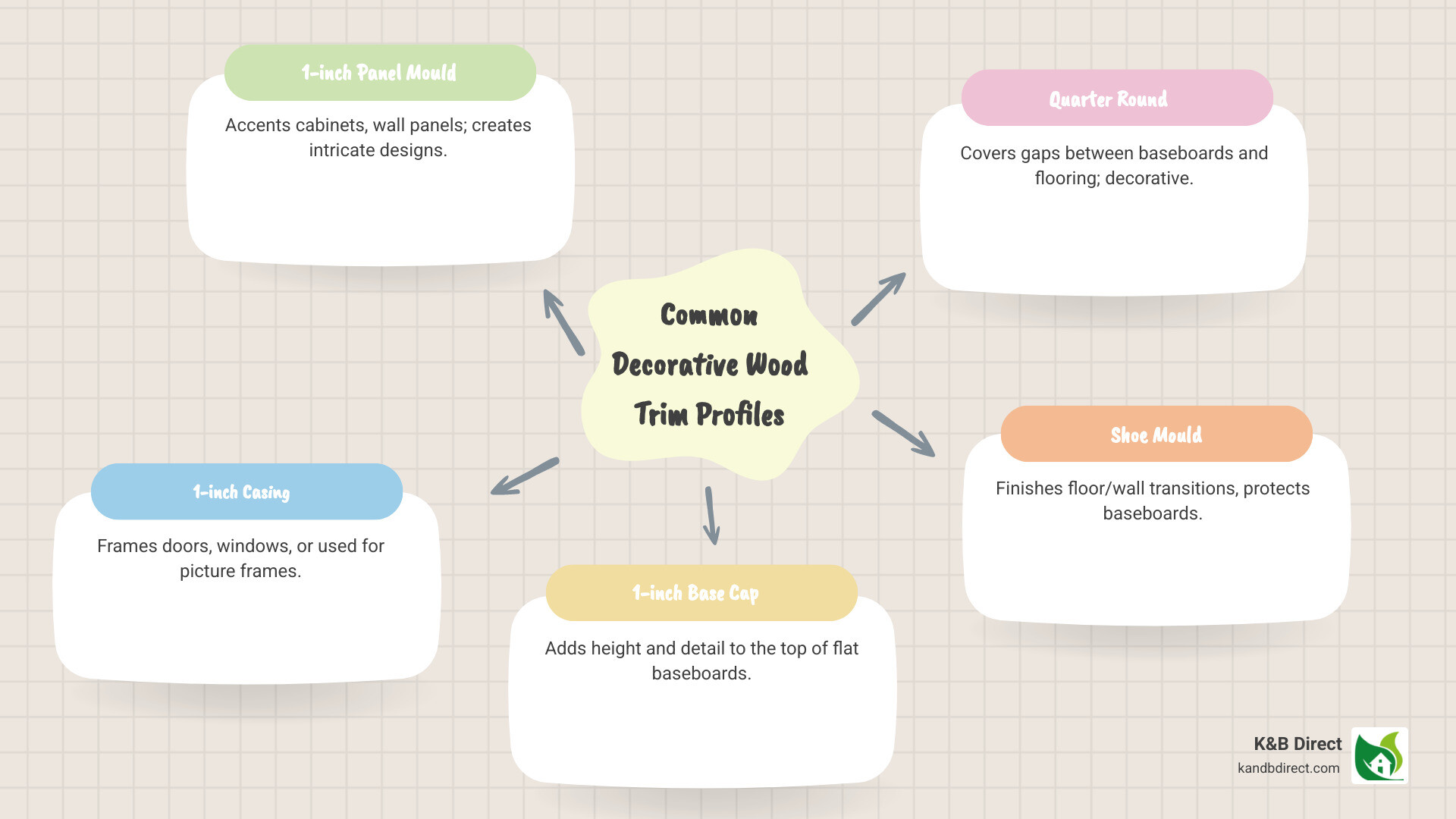
- Casing: This trim frames doors and windows, covering the space between the wall and the frame. We offer various casing profiles, including Casing 105 and Casing 356 FJP.
- Baseboard: Installed where the wall meets the floor, it covers gaps and protects the wall from impacts. It’s a foundational element in any room. You can learn more in our Baseboard Moulding Guide.
- Base Cap Moulding: Adds a decorative top to flat baseboards for a taller, more elaborate look and architectural interest. Explore options like our Base Cap Moulding.
- Chair Rail: Installed horizontally on a wall, it protects from chair scuffs and adds a decorative line that can break up wall space. Check out our Chair Rail 105 for a neat option.
- Quarter Round & Shoe Mould: Small, curved mouldings used at the base of baseboards to cover gaps and provide a finished edge.
- Panel Mould: Creates decorative frames or panels on walls, ceilings, or furniture for a bespoke feel. Our Panel Mould 185 1049756 is a fantastic example.
- Crown Moulding: Installed where walls meet the ceiling, it creates a decorative transition and adds a sense of grandeur. Find more about our Crown Moulding options.
- Flat Stock: Simple, flat strips of wood used for building up custom profiles or as a minimalist trim option.
- Shiplap & Wainscoting: Wall paneling that adds texture and character. Shiplap creates horizontal lines, while wainscoting covers the lower portion of a wall. We offer ShiplapWainscot LSL18 1049508 for these applications.
Each of these profiles, including our various Types of Moulding, plays a unique role in shaping the architectural character of a space.
A Guide to Wood Trim Materials
The material you choose for your trim impacts its appearance, durability, and finish. We offer a diverse range of options for Wood Moulding.
- Solid Wood: The classic choice, offering natural beauty and durability.
- Oak: Known for its prominent grain and strength, a popular choice for staining.
- Poplar: A smooth hardwood that paints beautifully for a crisp finish, and can also be stained.
- Basswood: Lightweight and stable with a fine grain, it accepts paint and stain beautifully, making it great for decorative mouldings.
- Pine: A versatile softwood with a distinctive grain that accepts paint and stains, often used for a rustic look.
- Cherry, Hemlock, Maple, Walnut, Fir: These species offer a range of colors and grain patterns. For an in-depth look at different wood species, The Wood Database is an excellent non-commercial resource.
- Medium Density Fiberboard (MDF): A popular, economical alternative to solid wood for painted applications. Its smooth, consistent surface is ideal for a flawless painted finish. Best for interior use away from moisture.
- Finger Jointed Pine (FJP): Smaller pieces of pine joined together, offering a stable, value-oriented option that is often primed and ready for paint.
- Primed vs. Unfinished:
- Primed Mouldings: Come ready for a topcoat of paint, saving time and labor.
- Unfinished Wood: Allows for custom painting or staining to highlight the wood’s natural grain.
When making your selection, while nominal dimensions are provided, actual sizes and profiles may vary slightly depending on the material and manufacturing process. It’s always a good idea to account for these slight variations in your project planning.
Exploring the Versatility of 1 Inch Decorative Wood Trim
1 inch decorative wood trim may seem like a small detail, but its design impact is significant. This size offers a blend of subtlety and presence, perfect for adding refined touches or creating visual interest with precision. The versatility of 1-inch trim is its key strength. It can create delicate frames, define furniture, or build up complex mouldings. Its slender profile suits smaller projects or rooms where larger trim might feel too heavy. We often recommend it for adding detail to cabinetry or creating unique wall paneling designs.

To illustrate the typical uses of different trim sizes, here’s a comparison:
| Trim Size | Common Uses | Best For |
|---|---|---|
| 1-inch | Cabinet accents, picture frames, wall paneling details, mantel embellishments, shelf edging. | Adding intricate detail, creating refined lines, accenting smaller features, and achieving a neat finish. |
| 3/4-inch | Quarter round, shoe moulding, small casings, decorative battens for wainscoting, light furniture trim. | Covering small gaps, protecting baseboards, and framing small windows or openings. |
| 1/2-inch | Small bead mouldings, lattice, decorative inserts, fine picture frames, delicate edging for craft projects. | Minimalist detailing, very subtle accents, and projects requiring the lightest touch of trim. |
Common Applications for 1 Inch Decorative Wood Trim
The adaptability of 1 inch decorative wood trim makes it a versatile choice in home design, capable of enhancing a wide variety of elements with a touch of class.
Here are some of our favorite applications:
- Cabinet Trim: A popular use is for Cabinet Trim, changing plain cabinet doors into custom-looking pieces. It’s perfect for adding definition or creating an ornate appearance.
- Picture Frames and Mirror Borders: Provides a substantial yet neat border for artwork, photographs, or mirrors, adding character to your pieces.
- Wall Paneling Accents: Excellent for creating geometric patterns on a feature wall or defining wainscoting borders, adding architectural detail to plain walls.
- Mantel Details: Adding this trim can improve the structure of fireplace mantels, creating a more customized look that draws the eye.
- Shelf Edging: Apply to the front of shelves for a finished, custom look that also adds protection.
- Window Frame Moulding: Can be used in a layered Window Frame Moulding system or as a minimalist frame for smaller windows.
- Furniture Embellishment: Turns ordinary furniture into bespoke pieces by outlining drawers or adding decorative motifs.
- Crown Accents: Can be used as a subtle accent to layer with or complement a larger crown moulding.
These applications demonstrate the significant impact a seemingly small element can have on the overall feel of your home.
Benefits of Using Smaller Profile Trim
Smaller profile trims like our 1 inch decorative wood trim have distinct advantages beyond aesthetics, impacting both visual harmony and practical application.
Here’s why we love using smaller profile trim:
- Adds Detail Without Overwhelming a Space: Introduces neat detail in rooms with lower ceilings or minimalist designs without making the space feel cramped.
- Ideal for Smaller Rooms: Maintains a sense of spaciousness in smaller areas like powder rooms or hallways while adding character.
- Creates Refined, Neat Lines: Lends itself to crisp, clean lines, which is beneficial in modern designs where precision is paramount.
- Complements Larger Mouldings: Can be layered with larger mouldings to build up complex profiles and add intricate detail.
- Improves Architectural Features: Highlights and defines architectural elements like built-in bookshelves, making them appear more intentional and professionally crafted.
Styling with Decorative Wood Trim
Decorative wood trim is a fundamental design element that defines a room’s style. The right profile, material, and finish can dramatically shift the aesthetic, from subtle sophistication to bold statements. Our versatile Wall Trim options can help you achieve your vision.
Modern and Scandinavian Design
In modern and Scandinavian design, simplicity and clean lines are key. 1 inch decorative wood trim adds definition without ornate details.
- Clean Lines and Geometric Patterns: Use sleek, flat stock or simple panel mouldings to form crisp geometric patterns on walls for subtle texture and depth.
- Minimalist Appeal: Its slender profile provides a finished edge to features without drawing excessive attention, aligning with a minimalist philosophy.
- Subtle Texture: A finely milled 1-inch trim can introduce a delicate tactile quality, adding interest to a simple space.
- Painted Finishes: These designs often favor painted finishes in white, black, or gray to blend with walls or create a sharp contrast. Our Modern Base Moulding exemplifies this clean look.
Traditional and Heritage Styles
Traditional designs use trim as a cornerstone of the aesthetic, with intricate details and layered profiles that evoke timeless elegance.
- Layering Mouldings: Traditional styles often layer different trim profiles. A 1 inch decorative wood trim can add intricate detail or cap larger mouldings, like adding a base cap to a flat baseboard.
- Creating Depth: Layered trim casts shadows and creates visual interest, making architectural features feel more substantial.
- Ornate Details: Even a slender 1-inch trim can have an ornate profile with curves or beads that contribute to the design’s richness when combined with other mouldings.
- Wainscoting: Wainscoting often uses panel mouldings to create framed sections. 1 inch decorative wood trim is perfectly scaled for this detailing. See our Vintage Base Cap Moulding Guide for inspiration.
- Stained Wood Finishes: Stained wood is prized in traditional settings. Rich, dark stains on oak or cherry trim add warmth and a sense of enduring quality.
Farmhouse and Boho Aesthetics
Farmhouse and Boho styles emphasize natural textures, warmth, and a relaxed atmosphere, using trim to add rustic charm.
- Rustic Charm: In farmhouse design, simple, clean-lined trim complements shiplap walls and rustic elements, focusing on authenticity.
- Natural Textures: Unfinished or lightly stained trim highlights the natural grain. Knotty pine or light woods work particularly well. Our Natural Wood Casing options fit these styles.
- Shiplap Accents: Use 1-inch trim to cap or frame shiplap panels, enhancing the visual appeal of these textural surfaces.
- Framing Features: In Boho design, trim can frame art or define a nook, acting as a subtle outline for other artisanal elements.
- Relaxed Feel: The modest scale of 1-inch trim contributes to a relaxed feel, providing a finished look without being overly formal.
Selection and Installation Considerations
A successful trim project depends on careful selection and meticulous installation. The goal is a professional, lasting finish that seamlessly integrates into your home’s architecture. Consider the project requirements, material suitability, and proper surface preparation.
Choosing the Right Profile for Your 1 Inch Decorative Wood Trim Project
Selecting the right 1 inch decorative wood trim profile requires considering your space, architecture, and desired aesthetic to ensure a harmonious result.
Here’s what we advise our customers to consider:
- Room Scale: In smaller rooms, a delicate profile maintains balance. In larger rooms, it can be used for intricate layering.
- Existing Architecture: Harmonize your trim choice with your home’s existing style, whether traditional or modern.
- Desired Effect: Decide on the desired effect. A detailed panel mould can create a feature wall, while a simple half-round softens an edge.
- Combining Profiles: Layering different profiles can create unique, custom mouldings. Our Base Cap Moulding Profiles Guide offers insights into combining profiles.
- Visual Balance: The trim should be proportionate to the features it accents. A properly chosen trim adds the perfect touch of detail.
Key Installation Considerations
Proper installation is crucial for a professional finish. Precision and patience are key.
Here are our key installation considerations for decorative wood trim:
- Accurate Measurements: Precise measurements are essential to minimize waste and ensure a snug fit. Account for slight dimensional variations.
- Proper Cutting Techniques: Mastering mitered cuts for corners is essential. For inside corners, cope cuts often yield a tighter fit. Our guide on cutting baseboard corners provides valuable tips.
- Securing the Trim:
- Finishing Nails: Use 16 or 18-gauge finishing nails long enough to penetrate into a stud.
- Wood Adhesive: Apply wood adhesive before nailing for added security and to prevent gaps.
- Finishing Touches:
- Filling Gaps: Use paintable caulk for gaps at seams and wood filler for nail holes.
- Sanding: Lightly sand the trim after filling for a smooth surface before painting or staining.
- Painting or Staining: Primed mouldings are ready for a topcoat. For unfinished wood, choose paint for a uniform look or stain to showcase the natural grain.
Frequently Asked Questions about Decorative Wood Trim
Homeowners and professionals often have questions when exploring decorative wood trim. Here are answers to some common inquiries.
What is the difference between trim and moulding?
“Trim” is the general term for material used to finish openings and edges. “Moulding” is a specific type of trim with a decorative, shaped profile. All moulding is trim, but not all trim is moulding. We offer a wide range of both Molding and general trim products.
Can I paint or stain any type of wood trim?
Most wood and engineered wood trim can be painted or stained, but the material matters:
- Paint: Wood and MDF are excellent for painting. MDF provides a very smooth surface. Primed mouldings are ready for your final paint coat.
- Stain: Use stain on solid wood like oak, poplar, or pine to highlight its natural grain. The wood species will influence the stain’s final appearance.
- Check the Material: Unfinished trim offers the most versatility. Primed trim is ready for paint. Prefinished trim is not intended for further finishing.
Always test your finish on a scrap piece first.
What is the purpose of a base cap?
A Base Cap Moulding is a decorative profile added to the top of a flat baseboard to:
- Add Height: It makes a standard baseboard look taller and more substantial for a custom, luxurious feel.
- Add Detail: Its decorative profile creates an attractive layered effect, adding architectural interest.
- Conceal Gaps: It hides minor gaps between the baseboard and the wall for a clean look.
Using a base cap is an excellent method to improve your baseboards and add elegance.
Conclusion
Decorative wood trim, from the subtle elegance of a 1 inch decorative wood trim to larger profiles, is vital in defining your home’s character. We’ve explored the diverse profiles, materials, and styling possibilities for any interior design, from modern to traditional.
At K&B Direct, we believe quality trim is an investment in your home’s lasting beauty. It’s about lifting your interiors and creating an atmosphere that reflects your style. Our commitment to quality products, great value, and expert service ensures you’ll find the perfect finishing touch. We’re ready to help you from our locations across the greater Illinois area.
Ready to find the ideal 1 inch decorative wood trim or other moulding to complete your vision?
Explore Our Complete Collection of Wood Trim and find the perfect pieces to bring your design dreams to life. For a broader selection of architectural details, dig into our comprehensive range of Mouldings & Millwork. We’re excited to help you make your home truly shine!