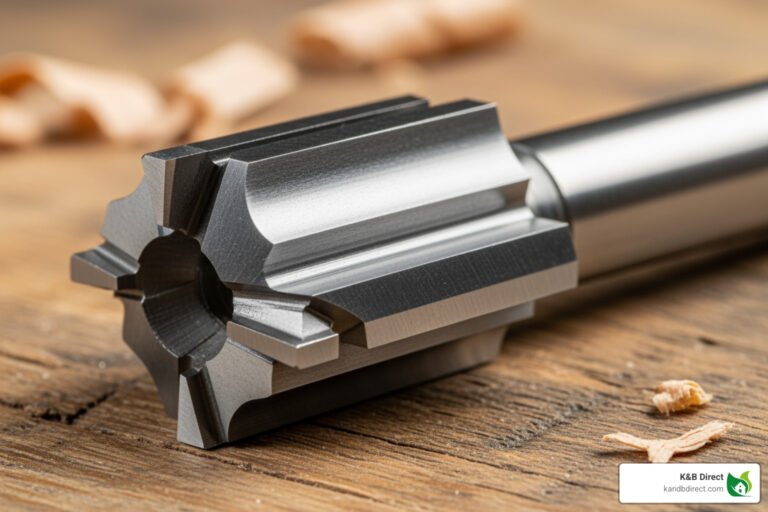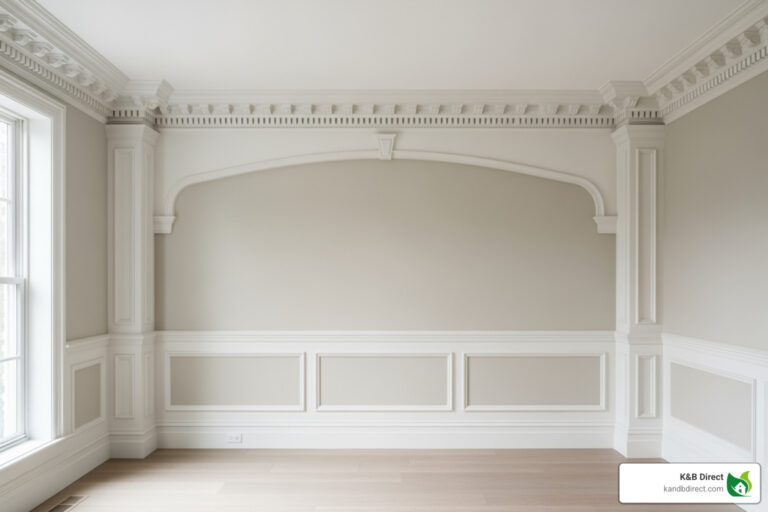
Why Molding and Baseboards Matter in Every Room
Molding and baseboards are two of the most impactful — — elements in any interior space. They protect your walls, hide gaps, and pull the entire look of a room together.
Quick Answer: What Are Molding and Baseboards?
| Element | Where It Goes | Main Purpose |
|---|---|---|
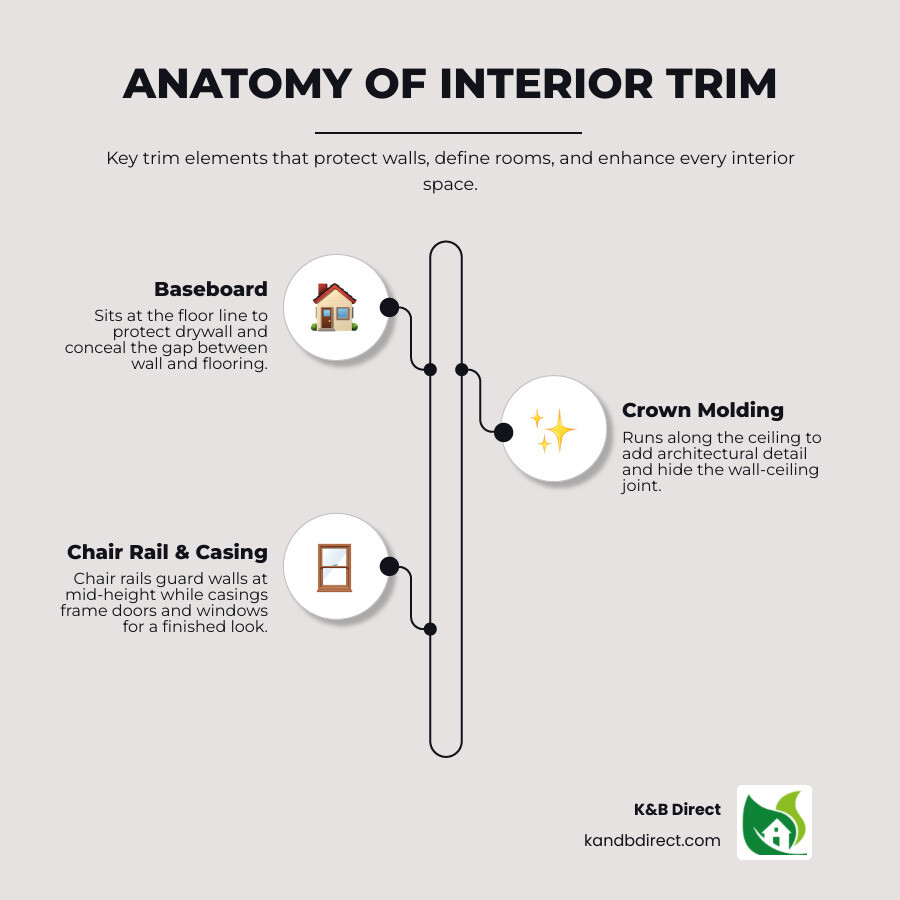
| Baseboard | Bottom of walls, along the floor | Protects drywall, hides wall-floor gap |
| Crown Molding | Top of walls, along the ceiling | Adds elegance, hides wall-ceiling joint |
| Chair Rail | Horizontal, ~3 ft up the wall | Decorative accent, wall protection |
| Casing | Around doors and windows | Frames openings, covers rough edges |
| Base Shoe / Base Cap | Paired with baseboard | Covers floor gaps, adds decorative detail |
Whether you’re renovating a kitchen, updating a bathroom, or refreshing an entire home, the trim you choose sets the tone for everything else. A well-chosen baseboard profile can make ceilings feel taller, rooms feel more finished, and spaces feel more intentional.
Yet most homeowners aren’t sure where to start — which profile, which material, which height. This guide breaks it all down clearly.
I’m Eryk Piatkowski, owner of K&B Direct, and over more than a decade of helping homeowners renovate kitchens and bathrooms, molding and baseboards are consistently among the details that make the biggest visual difference in a finished space. Let’s walk through everything you need to know to make the right call for your project.
Molding and baseboards further reading:
Understanding the Different Types of Molding and Baseboards
When we talk about molding and baseboards, we are looking at the “jewelry” of the home. These elements define the architectural style of a room, whether you are aiming for a sleek, modern look in a downtown Chicago loft or a stately, traditional feel in a Park Ridge colonial.
The profile—the shape or silhouette of the trim—is what determines the style. There are hundreds of types of moulding available, but they generally fall into a few primary categories:
- Ogee: This classic profile features an “S” curve. It is incredibly popular in traditional homes because it adds visual depth and a sense of history.
- Cove: A concave profile that curves inward. It’s often used where a softer transition is needed.
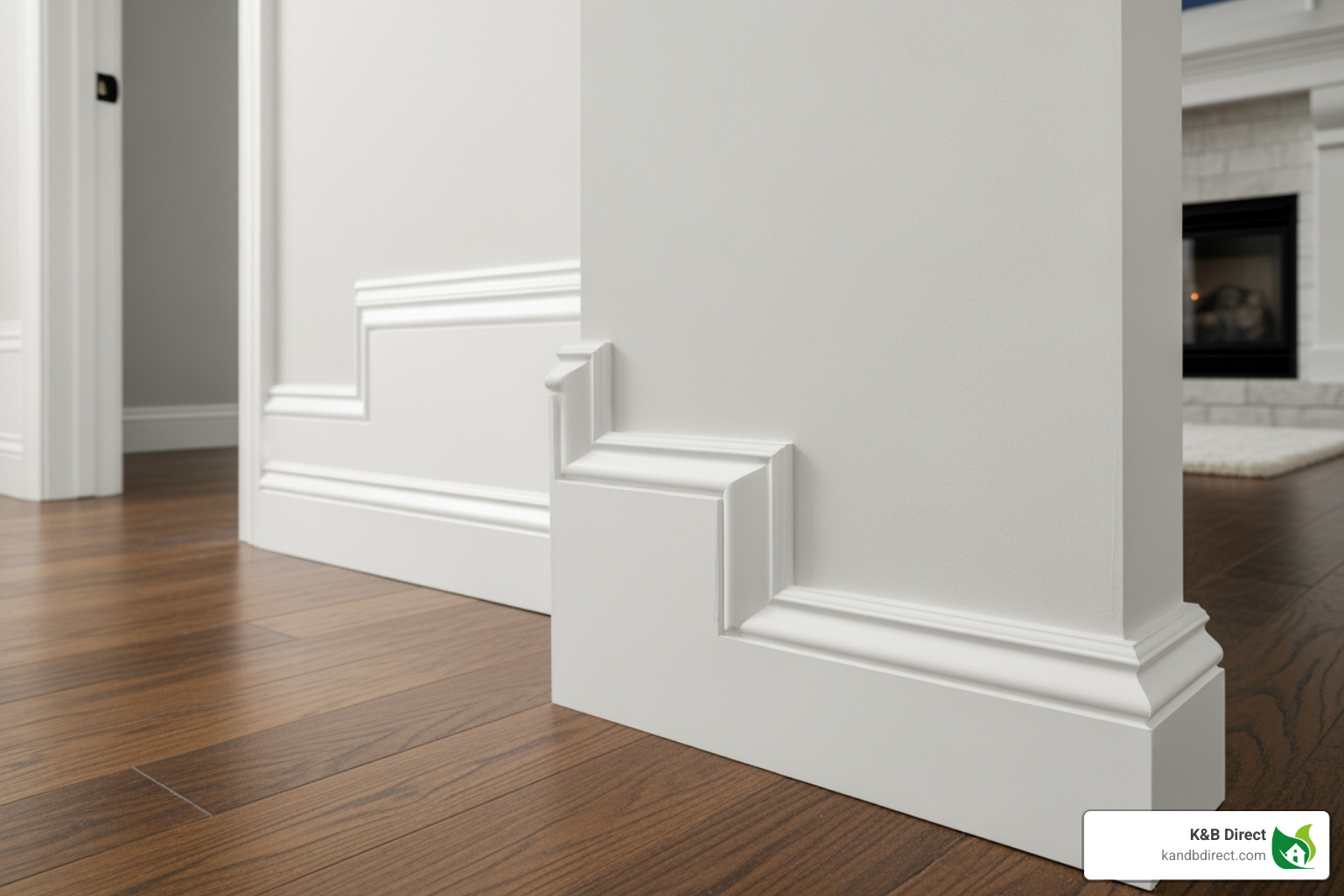
- Stepped: These profiles feature sharp, rectangular “steps” or tiers. They are excellent for transitional or modern spaces that need a bit more detail than a flat board.
- Flat: Simple, squared-off boards. This is the go-to for contemporary, minimalist, or “Modern Farmhouse” aesthetics.
- Sanitary: A simple profile with a rounded top edge, designed to be easy to clean—hence the name!
- Beaded: Features a small, rounded “bead” along the edge, adding a touch of delicate detail.
Popular Profiles for Molding and Baseboards
In our experience serving areas like Des Plaines and Elk Grove Village, we see a wide variety of preferences. Many homeowners start with a standard 620 9/16 in. x 4 1/4 in. x 96 in. Primed Finger Jointed Baseboard Moulding. This specific 620 profile is a workhorse in the industry; it’s tall enough to feel substantial but simple enough to work in almost any setting.
When choosing baseboard trim, consider the visual depth. A deeper, more intricate profile will cast more shadows, making the trim stand out as a focal point. If you want a “quiet” room where the furniture and art do the talking, a flatter, thinner profile is usually better.
Functional Differences in Trim Profiles
While we love the way they look, trim serves a very practical purpose. According to our baseboard moulding guide, these pieces act as protective barriers. Think about how often a vacuum cleaner or a stray toy hits the bottom of your wall. Without baseboards, your drywall would be covered in dents and scuffs within a month.
Furthermore, baseboards are essential for concealing gaps. When we install hardwood or laminate flooring in homes across Arlington Heights or Elmhurst, we must leave an “expansion joint”—a small gap between the floor and the wall. This allows the floor to expand and contract with the humidity changes we experience in the Chicago area. Molding and baseboards hide that gap perfectly, creating a seamless transition.
Material Selection for Durability and Style
Choosing the right material is just as important as choosing the right profile. In May 2026, we have more options than ever, ranging from traditional wood trim to modern synthetics.

Selecting Materials for Moisture-Prone Areas
If you are remodeling a bathroom in Schaumburg or a laundry room in Bensenville, moisture is your biggest enemy. Traditional wood moulding can warp, and Medium Density Fiberboard (MDF) can swell like a sponge if it gets wet.
For these areas, we highly recommend:
- PVC: Completely waterproof and will never rot. It’s perfect for those areas where the floor might get splashed.
- Urethane: This material is lightweight, pre-primed, and highly resistant to moisture and warping. It’s a fantastic alternative to wood for high-humidity environments.
Budget-Friendly and Premium Options
For the rest of the home, you have several choices in mouldings & millwork:
- MDF (Medium Density Fiberboard): This is the most economical choice. It’s paint-ready and very consistent (no knots or grain to worry about). However, as mentioned, it doesn’t handle water well.
- Primed Finger-Jointed (PFJ) Wood: This is made from small pieces of wood joined together and then primed. It’s more durable than MDF and offers the strength of real wood at a lower price point than solid boards.
- Solid Hardwoods (Oak, Poplar, Cherry): If you want to stain your trim to see the natural grain, solid wood is the only way to go. Poplar is a favorite for painting because it’s a hardwood that takes paint beautifully and is much sturdier than pine.
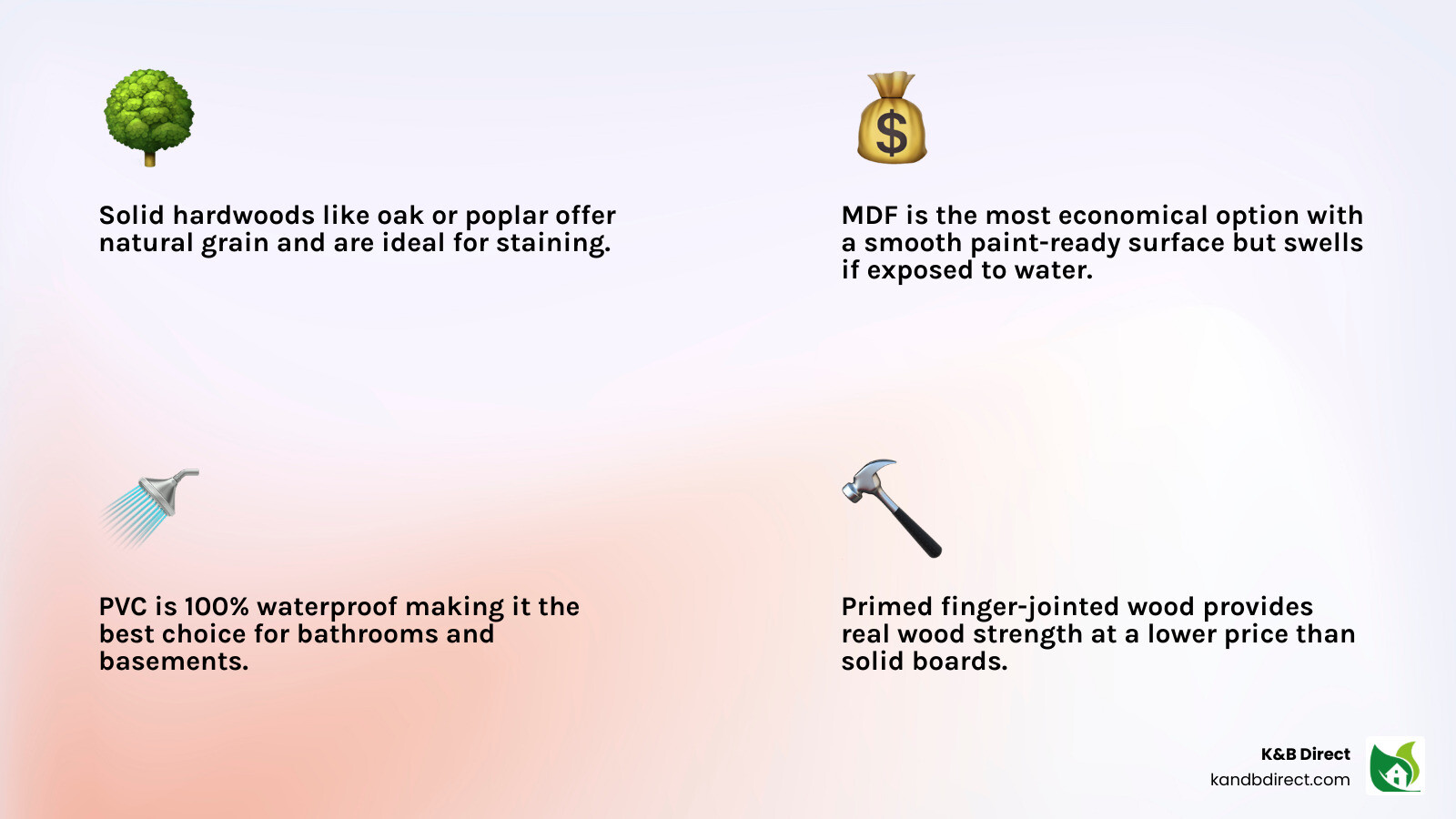
| Material | Best Use | Pros | Cons |
|---|---|---|---|
| MDF | Bedrooms, Living Rooms | Affordable, smooth surface | Swells if wet |
| Solid Wood | High-end areas, Stained finishes | Durable, natural beauty | Higher investment |
| PVC | Bathrooms, Basements | 100% Waterproof | Harder to paint than wood |
Coordinating Molding and Baseboards with Room Proportions
One of the most common questions we get at K&B Direct is: “How tall should my baseboards be?” The answer depends entirely on your room’s proportions.
When you look at a room, you should see a cohesive trim package. This includes the crown moulding at the ceiling, the casing around the doors, and the base cap moulding on the floor. If one element is too large or too small, the whole room feels “off.”
Coordinating Molding and Baseboards with Room Proportions
A general rule of thumb is that the taller the ceiling, the taller the baseboard should be. In a standard 8-foot room, a 3-inch to 5-inch baseboard is common. If you have 10-foot or 12-foot ceilings in a home in Oak Brook or Glenview, you might want to go up to 7 or even 9 inches to maintain visual balance.
You can achieve this height using a 3-piece baseboard setup. Instead of buying one massive, expensive piece of wood, we often “build up” the look by using a flat baseboard, a decorative base cap molding, and a shoe mold at the bottom. This creates a grand architectural look without the custom price tag.
Integrating Base Cap and Shoe Molding
If you have uneven floors—which is very common in older homes in Niles or Oak Park—a 2-piece base molding (baseboard plus shoe molding) is a lifesaver.
Baseboards are relatively stiff and don’t bend easily to follow a wavy floor. A “base shoe” or “quarter round” is much thinner and more flexible. It can be nailed into the baseboard (not the floor!) to cover the gaps caused by seasonal movement or a subfloor that isn’t perfectly level. This gives your project a professional, finished appearance.
Best Practices for Professional Installation and Finishing
Installing molding and baseboards is a true craft. If you look at the advice from This Old House, you’ll see that the pros focus on the details that the average person might miss.
Professional Installation Tips:
- Coped Joints: For inside corners, don’t just miter them at 45 degrees. A “coped joint”—where one piece is cut to fit the profile of the other—is much less likely to show a gap if the wood shrinks or the house shifts.
- Back-Beveling: Pro installers often back-bevel the bottom edge of the baseboard. This helps the front edge sit tighter against the floor.
- The Right Tools: Use a high-quality miter saw for clean cuts and an 18-gauge brad nailer. This size of nail is strong enough to hold the molding but small enough that the holes are easy to fill with a little spackle.
- Finishing: Always caulk the top edge where the trim meets the wall. This hides any slight gaps and makes the trim look like it’s part of the architecture rather than just nailed on.
Stock Profiles vs Custom Height Modification
In many historic restoration projects in areas like River Grove or Franklin Park, you might find that modern stock profiles don’t match the original trim. In these cases, we can often perform “height modifications.” This involves taking a stock profile and milling it down or combining it with other pieces to match the proportional balance of an older home. It’s a great way to maintain architectural style without the extreme expense of fully custom milling.
Frequently Asked Questions
Best materials for high-moisture environments?
For bathrooms, laundry rooms, or basements in the Chicago area, waterproof materials like PVC or Urethane are the gold standard. They offer incredible durability and won’t rot or warp when they come into contact with water. If you prefer wood, choose a hardwood like Poplar and ensure it is sealed on all sides (including the back) before installation.
Matching baseboards to door and window casing?
Your trim should talk to each other! Generally, your baseboard should be slightly thicker than your door casing so that the casing “terminates” into the baseboard cleanly. Proportional height is key; if you have wide 4-inch door casings, a tiny 2-inch baseboard will look out of place. Aim for a cohesive design where the scale of all trim pieces feels related.
Benefits of coped joints over mitered corners?
Mitered corners (two 45-degree angles) are notorious for opening up as the seasons change. In our region, where we have humid summers and dry winters, wood movement is a fact of life. Coped joints are much more forgiving. Because one piece “nests” inside the other, a tiny bit of movement won’t create a visible gap, ensuring a professional finish that lasts for years.
Conclusion
At K&B Direct, we believe that every detail matters. Whether you are looking for simple, modern lines or ornate, traditional profiles, the right molding and baseboards will transform your house into your dream home. We are proud to serve our neighbors in Schiller Park, Chicago, Rosemont, and throughout the surrounding suburbs with top-quality products and friendly service.
Ready to find the perfect finishing touch for your next project? Explore our full selection of Molding and Baseboards and let us help you realize your home’s full potential with quality millwork at unbeatable prices.