
The Smartest Way to Choose Door Handles Inside Your House
Choosing the right door handles inside house is one of the easiest ways to upgrade the way your home looks and functions – without a full renovation.
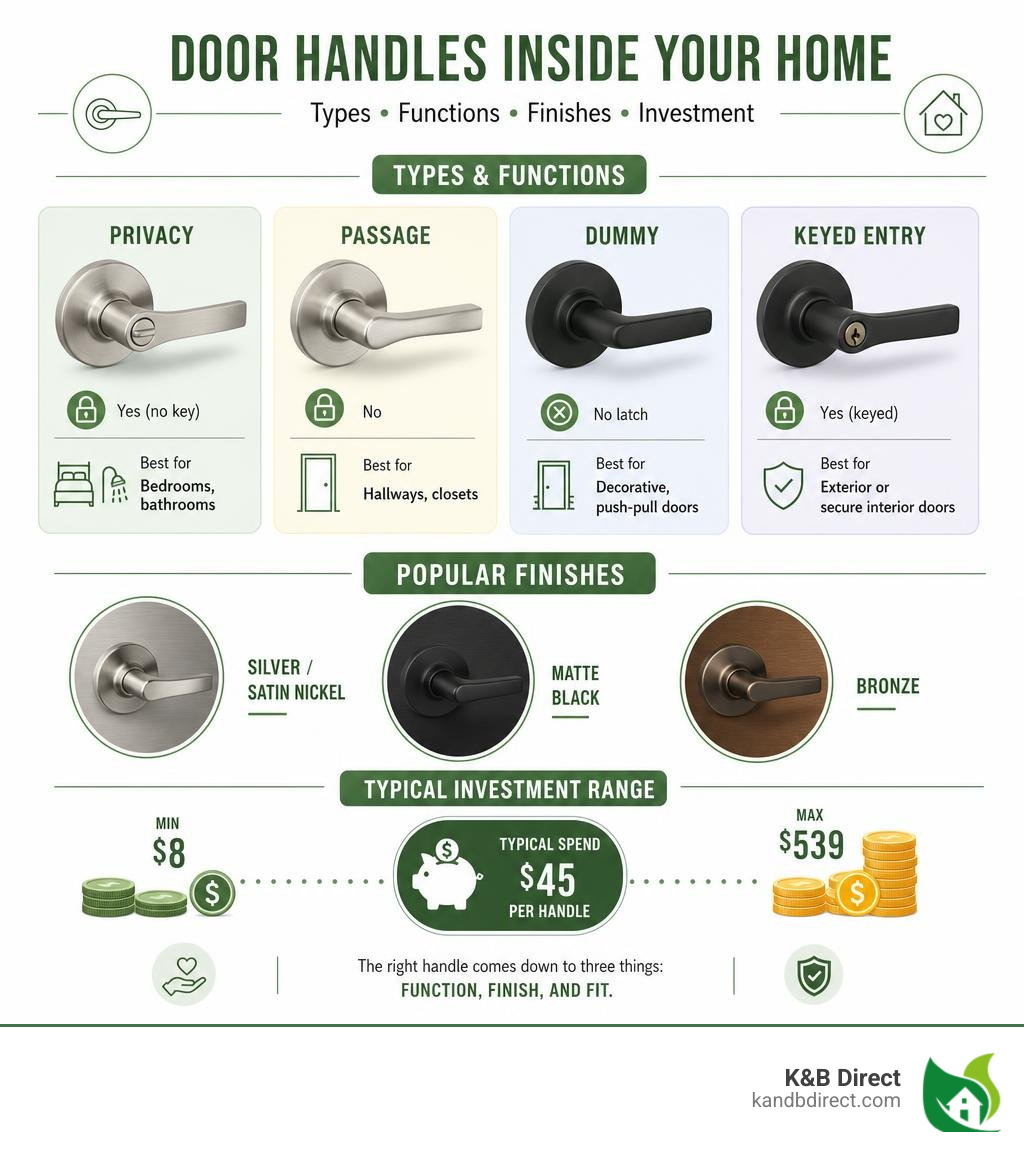
Here’s a quick breakdown of the main types to help you decide fast:
| Handle Type | Locking? | Best For |
|---|---|---|
| Privacy | Yes (no key) | Bedrooms, bathrooms |
| Passage | No | Hallways, closets |
| Dummy | No latch | Decorative, push-pull doors |
| Keyed Entry | Yes (keyed) | Exterior or secure interior doors |
Interior door handles range from simple builder-grade sets to premium solid-brass levers with designer finishes. The most popular finishes right now are silver/satin nickel, matte black, and bronze.
Whether you’re updating one bathroom door or replacing hardware throughout your entire home, the right handle comes down to three things: function, finish, and fit.
Door handles are also among the most frequently touched surfaces in any home – so material quality and finish durability matter more than most people realize.
I’m Eryk Piatkowski, owner of K&B Direct, and I’ve spent over a decade helping homeowners select interior hardware – including door handles inside the house – that balances everyday function with the style they actually want. Let’s walk through exactly what to look for.
Essential Types of Door Handles Inside House
When selecting residential hardware, understanding the core mechanical functions is the first step toward a successful home upgrade. Every door in your home serves a unique purpose, meaning the latching mechanisms must match the specific needs of each room.
| Handle Type | Latching Mechanism | Primary Purpose | Ideal Location |
|---|---|---|---|
| Privacy | Active latch with interior locking pin/button | Personal space security with emergency access | Bedrooms, Bathrooms, Home Offices |
| Passage | Active latch without locking mechanism | Seamless transition between communal spaces | Hallways, Closets, Pantries, Laundry Rooms |
| Dummy | Inactive pull (no latch mechanism) | Aesthetic grip for push-pull operation | Pantry double doors, Wardrobes, Bifold doors |
Choosing the wrong function can lead to daily frustration. For example, installing a passage lever on a bathroom door leaves guests feeling insecure, while putting a locking lever on a common hallway closet serves no practical purpose. Let’s look closer at these primary functions to guide your selection.
Privacy Door Handles Inside House for Bedrooms and Bathrooms
Privacy handles are designed to secure personal spaces. These units feature an interior locking mechanism—typically a push-button, turn-piece, or a unique pull-to-lock design—that prevents access from the hallway.
For safety, high-quality privacy hardware includes an exterior emergency release. This allows a parent or homeowner to unlock the door from the outside using a simple pin or coin, preventing accidental lock-ins.
If you are seeking a premium, modern aesthetic for your home in Park Ridge or Oak Brook, solid brass construction offers unparalleled weight and durability. A superb example is the Privacy Brushed Black Internal Door Handle, which provides a sleek look and features a secure, high-quality design with a concealed emergency safety release for an exceptional tactile experience.
Passage and Dummy Door Handles Inside House for Hallways and Closets
Passage handles are the workhorses of the home. They feature active, non-locking latches that keep doors closed securely while allowing anyone to open them with a simple turn of the lever. These are ideal for walk-in closets, utility rooms, and hallways where privacy is unnecessary.
Dummy handles, on the other hand, are completely inactive. They do not have a latch bolt or any internal moving parts. Instead, they mount directly to the surface of the door, serving as a simple pull handle. These are commonly paired with ball catches or magnetic latches on wardrobe doors and pantry double doors.
For a clean, transitional look, the Satin Nickel Passage Door Lever Set offers smooth mechanical operation and a timeless finish. If you prefer a highly contemporary look, there are options featuring a modern, non-removable latch plate and universal handing that works beautifully in any home layout from Chicago to Schaumburg.
Selecting Finishes and Styles for Interior Spaces

Your choice of door hardware plays a significant role in your overall home aesthetics. Hardware is often referred to as the “jewelry of the home” because it ties together lighting fixtures, plumbing elements, and cabinetry accents. When selecting new handles, consider the architectural style of your home and the finish coordination across nearby spaces. Our team at K&B Direct Hardware recommends selecting a finish that either complements your existing accents or provides a intentional, high-contrast statement.
Modern Aesthetics and Knurled Textures
Industrial modern design continues to influence interior styling throughout the Chicagoland area, particularly in areas like Bucktown and River Grove. One of the most prominent design trends is the use of knurled detailing on door levers. Knurling—a textured cross-hatch pattern cut into solid metal—provides a highly tactile grip and a sophisticated, contemporary appearance.
Matte black finishes remain exceptionally popular, offering a bold contrast against light-colored doors. To achieve this look, you can select the Brushed Satin Brass Lever Handle Set for a warm, luxurious feel. Textured handles catch the light beautifully and resist showing fingerprints, making them both highly stylish and practical for busy households.
Traditional and Classic Designs
For historic homes in Oak Park or traditional residences in Glenview, classic designs offer a timeless appeal that respects the architecture of the property. Satin nickel, antique brass, and dark bronze are excellent choices for traditional settings. These finishes harmonize with natural wood grain and classic white-painted doors.
When selecting classic hardware, look for soft curves, tiered rosettes, and traditional craftsmanship. Brands like Emtek excel in creating vintage-inspired pieces with modern internal mechanics. To coordinate your doors with your bathroom hardware, you can explore the Emtek Bath Accessories collection. High-end classic designs showcase the way traditional brass and bronze hardware can elevate a home’s interior character.
Technical Specifications and Installation Essentials
Before purchasing your new door handles inside house, taking accurate measurements is critical to ensure a seamless installation process. Standard residential doors in the United States follow specific guidelines, but older homes in historic neighborhoods like Maywood or Evanston may have non-standard dimensions. Our Door Handles Selection includes options designed to fit standard preparations effortlessly. For a neutral glossary of common parts, see Wikipedia’s door handle overview.
Determining Handing and Lever Orientation
While many modern door knobs are inherently universal, lever-style handles often require you to know the door’s “handing” to ensure the lever curves in the correct direction. Installing a handed lever upside down or backward can make it awkward to operate.
To determine the handing of your door:
- Stand on the outside of the room (the hallway side, facing the door).
- Note the location of the hinges.
- If the hinges are on your left, you have a left-handed door.
- If the hinges are on your right, you have a right-handed door.
To simplify the selection process, look for hardware featuring universal handing or reversible levers. These designs allow you to easily swap the orientation of the levers during installation, saving you time and preventing ordering errors.
Latch Adjustments and Backset Standards
The backset is the distance from the edge of the door to the center of the pre-bored hole. In residential construction, there are two standard backset measurements:
- 2-3/8 inches (60mm) – Most common for interior doors.
- 2-3/4 inches (70mm) – More common for exterior doors, though occasionally found inside.
Most modern interior hardware kits feature an adjustable latch bolt that can be set to either size. During installation, you will also need to secure the faceplate (the metal plate surrounding the latch on the edge of the door) and the strike plate (the plate mounted to the door jamb). Ensure your door preparation matches either a drive-in latch style or a mortised faceplate style.
Maintenance and Finish Protection
To keep your interior hardware operating smoothly and looking pristine, simple ongoing care is necessary. Because door handles are touched constantly, they accumulate oils from hands, which can degrade certain finishes over time.
- Cleaning: Wipe your handles down every six months using a soft, dry microfiber cloth. Avoid harsh chemical cleaners, abrasives, or polish, as these can strip away the protective clear coat and void the manufacturer’s warranty.
- Lubrication: Apply a light graphite lubricant or a light machine oil to the latch bolt and internal spring mechanism once a year to prevent squeaking and ensure smooth rotation.
- Finish Care: Living finishes, such as unlacquered brass, are designed to age naturally and develop a unique patina over time. If you prefer a consistent, unchanging look, select lacquered finishes like satin chrome or high-durability matte black. For specialized spaces, such as closets with space-saving doors, our Smart Bifold Door Handle Guide provides excellent advice on maintaining hardware in high-use areas.
Frequently Asked Questions About Interior Hardware
Are Interior Levers Reversible?
Yes, many contemporary interior door levers are designed with a reversible chassis. This universal design allows the homeowner to swap the left-hand and right-hand levers during the installation process by using a small wrench or pin included in the package. However, certain high-end, heavily stylized decorative levers or dummy handles require you to specify the exact door handing at the time of purchase. Always check the product specifications to confirm if a handle is reversible before finalizing your order.
What is the Difference Between Passage and Privacy Latches?
The primary difference lies in the locking capability. A passage latch is entirely non-locking, serving only to keep the door securely closed until the lever is turned. A privacy latch features an internal locking mechanism (such as a turn-button or push-pin) that restricts entry from the outside. For safety, privacy latches always incorporate an emergency access feature on the exterior faceplate, allowing the lock to be disengaged from the outside in an emergency without a key.
Which Materials Offer the Best Durability?
For maximum longevity and a premium feel, solid brass is the gold standard of door hardware. It is naturally corrosion-resistant, heavy, and wear-resistant. Zinc alloy is another excellent, highly durable option that offers fantastic structural strength at a moderate investment level. Stainless steel is highly favored for modern, minimalist designs due to its exceptional resistance to scratching and tarnishing.
Conclusion
Upgrading the door handles inside house is a highly effective home improvement project that instantly elevates your daily living experience and enhances your dream home aesthetics. By matching the correct handle function to each room, selecting a durable and stylish finish, and verifying your door specifications, you can enjoy beautiful, smoothly functioning hardware for decades.
At K&B Direct, we are dedicated to helping homeowners throughout Schiller Park, Des Plaines, Elk Grove Village, and the surrounding Chicago suburbs find top-quality doors, mouldings, and hardware with friendly service and strong everyday value. Ready to complete your interior door transformation? Explore our selection of Bifold Door Handles and discover the perfect finishing touches for your home today.