
Why Black Stained Trim is Transforming Modern Interiors
Dark woodwork is having a major moment across Chicagoland, from historical homes in Oak Park to contemporary builds in Glenview and Schaumburg. Choosing black stained trim brings a sophisticated, grounded aesthetic into a space while celebrating the organic texture of timber. Unlike opaque paint, stain allows natural wood grain patterns to show through, transforming standard casings into captivating design features.
Beyond simple aesthetics, dark woodwork creates visual depth. It anchors a room, guiding the eye across doors, windows, and baseboards to establish crisp structural outlines. Designer Ryan Martin notes that black remains a timeless neutral when applied thoughtfully, making it ideal for creating sharp architectural definitions without overwhelming your overall layout.
When applied around window casings—especially in north-facing rooms—dark trim frames outside views much like an artwork display. Because light in north-facing spaces can feel cool or flat, bold dark trim sharpens visual clarity. If you are browsing design ideas for black stained trim, you will notice that this contrast defines entryways, dining rooms, and expansive living areas.
Enhancing Architecture with Black Stained Trim
Every home possesses unique architectural details waiting to be highlighted. Incorporating black stained trim around doorway casings, crown moulding, or custom built-ins pulls those elements forward. Rather than letting standard millwork blend passively into drywall, dark staining turns trim into an intentional framing element.
In addition to elevating design, deep stains offer remarkable functional perks:
- Disguising timber variations: Dark ebonized stains blend mismatched wood species or reduce unwanted red undertones in existing millwork.
- Concealing daily wear: Lower trim elements easily absorb impact from shoes, pets, or vacuum cleaners. Darker finishes camouflage small scuff marks exceptionally.
- Framing features: Dark perimeter moulding acts as a visual border around fireplace mantels, accent walls, and large windows.
Selecting the right profile for your home’s era is essential. For guidance on matching millwork styles to your property, explore our guide to choosing trim for house styles.
Room Size, Ceilings, and Lighting Considerations
While dark woodwork brings undeniable elegance, spatial proportions require careful thought. High-contrast combinations between bright walls and dark outlines create energetic environments. Designer Jessica Helgerson notes that intense contrast can significantly elevate room energy, which feels fantastic in social dining areas but might feel overly stimulating in quiet, restful zones.
Vertical room height is another vital factor. In spaces with soaring ceilings, dark baseboards and crown moulding draw attention upward to emphasize height. However, in rooms with lower overhead clearances, dark crown moulding can visually lower the ceiling plane. For standard height rooms, pair dark baseboards and door casings with soft, neutral wall shades while keeping ceilings light to maintain an airy atmosphere.
Black Stained Trim vs. Painted Black Trim: Durability and Wood Selection
Homeowners often ponder whether to stain or paint their trim dark. While both options offer dramatic dark aesthetics, their long-term performance and surface visual textures differ significantly. Paint sits atop the timber surface like a film, whereas stain penetrates into the wood fibers, preserving natural grain and resisting flaking over time.
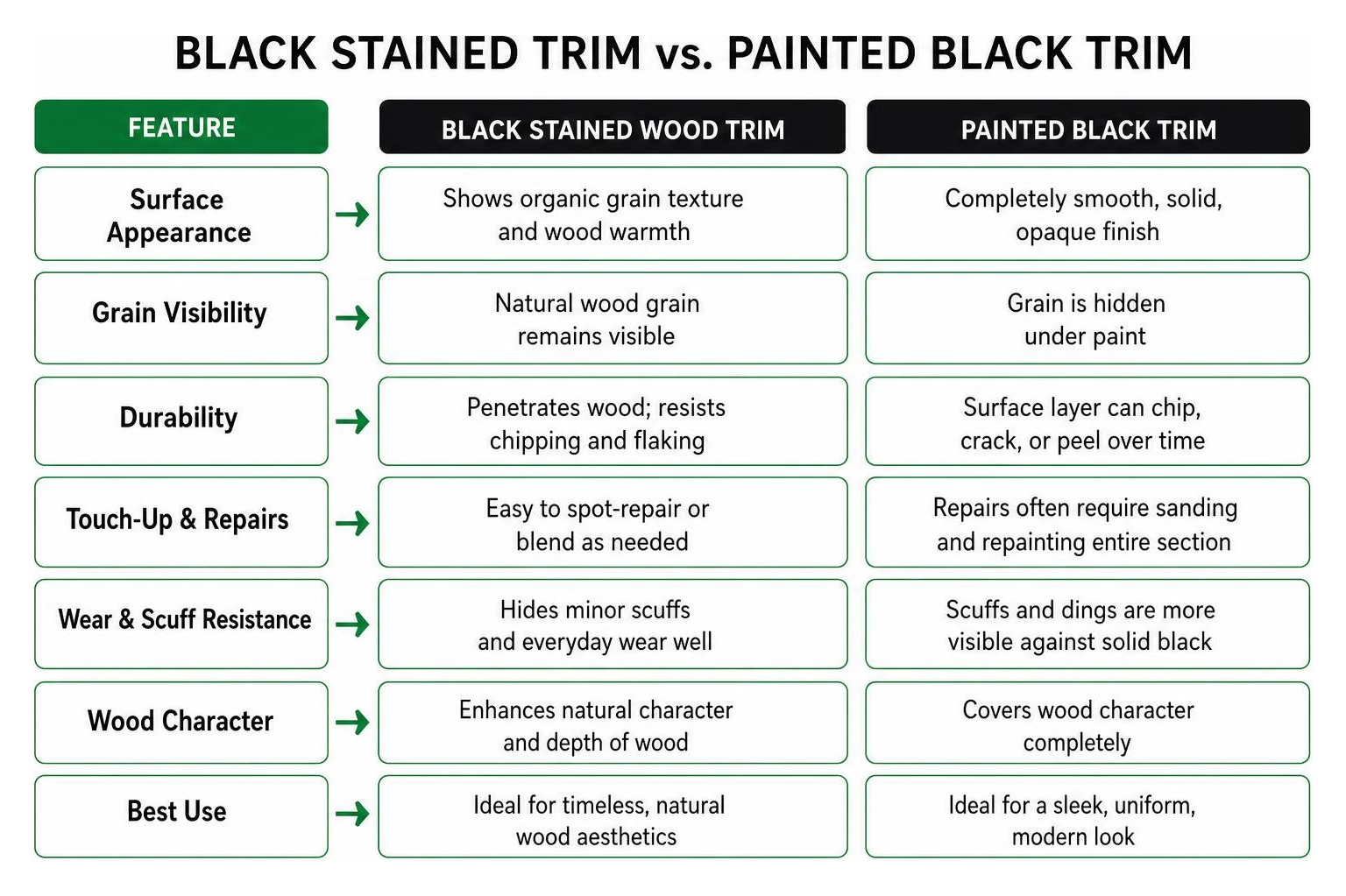
Here is a side-by-side comparison to help evaluate which finish best suits your living space:
| Feature | Black Stained Wood Trim | Painted Black Trim |
|---|---|---|
| Surface Appearance | Shows organic grain texture and wood warmth | Completely smooth, solid, opaque finish |
| Durability & Flaking | Penetrates wood fibers; resists chipping | Paint film can chip or peel upon hard impact |
| Disguising Imperfections | Blends mismatched wood tones and minor dents | Conceals original wood grain entirely |
| Maintenance Needs | Easy to touch up with tinted oil or finish | Requires careful filling, sanding, and repainting |
| Light Reflection | Diffuses light gently across natural texture | Reflects light depending on sheen level |
Best Wood Species for Black Wood Stain
The final appearance of black stained trim depends largely on the underlying wood species you choose. Different woods absorb stain at varying rates based on grain density and pore structure:
- Oak (Red and White): Featuring prominent, open grain patterns, oak absorbs dark stains beautifully while highlighting rich tactile texture. It excels at creating dramatic ebonized finishes.
- Pine: Softwood species like knotty pine absorb stain readily. Using a pre-stain conditioner ensures even absorption without blotchiness. Discover more options in our guide on from pine to oak choosing the best wood for stained trim.
- Alder: With smooth, subtle grain structures, alder takes dark stains consistently, delivering an elegant, refined aesthetic. Read details in our alder trim boards guide.
Comparing Stain vs Paint for Maintenance and Scuffs
When considering long-term upkeep, stained woodwork provides distinct advantages over painted alternatives. Baseboards naturally endure contact with feet, pets, and cleaning appliances. When painted trim suffers an impact, white primer or raw wood often shows through the chipped paint surface.
In contrast, deep stain penetrates deep within the wood grain, meaning minor nicks blend naturally into the dark timber without showing bright underneath layers. While dark finishes tend to show settled dust slightly faster than bright white surfaces, routine cleaning with a soft microfiber cloth keeps stained trim looking pristine.
Styling Your Home with Black Stained Wood Trim

Integrating black stained trim into your overall interior design requires balance across wall colors, cabinetry, and flooring. Dark woodwork acts as a grounded anchor, allowing wall finishes and decorative elements to stand out with clarity.
Sheen Options: Matte, Satin, and Gloss Finishes
The protective topcoat sheen applied over your wood stain dramatically shapes its final character and practical durability:
- Matte Sheen: Offers a non-reflective, modern look. While stylish, matte finishes show natural hand oils more easily, making them better suited for low-touch casing areas.
- Satin Finish: The ideal middle ground. Satin provides a subtle luster that resists scuffs, cleans effortlessly, and enhances wood grain depth without creating harsh glare.
- High Gloss: Delivers high reflection and dramatic flair. Highly reflective finishes highlight unique architectural details but magnify small surface prep flaws underneath.
Wall Colors and Decor Styles That Pair Perfectly
Pairing appropriate wall shades with dark woodwork creates cohesive elegance:
- Crisp Whites & Soft Creams: High-contrast combinations look striking in modern farmhouse or contemporary home settings.
- Light Warm Gray & Taupe: Subtle neutral walls soften contrast while preserving a cozy, sophisticated atmosphere.
- Moody Greens & Deep Blues: Combining dark trim with rich wall colors creates cozy, dramatic dining rooms or studies. Explore subtle paint pairings in our feature on modern drama paint colors for black house with wood trim.
Step-by-Step Application of Black Stain to Trim
Achieving a rich finish requires patient surface preparation and precise application. Proper sanding and sealing ensure deep stain absorbs evenly across every trim length.
- Surface Preparation: Sand raw wood smoothly using progressively finer sandpaper (moving from 120-grit up to 220-grit). Remove all sanding dust thoroughly using a clean tack cloth.
- Pre-Stain Conditioning: When working with softwoods like pine, apply a clear pre-stain wood conditioner to prevent blotchy color absorption.
- Stain Application: Apply your chosen stain evenly along the direction of the wood grain using a high-quality synthetic brush or clean microfiber cloth.
- Wiping Back Excess: Allow the stain to penetrate for the recommended time (typically 3 to 5 minutes), then wipe away excess stain with a soft cloth to expose the underlying wood texture.
- Clear Topcoat Sealing: Protect your stained finish by applying two coats of clear polyurethane, sanding lightly with fine grit between coats for maximum smoothness.
Pro Application Techniques for Black Stained Trim
Choosing between water-based and oil-based wood stain formulations depends on your timeline and project goals:
- Water-Based Wood Stains: Water-based formulas dry quickly—often within one hour—and emit minimal odor during application. Innovative water-based black stain products combine rich dark color with protective sealing coats in a single application.
- Oil-Based Wood Stains: Traditional oil formulas offer extended working times, making them excellent for intricate architectural mouldings. They penetrate deeply into hardwoods, enhancing natural grain patterns.
To explore various moulding options for your home upgrade, browse our overview of types of moulding for home interiors.
Frequently Asked Questions About Black Stained Trim
Does black stained trim make a room look smaller?
Not necessarily! When paired with light neutral walls and light-reflecting flooring, dark trim actually recedes visually, framing the room’s boundary and creating perceived depth. However, using heavy dark crown moulding in spaces with low ceilings can lower the overhead visual line, so reserve dark ceiling trim for rooms with standard or generous height.
Is stain or paint better for black wood trim?
Stain is ideal if you appreciate authentic wood texture and want a durable finish that resists surface chipping. Paint provides a solid, uniform opaque appearance but can show bright raw wood underneath if chipped by heavy impacts.
Cleaning and Caring for Black Stained Trim
Keep your dark stained woodwork looking fresh by dusting regularly with a microfiber duster. For routine cleaning, wipe surfaces with a damp cloth and mild dish soap solution, then dry immediately. Avoid harsh chemical cleaners or abrasive pads that can dull the protective clear coat finish.
Conclusion
Incorporating black stained trim into your living space brings timeless elegance, rich architectural outline, and durable surface performance to any room. Whether you are updating door casings in Des Plaines, framing large windows in Arlington Heights, or adding accent baseboards in Oak Brook, dark stained timber delivers visual impact that highlights your home’s unique character.
At K&B Direct, we assist Chicagoland homeowners across Schiller Park, Rosemont, Park Ridge, Franklin Park, River Grove, Norridge, Elk Grove Village, Bensenville, Mount Prospect, Elmhurst, Maywood, and surrounding communities. We provide high-quality kitchen and bathroom cabinets, doors, windows, and millwork to help bring your design vision to life. Ready to upgrade your home’s interior woodwork? Visit our showroom or explore quality wood trim options today!