
Why Kitchen Cabinets and Doors Define Your Renovation
Kitchen cabinets and doors are one of the biggest visual elements in any home — and one of the most important decisions you’ll make in a renovation.
Here’s a quick overview of what you need to know:
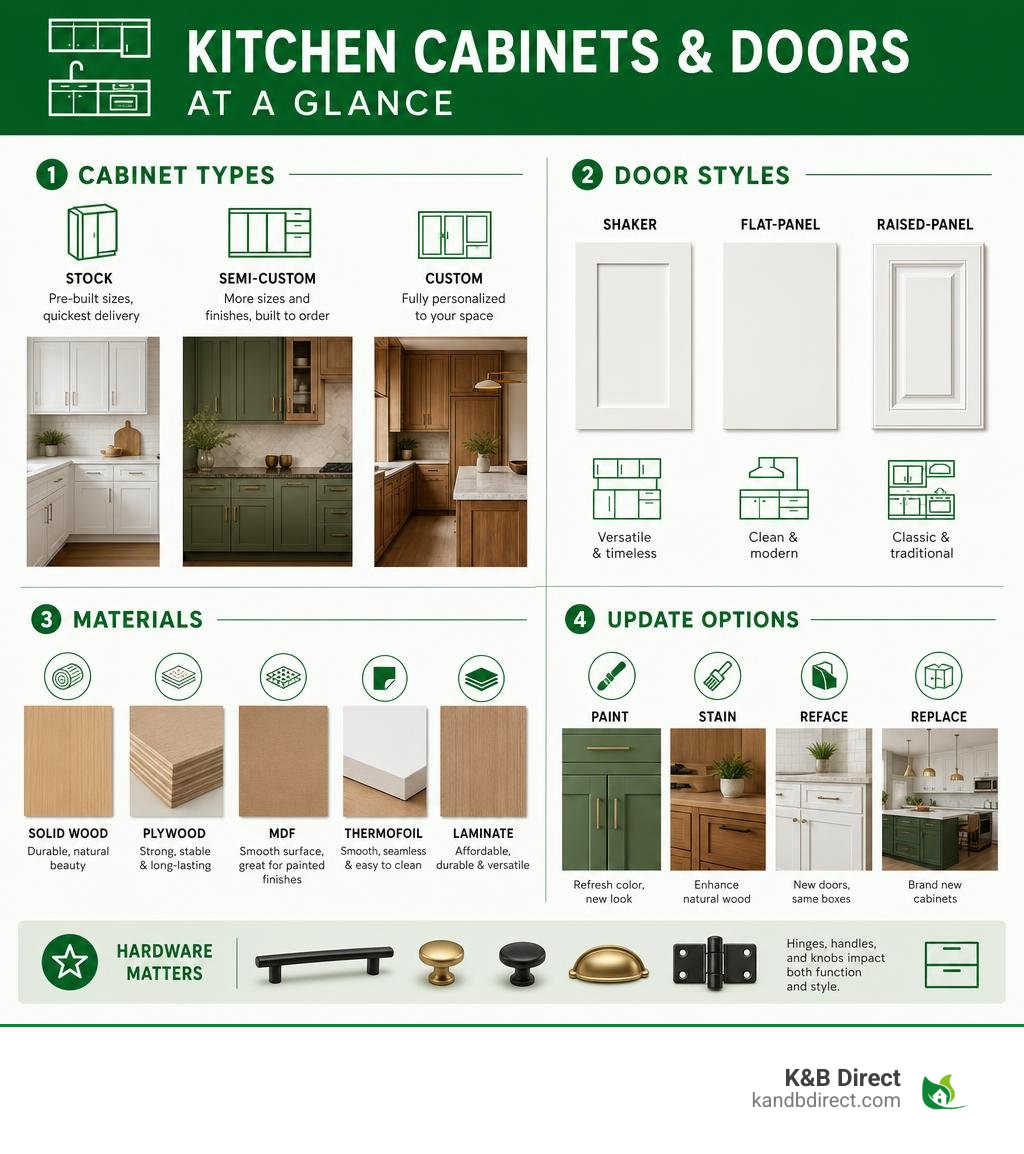
- Materials: Solid wood, plywood, MDF, thermofoil, and laminate are the most common options — each with different durability and maintenance needs
- Styles: Shaker, flat-panel, and raised-panel are the three main door styles, suiting everything from modern to traditional kitchens
- Cabinet types: Stock, semi-custom, and custom cabinetry offer different levels of flexibility and lead time
- Updates vs. replacement: You can paint, stain, reface, or fully replace cabinet doors depending on your budget and goals
- Hardware matters: Hinges, handles, and knobs affect both function and appearance
The kitchen cabinet market is growing fast — valued at over $128 billion globally in 2022 — and it’s easy to see why. About 60% of homeowners who remodel their kitchen choose to replace or reface their cabinet doors as part of the project. Your cabinets aren’t just storage. They set the tone for the entire space.
I’m Eryk Piatkowski, owner of K&B Direct, and I’ve been helping homeowners and professionals select the right kitchen cabinets and doors since 2011. In this guide, I’ll walk you through everything you need to make a confident, informed choice for your kitchen.
Essential Materials for Kitchen Cabinets and Doors
Selecting the right material for your kitchen cabinets and doors is the foundation of a successful kitchen design. The material you select determines not only the visual appeal of your space but also its resilience against daily wear, moisture, and temperature fluctuations.

Solid Wood
For generations, solid wood has been the premier choice for luxury cabinetry. Renowned for its natural beauty, unique grain patterns, and structural strength, solid wood brings unmatched warmth to a home. Popular species include maple, oak, cherry, and birch. While highly durable and easily refinished, solid wood is sensitive to humidity changes, which can cause minor expansion and contraction.
Plywood
Plywood is an engineered wood made by gluing thin layers of wood veneer together in alternating directions. This cross-grain construction makes plywood incredibly stable and highly resistant to warping. It is the preferred material for high-quality cabinet boxes because it holds screws securely and withstands moisture better than many alternatives.
Medium-Density Fiberboard (MDF)
Medium-Density Fiberboard (MDF) is composed of fine wood fibers mixed with wax and resin, compressed under intense heat and pressure. The result is an incredibly smooth, uniform sheet with no natural grain. MDF is the industry standard for painted cabinet doors because it does not expand or contract with humidity, preventing the paint film from cracking at the joints.
Thermofoil
Thermofoil is a vinyl profile wrapped tightly around an MDF core using heat and vacuum pressure. This process creates a seamless, non-porous surface that is exceptionally easy to clean. Thermofoil is highly resistant to staining and moisture, making it a practical choice for busy households, though it must be protected from high heat sources like ovens.
Laminate
Laminate cabinets feature a decorative paper and plastic resin layer bonded to a particleboard or MDF core. Available in high-pressure laminate (HPL) and low-pressure laminate (melamine), this material offers an incredible variety of colors, patterns, and realistic wood grain textures. It is highly resistant to scratches and impact, making it an excellent choice for modern, high-traffic kitchens.
| Material | Durability | Moisture Resistance | Maintenance Level | Best Suited For |
|---|---|---|---|---|
| Solid Wood | High | Moderate | Medium (needs gentle cleaners) | Traditional & Transitional Styles |
| Plywood | Very High | High | Low | Heavy-duty cabinet boxes |
| MDF | Medium-High | Low (if unsealed) | Low | Painted finishes & sleek profiles |
| Thermofoil | Moderate | High | Very Low | Easy-clean, modern kitchens |
| Laminate | High | High | Very Low | Contemporary & high-traffic spaces |
Comparing Durability and Maintenance of Kitchen Cabinets and Doors
When comparing these materials, durability and maintenance should be top priorities. Kitchens are hardworking environments filled with steam, spills, and constant physical contact.
Moisture resistance is crucial. While plywood and laminates handle occasional splashes with ease, unsealed MDF can swell if water penetrates the surface. Preventing warping requires selecting materials suited to your home’s climate. In high-humidity areas, MDF or high-quality plywood is often more stable than solid wood.
For daily cleaning, a soft microfiber cloth and a mild mixture of warm water and dish soap will keep most surfaces looking pristine. Avoid abrasive scrubbers or harsh chemical cleaners, which can dull finishes over time. If you are looking for long-term wear and a sleek, worry-free aesthetic, exploring premium engineered options like those found in our Modern Kitchen Cabinets collection can provide the perfect balance of style and resilience.
Popular Styles for Cabinet Fronts
The style of your cabinet doors dictates the overall design language of your kitchen. Whether you are aiming for a sleek, minimalist culinary studio or a cozy, traditional gathering space, the door profile is the key design driver.
Shaker and Flat-Panel Kitchen Cabinets and Doors
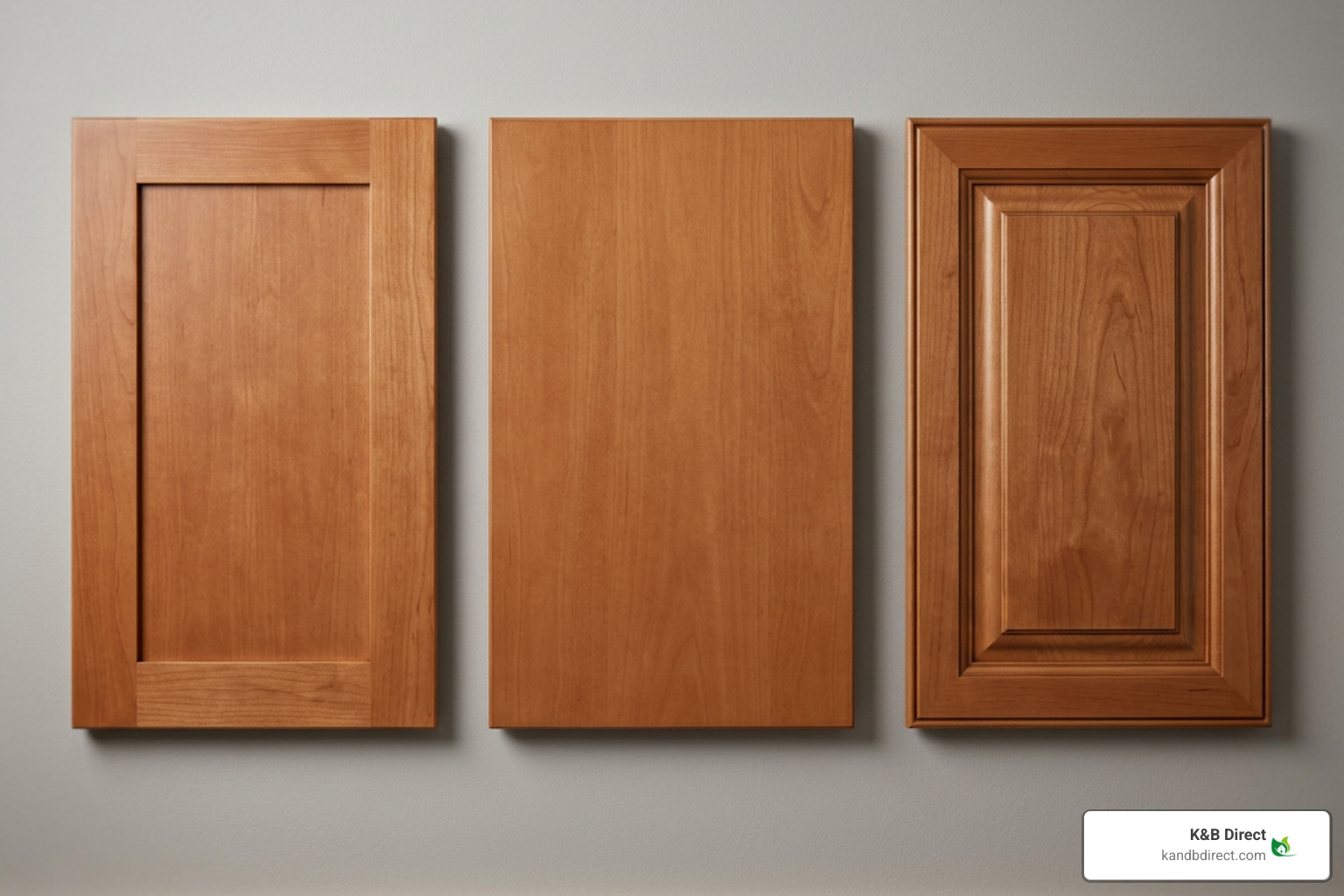
The Shaker style is characterized by a five-piece door with a recessed center panel and simple, clean lines. This timeless look bridges the gap between classic and contemporary designs. It is incredibly versatile, fitting seamlessly into farmhouse, transitional, and modern spaces alike. To explore this aesthetic in detail, read The Ultimate Guide to Modern White Shaker Cabinets.
Flat-panel (or slab) doors offer a completely flat surface with zero detailing. This style is the hallmark of modern European design, emphasizing minimalist aesthetics, clean lines, and the natural beauty of the wood grain or laminate finish. Flat-panel doors are often paired with a frameless cabinet box to maximize access and storage. To understand this construction method, check out our guide on What is a Frameless Cabinet.
Raised-Panel and Traditional Designs
For those who appreciate classic elegance, raised-panel doors are the ultimate choice. These doors feature a center panel that is elevated to the same level as the outer frame, often accented by intricate profile cuts and decorative grooves.
This style brings depth, texture, and architectural interest to traditional kitchens. To achieve a warm, sophisticated, and stately look, many homeowners opt for rich, dark finishes. A prime example of this can be seen in our feature on Espresso Kitchen Cabinets: Bold, Dark, and Handsome.
Selecting Stock, Semi-Custom, or Custom Cabinetry
When planning your kitchen layout, you must decide on the level of customization your project requires.
- Stock Cabinets: Pre-manufactured in standard sizes and styles. They offer the fastest lead times and are highly economical, making them excellent for quick updates. However, they provide limited flexibility for unusual wall lengths or unique storage configurations.
- Semi-Custom Cabinets: Built to order, allowing you to modify depth, width, and choose from a wider array of finishes and door styles. This option strikes a perfect balance between personalization and efficiency.
- Custom Cabinets: Built completely from scratch to your exact specifications. There are no size limitations, allowing you to maximize every inch of your kitchen. While custom cabinets require longer lead times and a larger financial investment, they offer absolute design freedom.
Visiting a physical Cabinet Store is the best way to touch the materials, test the drawer glides, and visualize different options in your home.
Frameless vs Framed Cabinet Construction
The structural design of your cabinet box affects both storage capacity and aesthetic style.
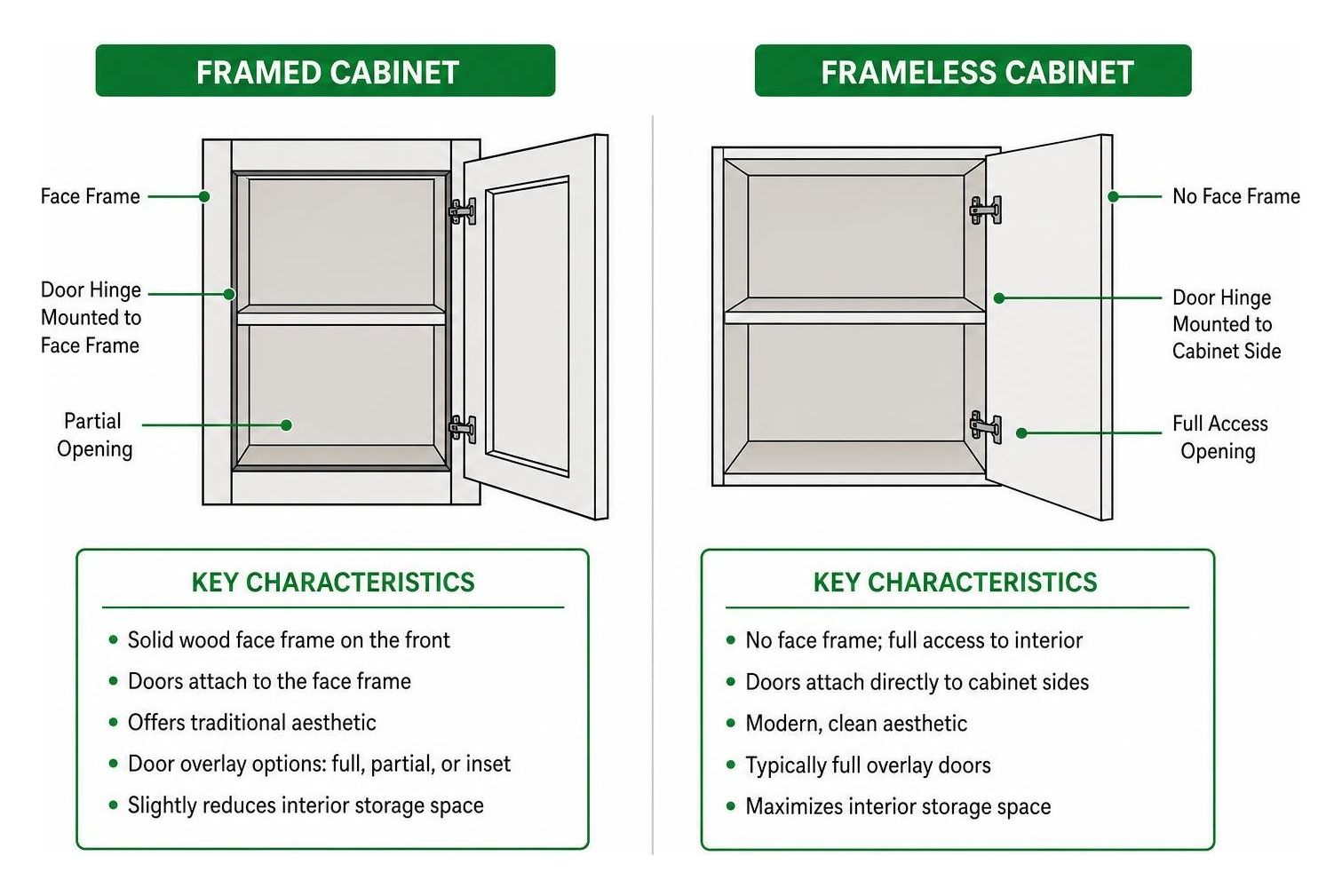
- Framed Cabinets: Feature a solid wood frame attached to the front of the cabinet box. The doors attach to this frame. Framed cabinetry offers a traditional look and excellent structural rigidity. You can choose between full overlay, partial overlay, or inset doors.
- Frameless Cabinets: Also known as European-style cabinets, these do not have a front frame. The doors attach directly to the sides of the cabinet box. This construction maximizes interior storage space and drawer width, providing a clean, seamless look with minimal gaps between doors.
To complete either construction type beautifully, selecting the right finishing touches is essential. Explore our range of Cabinet Trim Options to find the perfect crown moldings, light rails, and base trims to polish your design.
Planning and Measuring for Cabinet Upgrades
Accurate planning is the secret to a smooth kitchen update. Whether you are replacing entire units or just updating the fronts, precise measurements prevent ordering mistakes and installation delays.
When measuring for new doors, follow these steps:
- Measure the Openings: Measure the width and height of the cabinet opening to the nearest 1/16th of an inch.
- Calculate the Overlay: Determine how much the door will overlap the cabinet face frame. For example, a standard 1/2-inch overlay means the door will extend 1/2 inch past the opening on all four sides. Add 1 inch to both the width and height of the opening measurement to find your door size.
- Note Hinge Placement: Mark where the hinges will sit on the frame to ensure they do not align with internal shelves or drawer glides.
Deciding Between Painting, Staining, or Replacing
If your existing cabinet boxes are structurally sound, you might not need a full replacement. Consider these three options:
- Painting: Ideal for MDF or smooth wood doors when you want a clean, modern, solid-color look. It requires meticulous surface preparation, including sanding, priming, and applying high-quality cabinet-grade paint.
- Staining: Perfect for solid wood doors when you want to preserve and highlight the natural wood grain. Staining penetrates the wood fibers, offering beautiful depth and a classic look.
- Replacing (Refacing): If your doors are warped, damaged, or a style you dislike, replacing just the doors and drawer fronts while keeping the existing cabinet boxes is a brilliant compromise. It completely transforms the kitchen’s look with minimal disruption.
Selecting Hardware and Hinges
Cabinet hardware is often referred to as the jewelry of the kitchen. It has a massive impact on both everyday usability and visual style.
- Hinges: Modern kitchens rely heavily on concealed, soft-close hinges. These are hidden inside the cabinet door, preventing slamming and ensuring a quiet, smooth glide every time.
- Pull Handles and Knobs: Clean, linear bar pulls complement modern flat-panel and Shaker doors, while ornate knobs and cup pulls pair beautifully with traditional raised-panel designs.
- Finishes: Matte black, brushed brass, polished chrome, and satin nickel are highly popular. Coordinating your cabinet hardware with your faucet and lighting fixtures creates a cohesive, professional look.
Frequently Asked Questions
What is the typical lifespan of kitchen cabinet doors?
High-quality kitchen cabinet doors typically last between 15 and 25 years, depending on the material, construction quality, and daily wear. Solid wood and premium plywood structures can last even longer if properly maintained. Indicators that it is time for an upgrade include visible sagging, water damage at the base, warping that prevents proper closure, or outdated styles that no longer match your home’s aesthetic.
Can cabinet doors be replaced without changing the frames?
Absolutely! This process, known as cabinet refacing or door replacement, is a highly effective way to update your kitchen. As long as your existing cabinet boxes are structurally sound, plumb, and without water damage, you can easily install new doors, drawer fronts, and matching veneers onto the face frames. This preserves the layout of your kitchen while delivering a completely fresh look.
Which cabinet colors are trending in July 2026?
In July 2026, we are seeing a strong preference for warm, organic, and nature-inspired color palettes. Matte finishes continue to dominate, reducing glare and fingerprints. Soft sage greens, deep forest tones, and warm terracottas are highly sought after. Additionally, natural wood finishes with low-sheen clear coats are making a massive comeback, often paired with matte black hardware for a sophisticated, modern-rustic balance.
Conclusion
Your kitchen is the heart of your home, and choosing the perfect kitchen cabinets and doors is the most impactful step toward creating a space you love. From selecting durable materials to choosing a style that reflects your personality, every decision helps realize your dream home aesthetic.
At K&B Direct, we are dedicated to providing high-quality kitchen and bathroom solutions to our neighbors across the Chicagoland area — including Schiller Park, Chicago, Norridge, Schaumburg, Oak Brook, and Maywood. We offer top-tier craftsmanship, friendly service, and unbeatable value to help you bring your vision to life.
Beyond your kitchen, we can assist with all your home entry and interior design needs. Explore our Kitchen Cabinets to start planning your layout, or browse our comprehensive Interior Doors Complete Guide to learn about cohesive styling. As a trusted Door Supplier, we also offer beautiful Modern Interior Doors and space-saving Bifold Closet Doors to complete your home renovation. Contact us or visit our showroom today to get started!