
When Water and Floors Meet: Why Waterproof Trim Is a Smart Move
Floor trim waterproof solutions are one of the most overlooked parts of a renovation — until water damage shows up and forces your hand.
Here’s a quick answer if you’re short on time:
The best waterproof floor trim options, ranked by moisture resistance:
- Cellular PVC — fully waterproof, mold and mildew resistant, paintable
- Flexible vinyl — waterproof, bends around curves, great for bathrooms and laundry rooms
- Polyurethane — moisture resistant, durable, but higher investment
- Tile baseboard — best long-term option for wet areas, most complex to install
- MDF or solid wood — not waterproof; avoid in moisture-prone spaces
The problem with standard wood or MDF baseboards in kitchens, bathrooms, or basements? They absorb moisture. Over time, that leads to warping, mold, and rot. Water damage already accounts for roughly 24% of all property insurance claims in the United States, with average claim costs reaching over $11,000. A lot of that damage starts quietly — at the base of your walls.
Choosing the right waterproof trim from the start is a small decision that protects a much bigger investment.
My name is Eryk Piatkowski, owner of K&B Direct, and after more than a decade of helping homeowners renovate kitchens and bathrooms, I’ve seen how the right floor trim waterproof choice can be the difference between a finish that lasts and one that fails within a few seasons. In this guide, I’ll walk you through everything you need to pick, install, and maintain moisture-proof trim the right way.
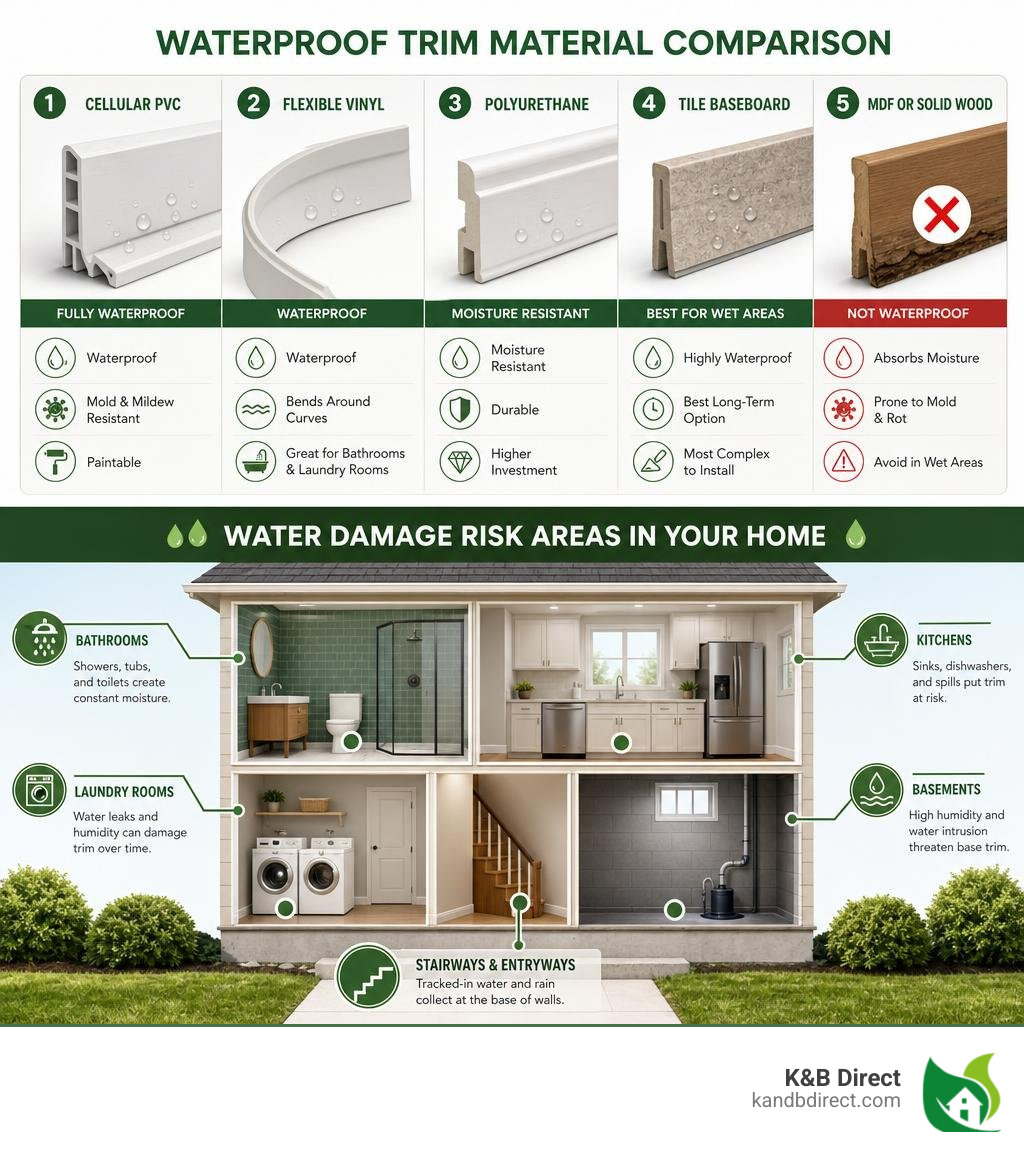
Learn more about floor trim waterproof:
Why Moisture Protection Matters for Interior Moldings
When moisture creeps into traditional baseboards, the results are rarely pretty. Standard medium-density fiberboard (MDF) and softwoods act like sponges. In high-humidity spaces, they absorb airborne water vapor, swell, split, and eventually support unsightly mold and mildew growth. This is especially true in moisture-prone areas like basements, kitchens, and bathrooms.
In our local Chicago suburbs — from the humid summer days in Des Plaines and Park Ridge to the damp basements of Schiller Park and Franklin Park — managing indoor humidity is a constant battle. Protecting your walls with a dedicated floor trim waterproof barrier prevents water from seeping behind the drywall. Local homeowners who follow smart disaster preparedness guidelines know that safeguarding a home against water intrusion starts with the smallest details, including the moldings that seal your floor-to-wall transitions.
By choosing a high-quality, non-porous material, you stop moisture from wicking upward into your plaster or drywall, keeping your home healthy and structurally sound.

Selecting the Best Floor Trim Waterproof Materials
When exploring options for a floor trim waterproof upgrade, you will find several key synthetic and stone-based materials on the market. Each has unique physical characteristics, aesthetics, and performance levels.
Cellular PVC
Cellular PVC is one of the most reliable materials for wet environments. It looks and feels remarkably like painted wood, but it features a closed-cell structure that is 100% waterproof. It will not rot, split, or warp, making it a stellar option for high-humidity areas. If you want to dive deeper into this material, check out our guide on choosing PVC baseboard trim.
Flexible Vinyl
Often sold in rolls or semi-rigid strips, flexible vinyl is highly adaptable. It is completely immune to water damage and can easily conform to curved walls. It is a popular choice for high-traffic utility zones. To understand how it holds up over time, read about vinyl trim benefits.
Polyurethane
Polyurethane moldings are dense, lightweight, and highly moisture-resistant. They are molded with intricate patterns, offering a high-end architectural look without the risk of rotting. However, they can be more delicate during installation compared to cellular PVC.
Tile Baseboards
Porcelain or ceramic tile baseboards are completely waterproof and incredibly durable. They are commonly used in fully tiled bathrooms and walk-in showers. While they offer unmatched longevity, they require specialized mortar installation.
| Material | Moisture Resistance | Flexibility | Paintability | Best For |
|---|---|---|---|---|
| Cellular PVC | Outstanding (100% Waterproof) | Moderate | Excellent (Paintable) | Bathrooms, Kitchens, Basements |
| Flexible Vinyl | Outstanding (100% Waterproof) | High (Bends easily) | Limited (Prefinished) | Laundry Rooms, Curved Walls |
| Polyurethane | Very High | Low | Excellent | Formal Dining, High-End Bathrooms |
| Tile / Stone | Outstanding (100% Waterproof) | None | No (Requires grout) | Wet Rooms, Showers, Entryways |
Prefinished vs. Unfinished Floor Trim Waterproof Options
Another major decision is whether to purchase prefinished or unfinished waterproof moldings.
- Prefinished Moldings: These come ready to install, saving you a massive amount of time. Options like pre-painted white PVC or wood-grain vinyl match modern flooring options beautifully. For example, high-quality transitions like the SLT-103007, Lime Washed Oak, Slim Trim, KP99 or SLT-120689, Natural Prime Oak, Slim Trim, SCB115 offer stunning, factory-finished looks that blend seamlessly with luxury vinyl planks.
- Unfinished Moldings: If you have a specific color scheme in mind for your 2026 home renovation, unfinished cellular PVC is the way to go. It features a paintable surface that accepts high-quality acrylic latex paint beautifully. This allows you to match your trim exactly to your walls or cabinetry.
For dark, modern aesthetics, you might also consider prefinished dark options. You can explore why black vinyl baseboard trim is always in style to see how prefinished dark trims create striking visual contrasts.
Key Applications for Moisture-Resistant Moldings
Where should you install floor trim waterproof profiles? Any space that experiences high humidity, frequent spills, or wet cleaning is a prime candidate.

- Bathrooms: Between steamy showers and occasional splashes, bathroom baseboards face constant moisture. Standard wood trims in bathrooms quickly rot at the corners. Installing a fully waterproof PVC or tile trim ensures your walls remain protected.
- Kitchens: From dishwasher drips to mopping down kitchen spills, kitchen floor perimeters need robust protection. Waterproof moldings prevent water from sneaking under your cabinets or behind your drywall.
- Laundry Rooms & Mudrooms: These areas are prone to high humidity, wet coats, muddy boots, and washer overflows. Flexible vinyl or cellular PVC baseboards handle these messy environments with ease.
- Basements: Basements are naturally damp due to concrete slab moisture transmission. Standard MDF baseboards in a basement are a recipe for mold. Running waterproof PVC trim along the floor perimeter is a smart preventative measure.
If you are currently planning a flooring upgrade, you can check out our comprehensive waterproof flooring options to find matching trim and floor combinations that keep your entire home protected.
Step-by-Step Installation of Waterproof Baseboards
Installing synthetic baseboards is very similar to working with wood, but there are a few material-specific tricks you need to know.
Step 1: Measure and Prep
Measure the perimeter of your room carefully. Always add a 5% to 10% waste allowance for cutting mistakes and miter joints. Ensure your walls and floors are clean, dry, and free of old adhesive or nails.
Step 2: Cutting the Material
When cutting cellular PVC or polyurethane, use a standard miter saw with a fine-tooth blade.
- Expert Tip: Cut slowly! If you force the blade through synthetic materials too quickly, the friction heat can melt the plastic, leaving messy, fused edges. Keep your blade clean of plastic buildup.
Step 3: Coping and Mitering Joints
For inside corners, coping is still the gold standard. You can easily cope cellular PVC using a standard hand coping saw. For outside corners, cut precise 45-degree miter joints.
Step 4: Installing on Curved Walls
If you are dealing with curved walls or columns, use flexible vinyl or flexible PVC baseboards. That flexible PVC has physical limits — most standard flexible profiles are rated for a minimum four-foot radius. Trying to bend them around tighter corners can cause the material to kink or pull away from the wall.
Step 5: Fastening and Adhesives
Unlike wood, which relies solely on nails, synthetic trim benefits greatly from a combination of construction adhesive and finish nails. Apply a continuous bead of high-quality, waterproof adhesive to the back of the trim, press it firmly against the wall, and secure it with brad nails into the wall studs.
For a complete breakdown of styles, profiles, and installation methods, consult our comprehensive baseboard moulding guide.
Where to Buy High-Quality Floor Trim Waterproof Products
When looking for premium floor trim waterproof materials, it is important to choose products that offer long-term durability and structural integrity. High-quality cellular PVC should have a dense, uniform core that doesn’t feel flimsy or overly hollow.
At K&B Direct, we serve homeowners and builders across the Chicago suburbs — including Schaumburg, Oak Brook, Arlington Heights, Mount Prospect, Elmhurst, and Glenview. We provide a vast selection of moisture-resistant trims, baseboards, and transition moldings designed to withstand the local climate.
Whether you need a low-profile transition trim like the SLT-124948, Slim Trim, Draco Oak, VV735-04019, the classic look of SLT-122798, Slim Trim, Allenhurt Oak, P1046-D7250 | Versatrim, LLC, or the warm tones of SLT-118525, Sandalwood, Slim Trim, TV602SD, we have the inventory to match your style. Explore our full K&B Direct baseboard collection to find the perfect match for your home.
Frequently Asked Questions about Moisture-Proof Trim
What is the best material for wet areas?
For areas in direct contact with water (like shower surrounds or wet rooms), porcelain tile baseboards are the absolute best choice. For high-humidity rooms like bathrooms, kitchens, and basements, cellular PVC is the most practical and beautiful alternative to wood, offering 100% water resistance with a classic painted look.
Can PVC moldings be painted?
Yes! Cellular PVC has a fantastic paintable surface. To get the best results, use a high-quality 100% acrylic latex paint. There is no need to prime top-tier PVC moldings unless specified by the paint manufacturer, but painting them helps seal any nail holes or joint filler for a flawless finish.
Can flexible trim bend around tight curves?
It depends on the material. Flexible vinyl trim can wrap around very tight curves and columns. However, architectural flexible PVC moldings typically have a flexibility limit, often restricted to a four-foot radius. Always check the manufacturer specifications before attempting to wrap tight architectural features.
Conclusion
Protecting your home from moisture damage doesn’t mean you have to sacrifice your design vision. By upgrading to a high-quality floor trim waterproof solution, you can enjoy beautiful, crisp, clean baseboards in your bathroom, kitchen, or basement without ever worrying about rot, mold, or warping again.
At K&B Direct, we are dedicated to helping our neighbors in Niles, Maywood, Oak Park, Rosemont, and River Grove achieve their dream home aesthetics. We offer top-quality cabinetry, windows, doors, and moldings at unbeatable, lowest possible prices, backed by friendly, expert service.
Ready to put the perfect, moisture-proof finishing touch on your floors? Browse our extensive K&B Direct baseboard collection or visit one of our local showrooms today!