
Why Floorboards Trim Matters in Every Room
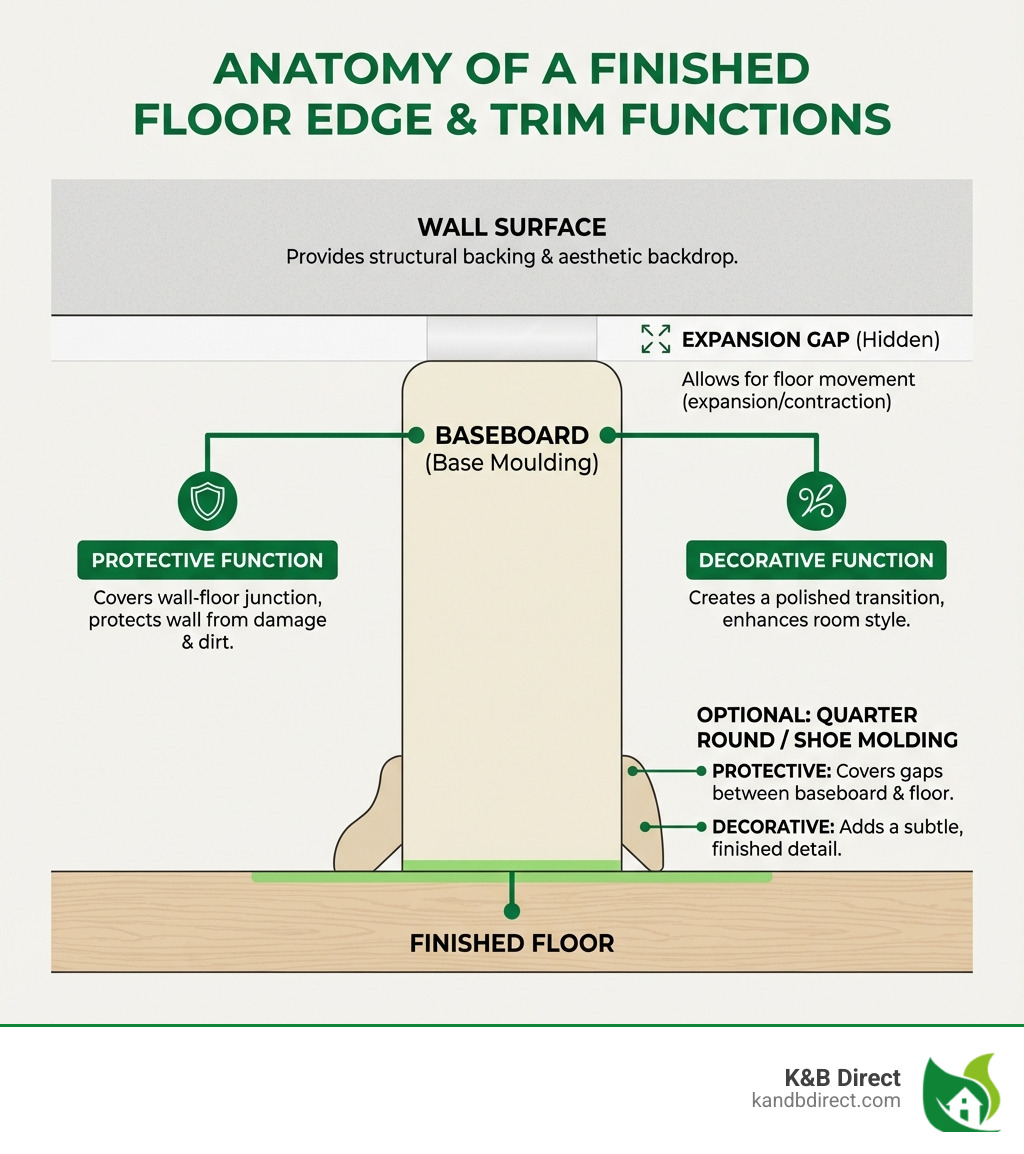
Floorboards Trim is the molding installed where your floor meets the wall, serving both functional and decorative purposes in your home. It protects wall surfaces from damage, covers expansion gaps left by flooring materials, and provides a polished, finished appearance to any room.
Key types of floorboards trim include:
- Baseboard (Base Moulding): The primary trim that runs along the bottom of walls.
- Quarter Round/Shoe Moulding: Small curved trim that covers the joint between baseboard and floor.
- Transition Strips: Specialized pieces like T-molding, reducers, and thresholds that bridge different flooring types or heights.
- Stair Nosing: Protective trim for the exposed edges of stairs.
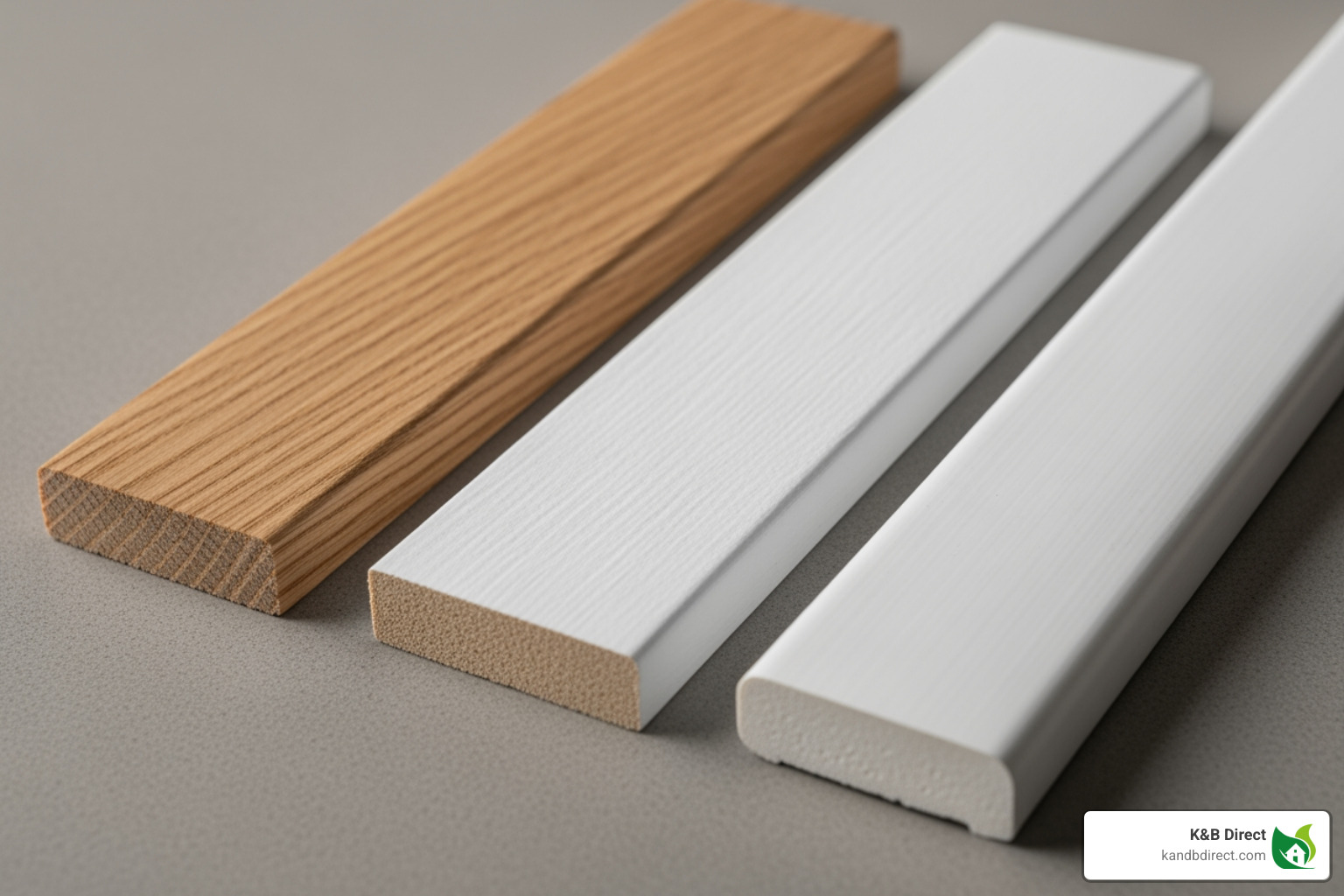
Common materials include solid wood (oak, pine, poplar), MDF (medium-density fiberboard), and PVC/vinyl. The right choice depends on your flooring type, room style, and specific requirements.
One professional remodeler noted that replacing floor trim can transform a home “from traditional to modern,” proving that this often-overlooked detail can completely change a space’s character.
Floor trim isn’t just about aesthetics. It is essential for every flooring installation because most materials expand and contract with temperature and humidity changes. The gap left between the floor and wall to allow for this movement would look unfinished without proper trim coverage. Whether you’re installing new hardwood, updating laminate, or completing a tile project, the right trim ties everything together.
For readers who want a broader overview of interior trim and molding concepts, the general reference at Wikipedia’s Molding (decorative) article) offers helpful background on terminology and common profiles.
As Eryk Piatkowski, Owner at K&B Direct, I’ve spent over a decade helping homeowners select quality floorboards trim and moldings that complete their kitchen and bathroom renovations with professional-looking results. Understanding your trim options is the first step toward achieving that polished, cohesive finish that makes a house feel like a home.
The Essential Guide to Floorboards Trim Types
When we talk about floorboards trim, we’re discussing the various transition pieces and finishing touches that tie your flooring project together. These pieces aren’t just for looks; they play crucial roles in protecting your home and ensuring the longevity of your floors. From covering unsightly gaps to providing smooth transitions between different surfaces, each type of trim has a specific purpose. Let’s explore the different kinds of trim that can give your home in Chicago, Glen Ellyn, or any of our other Illinois locations that polished look.
Base Mouldings: The Foundation of Your Trim
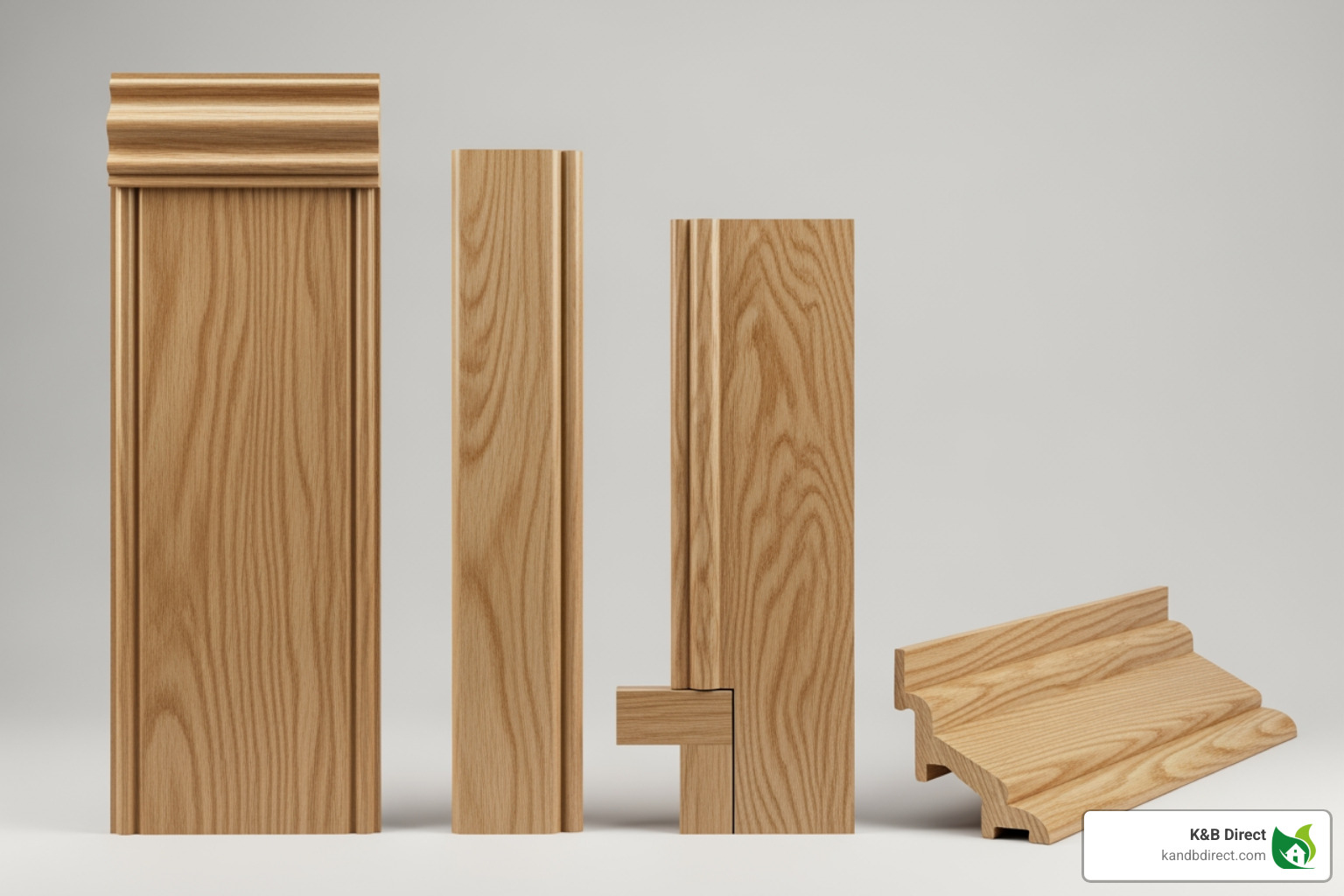
Baseboard, also known as wall base or skirting board, is the most common type of floorboards trim. It runs along the bottom of your walls, covering the joint where the wall meets the floor. This protects the wall from scuffs and conceals the necessary expansion gap left during flooring installation. Baseboards come in a variety of styles, allowing us to match nearly any aesthetic:
- One-piece baseboard: A single, continuous piece of trim, available in many styles from simple to ornate. Pre-primed pine baseboard moldings are a popular choice for quick and effective home updates in areas like Schaumburg and Palatine.
- Two-piece baseboard: This style combines a flat, square-edged bottom board with a separate cap of profiled molding for a more custom or traditional feel.
- Profiled baseboard: A single piece featuring a distinctive surface design, such as curves or steps. It offers significant visual appeal but can be more challenging to install.
The height of your baseboard also matters for aesthetic balance. For standard eight-foot ceilings, we generally recommend a 3-1/2- to 5-inch baseboard. If your home in Arlington Heights or Long Grove boasts nine-foot ceilings or higher, a 5-inch to 7-inch baseboard will provide a more proportionate and neat look.
For a deeper dive into baseboards, explore our Baseboard Trim and Baseboard Moulding Guide. If you’re looking for something sleek and contemporary, our Modern Base Moulding options might be just what you need.
Connector and Finishing Trims
Beyond the main baseboard, smaller trims are used to refine the edges and connections of your floorboards trim. These pieces ensure a seamless and polished transition.
- Quarter Round: This trim has a quarter-circle profile and is used at the bottom of the baseboard to cover small expansion gaps or imperfections.
- Shoe Moulding (Base Shoe): Similar to quarter round, shoe moulding has a slightly taller and less deep profile, making it more flexible for conforming to uneven floors. We often recommend it for older homes in areas like Elmhurst or Evanston.
- Base Cap: A decorative molding used with a flat baseboard to create a more elaborate, multi-piece profile. Explore our Base Cap Moulding options and our Base Cap Moulding Profiles Complete Guide.
- Scotia: This profile is a concave curve, often used like quarter round for a more traditional design.
- Panel Cap Moulding: While primarily used on walls, it can be incorporated into custom baseboard designs. See our Panel Cap Moulding for ideas.
Transition Strips for Seamless Flooring
Transition strips are essential for creating a smooth and safe connection between different flooring types or levels.
- T-Molding: Shaped like a “T,” this trim joins two floors of the same height, such as between two rooms with hardwood flooring.
- Reducer: Slopes down to connect floors of different heights, like from a thicker hardwood floor to a thinner vinyl surface.
- Threshold: Used in doorways to create a definitive break between spaces, such as between a carpeted bedroom and a hardwood hallway.
- End Cap: Provides a finished edge to floating floors where they meet a vertical surface like a fireplace hearth or sliding door track.
- Stair Nosing: A critical safety and aesthetic component that covers the exposed edge of a stair tread.
Understanding these various types of trim is key to achieving a truly finished and functional floor. For more comprehensive information on different molding and trim options, we encourage you to explore our wide selection.
Choosing the Right Material for Your Trim
Selecting the right material for your floorboards trim is just as important as choosing the right profile. The material impacts the trim’s durability, how it can be finished, and its suitability for specific environments within your home, especially in places like kitchens and bathrooms where moisture can be a concern. At K&B Direct, we offer a diverse range of high-quality mouldings to suit every need and style.
For a general overview of our offerings, check out our Mouldings & Millwork section.
Classic and Versatile Wood Floorboards Trim
Wood remains a timeless and popular choice for floorboards trim due to its natural beauty, versatility, and ability to be stained or painted to match any decor.
| Material | Finish Options | Durability | Moisture Resistance |
|---|---|---|---|
| Solid Wood | Stain, Paint, Clear Coat | High | Low to Moderate |
| Finger-Jointed Wood | Paint | Good | Low to Moderate |
| MDF | Paint | Moderate | Low |
| PVC/Vinyl | Pre-finished, Paintable | High | Very High |
Solid Wood
For a timeless and classic look, solid wood is an excellent choice. It offers natural beauty and can be stained to match your flooring or painted to complement your wall color. Popular options include:
- Oak: Known for its strength and prominent grain, making it a durable and attractive choice.
- Poplar: A smooth, fine-grained wood that is perfect for painting.
- Finger-Jointed Pine: An economical option made from smaller pieces of wood, ideal for painting.
Explore our full range of Wood Moulding and Wood Trim options.
Engineered and Composite Options
MDF (Medium-Density Fiberboard) is an engineered wood product that provides a perfectly smooth surface for painting, with no wood grain to worry about. It’s an economical choice, but it’s important to note that it can swell if exposed to moisture, so it’s best used in dry areas of the home.
Durable Synthetic Floorboards Trim
For areas prone to moisture, like bathrooms, kitchens, or basements, PVC (Polyvinyl Chloride) is a fantastic, worry-free option. It’s completely waterproof, won’t rot or warp, and is resistant to pests. It typically comes in a clean white finish but can be painted to match any decor. Composite trim, which blends wood fibers and plastic, offers another durable and moisture-resistant alternative.
Check out our PVC Floor Moulding and PVC Base Cap Moulding Guide for more details. When making your selection, consider the specific needs of each room, your desired aesthetic, and your requirements. We’re here to help you find the perfect fit for your project.
Design and Selection: Finding the Perfect Match
Choosing the right floorboards trim is a design decision that can dramatically impact the overall feel of a room. It’s about achieving aesthetic balance and ensuring the trim complements your home’s architectural style, whether it’s a historic bungalow in Elmwood Park or a modern build in Schaumburg.
Matching Trim to Your Flooring
The goal is to create a cohesive look that improves your flooring, not distracts from it.
- For Hardwood: Solid wood trim is a classic choice. You can stain it to match the floor for a seamless look or paint it white for a crisp, clean contrast.
- For Laminate & Vinyl: Many manufacturers offer matching T-molding, reducers, and quarter round. For vinyl floors, especially in wet areas, PVC or vinyl trim is ideal for a waterproof finish.
- For Tile: A baseboard is typically used where tile meets the wall. If there’s a gap, a quarter round or shoe molding can be added. PVC or painted wood are excellent choices for tiled areas like bathrooms or kitchens.
Consider whether you want the trim to blend with the floor or the wall. A white trim against a dark floor creates a striking contrast, while a trim that matches the floor can make the room appear more expansive. Just like selecting Cabinet Trim, floor trim is a crucial detail that ties the whole look together.
Key Considerations for Selection
Beyond matching your flooring, consider these factors:
- Color: White trim is a timeless choice that works with most color schemes. Alternatively, matching the trim to the wall color can make the room feel taller.
- Finish: Trim is available pre-primed (ready for paint), unfinished (for custom staining), or pre-stained for convenience.
- Profile: The shape of the trim should align with your home’s style. We offer everything from simple, modern lines to more ornate, traditional designs. Our Baseboard Cap Profiles showcase some of the variety available.
- Height and Proportion: The baseboard height should be proportional to the ceiling height. A good rule of thumb is 3-1/2 to 5-inch baseboards for 8-foot ceilings and 5- to 7-inch baseboards for 9-foot or higher ceilings. This maintains visual balance.
By carefully considering these elements, you can select floorboards trim that not only performs its functional duties but also lifts the design of your home.
Professional Techniques for Flawless Trim
Installing floorboards trim might seem like a straightforward task, but achieving a truly professional, flawless finish requires attention to detail and the right techniques. We’ve seen countless projects in our service areas, from Melrose Park to Deerfield, and can attest that proper installation makes all the difference.
Here’s a list of essential tools for trim work that we rely on:
- Miter saw (for precise angle cuts)
- Nail gun (pneumatic or electric, for quick and secure fastening)
- Tape measure
- Level
- Stud finder
- Caulk gun and paintable caulk
- Wood filler
- Sandpaper
- Utility knife
- Safety glasses
A key best practice is to install trim after the main flooring is in place. This ensures that the trim covers the expansion gap left by the flooring and provides the cleanest, most integrated appearance. It’s like putting on the perfect shoes after choosing your outfit – it just makes sense!
Mastering Corners and Joints
The true mark of a skilled trim installation lies in the corners and joints. Sloppy cuts here can ruin the entire look, no matter how beautiful your floorboards trim is.
- Mitered corners: For outside corners (where walls meet, forming an outward angle), we typically use a 45-degree miter cut on each piece, creating a 90-degree joint. Inside corners can also be mitered, but they are prone to opening up over time due to wood movement.
- Coped joints: For inside corners, coping is often preferred, especially for wood trim. This involves cutting one piece of trim square into the corner, and then carefully “coping” the profile of the adjacent piece to fit perfectly over the first. This creates a tight, clean joint that is less susceptible to opening up with wood movement. It’s a bit like a puzzle piece fitting into another.
- Scarf joints: When you need to join two pieces of trim along a long wall, a scarf joint is the way to go. This involves cutting both ends at opposing 45-degree angles, creating a long, overlapping joint that is less noticeable than a butt joint. We usually position these joints over a wall stud for added stability.
- Plinth blocks: These decorative blocks are sometimes used where baseboard meets door casing. The baseboard butts into the plinth block, which is typically thicker and taller than the baseboard, providing a clean and neat transition.
Learning to make these cuts properly is essential. For detailed guidance on cutting techniques, check out our resources on How to Cut Baseboard Corners and How to Cut Baseboard.
Common Challenges and Solutions
Even with the best tools and techniques, installing floorboards trim can present a few challenges. But fear not, there’s usually a solution!
- Uneven floors: This is a common issue, especially in older homes in areas like Wilmette or Skokie. If your floor isn’t perfectly level, baseboard alone might leave a gap. This is where shoe molding comes to the rescue! Its smaller size and flexibility allow it to conform much better to minor floor undulations, covering those gaps for a finished look.
- Wavy walls: Similarly, walls aren’t always perfectly straight. When installing baseboard, you might find small gaps between the trim and the wall. A bead of paintable caulk can work wonders here, filling the gap and creating a seamless appearance once painted.
- Gaps between trim and floor: After installation, small gaps might appear at the very bottom edge of your trim. This is normal! Again, a thin bead of paintable caulk can be applied along this seam to seal it and provide a polished finish.
- Securing trim properly: Ensure you’re nailing your trim into wall studs where possible for maximum hold. If studs aren’t available, construction adhesive can be used in conjunction with nails to provide a strong bond.
For more specific installation tips, particularly for base cap moulding, our guide on How to Install Base Cap Moulding offers valuable insights. With a little patience and the right approach, you can achieve professional-looking floorboards trim installation that improves your home for years to come.
Frequently Asked Questions about Floor Trim
We often hear similar questions from homeowners in our Chicago and Illinois service areas when they’re tackling flooring projects. Here are some of the most common inquiries about floorboards trim, along with our expert answers.
Should trim be applied before or after new flooring?
Trim is applied after the main flooring is in place. This allows the trim to cover the necessary expansion gap left at the edge of the flooring and creates the cleanest, most integrated appearance. Installing trim before flooring would mean the flooring would have to be cut precisely to meet the trim, which is much more difficult and often results in unsightly gaps or an inability to properly account for expansion and contraction.
What is the difference between shoe molding and quarter round?
While both cover the joint between the baseboard and the floor, a quarter round has a perfect quarter-circle profile. Shoe molding is slightly taller and less deep, giving it a flatter profile that is more flexible for conforming to uneven floors. This flexibility makes shoe molding a preferred choice in older homes or where floors may not be perfectly level, as it can hide small gaps more effectively than the stiffer quarter round. Both serve the same primary function of covering the expansion gap and adding a decorative touch to the base of the baseboard.
What is the best way to choose the right size baseboard?
The size of your baseboard should be proportional to your ceiling height. A common guideline is to use 3-1/2- to 5-inch baseboards for standard 8-foot ceilings and taller 5- to 7-inch baseboards for ceilings that are 9 feet or higher. This ensures that the baseboard looks balanced within the room and doesn’t appear too small or too large for the space. For example, a grand room with high ceilings in a home in Naperville or Glen Ellyn would benefit from a taller, more substantial baseboard, while a cozier room might look best with a more modest profile.
Conclusion
Floorboards trim is more than just a finishing touch; it’s a critical element that protects your walls, hides imperfections, and unifies the design of your space. By selecting the right type, material, and style, you can lift your room from simply finished to truly refined. From the sturdy baseboard that anchors your walls to the subtle shoe molding that gracefully meets your floor, each piece plays a vital role in creating a polished, cohesive look.
At K&B Direct, we understand that quality matters. That’s why we pride ourselves on offering top-quality products at unbeatable prices, helping our customers across Chicago and the surrounding Illinois areas realize their dream home aesthetics. For a wide selection of high-quality mouldings to complete your vision, explore the options at K&B Direct. Find the perfect profile to complement your home by browsing our extensive collection of Baseboard Trim.