
What Are the Main Vinyl Floor Molding Types?
Vinyl floor molding types are the finishing pieces that complete any vinyl plank or sheet flooring installation. Here is a quick overview of the main types:
| Molding Type | Primary Use |
|---|---|
| Baseboard | Covers the gap where the wall meets the floor around the room’s perimeter |
| Quarter Round | Fits against baseboards to hide the final expansion gap at floor level |
| Shoe Molding | Similar to quarter round but with a flatter, more refined profile |
| T-Molding | Transitions between two floors of equal height, such as in a doorway |
| Reducer Strip | Creates a smooth ramp between a thicker floor and a thinner one |
| End Cap / Threshold | Terminates flooring at doorways, sliding doors, or fireplaces |
| Stair Nose | Finishes the exposed edge of vinyl planks on stair steps and landings |
Vinyl flooring has become a go-to choice for homeowners because it is durable, water-resistant, and available in a wide range of styles. But even the best floor can look unfinished without the right trim. Those small gaps left around the perimeter of the room? They are not a mistake — they are intentional. Vinyl planks expand and contract with temperature changes, and the molding you choose is what turns those necessary gaps into a polished, professional result.
Getting the trim right also protects your floor from moisture, prevents edges from lifting, and eliminates tripping hazards. It is one of the most overlooked steps in a flooring project, yet it makes an enormous difference in the final look.
I’m Eryk Piatkowski, owner of K&B Direct, and with over a decade of experience helping homeowners select quality millwork and finishing products — including vinyl floor molding types — I have seen how the right trim transforms a renovation. Let’s walk through everything you need to know to get it right.
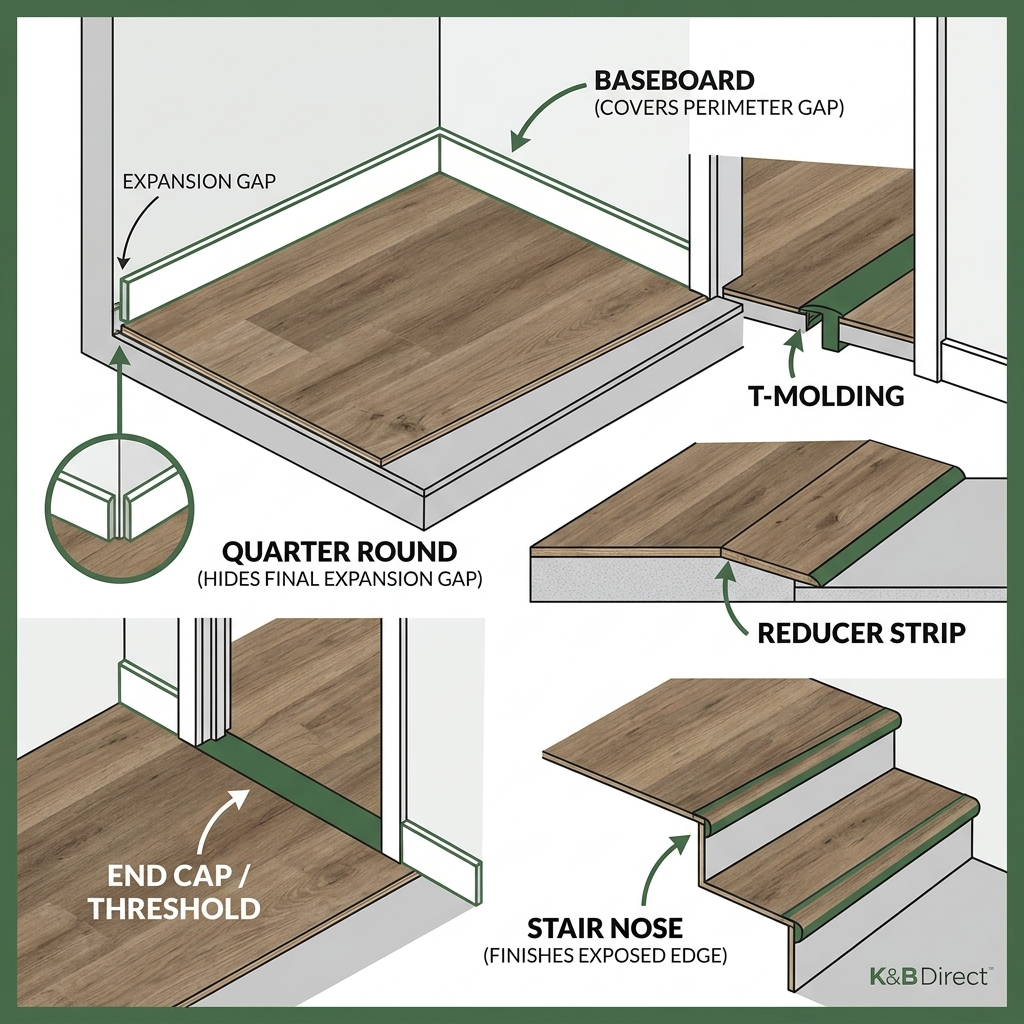
Vinyl floor molding types glossary:
The Essential Role of Vinyl Floor Molding Types
When we talk about vinyl floor molding types, we are looking at the unsung heroes of your home’s interior. While the planks themselves get all the glory, the trim does the heavy lifting. The most critical reason for using these moldings is to manage expansion gaps. Most vinyl floors, particularly Luxury Vinyl Plank (LVP), are installed as “floating” floors. This means they aren’t glued or nailed to the subfloor. Instead, they need room to breathe.
Because vinyl is a resilient material, it undergoes thermal shifting. When the temperature in your Chicago or Glen Ellyn home rises, the planks expand. When it cools down in the winter, they contract. Without a 1/4-inch to 1/2-inch gap around the perimeter, your floor would have nowhere to go, leading to buckling or “tenting” in the middle of the room.
Beyond physics, there is the matter of moisture protection. In areas like kitchens and bathrooms, water can easily seep into the raw edges of your planks if they aren’t sealed off by a proper pvc-floor-molding. High-quality vinyl trim is impervious to moisture, unlike some wood alternatives that might rot or swell over time. For a deeper dive into how different materials hold up, check out this look at the best flooring for different homes. If you are just starting your journey, our baseboard-moulding-guide is a fantastic place to begin understanding the basics of perimeter finishing.
Perimeter Finishing: Baseboards and Shoe Moldings
The perimeter of your room is where the floor meets the wall, and this is where you’ll spend most of your time planning. The primary piece here is the baseboard. It serves a dual purpose: it hides the expansion gap and protects the bottom of your drywall from vacuum cleaners, rogue toys, and wandering feet.
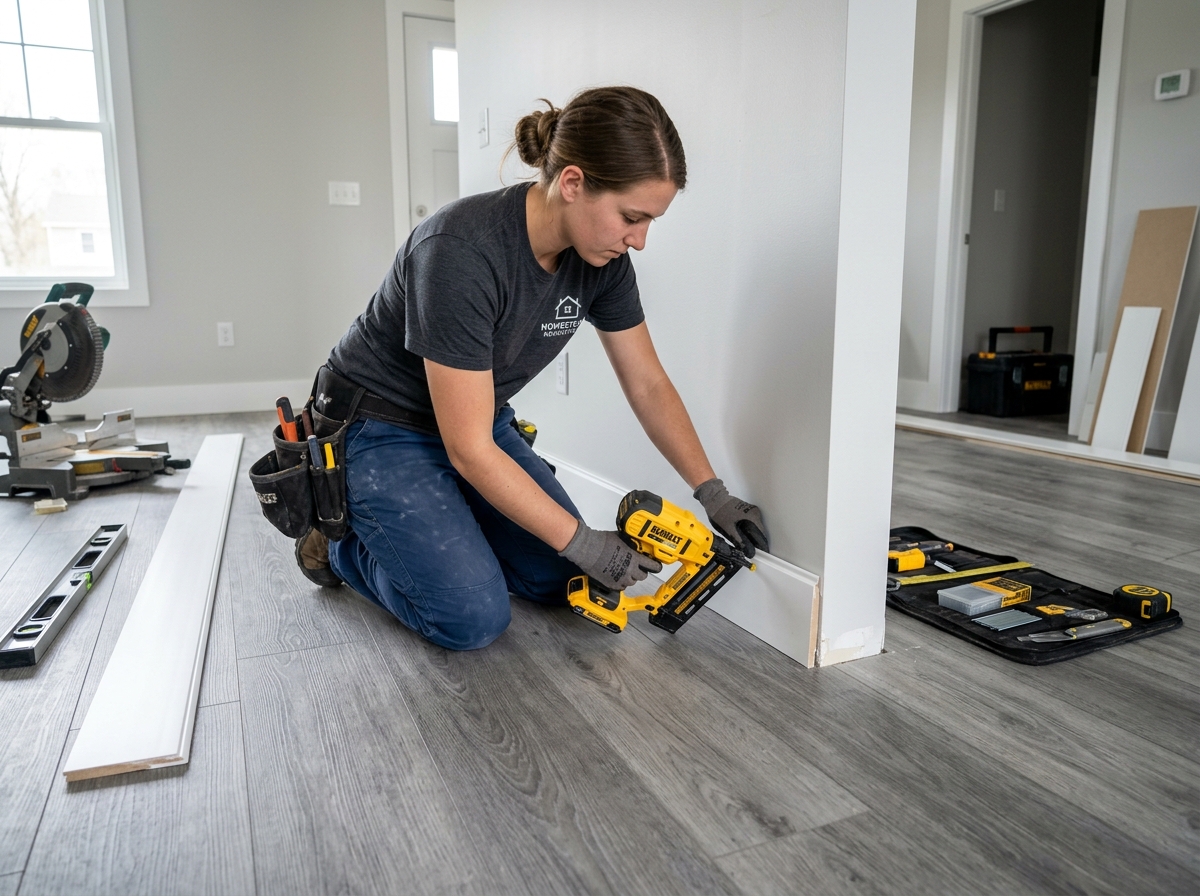
We often see homeowners choosing between a monochromatic match—where the trim is the exact same color and texture as the floor—and a classic white painted look. At K&B Direct, we offer a wide variety of baseboard-trim options to fit both modern and traditional aesthetics.
However, baseboards are often thick and rigid. If your subfloor isn’t perfectly level (which, let’s be honest, few are), you might see small daylight gaps between the bottom of the baseboard and the floor. This is where floorboards-trim becomes essential. By adding a secondary, smaller piece of molding, you can follow the slight waves of the floor for a tight, professional seal.
Quarter Round as a Versatile Vinyl Floor Molding Type
If you already have beautiful baseboards in place and don’t want to rip them out just to install a new floor, the quarter round is your best friend. As the name suggests, this trim is a 90-degree arc (one-quarter of a circle) that sits at the junction of the baseboard and the floor.
Quarter round is incredibly flexible. While a tall baseboard might resist bending, a vinyl quarter round can conform to minor imperfections in your walls or flooring. It’s a versatile molding choice that provides a soft, finished edge. For those who prefer a more “squared-off” or low-profile look, shoe molding is a popular alternative. It’s slightly taller and thinner than quarter round, offering a more refined aesthetic. You can browse our full range of styles in our category/baseboard section.
Navigating Transitions and Thresholds
A challenge in any flooring project is moving from one room to another. Unless you are running the same vinyl plank throughout the entire house without any breaks, you are going to need transition strips. These mouldings-millwork pieces ensure that the “war” between different floor types ends in a peaceful, trip-free truce.
There are three main transition types-of-moulding you should know:
- T-Molding: This is used when you have two floors of the same height. It looks like a capital “T” from the side. The vertical stem goes into the gap between the floors, while the horizontal top covers the edges of both.
- Reducers: These are used when transitioning from a thicker vinyl floor to a thinner surface, like sheet vinyl or low-pile carpet. It creates a gentle slope so you don’t stub your toe.
- End Caps (Square Nose): These are perfect for terminating a floor against a sliding glass door track, a fireplace hearth, or a wall where a baseboard won’t fit.
Specialized Vinyl Floor Molding Types for Stairs and Doorways
Stairs are the ultimate test of any flooring installation. Because the edges of the steps (the “nose”) take the full weight of foot traffic, you cannot simply use a standard plank and hope for the best. You need a specialized stair nose molding.
There are two main styles of stair nose:
- Flush Stair Nose: These click directly into your flooring planks for a completely smooth, level surface. These are preferred for a modern, seamless look but require very precise measurements.
- Overlap Stair Nose: These sit slightly on top of the flooring on the tread. They are much more “forgiving” during installation and allow for the natural expansion and contraction of the planks on the stairs.
When planning your stairs, it’s also worth considering the base-trim-on-stairs to ensure the wall-side of the staircase looks just as polished as the steps themselves. For those who want to see how these details look in a finished room before committing, we recommend checking out this guide to 3ds Max interior design visualization.
Material Composition and Moisture Performance
One of the main reasons we recommend vinyl-specific moldings for our Illinois customers—from Schaumburg to Wilmette—is the material’s inherent durability. Most of these trims are made from high-density PVC or a composite material wrapped in a waterproof decorative layer.
Unlike traditional wood-moulding, vinyl trim will not warp when exposed to the humidity of a basement in Des Plaines or the steam of a bathroom in Naperville.
Moisture-Resistant Materials for Trim:
- Extruded PVC: Completely waterproof and very flexible.
- WPC (Wood Plastic Composite): Offers great stability and matches “rigid core” flooring well.
- SPC (Stone Plastic Composite): Extremely dent-resistant and waterproof.
- Treated MDF: Sometimes used for baseboards, but must be properly sealed to handle moisture.
Installation Procedures and Design Integration
A professional finish is all in the details. Before you start, the most important step is acclimation. Just like your flooring, your vinyl trim needs to sit in the room where it will be installed for at least 24 to 48 hours. This allows the material to reach the same temperature and humidity level as your home, preventing it from shrinking or expanding immediately after you’ve cut it.
When it comes to the actual work, remember this golden rule: Never fasten your molding to the floor. Whether you are using nails or adhesive, the trim must be attached to the wall or the subfloor track. If you pin the floor down with the molding, it won’t be able to move, and you’ll end up with gaps or buckling.
For a clean look, use a miter saw to create 45-degree angles at the corners. If you’re working with baseboards, our guide on Baseboard cutting techniques offers some great pro-tips. If you want to add a bit of “flair” to your perimeter, you can even explore Base cap installation to add height and character to standard baseboards.
Transition Profile Comparison Table
| Feature | T-Molding | Reducer | End Cap |
|---|---|---|---|
| Height Match | Equal heights | High to Low | Termination |
| Best For | Doorways | Vinyl to Carpet | Sliding Doors |
| Installation | Track system | Track or Glue | Track or Glue |
| Expansion | Allows both sides | Allows one side | Allows one side |
Frequently Asked Questions about Vinyl Trim
Why is acclimation necessary for vinyl trim?
Vinyl is sensitive to temperature. If you bring cold trim from a warehouse into a warm home and install it immediately, it will expand. This can cause your mitered corners to push against each other and open up or warp. Giving it 24-48 hours ensures the material is stable.
Can vinyl molding be painted to match walls?
Yes! While many vinyl floor molding types come pre-finished to match specific flooring brands, many varieties are “paintable.” This is a great option if you want your baseboards to blend seamlessly into your wall color, creating a modern, integrated look.
Should trim be fastened to the floor or the wall?
Always fasten to the wall. For transition strips like T-moldings, use the manufacturer-provided track that screws into the subfloor between the planks. The goal is to let the vinyl floor “float” underneath the trim without being pinched.
Conclusion
Choosing the right vinyl floor molding types is the final step in ensuring your home improvement project looks like it was handled by a pro. From the moisture-prone bathrooms of Arlington Heights to the high-traffic hallways of Chicago, the right trim provides the protection and polished aesthetic your home deserves.
At K&B Direct, we pride ourselves on offering high-quality millwork and mouldings-millwork at unbeatable values. We believe that every homeowner should be able to realize their dream home aesthetics without breaking the bank. Whether you’re looking for the perfect color-matched stair nose or a classic white baseboard to frame your new LVP, we are here to help.
Stop by one of our locations or contact us today to find the finishing touches that will help your floor win the war against wear and tear!