Why Wood Cap Moulding is Essential for Your Home’s Finishing Touches
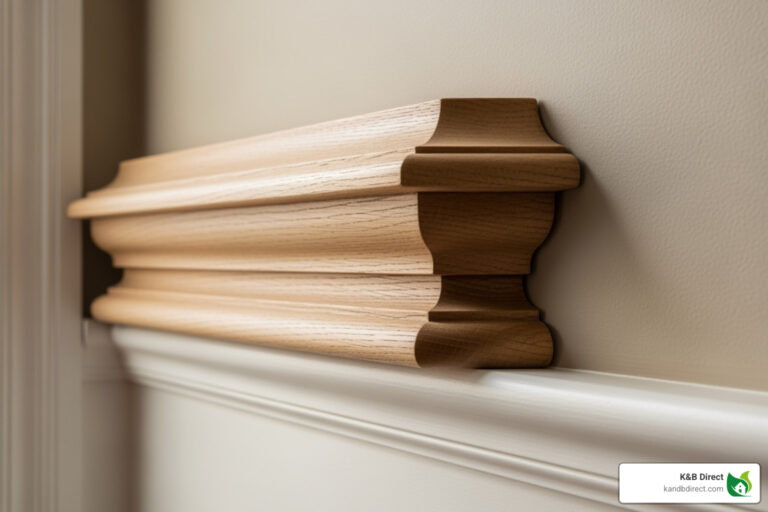
Wood cap moulding serves as the perfect finishing piece that transforms ordinary baseboards, wainscoting, and wall panels into sophisticated architectural details. These decorative trim pieces cap off the top edges of other mouldings, creating layered looks that add visual interest and hide imperfections where different materials meet.
Key uses for wood cap moulding:
- Wainscoting caps – Creates a finished top edge for wall paneling
- Baseboard improvement – Adds depth and complexity to standard baseboards
- Door and window trim – Provides professional-looking headers and caps
- Furniture accents – Lifts built-ins, mantels, and cabinetry
- Staircase details – Covers exposed plywood edges on skirt boards
The beauty of wood cap moulding lies in its versatility. As one industry expert notes, “You are limited only by your imagination when creating moulding masterpieces.” Whether you’re renovating a kitchen, adding wainscoting to a dining room, or simply want to give your baseboards more presence, cap moulding offers an affordable way to achieve custom, high-end looks.
Wood cap mouldings come in various profiles from simple quarter-rounds to elaborate ogee curves. Popular materials include pine, poplar, oak, and maple, available in both stain-grade and paint-grade options. Most pieces are sold in 8-foot lengths and can be custom-stained or painted to match your existing trim.
I’m Eryk Piatkowski, owner of K&B Direct, where we’ve helped homeowners transform their spaces with quality wood cap moulding and trim for over ten years. Our experience has shown that the right moulding details can lift any room from ordinary to extraordinary while staying within budget.
What is Wood Cap Moulding and How Is It Used?
At K&B Direct, we often hear questions about how to add that extra touch of elegance and finish to a room. Our answer? Wood cap moulding. This seemingly small detail plays a monumental role in interior design, providing both functional and aesthetic benefits. It’s a key component in achieving that polished, custom look that lifts a house into a home.
What Exactly is Cap Moulding?
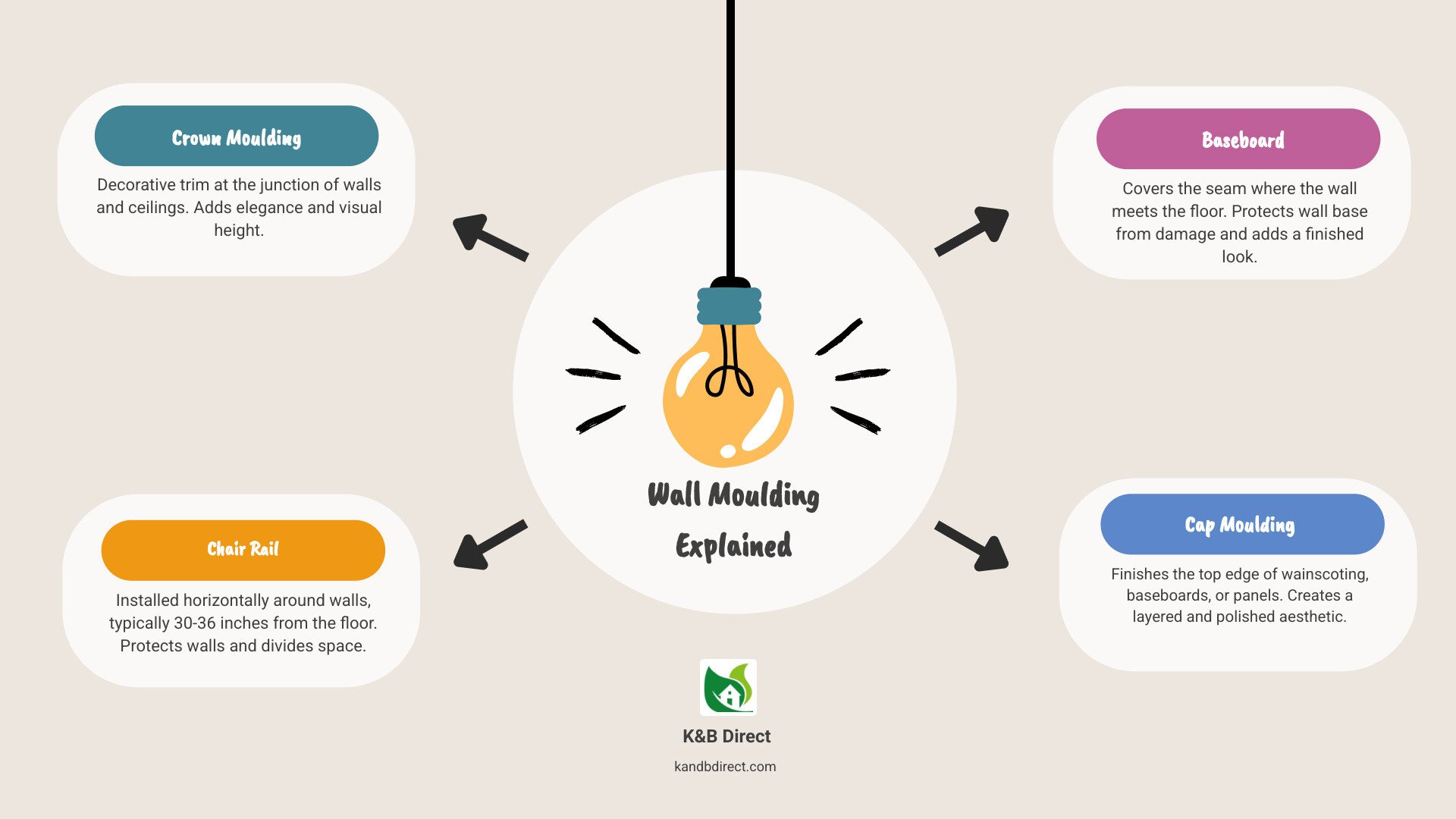
Simply put, wood cap moulding is a specialized trim piece designed to “cap off” or finish the top edge of another moulding or architectural element. Think of it as the crown jewel for your trim work. Its primary purpose is to provide a clean, decorative finish, seamlessly transitioning between different surfaces or adding a refined detail to a larger structure.
For instance, when installing wainscoting or paneling, the top edge can often look unfinished or abrupt. That’s where wood cap moulding comes in, sitting perfectly atop the paneling to create a smooth, neat transition to the wall above. It can also be used to improve the appearance of baseboards, adding a complex, layered trim that makes them appear more substantial and ornate. This can even help to hide imperfections where the floor and wall meet, or disguise any small gaps that might otherwise be visible.
We offer a wide selection of these essential finishing pieces, including versatile options like our Base Cap Moulding, specifically designed to complement and complete your baseboard installations.
Creative Ways to Use Wood Cap Moulding in Your Home
The versatility of wood cap moulding means its applications extend far beyond just baseboards and wainscoting. Here are some of our favorite ways to incorporate this beautiful trim into your home:
- Wainscoting Cap: This is perhaps the most classic use. Our wainscot cap mouldings are expertly designed to finish the top edge of your wainscoting, adding a sophisticated touch. Some styles, like a rounded-edge nosing, can even double as a durable chair rail, protecting your walls while adding visual interest.
- Baseboard Improver: Imagine a standard baseboard, then envision it with an added layer of intricate detail. That’s the magic of using wood cap moulding on top of your existing baseboards. It provides a more complex and layered trim, making your baseboards a true design feature. This is particularly useful if you’re looking to add visual interest to a room without overwhelming it, as base cap designs are often smaller and more affordable than other moulding options.
- Panel Cap Moulding: While distinct, panel moulding and base cap moulding often go hand-in-hand. Panel moulding creates raised accents directly on your walls, adding a three-dimensional look. Our Panel Cap Moulding can be used to finish the top of these wall panels or even to create unique embellishments on flat architectural surfaces like mantels.
- Picture Frame Moulding: You can use thinner wood cap moulding profiles to create decorative frames on your walls. These “picture frame” mouldings add a touch of classic elegance, turning a plain wall into a gallery-worthy feature.
- Mantel and Cabinetry Decoration: For built-in shelves, fireplace mantels, or even kitchen cabinetry, wood cap moulding can provide a refined top edge, giving these elements a custom, furniture-like appearance. It’s an excellent way to transcend the ordinary and jump into the field of finer detailing.
- Staircase Trim: Exposed plywood edges on staircase skirt boards can detract from an otherwise beautiful staircase. Specialized J-Cap wood cap moulding can be used to cover these edges, providing a perfectly finished look. What’s more, by combining it with another moulding type, like an Ogee Cove Moulding, you can even hide any drywall dips that run up the side of your staircase walls, creating a seamless and perfect finish.
- Furniture Accents: Don’t limit your creativity to walls! Wood cap moulding can be used for craft details or as decorative accents on furniture, changing a simple piece into a custom masterpiece.
At K&B Direct, we believe in empowering you with knowledge. For more ideas on how to transform your space, explore our comprehensive K&B Direct Moulding Guide which covers a wide array of trim styles and their applications.
A Guide to Styles and Materials
Choosing the right wood cap moulding involves more than just picking a design; it’s about understanding how different profiles and materials will interact with your home’s existing architecture and your personal aesthetic. The right choice can dramatically improve a room’s character, while a mismatched one can feel out of place.
Popular Wood Cap Moulding Profiles
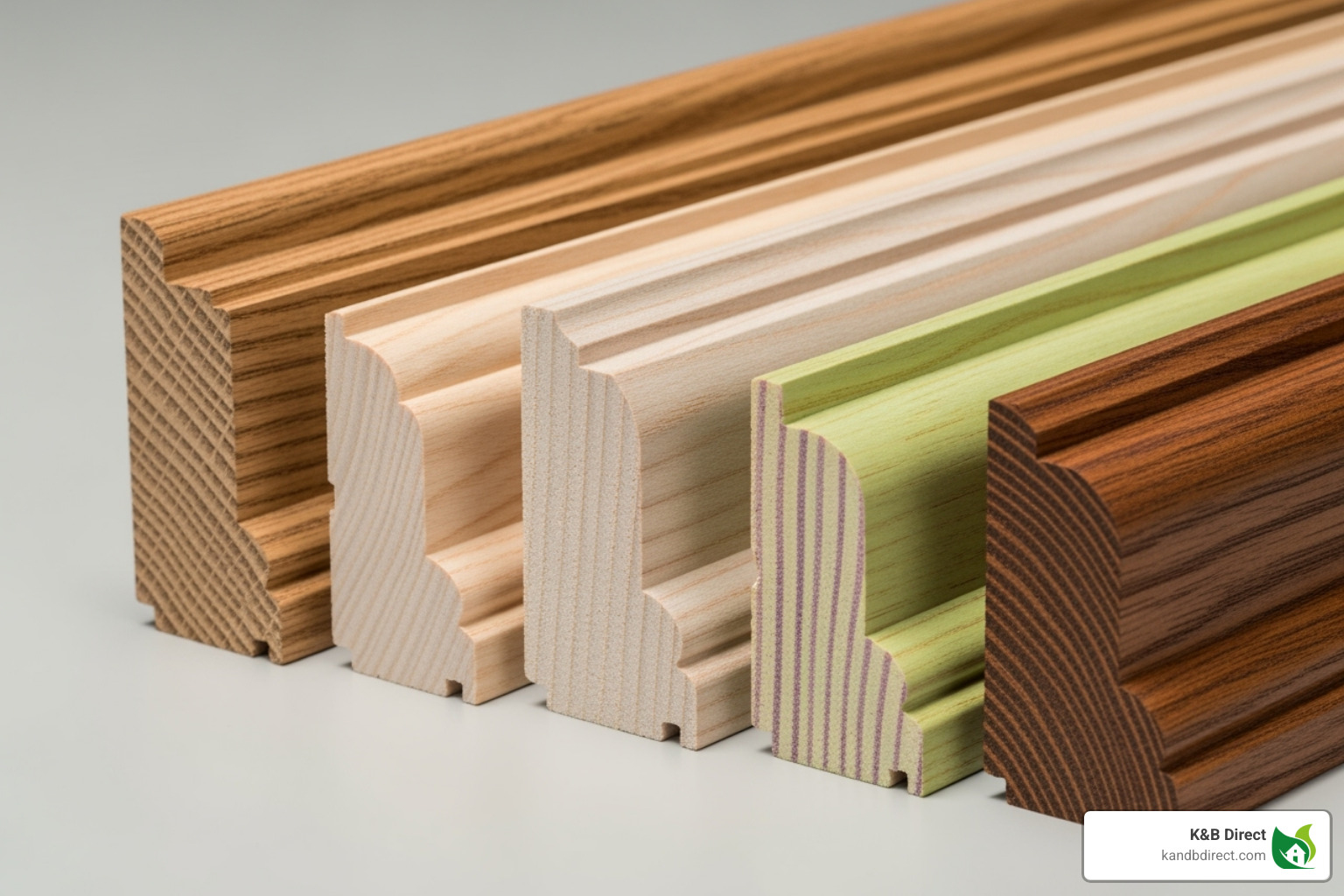
Think of moulding profiles like architectural personalities – each one tells a different story and creates a unique mood in your home. The profile you choose for your wood cap moulding can transport your space from simple to spectacular.
Colonial profiles offer timeless appeal with their simple, rounded or beveled edges. These versatile designs work beautifully in traditional homes but also blend seamlessly into transitional spaces. They’re like the perfect pair of jeans – they go with everything and never go out of style.
For those who love drama and historical richness, Victorian profiles deliver ornate curves, intricate beads, and sometimes even delicate carved details. These mouldings bring a sense of grandeur that makes every room feel like it belongs in a stately manor.
Modern and transitional profiles take a cleaner approach with sharp lines and minimal embellishments. They focus on subtle geometric shapes and simple curves that complement both contemporary and classic interiors. These profiles prove that sometimes less really is more.
The distinctive ogee curve creates that classic S-shaped flow that adds flowing elegance to any wood cap moulding. When you see this profile, you’re looking at centuries of architectural tradition distilled into one beautiful curve.
Many of our cap mouldings feature a rabbeted edge on the back – essentially a notch that allows the moulding to fit snugly over panel edges. Our wainscot cap mouldings, for example, come with specific notch sizes designed to fit material ranging from 3/8″ to 3/4″ thick. It’s like having a puzzle piece that fits perfectly every time.
Beaded details add subtle texture through small, rounded convex curves. These tiny touches create visual interest without overwhelming the overall design – they’re the jewelry of the moulding world.
Our extensive collection of Wood Trim showcases all these profiles and more, ensuring you’ll find the perfect match for your vision.
Choosing the Best Material for Your Project
The material you select for your wood cap moulding determines not just how it looks today, but how it will age and perform over the years. At K&B Direct, we focus on solid wood because we believe in giving our customers materials that will stand the test of time.
Solid wood offers best durability and natural beauty that synthetic materials simply cannot replicate. You can stain it to showcase gorgeous grain patterns or paint it for a smooth, custom finish. There’s something about the warmth and texture of real wood that makes a house feel like a home.
Poplar has become a favorite for painted wood cap moulding projects. This hardwood features a smooth, fine grain that accepts paint beautifully, creating that flawless finish everyone wants. It’s also remarkably stable, which means fewer headaches during installation and better long-term performance.
When you’re planning to paint your moulding, Finger-Jointed Pine (FJP) offers excellent value without sacrificing quality. This solid wood option works easily and provides a reliable foundation for painted finishes. It’s proof that you don’t have to break the bank to get professional results.
Oak brings character to any room with its prominent grain patterns and legendary durability. Red Oak, in particular, offers those warm tones that make stained wood cap moulding a true focal point. When you want the wood itself to be the star, oak delivers.
For those seeking the best of both worlds, Maple provides a denser hardwood with subtle grain that stains beautifully for a more uniform appearance than oak. Yet it’s smooth enough to paint if you change your mind later. Talk about versatility!
Understanding the difference between stain-grade and paint-grade woods will save you both money and frustration. Stain-grade woods like oak, maple, and cherry showcase beautiful grain patterns that are improved by stain. Paint-grade woods like poplar and pine offer smooth surfaces perfect for painted finishes. Choose based on your final vision, and always use a wood conditioner before staining to ensure even absorption.
While the broader market includes materials like MDF and PVC, we believe in the superior quality and timeless appeal of natural wood. There’s simply no substitute for the authentic warmth and lasting beauty that only real wood can provide. Explore our complete selection in our Wood Moulding collection to see the difference quality makes.
How to Select and Install Your Moulding
Starting a moulding project can feel overwhelming at first, but I promise it’s one of those home improvement tasks that delivers incredible results for your effort. At K&B Direct, we’ve walked countless homeowners through this process, and there’s nothing quite like seeing someone’s face light up when they step back and admire their finished wood cap moulding installation.
The key to success lies in thoughtful planning and taking your time with each step. Whether you’re a seasoned DIYer or picking up a miter saw for the first time, the right approach will have you installing wood cap moulding like a pro.
Key Considerations for Selection
Before you even think about making your first cut, spend time getting your selection just right. This planning phase makes the difference between a project that looks professionally done and one that feels off somehow.
Room scale is your starting point. Walk into your room and really look at the proportions. A delicate wood cap moulding profile will disappear in a grand room with 12-foot ceilings, while an elaborate 4-inch cap might overwhelm a cozy bedroom. The moulding should feel like it belongs, not like it’s trying too hard or hiding in the background.
Profile size matters more than you might think. Our Ornamental Mouldings White Hardwood Base Cap measures 3/4 inch thick by 1-1/4 inches wide, making it perfect for most standard applications. We also carry profiles that reach over 9 inches in width for those dramatic statements. The trick is finding that sweet spot where your wood cap moulding complements rather than competes with your existing trim.
Proportion is where many DIYers stumble. Your cap moulding needs to work harmoniously with your baseboards, door casings, and other trim elements. Generally, baseboards should be wider but thinner than your door and window casings, and your wood cap moulding should feel like a natural extension of this family. Think of it like accessorizing an outfit – everything should work together to create one cohesive look.
Matching existing trim becomes crucial if you’re only updating part of your home. Mixing a highly detailed Victorian profile with sleek modern baseboards creates visual chaos. When in doubt, bring a sample of your existing trim to help guide your selection. Our Crown Moulding collection showcases how different profiles can work together when chosen thoughtfully.
Unfinished versus primed options give you flexibility in your finishing approach. Most of our wood cap moulding comes unfinished, letting you achieve exactly the stain color or paint shade you’re envisioning. Primed pieces save you a preparation step if you’re planning to paint.
A Step-by-Step Installation Guide
Installing wood cap moulding requires patience and precision, but it’s absolutely doable with the right approach. I’ve seen homeowners go from nervous beginners to confident installers in a single weekend.
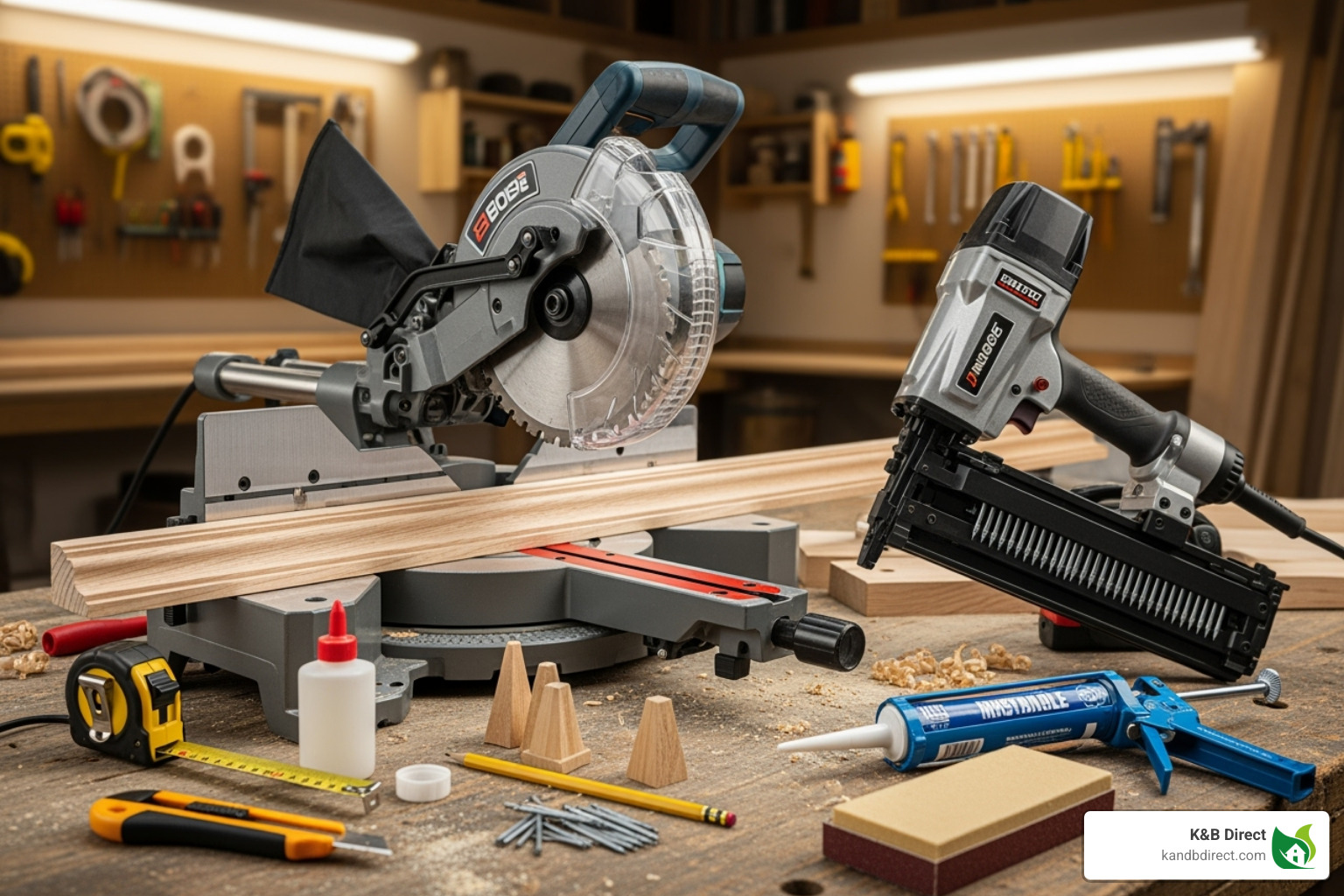
Tools you’ll need include a miter saw for those crucial angle cuts, measuring tape, pencil, stud finder, nail gun, wood glue, wood filler, caulk, and sanding supplies. Don’t skimp on the miter saw – clean, precise cuts make everything else easier.
Measuring accurately sounds obvious, but it’s where most mistakes happen. Measure each wall section twice, and add a little extra length for insurance. Trust me, running short on a piece is frustrating when you’re in the middle of installation flow.
Cutting angles is where your miter saw becomes your best friend. Inside corners typically need 45-degree cuts that meet to form a perfect 90-degree joint. Outside corners use the same 45-degree approach but cut in the opposite direction. If you’re new to cutting corners, our guide on How to Cut Baseboard Corners applies perfectly to wood cap moulding installation.
Test fitting before you commit saves headaches later. Dry-fit each piece to check your cuts. Small gaps are normal and actually preferable to pieces that are too long and bow outward.
Fastening securely starts with a thin bead of wood glue where your wood cap moulding meets the surface below. Then use your nail gun to secure it, aiming for studs whenever possible. The combination of glue and nails creates a rock-solid installation.
Filling and caulking transforms good work into great work. Wood filler covers nail holes perfectly once sanded smooth. Paintable caulk along seams where your wood cap moulding meets walls or other trim creates that seamless, built-in appearance. For detailed installation steps specific to base applications, check out our comprehensive guide on How to Install Base Cap Moulding.
Common Mistakes to Avoid
Even experienced DIYers can stumble on wood cap moulding projects. Learning from others’ mistakes saves you time and frustration.
Wrong scale for the room happens more often than you’d think. That gorgeous 6-inch profile might look amazing in the showroom but completely overpower your guest bathroom. Always consider your space’s proportions before falling in love with a particular style.
Mismatched styles create visual confusion. Pairing ornate wood cap moulding with minimalist contemporary baseboards feels jarring. Your trim should tell one cohesive design story throughout your home.
Poor cuts and joints scream amateur installation. Take your time with measurements and cuts. If a piece doesn’t fit perfectly, recut it rather than trying to make it work with extra filler. Your patience here pays dividends in the final appearance.
Skipping caulk and filler is like buying a beautiful car and never washing it. These finishing steps transform your installation from good to spectacular. Caulk makes your wood cap moulding look like it grew from the wall, while properly filled and sanded nail holes disappear completely.
Underestimating material needs leads to frustrating delays when you’re on a roll. Always buy 10-15% more than your measurements suggest. Our standard 8-foot lengths make calculations straightforward, but cutting mistakes and learning curves consume material faster than you expect.
Even professional installers started somewhere. Take your time, focus on quality over speed, and don’t be afraid to ask questions. For additional context on working with different trim types, explore our Window Frame Moulding resources for more installation insights.
Finishing, Maintenance, and Sourcing Your Moulding
Your wood cap moulding installation is complete, but you’re not quite done yet. The finishing touches and knowing how to care for your investment will ensure your beautiful trim looks stunning for decades to come. Plus, choosing the right supplier from the start makes all the difference in your project’s success.
Finishing Your Moulding for a Flawless Look
This is where the magic really happens. A proper finish transforms raw wood into a polished architectural feature that looks like it belongs in a high-end custom home.
Start with sanding, even if your wood cap moulding feels smooth to the touch. A light pass with 180 to 220-grit sandpaper removes any tiny imperfections and opens up the wood grain. This simple step makes an enormous difference in how well your finish adheres and looks.
If you’re planning to stain your moulding, using wood conditioner is absolutely crucial, especially on softer woods like pine or poplar. Think of it as primer for stain – it helps the wood absorb color evenly, preventing those blotchy spots that scream “amateur job.” Always test your stain on a scrap piece first to make sure you love the color.
For painted finishes, priming is your best friend. A high-quality primer creates that perfect foundation, blocks any wood tannins from bleeding through, and gives you that smooth, professional paint job you’re after. Don’t skip this step – it’s the difference between a finish that lasts years versus one that starts peeling in months.
When staining, work in manageable sections and wipe off excess according to the manufacturer’s directions. The beauty of wood really shines through with the right stain choice. For painting, several thin coats always beat one thick coat. You’ll avoid drips, brush marks, and that uneven texture that makes trim look homemade rather than professional.
Finish everything off with a clear topcoat like polyurethane. This protective layer guards against daily wear and tear, keeping your wood cap moulding looking fresh and new even in high-traffic areas.
Maintenance and Longevity
The wonderful thing about quality wood cap moulding is that it requires very little maintenance once it’s properly finished. A little care goes a long way toward protecting your investment.
Regular cleaning is mostly just dusting with a soft cloth or using your vacuum’s brush attachment. For painted trim, you can use a slightly damp cloth for deeper cleaning, but keep moisture to a minimum. Stained or natural wood prefers dry or barely damp cloths to avoid water marks.
When life happens and you notice small minor damage like nicks or scuffs, don’t panic. A little wood filler, some light sanding, and a touch-up with matching paint or stain will make most problems disappear. Keep a small container of your chosen finish on hand for these quick fixes – you’ll be amazed how a tiny touch-up can restore that perfect look.
The key to longevity is addressing small issues before they become big problems. A small gap that gets caulked today won’t turn into a major repair project next year. Just like our Door Casing, your wood cap moulding will reward you with decades of beauty when you show it a little love.
Where to Find the Best Moulding for Your Budget
Not all moulding suppliers are created equal, and your choice can make or break your project experience. After helping countless homeowners over the years, we’ve seen how the right supplier transforms a stressful project into an enjoyable one.
Big Box Stores offer convenience and competitive pricing on basic profiles, but their selection tends to be limited. You’ll find standard options, but if you’re looking for something special or need expert advice, you might leave empty-handed. The quality can be inconsistent, and you’re mostly on your own when it comes to guidance.
Lumber Yards typically stock higher-quality materials and offer more specialized profiles. Their staff usually knows their stuff, but you’ll pay premium prices for that expertise. If you need something custom, expect to wait and pay even more.
At K&B Direct, we’ve built our reputation on offering the best of both worlds. We stock over 200 styles of trim and mouldings, with 226 products in our Trim and Mouldings category alone. You’ll find everything from simple profiles to elaborate designs, all in top-quality solid wood.
What really sets us apart is our commitment to unbeatable, lowest possible prices without sacrificing quality. We source directly and run efficient operations, passing those savings on to you. But great prices mean nothing without great service, which is why our friendly, knowledgeable team is always ready to help you find exactly what you need.
Whether you’re in Chicago, Glen Ellyn, West Chicago, or any of our other convenient Illinois locations, we make it easy to get the materials that help tell your home’s story beautifully. Your home is your most important investment – a space that reflects who you are and shapes how you live. We’re here to help you make it everything you’ve dreamed of, without breaking the bank.
Conclusion
There’s something magical about the moment when you step back and see how wood cap moulding has transformed your space. What started as a simple room with basic trim suddenly has character, depth, and that polished look that makes visitors ask, “Did you hire a professional decorator?”
Wood cap moulding truly is the unsung hero of home improvement. It’s not the flashiest upgrade you’ll make, but it’s often the one that ties everything together beautifully. Whether you’ve used it to crown your wainscoting, give your baseboards more presence, or add those finishing touches to built-in furniture, you’ve invested in details that speak to quality and craftsmanship.
We’ve covered a lot of ground together – from understanding the different profiles that suit various design styles to choosing between oak’s bold grain and poplar’s smooth paintability. You now know how to measure properly, cut those tricky corners, and avoid the common pitfalls that can turn a weekend project into a month-long headache. Most importantly, you understand that the right finishing touches and ongoing care will keep your wood cap moulding looking stunning for decades.
At K&B Direct, we’ve seen countless homeowners find what you now know: that affordable luxury isn’t an oxymoron. Quality wood cap moulding doesn’t have to break the bank, and with the right materials and a little patience, you can achieve results that rival expensive custom work.
Your home deserves those special touches that make it uniquely yours. Don’t let bare edges and unfinished details hold back your vision. Transform your space with the simple elegance of quality trim – because every room has the potential to be extraordinary.
Ready to put the perfect finishing touch on your home’s design? Explore our complete collection of high-quality, affordable trim and find how Base Cap Moulding can make all the difference in bringing your vision to life.