
Why Composite Trim Boards Are the Smart Choice for a Low-Maintenance Exterior
Composite trim boards are engineered exterior and interior trim panels made from a blend of wood fibers, recycled plastics, or mineral-based compounds — designed to outlast traditional wood without the constant upkeep.
Here is a quick look at the top composite trim options available in 2026:
| Product | Material Type | Warranty | Key Benefit |
|---|---|---|---|
| AZEK Trim | Engineered polymer | Limited lifetime | Moisture and rot resistant |
| MiraTEC | Wood fiber + phenolic resin | 50 years | Termite and hail resistant |
| Arris by Edge | Mineral-based composite | Limited lifetime | Minimal thermal expansion |
| TruWood Trim | Engineered wood | 30 years | Reversible texture, pre-primed |
| WoodPlank Composite | Wood fiber + HDPE | 30 years | Factory-finished, color-matched |
| Trex Transcend | Capped composite | 50 years (residential) | Fade, stain, and rot resistant |
Traditional wood trim rots, warps, and demands regular sealing, sanding, and repainting. Composite trim solves all of that. It resists moisture, insects, and UV damage — and most products need zero painting or sealing to stay looking sharp for decades.
Whether you are finishing window casings, fascia boards, door surrounds, or exterior corners, the right composite trim board makes a real difference in both curb appeal and long-term performance.
I’m Eryk Piatkowski, owner of K&B Direct, and over more than a decade of helping homeowners and renovators choose quality building materials, I’ve seen how the right composite trim boards can transform an exterior while cutting maintenance time dramatically. In this roundup, I’ll walk you through the best options on the market so you can choose with confidence.
Discover more about composite trim boards:
What are Composite Trim Boards?
The science behind modern building materials has evolved rapidly. Composite trim boards are engineered architectural elements created by blending organic materials with stable synthetic polymers or mineral binders. Unlike classic timber, which is vulnerable to natural degradation, these boards are formulated to endure severe environmental exposure.
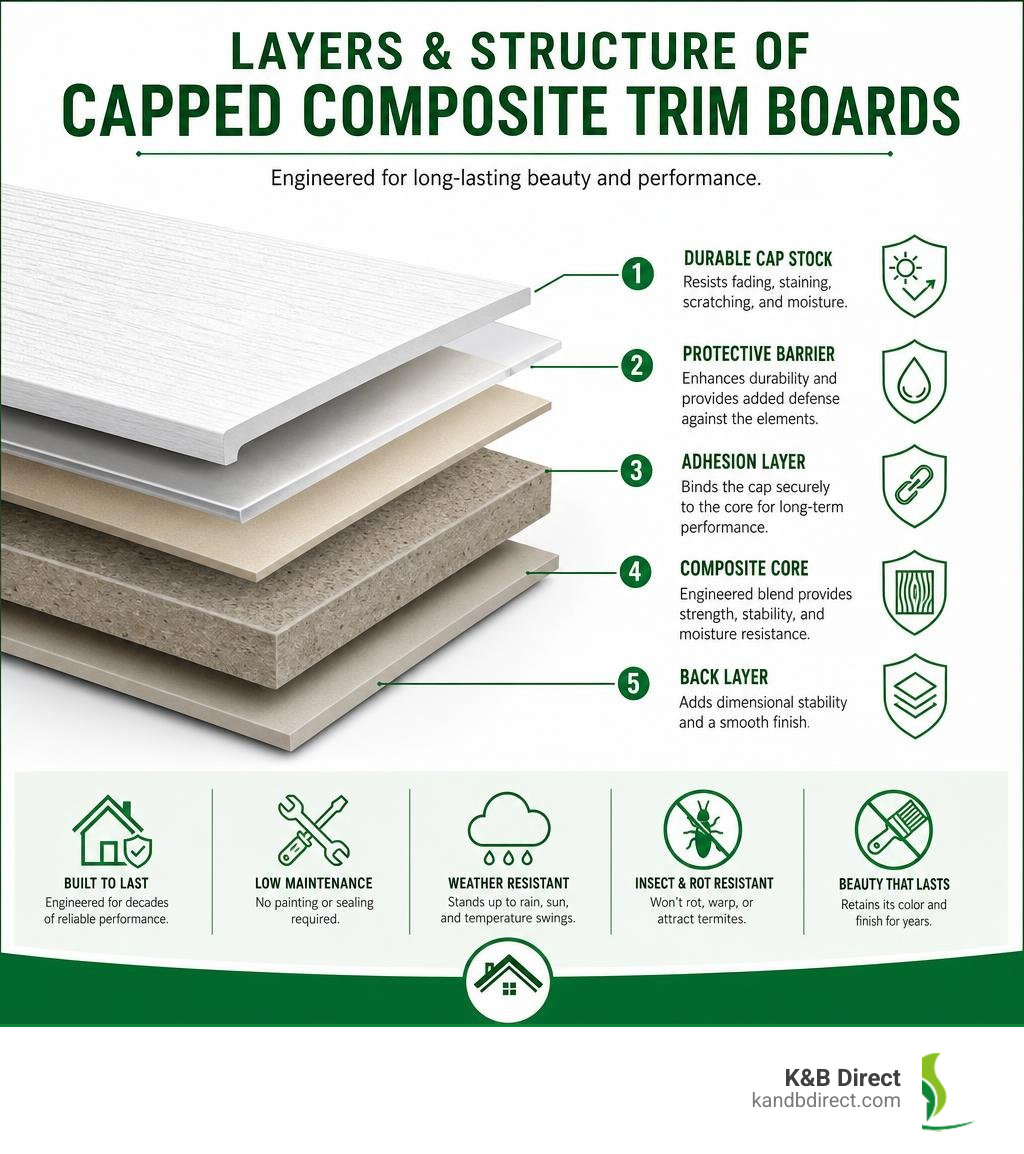
In the past, selecting Wood Trim Options meant accepting that moisture, rot, and insects would eventually degrade the installation. Traditional Wood Moulding offers undeniable warmth, but the continuous exposure to rain, snow, and intense sunlight creates a cycle of endless scraping and painting. Engineered composite boards solve this issue by utilizing co-extruded caps and moisture-impervious cores, sealing out the elements entirely.
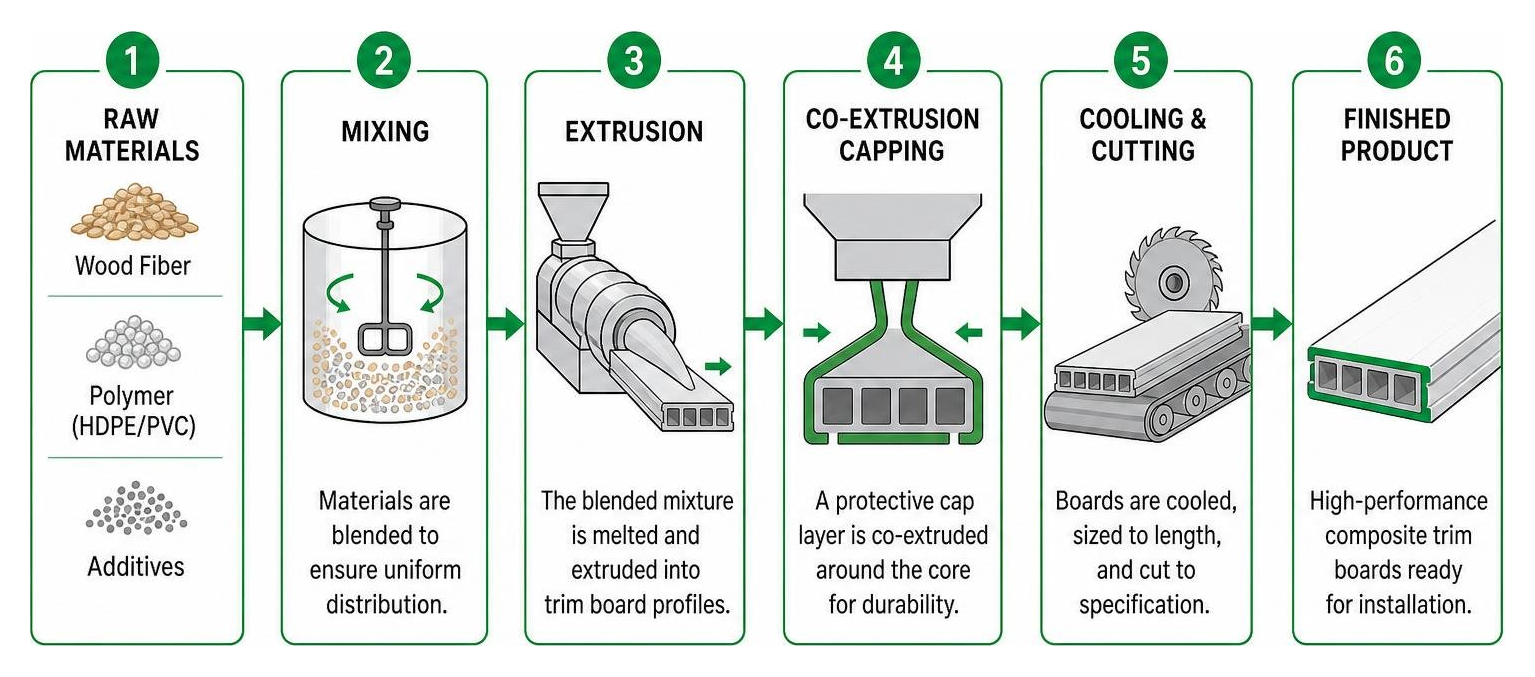
Modern composite trim boards are manufactured using advanced extrusion processes. During production, wood fibers or mineral particles are encapsulated in a thermoplastic matrix, such as high-density polyethylene (HDPE) or polyvinyl chloride (PVC). A co-extruded 360-degree protective cap layer is often applied, which shields the core from ultraviolet rays, physical impacts, and moisture penetration. This engineering ensures that the product retains its shape, structural integrity, and color for decades.
Selecting the Right Composite Trim Boards
Choosing the ideal product for a home renovation depends on the specific performance requirements of the project. Different manufacturers utilize distinct chemical compositions, each offering unique benefits for residential properties in our local communities, such as Park Ridge, Glenview, and Schaumburg.
For example, homeowners looking for ultimate moisture protection often select premium engineered polymer options like the AZEK Trimboard | AZEK Exteriors. These boards contain no organic wood fibers, making them completely immune to fungal decay and insect infestation.
Alternatively, wood-plastic composites (WPC) combine natural wood fibers with recycled polymers to deliver a highly authentic woodgrain texture. For projects requiring extreme thermal stability, mineral-based composites represent the cutting edge of material technology, virtually eliminating the expansion and contraction associated with temperature swings.
Standard Sizes and Profiles of Composite Trim Boards
To accommodate diverse architectural designs, synthetic trim boards are manufactured in standard nominal dimensions that match traditional lumber sizes. This consistency allows for seamless integration into existing structures without complex modifications.
Common nominal sizes include:
- 1×3 boards (actual thickness of 3/4 inch, actual width of 2-1/2 inches)
- 1×4 boards (actual thickness of 3/4 inch, actual width of 3-1/2 inches)
- 1×6 boards (actual thickness of 3/4 inch, actual width of 5-1/2 inches)
- 1×8 boards (actual thickness of 3/4 inch, actual width of 7-1/4 inches)
These boards are typically distributed in long-span lengths of 96 inches, 144 inches, 192 inches, or even 240 inches. This minimizes the number of joints along long rooflines or tall wall assemblies.
| Feature | Traditional Wood Trim | Cellular PVC Trim | Composite Trim (WPC / Mineral) |
|---|---|---|---|
| Moisture Resistance | Poor (absorbs water, swells) | Outstanding (completely waterproof) | Excellent (sealed cap protection) |
| Rot Prevention | High risk over time | Zero risk of rot | Zero risk of rot |
| Insect Resistance | Vulnerable to termites/beetles | Completely immune | Highly resistant (often treated) |
| Thermal Stability | Moderate movement | High expansion/contraction | Outstanding (minimal movement) |
| Workability | Excellent | Excellent (can split near edges) | Excellent (routes and cuts smoothly) |
When coordinating interior transitions, selecting complementary synthetic options is crucial. For instance, Choosing PVC Baseboard Trim for high-moisture rooms like bathrooms or basements ensures a cohesive, rot-free transition from exterior to interior spaces.
Key Benefits of Composite Trim for Exterior Applications
Exterior architectural details must withstand severe weather, from freezing winter snow in Elmhurst to humid summer heat in Des Plaines. Standard wood finishes quickly deteriorate under these conditions, whereas composite alternatives maintain their structural integrity and appearance with minimal effort.
- Unrivaled Weather Resistance: Composite materials do not absorb moisture, which prevents the freezing and thawing cycles from causing cracks, splits, or warping. This makes them highly effective around windows and doors where water accumulation is common.
- Superior UV Protection: The protective cap layer on high-quality composite boards contains advanced UV inhibitors. This technology prevents the deep color fading that typically occurs on painted timber surfaces exposed to direct sunlight.
- Outstanding Paint Retention: While many composite products are factory-finished and require no additional coatings, those designed for custom painting hold onto their finish significantly longer than wood. Because the substrate does not expand or contract with moisture, paint does not blister, peel, or crack.
- Minimal Maintenance: Homeowners can completely eliminate the routine of sanding, scraping, and resealing their exterior trim. Cleaning is simple, requiring only a soft cloth and mild soap or a low-pressure wash to remove surface dust.
Using high-performance materials to frame exterior features creates a reliable barrier against water intrusion. Incorporating these durable profiles alongside premium Molding and Trim Options allows you to establish a beautiful, unified look across the entire home facade.
Types of Composite Trim Materials
Understanding the material science behind different composite options helps you make an informed selection for your specific home design.
Wood-Plastic Composite (WPC)
WPC products blend real wood fibers with recycled plastics like high-density polyethylene. The result is a highly durable product that replicates the authentic weight and feel of natural timber. A prime example is the Composite Plank Exterior Cladding (28 SF) | WoodPlank, which utilizes a co-extruded 360-degree cap to deliver a rich woodgrain appearance without the risk of splitting or rotting.
Cellular PVC
Cellular PVC contains no organic wood fibers, making it entirely waterproof. It can be routed, milled, and cut using standard woodworking equipment. High-quality cellular PVC products can even be heat-formed to create dramatic curved architectural details.
Mineral-Based Composite
This innovative category utilizes advanced mineral-polymer blends to achieve exceptional physical stability. Products like Arris Mineral-Based Composite are created with Surestone technology. This material exhibits almost zero thermal expansion or contraction, allowing installers to execute tight mitered joints without worrying about unsightly gaps forming during seasonal temperature shifts.
Engineered Wood
Engineered wood composites utilize wood fibers combined with synthetic resins, water repellents, and protective minerals like zinc borate. The TruWood Reversible Trim offers a versatile dual-sided design, featuring a rustic textured surface on one side and a smooth contemporary finish on the other. This gives designers great flexibility while ensuring robust protection against fungal decay and termites.
For homeowners exploring various interior and exterior architectural profiles, reviewing the comprehensive guide on Types of Moulding provides valuable insight into coordinating these modern materials with classic home styles. To finish outdoor living spaces with a cohesive look, choosing high-performance fascia options like the TREX Transcend Tropical Composite Fascia & Riser Board – The Deck Store ensures that deck perimeters and stair risers remain beautiful and pest-resistant for decades.
Installation and Maintenance Best Practices
Achieving a professional, long-lasting finish with composite trim requires adhering to specific installation procedures that account for the unique physical properties of synthetic materials.
- Acclimatization: Before fastening, store the boards flat on a dry surface at the jobsite for at least 48 hours. This allows the material to adjust to local humidity and temperature levels, preventing post-installation shifting.
- Fastener Placement: Use high-quality, corrosion-resistant fasteners, such as hot-dipped galvanized or stainless steel screws. When installing cellular PVC or polymer boards, you can safely drive fasteners within 2 inches of the edge without splitting the substrate.
- Adhesive Selection: For strong, seamless joints, use a premium polyurethane-based adhesive or an MS polymer hybrid compound. Standard wood glues will not bond synthetic polymers effectively. To learn more about securing trim components, refer to our guide on A Sticky Situation for Your Baseboard Glue.
- Thermal Expansion Management: Because synthetic polymers expand and contract with temperature changes, leave small gaps at the joints as specified by the manufacturer. Using mineral-based composites like Arris minimizes this movement, allowing for tighter joints.
- Jobsite Protection: When using pre-finished boards, select products shipped with a protective film, such as the BuildReady Trim Board – Ply Gem. Keep this protective layer intact during cutting and installation to prevent scuffs, removing it only after the project is complete.
For detailed technical advice and sourcing the best installation accessories in the Chicago suburban area, consult our Molding Supplier Resources to ensure your project goes smoothly from start to finish.
Frequently Asked Questions About Composite Trim
Does Composite Trim Require Painting or Sealing?
No, the vast majority of composite trim boards do not require painting or sealing for weather protection. High-performance capped composites and cellular PVC boards are manufactured with built-in UV resistance and a finished exterior surface.
However, if you want a custom color to match your home’s design, many composite boards can be painted. When painting cellular PVC, it is best to use a 100% acrylic latex paint with a Light Reflectance Value (LRV) of 55 or higher to prevent excessive heat absorption. For detailed techniques on preparing trim surfaces, see our guide on Installing Base Cap Moulding.
Additionally, if you are looking for local inspiration or professional color coordination, checking out examples of Exterior Painting in Franklin Park, NJ can provide great design ideas for matching modern composite trim with bold siding colors.
What Warranties Apply to Composite Trim Products?
Composite trim products are backed by some of the strongest warranties in the building materials industry, reflecting their long-term durability. Engineered polymer and mineral-based options often carry limited lifetime warranties against warping, cracking, rotting, and corrosion.
Other high-quality products, such as MiraTEC and Trex Transcend, offer impressive 50-year warranties that cover hail damage, termite infestation, and delamination. Many pre-finished boards also include 30-year warranties specifically protecting against color fading and staining.
This long-term reliability makes composite trim an outstanding investment for protecting critical exterior elements, such as Hiding Deck Posts with Skirts from moisture and pest damage.
Can Composite Trim Be Used for Structural Applications?
No, composite trim boards are engineered exclusively for non-load-bearing, decorative applications. They do not possess the structural load capacity of solid timber framing. They are ideal for fascia, window casings, door surrounds, soffits, and corner boards, but should never be used as structural posts, joists, or beams.
When cutting and shaping these materials for decorative use, you can handle them easily with standard woodworking tools. For helpful tips on making precise cuts, refer to our tutorial on Cutting Baseboard.
Conclusion
Upgrading your home’s exterior with premium composite trim boards is a smart investment that delivers lasting beauty and eliminates tedious maintenance. By choosing engineered polymers, mineral-based composites, or capped wood-plastic composites, you protect your home from moisture, rot, and pests while maintaining beautiful curb appeal for decades.
At K&B Direct, we are dedicated to helping you realize your dream home aesthetics. We offer a wide selection of top-quality mouldings, doors, windows, and cabinets at unbeatable, lowest possible rates, paired with warm, friendly service. Whether you are remodeling a classic residence in Park Ridge, updating a modern property in Schaumburg, or building in Elmhurst, our team is here to help you select the perfect materials for your project.
Explore our extensive selection of trim and moulding profiles today by visiting our Baseboard Moulding Category, or contact us to receive a personalized quote for your next home improvement project!