
Why Black Interior Doors and Trim Create Instant Architectural Contrast
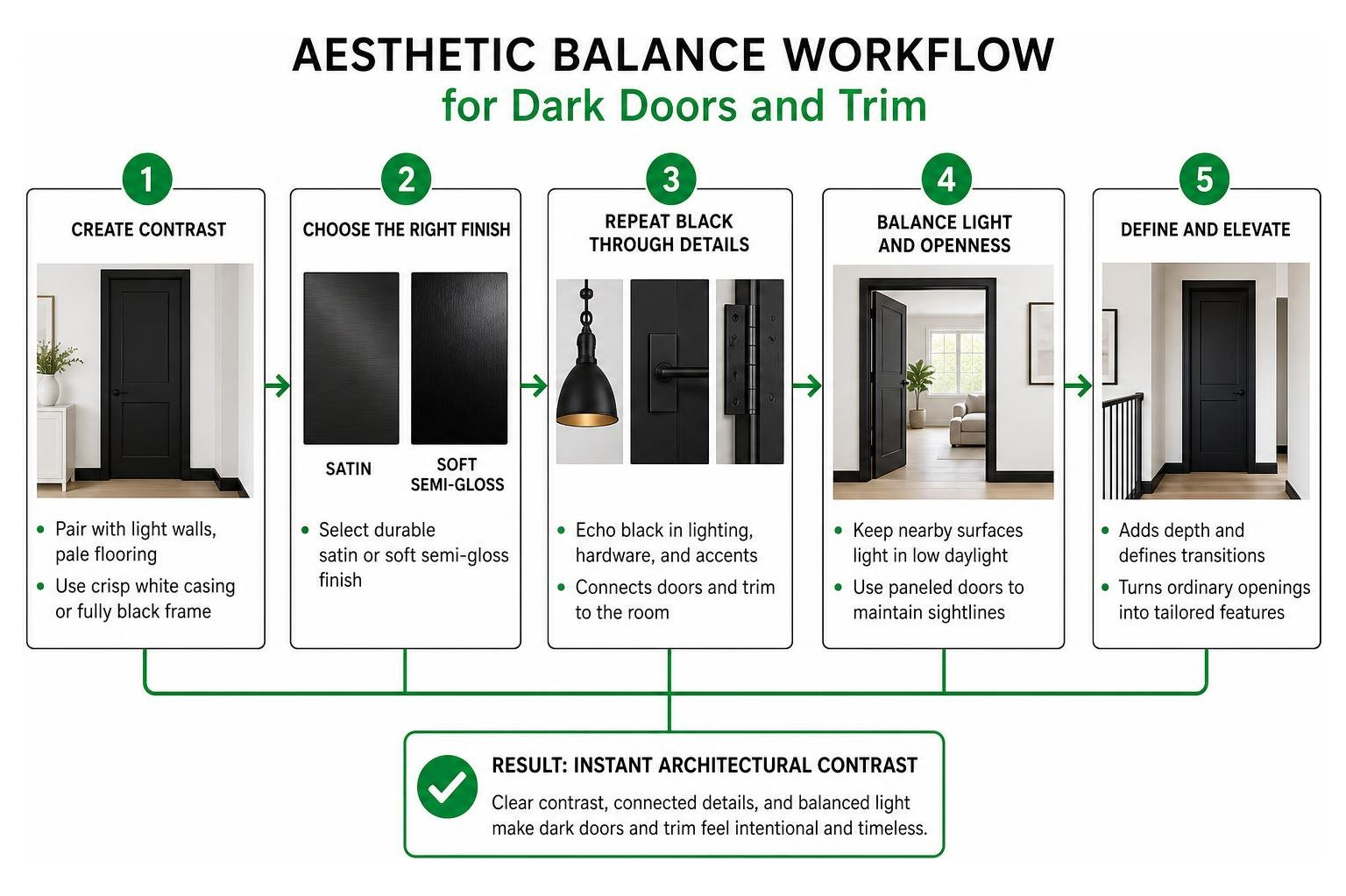
Black interior doors and trim work best when they create clear contrast, not darkness. Pair them with light walls, pale flooring, and either crisp white casing or a fully black, intentional frame. Choose a durable satin or soft semi-gloss finish, then repeat the black through a few details, such as lighting or hardware, so the doors feel connected to the room.
They can add depth, define transitions between rooms, and make ordinary door openings feel more tailored. In rooms with limited daylight, keep nearby surfaces light or select paneled doors that allow sightlines to stay open.
I am Eryk Piatkowski, owner of K&B Direct, and since 2011 I have helped homeowners make practical design choices for kitchens, baths, doors, and finish details. This guide draws on that experience to make selecting black interior doors and trim feel more clear and purposeful.
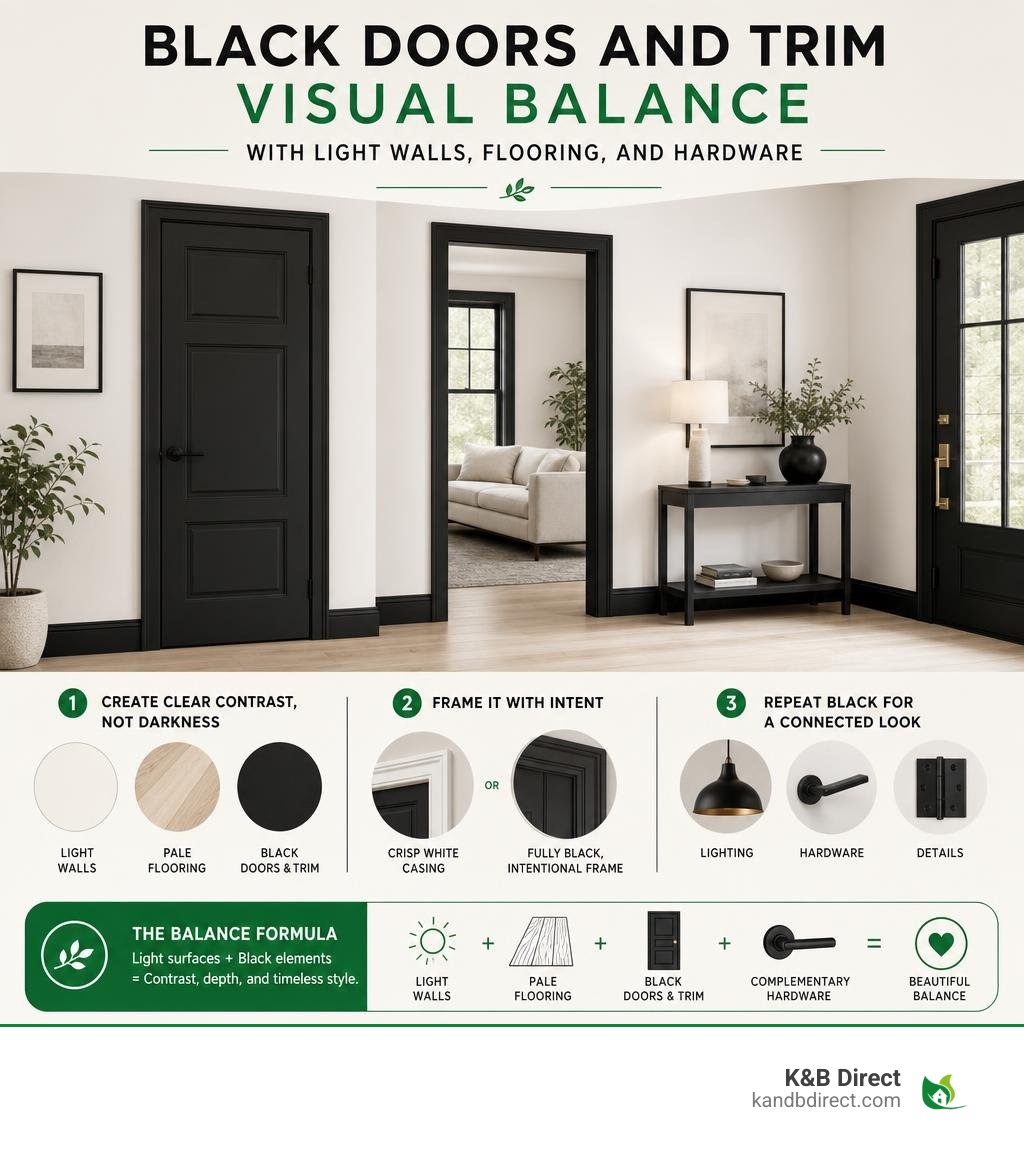
Black interior doors and trim terms you need:
The Aesthetic Impact of Black Interior Doors and Trim
Standard builder-grade white doors often blend into background walls until they disappear entirely. Introducing dark tones completely changes this relationship, giving entryways structural definition. A dark slab functions as an anchor, drawing the eye upward and emphasizing ceiling height by establishing vertical boundaries.
When you frame an entryway in dark hues, you create a deliberate visual pause between living zones. Choosing modern interior doors in rich charcoal or jet tones turns standard passage points into architectural features. Our interior doors complete guide highlights the way contrasting finishes turn standard passageways into intentional design statements.
Designers frequently turn to deep tones to frame exterior views or highlight transitional architecture, as seen in curated design inspiration on Houzz. Rather than absorbing all surrounding light, a dark door with the right sheen reflects illumination across its face, producing visual depth without making hallways feel closed in.
Styling Modern Spaces with Black Interior Doors and Trim
Dark finishes adapt smoothly across diverse interior layouts. In minimalist or transitional interiors, dark doors ground pale greige or off-white wall surfaces. In modern farmhouse or industrial homes, dark profiles complement matte metal light fixtures, exposed timber, and clean-lined millwork.
Natural, light-toned hardwood flooring (such as white oak or pale maple) pairs naturally with dark millwork. The warm timber tones prevent the room from feeling cold, while the dark door establishes a clean baseline. To tie everything together, introduce subtle black accents elsewhere—such as curtain rods, thin picture frames, or cabinet handles—so the doors feel integrated rather than isolated.
Managing Room Light and Spatial Flow
Homeowners often worry that dark tones will make spaces feel cramped. In practice, dark surfaces often create an illusion of depth, causing door openings to visually recede.
To maintain brightness in dim or narrow corridors:
- Select doors with glazed inserts to allow shared light between adjacent rooms.
- Use French doors to separate office or dining spaces while preserving sightlines.
- Position wall sconces or recessed lighting to illuminate door surfaces evenly.
- Keep adjacent wall finishes in soft, reflective tones like warm off-white or alabaster.
Choosing the Right Paint Colors, Sheens, and Materials
Selecting the right dark tone requires looking closely at undertones. A true jet black provides crisp, modern contrast. Warmer charcoal shades contain subtle brown or yellow undertones that complement traditional millwork, while cool obsidian shades carry blue undertones suited for crisp contemporary palettes.
Material Considerations for Black Interior Doors and Trim
The physical door slab plays a major role in the way the finish looks and lasts. Solid core doors provide substantial weight, durable structural integrity, and natural sound dampening between rooms. Hollow core units, while lightweight, can sound hollow when closed and may show surface imperfections more clearly under dark paint.
For homeowners who appreciate natural wood grain, black stained interior trim over oak veneer offers a tactile, high-end look. The dark stain highlights the organic grain patterns while delivering the modern impact of a dark finish.
Paint Finishes: Matte, Satin, Semi-Gloss, and Lacquer
Paint sheen determines the way light interacts with the dark surface:
- Matte / Flat: Offers a velvety texture, but can be difficult to clean in high-traffic areas.
- Satin: Provides an ideal balance. It diffuses light gently, hides subtle surface marks, and cleans up easily.
- Semi-Gloss: A classic trim finish that provides durability and simple wipe-down maintenance.
- Lacquer / High-Gloss: Creates a dramatic, high-reflection look, though it requires meticulous surface preparation since it highlights minor imperfections.
Perfect Pairings: Trim Profiles, Wall Colors, and Hardware
Finding the right combination of casing profiles, wall paint, and hardware ensures your doors look intentional and cohesive.
Coordinating Trim Profiles and Casing Styles
The casing profile dictates the architectural tone:
- Flat Modern Casing: Clean, straight-edge trim pairs naturally with flush or single-panel dark doors in contemporary homes.
- Craftsman Moulding: Simple profiles with substantial headers complement three-panel or five-panel door slabs.
- Colonial & Traditional Profiles: Detailed, multi-tiered door casing looks refined when finished in clean white against a dark panel, or coated in dark paint for a monochromatic statement.
For baseboards, installing why black vinyl baseboard trim is always in style offers a durable, scuff-resistant perimeter that ties directly into dark door casings.
Selecting Complementary Hardware and Hinges
Hardware stands out boldly against dark backdrops. Popular metal finishes include:
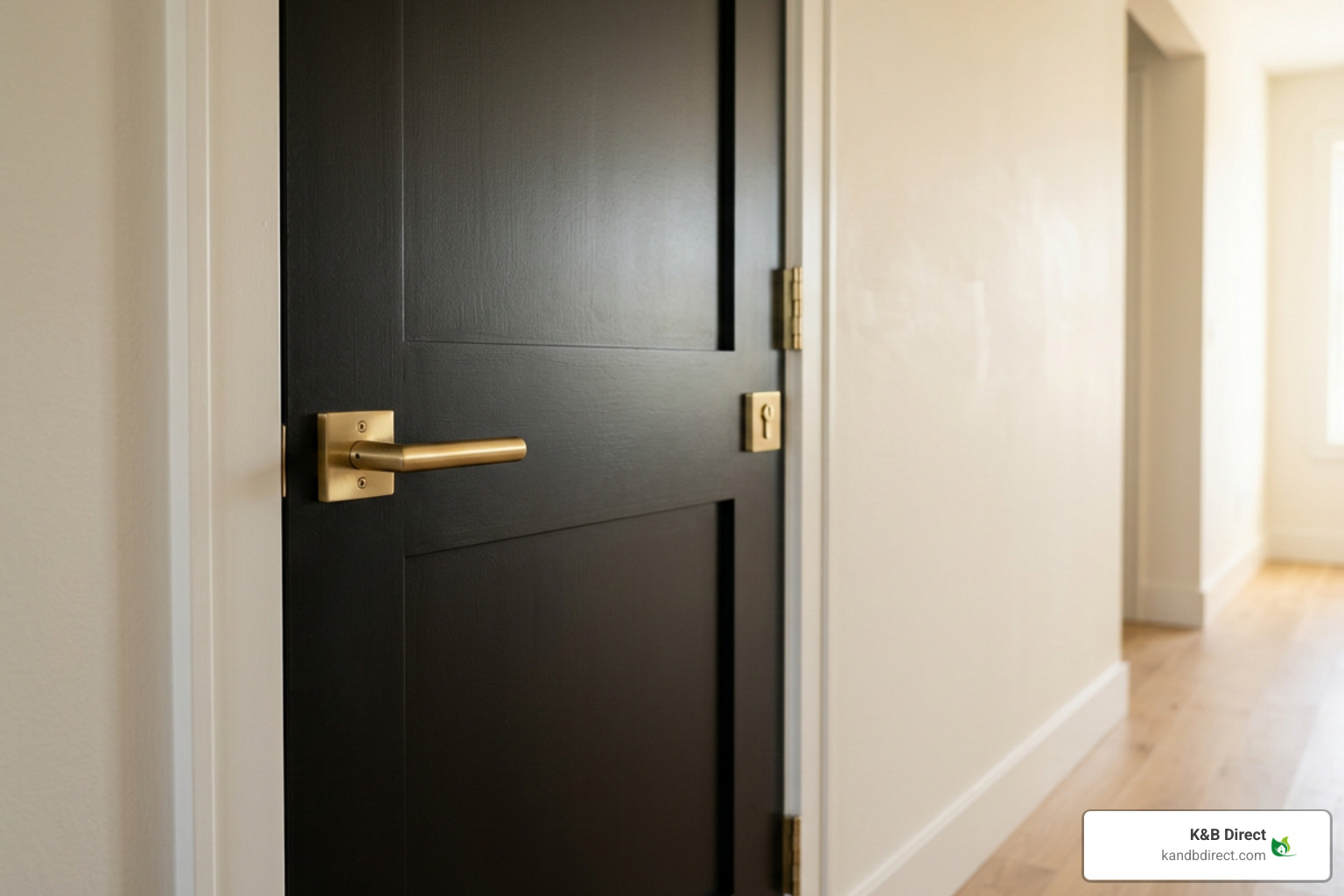
- Brushed Brass & Warm Gold: Adds warmth and high contrast, producing an upscale feel.
- Polished Chrome & Nickel: Offers a crisp, clean contrast that fits modern aesthetics.
- Matte Black: Creates a subtle, monochromatic appearance.
- Crystal or Fluted Knobs: Blends vintage character with modern framing.
Always replace door hinges to match your handles rather than painting over them. Paint on moving hinge joints quickly chips, binds, and flakes from friction.
Prefinished Doors vs. Site-Painted Doors: Execution and Project Comparisons
When updating your doors, you can either purchase factory prefinished units or paint existing slabs on-site.
| Feature | Factory Prefinished Black Doors | Site-Painted Doors |
|---|---|---|
| Surface Finish | Smooth, spray-applied, multi-coat factory finish | Hand-brushed or rolled (requires steady technique) |
| Labor Time | Ready to hang out of the box | Extensive sanding, priming, painting, and cure time |
| Durability | High resistance to chipping and peeling | Dependent on primer quality and paint application |
| Edge Adjustment | Limited to engineered timber lipping allowances | Flexible trimming on existing solid wood slabs |
Reviewing our guide to painting an interior door will help you decide whether tackling the project manually or ordering ready-to-hang units fits your timeline best.
Step-by-Step Surface Preparation and Painting
If you choose to paint your existing doors, careful surface preparation is essential:
- Remove Hardware: Take off all handles, latches, and hinges rather than taping around them.
- Clean and Sand: Wash down the door slab to remove oils, then sand with 180-grit abrasive paper to create a mechanical bond.
- Prime: Apply a stain-blocking bonding primer to prevent bleed-through and ensure even adhesion.
- Paint Application: Use an angled sash brush for recessed panel profiles and a high-density foam roller for flat surfaces.
- Curing: Allow paint to cure fully for 24 to 48 hours before reinstalling hardware to prevent surface marring.
Installation Realities and Structural Demands
Solid core slabs weigh considerably more than hollow units. Ensure door jambs are plumb, secure, and anchored with three substantial hinges to prevent sagging over time. Properly align the strike plate so the latch catches cleanly without rubbing the fresh finish on the door stop.
Cleaning, Maintenance, and Avoiding Costly Design Mistakes

Dark doors are surprisingly simple to maintain when finished in a quality satin or semi-gloss sheen. Unlike white doors that quickly show grime and yellowing around handles, dark finishes conceal everyday smudges effectively. Real-world experiences shared in homeowner feedback in design forums show that daily living with dark doors is straightforward with the right cleaning approach.
Routine Cleaning and Maintenance Protocol
To keep dark doors looking pristine:
- Dust horizontal panel ledges weekly using a vacuum with a soft bristle brush attachment.
- Wipe away surface oils or fingerprints around handles with a slightly damp microfiber cloth.
- Gently lift stubborn scuff marks using a melamine foam sponge, followed by a dry microfiber wipe.
- Keep a small container of color-matched paint on hand for quick touch-ups on high-traffic edges.
Design Pitfalls: When to Avoid Black Doors and Trim
Dark millwork enhances most spaces, but certain situations require caution:
- Warm Pink-Beige Flooring: Earthy Tuscan palettes or pink-beige carpeting can clash with cool, deep black tones.
- Dim, Low-Ceiling Corridors: Narrow hallways lacking natural light can feel closed in if both walls and doors are painted dark without adequate lighting.
- Excessive Saturation: Painting doors, casing, baseboards, and walls dark in a small room without contrasting furniture can overpower the space.
Frequently Asked Questions About Dark Interior Finishes
Do black interior doors make a room look smaller or darker?
When paired with light-toned walls and flooring, dark doors add visual depth rather than shrinking a room. They create clear focal points that draw the eye, making room boundaries feel intentional and defined.
Are black doors and trim harder to keep clean than white doors?
No. Dark doors hide common grime and smudges around handle areas better than standard white doors. Light dust on panel bevels can be quickly cleared away with a microfiber duster or soft vacuum brush attachment.
What color hinges should you use with black interior doors?
Match your hinges directly to your door handle hardware (such as matte black, brushed brass, or polished nickel). Avoid painting existing hinges, as repeated mechanical movement causes the finish to flake and squeak.
Conclusion
Upgrading your home with dark interior doors and matching casing delivers lasting architectural character and visual balance. By balancing your door choices with quality sheens, complementary wall colors, and matching hardware, you can completely transform your living space. Explore our wide collection of premium wood trim and door styles to find the perfect match for your home renovation project.