How Decorative Ceiling Trim Transforms Any Room
Decorative ceiling trim is molding installed where your walls meet the ceiling — and it’s one of the simplest ways to give a room a finished, polished look.
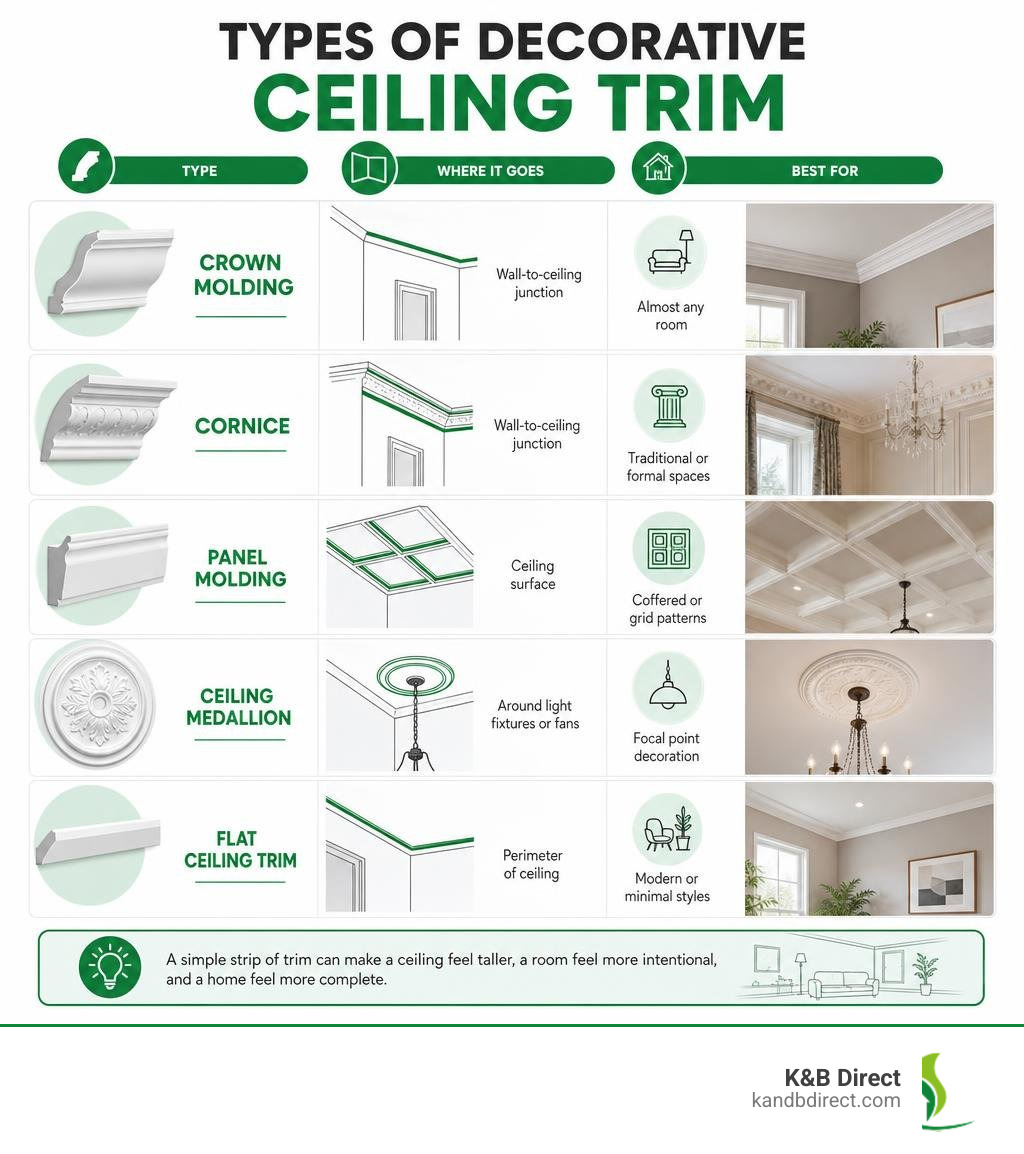
Here’s a quick overview of the most common types:
| Type | Where It Goes | Best For |
|---|---|---|
| Crown molding | Wall-to-ceiling junction | Almost any room |
| Cornice | Wall-to-ceiling junction | Traditional or formal spaces |
| Panel molding | Ceiling surface | Coffered or grid patterns |
| Ceiling medallion | Around light fixtures or fans | Focal point decoration |
| Flat ceiling trim | Perimeter of ceiling | Modern or minimal styles |
The global decorative molding market was valued at around $4.2 billion in 2023 — and it’s still growing. Over 65% of homeowners who renovated their ceilings in 2022 chose decorative trim or molding as part of the upgrade. That’s not a coincidence. A simple strip of molding can make a ceiling feel taller, a room feel more intentional, and a home feel more complete.
Whether you’re refreshing a living room or finishing a renovation, ceiling trim is one of the highest-impact upgrades you can make.
I’m Eryk Piatkowski, owner of K&B Direct, and I’ve spent over a decade helping homeowners and renovators choose the right decorative ceiling trim to match their style and space. Let’s walk through everything you need to know.
Decorative ceiling trim definitions:
Architectural Types of Ceiling Moldings
When we look up at a plain, flat ceiling, we see a missed opportunity. Adding architectural trim introduces shadow lines, texture, and character that paint alone cannot replicate. Selecting the correct style depends on the architectural language of your home.
By familiarizing ourselves with the different Types of Moulding, we can transform plain plaster into a stunning design statement. For those looking to explore a wide variety of patterns, browsing through options like Decorative Ceiling or Wall Moldings & Stunning Wall Trims can provide wonderful inspiration.
Crown Molding and Cornice Profiles
The most popular style of decorative ceiling trim is crown molding. This classic element bridges the sharp 90-degree angle where the wall meets the ceiling. Unlike flat trims, crown molding sits at an angle (usually 38, 45, or 52 degrees), creating a hollow space behind it. This sloped profile softens the transition between surfaces and throws beautiful, soft shadows across the top of the room.
A cornice is a specific, often more ornate, type of crown molding. Historically, cornices were heavy plaster assemblies used in grand classical architecture. Today, we use the terms interchangeably, but a cornice typically refers to larger, multi-piece built-up profiles that feature classical motifs like dentil patterns or egg-and-dart detailing.
For modern homes, sleek profiles with simple geometric steps offer a clean transition. You can view our extensive collection of Crown Moulding designs or consult with a specialized Molding Supplier Crown Moulding Cornice to find the perfect profile. If you love contemporary aesthetics, look at minimalist designs such as the Medium Chicago 3 Step Crown Molding – modern molding to complement clean lines.
Panel Molding and Coffered Designs
If you want to add depth directly to the ceiling surface rather than just the edges, panel molding is the ideal choice. Panel molding involves applying thin strips of wood or composite material directly to the ceiling in geometric shapes—most commonly rectangles or polygons. This technique can mimic the appearance of a traditional coffered ceiling without the structural weight of heavy beams.
By laying out a grid pattern, we can divide a large, boring ceiling into smaller, visually interesting sections. This works beautifully in formal dining rooms, libraries, or spacious primary bedrooms. You can learn more about creating these dramatic grid patterns by visiting our guide on Molding Supplier Wainscoting Wall Paneling, which explains how to adapt paneling techniques for overhead surfaces.
Decorative Ceiling Trim Accents and Medallions
To truly elevate a room, consider pairing your perimeter trim with a central accent. Ceiling medallions are circular, oval, or diamond-shaped decorative pieces placed directly in the center of the ceiling, usually serving as a backing canopy for a chandelier or ceiling fan.
Historically made from heavy plaster, modern medallions are crafted from lightweight materials that are simple to install. For a warm, natural look, options like the 34 in. x 13.125 in. x 0.375 in. Wood Medallion Moulding introduce organic textures and exquisite fretwork. If your style leans toward classical elegance, a detailed resin or high-density urethane option like the Pearlworks | Architectural Details, Decorative Accents & Ornaments EM-CM26PE – 26 1/4″OD x 1 1/2″P Pearl Ceiling Medallion (Fits Canopies up to 1 7/8″) can frame your light fixture beautifully.
Selecting the Perfect Decorative Ceiling Trim for Your Space

Choosing the right trim is not just a matter of picking a pretty profile. We must consider the scale of the room, the height of the ceiling, and the existing architectural details. A molding that looks grand and elegant in a historic Chicago home with ten-foot ceilings might feel overwhelming and cramped in a ranch-style home with standard eight-foot ceilings.
To gain a deeper understanding of how to balance these elements, explore The Ultimate Guide to Molding and Baseboards.
Aesthetic Benefits of Decorative Ceiling Trim
Beyond hiding minor taping flaws or drywall cracks at the wall-ceiling joint, decorative ceiling trim serves several brilliant visual purposes:
- Draws the Eye Upward: Well-placed molding acts as a visual frame, encouraging people to look up and appreciate the full volume of the space.
- Creates Architectural Symmetry: It balances heavy baseboards and window casings, making the room feel cohesive and professionally designed.
- Softens Harsh Angles: By replacing sharp corners with smooth curves or stepped profiles, the overall atmosphere of the room becomes warmer and more inviting.
To see how top-tier overhead trim coordinates with floor-level elements, read about our coordinated solutions for Molding and Baseboards.
Sizing Guidelines for Different Ceiling Heights
Proportion is everything in interior design. If your trim is too small, it will look like an afterthought; if it is too large, it will make the ceiling feel as though it is pressing down on you.
Here is a simple sizing reference to guide your selection:
- 8-Foot Ceilings: Stick to a profile width of 2.5 to 4 inches. Keep the profile relatively flat and simple to avoid lowering the visual height of the room.
- 9-Foot Ceilings: This is the sweet spot where you can comfortably use moldings between 4 and 6 inches in width.
- 10-Foot to 12-Foot Ceilings: Larger spaces demand grander statements. Choose profiles ranging from 6 to 9 inches, or build up a custom look by combining multiple smaller trim pieces.
For a detailed breakdown of available trim dimensions and how they fit your specific design, refer to our resource on Decorative Wood Trim Sizes.
Material Options for Ceiling Embellishments
The material you choose impacts not only the final look but also the ease of installation and long-term durability of your ceiling accents. Let’s compare the three most common materials used in modern homes.
We can review these options in the table below:
| Material | Durability | Moisture Resistance | Best For |
|---|---|---|---|
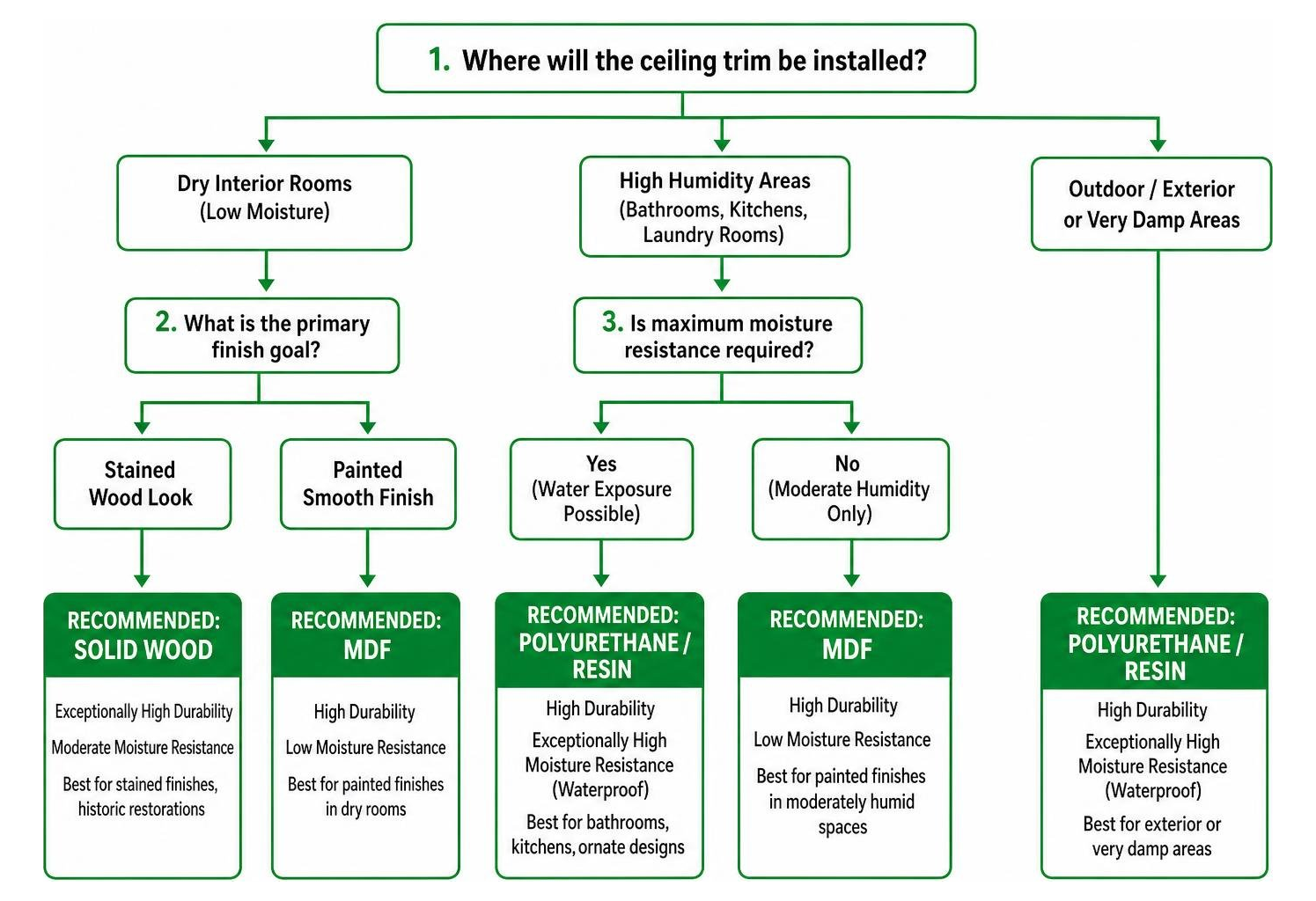
| Solid Wood | Exceptionally High | Moderate (requires sealing) | Stained finishes, historic restorations |
| MDF (Medium-Density Fiberboard) | High | Low (prone to swelling) | Painted finishes in dry rooms |
| Polyurethane / Resin | High | Exceptionally High (waterproof) | Bathrooms, kitchens, ornate designs |
To explore our complete inventory of these materials, browse our main Molding catalog.
Before purchasing, it is helpful to visualize which material suits your specific room conditions:
Classic Wood and MDF Trim
For purists, nothing beats the authenticity of natural wood. Solid wood trim offers crisp, sharp details and can be stained to showcase beautiful grain patterns. It is highly durable and stands the test of time. If you are planning a stained wood project, explore our premium options for Wood Moulding and Wood Trim. For our local customers in the Chicago area, sourcing high-quality local materials is easy with regional options like Interior Mouldings and Trim in Chicago – LAS Hardwoods .
MDF (Medium-Density Fiberboard) is a highly popular alternative to solid wood. It is made from compressed wood fibers and resin, resulting in a completely smooth surface with no knots or grain patterns. MDF is exceptionally easy to paint and does not warp or split like natural wood can. However, because it absorbs moisture easily, it should be avoided in damp spaces like bathrooms unless it is thoroughly sealed on all sides.
High-Density Polyurethane and Resin
If you are looking for a lightweight, moisture-proof, and highly detailed option, high-density polyurethane is an outstanding modern solution. It is impervious to water, rot, and insects, making it the absolute best choice for bathrooms, kitchens, and laundry rooms.
Polyurethane moldings are cast in molds, allowing for incredibly intricate, classical patterns that would be prohibitively expensive to carve out of wood. Products like the MD1883 Universal Molding Trim decorative Spectis urethane by Spectis Moulders offer beautiful, durable designs that are easy to handle overhead.
Additionally, for complex corners and beautiful transitions, using pre-cast resin pieces like the Pearlworks | Architectural Details, Decorative Accents & Ornaments CE-100 Series Acanthus Leaf and Roses Resin Corner Element eliminates the need for complicated miter cuts while adding an elegant, hand-carved look.
Installation and Finishing Best Practices

Installing decorative ceiling trim requires patience and precision. Because ceilings and walls are rarely perfectly flat or square, a successful project relies on proper preparation and the right techniques.
Securing and Aligning the Trim
When working overhead, gravity is your biggest challenge. To ensure a permanent hold, we recommend a dual-fastening approach:
- Adhesive: Apply a continuous bead of high-quality construction adhesive (such as polyurethane-based adhesive) along the back edges of the molding where it contacts the wall and ceiling. This provides long-term holding power and prevents sagging.
- Mechanical Fasteners: Use a brad nailer with finishing nails to hold the trim securely in place while the adhesive cures. Be sure to shoot the nails directly into the wall studs and the top plate of the wall framing.
- Corner Alignment: For perfect corners without frustration, utilize pre-formed corner blocks or resin corner elements. If you choose to miter, always cut test scraps first to verify the actual angle of your wall corners.
Painting and Maintenance Tips
To achieve a flawless, professional finish, follow these simple steps:
- Prep Work: Fill all nail holes with a high-quality wood filler or spackle. Once dry, sand the spots smooth. Use a paintable acrylic caulk to fill any gaps along the ceiling and wall joints.
- Priming: If your molding is not pre-primed, apply a high-quality primer. This is especially critical for MDF and raw wood to prevent the paint from soaking in unevenly.
- The Final Coat: Apply two coats of premium latex paint. A semi-gloss or satin finish is traditional for trim because it is easy to clean and reflects light beautifully, emphasizing the profile’s shape.
- Easy Maintenance: To keep your ceiling trim looking fresh, simply dust it occasionally with a static duster or wipe it down with a damp cloth. Polyurethane and well-sealed wood trims will maintain their beauty for decades with minimal care.
Frequently Asked Questions about Ceiling Moldings
What is the difference between crown molding and ceiling trim?
While the terms are often used interchangeably, “ceiling trim” is a broad category that includes any decorative element applied to the ceiling surface or perimeter. “Crown molding” is a specific type of ceiling trim designed to sit at an angle, bridging the joint between the wall and the ceiling. Other ceiling trims, like panel moldings or flat banding, sit completely flat against the ceiling surface.
Can polyurethane trim be used in high-moisture areas like bathrooms?
Yes, absolutely! High-density polyurethane is completely waterproof and non-porous. Unlike wood or MDF, it will not swell, warp, split, or support the growth of mold and mildew when exposed to steam and humidity. It is the premier choice for creating a luxurious, spa-like atmosphere in your bathroom.
What is the best way to handle corners without complex miter cuts?
The easiest way to bypass complex miter cuts is to use decorative corner blocks or corner elements. These pieces install directly in the corners of the room, allowing you to make simple, straight 90-degree cuts on the ends of your molding runs. The molding simply butts up against the flat sides of the corner block, saving time and ensuring a gorgeous, ornate look.
Conclusion
Adding decorative ceiling trim is one of the most rewarding improvements you can make to your home. It frames your rooms, elevates your design style, and adds a sense of architectural permanence that makes any space feel more luxurious.
Whether you live in Schiller Park, Chicago, Rosemont, Park Ridge, or any of our neighboring communities like Schaumburg, Oak Brook, or Elmhurst, we are here to help you bring your dream home aesthetics to life. At K&B Direct, we specialize in providing top-quality doors, windows, cabinets, and mouldings at highly competitive rates, backed by friendly, neighborly service.
Ready to transform your ceilings? Connect with a trusted Molding Supplier today, or explore our extensive selection of premium Baseboards and Trim to find the perfect match for your home.