
What Cabinet Casing Really Means for Your Home Project
Cabinet casing is a term that often creates confusion, but understanding it is crucial for any kitchen or bathroom renovation. Here’s what you need to know:
Cabinet casing typically refers to:
- Trim and molding that finishes cabinet installations
- Decorative elements like crown molding, light rail, and scribe molding
- Functional pieces that hide gaps and create professional-looking results
- Different from door/window casing – cabinet trim serves unique purposes
The confusion comes from mixing up cabinet trim with door and window casing. While door casing frames openings, cabinet casing encompasses all the finishing touches that make your cabinets look built-in and professional.
Cabinet trim serves two main purposes: hiding imperfections where cabinets meet walls or ceilings, and adding style that transforms basic cabinet boxes into beautiful, finished furniture. Without proper trim, even expensive cabinets can look unfinished.
The right cabinet casing can make or break your renovation. It’s the difference between a DIY project that screams “amateur” and one that looks professionally done. Whether you’re dealing with uneven walls or awkward gaps, understanding cabinet casing is your first step toward success.
I’m Eryk Piatkowski, owner of K&B Direct. With over ten years of experience, I’ve seen how the right trim selection can transform any space while staying within budget, which is what I’ll share with you in this guide.
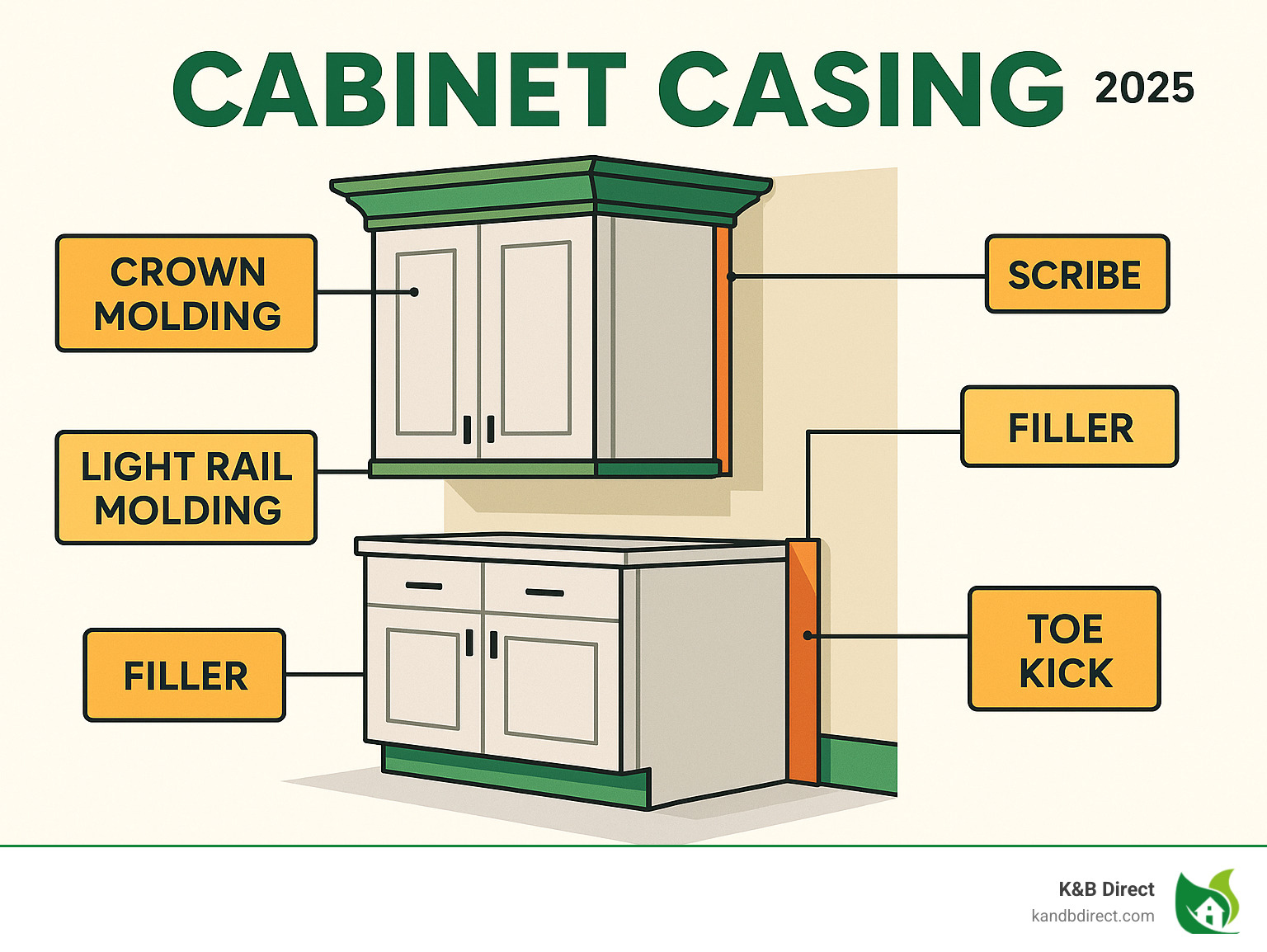
Related content about cabinet casing:
The Role of Trim in Your Home’s Design
When we talk about cabinet casing, we’re discussing the unsung heroes of kitchen and bathroom design. These small pieces play a monumental role in changing functional boxes into a cohesive, aesthetically pleasing part of your home. It’s the final step that ensures your cabinets don’t just hold things, but also add significant value and beauty to your space.
Cabinet casing provides an essential finishing touch, creating a professional look that lifts the entire room. Think of it as the picture frame for your cabinets—it pulls everything together, adds architectural detail, and can increase your home’s value. Beyond aesthetics, it serves a crucial function: hiding inevitable imperfections (as not all walls are perfectly straight) and protecting cabinet edges from daily wear and tear.
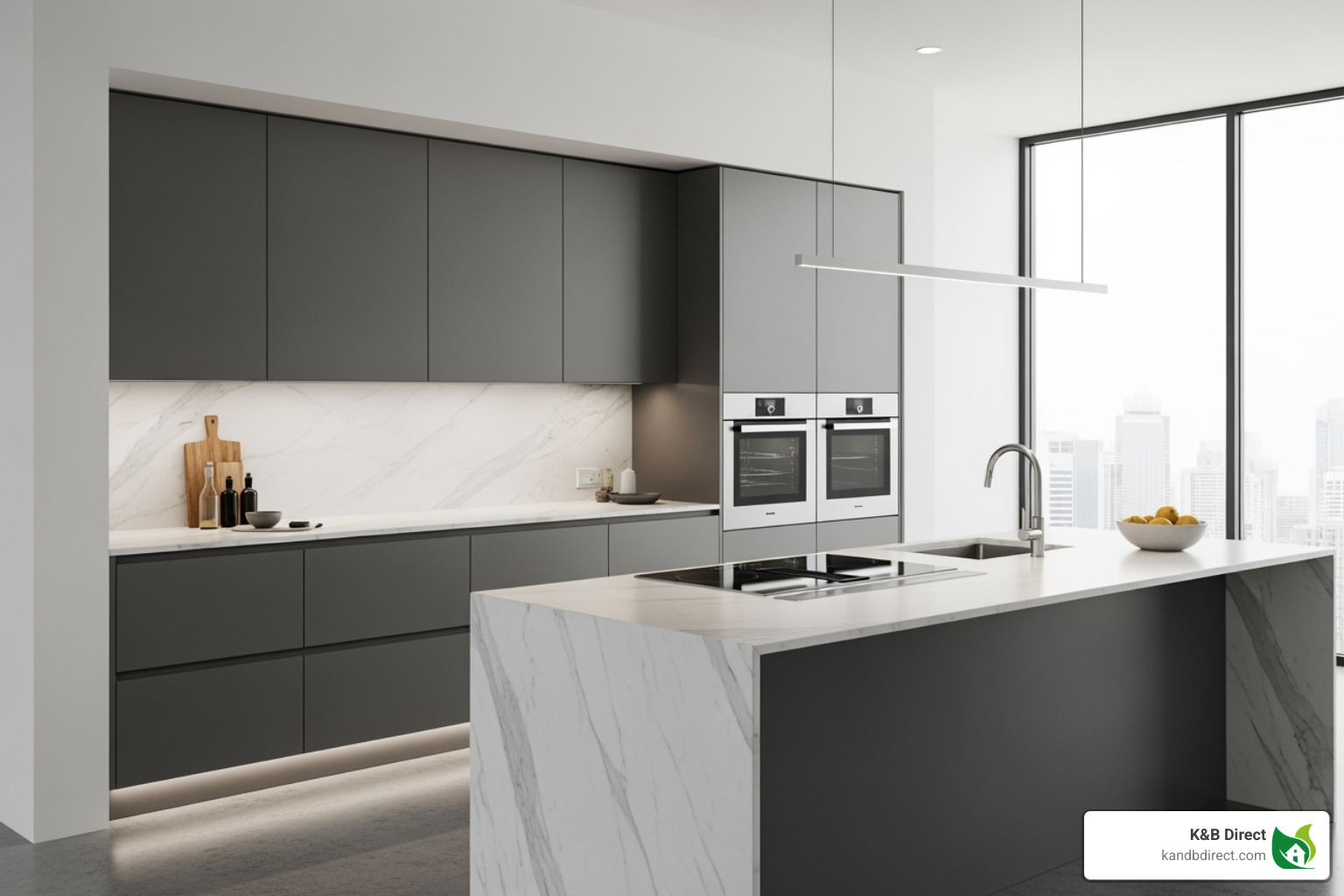
At K&B Direct, we believe every detail matters, which is why we emphasize choosing the right wood trim for your project. More info about Wood Trim.
Enhancing Aesthetics and Style
The style of your cabinet casing is a powerful tool for defining a room’s aesthetic. Whether you’re aiming for a classic, traditional feel with ornate crown molding or a sleek, modern vibe with flat-stock trim, your choice dramatically influences the outcome. These decorative improvements add a “layer of detail and personalization” to your kitchen, creating focal points and a cohesive design flow. In open floor plans, extending the design consistency from your kitchen to adjoining living spaces with wall trim helps tie everything together. More info about Wall Trim.
Functional Benefits of Cabinet Trim
Beyond beauty, cabinet casing offers invaluable functional benefits that solve common installation challenges.
Scribe molding is a thin, flexible strip of wood designed to “disguise gaps resulting from uneven wall or ceiling surfaces.” It’s a small detail that makes a huge difference in achieving a professional, built-in look.
Fillers are solid strips of wood used to fill larger, planned gaps between cabinets and walls or between two cabinet units. They ensure a tight, finished appearance.
Toe kicks are strips that run along the bottom inset of base cabinets, concealing seams between units and creating a clean base. They also protect the cabinet from scuffs and kicks.
Light rail molding, installed under wall cabinets, cleverly hides under-cabinet lighting, ensuring a polished look while allowing your task lighting to shine.
Finally, a dishwasher side panel provides crucial countertop support at the end of a cabinet run, preventing potential fracturing and ensuring stability. These functional elements of cabinet casing are indispensable for a successful installation.
Types of Molding for Cabinets
When you dive into cabinet casing, you’ll find an array of molding types, each with a special job. These essential elements bring both beauty and brilliant functionality to your kitchen or bathroom. Understanding what each one does is key to planning your perfect home project.
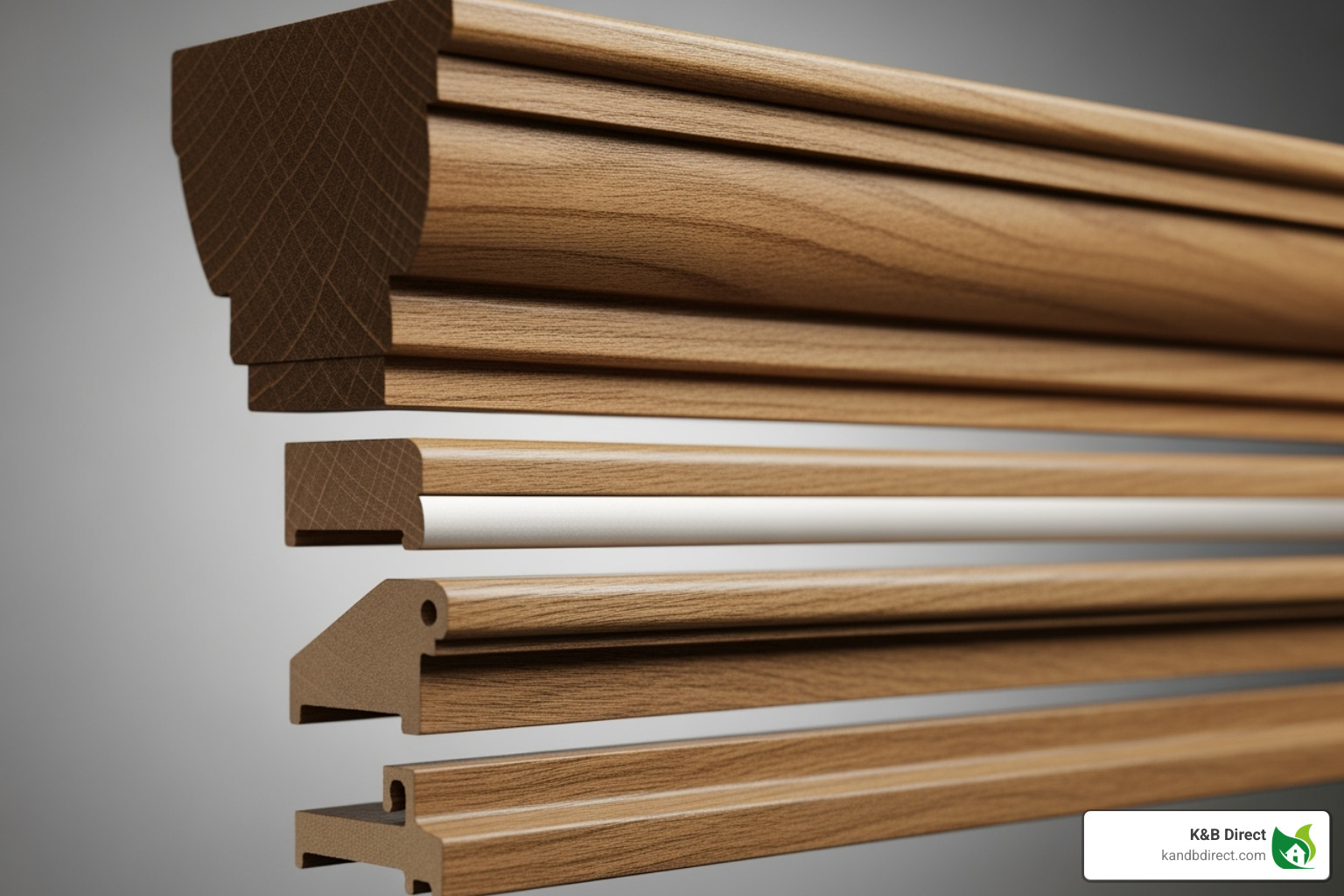
Here are the key players in the cabinet casing lineup:
- Crown Molding: The showstopper at the top of your wall cabinets, it provides a grand, finished look and comes in various profiles, from ornate to simple.
- Light Rail Molding: Installed under wall cabinets, this trim hides under-cabinet lighting and adds a subtle, decorative line.
- Scribe Molding: A thin, flexible strip that masterfully disguises small gaps where cabinets meet an uneven wall or ceiling, giving you a seamless, built-in appearance.
- Base Molding: Used around a kitchen island or peninsula, it can make cabinets look more like finely crafted furniture.
- Toe Kick: This essential piece runs along the bottom, recessed area of your base cabinets. It hides cabinet legs and joints for a clean, cohesive base while protecting from scuffs. Toe kicks are typically about 4.5 inches tall.
- Fillers: Solid wood strips, usually eight feet long, used to fill planned gaps between cabinets and walls, ensuring a custom, built-in look.
- Outside Corner Molding (OCM): A V-shaped molding that provides a clean, crisp finish to exposed 90-degree corners on islands or peninsulas.
We offer a wide range of options for your cabinet casing needs, including beautiful panel cap molding. You can explore more here: More info about Panel Cap Molding.
Differentiating Cabinet Trim from Door and Window Casing
It’s easy to confuse these terms. While both cabinet casing (cabinet trim) and door or window casing are types of molding, they differ in purpose, size, and installation.
Door casing acts as the frame around doors and windows. Its main job is to hide the gap between the door frame and the wall, adding a decorative touch. Door casings are generally thicker and more visible, designed to “bring a room together.” You can see examples here: Door Casing.
Cabinet casing, on the other hand, is custom-made to integrate your cabinet units seamlessly. Its profiles are designed for specific functions, like hiding seams, supporting countertops, or concealing lighting. While you could creatively use some door casing profiles on cabinets, it’s not their intended use and would require significant custom work to ensure a proper fit.
Popular Styles for Your Cabinet Casing Project
Just like fashion, molding styles range from timeless classics to modern trends. The profile you choose can instantly change your kitchen’s personality.
- Colonial Style: A timeless classic recognized by its neat curves and often a distinctive “cap” design, bringing a rich, traditional feel.
- Clamshell Style: A traditional profile with a simpler, rounded design, great for an understated or period-appropriate look.
- Shaker Style: With its unfussy, straightforward, and minimalist profile, this trim perfectly echoes the popular Shaker cabinet aesthetic.
- Craftsman Style: This style emphasizes clean lines, strong proportions, and a more structured, built-up appearance, celebrating quality construction.
- Modern Flat-Stock Trim: Offering unadorned lines that blend into minimalist designs, this style is all about simplicity.
- Ornate Profiles: For those who love intricate details, these can add incredible grandeur to cabinetry, perfect for highly traditional or luxurious designs.
At K&B Direct, we stock a fantastic range of casing profiles to inspire your cabinet casing project. Our Casing 356 MDF and Casing 444 offer diverse options to bring your vision to life.
Materials and Installation for Cabinet Casing
Once you’ve chosen your style, the next steps are selecting the right materials and understanding the installation process for your cabinet casing. This is where your vision becomes a reality.
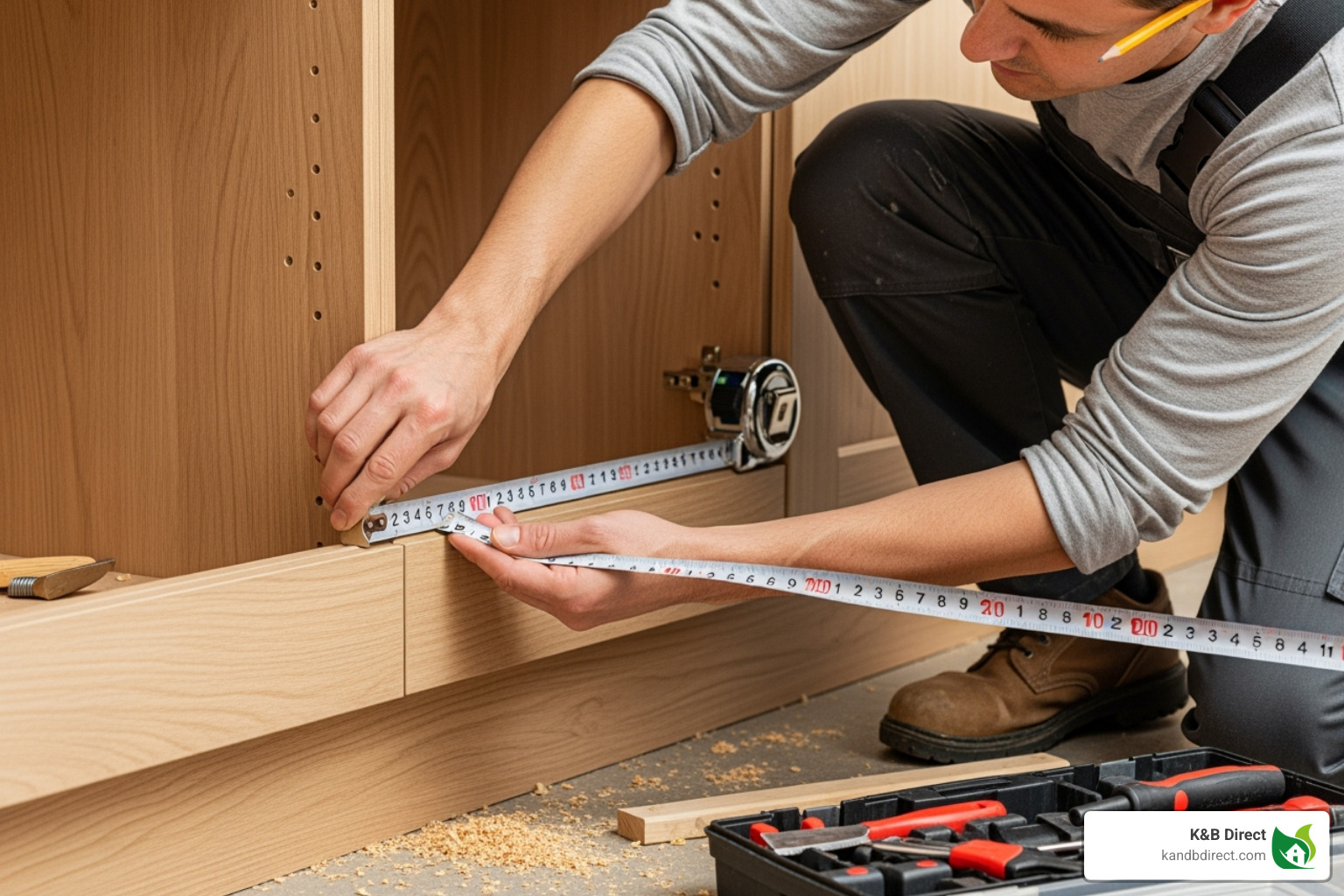
Choosing the right material depends on your budget, desired finish, and overall look. Installation, while requiring precision, is a rewarding DIY project for many homeowners.
Common Materials for Cabinet Casing
Here’s a look at the most common materials used for cabinet casing:
| Material | Pros | Cons |
|---|---|---|
| Solid Wood | Highly durable, can be stained or painted, natural beauty, can be repaired, adds warmth. | More expensive, can warp or crack with humidity changes, requires more maintenance (e.g., resealing). |
| MDF (Medium-Density Fiberboard) | Cost-effective, very stable (no warping), smooth surface for painting, easy to cut. | Not suitable for staining, heavy, can swell if exposed to moisture, less durable than solid wood for impact. |
| Finger-Jointed Pine (FJP) | More affordable than solid wood, paintable, stable, uses reclaimed wood, light and easy to work with. | Visible finger joints (must be painted), less impact resistant than solid wood, not ideal for staining. |
| Polyurethane | Lightweight, moisture-resistant (great for bathrooms), very durable, pre-primed, holds detail well. | Can be more expensive than MDF, not suitable for staining, can be brittle if mishandled. |
At K&B Direct, we offer a range of wood moulding options that provide both beauty and durability for your project. More info about Wood Moulding.
A Guide to Installing Cabinet Trim
Installing cabinet casing is a precise job, but with the right tools and patience, it’s achievable for a DIYer. Safety first! Always wear eye protection and follow tool safety guidelines.
Essential Tools: You’ll need a miter saw for accurate angle cuts, a nail gun (pneumatic or cordless), a level, a tape measure, and a pencil. A stud finder is also helpful.
The Process:
- Measure Accurately: “Right angles are essential, as are correct measurements.” Precision is key. Measure twice, cut once, and mark your cuts clearly.
- Cut Your Pieces: Using your miter saw, cut the molding to the required lengths. For corners, you’ll make mitered cuts (typically 45-degree angles) that join to form a perfect 90-degree corner.
- Dry Fit: Before nailing, always dry-fit your pieces to ensure they align perfectly. This is your chance to make any minor adjustments.
- Nail and Finish: Once satisfied, use your nail gun to fasten the cabinet casing securely. After nailing, fill any nail holes with wood putty, sand smooth, and then paint or stain to match your cabinets.
For more detailed guidance, you can explore resources like our guide on How to Install Base Cap Moulding. While woodworking joinery principles apply broadly, an external guide on woodworking joinery can provide fundamental insights into precise cuts and assembly.
Modern Trends and Purchasing Your Trim
Interior design is always evolving, and cabinet casing is no exception. Once a simple necessity, it’s now a powerful design tool. Today’s trends blend sleekness with personality, and understanding them helps you choose a current, chic look for your home.
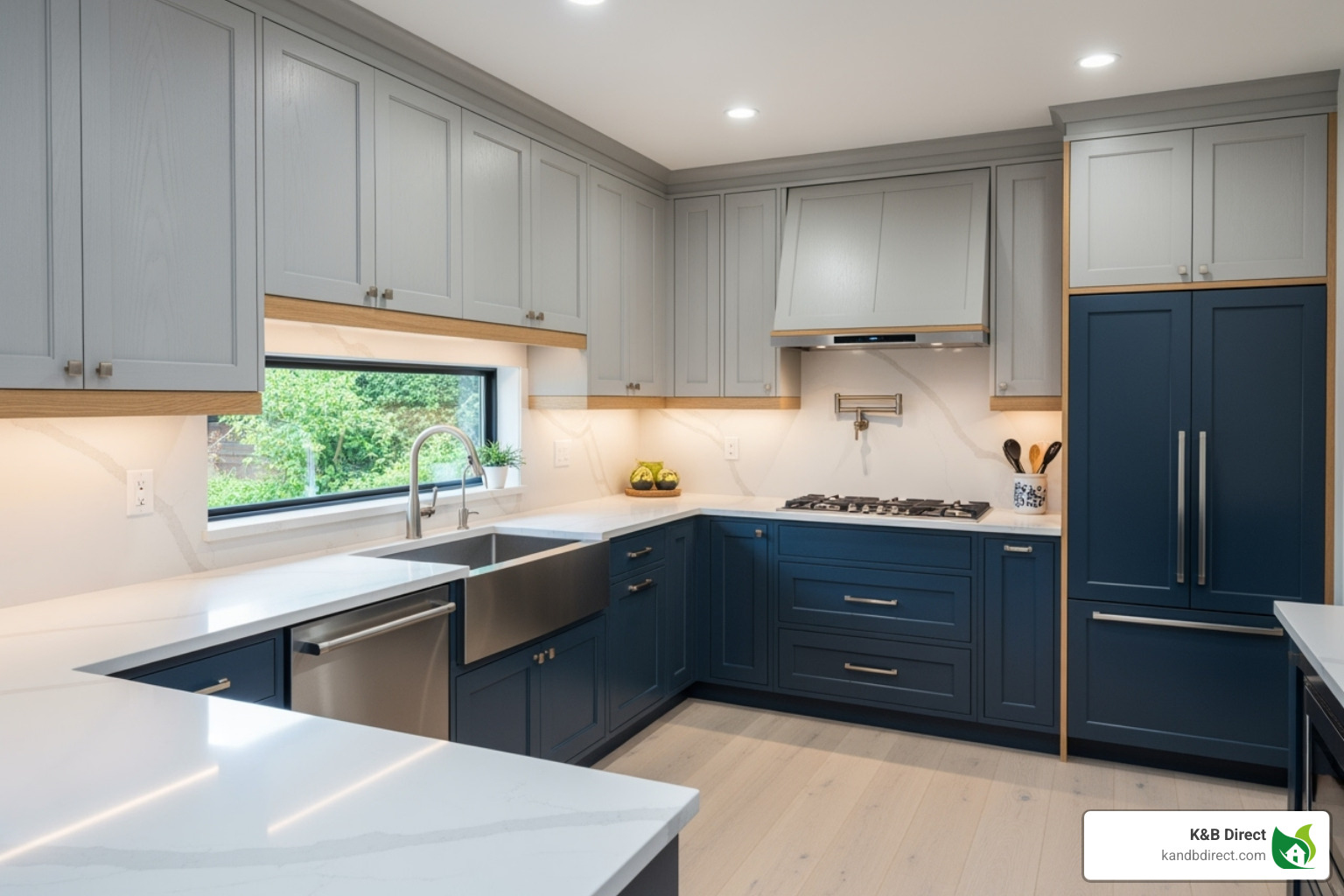
Design Trends in Modern Interiors
Today’s design playbook for cabinet casing is about making your cabinets shine with both style and smart function.
- The Minimalist Approach: This trend favors flat-stock trim—clean, unadorned lines that create a crisp, uncluttered vibe and let the cabinet architecture be the star.
- Integrated Trim: Here, seamless design takes center stage. The cabinet casing blends so perfectly it’s barely noticeable, sometimes including integrated handles for an ultra-sleek look.
- Natural Wood Finishes: Unfinished or lightly finished wood trim is popular in Scandinavian-inspired or modern rustic homes, adding instant warmth and natural texture.
- Bold, Contrasting Trim Colors: A growing trend is using cabinet casing in a color that pops against the cabinets. This defines your cabinet lines and adds a dramatic, high-end flair, especially in two-tone kitchens.
- Thinking Beyond the Kitchen: Beautiful cabinetry is extending into mudrooms, laundry rooms, and living areas. The principles of cabinet casing apply throughout the home, tying spaces together with cohesive design. You can even borrow ideas from sleek window frame moulding. More info about Window Frame Moulding.
How to Choose and Purchase Your Trim
Picking the perfect cabinet casing is a key step that shapes your home’s look and feel. Here’s what to consider when you’re ready to buy:
- Quality of Material: Invest in the best quality your budget allows. Better material means better longevity and a superior finish.
- Price and Budget: Set a realistic budget. While trim is a small part of the overall cost, it has a huge visual impact. At K&B Direct, our mission is to offer top-quality products at the lowest possible prices.
- Supplier Reputation: Choose a supplier with a history of quality products and fantastic customer service. We pride ourselves on our friendly service and dedication to helping every customer.
- Measuring Your Project Correctly: Precise measurements are vital to avoid waste and ensure a smooth installation. If you’re unsure, consult with a professional.
- Getting Quotes: A detailed quote should break down all costs, helping you compare and plan effectively.
We’re proud to serve communities across Illinois, including Chicago, Glen Ellyn, West Chicago, and many more. Our local presence means we understand your needs and are ready to provide expert guidance and high-quality cabinet casing for your project.
Frequently Asked Questions about Cabinet Casing
Working with cabinet casing brings up many questions. After helping homeowners for over ten years, I’ve noticed the same concerns come up again and again. Here are the answers to the questions we hear most often at K&B Direct.
Can I use door casing for my cabinets?
Yes, you can use door casing for cabinets, but be mindful of its profile. Door casing is often thicker and more robust, which can create a substantial, furniture-like look that is ideal for certain styles like farmhouse or traditional. However, you must ensure its thickness doesn’t obstruct cabinet doors or drawers from opening and closing properly. Always double-check your clearances before installation.
What’s the difference between scribe molding and filler?
This is a common point of confusion. Both pieces help create a finished look, but they serve very different purposes in a cabinet casing project.
Scribe molding is a thin, flexible strip—usually about 1/4 inch thick—used to hide small, irregular gaps where cabinets meet uneven walls or ceilings. It can be cut or sanded to match the exact contour of the surface, hiding minor imperfections.
Fillers, on the other hand, are much wider solid pieces of wood, typically ranging from 1 to 6 inches wide. These are used to handle larger, planned gaps in your design, such as the space between a cabinet run and a wall or between two cabinet units.
In short, scribe molding fixes small, unplanned imperfections, while fillers solve larger spacing issues that are part of your design from the start.
How do I match new trim to my existing cabinets?
Matching new cabinet casing to existing cabinets can be done seamlessly with the right approach. The strategy depends on whether your cabinets are painted or stained.
For painted cabinets: Your best bet is color-matching technology. Take a small piece of your existing cabinet (like a door or a piece of trim from a hidden area) to a paint store. They can analyze it and create a new batch of paint that perfectly matches.
For stained cabinets: This requires some testing. The secret is to test different stain colors on scrap pieces of the exact same wood species as your existing cabinets. This is crucial because different woods absorb stain differently. Apply various shades and let them dry completely, as the color often changes as it dries.
Also, consider wood grain and species matching. Even with a perfect color match, different wood grains can look noticeably different. Using the same wood species for your new trim ensures the grain pattern remains consistent for the most integrated look.
Conclusion
We hope this guide has demystified cabinet casing for you. What might seem like an afterthought is, in fact, one of the most critical elements in creating a truly finished, professional, and beautiful kitchen or bathroom.
Cabinet casing is the frame that turns basic cabinet boxes into stunning, built-in furniture. It serves as both a decorative improvement and a practical solution, hiding imperfections and protecting your investment. From the graceful curves of crown molding to the seamless fit of scribe molding, every piece plays a vital role. Now you can confidently discuss your project’s needs, knowing the difference between cabinet casing and other types of trim.
It is the attention to detail that lifts a home from simply “good” to truly exceptional. You now have the knowledge to pick the perfect trim, understand the materials, and even tackle the installation with confidence.
Ready to put your newfound knowledge to work? We’re excited for your project! Explore our full range of high-quality mouldings and millwork to find the perfect cabinet casing solutions for your dream home. At K&B Direct, we’re dedicated to helping you every step of the way, offering top-quality products at unbeatable prices with friendly, expert service.